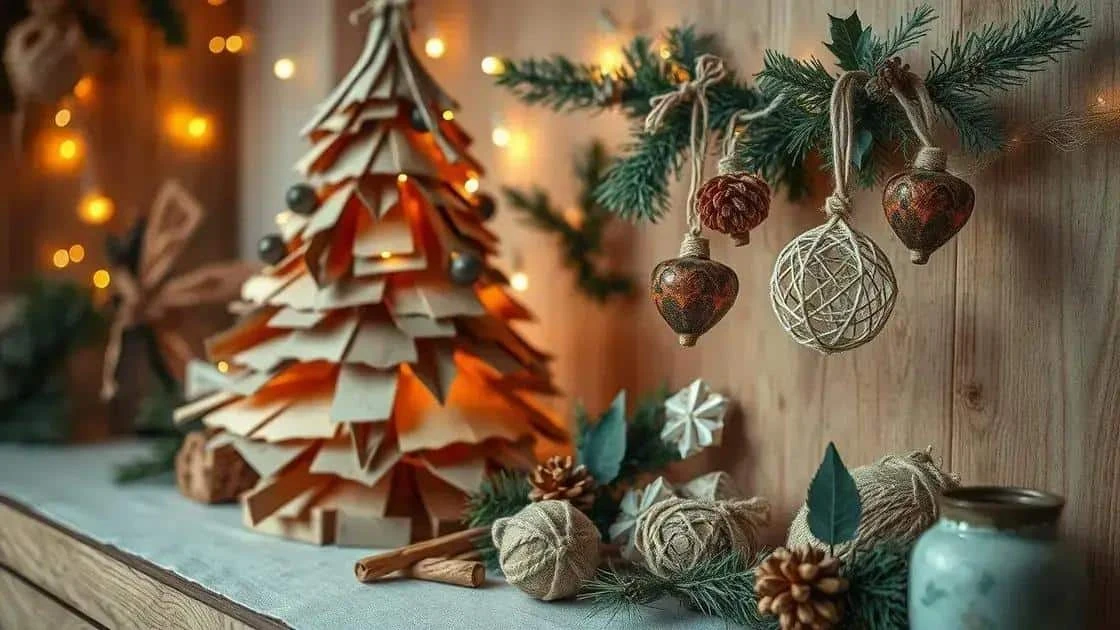
Christmas decorations made from reused materials give suitable objects another use before disposal. Clean paper, card and existing containers can become simple decorations, provided the projects are safe and the extra materials do not create unnecessary waste.
Making Christmas decorations from reused materials is a chance to use what is already at home. A folded paper star or a small cardboard tree can add a personal detail without a large shopping list. Here are ideas to adapt to your space, materials and family.
What Does Decorating with Reused Materials Mean?
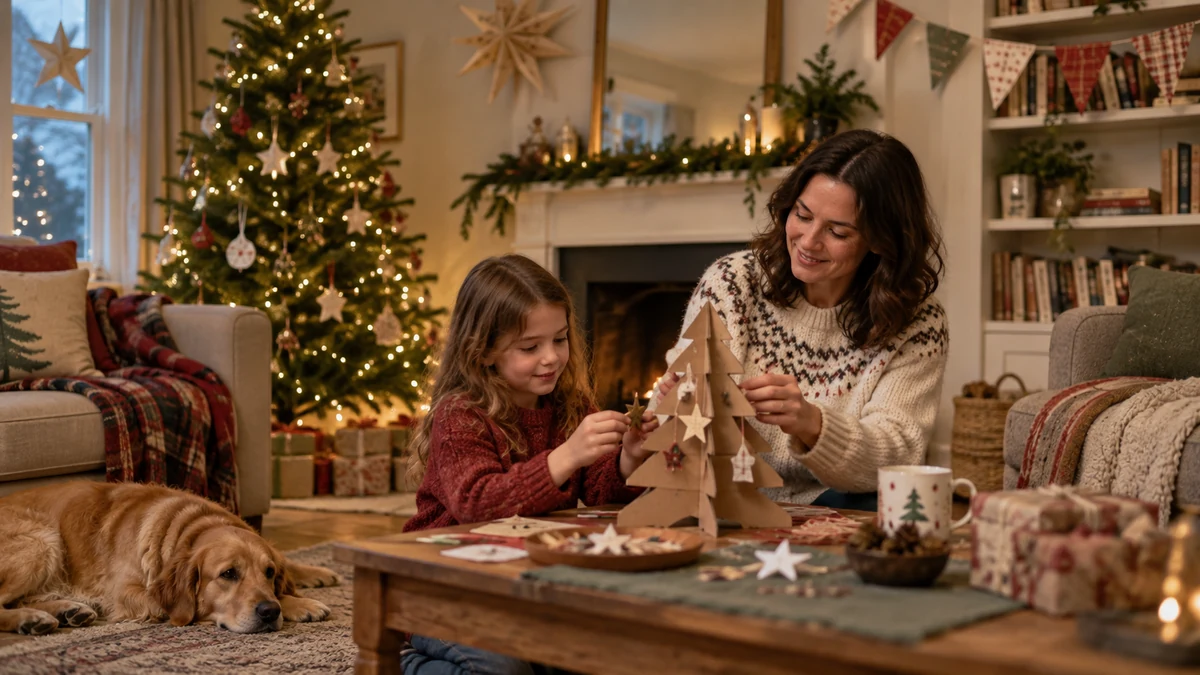
Decorating with reused materials means giving a suitable item another purpose. This differs from recycling, which processes materials into something new. A craft may extend an item’s life, but adding paint, glue or mixed materials can also affect whether it can be recycled later.
A sound container, clean paper or sturdy card may become a useful decoration. Start by asking whether the finished object is something you want to keep and use. Reuse works best when it replaces a purchase rather than adding another short-lived item.
Materials to Consider
The following can be useful when their condition and intended use are suitable:
- Glass bottles: Use intact, stable bottles as adult-only decorative vases, away from edges and children. Do not assume ordinary glass is suitable for candles or heating.
- Newspapers and magazines: Fold clean pages into paper ornaments or use suitable sheets for wrapping. Keep paper well away from heat and flames.
- Food tins: Use only clean tins with fully safe, smooth rims, checked by an adult. Do not cut metal into shapes; choose a cardboard container if there is any sharp edge.
- Cardboard boxes: Clean card can become a small tree or a flat seasonal figure. Remove staples and let adults handle sharp cutting tools.
These are starting points rather than a reason to save every piece of packaging. Keep only materials you can use safely, and recycle the rest according to local guidance.
Why Reuse Materials at Christmas?
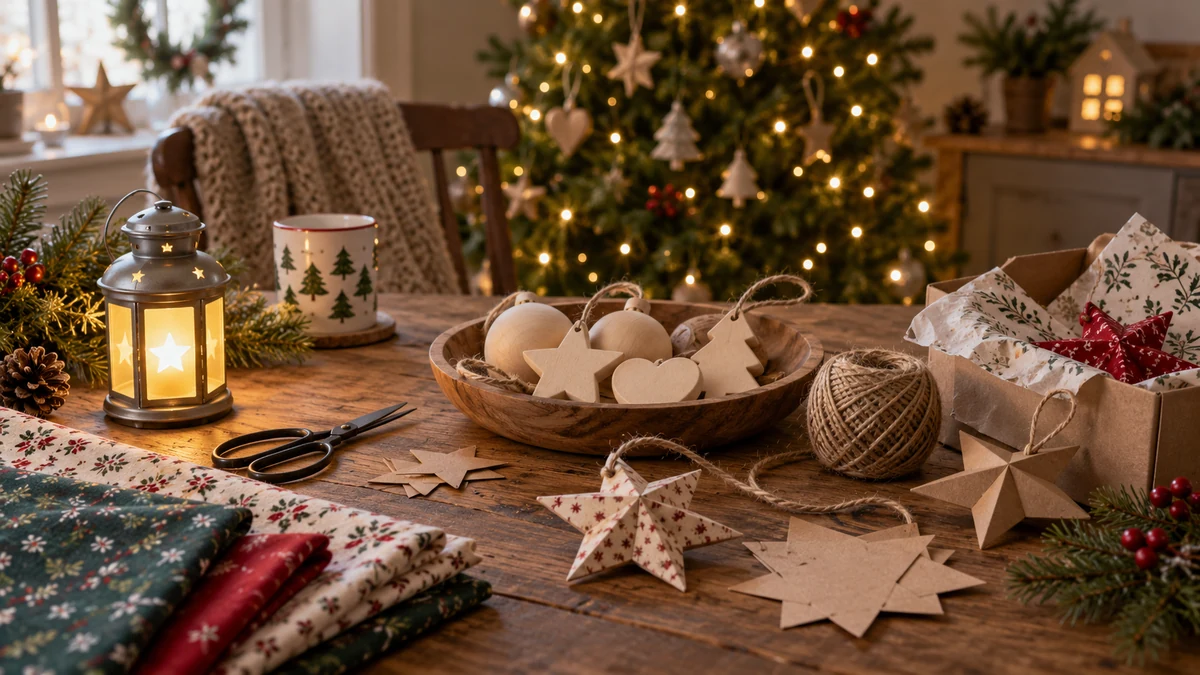
Using existing materials may reduce the need for new decorations and keep useful items in use for longer. The overall benefit depends on the project, what it replaces and how the finished item is stored or disposed of.
It can also help with costs, particularly when you already have the tools and supplies. Set a small budget for anything missing; an elaborate upcycling project is not automatically cheaper than a simple decoration.
Working with limited materials encourages creativity. A child might draw a pattern while an adult prepares the shapes, or family members may choose different ways to decorate the same basic design.
It can provide a practical example of looking after resources. Explain what is being reused and avoid claiming every handmade object is environmentally harmless. Keeping and using the decoration again is part of the idea.
Decoration Ideas Using What You Have
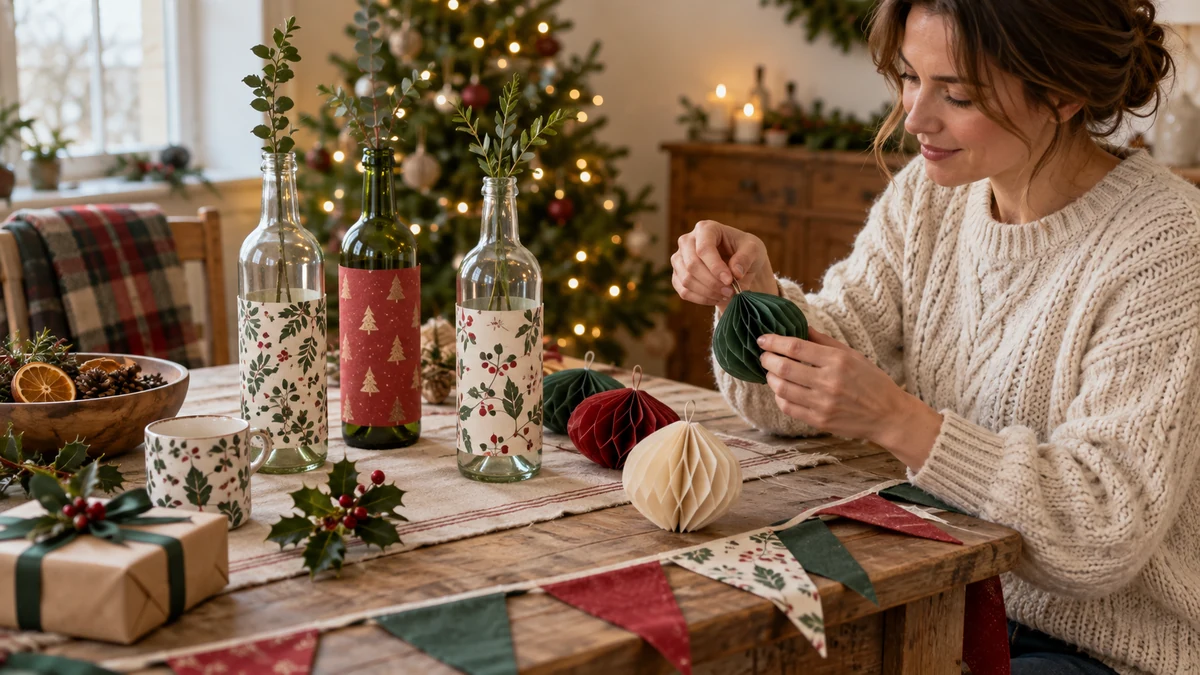
These ideas are designed to stay simple. Match the activity to the people involved and stop if a material is damaged, sharp or unsuitable.
1. Intact Plastic Bottles
Keep a clean bottle intact and wrap it in a removable paper sleeve decorated as a snowman or tree. This avoids sharp cut edges and makes the parts easier to separate later. Do not put a flame, hot bulb or improvised electrical fitting inside.
2. Cork Decorations
Adults can arrange sound corks into a small decorative tree on a stable base using an appropriate adhesive. Follow the adhesive instructions and keep corks and small pieces away from young children. Paper shapes are a simpler alternative for a shared family craft.
3. Wrapping Paper and Newspaper
Fold clean saved paper into stars, short garlands or little decorative parcels. Use only the glue or tape needed, and avoid long hanging loops where small children could reach them. Glitter and foil coatings can complicate recycling.
4. Reuse a Safe Container
Instead of cutting aluminium cans, decorate a clean container with a removable paper band. An adult must check that any metal rim is safe; otherwise use a cardboard pot. Keep the finished item decorative and away from food unless the container remains suitable for food use.
5. Cardboard Shapes
Make flat trees, snowmen or simple Nativity figures from clean card. Adults can prepare the shapes, while children add drawings with age-appropriate materials. Keep small decorations and craft tools out of little hands.
Choose one project that suits your supplies, and make a version you will want to keep. There is no need to combine every material in the recycling box.
Make a Small Cardboard Christmas Tree
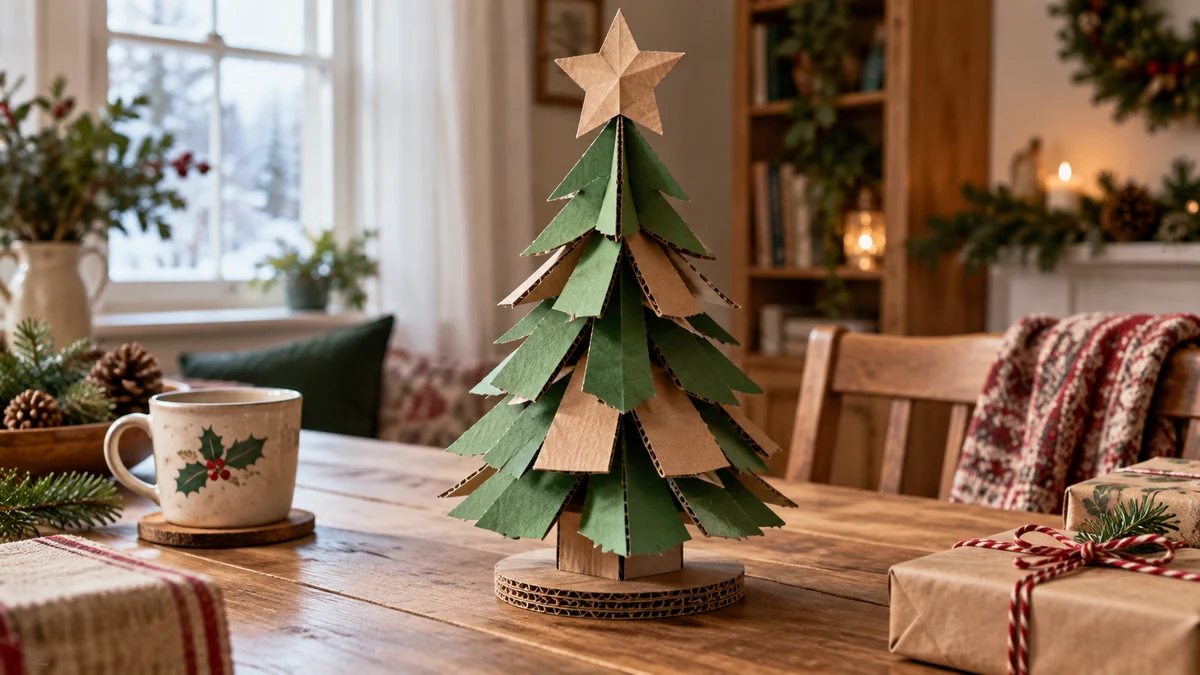
This step-by-step project makes a small, unlit tabletop decoration. Use clean card, paper scraps and suitable glue, with adult help for cutting.
1. Prepare a Stable Shape
An adult can roll a piece of card into a small cardboard cone and secure it, trimming the base so it stands evenly. Keep the tree small enough to remain stable and do not use staples where children could touch them.
2. Prepare the Decorations
Choose a few clean paper scraps and cut or tear them into manageable shapes. Avoid loose glitter, beads, cut metal and sharp plastic. Children can draw patterns before the pieces are attached.
3. Assemble the Tree
Attach the paper pieces from the bottom upwards with a suitable adhesive, following its instructions. Use light decorations so the cone does not tip. Allow the glue to dry before moving the tree.
4. Keep It Unlit
Leave this paper-and-card tree unlit. Position it where existing room lighting shows it clearly, away from candles, heaters and electrical equipment. An LED label does not automatically make a light suitable for contact with every craft material.
5. Add a Personal Detail
Finish with a paper star, a drawn name or the year. Avoid small detachable pieces if children will handle the decoration. Check stability again and choose a safe display position.
When Christmas is over, store the tree flat or in a suitable box if possible. If you no longer need it, separate materials where practical and check which parts your local service accepts.
Thoughtful Small Gifts with Less Waste
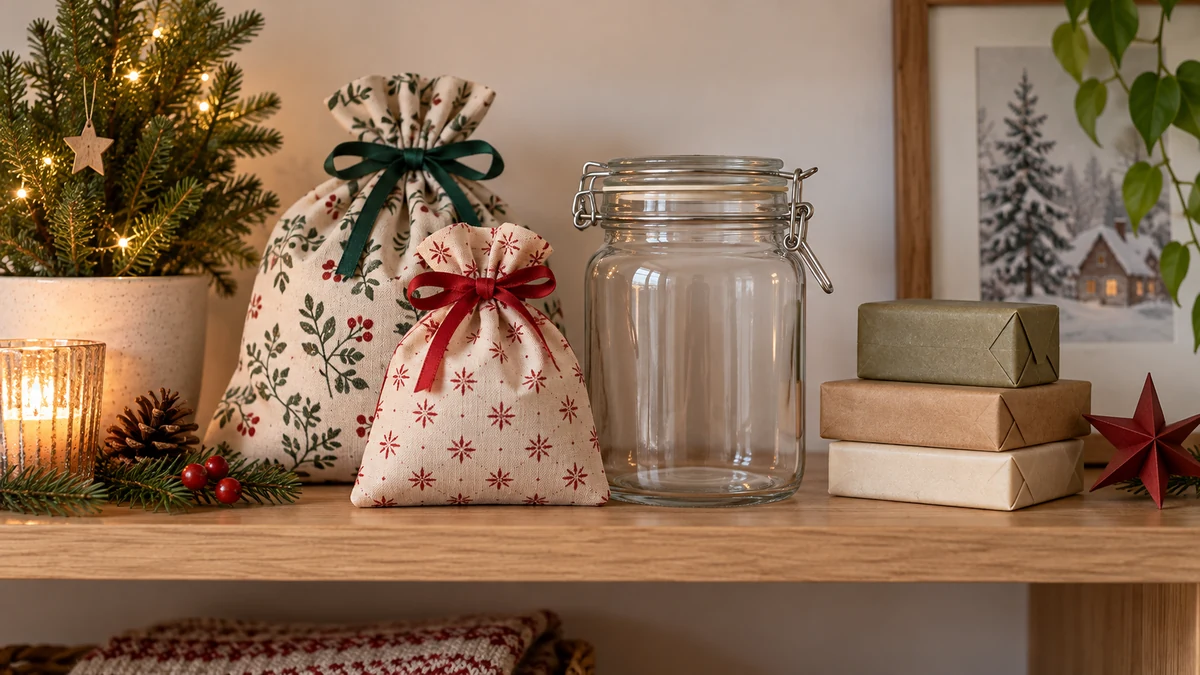
Lower-waste small gifts begin with the recipient’s interests. A useful, simple item can be more welcome than a decorative object made only to fill a gift bag. These are optional ideas, not obligations.
1. A Suitable Potted Plant
Keep a small plant in an appropriate pot with drainage, then use a clean reused container as an outer cover if suitable. Choose the plant for the recipient’s home, including any pets or children, and include care instructions. Avoid planting a succulent directly into a sealed jar without considering drainage.
2. A Carefully Chosen Soap
A commercially made soap with its ingredient label intact may suit someone who wants it. Do not assume natural ingredients or essential oils are harmless for everyone. This guide does not provide a soap-making formula; avoid improvising chemical recipes as a family craft.
3. A Reusable Fabric Bag
A plain, well-made fabric bag can be useful if the recipient will actually use it. Add a drawing or sewn detail if desired, rather than loose magnets or buttons. Reusing the bag matters more than simply owning another one.
4. A Small Notepad
Use clean, blank-sided paper without personal information to make a simple notepad. An adult can trim the sheets and use an appropriate binding method. A reusable cover can help the pad last beyond the first set of pages.
5. A Reused Jar for Storage
An intact, clean jar with a safe lid can hold stationery or another suitable dry item for an adult. Add a removable paper label. This is a simpler option than mixing a homemade fragrance diffuser, whose liquids and oils can create risks around children and pets.
Choose a gift because it is useful and welcome, not because a material has been labelled sustainable. Keep instructions and any safety information with it, and avoid unnecessary extra packaging.
Involve the Family

Inviting the family to help can make preparations more enjoyable. Offer manageable tasks and let people opt out; a shared activity should not become another source of Christmas pressure.
1. Plan Together
Let people help with the choice of a theme or one craft project. Agree how much time and money to spend, and begin with the materials already available.
2. A Short Craft Session
Set up a craft session with age-appropriate materials. Adults can handle cutting and assembly, while children draw or choose colours. Keep hot glue, blades, small parts and unsuitable adhesives out of reach.
3. Prepare Food Together
If people want to help with the Christmas meal, assign tasks to their ability and keep food preparation separate from the craft area. Follow food hygiene and allergy requirements, with adults handling hot equipment and raw meat.
4. Share a Memory
Take a moment to share a Christmas story while you work. It can explain why an old ornament matters or suggest an idea for a new one. Do not insist on cheerful memories if someone finds the season difficult.
5. Wrap Presents Together
Reuse suitable wrapping and invite people to add a drawing or note. Keep scissors and small decorations under adult control, and avoid exposing someone’s private information on reused packaging.
Choose the activities that fit your household. A small amount of shared preparation can be enough; the aim is enjoyable time together, not a perfectly handmade Christmas.
A More Thoughtful Approach to Christmas Decorations
Reusing suitable materials can be a practical part of Christmas preparation. Start small, avoid unnecessary purchases and think about whether you can use the decoration again.
Making something together offers a chance to talk about caring for possessions and separating waste properly. It does not require broad claims that one craft will solve an environmental problem.
Whether you fold paper, prepare a meal or share a story, keep the task manageable and safe. Store useful decorations for another year, and check local recycling guidance for anything you cannot keep.
Creativity does not need a large budget or a pile of new materials. Use what works for your family and leave out the rest.
FAQ — Christmas Decorations from Reused Materials
How can I involve the family in Christmas crafts?
Choose one manageable activity and offer tasks suited to age and ability. Adults should handle sharp or hot tools, while children can draw, fold or choose colours.
Which materials can I reuse for decorations?
Clean paper, sound cardboard and suitable intact containers are useful starting points. Avoid sharp metal, cut plastic, damaged glass and materials with unknown residues.
How can I decorate a plastic bottle safely?
Keep it intact and add a removable paper sleeve or drawing. Do not put heat, flames or improvised lights inside, and keep it out of use as a toy.
What small gifts could I make with less waste?
A useful fabric bag, a simple notepad or an adult’s labelled storage jar may work. Choose for the recipient and avoid homemade chemical mixtures or loose magnets.
Why reuse materials for Christmas decorations?
It can extend an item’s useful life and reduce some purchases. The benefit depends on what the project replaces, the extra materials used and whether the result is kept.
What else can I do to reduce Christmas waste at home?
Plan purchases and food portions, care for existing decorations and pass on suitable unwanted items. Check local recycling guidance rather than assuming painted, glued or mixed materials are all recyclable.
Sources and Further Reading
- Recycle Now — wrapping paper
- Recycle Now — Christmas recycling
- London Fire Brigade — Christmas safety