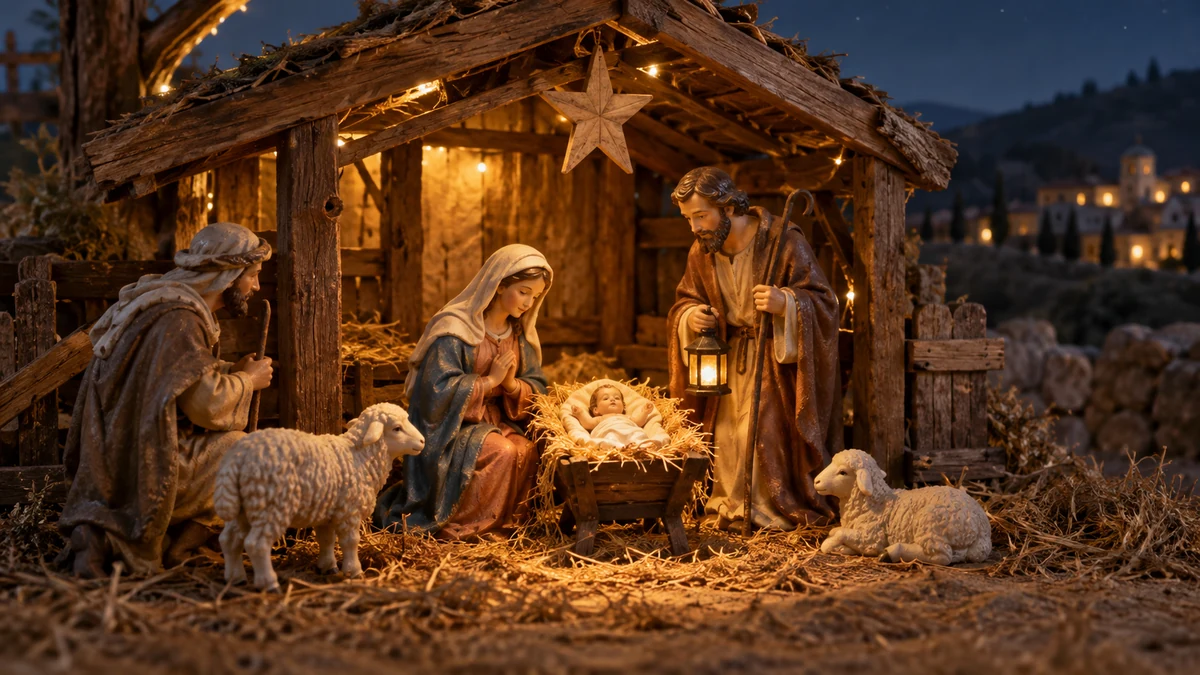
To set up a traditional nativity scene, choose a safe display space, prepare a stable base and arrange the figures around the manger. Add a simple backdrop and a few personal details, keeping loose materials and electrical items away from children and pets.
Learning how to set up a traditional nativity scene offers a practical way to explore the Christian Christmas story at home. Whether your figures are inherited, bought or handmade, a modest arrangement can be meaningful. Here is how to plan a display that suits your space and family.
The nativity scene in Christmas tradition
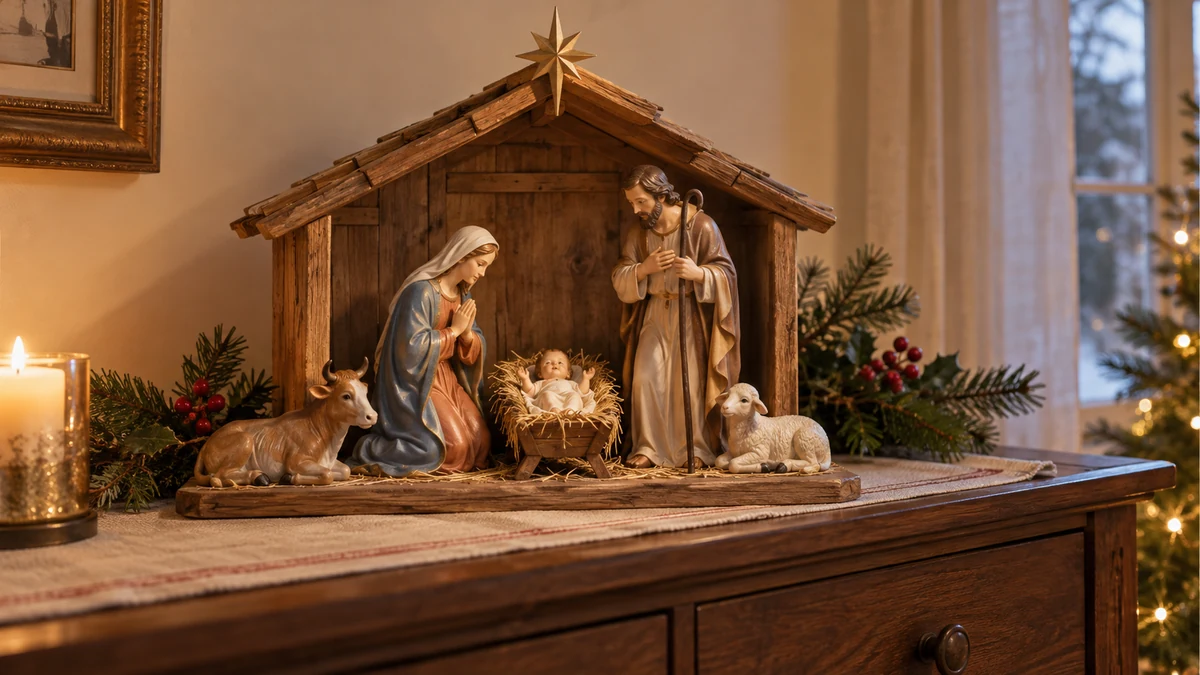
A nativity scene, also called a crib, represents the birth of Jesus. In many Christian households, putting it together is a familiar part of Christmas preparations. Its figures offer a visual starting point for discussing the story and its religious meaning.
St Francis of Assisi’s Christmas celebration at Greccio, Italy, in 1223 is an important landmark in this tradition. It used a manger, hay and live animals rather than a set of miniature statues. Household cribs developed in many forms over subsequent centuries.
Creating a display can involve different generations. Adults can explain who the figures represent while children ask questions or suggest where pieces should go. Treat it as an invitation to learn, respecting the beliefs and interests of everyone taking part.
The materials can reflect your own family’s style. Wooden, ceramic or handmade card figures all offer possibilities, and a simple backdrop may be enough. You do not need an elaborate miniature village or a new set every year.
For Christian families, the scene can provide a focus for reflection on hope, humility and love. Others may approach it as part of cultural history or seasonal art. Its meaning need not depend on the size or cost of the display.
What you need for a nativity scene
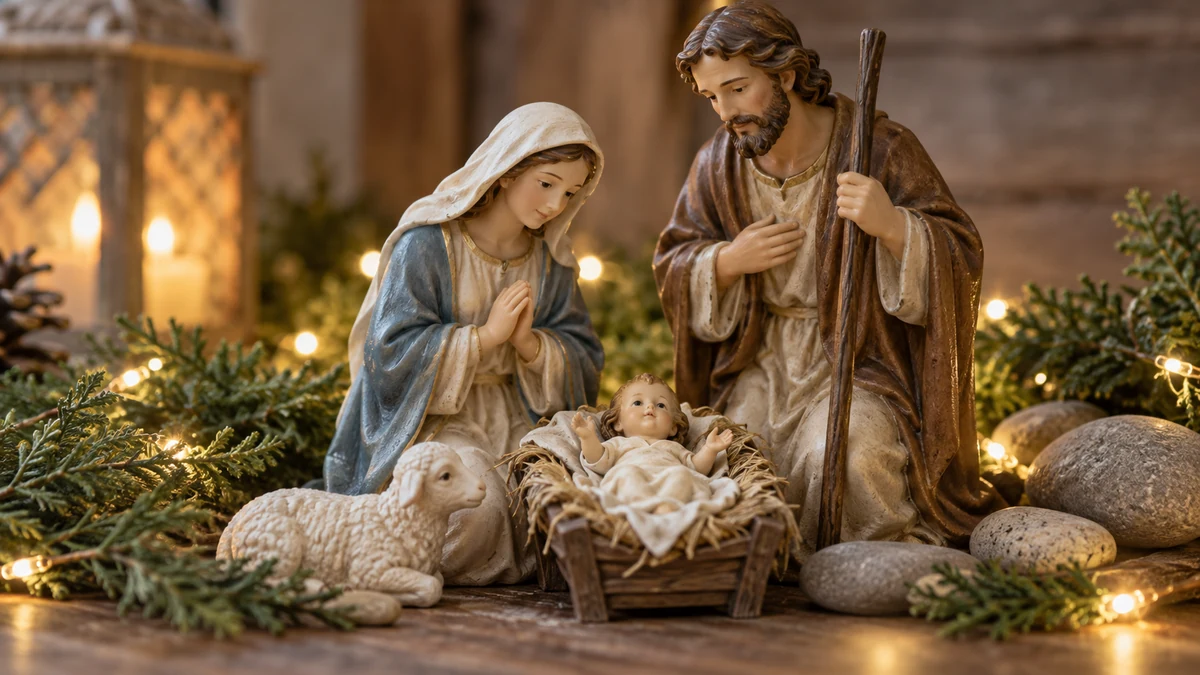
Before assembling your nativity scene, gather the pieces and check their condition. The size and weight of the figures will determine the base you need. These are the main elements to consider:
- Figures: Mary, Joseph and the infant Jesus form the centre of many sets, with shepherds, wise men and animals added around them. Ceramic, wood and durable plastic are common options; fragile or small pieces belong out of young children’s reach.
- A stable base: Use a level shelf, sturdy tray or solid board capable of holding the whole arrangement. Avoid precarious boxes or an overhanging cloth that a child or pet could pull. Check that individual figures stand securely.
- Scenery: Paper, fabric or a few clean, dry natural materials can suggest the setting. Loose straw, stones and dried plants are optional, not essential. Keep them away from heat and avoid anything sharp, mouldy or accessible to children who might swallow it.
- Lighting: If wanted, use a small set of suitable LED lights according to its instructions. Check cables and keep battery compartments secure. Lighting should not touch combustible scenery or create a trailing-cable hazard.
- A backdrop: A simple card stable, a painted night sky or a securely attached paper star can frame the scene. These are artistic interpretations rather than a claim to reconstruct the historical setting exactly.
Once the materials are ready, leave enough clear space to arrange them without rushing. A small, stable scene is easier to look after than a crowded one. Invite family members to help with tasks suited to their age and ability.
Set up your nativity scene step by step
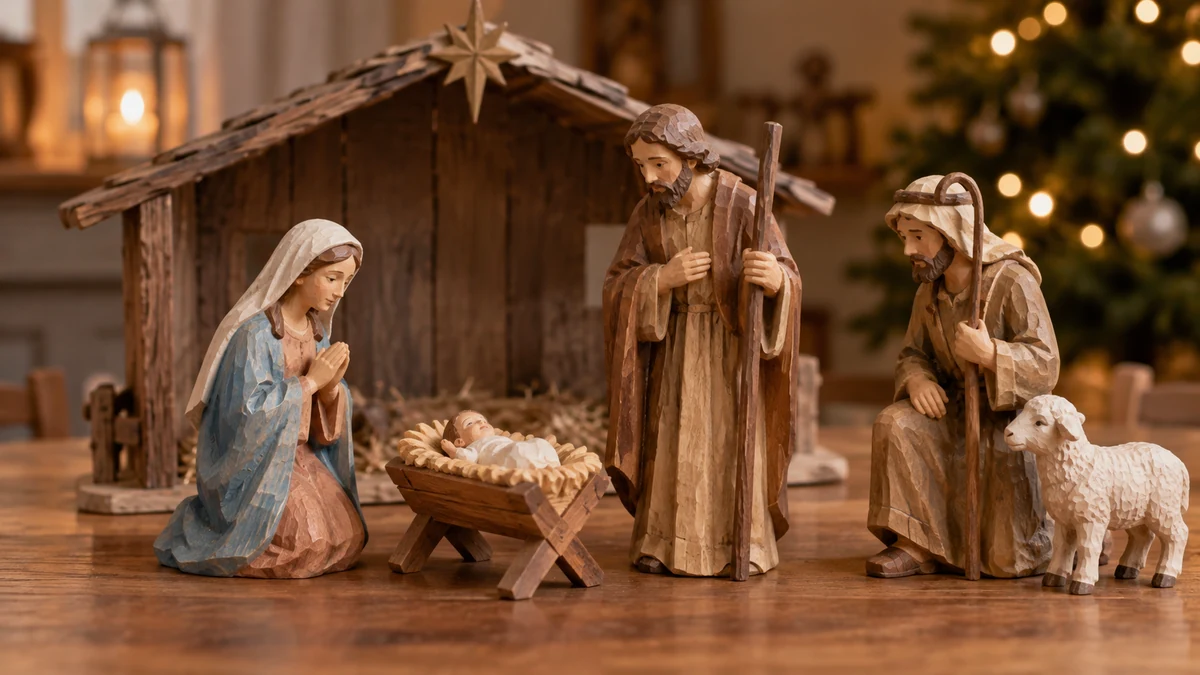
Putting together a nativity scene can be a relaxed shared activity. Follow this step-by-step guide and adapt the details to the figures and space you have:
- Choose the location: Find a level shelf or table where the scene can be seen without obstructing a doorway or walkway. Keep it away from fires, heaters and direct access by young children or pets.
- Prepare the base: Set down a sturdy tray or board and test its stability. A sheet of coloured paper or a flat piece of fabric can cover it. Do not rely on thin card to support heavy ceramic figures.
- Arrange the figures: Place Mary and Joseph near the manger, then add other figures around them. Some families add the infant Jesus on Christmas Day and the wise men at Epiphany; others display the whole set together. Follow the practice that is meaningful to you.
- Add the setting: Position the stable or backdrop, followed by a few landscape details. If adding lights, use suitable LEDs and follow their safety instructions. Keep wiring clear and leave combustible materials away from heat sources.
- Include personal details: A handmade star, a small family keepsake or a note about an inherited figure can make the display personal. Avoid adding so much that the central figures become hard to see.
- Pause and share: Once it is finished, talk about the story and the pieces you have chosen. A prayer may be appropriate for your family, while others may prefer a quiet conversation or simply looking at the scene.
The result need not be elaborate. A carefully placed group of figures with space around them can be an attractive and meaningful part of your Christmas home.
Ideas for decoration and atmosphere
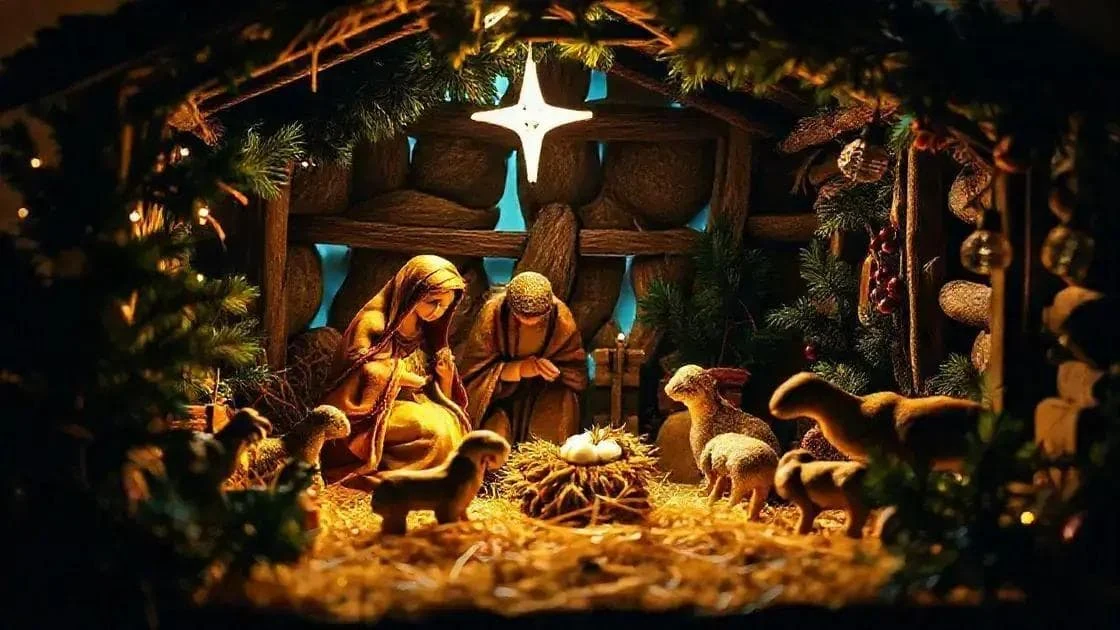
A few thoughtful choices can help your nativity scene sit comfortably with the rest of the room. Use these ideas selectively rather than trying to include everything:
- Choose a colour palette: Let the colours of the figures guide the backdrop and any fabric. Gold, green, red or neutral shades can work, but there is no required festive palette. A plain background often makes detailed figures easier to see.
- Keep lighting gentle: A small, steady LED light can highlight the scene without overwhelming it. Avoid flashing effects if they are uncomfortable for anyone in the household, and switch decorations off when unattended.
- Consider sound and comfort: Quiet seasonal music may suit the occasion, but silence is equally appropriate. Do not place lit candles beside straw, paper or fabric. A battery-operated candle is an alternative, with its battery compartment kept secure.
- Use scenery sparingly: A clean twig or a few paper shapes can suggest a landscape without filling every gap. Natural materials are not automatically safe; check them for sharp edges and keep loose items beyond the reach of children and pets.
- Make it personal: Include a handmade element or a figure with a family story. A small label kept with the set can preserve who made or gave it and when.
- Leave room between pieces: Allow each figure to be seen and avoid unstable stacks or crowded edges. Check the arrangement from the height at which children or seated visitors will view it.
A coherent display is usually easier to achieve by removing unnecessary details than by adding more. Keep the emphasis on the figures and the meaning you want to share.
Helping children take part
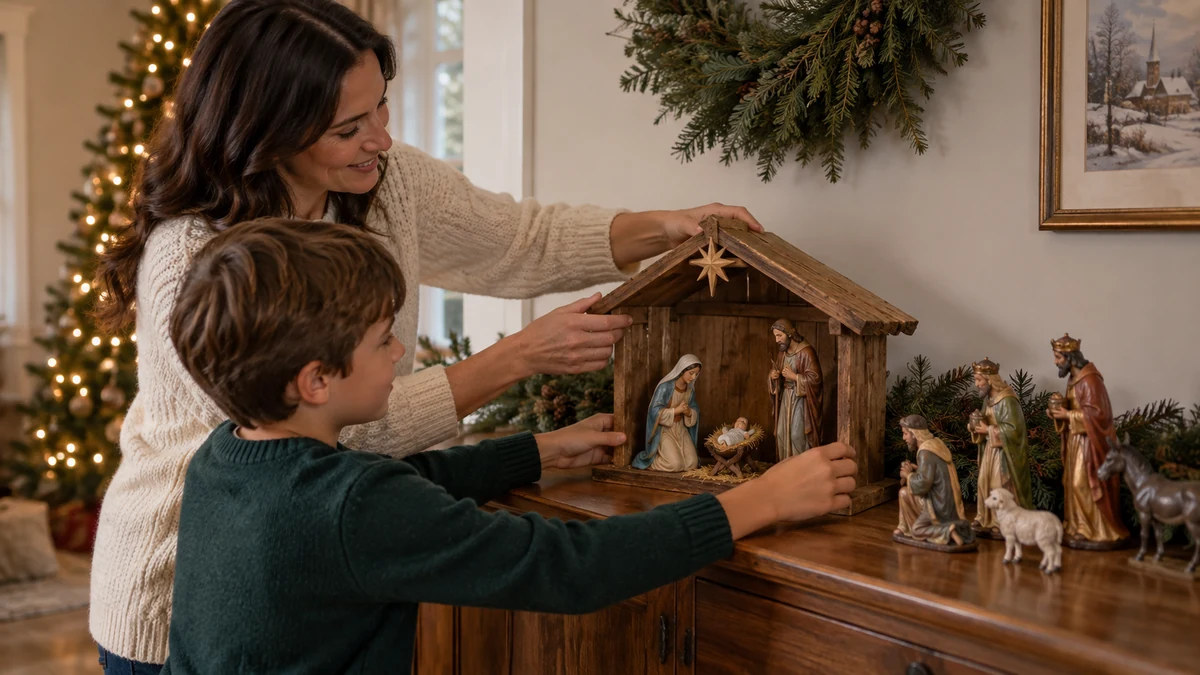
Inviting children to help with a nativity scene can combine storytelling and a simple creative task. Make participation optional and adapt the activity to their age:
- Explain the story: Introduce the figures and explain their place in the Christian Nativity tradition. Use clear, age-appropriate language and allow questions rather than expecting children to know the story already.
- Offer safe choices: Children can decide where suitable, robust figures should stand. An adult should handle delicate pieces and anything small enough to pose a choking risk. A separate age-appropriate play set may be better for very young children.
- Make a simple decoration: Draw a star, colour a card backdrop or decorate a clean cardboard stable. Use child-appropriate materials, with adult supervision for scissors and adhesives. Avoid sharp cut plastic and loose tiny embellishments.
- Share the tasks: One child might choose a colour while another places a safe figure. Keep tasks manageable and let adults deal with electrical items and high shelves. Taking turns can help everyone contribute without crowding the display.
- Talk about the finished scene: Ask which figure or detail they noticed and why. Families may choose a short prayer or discuss ideas such as welcome and kindness. Avoid pressuring a child to express a particular religious response.
- Build a flexible tradition: Revisit the activity each year if the family enjoys it. Add a date to handmade pieces or take a photograph for your own album. Allow the tradition to change as children grow.
The value of the activity lies partly in the time spent together. A brief, enjoyable session can be more suitable than insisting on a complex display or a perfect arrangement.
A nativity scene as a family tradition
Assembling a nativity scene can be a way to explore Christian Christmas traditions and share family memories. A few figures and a clear explanation can be enough; the display does not need to be expensive or large.
Choose safe materials, a stable position and details that have meaning for your household. Pack fragile figures carefully afterwards, noting any repairs needed before next year. Keeping the process simple makes it easier to return to it.
Whether you arrange the scene alone or with others, give it the form that suits your home. It can offer a quiet point of reflection within a busy festive season.
FAQ — Setting Up a Nativity Scene
Why do people display a nativity scene at Christmas?
For many Christians it represents the birth of Jesus and provides a focus for reflection. It can also introduce children and visitors to the religious story behind Christmas.
How can children help set up the scene?
Explain the figures, offer safe pieces to arrange and invite them to make a simple card backdrop or star. Adults should handle fragile figures, small parts, electrical items and sharp tools.
What materials do I need?
Start with nativity figures and a stable base. A backdrop, fabric or paper scenery and suitable LED lighting are optional; avoid loose combustible materials near heat sources.
How can I make the display look balanced?
Keep the manger and central figures easy to see, use a simple backdrop and leave space between pieces. Add only a few personal details rather than filling every available gap.
How can setting up the crib become a family tradition?
Choose a convenient time each year, let people contribute voluntarily and keep a note of the stories behind favourite pieces. Adapt the activity as your family’s needs change.
What can children learn from making a nativity scene?
They can learn about the Christian Nativity story, explore materials and practise sharing tasks. Encourage questions and creativity while respecting different beliefs and levels of interest.