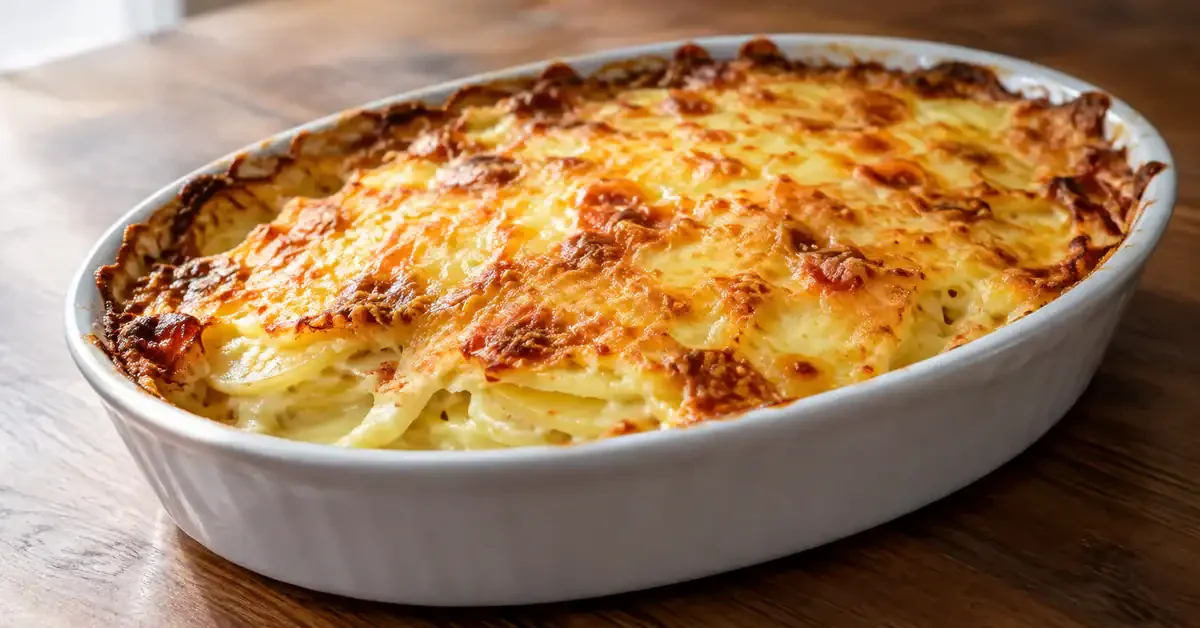
Cheesy potato gratin layers thinly sliced potatoes with cream and melting cheese, giving a golden surface and a soft centre. Assemble evenly, pour over the warm cream mixture and bake at 180°C until the potatoes are tender and the top is browned.
Cheesy potato gratin combines a golden topping with a creamy interior. It works as a substantial side dish for a weekend lunch, a festive meal or a simple supper.
The images illustrate this recipe and its preparation; the appearance of your finished dish may vary.
Distribute the potatoes, cream and cheese between the layers rather than using all the ingredients in the first one. Even slices help the centre cook through while the surface browns.
Ingredients
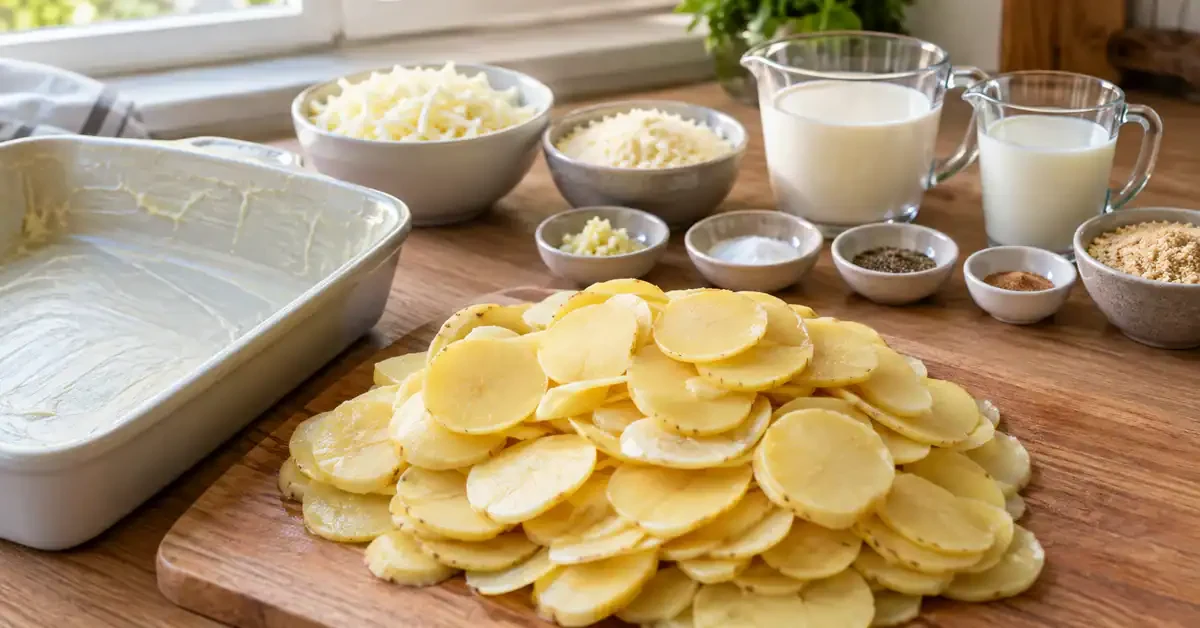
Ingredient list and quantities
- 700 g potatoes, peeled and thinly sliced
- 200 g mozzarella, grated
- 60 g Parmesan, grated
- 300 ml fresh cream
- 100 ml whole milk
- 1 garlic clove, chopped
- 20 g unsalted butter, for greasing the dish
- 1 teaspoon salt, or less to taste
- ¼ teaspoon freshly ground black pepper, to taste
- ¼ teaspoon grated nutmeg, optional
- 2 tablespoons breadcrumbs, optional
Method
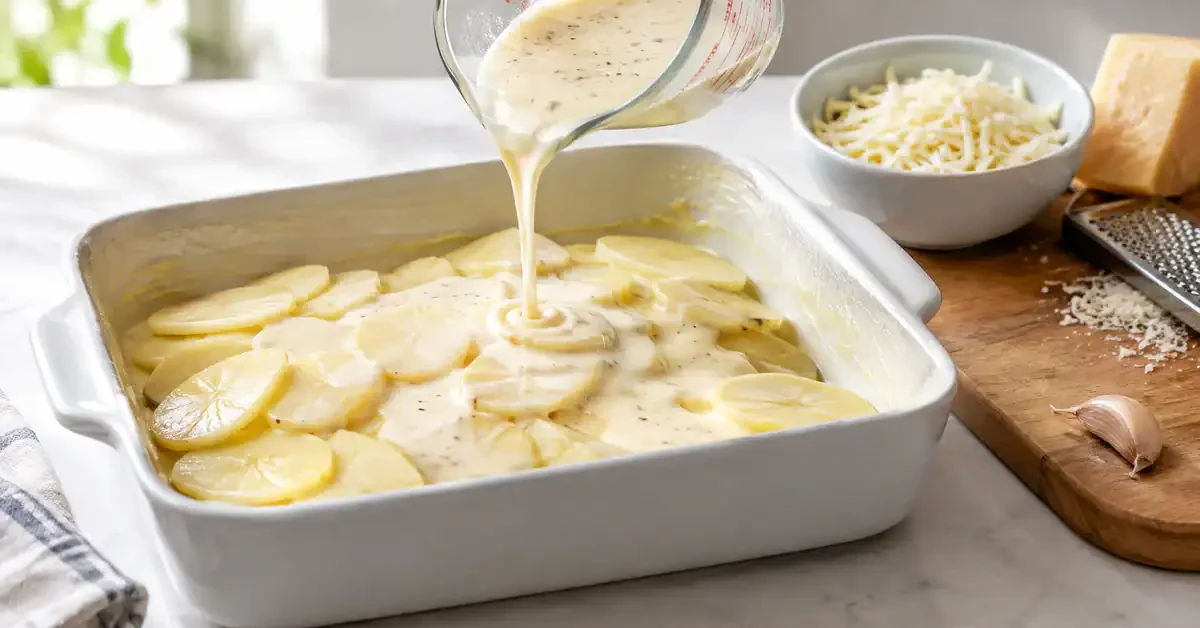
Step-by-step preparation
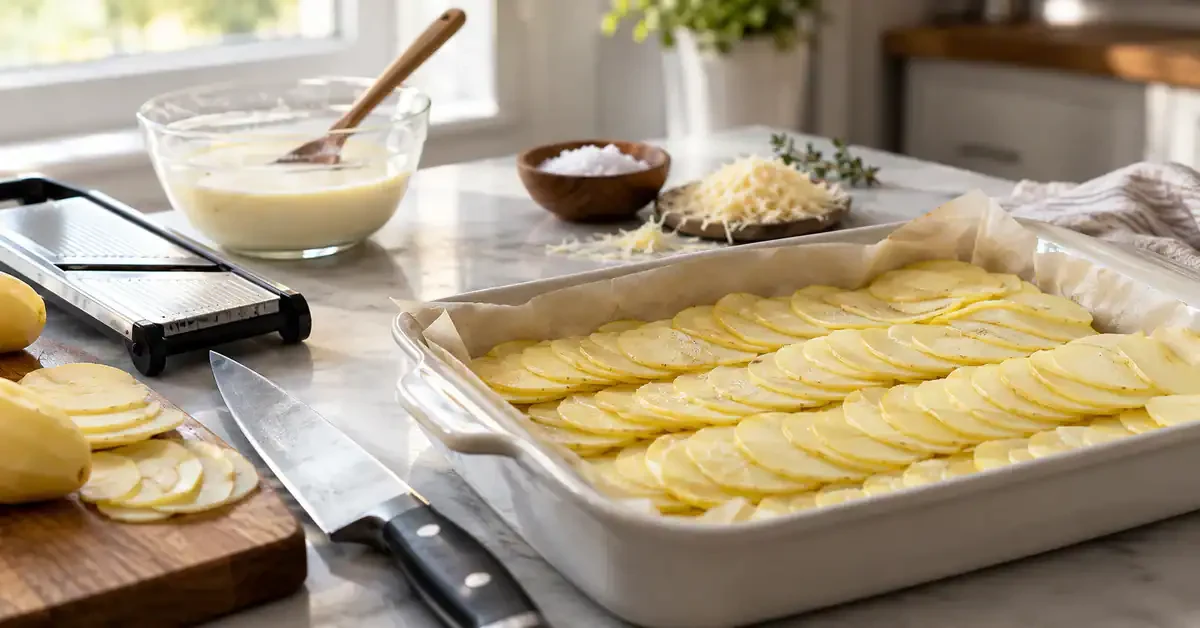
- Prepare the oven and dish: preheat a conventional oven to 180°C. Butter a medium ovenproof dish, approximately 20 × 25 cm. Slice the potatoes evenly with a sharp knife or a mandoline used with its hand guard.
- Warm the cream mixture: put 300 ml fresh cream, 100 ml whole milk and 1 chopped garlic clove in a small saucepan. Heat gently, stirring occasionally, until small bubbles appear at the edge; do not boil vigorously. Remove from the heat. Season with up to 1 teaspoon salt, ¼ teaspoon black pepper and the optional ¼ teaspoon nutmeg. Allow for the saltiness of the cheese.
- Start the potato layers: arrange some of the 700 g sliced potatoes evenly over the base. Reserve the rest for further layers. Avoid a thick mound in the middle, which would cook more slowly.
- Add cream and cheese: spoon over some warm cream mixture and scatter over some of the 200 g grated mozzarella. Repeat with the remaining potatoes, cream and mozzarella, distributing the stated totals between all the layers. Finish with cream mixture on top.
- Finish the topping: scatter over 60 g grated Parmesan and, if desired, 2 tablespoons breadcrumbs for added texture.
- Bake: cook at 180°C for approximately 60–75 minutes, checking for tenderness. If the top colours too quickly, cover loosely with foil. Remove the foil for the final 15–20 minutes if more browning is needed. A knife should slide easily through the potatoes at the centre.
- Rest and serve: leave for 5–10 minutes before cutting or spooning out. The brief rest helps the layers settle without losing their creamy texture.
Doneness and texture
Recognising when it is ready
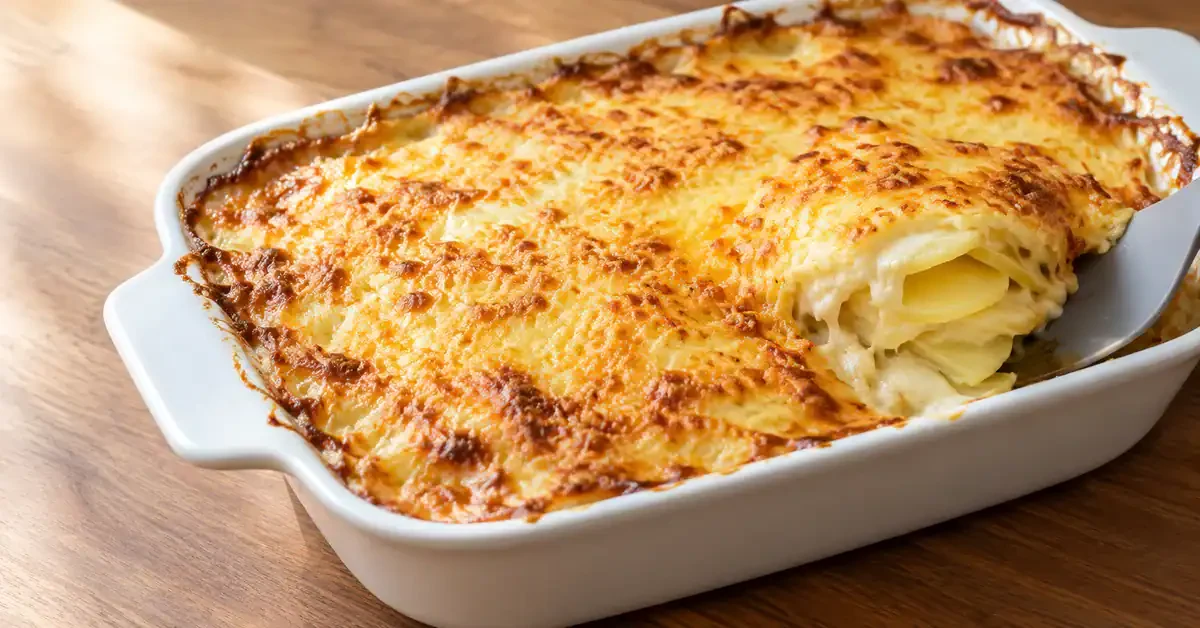
Look for a golden surface and tender potato layers surrounded by hot cream. At 180°C, allow roughly 60–75 minutes, but let the centre’s tenderness guide you. Check after about an hour and continue in short intervals if needed.
- Colour: the topping should be golden. Remove foil towards the end if the surface needs more colour; keeping it covered will not help it brown.
- Topping: look for melted cheese and browned patches. Do not touch the hot surface to test it, and do not assume a firm crust means the potatoes beneath are cooked.
- Tender centre: a knife should pass through the middle with little resistance. If the potato slices remain firm, bake longer, shielding the top if necessary.
- Bubbling: the cream should bubble around the edges. This indicates a hot sauce, but still check the central potatoes separately.
- Resting: allow 5–10 minutes after baking so the layers settle and portions are easier to lift out.
Common problems and solutions
Uneven slicing, excessive heat or too much seasoning can affect the result. These checks help keep the gratin creamy inside and golden on top.
Troubleshooting
- Thick slices or uneven layers: some pieces may stay firm while others soften. Solution: cut thin, even slices with a sharp knife or guarded mandoline and spread them evenly across the dish.
- Cream splitting or looking thin: vigorous boiling can make the sauce separate. Solution: warm gently and stir occasionally. If it begins to separate, take it off the heat and stir gently; do not assume adding all the cheese will repair it. A badly split sauce may not recover completely.
- Too much or too little salt: Parmesan adds its own saltiness. Solution: taste the cream mixture before assembly and season cautiously. There is no need to add an extra full measure between layers.
- Firm potatoes in the centre: thick slices or a deep, uneven stack need more time. Solution: continue baking, loosely covered if the surface is already brown, until a knife passes easily through the middle.
- A pale topping: the surface may have remained covered too long. Solution: uncover for the final 15–20 minutes. If the potatoes are already tender, a brief increase to 190–200°C or 2–3 minutes under the grill may add colour. Watch continuously under the grill.
- A wet topping or excessive liquid: uneven distribution can leave pools of cream. Solution: share the measured cream mixture across the layers, saving some for the top. Allow the short rest before serving; avoid adding extra liquid without a reason.
- Uneven melting: large lumps of cheese may not spread well. Solution: grate the mozzarella and distribute it evenly, then use grated Parmesan for the topping.
- Dry edges and an undercooked middle: excessive heat can brown the outside too soon. Solution: start at 180°C and protect rapidly colouring areas with foil while the potatoes finish cooking.
Variations, serving and storage
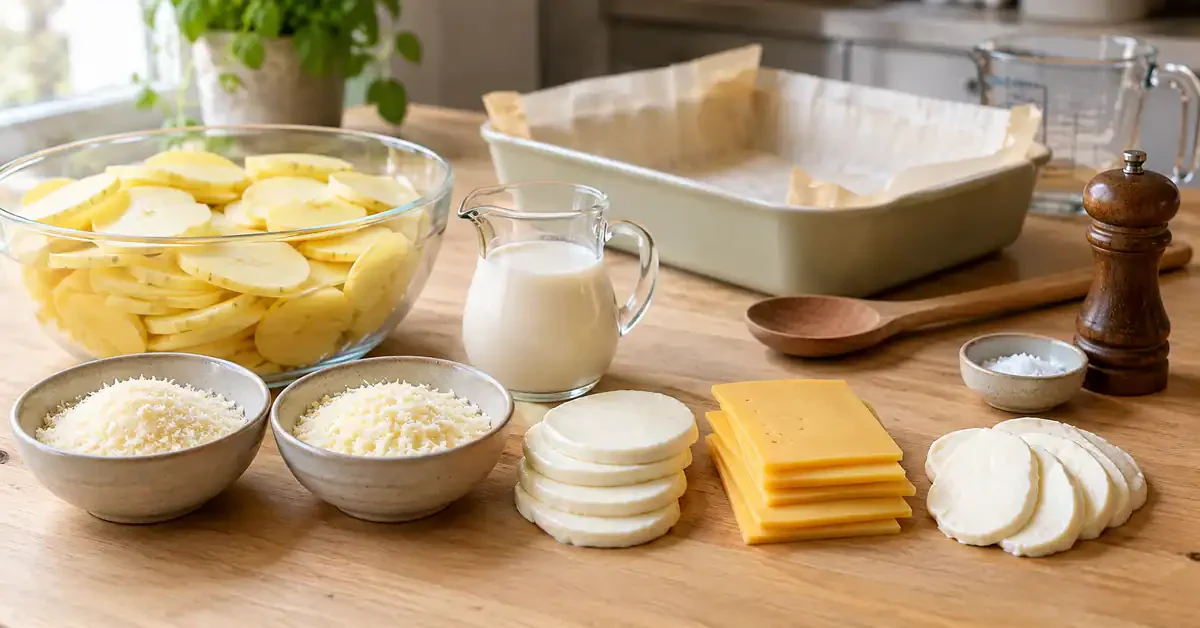
The cheese can be varied while retaining the layered potato base. Substitutions affect saltiness and moisture, so use the texture checks rather than assuming an identical result.
Possible substitutions
- Mozzarella: the original Brazilian alternative is 200 g queijo prato, a mild melting cheese. You can also try 200 g drained buffalo mozzarella. Fresh mozzarella may release more liquid, so drain it well and check the finished consistency.
- Parmesan: replace with 60 g grated pecorino romano for a stronger, saltier flavour. Reduce the added salt to suit.
- Cream: fresh cream is the basic ingredient. A suitable UHT cooking cream can be tried as a variation; retain the total of 300 ml cream plus 100 ml milk, rather than adding the milk twice. Different fat contents change the result.
- Crunchy topping: omit the breadcrumbs if preferred, or vary the topping with a little extra Parmesan. Another option is to mix the 2 tablespoons breadcrumbs with 1 teaspoon melted butter before scattering over the dish.
Serving and storing
Serve hot from the baking dish after the brief rest, either in portions or spooned onto plates. Green salad, roasted vegetables or simply cooked meat make straightforward accompaniments.
Cool leftovers promptly and refrigerate within two hours, in covered containers once cooled. Use within 48 hours or freeze. Reheat only once, until steaming hot throughout; an oven at 170–180°C is an option, with the centre checked rather than only the bubbling edges. Source: Food Standards Agency: cooling and storing food
Ready to serve
Let the gratin stand for 5–10 minutes before portioning. This helps the layers hold together while the inside remains creamy.
For a later variation, try pecorino romano in place of Parmesan. It changes the flavour and saltiness; keep checking potato tenderness rather than assuming a substitution guarantees exactly the same baking time.
Cheesy potato gratin: frequently asked questions
How do I know the gratin is cooked?
The potatoes at the centre should be tender when tested with a knife, with a golden top and hot, bubbling cream. Allow roughly 60–75 minutes at 180°C, adjusting for the actual dish and slice thickness. Shield the surface if it browns before the potatoes soften.
What if the cream splits or looks thin?
Warm the cream mixture gently and avoid a rolling boil. If it starts to separate, remove from the heat and stir gently. Adding cheese is not a guaranteed repair for a split sauce. Distribute the measured liquid evenly and allow the finished gratin its short rest.
How can I brown the top without drying the middle?
Remove foil towards the end if more colour is needed. Once the potatoes are tender, a short hotter finish or 2–3 minutes under the grill can help. Watch closely so the cheese does not burn.
How should I build the layers?
Divide the total 700 g potatoes, 200 g mozzarella and warm cream mixture between several even layers. Finish with cream, then the 60 g Parmesan and optional 2 tablespoons breadcrumbs. Do not use the full potato and mozzarella quantities in every layer.
Can I change the cheeses?
Yes. Queijo prato or drained buffalo mozzarella are the suggested alternatives to mozzarella, using 200 g. Pecorino romano can replace the 60 g Parmesan. Expect different moisture and saltiness, and reduce added salt where appropriate.
Sources and Further Reading
- Food Standards Agency: heating food and using leftovers
- Food Standards Agency: cooling and storing food