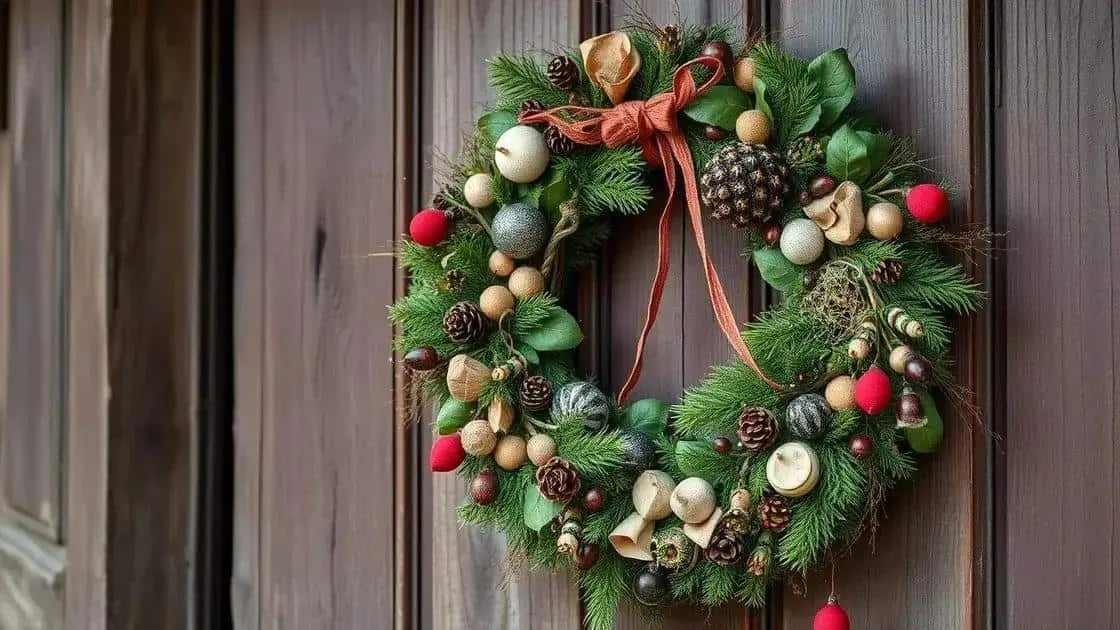
Make Christmas wreaths with suitable cardboard, corks, fabric or foliage you already have. Choose secure fixings and a practical design, checking tools, hanging arrangements and material hazards rather than assuming every reused or natural item is environmentally harmless.
Making Christmas wreaths with reused materials can give familiar items a new purpose. This guide brings together materials, assembly steps and style ideas rather than ten distinct tested models. Choose a lightweight project that fits your supplies and the place where it will hang.
Choosing materials for a reused-material wreath

Choose materials for your wreath by checking their condition and intended use. Suitable existing supplies can reduce new purchases, but adhesives, paint and mixed materials may affect repair, reuse or recycling later.
Suitable foliage
Plant branches, such as suitable conifer foliage, can give a wreath a natural appearance. Collect only where permitted, avoid unknown or hazardous plants and consider allergies, pets and children. Foliage can dry out, shed or deteriorate, so inspect it during use and keep it away from heat and flames.
Clean reused packaging
Cardboard and kraft paper can be easier starting points than plastic bottles. Cutting bottles may produce sharp edges and is an adult task; avoid using them if you cannot make the finished piece safe. Reusing packaging does not guarantee that the glued or painted decoration remains recyclable.
Dried fruit and spices
Properly dried fruit slices, such as orange or apple, and culinary cinnamon sticks can add texture. An adult should handle slicing and drying. Check for deterioration, keep them away from pets and do not eat food-based ornaments after they have been displayed.
Reusing family decorations
A ribbon or lightweight ornament from a previous Christmas can add a personal detail. Check that it is in good condition and attaches securely, rather than keeping a broken or sharp item simply because it has sentimental value.
Step by step: assembling your wreath

This step-by-step outline suits a lightweight indoor wreath. Adapt the base and fixings to the chosen weight and materials, with an adult handling sharp tools and any hot glue. Outdoor use needs materials and fixings suitable for weather exposure.
Step 1: gather your materials
Choose a firm cardboard ring, reusable craft ring or suitable prepared branch base. Gather foliage or dried fruit, ribbon and lightweight ornaments if wanted. Select suitable adhesive or ties and a hanging fixing rated for the finished weight.
Step 2: prepare the base
An adult can cut a cardboard ring or secure suitable branches into a circle using appropriate ties. If using wire, cover sharp ends and keep it away from children. Check that the base is stable enough for the decorations before adding them.
Step 3: attach decorative pieces
Arrange foliage and dried fruit, then attach them with a method suited to their weight and surfaces. Hot glue is for an adult to handle; let fixings cool before touching. Do not rely on an adhesive that fails to hold the chosen material securely.
Step 4: add finishing details
Add ribbon or a few lightweight ornaments, keeping the arrangement balanced. Avoid loose small parts or long cords where children may reach them, and leave the hanging point clear.
Step 5: hang your wreath securely
Use a fixing appropriate to the wall or door and the finished weight. Check that the wreath does not obstruct the door, a walkway or essential access. Keep it away from flames and heat, and inspect the fixing regularly rather than relying on an unspecified ‘sustainable hook’.
Wreath ideas using existing materials
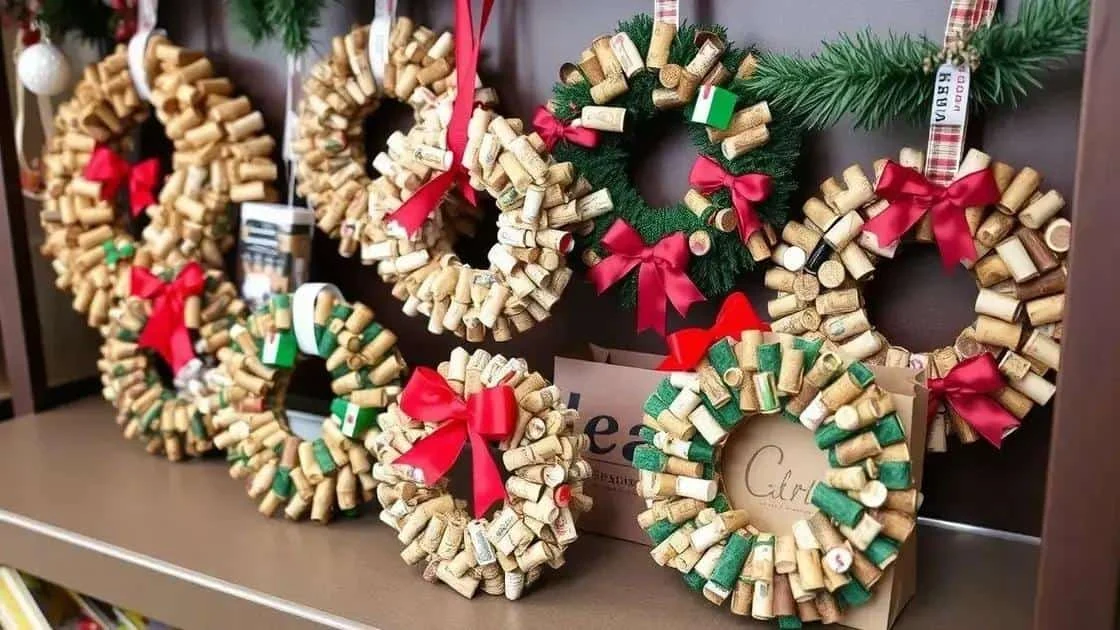
These wreath ideas using existing materials can provide different textures and styles. Choose according to safety and durability as well as appearance, and do not buy disposable items merely to create a reuse project.
Cork wreath
Arrange clean, dry corks on a firm ring and secure them with a suitable adhesive. An adult should handle hot glue if used. Corks are small parts, so keep them away from young children; painting or gluing them may affect disposal options.
Newspaper wreath
Fold or roll newspaper strips into simple flowers or loops, then attach them to a lightweight base. Keep the paper wreath indoors and away from heat, moisture and open flames. The newspaper can be reused, although added glue and coatings may affect recycling.
A wreath using intact old CDs
If using unwanted CDs, keep them intact and secure them to a suitable backing; do not cut or break them into sharp pieces. Check edges and weight before hanging. A cardboard or paper alternative may be simpler, especially for a family project, and glitter is not necessary.
Cardboard shape wreath
Cut stars or tree shapes from clean cardboard and arrange them on a ring. An adult should cut thick card. Colour with suitable pens or paint according to product instructions, avoiding spray products in children’s activities or poorly ventilated areas.
A wreath using suitable shopping bags
Fabric or paper bags that are no longer useful can provide material for a wreath. Prefer durable fabric or paper strips to loose plastic strips that can shed or become entangled. Keep loose materials away from children, pets and flames.
Decorating a wreath on a budget
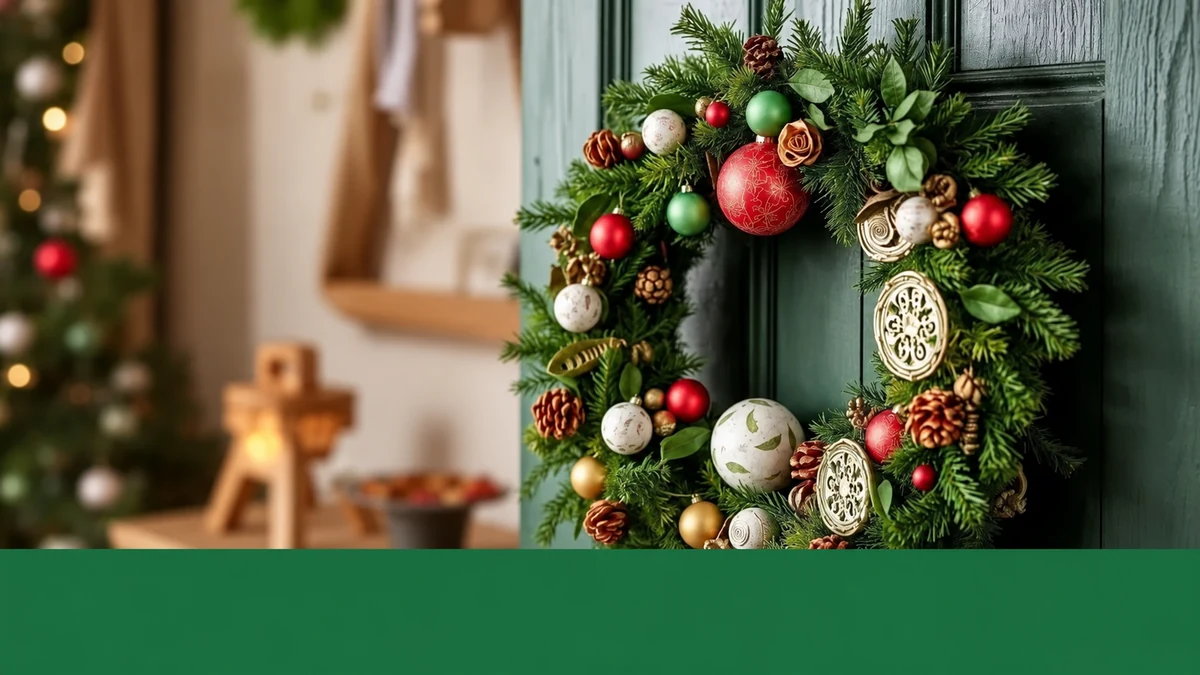
Start with a small design and the supplies you already have. Reuse can reduce spending, but adhesives, tools or extra decoration may still add cost. Check the full material list before deciding a project is inexpensive.
Use existing ornaments
Suitable ribbons or buttons and lightweight ornaments can add detail. Check their condition and keep loose buttons out of young children’s reach. Use drawn or stitched details if small detachable pieces would be inappropriate.
Choose natural materials responsibly
Suitable dry leaves or branches can add texture, but do not assume you may collect them in every park. Use materials from your own garden or collect only with permission, avoiding protected plants and disturbance to habitats. Inspect for dirt, insects or mould before use.
Colour and craft details
Use suitable paint you already own where possible, checking its label and condition. Protect surfaces and let painted pieces dry fully. Homemade plant colours may fade or spoil, and a low price alone does not establish that a paint suits the intended project.
Use tutorials thoughtfully
Look for a tutorial with a clear material list, realistic steps and secure fixing instructions. Check whether it is suitable for children or adults and whether it involves sharp tools, heat or outdoor exposure; an appealing photograph is not a safety check.
Swap useful decorations
An optional swap with friends or family can give unused items a new home. Exchange only pieces in good condition and avoid acquiring more than you need. A swap can be simple without making anyone feel obliged to provide something.
Wreath styles to explore

Different wreath styles can guide your colour and material choices. These are visual ideas rather than strict cultural categories or complete construction plans; use suitable fixings for whichever style you choose.
Rustic wreath
Try suitable natural materials, such as a prepared branch base or pinecones, with reused fabric ribbon. Check weight and sharp edges, and keep dried materials away from heat and flames.
Simple modern wreath
A reusable ring with a few suitable artificial flowers can create a restrained design. Cover sharp wire ends and secure each piece. Artificial materials can be reused for years, but are not automatically recyclable or lower-impact than every alternative.
Traditional Christmas colours
Combine red ribbon, lightweight baubles and optional gold-coloured details for a familiar Christmas palette. Reuse existing ornaments where suitable and keep the design balanced and securely attached.
Nordic-inspired wreath
For a Nordic-inspired appearance, try neutral colours with suitable wool or linen scraps and a few wooden shapes. This is a style suggestion rather than a description of how every Nordic household decorates.
Tropical-inspired wreath
Use suitable tropical-style foliage or reused colourful floral pieces for a different palette. Real plants need suitability checks for the location, children and pets; the design need not involve buying imported foliage solely for its appearance.
Thinking about reuse in Christmas decoration
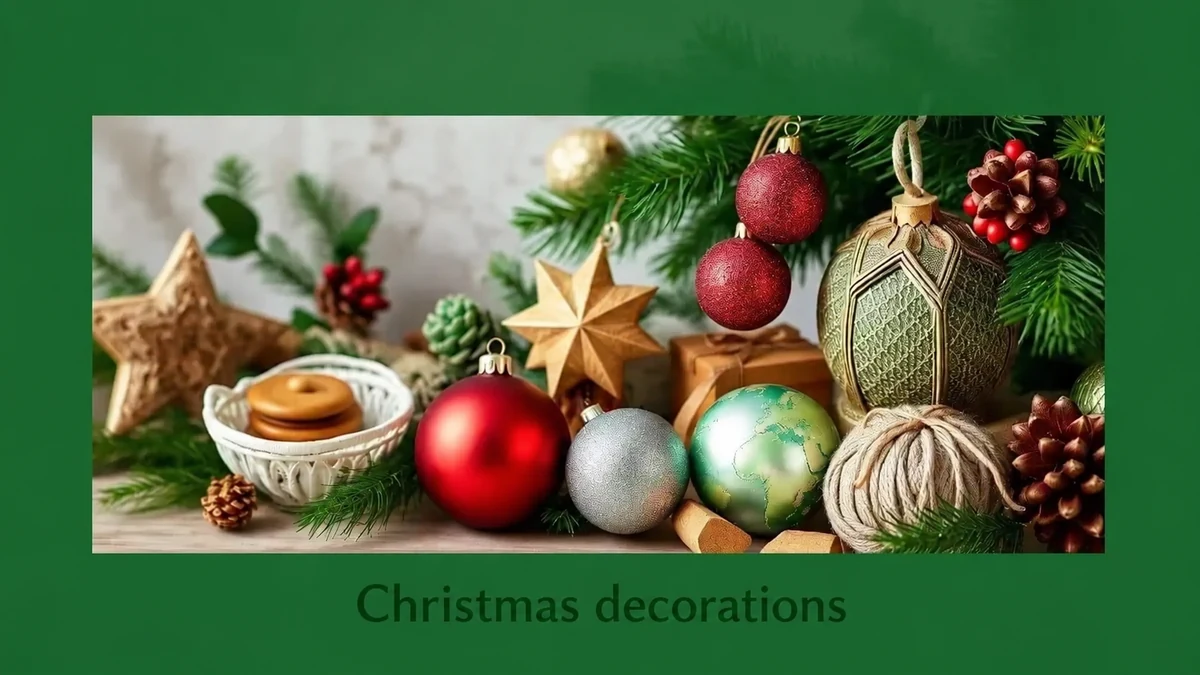
Reuse in Christmas decoration can help reduce unnecessary purchases. Consider how materials are sourced, how long the wreath will last and whether it can be repaired or dismantled, rather than promising a particular environmental benefit from its appearance.
Reducing unnecessary waste
Keep suitable decorations for several years and repair them where practical. Using an item repeatedly can avoid replacing it each Christmas. Mixed materials may be difficult to recycle, so plan the design with reuse and eventual separation in mind.
Understanding natural materials
Natural materials can add texture, but collecting, treating and transporting them also matters. Plain plant material may be compostable where accepted; paint, glue, wire or glitter can change that. Remove non-compostable components rather than composting a mixed wreath whole.
Supporting local makers
Buying suitable local crafts can support a maker’s work if it fits your budget. Ask about materials and construction rather than assuming every handmade or local item uses the same production practices.
Buying only what you will use
Choose items that serve a purpose and can be kept in good condition. Look for specific, credible information about materials and durability rather than relying on vague green claims. You may not need a new purchase at all.
Talking about material choices
A craft activity can prompt a simple conversation about reuse, repair and waste. Explain the trade-offs honestly and let children join age-appropriate decisions, without promising that one decoration solves wider environmental problems.
Finding inspiration and tutorials online

When looking for inspiration and tutorials online, use visual examples as a starting point and check the actual method. The resource categories below are ideas for searching, not a guarantee that every result is current, safe or complete.
Visual social platforms
Platforms such as Instagram or Pinterest may offer visual inspiration. Search for terms such as ‘reused-material Christmas wreath’ or ‘DIY Christmas wreath’, then look for full instructions rather than copying a photograph without knowing how it is supported.
Video tutorials
On YouTube or another video platform, search for a wreath project matching your materials and skill level. Check the tool list, safety steps and final hanging method; pause or choose a different project if essential details are missing.
Craft blogs
Look for craft blogs with clear material lists and complete step-by-step instructions. Photographs of each stage and a clear explanation of the hanging method make a tutorial easier to follow.
Online craft communities
Online craft groups or forums can offer ideas and practical experiences. Treat advice as suggestions to assess, protect personal information when sharing photographs and do not assume a popular technique is safe for children.
Step-by-step project websites
Look for DIY project websites with complete methods and material lists, alongside clear photographs of fixings. Check the date and suitability of each project; this guide does not claim to have tested a particular site’s wreath instructions.
Making a wreath you can keep and reuse
A wreath made from suitable existing materials can be a personal decoration. Choose a secure construction and a practical size, with materials appropriate for its display location.
Use a clear tutorial when needed and adapt colours or details within the method’s limits. A simple ring with a few well-attached decorations may be more useful than a complicated design that is difficult to store.
Keep the finished wreath dry and protected when not in use, inspect it before rehanging and repair it where practical. Reuse and careful purchasing can reduce waste, but avoid blanket claims that every handmade wreath is sustainable.
Start with one manageable idea and the materials you already have. Check the fixings and display location before hanging your finished piece.
FAQ — Christmas wreaths with reused materials
Which materials could I use for a reused-material wreath?
Suitable cardboard, clean corks, fabric scraps and responsibly collected foliage are possibilities. Check hazards, weight and fixings; cutting plastic can create sharp edges and is not always the best choice.
Where can I find wreath inspiration?
Visual platforms, video tutorials and craft blogs can provide ideas. Choose a method with clear materials, tools and secure hanging instructions rather than relying only on a photograph.
Can I adapt a wreath to different decoration styles?
Yes. Rustic, simple modern, traditional, Nordic-inspired and tropical-inspired palettes are possibilities. Keep the construction and material choices suitable for the place where it will hang.
How can I reduce waste when decorating for Christmas?
Use suitable items you already own, repair decorations and keep them for future years. Consider materials and disposal, and avoid buying extra products solely to create a reuse project.
Why think about the materials in a decoration?
Materials and fixings affect durability, repair and disposal. Reuse can reduce new purchases, but natural, recycled or handmade labels alone do not establish the impact of a finished wreath.
Are reused-material wreaths always easy to make?
Difficulty depends on the design, tools and materials. A lightweight cardboard ring can be a manageable starting point, while wire, sharp packaging or heavy ornaments need extra care and adult handling.