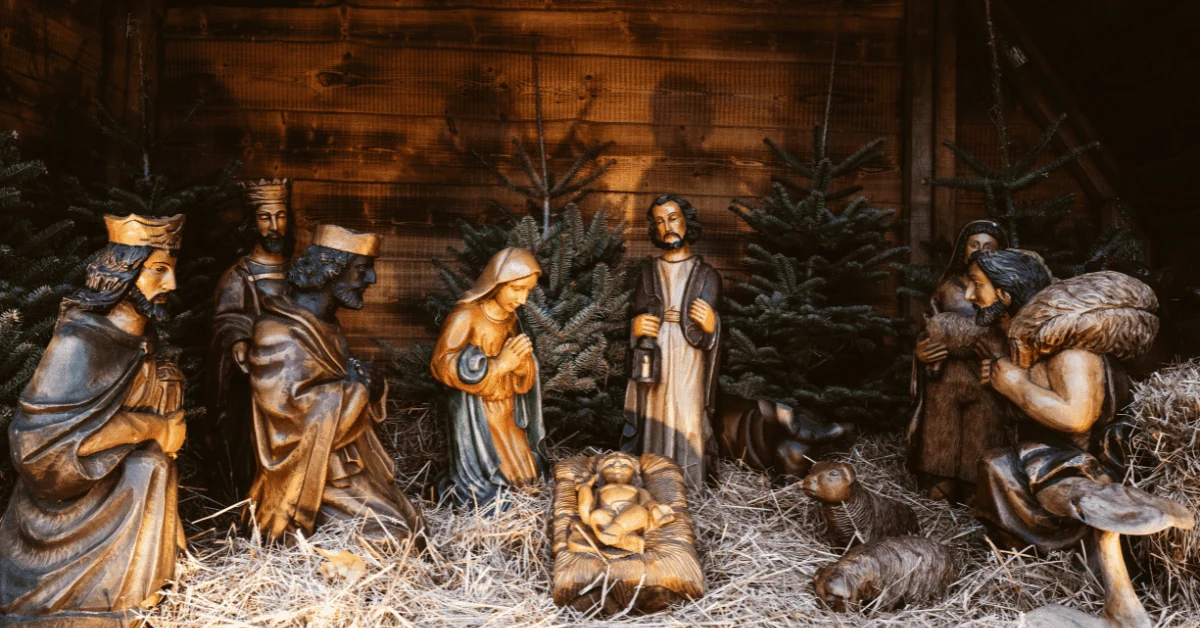
A Christmas Nativity scene is a familiar decoration in many Christian homes and churches. It may be a small collection of figures, a handmade display or an elaborate public installation.
This guide explores its meaning and history, including the custom of arranging a crib beside the Christmas tree.
What Is a Christmas Nativity Scene?
A Nativity scene represents the birth of Jesus, usually through figures of the infant with Mary and Joseph. Other characters reflect Gospel accounts and traditions that developed around them.
Luke’s Gospel places the birth in Bethlehem and describes Jesus being laid in a manger. The familiar stable, hay and animals belong to the way artists and families have pictured that setting over time.
What Does the Nativity Scene Mean?
Many displays include the Magi following the Star of Bethlehem and bringing gifts. This combines details from Matthew with the shepherds and manger in Luke, rather than showing a single scene described identically in both Gospels.
The English word crib can mean the manger as well as the whole display. Portuguese presépio comes from a Latin word for a manger or enclosure. The tradition should not be explained through an unsupported claim that Pope Liberius built a chapel on Jesus’s birthplace.
Mary, Joseph and the infant are central to the display. A donkey may also appear, but the familiar story of Mary riding one to Bethlehem is not stated in Luke’s account of the journey.
St Francis of Assisi’s Christmas celebration at Greccio in 1223 is a landmark in the tradition of presenting the Nativity. It helped bring the story vividly before a community; Christian images of Jesus’s birth existed before that occasion.
For Christians, the scene offers a focus for reflection on humility, welcome and the vulnerability of a newborn child.
How Did the Nativity Scene Tradition Develop?
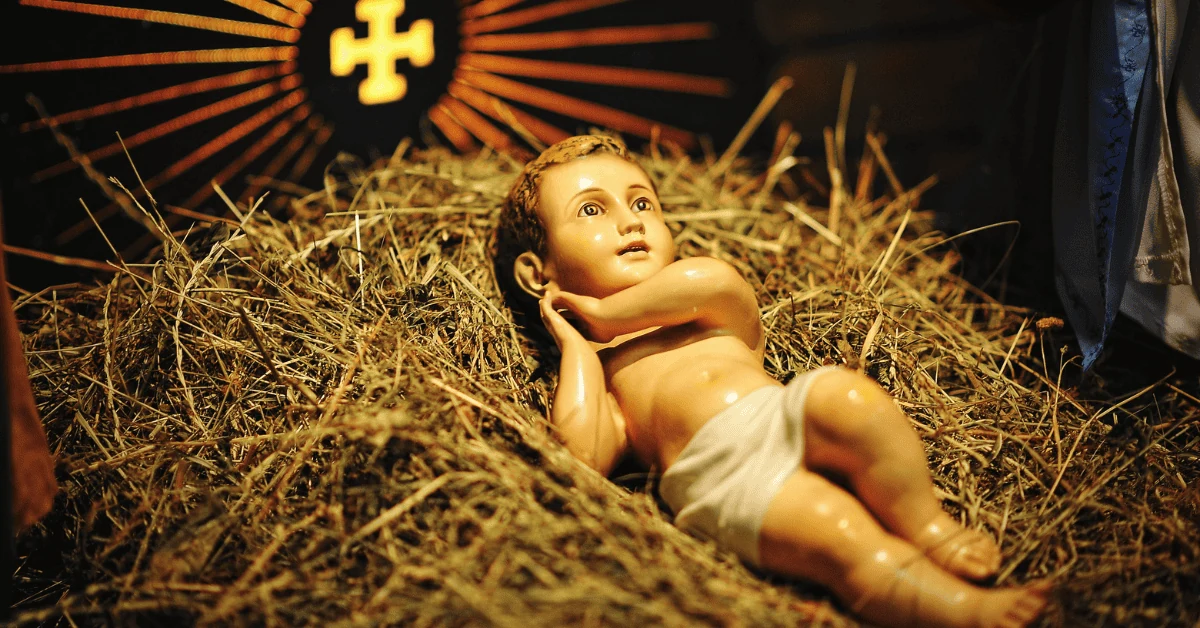
The custom has a strong association with Italy and spread through different Christian communities. Displays developed distinctive local styles rather than following one unchanging design.
Figures may be carved in wood, modelled in clay or made from other materials. Some settings use a cave or stable, while others place the story in a landscape familiar to the maker.
Brazilian Nativity displays also form part of the country’s Christian heritage. Today they can be found in homes, churches and public spaces, with materials and arrangements varying between communities.
Who Appears in a Christmas Nativity Scene?
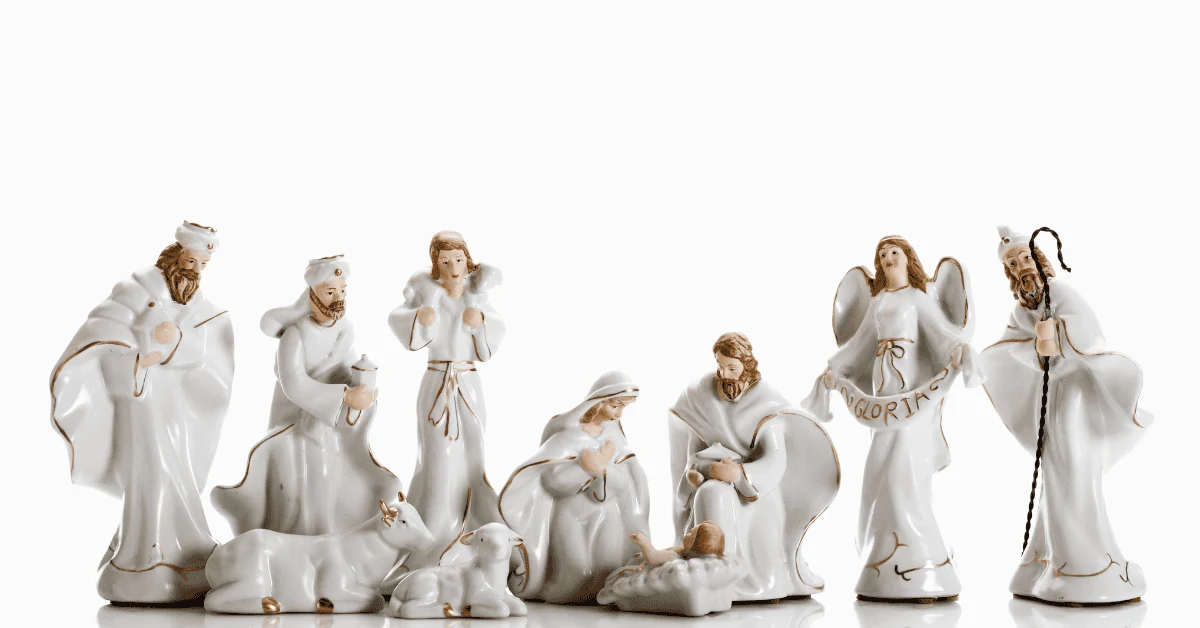
The figures can help tell the story, although not every scene includes all of them. Their meanings below reflect Christian interpretation and later artistic tradition.
- Mary: the mother of Jesus, often shown close to the child. In Christian devotion she is associated with faith, care and her response to God’s call.
- Joseph: Mary’s husband and Jesus’s earthly guardian. Christian tradition portrays him as a caring, responsible protector, rather than Jesus’s biological father.
- Jesus: the infant at the centre of the scene, whom Christians believe to be the Son of God.
- Shepherds: visitors in Luke’s account who hear the announcement of the birth. They are distinct from the Magi described in Matthew.
- The Magi: visitors bearing gold, frankincense and myrrh. Their familiar depiction as three named kings comes from later tradition, not an explicit list in Matthew.
- The Star of Bethlehem: a sign associated with the Magi’s journey in Matthew. On a display it often represents guidance and hope.
- Angels: messengers in the biblical story, represented in Nativity scenes as announcing good news.
- Animals: familiar additions to the manger setting. Their presence in a display should not be mistaken for a detailed list of animals in Luke’s account.
- The donkey: a traditional companion in Nativity art. It evokes a humble rural setting, though the Gospel does not specify that Mary rode one to Bethlehem.
Some households pray beside the crib, perhaps using the Lord’s Prayer or a personal prayer of thanksgiving. There is no single compulsory prayer for a family Nativity display.
Making a Nativity Scene Together
Arranging a crib can create time to discuss the Christmas story and its themes of care and hospitality. It need not be large or expensive to provide a meaningful focus.
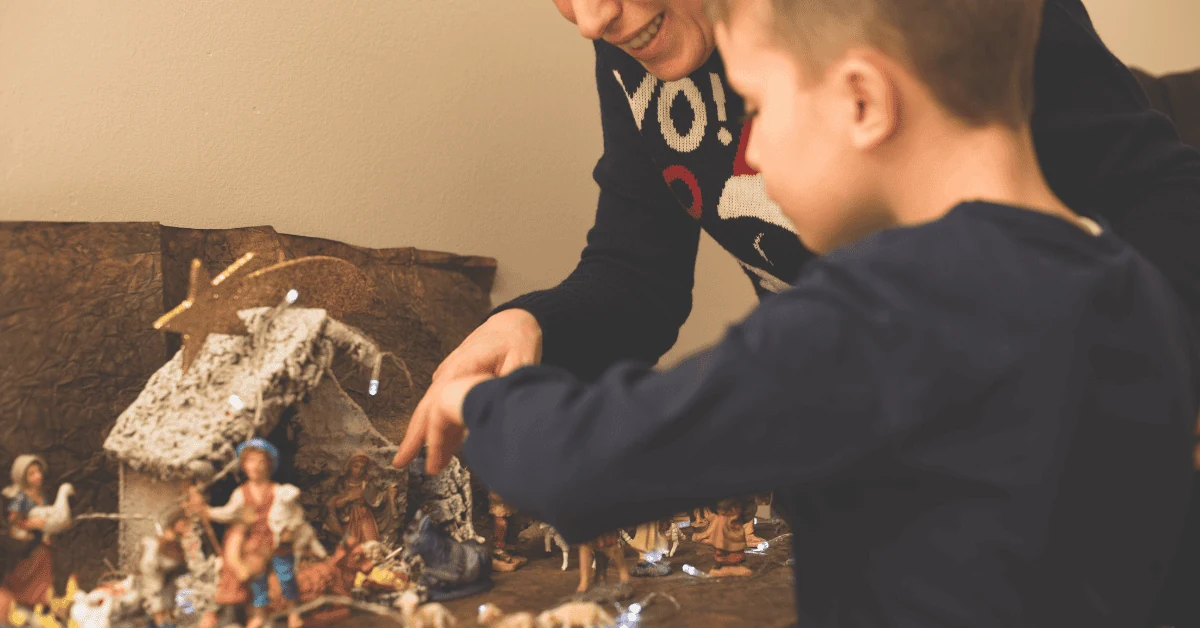
Children can help with suitable figures while an adult handles fragile pieces. Explain the tradition in an age-appropriate way and respect the different beliefs of guests and family members.
A Christmas Story Told Through Figures
Like the Star of Bethlehem, the Nativity scene carries both religious meaning and layers of family tradition. Recognising the difference between Gospel details and later customs makes the display easier to understand.
Share this introduction with anyone who enjoys learning about Christmas decorations and the stories behind them.
Tell I Love Christmas about a Nativity display you remember or make each year. If you share photographs, obtain the permission of anyone shown and avoid revealing children’s personal details.
More Christmas Stories and Traditions
Continue exploring the season with these related articles:
The Star of Bethlehem: Meaning and Christmas Traditions
Silent Night: The History and Meaning of the Christmas Carol
Santa Claus: History, Stories and Christmas Traditions
Explore Our Christmas Recipes
Grandma-Style Christmas Biscuits with Colourful Icing
Brazilian Bacon and Calabresa Farofa
Brazilian Sardine Traybake with Blender Batter
Brazilian Rabanadas with Condensed Milk and Cinnamon