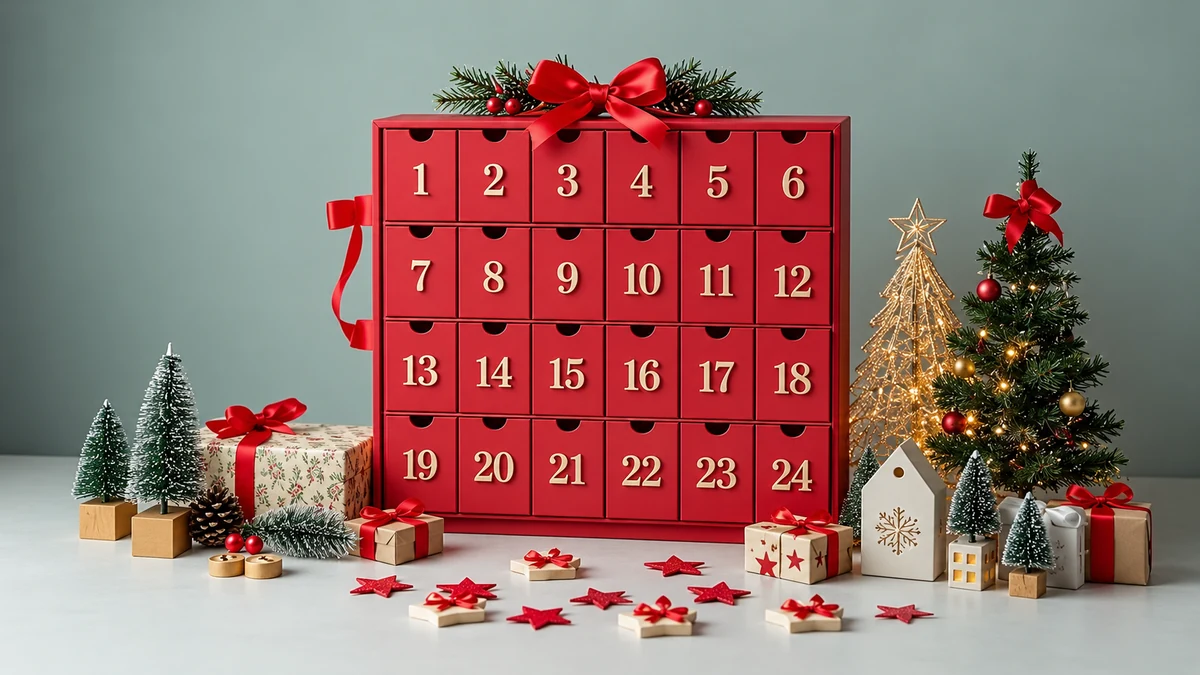
An Advent calendar counts down towards Christmas through pictures, messages, activities or small gifts. Most familiar versions run from 1 to 24 December, while the church season of Advent begins on a Sunday and varies in length.
The history of Advent calendars connects a familiar December countdown with older practices of preparing for Christmas. Discover how calendars developed, how they differ from the religious season and how to make a simple version suited to your household.
The origins of Advent calendars
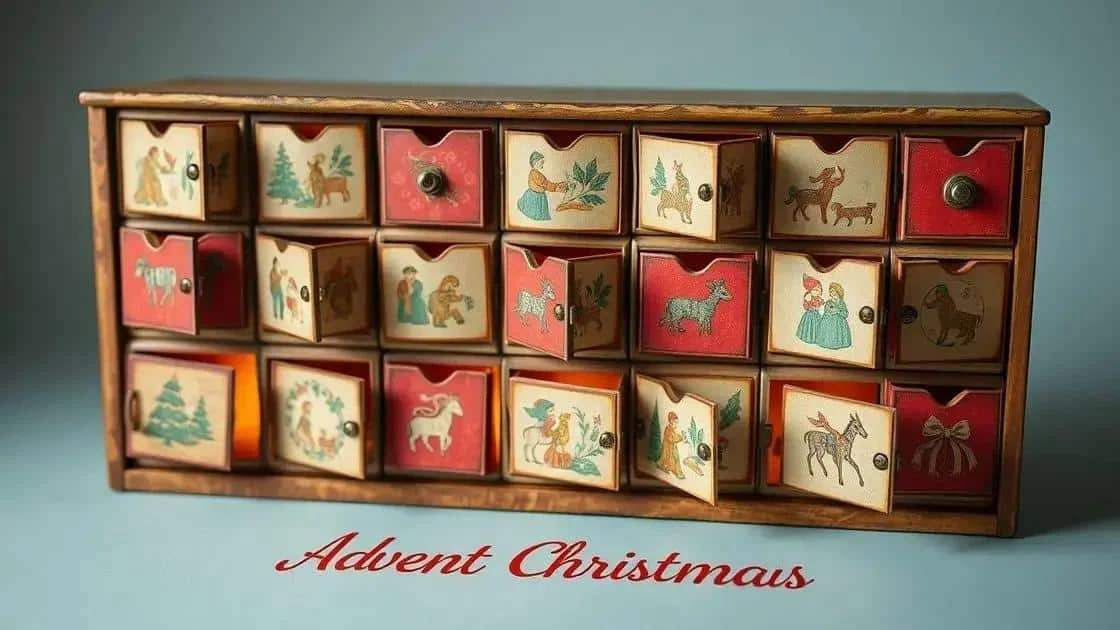
The origins of Advent calendars are associated with German Christian households marking the approach to Christmas in the nineteenth century. Practices included daily marks or pictures; printed calendars became more widespread around the turn of the twentieth century. Not all early versions had doors or contained presents.
A changing tradition
Calendars later developed many forms, including versions with treats and small gifts. Some households use a daily message, a kind action or a moment of reflection instead. There is no requirement to buy something for every day.
Advent calendars today
Today, calendars range from paper pictures and chocolate boxes to reusable fabric pockets and digital versions. Their shared idea is a countdown towards Christmas. A personalised calendar can contain activities or messages that fit the family’s time and budget.
Making a creative Advent calendar
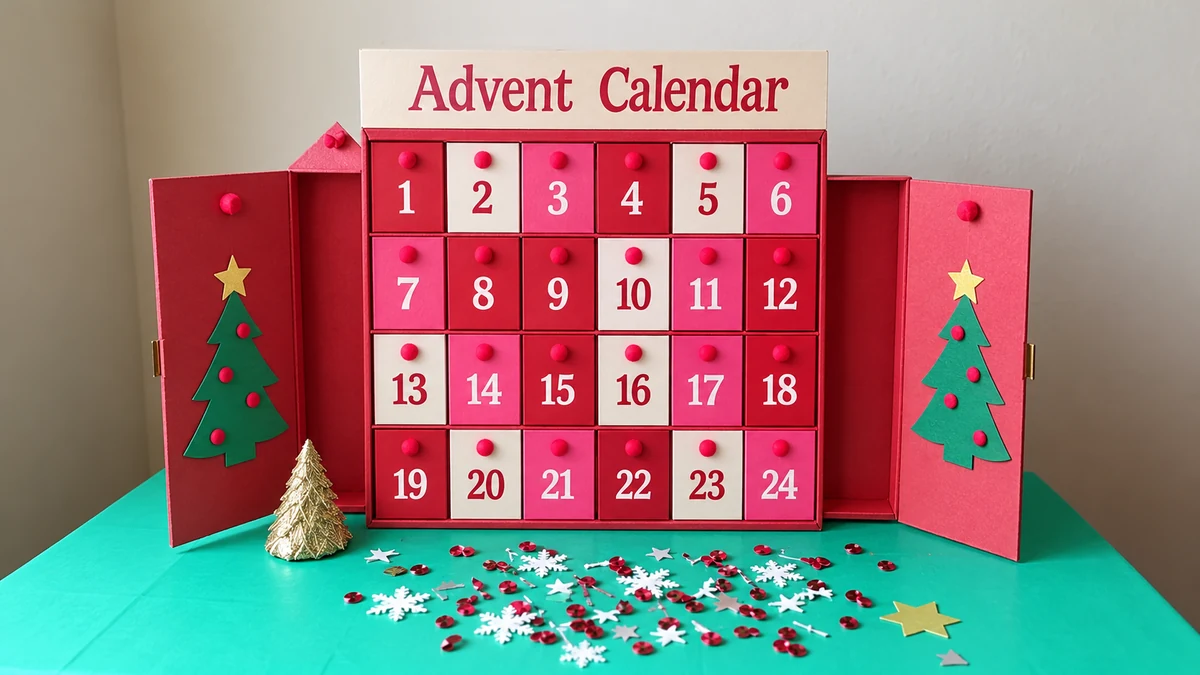
A creative Advent calendar can turn the countdown into a personal routine. Keep the design manageable: a set of numbered envelopes is enough, and it need not be a daily craft challenge.
Choose a theme
Choose a theme your household enjoys, such as reindeer, angels, Christmas films or favourite characters. The theme can guide colours and pictures without requiring new purchases.
Gather materials
Collect paper, age-appropriate scissors, suitable glue and small boxes or envelopes. Reuse materials you already have where practical. Fabric bags can be useful; if using glass jars, keep them stable and beyond young children’s reach.
Plan personal surprises
Fill the days with encouraging notes, occasional sweets or family activities. Check allergies and age suitability. An activity can be as small as reading together, rather than an obligation to arrange something elaborate.
Decorate the calendar
Use ribbons, stickers or drawings that suit the theme. Keep loose cords, small parts and button batteries away from young children. A paper calendar does not need lights; if adding them, follow the product’s instructions and keep electrical fittings clear.
Involve the household
Invite family members to help decorate or suggest activities. Some may prefer to keep surprises secret, while others enjoy planning them together. Choose a level of participation that feels enjoyable rather than compulsory.
Ideas for each day of the countdown
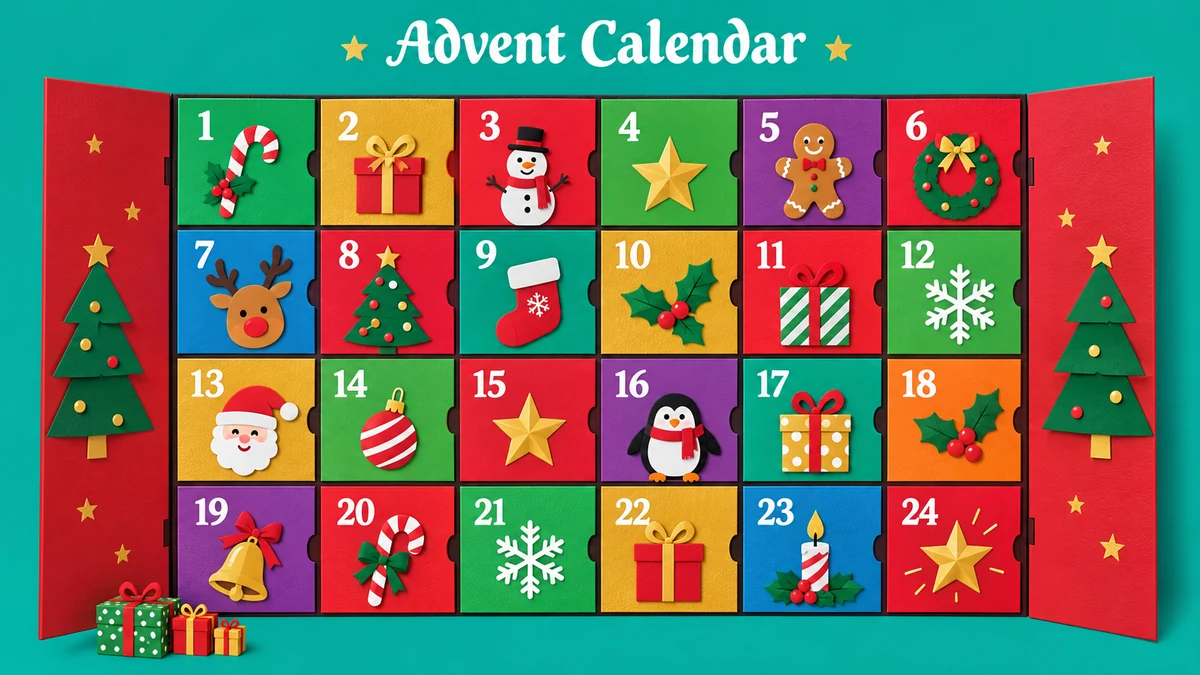
These ideas for calendar contents can be repeated or adapted. Mix quieter days with activities that require more preparation, and leave room for plans to change.
1. Kind messages
Add a short note of thanks or affection. Mention a particular moment or something you appreciate about the person. A simple message can make the day feel personal.
2. Time together
Suggest a film night or a board game the group enjoys. Check that the activity suits everyone’s schedule, and offer a shorter or quieter option if needed.
3. Christmas recipes
Choose a complete recipe for biscuits, hot chocolate or another festive treat. Adults should manage heat and sharp tools, and ingredients need to suit allergies and dietary requirements.
4. Christmas stories
Include a short story or a note suggesting a book to read together. Distinguish imaginative tales from religious or historical accounts, and choose material suited to the household’s beliefs and the children’s ages.
5. Acts of kindness
Suggest a useful act, such as helping a neighbour or contributing to a local collection. Ask what is needed first, make the activity optional and protect the privacy of anyone receiving help.
6. Festive crafts
Plan a simple ornament or card-making session. Prepare suitable tools and materials, and avoid expecting a new project every day. An unfinished craft can continue on another date.
The historical and religious meaning of Advent

The historical and religious meaning of Advent is distinct from the design of a modern calendar. Advent comes from the Latin adventus, meaning coming or arrival. In Christian worship, it is a season of preparation for the birth of Jesus Christ and anticipation of his coming.
The development of Advent
Advent observances developed in the early Church over time and differed between regions. In many Western churches today, the season includes the four Sundays before Christmas. Its start date therefore changes from year to year; it does not always begin on 1 December.
Religious observance
For Christians who observe Advent, prayer, reflection and preparation can be central. Different denominations and households follow different practices. A commercial countdown calendar may be used without any religious observance, so the two should not be treated as identical.
Rituals and traditions
Some churches and families light a candle on each Advent Sunday. Colours, readings and interpretations vary; hope, peace, joy and love are familiar themes in some traditions, not universal rules. At home, keep real flames away from wreath materials and never leave them unattended; LED candles offer an alternative.
Making the tradition work for your family
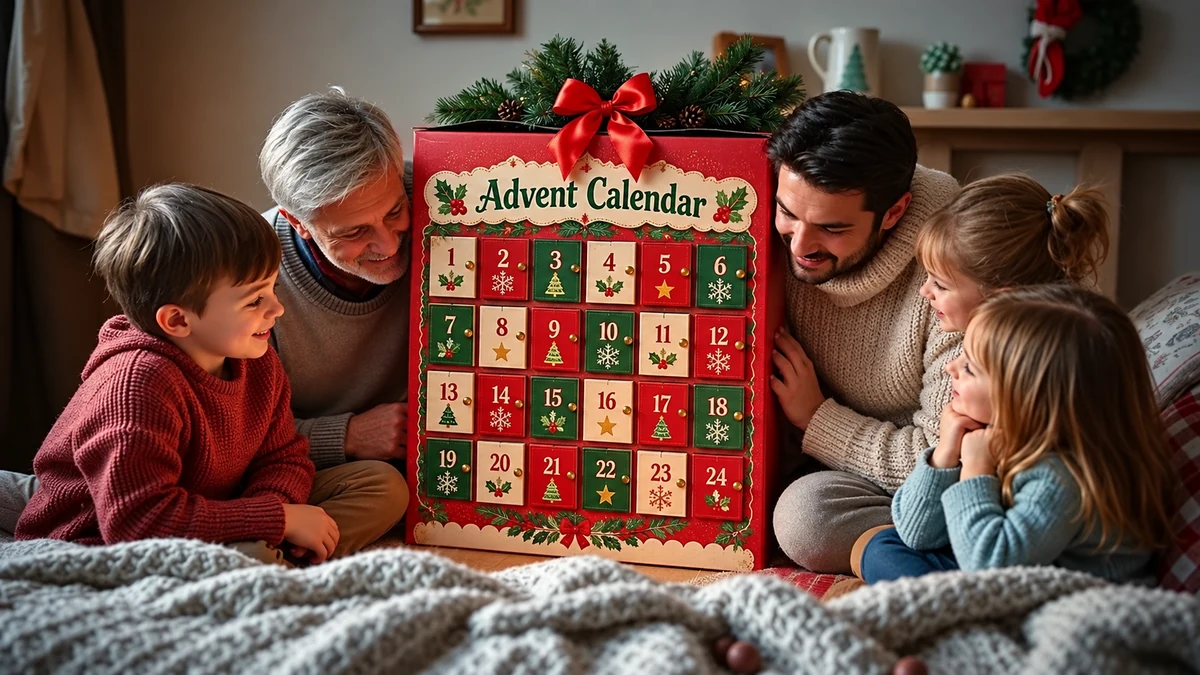
A family Advent tradition can be simple and flexible. Choose practices that fit your beliefs, available time and the people taking part.
1. Make a personal calendar
Invite everyone to suggest a picture, message or activity. A familiar 24-day design can run from 1 to 24 December; a calendar following the church season needs dates chosen for that year.
2. Choose manageable times together
Set aside a few minutes on suitable days for a story, a conversation or shared preparation. A weekly routine may work better than a daily one. If lighting candles, use appropriate holders and supervision.
3. Include practical kindness
Choose useful, achievable actions such as helping someone with a task or supporting a reputable community organisation. There is no need to spend money each time.
4. Share Christmas memories
Tell a family story or look at an old photograph. Invite different generations to contribute, and ask permission before recording or sharing personal memories more widely.
5. Make something together
Try a simple tree ornament or a handmade card. Adapt the project to ages and abilities, and focus on the shared time rather than a perfect result.
Ideas for a lower-waste Advent calendar
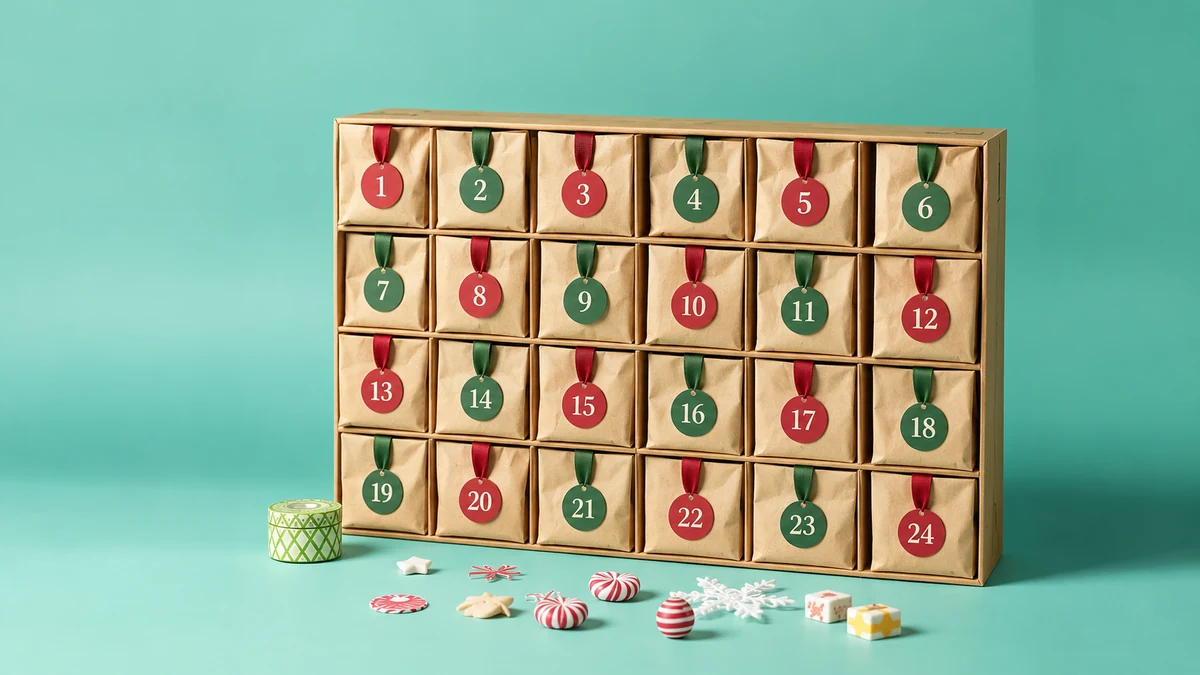
A lower-waste Advent calendar starts with avoiding unnecessary purchases. Reusing a durable calendar and choosing messages or activities can be practical ways to reduce the materials involved.
1. Reuse suitable materials
Use cardboard boxes, clean paper tubes, envelopes or fabric bags you already own. A sturdy design can be kept for another year. Glass containers need safe placement and may not suit a child’s calendar.
2. Choose small gifts carefully
If adding presents, choose items likely to be used and valued. Seeds or a small plant may suit a keen gardener, but labels such as natural or eco-friendly do not automatically prove a product has a lower environmental impact. Check suitability and avoid unnecessary packaging.
3. Include experiences and useful activities
A walk, a visit to a local event or learning how to sort household recycling can replace a physical gift. Plan for weather and access needs, and avoid collecting wildlife or plants from protected places.
4. Make a reusable design
Making your own calendar can be enjoyable when it uses suitable materials and fits your skills. It is not automatically lower-impact than a purchased calendar; durability and how often it is reused also matter.
5. Share ideas with the community
A group could share activity suggestions or create a joint countdown display. Keep costs and participation optional, and do not publish names or photographs without permission.
A personal way to mark Advent
An Advent calendar can create a gentle routine of anticipation, whether it contains pictures, thoughtful messages or a few activities. The design can reflect religious meaning, family interests or both.
Keep the calendar manageable and allow plans to change. A short conversation or shared story can be more valuable than a costly daily surprise.
Understanding the difference between Advent and a December countdown gives the tradition more context. Reusing a simple design can also make it easier to enjoy in future years.
FAQ: Advent calendars
What is an Advent calendar?
It is a countdown towards Christmas, often running from 1 to 24 December. The religious season of Advent begins on a Sunday and varies in length, so the dates are not always identical.
How can I make a lower-waste Advent calendar?
Reuse a durable calendar or suitable materials you already have. Choose messages and activities instead of buying a new object for every day.
What can I put in an Advent calendar?
Ideas include kind notes, stories, simple crafts, shared activities or occasional treats. Check food allergies and avoid small parts unsuitable for young children.
How can an Advent calendar encourage time together?
It can prompt a short story, conversation or activity. Keep participation flexible so that the routine suits the household rather than adding pressure.
Where did Advent calendars develop?
They are associated with German household countdown practices in the nineteenth century, with printed versions becoming more widespread around the turn of the twentieth century.
Does an Advent calendar have to be religious?
No. Some calendars reflect Christian preparation for Christmas, while others are secular countdowns. The religious season and the commercial calendar have related but distinct roles.