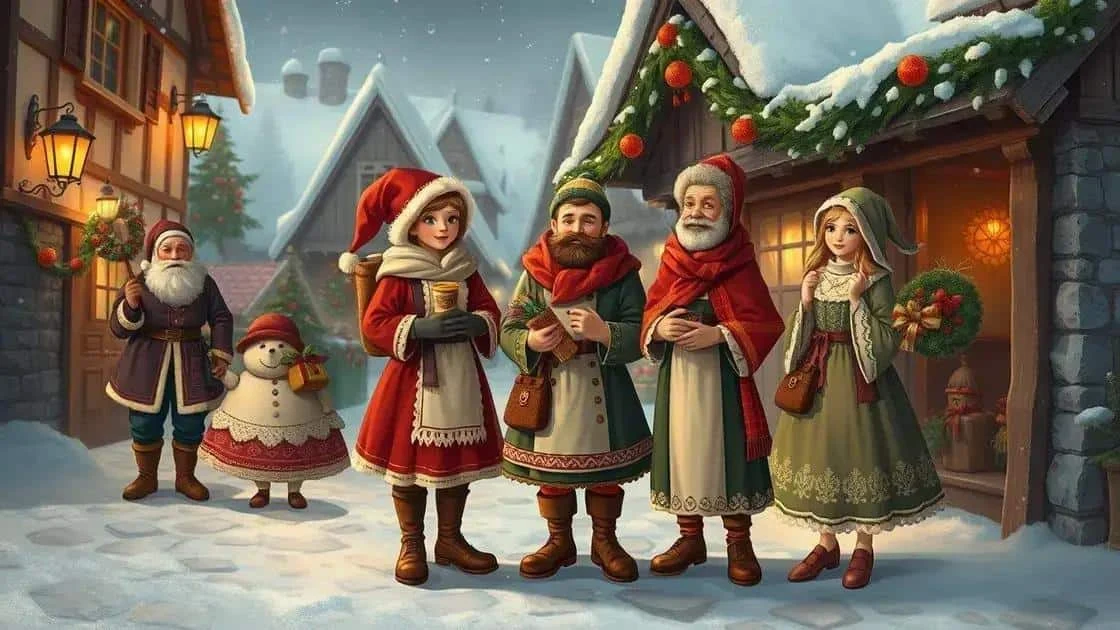
European Christmas and winter folklore includes Krampus, Befana, the Three Kings and Ded Moroz, alongside Father Christmas and Santa Claus. Their stories, dates and roles differ; some belong to Epiphany or New Year rather than Christmas Day.
European Christmas characters offer more variety than one red-coated gift-bringer. Regional stories mix religious accounts, folklore and later invention. Discovering those differences helps us enjoy the characters without assuming every country or family follows one tradition.
The origins of European Christmas characters
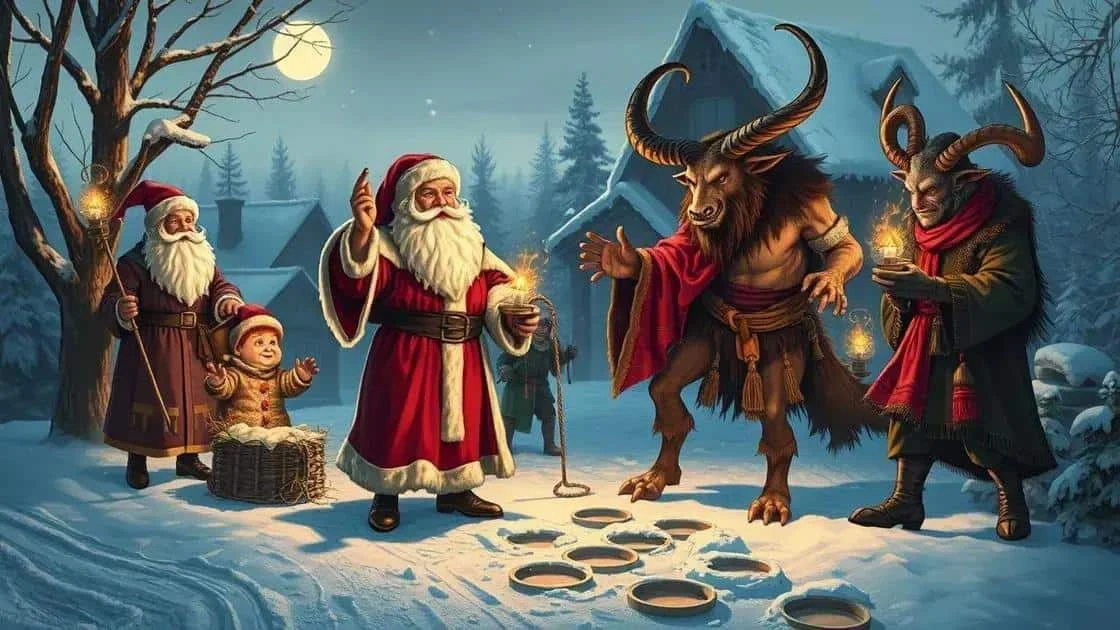
European Christmas characters have different histories. Santa Claus and Krampus should not simply be assigned one common pagan origin: traditions about saints, regional performances and modern illustrations all play distinct parts.
Santa Claus draws partly on stories of Saint Nicholas, traditionally a fourth-century bishop associated with generosity. British Father Christmas had an earlier role linked with festive hospitality before becoming closely connected with Santa.
Krampus is usually depicted as a horned, frightening figure, rather than defined as a winged demon. Alpine traditions associate him with Saint Nicholas around 5–6 December; costumed events continue in parts of Austria and Bavaria.
In Nordic traditions, the nisse or tomte is associated with homes and farms. These local figures later acquired Christmas roles in some places. They should not be replaced with an unsupported character called Jóláf or given one universal harvest-festival history.
In Britain, Dickens’s fictional Christmas spirits and festive fairy imagery belong to different literary and decorative settings. Victorian culture shaped some popular images without inventing every older tradition.
These differences make European folklore worth exploring in its local context. A character’s modern appearance does not necessarily reveal when or how its story began.
Gift-bringers and winter figures to know
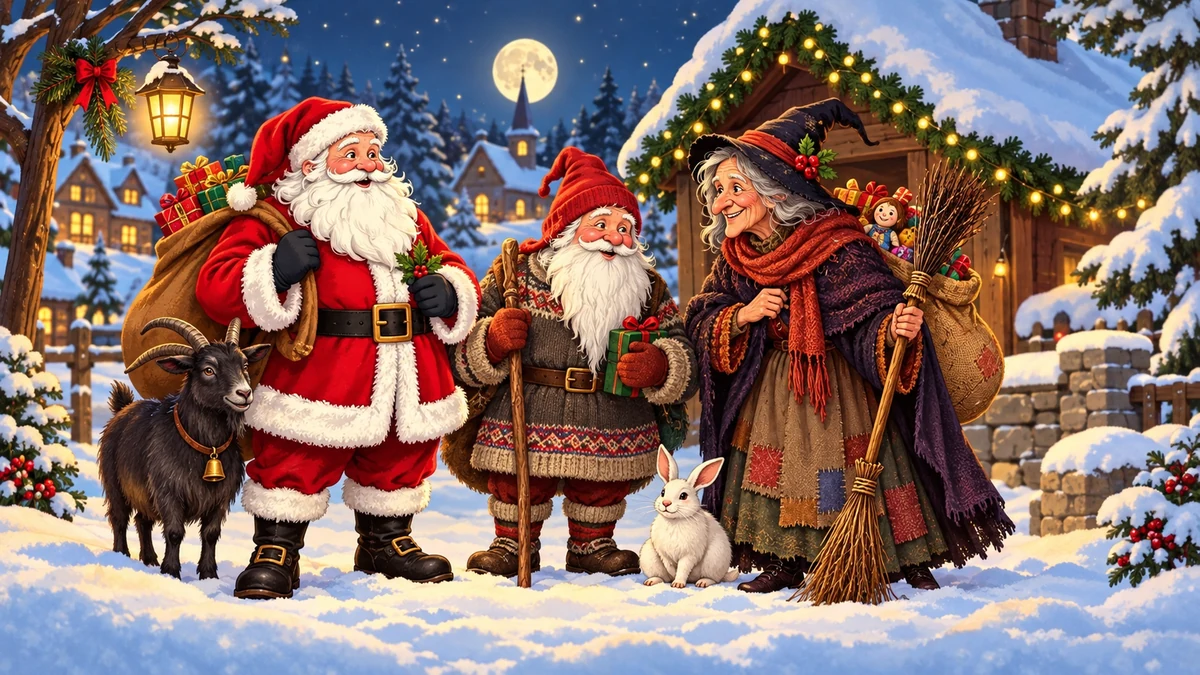
The following figures have distinct roles and dates. They are examples rather than a complete list of European traditions.
Father Christmas and Santa Claus: now closely associated, these figures developed through different influences. Literature, illustration and advertising helped familiarise the white beard and red suit, but no single advertisement invented the whole character.
Krampus: an Alpine folkloric figure often paired with Saint Nicholas. Stories and performances portray him as threatening, but that does not make frightening children a recommended way to teach behaviour.
Ded Moroz: often translated as Grandfather Frost, this Russian gift-bringer is particularly associated with New Year celebrations. He commonly appears with his granddaughter, Snegurochka, the Snow Maiden, rather than simply being a Russian version of Christmas Eve Santa.
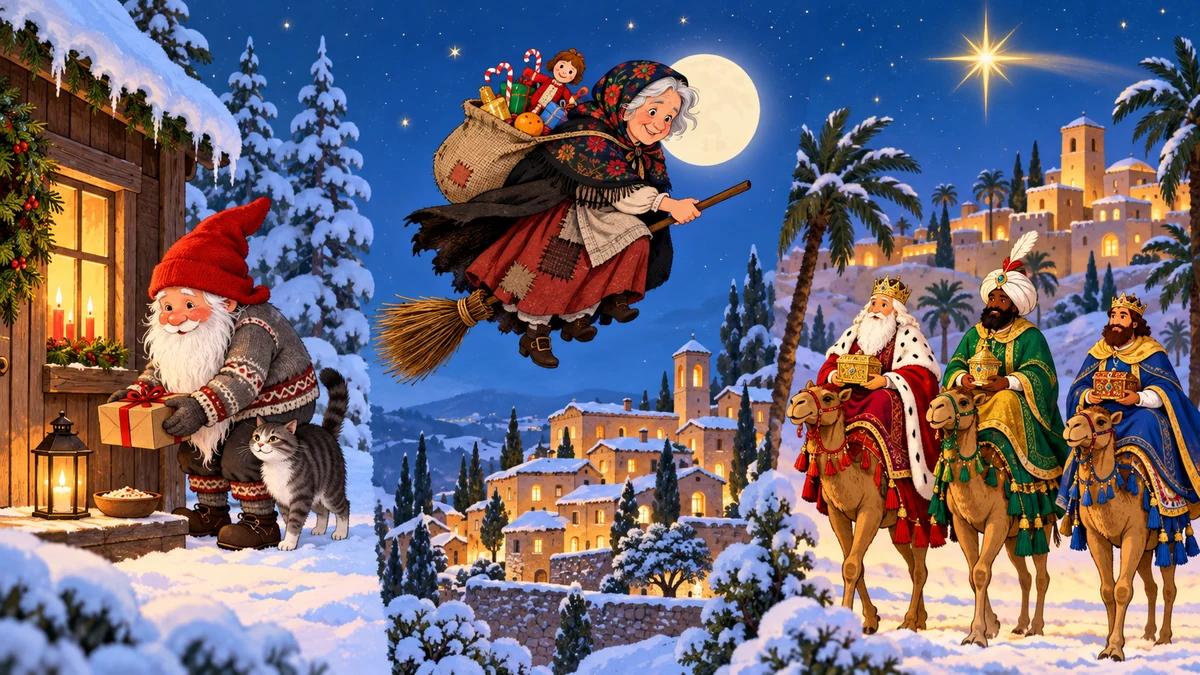
The Three Kings: in Spain and other places, Epiphany on 6 January is an important gift occasion. The tradition recalls the Magi’s visit to Jesus. Matthew’s Gospel names neither three visitors nor their later traditional names; those details developed in subsequent tradition.
Befana: this Italian folkloric gift-bringer is often pictured as an older woman with a broom, visiting on the night before Epiphany. Stockings may hold sweets and small gifts, with playful sugar coal in some versions.
These figures are not interchangeable names for Santa. Their differences reveal how celebrations extend across December, New Year and Epiphany.
Christmas customs in Europe and beyond
Christmas also has familiar regional customs outside Europe. The following comparisons describe examples, not practices followed by every person in a country.
Brazil: a Christmas Eve meal may include roast pork, farofa and rabanada. Some families exchange gifts around midnight; others choose different timings. December is summer, although decorations often borrow northern winter imagery.
Germany: Christmas markets offer crafts and seasonal food and drink. Decorated trees have strong links with German-speaking traditions. Real candles belong to their history, not safe modern advice for a tree at home.
Japan: Christmas has popular secular customs as well as religious meaning for Christians. KFC Christmas meals became associated with a campaign launched in 1974, not the 1980s. They are one commercial custom rather than everyone’s Christmas dinner.
Italy: Nativity scenes, or presepi, are important in many celebrations. Some families share a fish-based Vigilia meal on Christmas Eve, with menus varying by region and household.
Philippines: the star-shaped parol lantern is a distinctive Christmas decoration associated with the Star of Bethlehem. Designs, materials and participation vary across communities.
Such comparisons can encourage curiosity when we keep local differences visible. A custom’s popularity does not make it universal.
Christmas characters in family traditions
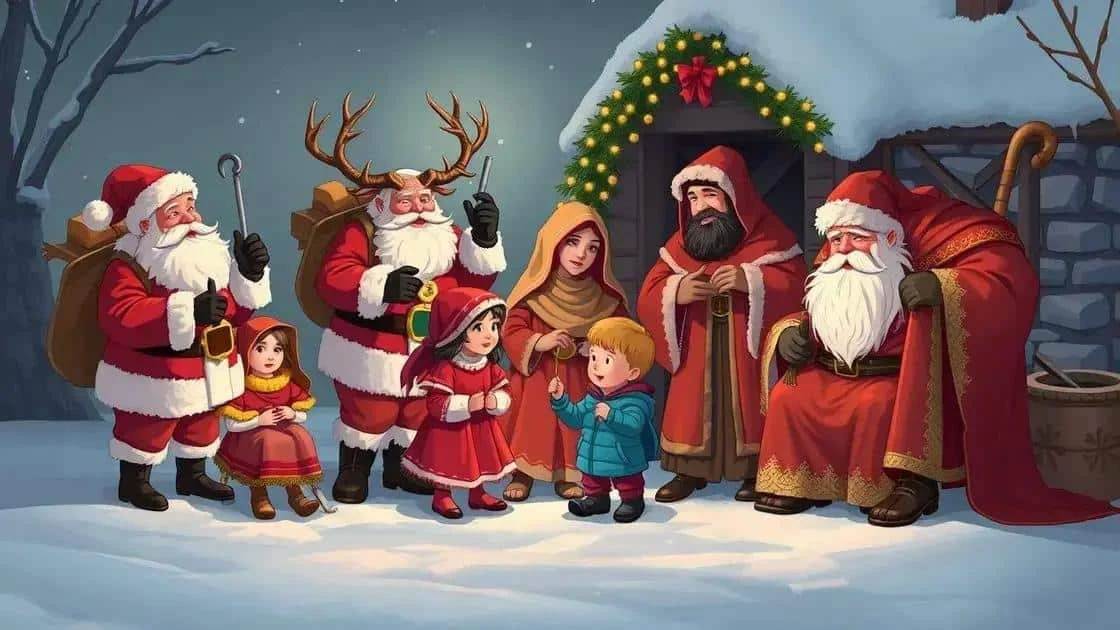
Christmas characters can inspire letters, stories and small rituals. Families decide how to explain them and whether they want to participate.
Father Christmas: a playful letter can include wishes or thanks. Avoid suggesting that a child’s character determines the value of presents, since finances and family choices differ.
Krampus: this figure can be discussed as folklore or a costumed performance. Preview an event’s tone and suitability; a frightening mask or threatening story may upset a child.
Befana: Italian families may tell stories about her Epiphany visit and prepare stockings. Customs vary; there is no need to invent a universal ritual involving food for a pet.
The Three Kings: Epiphany celebrations may include gifts and a roscón de Reyes in Spain, with related breads elsewhere. Their meanings and recipes differ. Check for hidden objects that could be a choking hazard.
Ded Moroz: New Year gatherings may include presents, performances, games and Snegurochka. The setting is not identical to a Christian Christmas service or family Christmas Eve.
A familiar character can become part of a family memory, but participation need not be compulsory. Make room for different beliefs and preferences.
How characters shape celebrations
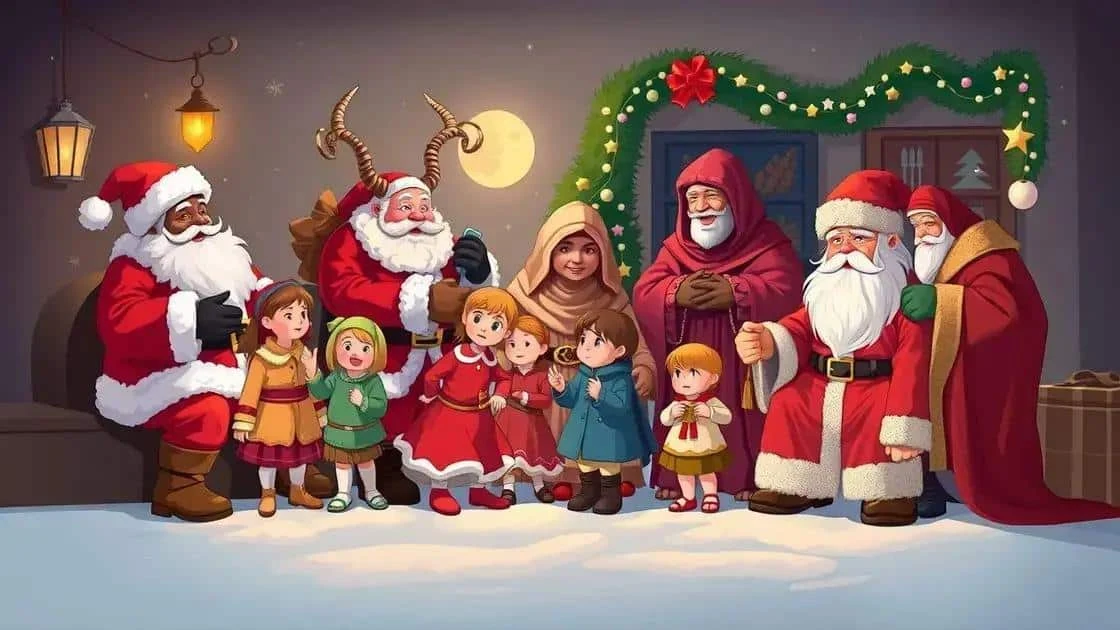
Christmas characters influence decorations, stories and the timing of gifts. They can carry meanings for a community without representing one universal essence of Christmas.
Father Christmas can invite imaginative play and a conversation about giving. Let letters remain a playful choice rather than a promise that every requested present will arrive.
Krampus illustrates the darker side of seasonal folklore. Understanding a historical story is different from endorsing threats or punishment as a parenting method.
Befana stories can prompt questions about generosity and welcome. Explain that regional versions differ and that she is a distinct Epiphany figure.
The Three Kings connect gift customs with Christian tradition. Distinguish the Gospel narrative from later names, costumes and local processions when discussing their history.
Ded Moroz shows how winter gift-bringing also belongs to New Year traditions. A shared seasonal theme does not make all these occasions the same holiday.
Stories change as families and communities retell them. Exploring a character’s particular context is more informative than assigning every figure the same lesson.
Christmas stories in popular culture
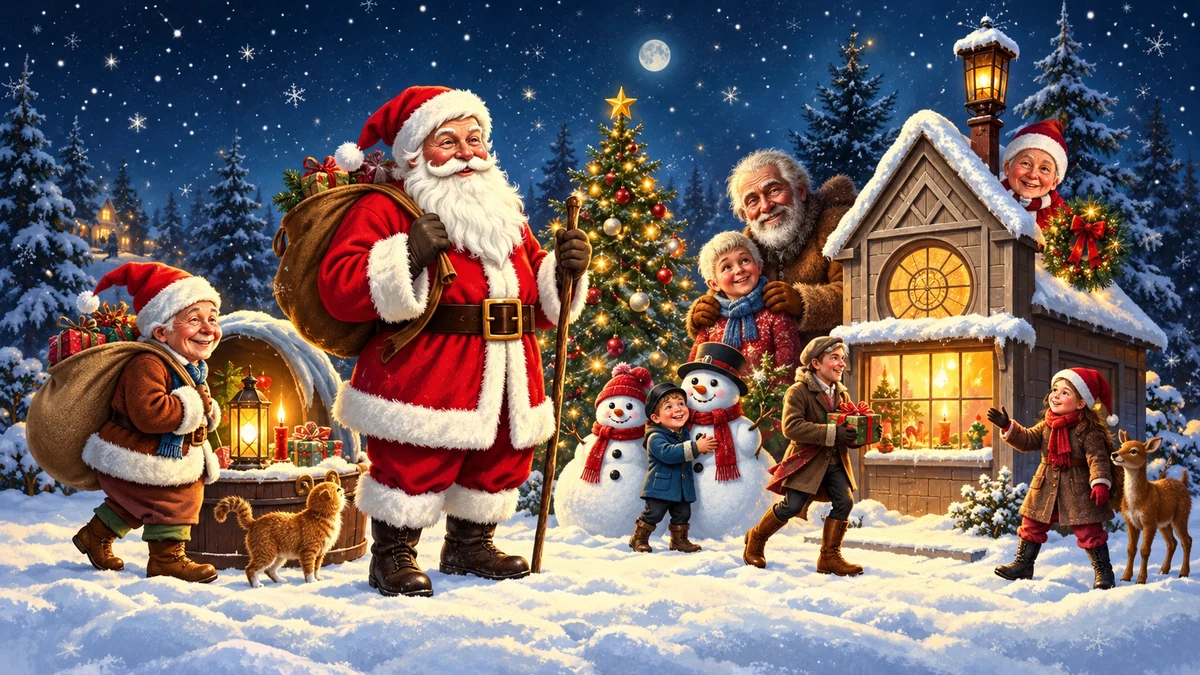
The development of Christmas stories reflects changing media and audiences. Older folklore, religious narratives and commercial entertainment continue to influence one another.
The birth of Jesus remains central to Christian Christmas. Stories involving Father Christmas and other gift-bringers developed alongside religious traditions rather than neatly replacing them in one historical sequence.
Nineteenth-century writers and illustrators helped shape popular images of Santa Claus. Dickens’s A Christmas Carol, published in 1843, also became influential through its themes of responsibility and change, not as the origin of Santa.
Twentieth-century books, films, songs and television added new seasonal stories. Dr. Seuss’s Grinch and the film Home Alone are modern fictional creations, rather than evidence of ancient European folklore.
Newer stories may explore belonging, inclusion or environmental concerns. These themes can broaden perspectives when handled through specific characters rather than general claims about every family’s experience.
Christmas stories keep changing through adaptation and retelling. Looking at who created a version and when can reveal as much as the character itself.
Exploring European Christmas folklore thoughtfully
European folklore includes many Christmas and winter characters. Their different histories and dates make them worth studying individually.
Father Christmas and Krampus can appear in the same season while belonging to different traditions and tones. Enjoying a legend need not mean endorsing every behaviour described in it.
Popular culture continues to change these characters. Clear distinctions between religious account, folklore, performance and modern fiction help readers follow those changes.
Ask about the local version, choose age-appropriate stories and allow people to celebrate differently. Curiosity works best alongside respect for that variety.
FAQ — European Christmas folklore and characters
Which winter gift-bringers and characters appear in Europe?
Examples include Santa Claus, Father Christmas, Krampus, Befana, the Three Kings and Ded Moroz. Their traditions differ, and some are associated with Epiphany or New Year.
How did Santa Claus become familiar?
Saint Nicholas traditions, literature, illustration and later advertising all contributed. British Father Christmas had a distinct earlier history before becoming closely linked with Santa.
Who is Krampus?
Krampus is a frightening Alpine folkloric figure often associated with Saint Nicholas around 5–6 December. Stories and costumed performances should not be treated as a reason to threaten children.
Who is Befana in Italian tradition?
Befana is a folkloric gift-bringer commonly pictured with a broom, visiting on the night before Epiphany. Stockings and sweets feature in some family customs.
How do Christmas customs vary between places?
Examples include Brazilian Christmas Eve meals, German Christmas markets and Spanish Epiphany gifts and roscón. Customs also vary within each country.
Why study Christmas stories in popular culture?
They show how traditions are adapted by writers, artists and audiences. Distinguishing older folklore from new fiction helps explain their changing meanings.
Sources and Further Reading
- English Heritage: the history of Father Christmas
- Italia: Befana traditions in Urbania
- Visit Norway: the Norwegian Santa
- Spain Tourism: January festivities
- Austria Tourism: winter traditions