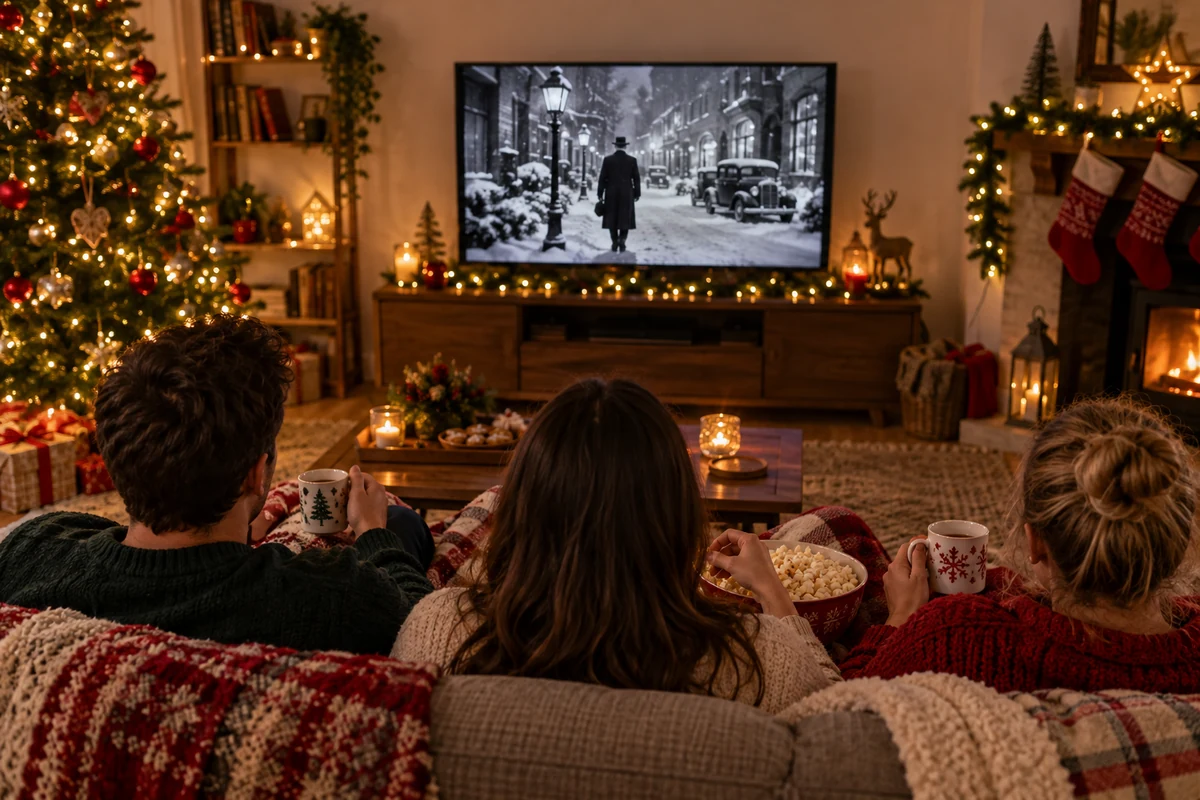
Classic black-and-white Christmas films offer a different pace and visual style from modern releases. Scrooge, It’s a Wonderful Life, Miracle on 34th Street and The Shop Around the Corner are four options to explore, with age guidance checked for each version.
Classic black-and-white Christmas films can be a way to share an old favourite or discover something unfamiliar. Their seasonal settings, performances and distinctive images remain interesting beyond nostalgia. Here are four genuine monochrome classics and some ideas for watching them together.
Christmas films and cultural traditions

The place of Christmas films in cultural traditions is partly shaped by repeated viewing. A film watched with family may become associated with a particular time of year. That experience varies between households, and no single film represents everyone’s Christmas.
Stories about values
Christmas films often explore generosity, friendship, family and personal change. Their characters can offer starting points for conversation, although watching a story does not automatically teach a lesson or change someone’s behaviour.
A shared point of reference
Watching an older film together allows different generations to exchange impressions. Someone may remember seeing it years ago, while a first-time viewer notices something entirely different. There is room for disagreement as well as shared enjoyment.
A view of another period
Older films reflect aspects of the period and industry in which they were made. Their homes, clothing, work and social expectations can be interesting to discuss. They are fictional productions, not comprehensive or neutral records of a culture.
Seasonal influences
Films can contribute images, music and ideas to the way viewers imagine Christmas. Sometimes a household borrows a small detail for its own celebration. It is more helpful to see this as one influence among many than to assume cinema created a particular tradition.
These films can be entertainment, a family habit or a way into film history. Their continuing appeal depends on the viewer, and an older favourite is not something everyone must enjoy.
Four black-and-white classics

These four black-and-white classics offer different kinds of Christmas story. Look for the specified release year: remakes, adaptations and colourised editions can otherwise cause confusion.
Scrooge (1951)
Alastair Sim plays Ebenezer Scrooge in this adaptation of Charles Dickens’s A Christmas Carol. The ghostly visits challenge his choices and treatment of others. Its darker moments may need consideration for younger viewers.
It’s a Wonderful Life (1946)
Frank Capra’s film follows George Bailey as he confronts despair and his sense of what his life has meant. Its Christmas setting does not make it uniformly light: it includes suicidal distress, so check content guidance before choosing it.
Miracle on 34th Street (1947)
The original 1947 film places a story about belief and Santa Claus against the backdrop of a New York department store. Its central mother-and-daughter relationship helps make the fantasy a more personal story.
The Shop Around the Corner (1940)
Two shop colleagues clash in person while unknowingly exchanging affectionate letters. The Christmas setting adds to this romantic comedy’s atmosphere. It also touches on adult concerns rather than being simply a children’s festive tale.
These are four starting points, not an exhaustive list. Their original monochrome photography is part of their character. Modern colour films such as Home Alone and The Grinch belong on a broader festive watchlist, rather than a list specifically about black-and-white cinema.
Bringing film-inspired ideas into Christmas

Christmas films can inspire present-day traditions in small, personal ways. A familiar viewing date or an idea for a room can become part of a household’s routine without reproducing the film’s entire celebration.
Decoration ideas
A shop window, a simple tree or a softly lit room may suggest a decoration you would enjoy. Adapt it to your own space and budget. Use lights according to their instructions and keep combustible decorations away from heat.
Food and festive meals
A film might prompt you to look up a dish or make a favourite snack. Use a reliable recipe rather than treating something glimpsed on screen as cooking instructions. Plan for allergies and the ages of the people eating.
Music and a viewing ritual
Some households enjoy returning to the same film during the holidays. Others prefer choosing something new together. A viewing ritual can be as modest as one evening; there is no need for a long marathon.
Messages worth discussing
Questions about kindness, belonging and material expectations can follow naturally from a story. Ask what people thought of a character’s decision rather than insisting on a single moral. Some older attitudes may also deserve a critical discussion.
Cinema can connect a remembered Christmas with a present-day activity. The useful part is whatever people actually enjoy together, not how closely they reproduce an idealised scene.
Why older films can feel personal

The personal associations of older films often come from when and with whom we watched them. A soundtrack or opening scene may recall a familiar room or person. Those memories can be pleasant, mixed or absent altogether.
Childhood memories
A film watched in childhood may be associated with a particular celebration. Returning to it can bring that memory to mind, but someone discovering it as an adult has a different starting point. Neither response is more valid.
Recognising a character’s situation
A character facing disappointment, uncertainty or a difficult choice may feel familiar despite the film’s age. Another viewer may find the same character remote. These differences can make a conversation about the story more interesting.
Thinking about human relationships
Kindness, generosity and responsibility recur in many festive plots. A film can invite reflection on these subjects, including places where a character behaves poorly. It does not have to offer a simple or universally comforting answer.
An optional family habit
Returning to a favourite can become a shared custom. It is also fine to change that custom, skip a year or choose a different film. A tradition works best when it leaves room for people’s current interests and circumstances.
The significance of a film is personal rather than guaranteed to last a lifetime. Enjoy the experience for what it is, without expecting it to produce a particular feeling or strengthen every relationship.
Planning a family Christmas film night
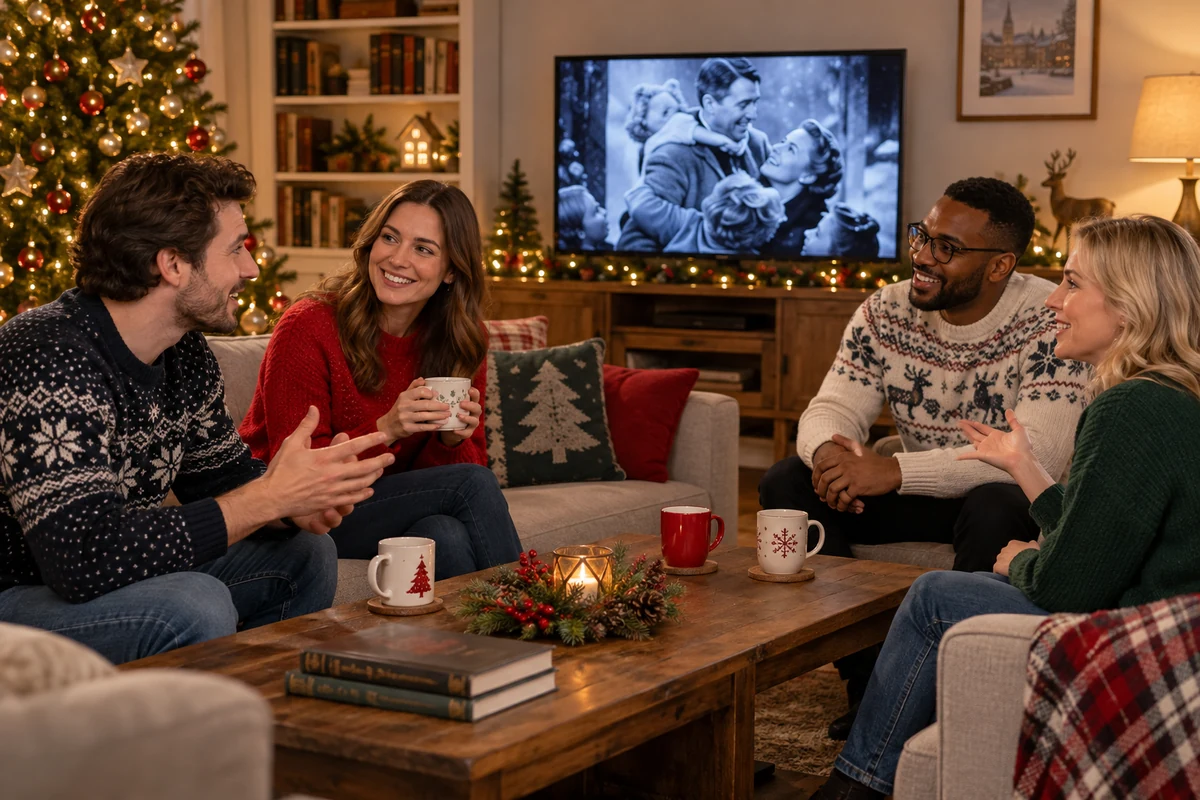
A family Christmas film night needs only a suitable film, a comfortable place and time people want to share. A few practical choices can help avoid turning it into another demanding festive event.
Choosing the film
For a monochrome evening, consider Scrooge (1951), Miracle on 34th Street (1947) or The Shop Around the Corner (1940). Check the BBFC guidance for the exact version and discuss preferences beforehand. Older Christmas films may contain frightening scenes or serious themes.
Making the room comfortable
Arrange seating so everyone can see comfortably, and offer blankets if wanted. Keep exits and walkways clear and use gentle lighting rather than complete darkness if that helps. A decorated tree is optional, and real flames should be kept away from fabrics.
Snacks and drinks
Choose snacks for the people attending, with allergies and safe preparation in mind. Do not offer popcorn or whole nuts to children under five, and cut small round foods appropriately. Keep hot drinks out of children’s reach. A light meal beforehand may be easier than eating throughout the film.
Optional activities
A few questions about favourite scenes or characters can make a pleasant conversation afterwards. Keep games voluntary and avoid turning the evening into a test. A break or an earlier finish is fine if someone is tired.
Photographs, with agreement
Ask before taking photographs or sharing them online, especially when children are involved. A private snapshot or a note of the film you watched may be enough. Recording the evening is optional; it need not interrupt it.
Let the plan remain flexible. A film night does not have to be elaborate or suit every person for the same reasons. Taking people’s comfort and preferences seriously matters more than achieving a particular festive atmosphere.
Enjoying older Christmas cinema
Black-and-white Christmas films can offer striking images, memorable performances and stories worth revisiting. Choosing a specific version helps you know what you are watching, while checking its themes makes the selection more thoughtful.
A comfortable room, suitable snacks and permission to pause are usually enough. Family participation is an invitation rather than an obligation, and an old favourite can sit alongside new choices in future years.
Pick a film that interests you, make time for it and see what you think. Shared memories may follow, but the evening does not need to meet any larger expectation.
FAQ — Black-and-white Christmas films
Which black-and-white Christmas films could I try?
Four options are The Shop Around the Corner (1940), It’s a Wonderful Life (1946), Miracle on 34th Street (1947) and Scrooge (1951). Check the release year and content guidance before choosing.
How can I make a comfortable film-night setting?
Provide suitable seating, gentle lighting and blankets if wanted. Keep walkways clear, use decorations safely and choose snacks appropriate for the ages and allergies of those attending.
Should everyone help choose the film?
Inviting suggestions helps you understand people’s preferences, although one film may not suit everyone. Agree on a choice and allow anyone to opt out or take a break.
What could we do before or after the film?
Discuss a favourite scene, compare it with another adaptation or play a short optional quiz. Photographs are another possibility if everyone involved agrees.
Why do some households return to the same Christmas film?
A familiar film may be associated with previous celebrations or people they watched it with. Others prefer different films each year; both approaches can work.
How can I keep a record of the evening?
Write down the title or take a photograph with permission. Think carefully before posting images of other people online, and remember that keeping a record is optional.
Sources and Further Reading
- Parents guide to age ratings — BBFC
- Preparing food safely — NHS
- Great Christmas films — BFI
- Scrooge (1951) — BFI
- Miracle on 34th Street — Academy of Motion Picture Arts and Sciences