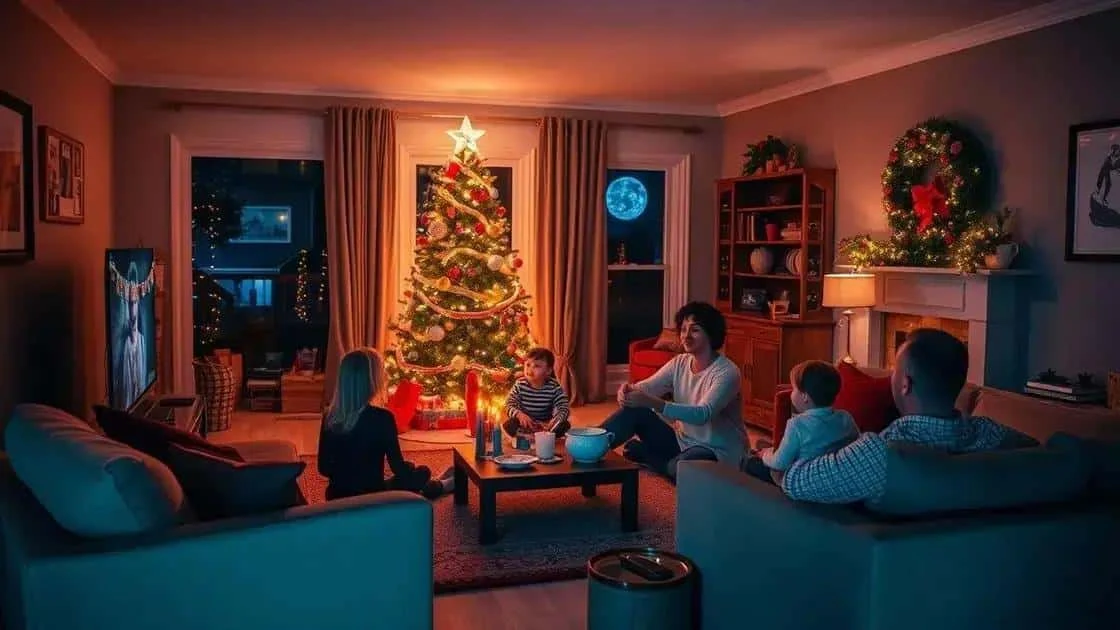
Christmas films can appeal through familiar stories, personal memories, music and seasonal rituals. These are possible ways to understand their attraction, not a diagnosis or proof that every viewer experiences the same emotional benefits.
Thinking about why we enjoy Christmas films can reveal the place a story has in our own lives. Perhaps it recalls someone you watched it with, or perhaps you simply enjoy the comedy. This article explores possible explanations and storytelling choices; your favourite film is not a psychological test.
Christmas films and personal memories

Christmas films can become associated with repeated seasonal activities. For some viewers, a familiar title recalls a particular room, person or stage of life. Others discover it without those associations and respond mainly to the story.
Themes of companionship, generosity and family may overlap with a viewer’s memories. A film can also present a Christmas very different from anything they have experienced. Both recognition and novelty can contribute to its interest.
Watching Home Alone or It’s a Wonderful Life again may bring back an earlier viewing for some people. The films have very different tones and difficult moments, so neither should be assumed to be comforting or suitable for every audience.
Music and recurring images help make a film recognisable. An opening tune or a familiar setting may signal the arrival of a favourite scene. These associations are personal; another viewer can hear the same music without sharing the memory.
An annual viewing can become a household ritual, but repetition alone does not guarantee stronger relationships or happy memories. People can choose to keep, adapt or discontinue the habit according to how it feels now.
How Christmas films use nostalgia
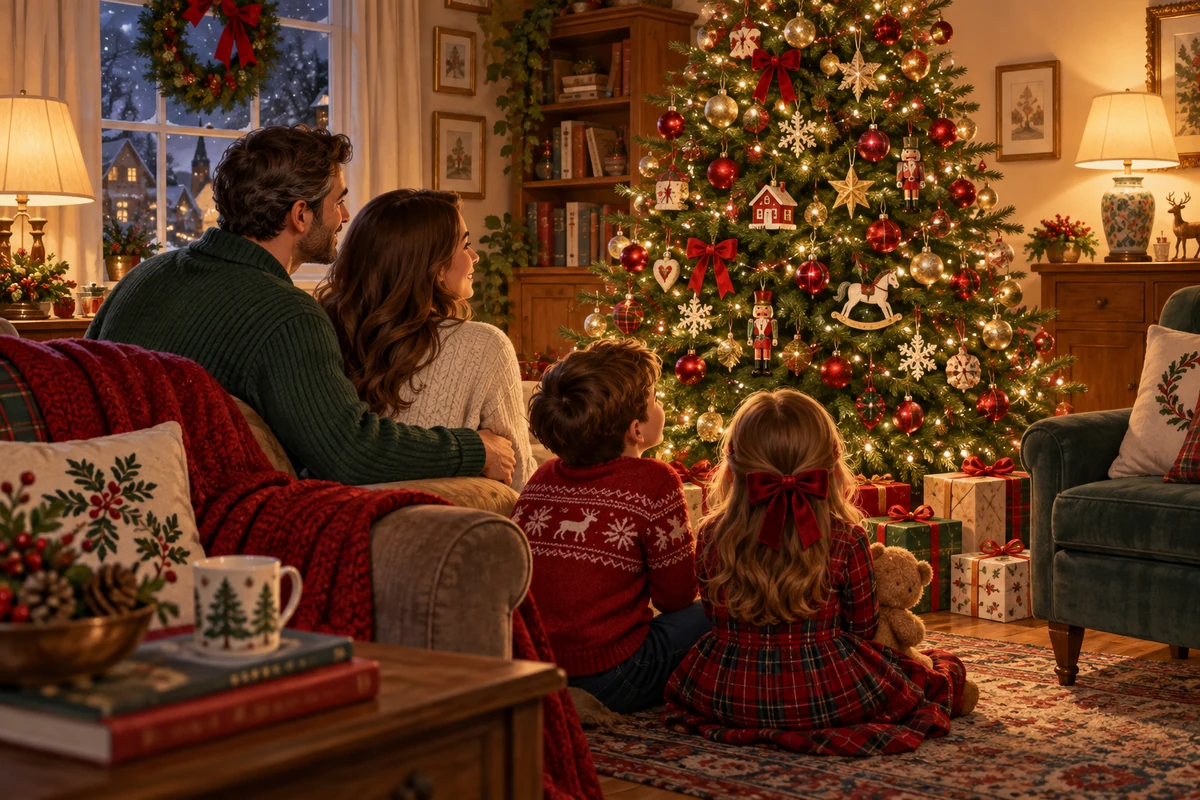
Christmas films often invite nostalgia through familiar settings and references to the past. Research describes nostalgia as a mixed, often predominantly positive emotion that can include longing or sadness. That broad research does not establish a guaranteed effect from a particular film.
A decorated tree, an old-fashioned shop or a shared meal may resemble something a viewer remembers. Such images can also represent an imagined past. It is worth distinguishing an attractive screen setting from an accurate picture of how everyone used to live.
Seasonal music can add a sense of familiarity. A song may recall celebrations for one person and be entirely new to another. What sounds comforting also depends on the listener’s experiences and preferences.
The conflicts and resolutions in a film may resemble a reunion, disappointment or hope from a viewer’s life. A neat fictional ending can be enjoyable, but real relationships and losses do not necessarily resolve on a festive timetable.
Nostalgia is one possible part of the experience, alongside humour, performance and simple curiosity. You do not need fond childhood Christmas memories to enjoy a seasonal film, and not enjoying one says nothing negative about you.
Human behaviour in Christmas stories
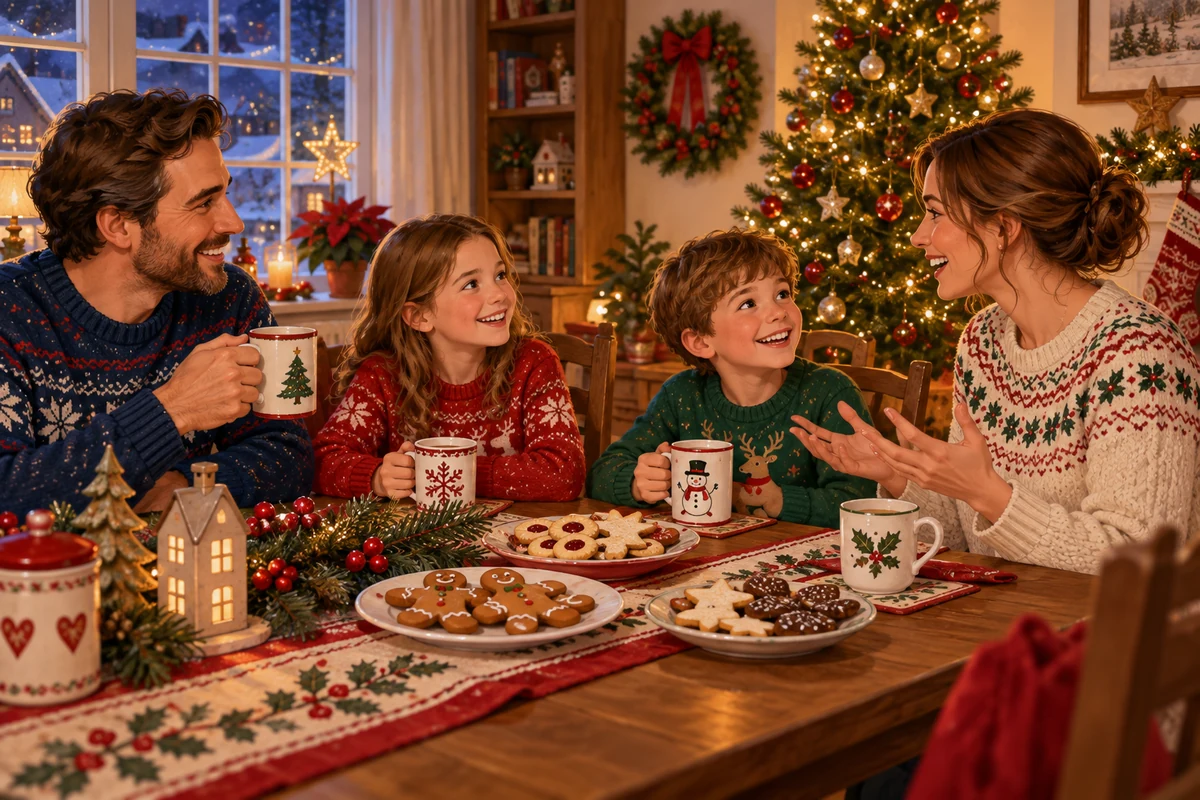
Christmas films frequently explore kindness, affection, conflict and forgiveness. These are useful subjects for stories because characters must decide how to respond to other people. Their behaviour is a narrative choice, not a complete account of how people act during the holidays.
Generosity often takes the form of a character sharing time, money or attention despite a difficulty of their own. The story may make that action central to its resolution. Viewers can consider the choice without being told that a film automatically makes an audience more generous.
Family conflict is another recurring device. A plot may resolve tension through conversation or a changed perspective. In real life, some relationships require boundaries, and no one is obliged to reconcile simply because it is Christmas.
Characters may also reconsider what matters to them. A promotion, purchase or elaborate celebration can seem less important after an encounter with someone else. This is a common story structure rather than proof of a single route to happiness.
These themes can prompt a discussion about empathy and responsibility. Viewers may admire one decision and question another. A thoughtful response allows for that complexity rather than treating every festive ending as a lesson to copy.
Family traditions as part of the plot

The role of family traditions in Christmas films often extends beyond decoration. A planned meal, visit or gift exchange brings people into the same place and gives them expectations to negotiate.
Christmas films may show tree decorating, cooking and presents to establish a setting quickly. These activities can also reveal a change in the household or a disagreement about how the celebration should happen.
A reunion provides opportunities for conflict and affection. One character may want everything to stay the same while another needs a different arrangement. A tradition can be a source of belonging or pressure, depending on the people involved.
Family values on screen are not identical across films or cultures. Some stories centre on relatives, while others find companionship through friends, neighbours or a chosen family. Shared small activities can matter without implying that one household structure is ideal.
Traditions therefore provide both atmosphere and dramatic material. A viewer might recognise their own routine or question an expectation they had taken for granted. Neither response requires them to reproduce the celebration shown on screen.
Emotional themes in festive plots
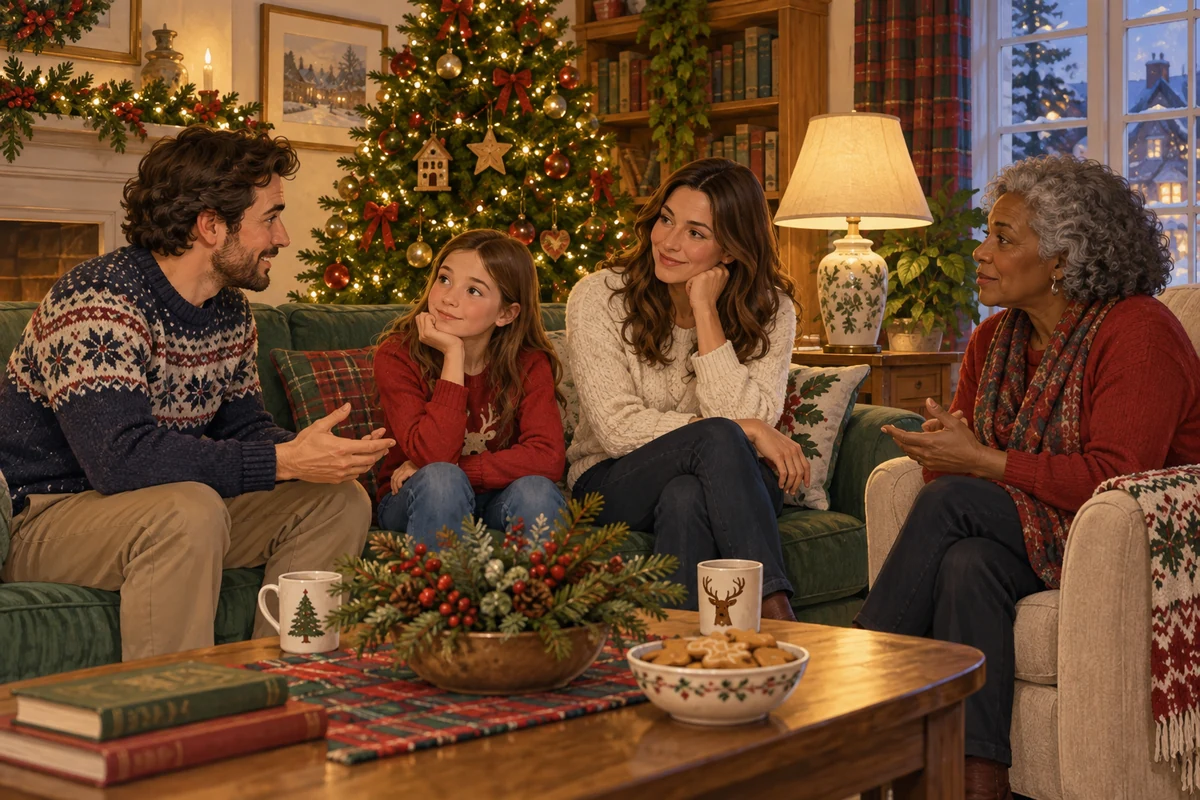
The emotional themes in festive plots include belonging, disappointment and hope. Discussing these themes is different from assessing a viewer’s mental health. A film preference cannot identify a person’s history, needs or personality.
Nostalgia may emerge when a story looks back at an earlier celebration or a lost relationship. The feeling can be bittersweet rather than purely cheerful. Broader nostalgia research helps describe that possibility, but individual responses remain varied.
Family dynamics can become more visible when characters gather for an important occasion. The script may compress years of disagreement into a single evening. Recognising the dramatic device helps avoid expecting similarly rapid change in real life.
Loneliness appears in many seasonal stories and may invite sympathy for a character. Being alone is not always the same as feeling lonely, however, and some people prefer a quiet Christmas. A satisfying viewing choice respects both possibilities.
Personal change gives many festive plots their direction. A character responds to an encounter or sees an old problem differently. Light, gifts and other seasonal symbols may underline that change, without showing that the season itself causes transformation.
Music and visual style

Music and visual style help filmmakers establish tone. A cheerful arrangement, a quiet pause or a dimly lit room can suggest how a scene should feel, alongside the dialogue and performances.
Familiar tunes such as Jingle Bells and Silent Night can signal a seasonal setting. Their effect depends on the arrangement and scene: a melody can feel playful, solemn or unsettling rather than always producing festive joy.
Visual style includes colour, lighting, costumes and the arrangement of a room. Bright decorations may suggest celebration, while an empty chair can draw attention to absence. A cosy-looking scene can still contain tension.
Music and images work together with the action. A gentle accompaniment to a reunion may encourage a warm reading of the scene; silence or contrasting music might make the same moment feel uncertain. This is an interpretation of filmmaking choices, not a fixed response shared by everyone.
A change in the soundtrack can mark a turning point or draw attention to something unexpected. Viewers may notice the technique on a repeat viewing, when they already know the plot and can pay attention to how it is presented.
Thinking about Christmas through cinema

The Christmas spirit on screen often involves generosity, love and mutual support. Different films interpret those ideas differently, and some deliberately challenge the pressure to have a perfect celebration.
A character helping someone may make charity or kindness part of a plot’s turning point. A viewer can reflect on the circumstances and consequences of the act, rather than assuming that every grand gesture is useful or appropriate in real life.
Family gatherings often give festive stories their structure. Yet belonging can also come through friendships or community. A reconciliation on screen is one possible ending, not an instruction to overlook harm or ignore personal boundaries.
The Christmas spirit may also be expressed through hope after disappointment. A story can make room for that possibility without implying that everyone should feel renewed or cheerful during the holidays.
Seasonal symbols help a filmmaker develop these ideas. A gift can represent care, obligation or misunderstanding, depending on the scene. Looking at what the symbol does in the story is more revealing than assuming it has one universal meaning.
Finding your own reasons for enjoying a festive film
Christmas films offer many kinds of entertainment: comedy, romance, reflection and sometimes darker drama. Familiarity and personal memories may contribute to their appeal, but so can an unfamiliar story or an actor’s performance.
Music and visual design add further layers to the experience. Notice what you respond to, while allowing other viewers to feel differently. The ideas explored here are possible interpretations, not a psychological assessment.
Choose films that suit your interests and circumstances. You can enjoy a favourite, try something new or skip festive viewing altogether. There is no correct emotional response you need to achieve.
FAQ — Why we enjoy Christmas films
How do Christmas films explore generosity?
They often make a character’s decision to help someone important to the plot. That can invite reflection, but it does not prove that watching the film changes an audience’s behaviour.
What does music contribute to a Christmas film?
It helps establish tone, highlight a turning point or create familiarity. The same tune can feel different depending on its arrangement, the scene and the viewer’s associations.
Why do family traditions feature so often?
Traditions bring characters together and create expectations, which can lead to affection, disagreement or change. They provide dramatic material as well as a festive setting.
How does a Christmas setting affect a story?
Visits, preparations and seasonal expectations give characters reasons to meet and make decisions. The setting can support a cheerful, reflective or darker story.
Do Christmas films always show personal transformation?
Many use that theme, but it is a storytelling pattern rather than a guaranteed outcome of the season. Real changes in people’s lives may be slower and less tidy.
Does visual style influence the viewing experience?
Lighting, colour and setting help suggest a scene’s mood, alongside performance and sound. Viewers can still interpret and respond to those choices differently.
Sources and Further Reading
- Nostalgia research — University of Southampton
- Memories, traditions and moments: watching films at Christmas — BFI
- Parents guide to age ratings — BBFC