Christmas traditions around the world include seasonal meals, decorations, religious celebrations and gift-giving. Customs vary within countries as well as between them, and no single celebration represents every household.
Exploring Christmas traditions around the world is a chance to learn about other people’s celebrations. From a favourite family dish to a distinctive decoration, the examples below offer inspiration while keeping their cultural context in view.
How Christmas traditions developed
The history of Christmas traditions involves customs that have changed over centuries. Religious observance, local seasons, migration and popular culture have all played a part. Decorating with evergreen foliage has a long history, but it is too simple to give every modern decoration a single ancient origin.
Different strands of Christmas history
Christmas celebrates the birth of Jesus in the Christian tradition. Its observance has developed alongside local seasonal customs, and many people also take part in secular festivities. These histories overlap in different ways; today’s celebrations are not all direct copies of one earlier festival.
Rituals and customs
Over time, Christmas decorations, songs and shared meals have taken on different forms. Some traditions are passed down within families, while others spread through churches, communities and commercial culture. Their meanings can change as people adapt them to their own lives.
The influence of popular culture
The English figure of Father Christmas and the gift-bringing Santa Claus developed through partly different traditions before becoming closely associated. Books, illustrations and other popular media helped shape the familiar modern character, particularly during the nineteenth century.
Modern traditions
Today, religious services, gifts, meals and time with friends or relatives can all form part of Christmas. Their importance differs from one household to another. It would be misleading to say that one country celebrates only through shopping while another preserves the festival’s entire original meaning.
For many people, Christmas offers an opportunity to support their community. Others celebrate quietly, follow a different faith or do not observe the occasion. Understanding that variety makes sharing traditions more welcoming.
How different cultures celebrate Christmas
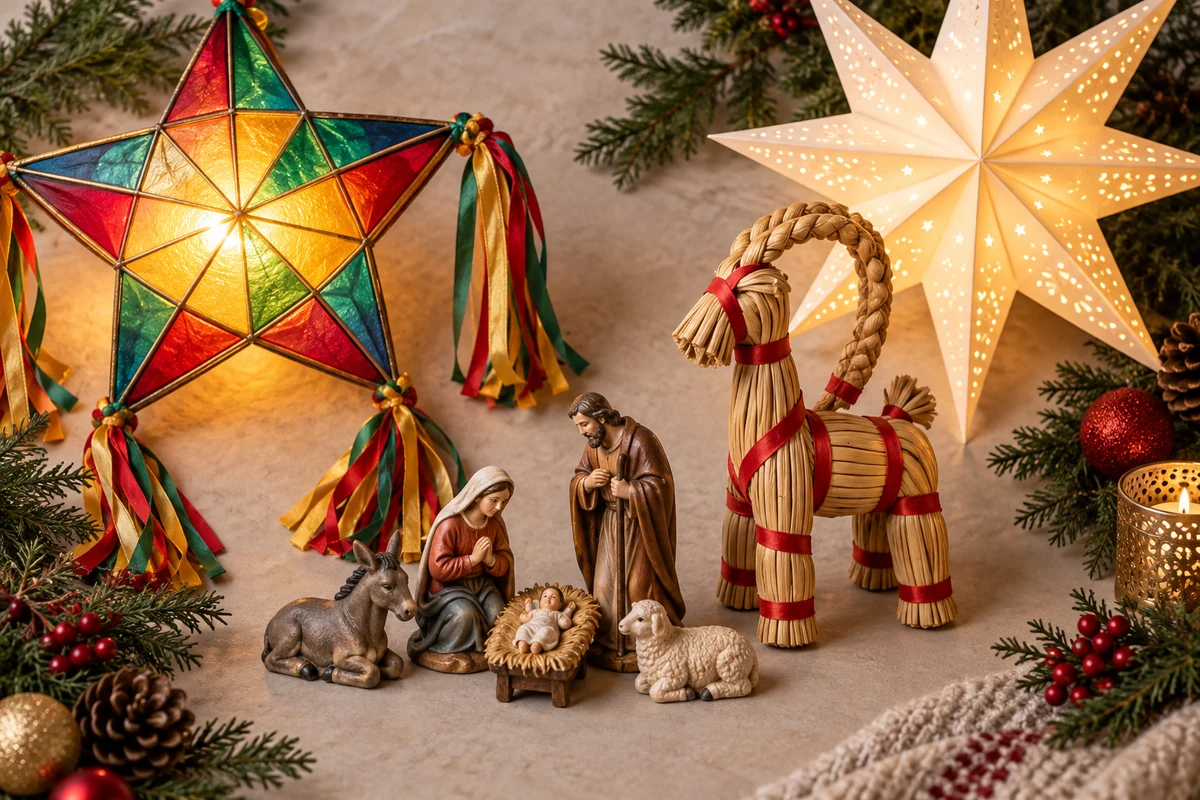
These examples introduce a few well-known customs rather than a complete picture of any country. Regional traditions, faith, family history and personal preference all influence what people actually do.
Christmas in Europe
In Germany, Christmas markets bring together seasonal food, drinks and decorations. In France, a festive meal may feature roast poultry and a bûche de Noël, the log-shaped Christmas dessert. Menus and celebrations still vary considerably by region and household.
North American traditions
In the United States and Canada, decorated trees and stories about Santa Claus are familiar parts of many Christmas celebrations. Some families exchange gifts on Christmas morning and gather for a meal; others follow different religious, cultural or family traditions.
Christmas in Latin America
Across Latin America, Christmas customs vary widely. In Brazil, December falls in summer, and some festive tables include bacalhau, or salt cod, and rabanada, a sweet bread dish similar to French toast. In Mexico, posadas recall Mary and Joseph’s search for lodging through community celebrations before Christmas.
Christmas across Asia and Africa
There is no single Christmas tradition shared by all of Africa: observance differs between countries, communities and households. The same is true of Asia. In the Philippines, for example, the star-shaped parol lantern is a distinctive Christmas symbol, while other countries and communities mark the season very differently.
Learning from cultural differences
Shared meals, music and gifts appear in many celebrations, but their meaning is not identical everywhere. Learning the name and background of a custom is more useful than treating it simply as an unusual decoration or an exotic addition to dinner.
Christmas food around the world
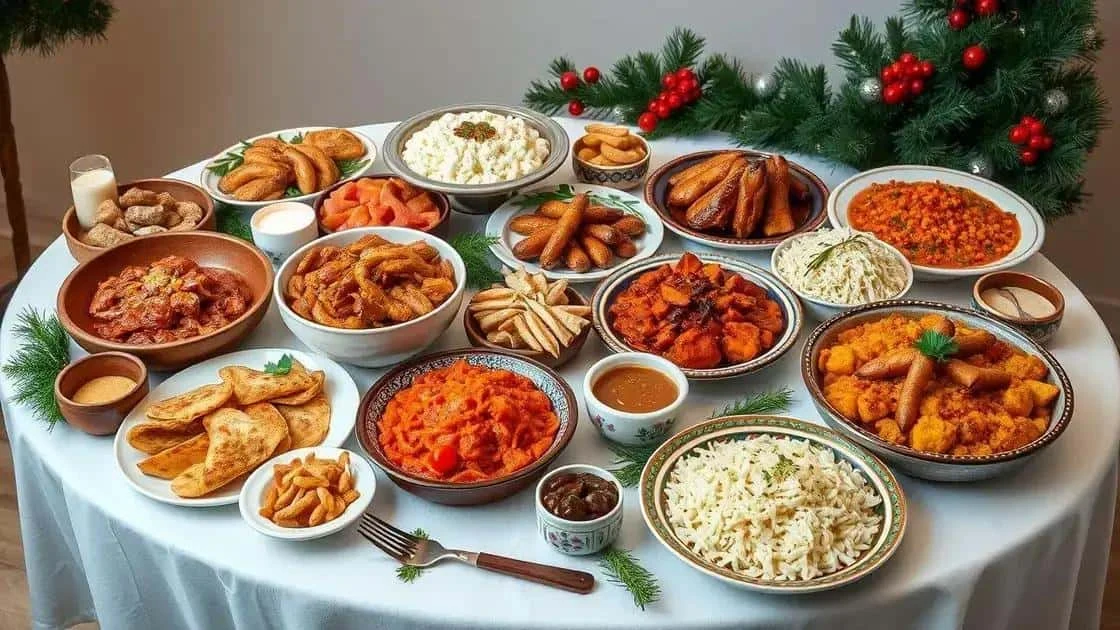
Christmas dishes around the world reflect local ingredients, religious practices and family preferences. A well-known dish is an introduction to a food tradition, not a fixed national menu that everyone follows.
European dishes
In England, roast turkey with vegetables and gravy is one familiar Christmas dinner. In Italy, festive dishes vary by region and may include pasta. In Poland, the traditional Wigilia supper on Christmas Eve is meat-free, with dishes such as fish and dumplings and beetroot soup.
North American flavours
A roast turkey may appear on a festive table in the United States, alongside a family’s preferred vegetables and desserts. Canadian celebrations likewise draw on regional and cultural traditions, with family recipes and seasonal puddings or other desserts varying from home to home.
Latin American dishes
In Brazil, festive choices may include turkey, bacalhau and rabanada. In Mexico, tamales and bacalao a la vizcaína are among the foods associated with the season. Recipes and customs vary, so look for a reliable recipe from the tradition you want to explore.
Examples from Asia
There is no single nationwide Christmas dinner in China. In the Philippines, festive meals may include lechon, or roast pig, among other dishes. In Japan, eating fried chicken at Christmas has become a well-known seasonal custom, although it is not something every household does.
Combining food traditions thoughtfully
You might try one new dish alongside your usual meal rather than replacing everything at once. Read about its background, follow a dependable recipe and check ingredients with guests who have allergies or dietary requirements. Describe adaptations honestly instead of presenting your own version as the only authentic one.
Christmas decorations from different traditions
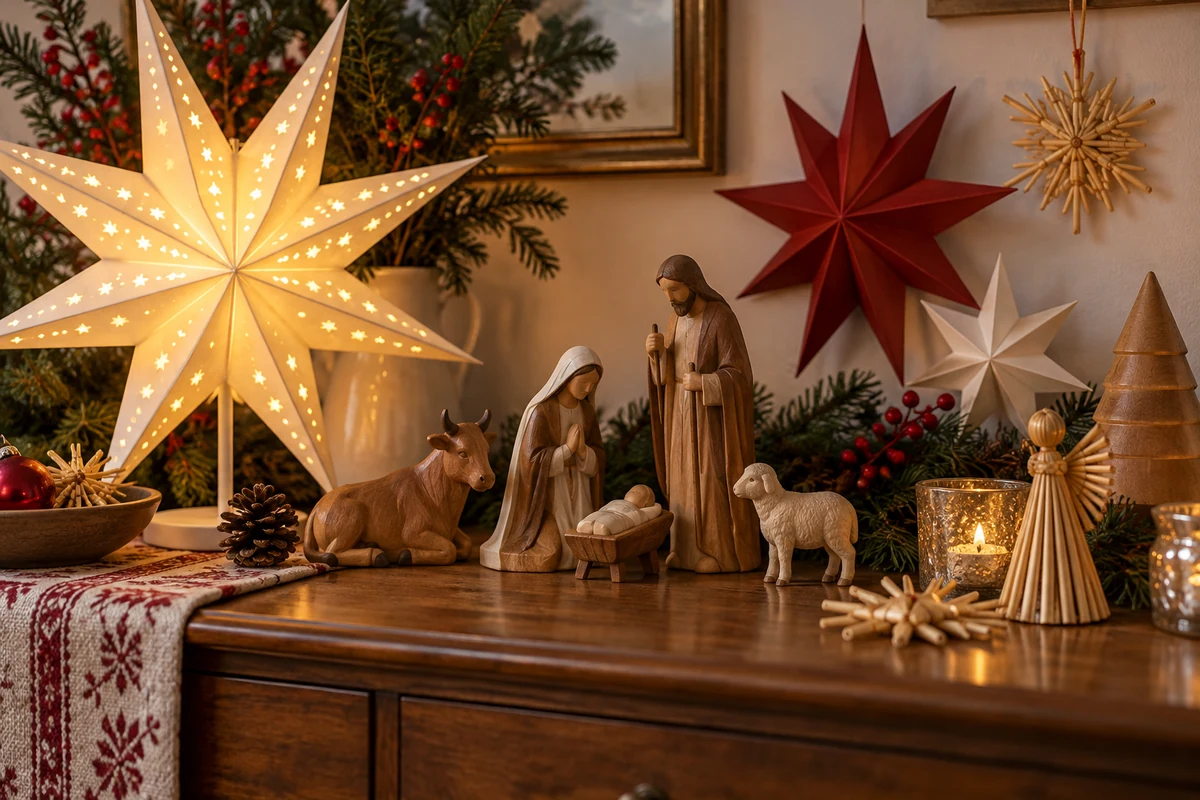
Christmas decorations from around the world can carry religious, cultural or family meaning. Finding out that meaning adds more to a display than copying its appearance alone.
European decorations
In Germany, seasonal displays may include lights and paper stars, alongside Advent calendars and other customs. In Italy, the presepe, or Nativity scene, is an important Christmas tradition, with styles ranging from simple household arrangements to elaborate displays.
Styles in the Americas
In the United States, Christmas trees and wreaths can be decorated in many styles, from rustic to modern. In Brazil, some households bring a summery touch to their decorations with green foliage or colourful flowers, while others choose more familiar winter-inspired designs.
Examples from Asia
Christmas displays across Asia are equally varied. The Filipino parol is a star-shaped lantern associated with the Star of Bethlehem. In Japan, seasonal illuminations may use LED lights to create large public displays; these are a different tradition from the parol rather than interchangeable symbols.
Avoiding a single picture of Africa
Across Africa, Christmas decorations depend on the particular country, faith community and household. Rather than assigning one colour palette or craft style to an entire continent, look for the work of a specific local maker or community and learn how they describe it.
Lower-waste decorating
For lower-waste decorations, start with what you already own. Repairing and reusing a favourite ornament can avoid another purchase. Recycled materials and handmade items are not automatically environmentally better: durability, materials and how you dispose of them also matter.
Gift-giving and cultural customs
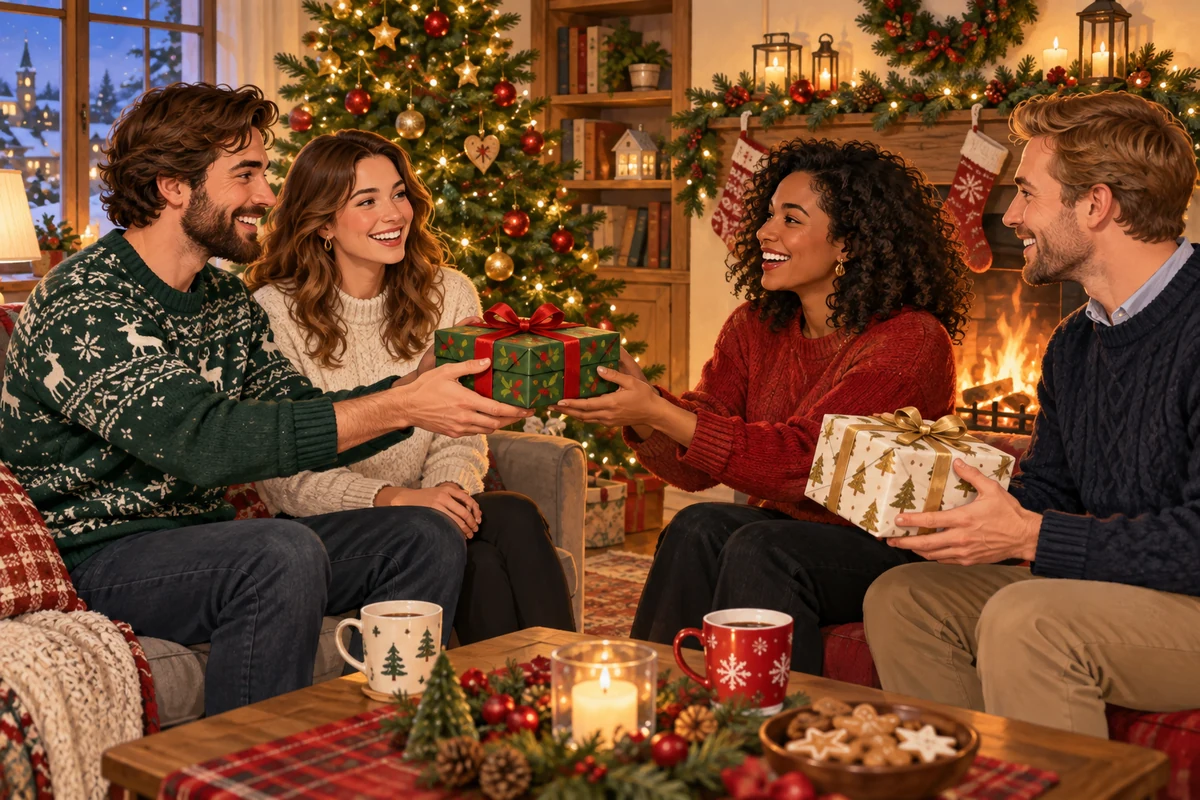
Gift-giving customs differ between and within countries. Gifts can be meaningful, but buying something is not essential to celebrating Christmas or showing care. It is worth asking about another family’s practice before making assumptions.
European examples
In France, gifts may be exchanged on Christmas Eve or Christmas Day, depending on the household. In Sweden, the julbock, or Christmas goat, is a familiar straw decoration. It has its own history and should not simply be described as the Swedish name for exchanging gifts.
North American gifts
Stories about Santa Claus and gifts on Christmas morning are familiar in many US households. Secret Santa exchanges are another optional way for friends, families or colleagues to give one present each, usually within an agreed budget.
Latin American customs
In Brazil, some families exchange presents during their Christmas Eve gathering. In Mexico, posadas are primarily associated with the religious journey, music, food and community activities, including piñatas. They should not be reduced to a gift-exchange party.
Different occasions in Asia
Gift-giving across Asia follows many different calendars and customs. In Japan, Christmas can be a social occasion for couples or friends, while New Year has a more established place in family celebrations. Neither occasion can be explained by a single rule about presents.
Thoughtful, lower-waste gifts
Thoughtful, lower-waste gifts might include something useful bought second-hand, a repaired favourite item or a handmade gift the recipient actually wants. A charitable donation can also be welcome, but check that the person supports the cause. No gift is automatically sustainable simply because it is handmade or labelled recycled.
Including family in Christmas traditions
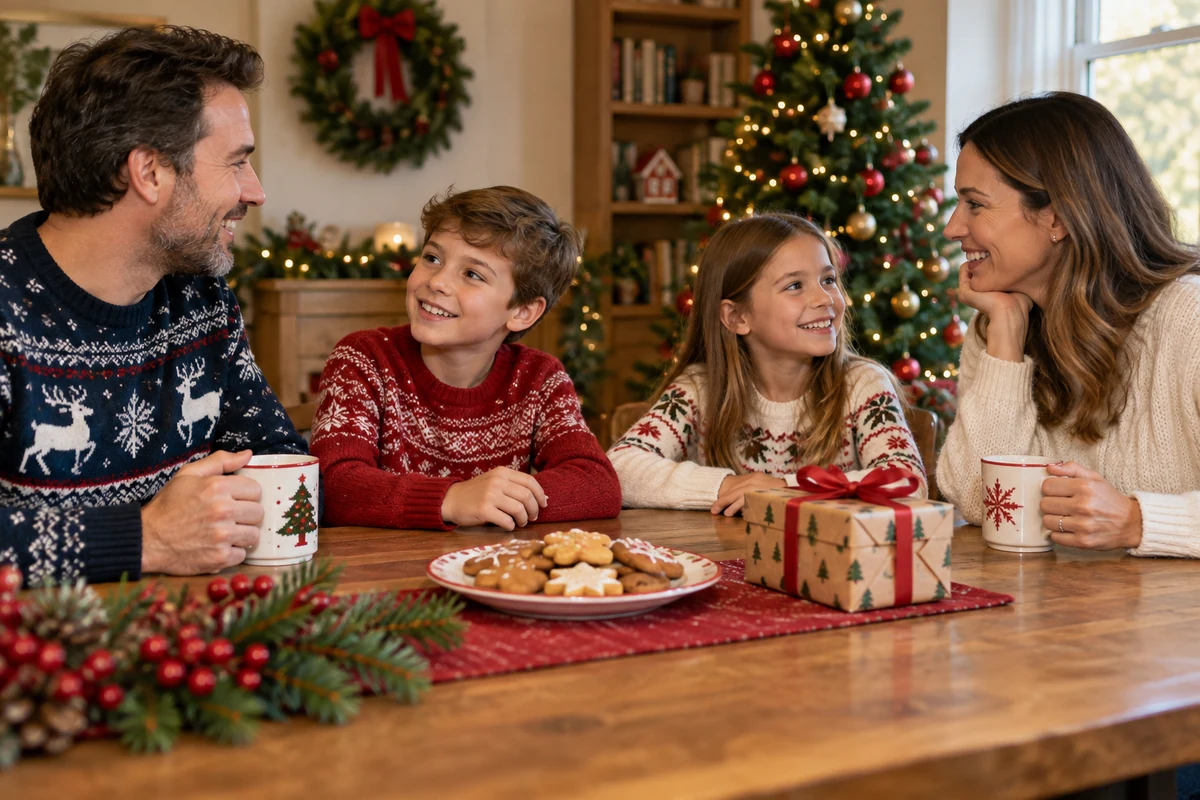
Sharing family traditions can be enjoyable when people have a choice about how to participate. Keep activities manageable and make room for different beliefs, abilities, budgets and interests.
Sharing the preparations
Invite suggestions for the preparations, from choosing music to planning a dish or decorating a tree. Match tasks to people’s ages and abilities, and let anyone who needs a break take one. Participation works better as an invitation than an obligation.
Activities to do together
Baking biscuits or assembling a Nativity scene may be part of your family’s celebration. Choose activities that fit your beliefs and supervise children around hot ovens, tools and small decorations. There is also value in simply asking an older relative about a favourite tradition.
Planning a gift exchange
If you choose a gift exchange, agree a comfortable spending limit first. Secret Santa can reduce the number of gifts each person buys, but make opting out easy. A note, shared activity or no-gift agreement may suit the group better.
Reflection without pressure
A quiet moment of reflection can be meaningful for those who want it. Invite people to share a memory or something they appreciated, without requiring a public account of their feelings. Christmas can also bring grief, stress or difficult memories.
Connecting with family history
Recipes, music, photographs and stories can help you explore family history. Different relatives may remember the same occasion differently. Traditions can be adapted or set aside when they no longer suit the people taking part.
Making room for different Christmas traditions
Christmas traditions offer many ways to learn about culture and community. Understanding where a dish or decoration comes from helps you appreciate it without treating a whole country as though everyone celebrates alike.
Choose a small number of activities that your household will enjoy. A shared meal, one craft or a familiar song can be enough; an elaborate celebration is not required to make time together worthwhile.
Respecting different beliefs and circumstances matters as much as preserving customs. Some people celebrate with relatives, others with friends or alone, and some do not celebrate Christmas at all.
Keep learning about the traditions that interest you, credit their origins and make thoughtful adaptations. Curiosity is more useful than judging another celebration as strange or less authentic than your own.
Frequently asked questions about Christmas traditions around the world
What are some well-known Christmas traditions around the world?
Examples include Nativity scenes in Italy, Christmas markets in Germany and Christmas-morning gifts in many US households. These are familiar customs, not practices followed by every person in those countries.
How can I include my family in Christmas preparations?
Offer manageable choices such as preparing a dish, decorating or sharing a story. Match tasks to people’s abilities and keep participation optional, especially for anyone who finds the season difficult.
Which foods are associated with Christmas?
Examples include roast turkey in some British and North American households, bacalhau in Brazil and bûche de Noël in France. Menus vary by region, religion and family preference.
How do Christmas decorations vary between cultures?
The Filipino parol is a star-shaped lantern, while Italian presepi are Nativity scenes. Each has its own background; learning that context is more informative than treating decorations as interchangeable themes.
Why might families keep Christmas traditions?
Familiar activities can provide a way to share memories and family stories. Keeping them is a choice, and changing a tradition can be sensible when needs, circumstances or beliefs change.
What are some lower-waste Christmas gift ideas?
Consider a useful second-hand item, repairing something the person loves or a wanted handmade gift. Agreeing not to exchange gifts can also work. Check a recipient’s preferences before donating to charity in their name.
Sources and Further Reading
- Twelve dishes of Polish Christmas — Culture.pl
- Christmas in Japan — Japan National Tourism Organization
- Las posadas — Government of Mexico
- Christmas — Visit Sweden
- Christmas greenery — English Heritage