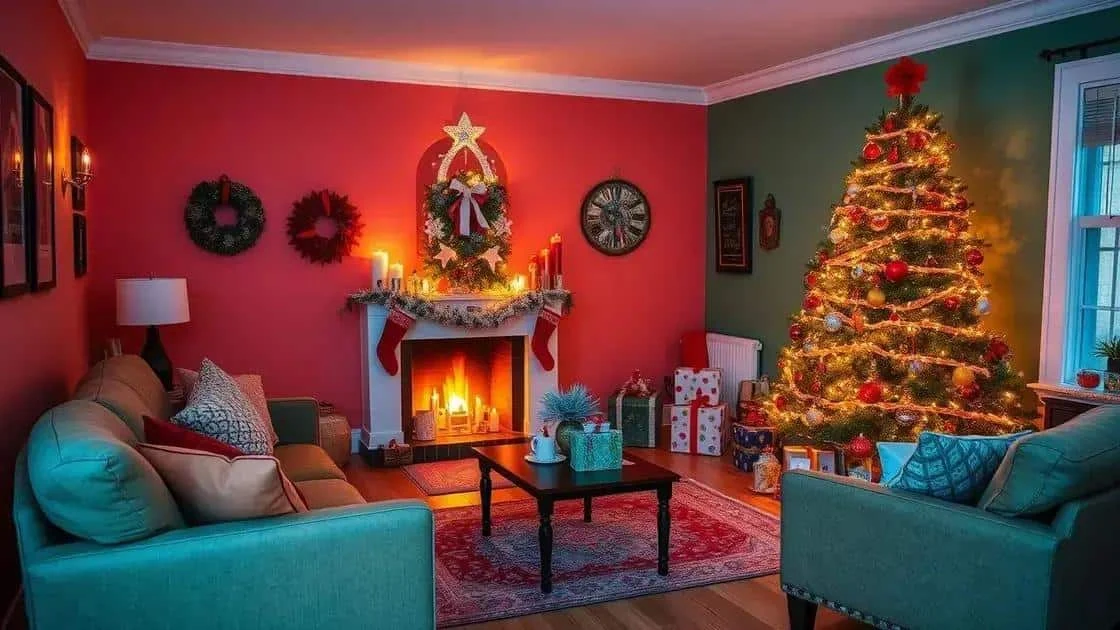
Christmas colours carry different meanings in religious traditions, popular decoration and personal memory. Red and green are familiar festive partners, while gold, silver, blue and white offer other possibilities. These associations are not universal rules or guarantees of how a colour will make someone feel.
Have you wondered about the meaning of Christmas colours? A red ornament may recall childhood for one person, while another prefers white lights and natural greenery. This guide separates symbolic associations from practical decorating ideas so that you can choose a palette that suits your own celebration.
Colour symbolism at Christmas

Christmas colours can have symbolic meanings, but those meanings depend on context. Church traditions, winter landscapes, commercial imagery and family habits all contribute. The following are common interpretations rather than one official code for Christmas decoration.
Red
Red is often associated with love, warmth and festive energy in home decorating. Some Christian interpretations also connect red with Christ’s sacrifice. Visually, it can create a strong accent against a green tree or a pale background.
Green
Green can suggest life and continuity through its association with evergreen foliage. That connection is particularly easy to recognise in a northern winter, when a green wreath contrasts with bare branches outside. It is a useful starting point for many festive arrangements.
Gold and silver
Gold and silver often suggest brightness and celebration. Their reflective surfaces catch the light, making a small amount noticeable. Religious meanings vary; a shiny ornament should not be assumed to carry the same significance in every tradition.
Blue
Blue is often chosen for a cool, wintry appearance. Some people associate it with peace or the night sky, but that is an interpretation rather than a predictable emotional effect. It can work well with silver, white or deep green.
Combining colours
Think about the visual result you want rather than trying to follow fixed meanings. Red and gold can create a rich contrast, while green and blue can draw attention to foliage and cooler tones. Both can feel festive in the right setting.
Choosing colours for your Christmas decorations

Begin your Christmas decorating with the items you already own and the atmosphere you personally enjoy. A palette is a helpful organising tool, not a rule that requires every treasured ornament to match.
Choose a loose theme
A rustic look might use green and brown, while a reflective display could include gold and silver. Use the theme to narrow choices rather than as a reason to replace a whole collection.
Build a small palette
Choose a colour palette with a main shade and a few supporting tones. For example, use red for the most visible ornaments, with green and gold appearing in smaller details.
Look at relationships between colours
A colour wheel can help you compare neighbouring shades and stronger contrasts. You do not need specialist terminology: place the actual decorations together and decide whether you like the balance.
Try a small arrangement first
Make a few trial arrangements before decorating the whole room. Put two ornaments against the tree or lay out a napkin, plate and ribbon together. Change one element at a time so that you can see the difference.
Consider the room
Look at the wall colour, furniture, available space and light. Pale decorations may stand out against a dark background, while deeper shades can give definition in a light room. The effect depends on the whole setting, not colour alone.
Popular colours and their associations
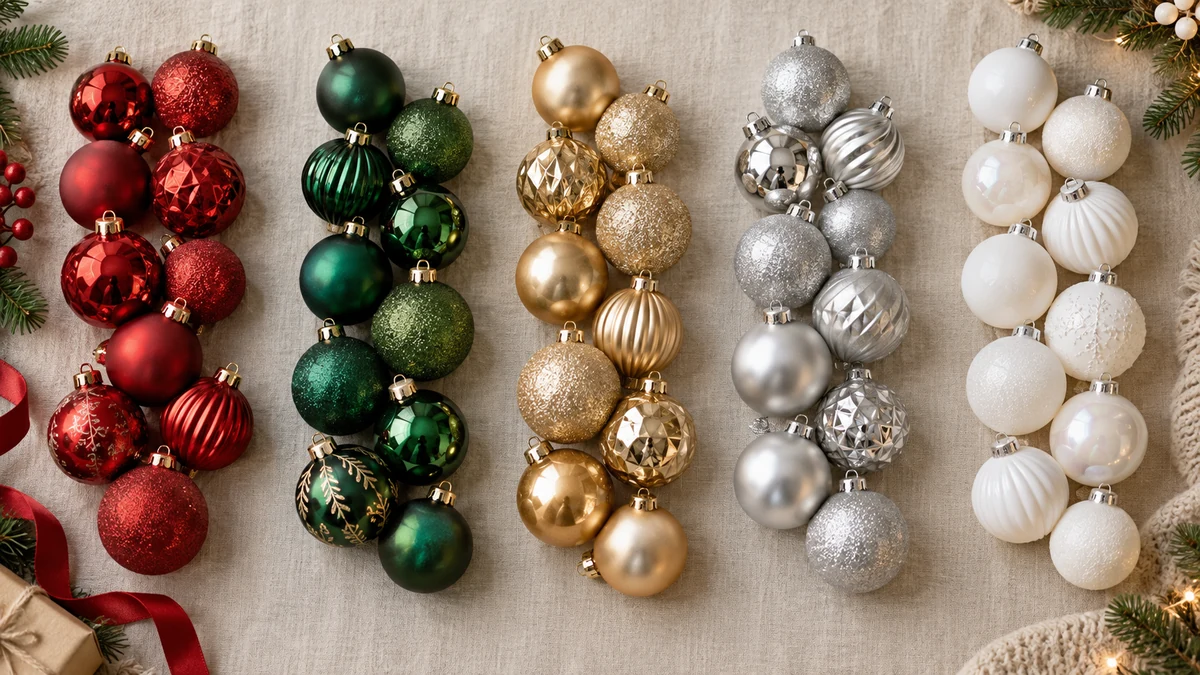
These popular Christmas colours have familiar associations that can inspire a design. Treat them as possibilities, with room for your own cultural traditions and memories.
Red
Red may suggest affection, warmth or celebration. A few red ribbons can give a tree a clear focal point, while larger areas of red create a more striking look. Its symbolic meaning depends on the setting.
Green
Green often brings evergreen foliage to mind. It can be the main colour of a natural-looking display or a background for brighter ornaments. Different greens, from sage to deep forest shades, produce different combinations.
Gold
Often linked in decoration with richness and radiance, gold also has a place in some Christian worship traditions. The Church of England’s Christmas provision specifies gold or white; that liturgical use is distinct from the freedom of a household colour scheme.
Silver
Silver can suggest frost, reflected light or a cool finish. Use it to repeat the shine of glass or metal elsewhere in the room. A brushed surface looks different from a mirror-like one, even when the colour is similar.
Blue
Blue can evoke a winter sky or a night-time scene. Deep navy gives a different result from pale ice blue, so test the shade with your lighting rather than assuming every blue creates the same atmosphere.
White
White may represent purity in religious contexts or snow in a decorative winter theme. It can also simply provide contrast. A white Christmas display is an aesthetic choice, not a description of the weather everywhere Christmas is celebrated.
Colour combinations to try
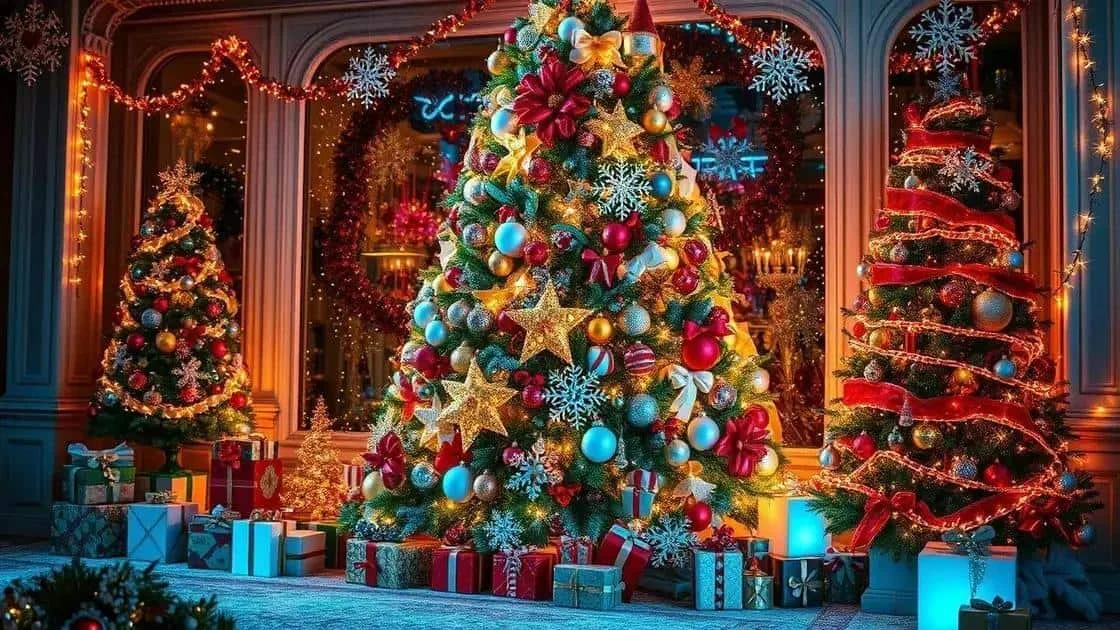
A few repeated colours can bring your Christmas decorations together. Use these colour combinations as starting points and adapt them to the ornaments you have.
Green and red
Green and red make a familiar festive pairing. Try a green wreath with a single red bow, or distribute red ornaments across a tree so that the colour is not concentrated in one area.
Gold and white
Gold and white can create a light, reflective display with a touch of richness. Use white as the larger area and gold for smaller details, or reverse the balance for a more dramatic arrangement.
Blue and silver
Blue and silver suit a winter-inspired design. Combine plain blue baubles with a few reflective ornaments, and check how the colours look under the lights you will actually use in the evening.
Red and gold
Red and gold give a strong, warm-looking contrast. A red table runner with small gold-coloured details can carry the theme without covering every surface in ornaments.
Green and blue
Green and blue offer an alternative to red-based schemes. Try dark blue ribbon against greenery or pale blue paper ornaments among green branches, using a neutral colour if you want more separation.
White and silver
White and silver can look restrained or highly decorative depending on the shapes and quantities. Mix matt and reflective textures so that the details remain visible rather than blending into one bright area.
Christmas decorating themes built around colour
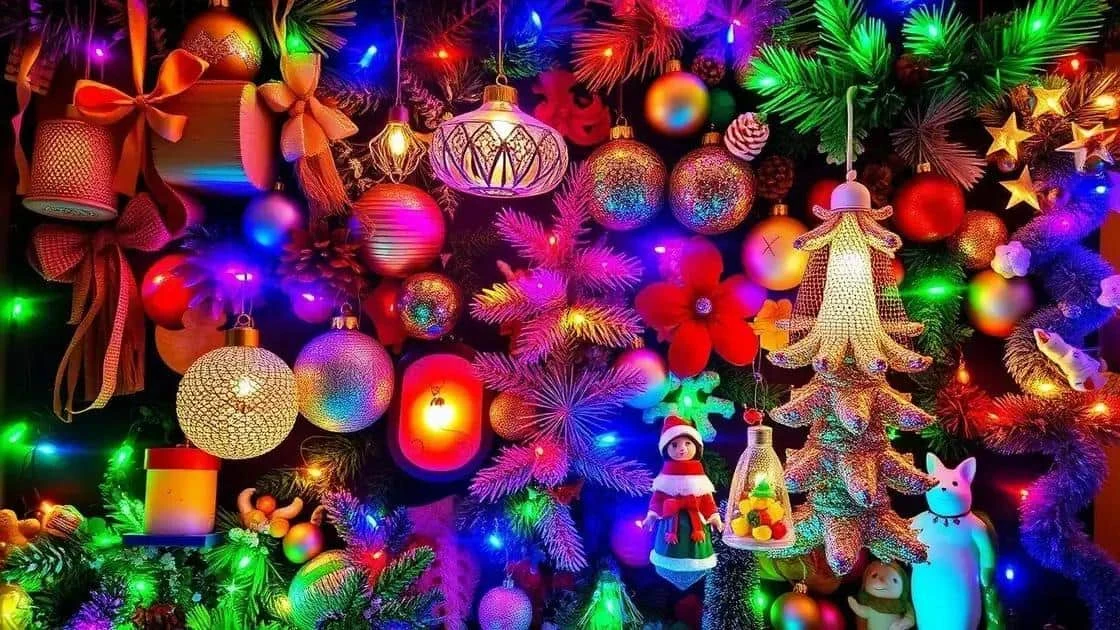
A colour-led Christmas theme can make decisions easier, especially when decorating more than one part of a room. You can still include favourite pieces that fall outside the palette.
Rustic
A rustic scheme might combine earthy cloth, wood and green foliage. A few red or gold details can add contrast. Keep dried materials away from heat and flames.
Reflective and glamorous
For a glamorous look, use gold and silver in selected ornaments rather than everywhere. A few larger reflective pieces can have more impact than many tiny decorations.
Winter-inspired
A winter theme may combine blue, white and silver with paper snowflakes or clear ornaments. It is a decorative interpretation of winter, so you can enjoy it even without snow outside.
Tropical
A tropical theme can use lime green, orange and pink, with paper leaves or fruit shapes. This can acknowledge a summer Christmas setting, such as Brazil, or simply reflect your preferred colours.
Vintage-inspired
A vintage-inspired display might include pastels, old baubles and saved ribbons. Different decades had different styles, so begin with a particular object or family collection rather than treating every old decoration as the same look.
Storybook
A storybook theme can combine gold, silver and white with paper stars and gentle lighting. Repeated shapes help the arrangement feel connected even when the ornaments come from different sources.
Keeping your colour scheme balanced
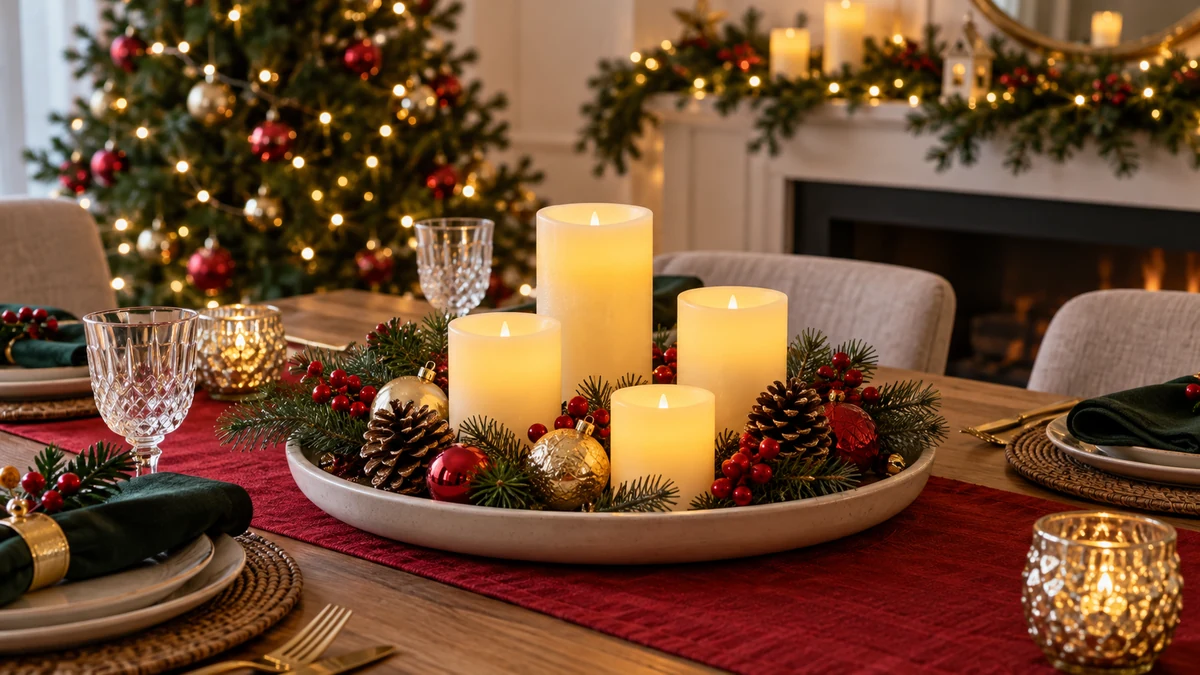
Colour balance is about what looks comfortable to you in the actual space. These small checks can help you decide when the arrangement is finished.
Choose a manageable palette
A small colour palette is easier to repeat across a room. Two or three main shades may be enough, with existing furniture and greenery supplying additional colours naturally.
Use a neutral background
Neutral colours such as cream, beige or grey can provide space between stronger shades. You may already have this background in your walls or table linen, so there is no need to add another layer of decoration.
Vary intensity
Combine strong red or green accents with quieter tones if the display feels too busy. Alternatively, keep the colours bold but reduce the number of shapes and patterns.
Add colour through small details
Introduce a new shade in small amounts through ribbon, a few baubles or place cards. Repeating the detail in two or three spots can make it look intentional without dominating the room.
Review before finishing
Try the arrangement from different viewpoints, including where guests will sit. Remove an item if the area feels crowded; adding more is not the only way to improve a display.
Check the lighting
Lighting changes how colours and surfaces appear. Compare the decorations in daylight and under your evening lights. Bulb colour, brightness and surrounding materials all affect the result, so there is no single rule that warm or cool light always flatters a particular shade.
Choose colours that mean something to you
Christmas colours can carry personal or cultural meaning, but they do not need a fixed symbolic explanation to belong in your home. An inherited ornament may matter more than a perfectly coordinated palette.
Use combinations and themes to organise your ideas, then adjust them to the room and the people celebrating there. Check the actual lighting, reuse what you enjoy and leave enough clear space for everyday use.
The result can be traditional, colourful, restrained or a mixture of all three. Let the decorations reflect your own Christmas rather than a rule about what every colour must mean.
FAQ: the meaning of Christmas colours
What does red mean in Christmas decoration?
Red is often associated with love, warmth and celebration, and some Christian interpretations connect it with Christ’s sacrifice. These meanings vary; it also works simply as a strong decorative accent.
Why is green used at Christmas?
Green recalls evergreen foliage and is often associated with life and continuity. Trees and wreaths make it a natural part of many displays, although it is not compulsory in a Christmas colour scheme.
How does lighting affect decoration colours?
Colours can look different in daylight and under different bulbs. Test your decorations with the lighting you intend to use, considering brightness and the difference between matt and reflective surfaces.
How do I choose a Christmas palette?
Start with decorations you already like, choose a main colour and add a few supporting shades. Try a small arrangement before using the scheme throughout the room.
What decorating themes can I try?
Rustic, reflective, winter-inspired, tropical, vintage-inspired and storybook themes are possibilities. They are design ideas rather than requirements or claims about current trends.
How can I keep the colours balanced?
Repeat a few shades, use quieter backgrounds where helpful and vary texture and intensity. Look at the arrangement from different positions and remove items if it feels too crowded.