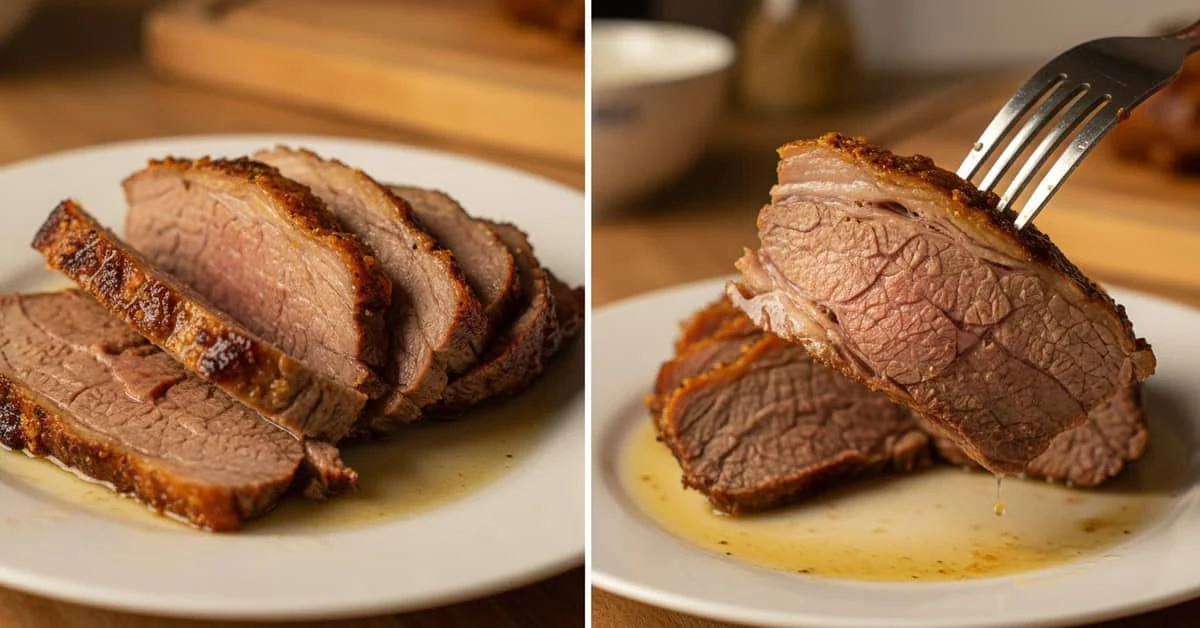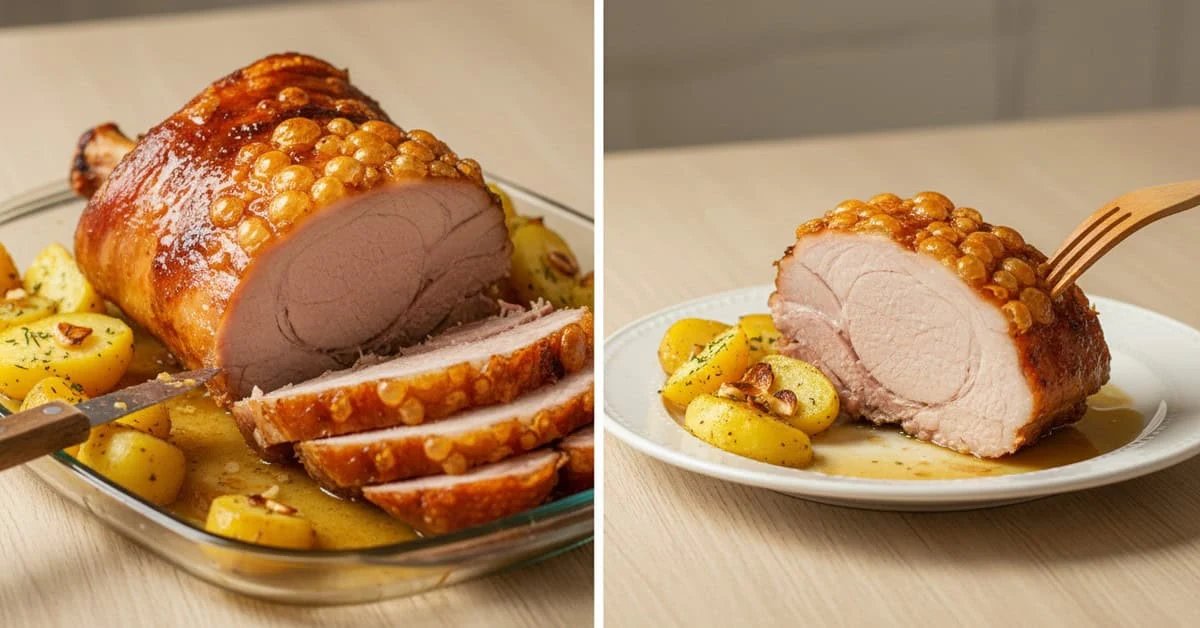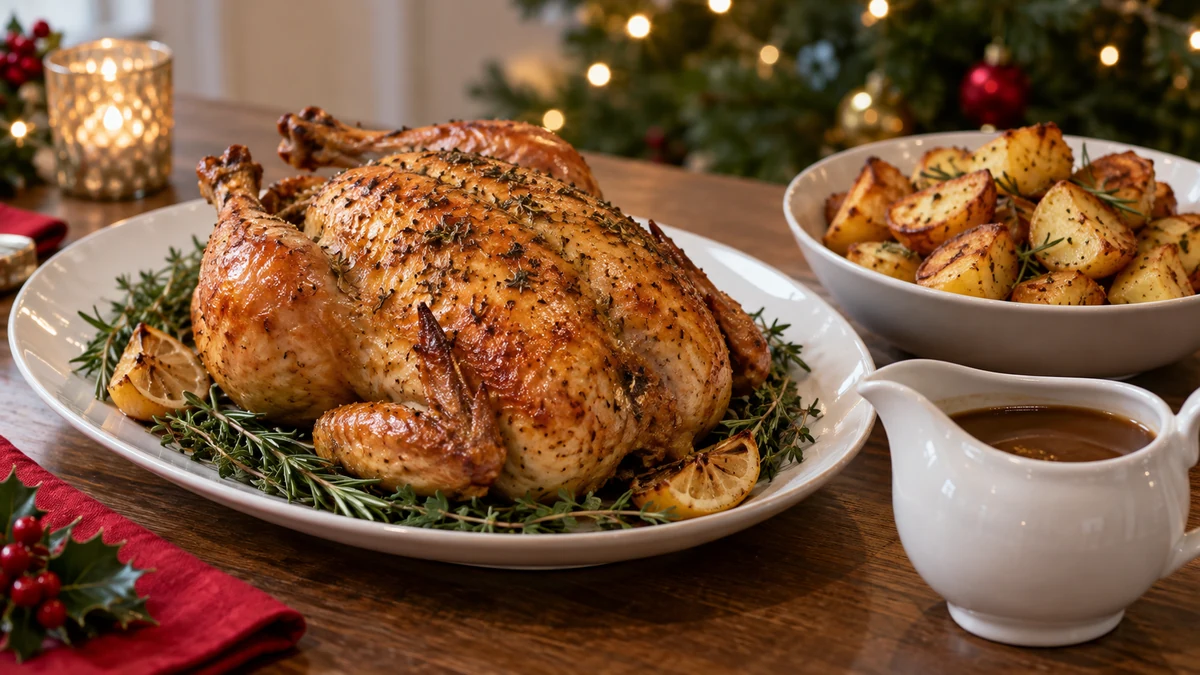
This Brazilian Christmas Chester chicken recipe combines a whole bird with beer, herb butter and potatoes. Learn what Chester means, how to avoid over-seasoning a prepared bird, and how to check cooking, defrosting and leftovers safely. A whole chicken is an alternative where Chester is unavailable.
Try Christmas Chester chicken roasted with beer and potatoes for a Brazilian-inspired celebration. Chester is a branded chicken product, not a separate species or a turkey. Follow its packaging first, particularly if it is already seasoned. This editorial adaptation has not been kitchen-tested by us.
Ingredients for Christmas Chester chicken
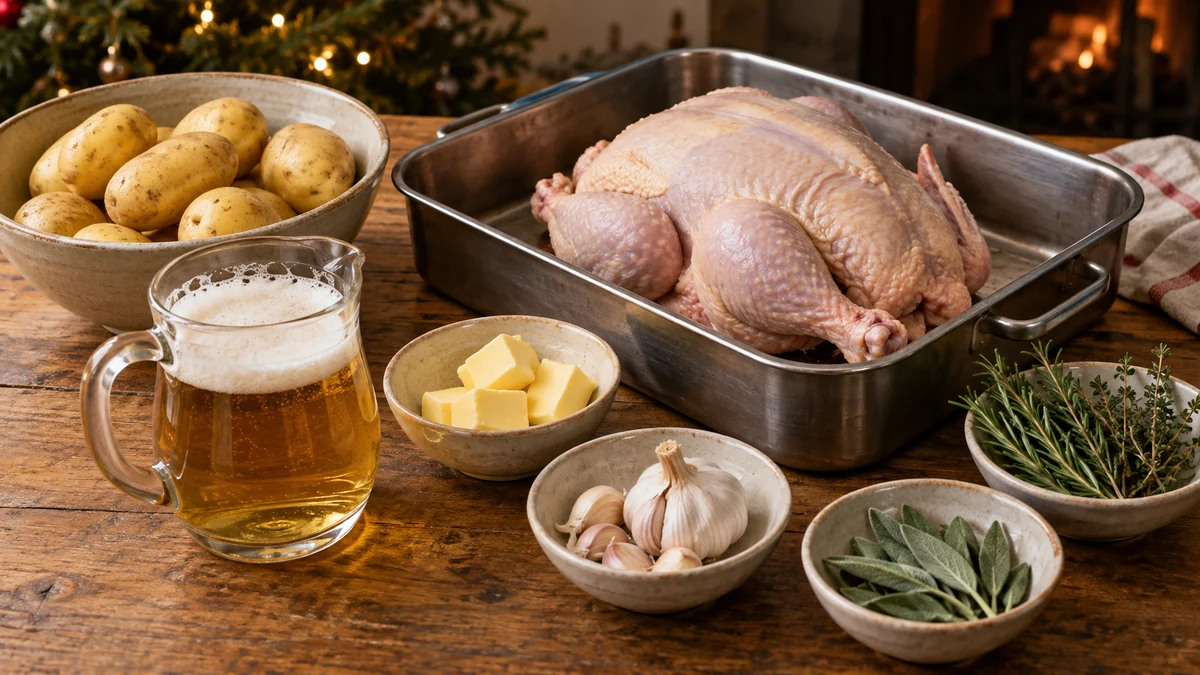
For Christmas Chester chicken with beer and potatoes, use the ingredients below. The later marinade, rub and smaller-chicken sections are alternatives, not extra ingredients to add to this main method.
- 1 whole Chester chicken, 3.5–4 kg — fully defrosted if frozen. Where unavailable, use a whole chicken and follow its own weight-based cooking instructions; do not assume a turkey needs the same timing.
- 330 ml lager — for the roasting tin. Use 330 ml chicken stock instead if avoiding alcohol; cooking beer does not reliably remove all alcohol.
- 150 g unsalted butter, softened — for the herb butter. A suitable dairy-free spread can replace it; check the bird and every other ingredient if catering for milk allergy.
- 4 garlic cloves, crushed — or 1 tsp garlic powder.
- 2 medium onions, cut into wedges — for the roasting tin, not packed inside the bird.
- 1.5 kg small potatoes, washed and halved — or larger roasting potatoes cut into even pieces. Sweet potatoes need their own cooking checks.
- Salt only if needed — Chester is often pre-seasoned, so do not automatically add salt or brine it. Season the potatoes separately to taste.
- Freshly ground black pepper, to taste — start with a small amount rather than a full tablespoon.
- 1 tbsp sweet paprika — or smoked paprika if that flavour is wanted.
- 2 tbsp chopped fresh rosemary and thyme — or 2 tsp dried herbs.
- 1 tbsp honey or brown sugar, optional — for a sweet finish; omit if preferred. Do not give honey to babies under one year, even in cooked food.
- 2 tbsp olive oil — for the potatoes. The herb butter coats the bird; vegetable oil can replace olive oil for the potatoes.
- Finely grated zest and juice of 1 lemon — zest for the butter and juice for the roasting tin.
- 100 ml chicken stock — in addition to the lager, or use water. Choose a lower-salt stock for a pre-seasoned bird.
- A few extra rosemary and thyme sprigs — for the tin or a removable garnish, not for stuffing the cavity.
Substitutions and planning notes
Plan ahead: defrost a frozen bird in the fridge according to its label, allowing several days if needed and checking that no ice remains inside. A pale lager gives a different flavour from a dark beer. Lager commonly contains gluten; replacing butter alone does not make the whole dish suitable for an allergy. Check the Chester label too, as seasonings and allergen warnings vary.
How to roast Chester chicken step by step
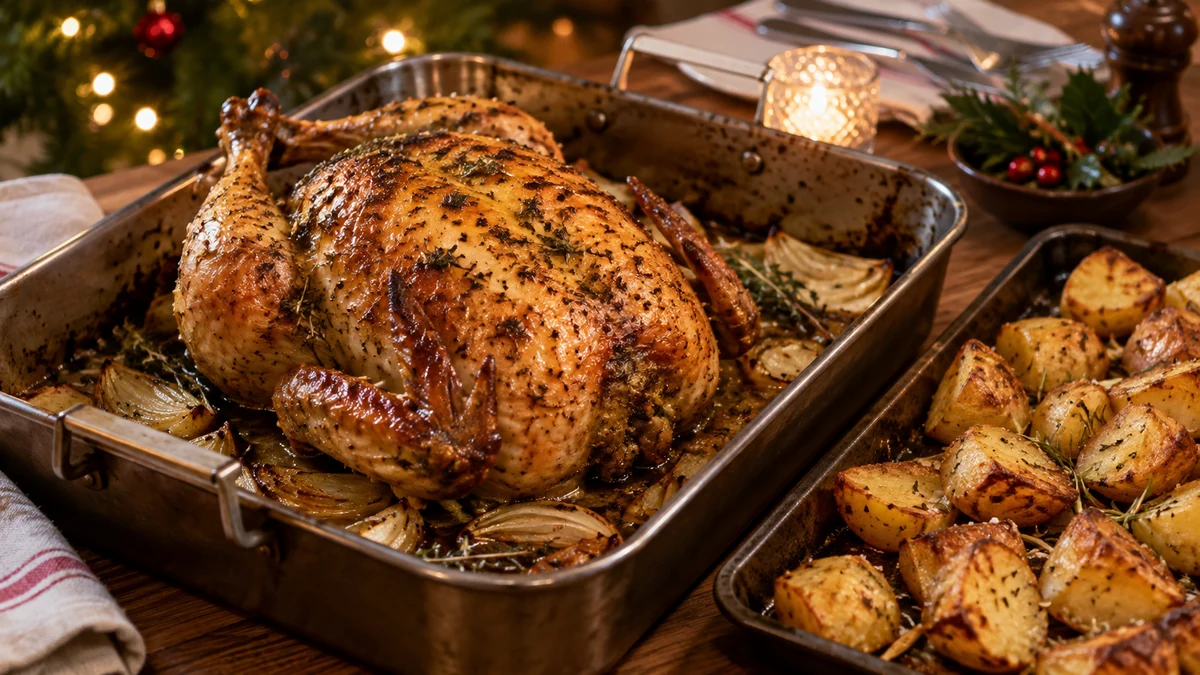
- Preheat the oven: follow the bird’s packaging. Where compatible, use 180°C conventional or 160°C fan, with space around the roasting tin for heat to circulate.
- Prepare the bird: remove packaging and any giblet bag as directed. Do not wash raw poultry. Pat the skin dry with disposable kitchen paper if needed, discard it and wash your hands and any contaminated surfaces.
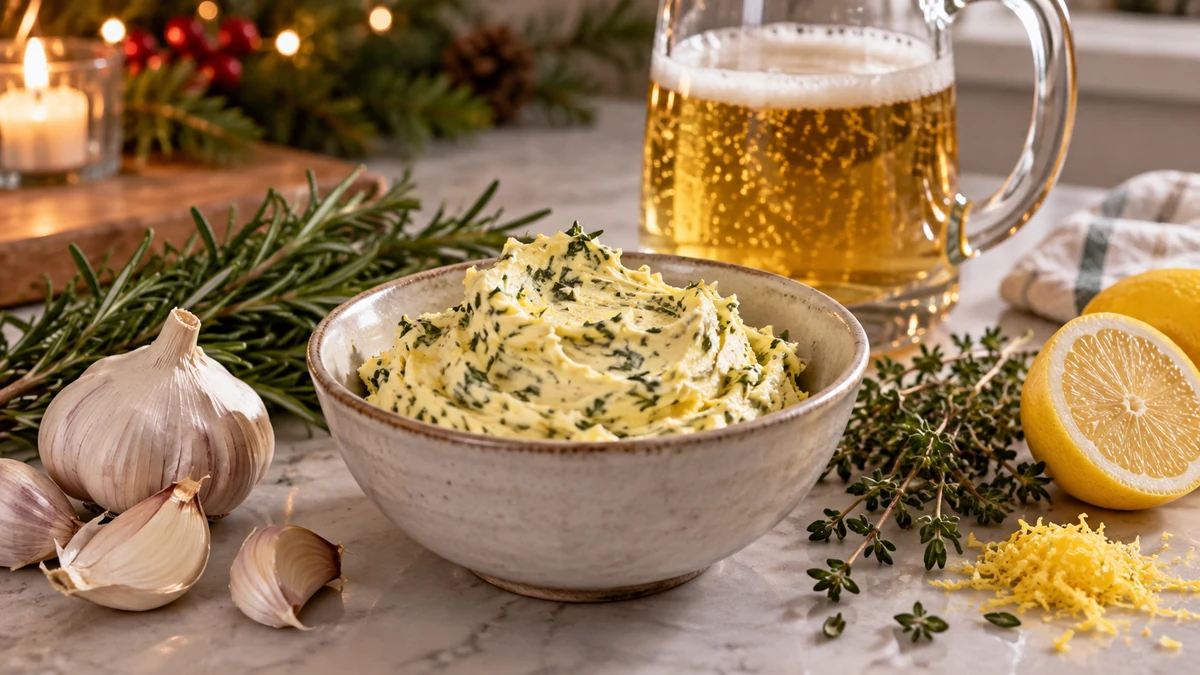
- Make the herb butter: mix 150 g softened butter with 4 crushed garlic cloves, 2 tbsp chopped herbs and the lemon zest. Do not add salt automatically to an already seasoned Chester.
- Apply the butter: gently loosen the breast skin if possible without tearing it, and spread some butter underneath. Spread the remainder over the outside using clean utensils, then wash anything that touched the raw bird.
- Season the outside: add the paprika and a little black pepper. If using the optional honey or sugar, keep it for a thin coating near the end so it does not burn during the long roast.
- Leave the cavity unstuffed: put the onion wedges and extra herbs in the tin around the bird. Cook any bread, rice or farofa stuffing separately.
- Prepare the potatoes: toss the 1.5 kg halved potatoes with 2 tbsp olive oil and a little seasoning. Use a separate roasting tin so their cooking time can be managed independently.
- Add the roasting liquid: place the chicken in its tin with the onions. Pour the 330 ml lager, 100 ml stock and lemon juice into the bottom, not over the buttered skin. Keep the potatoes in their separate tray.
-
Cooking time and temperature checks
Use the packaging’s instructions first. As a general guide for an unstuffed chicken at 180°C conventional or 160°C fan, allow 45 minutes per kilogram plus 20 minutes. That is roughly 2 hours 58 minutes to 3 hours 20 minutes for 3.5–4 kg, but timing alone cannot confirm that a bird is cooked.
Check the thickest parts of the breast and thigh with a clean thermometer, without touching bone. They must reach 75°C for 30 seconds, or another equivalent safe time and temperature, throughout.
- Monitor the roast: cover loosely with foil if the skin is browning too quickly and the product instructions permit it. Check the tin occasionally, adding a little hot water if it is drying out; avoid opening the oven unnecessarily.
- Time the potatoes separately: put their tray in for approximately the final hour, allowing longer if pieces are large or the oven is crowded. Turn them partway through and check that they are tender. Do not remove partly cooked potatoes to sit at room temperature for a long period.
- Finish the skin: uncover towards the end if necessary. Add a thin layer of the optional honey or sugar and watch closely. Colour is not a substitute for checking the meat’s temperature.
- Rest before carving: once safely cooked, rest the bird loosely covered for 15–20 minutes, then carve and serve promptly.
- Carve and serve: remove any string, separate the legs at the joints and slice the breast across the grain. Serve with the potatoes and a sauce made from thoroughly heated pan juices.
Seasoning alternatives: marinade, dry rub and herb butter
Check before brining: a pre-seasoned Chester does not need a second salt soak. Extra brine can make it excessively salty. This method uses herb butter instead; if you choose an unseasoned chicken, season it appropriately rather than applying all the alternatives below together.
Why the product label matters
Some birds already contain salt and other seasonings. Inspect the ingredients, preparation instructions and allergen information before adding a marinade or rub. Extra seasoning cannot correct unsafe defrosting or undercooking.
An optional beer marinade
For an unseasoned chicken, the following is an alternative to the main herb-butter treatment. Marinate covered in the fridge for 4–8 hours within the use-by period, never on the worktop. Discard marinade that has touched raw chicken; use fresh liquid for roasting.
- 330 ml lager — for this alternative marinade, not an extra addition to the main method.
- 60 ml olive oil — to combine with the flavourings.
- 3 crushed garlic cloves — for an aromatic flavour.
- Juice of 1 lemon — for acidity; it does not make raw poultry safe to eat.
- Up to 2 tbsp soy sauce, optional — omit on a pre-seasoned bird. Soy sauce contains soya and often wheat; use only a labelled gluten-free alternative if required, and check the beer as well.
An alternative dry rub
A dry rub offers another flavour profile for an unseasoned bird. Use it instead of layering it onto the full main seasoning, and keep the cavity empty.
- 2 tbsp sweet paprika — for colour and flavour.
- 1 tbsp brown sugar, optional — omit for a less sweet result and monitor the skin for burning.
- Salt only as needed — omit extra salt if the bird is already seasoned; do not add a full tablespoon automatically.
- Ground black pepper to taste — start with a little and adjust to preference.
- 1 tsp garlic powder and 1 tsp onion powder — check that these are not salted seasoning blends.
- 1 tsp dried thyme — with rosemary if liked.
The main herb-butter option
For the main recipe, use the same 150 g butter, 4 garlic cloves, 2 tbsp fresh herbs and lemon zest already listed. Spread beneath the breast skin where practical and over the outside. This is a reminder of that mixture, not a second batch of butter.
Temperature and safe cooking
Follow the label’s roasting instructions, using 180°C conventional or 160°C fan only where appropriate. Check both breast and thigh for 75°C for 30 seconds or an equivalent safe combination, without the probe touching bone. Do not wash the bird or add brine to a pre-seasoned product.
Flavour combinations and practical notes
Choose one flavour direction: beer and honey, or beer and a little mustard, can be alternatives. Soy sauce adds salt as well as flavour. For no added alcohol, replace the 330 ml beer with stock and, optionally, 1 tbsp apple juice; cooking beer is not a reliable way to remove all alcohol.
Finish with care: keep an eye on the liquid in the tin and the colour of the skin, but use temperature checks to decide when the meat is ready. Rest for 15–20 minutes, then serve.
Beer-roasted potatoes and other side dishes
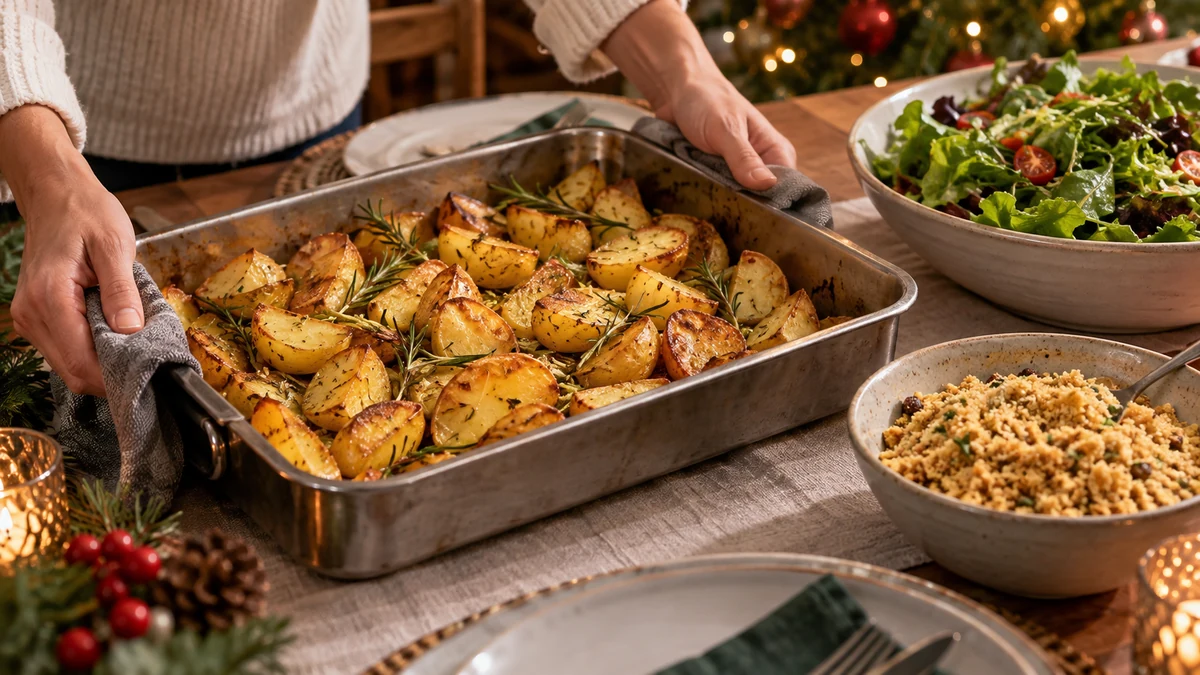
Beer-roasted potatoes are an optional alternative to the plain potatoes in the main method. Liquid in the tray gives a softer result until it evaporates; crispness will depend on the tray size, oven and cooking time.
Ingredients for the alternative potato side:
- 1.5 kg small potatoes, halved — use instead of the main recipe’s potatoes, not in addition to them.
- 2 tbsp olive oil — or vegetable oil.
- 330 ml lager — this is additional liquid for the separate potato tray. Replace with stock if avoiding alcohol.
- 1 tbsp honey or brown sugar, optional — for a sweet finish; omit honey when serving a baby under one year.
- Salt to taste — use less with salted stock.
- Black pepper to taste — start with a small amount.
- 2 rosemary sprigs — or 1 tsp dried rosemary.
- 2 garlic cloves, finely sliced — or 1 tsp garlic powder.
How to make the beer-roasted potatoes
- Set the oven: for this side cooked on its own, use 200°C conventional or 180°C fan. If sharing the chicken’s cooler oven, allow longer rather than changing the bird’s required setting.
- Season the potatoes: toss the even-sized pieces with oil, garlic, rosemary, pepper and any salt needed.
- Spread them out: use a large roasting tray, with the potatoes in one layer and space between them.
- Add the beer: pour it into the base of the tray without submerging the potatoes. Use a larger tray if necessary so the liquid can evaporate.
- Roast uncovered: start checking after about 45 minutes, turning partway through. Allow longer as needed until the potatoes are tender and the liquid has mostly evaporated; size and oven conditions affect the time.
- Add the optional sweet finish: brush with the honey or sprinkle with sugar near the end, watching carefully so it does not burn.
- Check before serving: a knife should pass easily into the centre. Serve when tender, with whatever browning the tray and liquid have allowed.
Other side-dish ideas
- Brazilian farofa with onion and bacon: add cooked onion and thoroughly cooked diced bacon to toasted cassava-flour farofa. For a vegetarian side, use nuts and raisins instead and check the other ingredients.
- Vegetables with herbs: roast carrots, courgettes and onions with oil and thyme in a separate tray. A little honey is optional, except for children under one year.
- Festive rice: cook rice with optional raisins, chopped nuts and parsley. Serve promptly; if saving it, cool within one hour, refrigerate for no more than 24 hours and reheat only once until piping hot.
- Citrus green salad: combine leaves, pear or apple, optional walnuts and lemon dressing. Identify nuts and any other allergens for guests.
- Pan gravy: in a saucepan, melt 1 tbsp butter and stir in 1 tbsp plain flour, cooking briefly. Gradually whisk in 150 ml stock and strained pan juices, skimmed of excess fat, then simmer until thickened and piping hot. Check seasoning before adding salt.
Practical serving tips
- Make a schedule: work backwards from serving time, allowing for the bird’s roast and rest, the potatoes and the sauce. Avoid leaving finished food lukewarm while other dishes catch up.
- Vary the textures: a crisp farofa and a fresh salad can complement the roast; there is no need to make every suggested side.
- Prepare ahead safely: chill cooked food promptly and reheat only once. Rice needs particular care: cool within one hour, refrigerate up to 24 hours and reheat until piping hot throughout.
Smaller and festive variations of Christmas Chester chicken
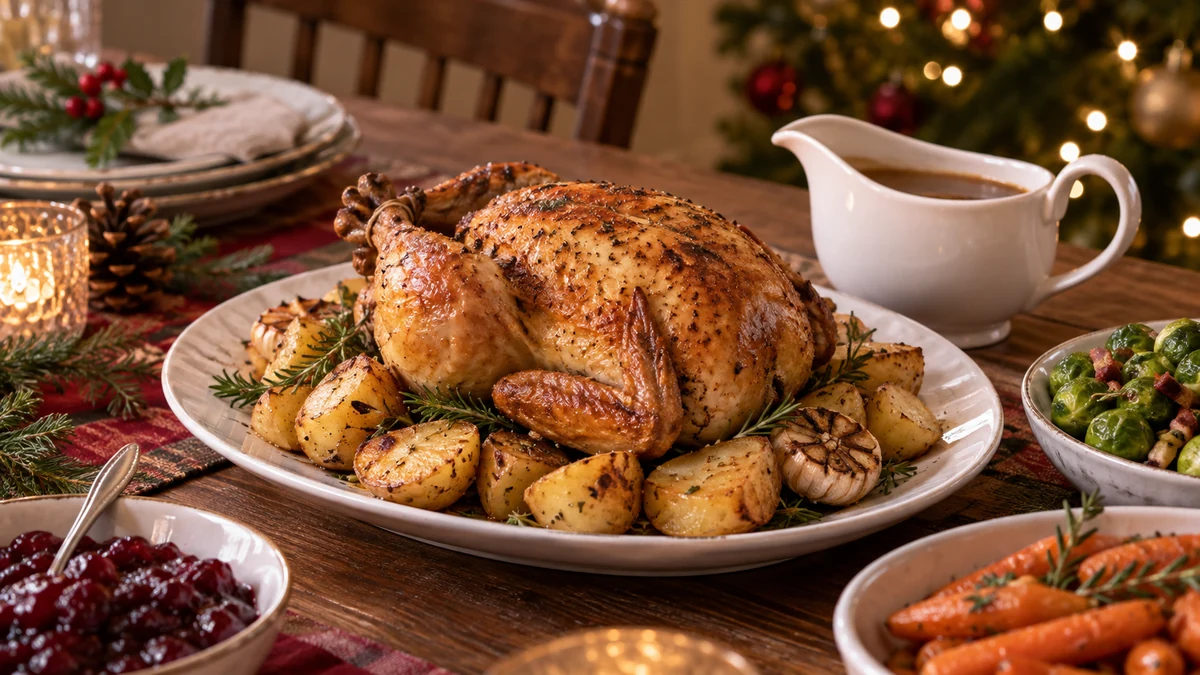
A smaller chicken alternative
A smaller whole chicken may be easier to find in the UK. Compare actual prices and quantities rather than assuming one fat or cut is always cheaper. The quantities below replace the main version.
- 1 whole chicken, 1.8–2.2 kg — use its packaging instructions and cooking checks.
- 75 g softened butter or about 3 tbsp olive oil — an alternative coating for the smaller bird; oil does not spread beneath the skin in the same way as butter.
- 330 ml lager or chicken stock — for the tin, using stock if avoiding alcohol.
- 1 kg potatoes, cut into even pieces — roast separately with a little oil.
- Garlic, onion, paprika and seasoning — use modest quantities to taste, checking whether the chicken is already seasoned.
Method for the smaller chicken
- Prepare and season: remove the packaging and any giblet bag, do not wash the bird, and season the outside as appropriate. Leave the cavity unstuffed.
- Add butter or oil: mix the softened butter with garlic and herbs, spreading some beneath the breast skin and the rest outside. If using oil, brush it over the outside instead.
- Arrange the trays: place the chicken and onion in one roasting tin with the beer or stock in the base. Roast the potatoes in their own tray so their timing can be adjusted.
- Roast according to the label: a general unstuffed-chicken guide at 180°C conventional or 160°C fan is 45 minutes per kilogram plus 20 minutes, roughly 1 hour 41 minutes to 1 hour 59 minutes for this weight range. Confirm safe cooking in breast and thigh with a thermometer; a fork test alone is insufficient.
- Rest briefly: once safely cooked throughout, leave loosely covered for 10–15 minutes, then carve and serve.
Use leftovers safely: chill promptly and use within 48 hours or freeze. Suitable leftovers can become sandwich fillings, salads or pie fillings; reheat only once if serving hot.
A festive presentation
Use the main recipe and give attention to the platter and sides. The following restates its core quantities rather than adding a second set of ingredients.
- 1 whole Chester chicken, 3.5–4 kg — defrosted and prepared according to its label.
- 150 g butter — mixed with the main recipe’s garlic, lemon zest, rosemary and thyme.
- 330 ml lager — with the main recipe’s 100 ml stock in the tin; use stock instead of beer if required.
- 1.5 kg small potatoes — roast in a separate tray with the main recipe’s oil and seasoning.
- Optional separately cooked stuffing or farofa — choose a complete recipe for farofa with nuts and raisins, or rice with cranberries. Do not pack it inside the chicken.
Finishing touches for the festive version
- Use the herb butter: spread the main mixture beneath the breast skin where practical and over the outside, without making an extra batch.
- Keep the cavity clear: put onion, optional apple pieces and herbs in the tin around the bird. Prepare any edible stuffing separately.
- Set up the roast: put the bird on a suitable rack if its instructions advise it, with beer and stock in the tin below. Keep the potatoes on a separate tray.
- Check cooking properly: follow the bird’s label and confirm 75°C for 30 seconds, or an equivalent safe combination, in both breast and thigh. Monitor browning without treating skin colour as a safety test.
- Make gravy: use the butter-and-flour method described above, whisking in strained pan juices and stock and simmering until thickened and piping hot. Adjust the liquid for the consistency you prefer.
Adaptations and planning
- No added alcohol: replace the lager with 330 ml stock and optionally 1 tbsp apple juice. Check any beer marketed as alcohol-free carefully rather than assuming every product contains zero alcohol.
- Avoiding dairy: use a suitable dairy-free spread or oil, but check the prepared chicken, stock and every other ingredient. Lactose-free does not mean safe for someone with a milk allergy.
- Allow for bones and appetite: buying around 300–350 g of whole raw bird per adult can be a rough starting point with sides. This is not the weight of cooked edible meat on each plate; adjust for your group and desired leftovers.
- Keep presentation practical: add roasted fruit or removable herb sprigs, and keep nuts separate where allergies or preferences require it.
Storage, defrosting and roasting guidance
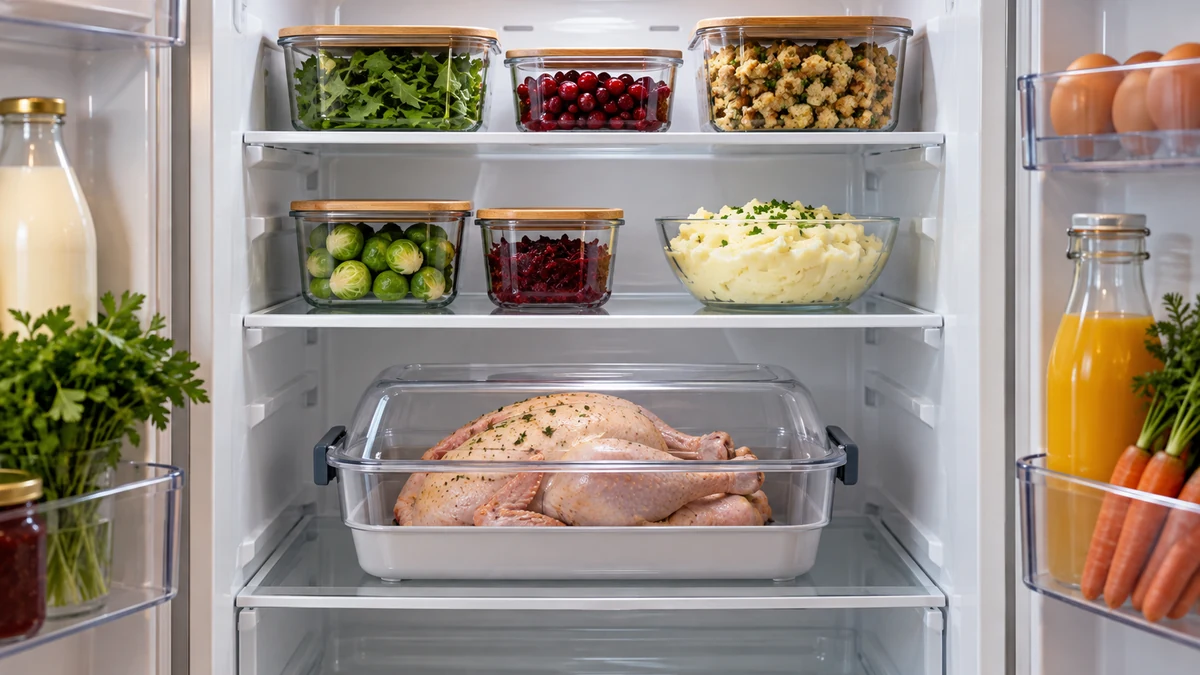
Safe storage
- Raw poultry in the fridge: follow its use-by date and packaging instructions. Keep it covered on the bottom shelf, away from ready-to-eat food, with the fridge at 5°C or below.
- Raw poultry in the freezer: freeze before the use-by date if the label allows, wrap securely and follow the product’s recommended frozen-storage period. Label the date rather than assuming every bird has the same shelf life.
- Cooked poultry in the fridge: cool and refrigerate within 1–2 hours, then eat within 48 hours or freeze.
- Cooked poultry in the freezer: freeze cooled portions promptly in suitable sealed containers. Label the contents and date, and follow freezer and food-storage guidance for quality.
Defrosting safely
Plan refrigerated defrosting rather than thawing a whole bird on the kitchen worktop. The outside can become warm while the centre remains frozen.
- Use the fridge: put the wrapped bird in a tray on the bottom shelf and follow the label’s thawing time. A large bird may take several days; confirm that the centre and cavity are completely thawed before cooking.
- Do not improvise a quick whole-bird thaw: if time is short, consult the manufacturer’s safe instructions or change the meal plan. Do not rely on a general cold-water timing rule for every product.
- Microwave defrosting: use only when the food and microwave instructions support it, and cook immediately afterwards. It is not the method used for the whole bird in this recipe.
Roasting time and checks
Treat oven times as planning guides. The packaging and checks in the thickest parts of the bird determine whether it is ready.
- Oven setting: follow the bird’s instructions; 180°C conventional or 160°C fan is the general chicken setting used here where appropriate.
- Planning time: for an unstuffed chicken, a general guide is 45 minutes per kilogram plus 20 minutes. Do not apply it unquestioningly to a different poultry product or an oven-ready bag with its own directions.
- Safe internal cooking: check the breast and thigh for 75°C for 30 seconds, or an equivalent combination such as 70°C for 2 minutes. Keep the probe clear of bone and clean it between checks.
- Cook stuffing separately: use its own dish and recipe. Any meat-containing stuffing must also be cooked safely throughout, for example to 75°C for 30 seconds. This method leaves the bird’s cavity unstuffed.
Using the thermometer
Insert the clean probe into the thickest breast meat without touching bone, and check the thickest part of the thigh too. Take more than one reading where needed; clean the probe after use and avoid contaminating cooked food with raw juices.
Resting and storing after roasting
- Rest briefly: once cooked safely, loosely cover the bird for 15–20 minutes before carving and serving.
- Cool leftovers promptly: divide into smaller portions in shallow containers and refrigerate within 1–2 hours. Do not leave the whole carcass on the table all evening.
- Freeze what you will not use: seal and label suitable cooled portions promptly rather than waiting until they have spent too long in the fridge.
Reheating safely
- In the oven: reheat a portion in a covered ovenproof dish with a little liquid if needed, until piping hot throughout. A thermometer can check 75°C for 30 seconds or an equivalent combination. Reheat only once.
- In the microwave: follow the appliance instructions, use a suitable covered dish, rearrange portions and allow the stated standing time. Check several places for piping-hot food throughout, as cold spots can remain. Reheat only once.
Final food-safety reminders
- Handle thawed food correctly: follow the label and cook promptly after complete defrosting, normally within 24 hours. Do not refreeze raw thawed poultry; safely cooked and cooled portions can then be frozen.
- Label containers: record when food was cooked or frozen so leftovers are not kept beyond their safe storage period.
- Prevent cross-contamination: wash hands with soap and water and clean utensils and surfaces after handling raw poultry. Keep raw juices away from salad and cooked food; do not wash the raw bird.
About Chester and serving it at Christmas
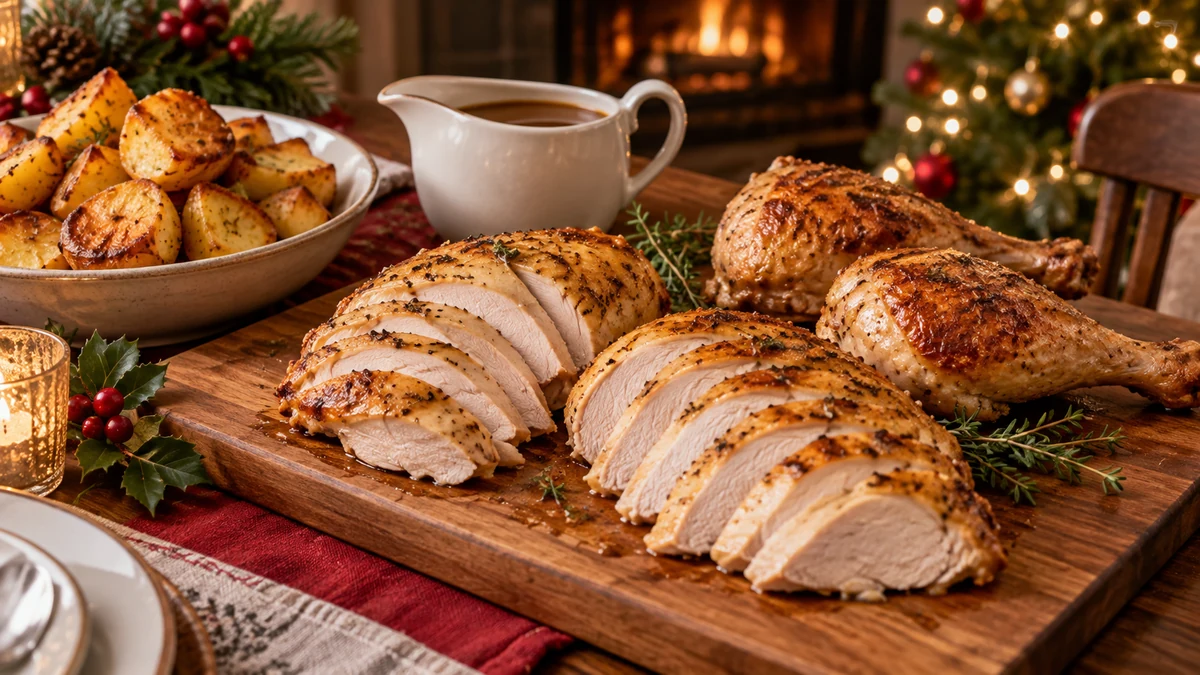
Chester is a Brazilian branded chicken product associated with festive meals. The traditional product is sold seasoned, which is why checking the label before adding salt is especially important.
A few useful distinctions
- Chester is not a separate bird species and is not the same thing as turkey. The name identifies a commercial chicken product.
- For a UK reader who cannot obtain it, a whole chicken is the practical alternative, with the cooking time and seasoning adjusted to that bird.
- At a Brazilian celebration, the roast may be served with both sweet and savoury sides. Family menus vary rather than following one compulsory combination.
Serving ideas for Christmas dinner
- Carve before serving: arrange breast slices on a warmed platter with leg meat alongside, keeping bones clear for guests.
- Add colour simply: use roasted orange slices or a little cranberry accompaniment, with herb stems treated as removable decoration.
- Serve gravy separately: let each person choose how much sauce they want.
- Serve promptly: coordinate the sides so the bird does not wait around after carving. A low oven setting alone is not a reliable check that food is being held safely hot.
- Choose complementary sides: roast potatoes, farofa and a citrus salad offer different textures. Keep optional nuts clearly identified.
How to carve the bird
- Position it securely: put the rested bird breast-side up on a large, stable chopping board with space for the knife.
- Remove string: cut and discard any kitchen string before carving.
- Separate the legs: cut through the joints where the legs meet the body, then portion or remove the bones as preferred.
- Slice the breast: use controlled strokes and cut across the grain, keeping fingers out of the knife’s path.
- Arrange and serve: overlap the slices on the platter and add a little hot gravy just before taking it to the table.
Portions and leftovers
- Shopping guide: approximately 300–350 g of whole raw bird per adult is a starting estimate with several sides, allowing for bones and cooking loss. Adjust for appetites, children and whether you want leftovers.
- Use chilled leftovers: suitable cooked chicken can go into sandwiches, salads or a thoroughly heated pie filling within its storage limit. Keep raw and cooked ingredients separate during preparation.
- Store promptly: cool leftovers in shallow portions and refrigerate within 1–2 hours. Eat within 48 hours or freeze, and reheat only once if serving hot.
Finishing touches
Keep the finishing touch small: a little fresh lemon zest or hot gravy can lift the presentation without burying the carved meat in decorations.
Final thoughts
This Brazilian Christmas Chester chicken with beer and potatoes brings a festive Brazilian idea to an English-language kitchen. Check the exact bird you have, keep the seasoning balanced and use reliable cooking and storage checks rather than relying on colour or timing alone.
Thank you for reading. Browse more Christmas recipes and serving ideas to plan a meal that suits your household.
Visit the I Love Christmas blog for further festive inspiration and step-by-step cooking guides.
FAQ: Christmas Chester chicken with beer and potatoes
How long should I roast a 3.5–4 kg Chester chicken?
Follow its packaging first. A general guide for an unstuffed chicken at 180°C conventional or 160°C fan is 45 minutes per kilogram plus 20 minutes, roughly 2 hours 58 minutes to 3 hours 20 minutes for this range. Confirm 75°C for 30 seconds, or an equivalent safe combination, in the thickest breast and thigh meat.
Can I replace the beer?
Yes. Replace the 330 ml beer with chicken stock, plus an optional tablespoon of apple juice. Cooking beer does not guarantee that all alcohol disappears, and ordinary lager commonly contains gluten. Check labels for everyone’s dietary needs.
How can I avoid drying out the bird?
Follow the product’s roasting instructions, use the herb butter if suitable and cover the skin loosely if it browns too quickly. Check the meat’s temperature rather than roasting blindly for extra time, then rest briefly. Do not brine an already seasoned Chester.
How should I defrost it safely?
Defrost in the fridge in a tray on the bottom shelf, following the packaging. A large bird can take several days; ensure the cavity and centre have completely thawed. Do not leave it on the worktop or improvise a quick whole-bird thaw.
What alternatives might suit a smaller budget?
Compare the price of a smaller whole chicken and use its own cooking instructions. Stock can replace beer, and plain potatoes and seasonal vegetables can keep the menu simple. Oil and butter prices vary, so compare costs rather than assuming either is always cheaper.
How can I use the leftovers?
Cool and refrigerate within 1–2 hours, then eat within 48 hours or freeze. Use suitable chilled chicken in sandwiches or salads, or reheat a portion once until piping hot for a hot dish. Defrost frozen leftovers safely before use.
Sources and Further Reading
- Food Standards Agency: Christmas food hygiene
- Food Standards Agency: cooking food safely
- Food Standards Agency: chilling freezing and defrosting
- Perdigão: Chester Tradicional ingredients and product information