Puff pastry-wrapped sausages are a convenient warm appetiser for a New Year’s Eve buffet. Wrap suitable cooked sausages in chilled pastry, bake until the pastry is crisp and the centre is piping hot, and serve with dips. The recipe includes cheese, bacon and vegetarian variations, plus guidance on storage and making ahead.
Puff pastry-wrapped sausages are easy to portion and adapt for a party. This version uses cooked frankfurter-style sausages, as in the Brazilian original, rather than raw British sausagemeat. Follow the steps below for the wrapping, baking and serving.
Ingredients for puff pastry-wrapped sausages

Ingredients for puff pastry-wrapped sausages
To make puff pastry-wrapped sausages, use the quantities below. The original gives both 12 cocktail sausages and about 500 g, but these are not interchangeable sizes: 500 g of small cocktail sausages will usually make more than 12 bites. Match the pastry pieces to your sausages and plan the yield by their actual size.
- 500 g puff pastry – thawed according to the packet if frozen. Ready-made croissant dough gives a different result and needs its own baking instructions.
- About 500 g cooked, ready-to-eat frankfurter-style or cocktail sausages – cut larger sausages into suitable portions. Check the label: this method is not a timed recipe for raw sausages. Plant-based alternatives need their own cooking instructions.
- 1 large egg, beaten – for glazing the pastry; use about 2 tablespoons milk instead for an egg-free glaze, checking the pastry and sausage ingredients too.
- 1 tablespoon mustard – for a thin layer inside or to serve alongside. Ketchup or barbecue sauce gives another flavour.
- 1 tablespoon melted butter, optional – for a very light finish after baking; omit it for a less greasy surface.
- 1 tablespoon sesame seeds, optional – for topping. Poppy seeds or a little grated cheese are alternatives with different allergen considerations.
- A little plain flour for dusting – use sparingly, or work on the pastry’s baking paper where appropriate.
- Black pepper or dried herbs, to taste – extra salt is usually unnecessary because sausages are already seasoned. A little smoked paprika is another option.
- Dips to serve – mustard, ketchup, mayonnaise, chutney or a suitable hot sauce.
How to make puff pastry-wrapped sausages
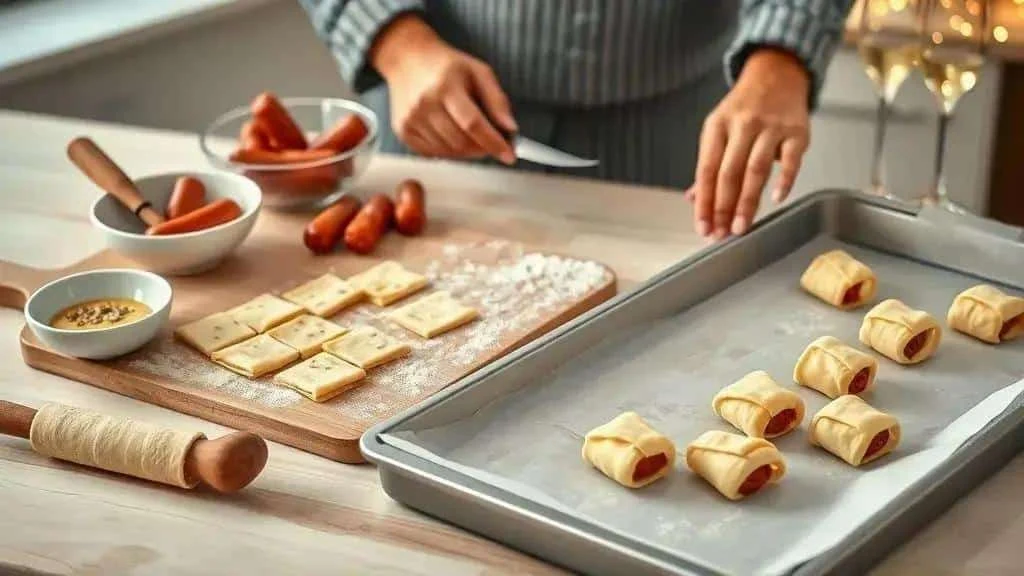
Follow these steps for puff pastry-wrapped sausages with an evenly baked pastry shell. Use the sausage and pastry packaging as well as the guidance below, since sizes and products vary.
- Gather the ingredients: have the 500 g pastry, about 500 g cooked sausages, beaten egg, mustard and optional toppings ready. Drain or pat the sausages dry if needed so they do not wet the pastry.
- Thaw the pastry: follow the packet’s fridge-defrosting directions; a fixed 1–2 hours may not thaw a block. Keep it cold but pliable enough to unroll or roll without cracking.
- Heat the oven: use 200°C conventional / 180°C fan as a starting point, unless the pastry packet specifies otherwise. Line a baking tray with baking parchment.
- Cut the pastry: roll block pastry to about 3 mm thick, or unroll a ready-rolled sheet. Cut rectangles just large enough to wrap the sausage pieces with a small overlap. Test one first rather than cutting every piece to a fixed 8 × 10 cm.
- Add mustard: spread a thin layer down the centre of each rectangle, keeping the joining edge clear. Dijon or a little mild barbecue sauce can be used.
- Wrap the sausages: place a sausage portion on each piece of pastry, roll to enclose and press the overlapping seam together. Set seam-side down. Adjust the pastry to the filling rather than adding several thick layers.
- Glaze and finish: brush lightly with beaten egg, keeping excess off the cut edges. Add sesame seeds or a little grated cheese if desired.
- Chill if needed: if the pastry has softened during assembly, refrigerate the tray for about 10 minutes before baking.
- Bake: start checking small pieces after about 18–20 minutes, continuing as needed until the pastry is well risen and golden, the underside is cooked and the sausage centre is piping hot. Larger pieces may need appreciably longer; follow any more specific product instructions.
- Rest and serve: leave for a couple of minutes before serving with dips. The optional melted butter needs only a very light brush; it is not necessary for a crisp finish.
- Storage: these are perishable foods: do not store them for 24 hours at room temperature. Cool promptly and refrigerate within 2 hours at 5°C or below, then use within 48 hours or an earlier product deadline. Because this method heats ready-cooked sausages, avoid another reheating cycle; serve safely stored leftovers cold or follow specific manufacturer advice.
- Simple variations: add a small strip of cheese, a thin piece of cooked ham or a few dried herbs. Keep additions modest so the pastry can seal.
Practical tips
- Work with cold pastry to preserve its layers and make it easier to handle.
- Avoid overfilling and drain wet ingredients so the pastry does not become soggy.
- For an egg-free glaze, use a little milk; the whole recipe is egg-free only if all other ingredients are suitable too.
- Freeze assembled, unbaked portions only when both the sausage and pastry packaging allow it. Thaw in the fridge before baking for this method, and use within 24 hours of full defrosting or any earlier label deadline; a fixed extra 4–6 minutes from frozen is not a reliable guide.
Recipe variations

Change the extras in your puff pastry-wrapped sausages to suit the party, without crowding the pastry or overlooking the cooking requirements of a substitute sausage.
- With cheese: add a narrow strip of firm mozzarella or Cheddar, using less for small cocktail bites. A plant-based cheese alternative can replace dairy cheese, but also check the pastry, sausage, glaze and optional butter when avoiding milk.
- With bacon: add a small piece of fully cooked, drained bacon, cooled promptly before assembly. Do not leave it merely partly cooked or assume the pastry’s colour proves the bacon is done.
- Vegetarian: use suitable plant-based sausages and follow their cooking directions. Check pastry fat, cheese and pesto for vegetarian suitability; a little well-drained roasted pepper makes a useful addition.
- Spicy: stir a little chilli flake or sriracha into the mustard, tasting before using the full amount. Sweet paprika is milder; chipotle sauces can still be hot.
- Sweet and savoury: mix 1 tablespoon honey with 1 tablespoon mustard for an optional dip or very light finish. Apricot jam is another accompaniment. Honey is not suitable for babies under one year.
- Smaller party bites: cut larger sausages and pastry into smaller portions before wrapping. Yield depends on the starting number: six sausages cut into thirds give 18 pieces, not 24.
- Other fillings: try a small dab of cooled caramelised onion, a little blue cheese or a pinch of dried herbs. Scale down the additions for small bites.
Practical tips
- Keep the pastry cold and the filling reasonably dry for well-defined layers.
- Use only a small amount of extra filling so the seam stays closed during baking.
- Brush lightly with beaten egg, or milk for an egg-free glaze, checking the rest of the ingredients as well.
- If freezing unbaked portions, check that all products allow it, freeze them separately until firm and pack with a date and ingredient label. Thaw safely before baking rather than assuming every frozen portion needs the same extra time.
- An oven gives crisper pastry than a microwave. However, this ready-cooked-sausage version has already heated a cooked filling: do not routinely plan another reheating cycle for leftovers.
- Serve with Dijon mustard, ketchup, flavoured mayonnaise, mango chutney or a garlic mayonnaise dip.
Filling and seasoning ideas

Small additions give puff pastry-wrapped sausages variety without changing their basic shape. Choose one or two extras per version rather than combining every filling.
Suggested fillings
- Firm mozzarella – a small strip adds a mild cheese flavour. Use less than 10–15 g for a tiny cocktail bite, and avoid undrained fresh mozzarella.
- Cheddar – a thin strip gives a stronger flavour; Provolone is another option.
- Cooked bacon – use a small, fully cooked and drained piece. Ready-to-eat cooked ham offers a less crisp alternative.
- Caramelised onion – up to a small teaspoon for a larger piece, less for tiny bites; cool and drain before assembling. Softened onion is another option.
- Roasted pepper strips – pat dry before adding. A small piece of drained pickled cucumber gives a sharper alternative.
- Pesto or olive paste – use sparingly and check ingredients. Pesto may contain animal-rennet cheese or nuts, and some tapenades contain anchovies.
- Blue cheese – a small amount adds a strong flavour; a mild goat’s cheese is an alternative. Check suitability for the people being served.
- Honey and mustard – mix 1 tablespoon of each for the whole batch and serve separately or brush on very sparingly after baking.
Glazes, seasonings and dips
- Beaten egg, 1 for the batch – brush lightly over the pastry; about 2 tablespoons milk is an alternative glaze.
- Dijon mustard, 1 tablespoon – use a thin layer inside the pastry or serve alongside.
- Barbecue sauce, about 1 tablespoon – a small amount works with bacon and Cheddar; avoid soaking the pastry.
- Garlic mayonnaise – mix 3 tablespoons shop-bought mayonnaise with 1 teaspoon lemon juice and half a small crushed garlic clove. Keep chilled and serve in a separate bowl; check egg and mustard allergens.
- Apricot chutney or chilli jam – serve a small bowl alongside stronger cheese versions.
- Dried herb seasoning – a small pinch of oregano, thyme or finely crushed rosemary adds aroma without extra sauce.
Easy flavour combinations
- Classic: mozzarella and Dijon mustard.
- Smoky: cooked bacon, Cheddar and black pepper.
- Vegetarian: suitable plant-based sausage, vegetarian pesto and drained roasted pepper.
- Rich and savoury: a little blue cheese and caramelised onion, with honey served separately if wanted.
- Sweet heat: mustard with a little sriracha and an optional touch of honey.
Quick tips
- Chill pastry that becomes soft or greasy during preparation.
- The suggested small additions are extra to the sausage, not the total filling weight. Tiny cocktail bites need much less cheese or onion than larger portions.
- Pat wet fillings dry with kitchen paper before wrapping.
- Add sesame or poppy seeds after applying the glaze so they adhere. Make guests aware of sesame where used.
- Prepare and serve different varieties separately, with clear labels and separate utensils where needed.
Wrapping and baking for crisp pastry

- Prepare the surface: dust lightly with flour or use suitable baking parchment beneath the pastry.
- Size the pieces: cut one test rectangle to fit a sausage portion with a small seam overlap, then use it as a guide for similar-sized pieces.
- Add flavour: use only a thin layer of mustard or other sauce down the centre, keeping the joining edge clear.
- Wrap neatly: roll the pastry around the sausage without stretching it tightly or building up a thick overlap. Press the seam to seal.
- Place seam-side down: this helps prevent the pastry opening as it rises.
- Apply the glaze: brush lightly with the beaten egg or alternative glaze, avoiding pools around the bases.
- Add a topping: scatter over sesame seeds or a little grated cheese if desired.
- Chill softened pastry: about 10 minutes in the fridge can firm the assembled pieces before baking.
- Preheat thoroughly: use 200°C conventional / 180°C fan unless the pastry instructions specify otherwise, with a shelf near the centre of the oven.
- Bake until ready: check small portions from about 18–20 minutes and continue until the pastry is golden and cooked underneath and the sausage centre is piping hot. A safe temperature check is 70°C for 2 minutes or an equivalent combination. Larger portions can take longer.
- Avoid unnecessary opening: let the oven maintain its heat, while still checking towards the expected finishing time. Pastry colour alone does not confirm the centre is hot.
- Finish: rest briefly, then transfer to a rack or serving platter so steam does not collect underneath. Use the optional butter sparingly, if at all.
Keeping the pastry crisp
- Cold pastry: keeping the fat firm during preparation helps the layers separate in the oven.
- Modest additions: avoid large amounts of wet cheese, sauce or vegetables around the sausage.
- A properly heated oven: follow the pastry’s temperature guidance so steam can lift the layers as it bakes.
- Space on the tray: leave room between the pieces for air to circulate and the pastry to expand.
- Serve freshly baked: baking in small batches gives the best texture without repeatedly reheating ready-cooked sausage fillings.
Points to remember
- Cook any raw bacon fully before adding it, drain excess fat and cool it promptly. Do not leave partly cooked bacon waiting for later assembly.
- If the pastry resists rolling or becomes soft, give it a short rest in the fridge rather than stretching it.
- Freeze assembled portions only if the ingredients allow it, label clearly and thaw in the fridge before baking for this method.
Serving at New Year’s Eve or a party

Serve puff pastry-wrapped sausages warm, with dipping sauces alongside. Small portions are convenient for a buffet, but adapt the shape and texture for young children rather than serving round sausage pieces whole.
Portions and presentation
- Per person: 3–4 genuinely bite-sized pieces may be appropriate alongside other dishes; larger wrapped sausages need a lower allowance. Adjust for appetite and the rest of the menu.
- For ten guests: around 30–40 small bites is a possible starting estimate with other food available. Check the yield of your chosen sausage size before multiplying the recipe.
- Presentation: arrange on a clean platter with enough space for guests to pick up a portion easily.
Dip combinations
- Dijon mustard or a honey-and-mustard dip, with honey omitted for babies under one year.
- Ketchup or smoky barbecue sauce.
- Garlic mayonnaise made with shop-bought mayonnaise, lemon and crushed garlic, kept chilled until serving.
- Apricot chutney or chilli jam for a sweet-sharp contrast.
Different serving formats
- Individual portions: use small plates with one piece and a dab of sauce, rather than squeezing large pieces onto tiny tasting spoons.
- Small party bites: cut larger sausages into portions before wrapping. If using decorative picks, keep them away from young children. Cut sausage lengthways into narrow strips for children, rather than round coin shapes.
- Separate varieties: keep classic, vegetarian and cheese versions on different labelled trays.
Temperature and timing
- Serve promptly after baking. If holding hot, keep the food itself at 63°C or above using suitable equipment; an oven set to 90–100°C does not by itself prove that the food stays at a safe temperature.
- For a long party, bake successive small batches instead of cooling and reheating the same cooked-sausage portions repeatedly.
- A microwave softens puff pastry. For this recipe, fresh baking is preferable to planning a later reheating step.
Finishing touches
- Add a little chopped parsley or chives, or use a seed topping applied before baking.
- Use written labels to distinguish spicy, cheese and vegetarian versions; colours alone do not communicate ingredients or allergens.
- A few edible rosemary sprigs, lemon slices and separate dip bowls can give the table a festive appearance without crowding the food.
Drinks to serve alongside
- Dry sparkling wine is an option for adults who choose to drink alcohol.
- A light lager or wheat beer offers another pairing.
- A fresh white wine or rosé can also accompany the savoury pastry.
- Offer water and alcohol-free drinks too, such as sparkling water with citrus or an unsweetened lemon-flavoured drink.
A useful serving arrangement
Set out tongs, separate dip bowls and accurate labels so guests can help themselves. Keep chilled dips refrigerated until needed and replenish small amounts during service.
Storage, making ahead and party quantities
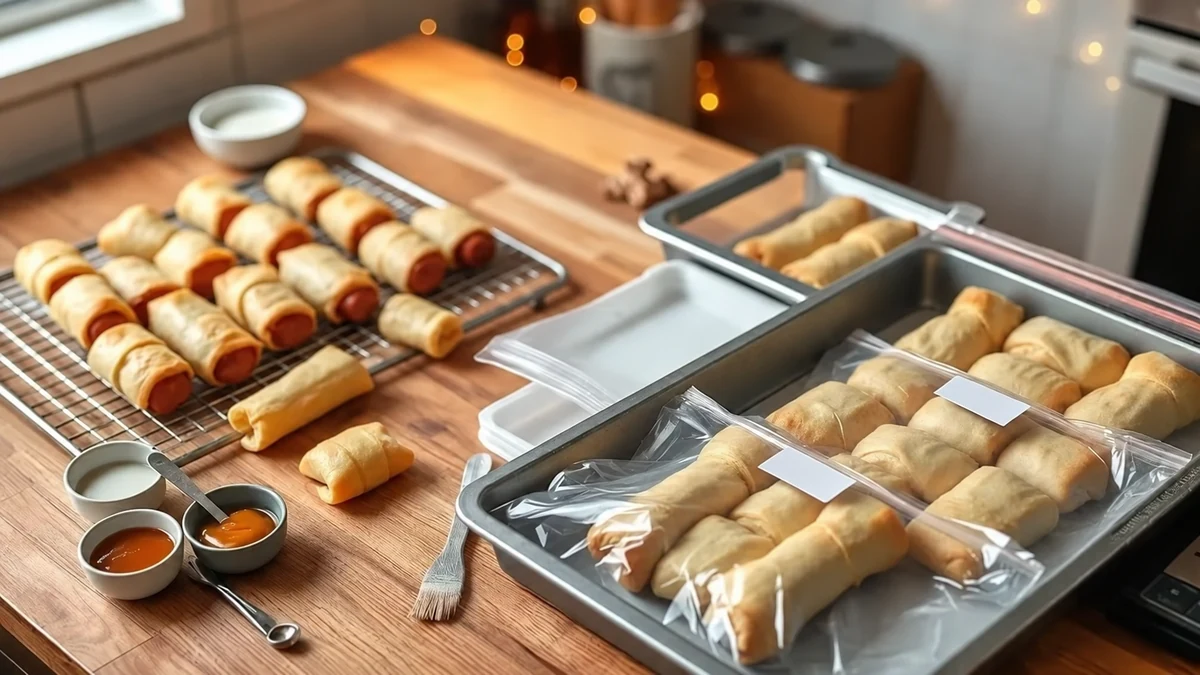
Plan the number of portions around the actual sausage size, and keep perishable ingredients chilled during advance preparation.
Storage
- Unbaked in the fridge: assemble up to a day ahead only if the pastry and sausage labels allow it. Keep covered at 5°C or below and respect the earliest use-by, opening or defrosting deadline.
- Unbaked in the freezer: freeze promptly only when all ingredients permit freezing in this state. Follow the shortest relevant product guidance, label the date and avoid promising a universal three-month storage period.
- Baked in the fridge: cool promptly, refrigerate within 2 hours and use within 48 hours or an earlier ingredient deadline. This method uses ready-cooked sausages, so do not plan repeated reheating; safely stored portions can be eaten cold.
- Baked in the freezer: freeze suitable portions promptly after cooling if their storage history and packaging allow. Thaw in the fridge and use within 24 hours of full defrosting; freezing does not undo an earlier unsafe storage period.
Making ahead step by step
- Assemble: wrap the sausage portions in pastry and place on a lined tray, keeping the ingredients cold.
- Freeze if suitable: where the ingredient labels allow, freeze the portions separately until firm enough to pack without crushing.
- Pack and label: transfer to freezer-safe bags or containers, removing excess air. Write the date, flavour and ingredients on the pack rather than relying on memory.
- Before baking: thaw in the fridge until fully defrosted and bake within 24 hours or any earlier product deadline. Allow enough time; a fixed 6–8 hours is not sufficient for every pack or portion size.
- Bake in batches: keep the remaining unbaked portions chilled while each tray cooks, then serve freshly baked pieces as needed.
Planning quantities
- Recipe yield: 500 g pastry and about 500 g cooked sausages gives a variable number of portions. Twelve larger pieces and a tray of tiny cocktail bites are different serving sizes, so count your prepared batch.
- Working estimate: allow around 3–4 small bites per person with other food, adjusting upwards if there are few alternatives or downwards for larger portions.
- Examples: 30–40 small bites for ten guests, or 60–80 for twenty, follows that estimate. Scale from the yield of your actual sausages rather than a nominal packet count.
- Guests’ needs: adjust portion size to appetite and age. Sausages are salty processed foods; for young children, serve appropriately cut narrow lengthways pieces without sharp picks, not whole rounds.
Reheating and serving
- Oven use: bake these ready-cooked-sausage portions to serve hot once, rather than relying on a later 5–8-minute warming step. Other recipes made with raw sausagemeat have different cooking and reheating histories.
- Microwave texture: microwaving tends to soften pastry, so baking in small batches is the better approach for this buffet recipe.
- Hot holding: keep the food at 63°C or above if holding it hot, and check the food temperature. Do not assume that covering a tray or choosing a low oven setting guarantees safe holding.
Common mistakes to avoid
- Do not overload the pastry with additional filling; use only a small amount alongside the sausage.
- Keep the pastry cold during assembly so its layers remain distinct.
- Cook optional bacon fully, drain it and cool promptly before using.
- Freeze only suitable ingredients and label portioned packs clearly to simplify preparation on the day.
Final thoughts
Puff pastry-wrapped sausages make a straightforward New Year’s Eve appetiser. Match the pastry to your sausage size, keep fillings modest and bake until both the pastry and centre are ready. Serve in small fresh batches with a choice of dips.
Thank you for reading. Follow us on social media for more festive food ideas and visit I Love Christmas for further recipes and inspiration.
FAQ: puff pastry-wrapped sausages
Can I use frozen puff pastry?
Yes, but thaw it as directed on the packet, usually in the fridge, before shaping. Keep it cold and pliable. A fixed 1–2-hour defrosting time is not suitable for every block or sheet.
How should I store the assembled pieces before baking?
Keep covered at 5°C or below and bake within a day only if all ingredient labels and existing storage deadlines allow it. Freeze only when the pastry and sausages permit this, label clearly, then thaw in the fridge before baking for this method.
What oven temperature and baking time should I use?
Start with 200°C conventional / 180°C fan unless the pastry packet specifies otherwise. Check small portions from about 18–20 minutes and continue until golden, cooked underneath and piping hot in the centre. Size and product instructions matter more than a fixed time. This version uses cooked sausages, not raw sausagemeat.
How can I make a vegetarian or dairy-free version?
For vegetarian portions, use suitable plant-based sausages and check pastry, cheese and pesto ingredients. For dairy-free portions, also check the sausage and pastry, omit or replace cheese and butter, and use a suitable dairy-free glaze. Vegan portions need an egg-free glaze too. Follow the substitute sausage’s cooking directions.
How many should I make for a party?
For genuinely small bites, around 3–4 per person is a starting point alongside other food: roughly 30–40 for ten guests. Larger wrapped sausages need fewer portions. Check your actual batch yield, since 12 cocktail sausages and 500 g of sausages do not describe one standard size.
Sources and Further Reading
- Food Standards Agency: cooking your food
- Food Standards Agency: chilling, freezing and defrosting food safely
- Food Standards Agency: food allergies and intolerances