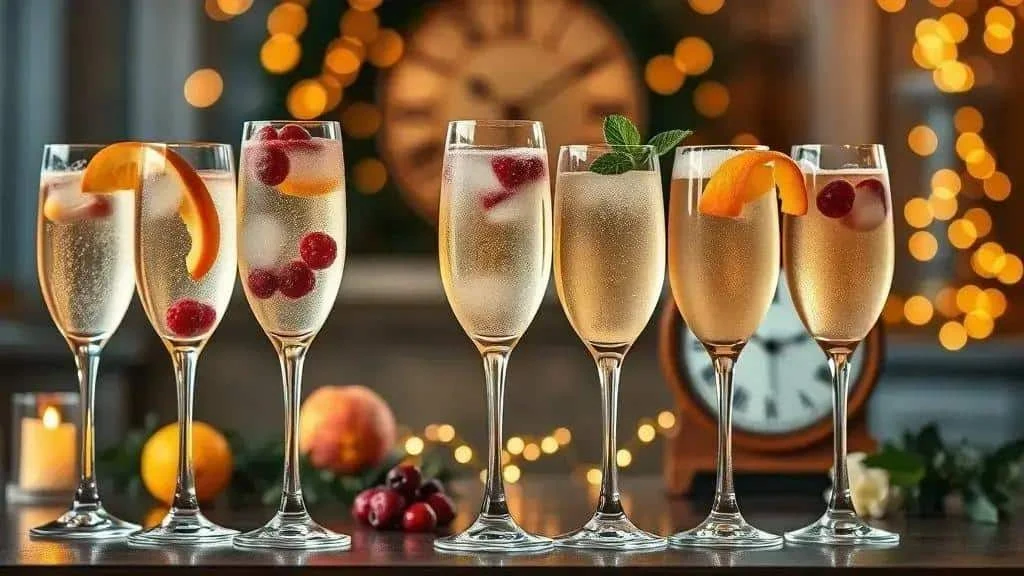
These five New Year’s Eve sparkling wine cocktails are easy festive variations on familiar drinks. Find measured ingredients, simple methods, fruit and spice ideas, alcohol-free alternatives and serving tips to help keep the bubbles lively.
Sparkling wine cocktails bring colour and flavour to a New Year’s Eve toast. The five recipes below are home variations, with options for different tastes. Alcoholic versions are for adults; offer clearly labelled alcohol-free drinks alongside them.
Why choose sparkling wine cocktails for New Year’s Eve?
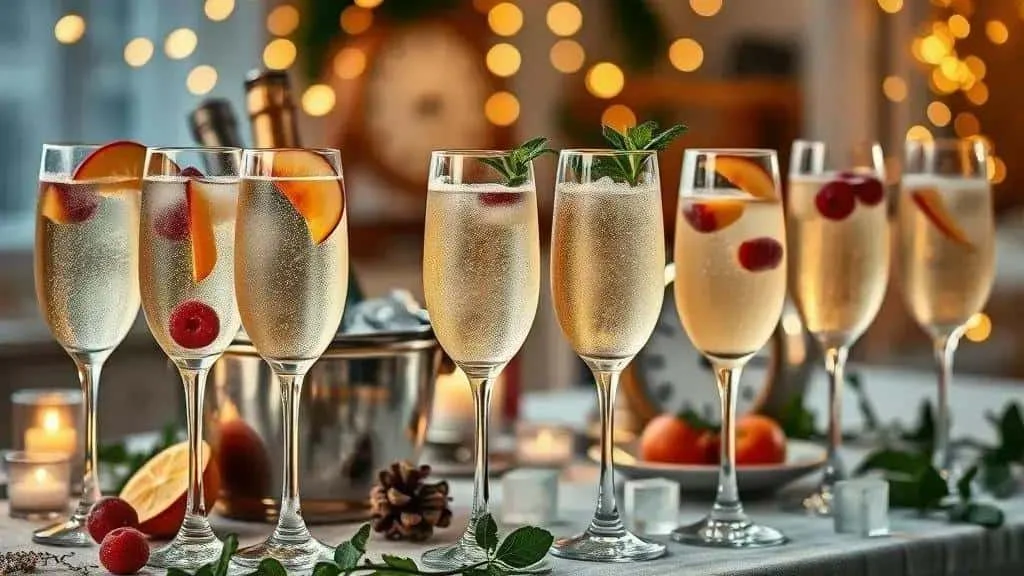
New Year’s Eve sparkling wine cocktails combine festive bubbles with straightforward fruit, liqueur and syrup mixtures.
What makes them useful for entertaining?
- A festive feel: bubbles make a simple drink feel ready for a celebration.
- Versatility: sparkling wine works with fruit, liqueurs, herbs and spices, giving you plenty of flavour combinations.
- Quick assembly: many versions only need measuring, gentle mixing and serving once their bases are ready.
- Colourful presentation: different glasses and garnishes make the drinks attractive on the table.
- Measure the alcohol: adding juice or sparkling water dilutes a drink but does not remove alcohol already poured. A mixture of one part liqueur to three parts sparkling wine is still an alcoholic cocktail, not a low-alcohol option.
- A choice for guests: offer dry or sweeter styles, plus an alcohol-free version made with sparkling water and alcohol-free flavourings.
- Food pairings: choose citrus-led drinks for savoury nibbles and fruitier versions to accompany desserts, according to taste.
Practical tips for the evening
- Serve well chilled: keep bottles in an ice bucket until you need them.
- Prepare the bases ahead: make fruit purées and syrups, cool as needed and refrigerate in clean covered containers; add sparkling wine at serving time.
- Choose suitable frozen fruit: use only fruit labelled ready to eat without cooking. Follow any cooking instructions on frozen berries; do not put those berries straight into a drink.
- Choose the glass: use a flute for a tall sparkling presentation or a coupe for a wider, more aromatic serve. Leave room for foam and garnish.
- Check the measures: one part cordial or liqueur to two or three parts wine is a starting point for some mixtures, not a universal rule. Concentrated syrups may need much less.
- Label alcohol-free drinks: check every ingredient and keep these servings clearly identifiable.
- Offer water and food: make both readily available and avoid topping up glasses without asking. Neither food nor water removes alcohol already consumed.
A little preparation makes it easier to serve attractive drinks without rushing and to offer a suitable choice to each guest.
Choosing sparkling wine, equipment and flavourings
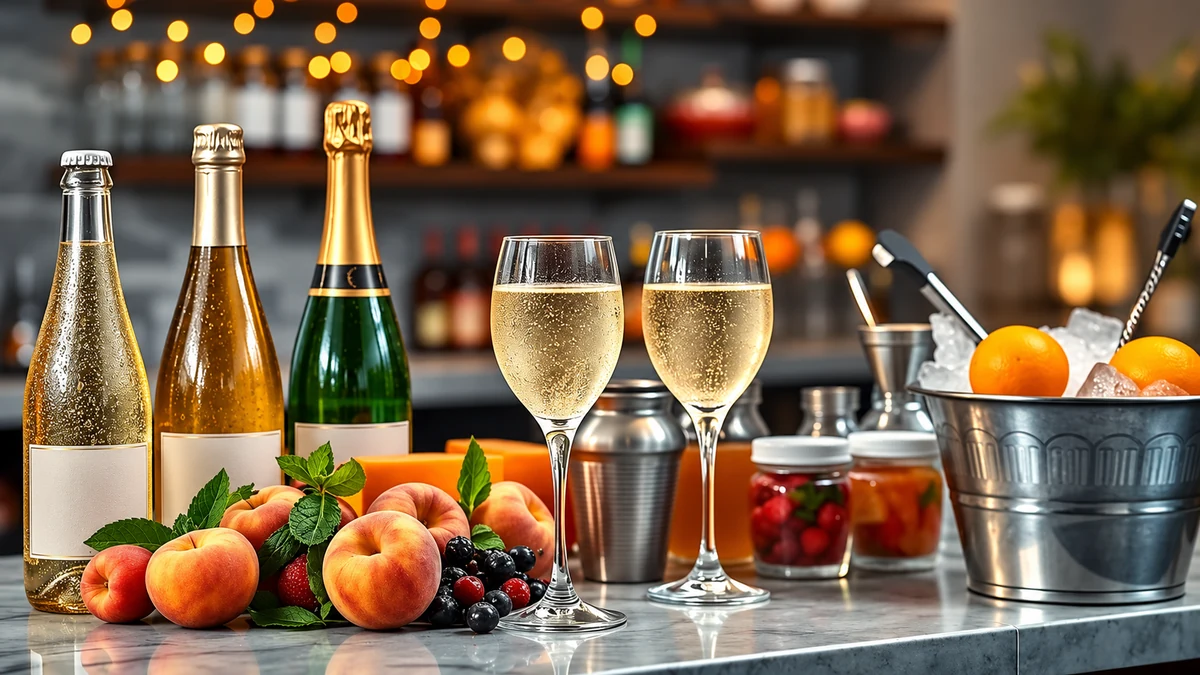
Pick your wine and additions together, then measure a small trial serving before preparing drinks for guests.
Sparkling wine styles
- Extra brut or brut: dry styles that can work well with citrus, bitters and floral liqueurs.
- Demi-sec or sweeter styles: an option for sweeter fruit cocktails. Taste before adding syrup, particularly with peach purée or orange liqueur.
- Rosé: try it with berries, raspberry syrup or mint. Flavour and sweetness vary between bottles.
- Blanc de blancs: a white-grape sparkling style to try with subtle additions such as flavoured tonic or citrus bitters; check the bottle’s sweetness rather than assuming it is dry.
- Alcohol-free choices: use sparkling water or a sparkling alternative labelled 0.0%, together with alcohol-free fruit concentrates and syrups.
Useful equipment
- Ice bucket: to keep bottles chilled until the toast.
- Flutes and coupes: choose glasses with enough capacity for the measured drink and a little headroom.
- Cocktail shaker: for still juice, purée or syrup bases only. Never shake sparkling wine or other carbonated ingredients; add them afterwards.
- Jigger: a measure helps keep the balance and serving size consistent.
- Bar spoon and strainer: for gentle stirring and removing pulp where desired.
- Fine sieve: useful for smooth purées and strained juice.
- Muddler: press herbs or fruit gently rather than crushing them excessively.
Flavouring ideas by style
For dry sparkling wines
- 30–45 ml orange or elderflower liqueur — these liqueurs contain sugar, even with dry wine. Alternatively, try 30 ml green apple juice instead of the liqueur; the wine still contains alcohol.
- 15 ml lemon juice — lime juice is an alternative.
- A few drops of citrus bitters — optional; check their alcohol content when making an alcohol-free drink.
- Lemon peel — twist it over the glass to release its aromatic oils.
For demi-sec and sweeter sparkling wines
- 30–45 ml peach or passion fruit purée — mango purée is another option.
- 15–20 ml orange liqueur or sweet vermouth — these add sweetness as well as alcohol; use less if you prefer a drier result.
- Mint or basil leaves — lightly press to release their aroma.
- Thin peach slices for garnish
For sparkling rosé
- 20–30 ml raspberry syrup or grenadine — or strained strawberry purée. Start with less if your syrup is very concentrated.
- 10–15 ml lemon juice — to balance sweetness.
- Blackberries or raspberries — use washed fresh berries, or frozen berries suitable for eating without cooking.
- Mint sprigs — for a fresh aroma.
For alcohol-free versions
- 60–90 ml sparkling water — kombucha is not an automatic alcohol-free substitute; check the product rather than assuming it contains no alcohol.
- 30 ml orange, apple or berry concentrate — adjust for the strength of the product.
- Sugar syrup or alcohol-free elderflower cordial — add to taste.
- Fresh fruit garnish
Ratios and quick tips
- A starting ratio: one part juice or purée to three parts sparkling wine can be useful for experimenting. Liqueurs and concentrated syrups need separate tasting and measuring.
- Add bubbles last: pour in the sparkling wine just before serving.
- Try a small serving: check the balance before scaling up for guests.
- Note your changes: record substitutions and measures so you can repeat a favourite combination.
Five cocktail recipes: ingredients, methods and variations
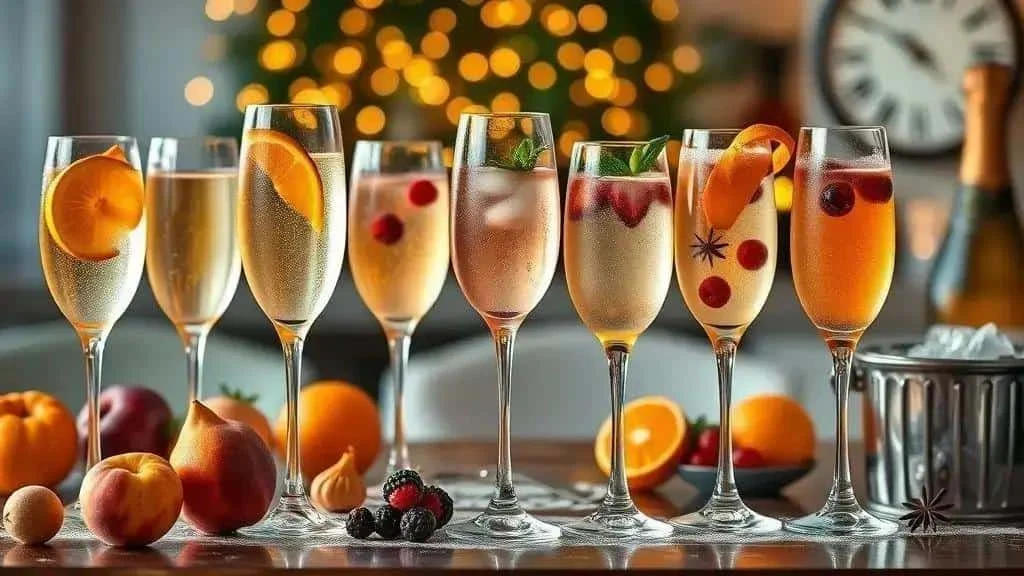
Festive mimosa
Festive mimosa ingredients
- 90–120 ml chilled brut sparkling wine — for example, a dry prosecco or cava.
- 45–60 ml strained fresh orange juice — or tangerine juice for a different citrus flavour.
- 1 orange slice — to garnish.
- Frozen fruit, optional — only if suitable for eating without cooking.
How to make a festive mimosa
- Chill the glass: refrigerate it or fill it with ice, then discard the ice before serving.
- Add the juice: pour 45–60 ml orange juice into the glass.
- Add the wine: slowly pour in 90–120 ml chilled sparkling wine, tilting the glass to limit foaming.
- Stir gently if needed: one gentle turn with a bar spoon is enough.
- Garnish: add an orange slice or suitable ready-to-eat frozen fruit and serve.
Festive mimosa variations
- Rosé mimosa: use sparkling rosé and blood orange juice.
- Elderflower mimosa: add 10–15 ml elderflower liqueur for a floral variation.
- Alcohol-free version: replace the wine with sparkling water and use lightly diluted fruit concentrate if desired. Omit all liqueurs.
Citrus kir royale variation
Citrus kir royale ingredients
- 90–120 ml chilled brut sparkling wine — or demi-sec for a sweeter variation.
- 15–20 ml crème de cassis — raspberry liqueur gives a different berry variation.
- Finely grated lemon zest — for aroma.
- 1 raspberry — to garnish.
How to make a citrus kir royale
- Measure the liqueur: pour 15–20 ml crème de cassis into a flute.
- Add the wine: slowly pour in 90–120 ml chilled sparkling wine.
- Add citrus aroma: grate a little washed lemon peel over the glass, avoiding the white pith.
- Garnish: add a raspberry and serve.
Citrus kir royale variations
- Herbal variation: add a small thyme or basil sprig.
- Orange variation: replace the cassis with 15 ml orange curaçao for a different sparkling cocktail.
- Alcohol-free version: replace the liqueur with blackcurrant syrup and the wine with sparkling water.
Peach and mint bellini variation
Peach and mint bellini ingredients
- 60 ml ripe peach purée — or mango purée for a different fruit version.
- 120–150 ml chilled demi-sec sparkling wine — or prosecco, checking the label for your preferred sweetness.
- 2–3 mint leaves — lightly pressed.
- Thin peach slices — to garnish.
How to make a peach and mint bellini
- Prepare the purée: blend peeled, stoned ripe peaches; sieve if you prefer a smoother texture.
- Press the mint: lightly bruise the leaves without grinding them.
- Measure the purée: put 60 ml into a coupe or flute large enough for the finished drink.
- Add the wine: slowly pour in 120–150 ml chilled sparkling wine, stirring gently if needed.
- Garnish: add a peach slice and mint sprig.
Bellini variations
- Tropical variation: mix a little passion fruit purée into the peach.
- Less sweet: choose brut wine and use less purée.
- Alcohol-free version: combine peach purée with sparkling water and ice instead of wine.
Berry rosé spritz
Berry rosé spritz ingredients
- 90–120 ml chilled sparkling rosé
- 30 ml chilled sparkling water — or light tonic for a more bitter flavour.
- 20–30 ml raspberry syrup — or strained strawberry purée.
- Blackberries or raspberries — fresh and washed, or frozen and labelled ready to eat without cooking.
- 1 mint sprig — to garnish.
How to make a berry rosé spritz
- Add the syrup: pour 20–30 ml raspberry syrup into a large glass.
- Add the berries: use a few washed fresh berries or suitable ready-to-eat frozen berries.
- Pour in the wine: gently add 90–120 ml chilled sparkling rosé.
- Top with sparkling water: add 30 ml and stir gently.
- Finish: garnish with mint and, if desired, a curl of lemon peel.
Berry rosé spritz variations
- Citrus spritz: add 15 ml lemon juice for extra sharpness.
- Drier spritz: use brut rosé and less syrup.
- Alcohol-free version: replace the wine with sparkling water and alcohol-free pink grape juice, keeping the syrup.
Sparkling wine with orange liqueur and spice
Orange and spice cocktail ingredients
- 90–120 ml chilled brut sparkling wine
- 20–30 ml orange liqueur, such as Cointreau or triple sec — choose a liqueur with a known alcohol strength.
- 10–15 ml cinnamon and star anise syrup — see the method below.
- Orange peel and optional culinary star anise — for presentation; remove the whole spice before drinking.
How to make the orange and spice cocktail
- Make the syrup if needed: simmer 100 ml water, 100 g sugar, 1 cinnamon stick and 1 culinary star anise for about 5 minutes. Strain out the spices and cool. This makes more than one serving.
- Measure the liqueur: pour 20–30 ml orange liqueur into a glass.
- Add the syrup: measure in 10–15 ml cooled spiced syrup.
- Add the wine: slowly pour in 90–120 ml chilled sparkling wine.
- Garnish: twist orange peel over the glass and add it. A whole star anise is optional decoration, not something to swallow.
Orange and spice cocktail variations
- More orange flavour: use 30 ml liqueur and less syrup; this also increases the alcohol compared with the 20 ml version.
- Winter spice: try a clove and cinnamon syrup, straining out the whole spices before use.
- Alcohol-free version: replace the liqueur with 20–30 ml chilled concentrated orange tea, and replace all the wine with sparkling water.
Festive mimosa: detailed method
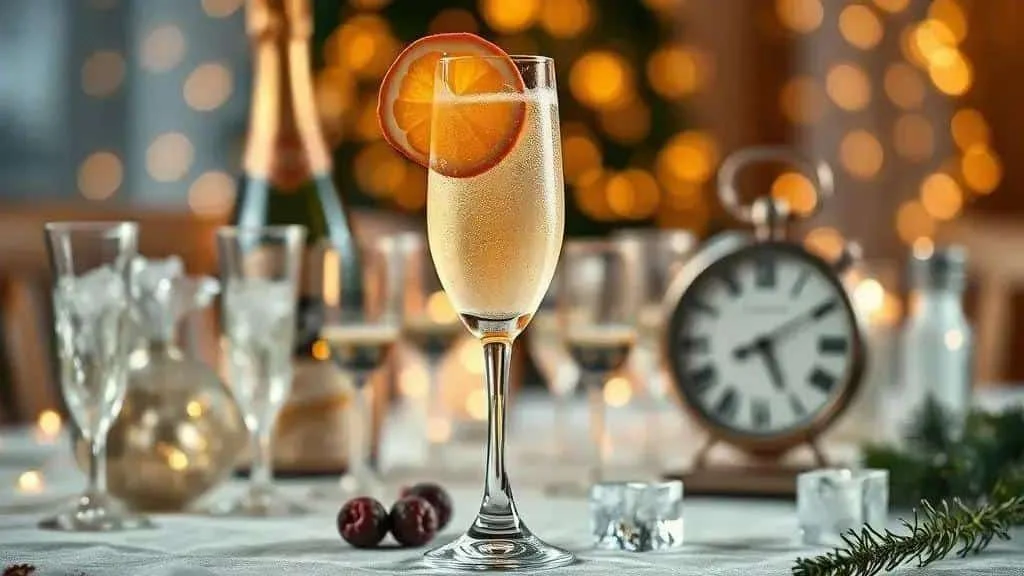
For one festive mimosa, gather:
- 90–120 ml well-chilled brut sparkling wine — dry prosecco or cava are suitable options.
- 45–60 ml strained fresh orange juice — or tangerine juice for a different citrus flavour.
- 1 orange slice — to garnish.
- Frozen fruit, optional — for example, grapes or raspberries labelled suitable for eating without cooking.
- 10–15 ml elderflower liqueur, optional — for a floral note; use sugar syrup instead if you only want added sweetness.
How to make a festive mimosa
- Chill the glass: refrigerate it or fill with ice, then discard the ice before use.
- Measure the juice: pour 45–60 ml fresh orange juice into the glass.
- Add the optional liqueur: measure in 10–15 ml elderflower liqueur before the wine.
- Add the wine: tilt the glass and slowly pour in 90–120 ml chilled sparkling wine.
- Stir lightly: give it one gentle turn with a bar spoon if needed, avoiding vigorous stirring.
- Garnish and serve: add the orange slice or suitable frozen fruit and serve immediately.
Easy variations
- Rosé mimosa: use sparkling rosé and blood orange juice.
- Floral mimosa: use 10 ml elderflower liqueur for a gentle floral note.
- Alcohol-free version: replace the wine with sparkling water or a sparkling alternative labelled 0.0%, using the same measure. Omit the elderflower liqueur or replace it with alcohol-free cordial to taste.
Citrus kir royale: detailed method
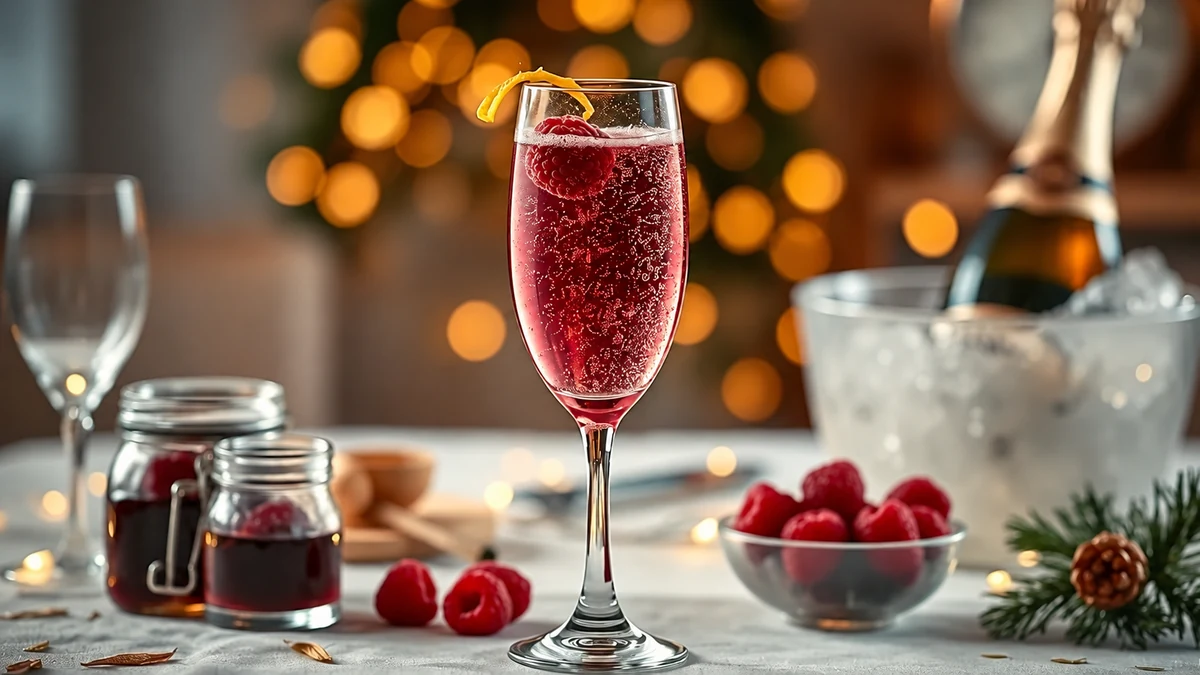
Gather the following ingredients for this citrus kir royale variation.
Citrus kir royale ingredients
- 90–120 ml well-chilled brut sparkling wine — dry prosecco or cava can be used for this variation.
- 15–20 ml crème de cassis — or raspberry liqueur. Alternatively, use 15 ml blackcurrant syrup, noting that the wine still contains alcohol.
- 1 teaspoon finely grated lemon zest — or orange zest, avoiding the bitter white pith.
- 1 raspberry — or a blackberry or maraschino cherry.
- Ice, optional — for chilling the glass, rather than adding to the finished drink.
- Alcohol-free version: replace both the wine and liqueur with 90–120 ml sparkling water and 15–20 ml alcohol-free blackcurrant syrup or fruit concentrate.
How to make a citrus kir royale
- Chill the glass: refrigerate the flute or fill it with ice and discard the ice before use.
- Measure the liqueur: pour 15–20 ml crème de cassis into the glass.
- Add the zest: sprinkle the teaspoon of finely grated lemon zest over the liqueur.
- Add the wine: tilt the glass and slowly pour in 90–120 ml chilled sparkling wine.
- Stir gently if needed: use one light turn of a bar spoon.
- Garnish and serve: add the raspberry and serve immediately.
Variations and serving tips
- Herbal note: add a small thyme or basil sprig.
- Orange twist: use orange zest for a different citrus aroma; zest alone does not meaningfully sweeten the drink.
- Drier version: reduce the cassis to 10–12 ml and choose extra brut sparkling wine.
- Taste before serving: prepare a small trial to check the balance.
Peach and mint bellini: detailed method
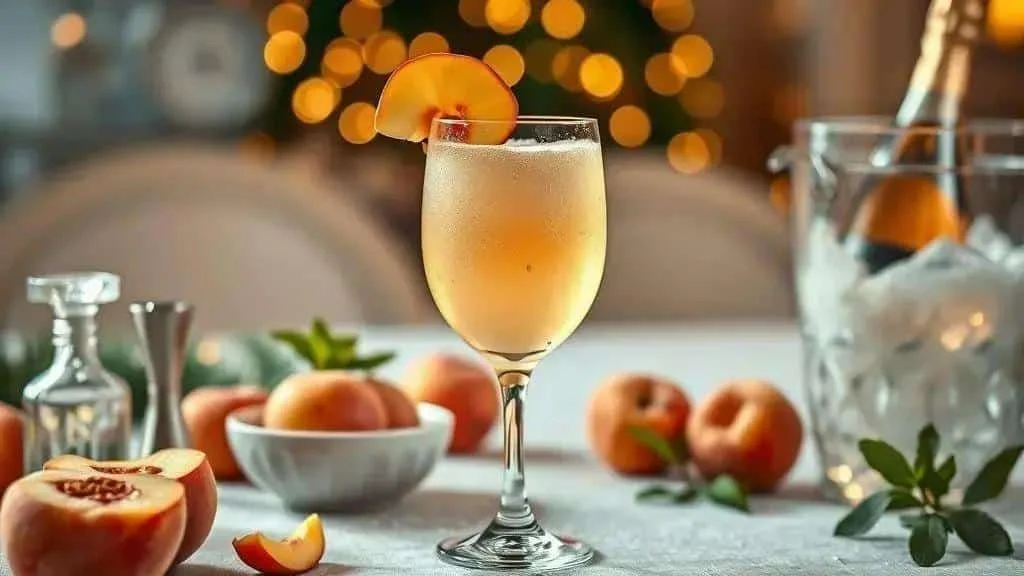
This peach and mint bellini variation combines fruit purée, fragrant mint and chilled sparkling wine.
Peach and mint bellini ingredients
- 60 ml ripe peach purée — start with a medium peach and measure the purée, as fruit sizes vary. The same measure of mango purée is an alternative.
- 120–150 ml well-chilled demi-sec sparkling wine — choose a dry prosecco or brut wine for a less sweet variation.
- 2–3 lightly pressed mint leaves — basil offers a different herbal flavour.
- Up to 15 ml sugar syrup, optional — only if needed; alternatively use around half as much runny honey.
- Thin peach slices — to garnish.
- Ice, optional — for chilling the glass; discard it before pouring if you do not want dilution.
- Alcohol-free version: replace the wine with 150–180 ml sparkling water.
How to make a peach and mint bellini
- Make the purée: wash, peel and stone a ripe peach, then blend until smooth. Sieve if desired and measure 60 ml per glass, preparing more peach if necessary.
- Adjust sweetness: taste the purée; if needed, stir in up to 15 ml sugar syrup or 7–8 ml runny honey.
- Press the mint: gently bruise 2–3 leaves with a spoon to release their aroma without crushing them into a paste.
- Chill the glass: refrigerate a sufficiently large coupe or flute, or fill it with ice and discard the ice before use.
- Add the purée: pour 60 ml peach purée into the glass.
- Add the mint: place the lightly pressed leaves over the purée or near the rim.
- Add the wine: slowly pour 120–150 ml chilled sparkling wine down the side of the tilted glass.
- Mix carefully: stir gently only as much as needed to combine.
- Garnish and serve: add a thin peach slice and a small mint sprig, then serve immediately.
Quick variations
- Sharper bellini: add a teaspoon of lemon juice.
- Tropical bellini: add 20 ml passion fruit purée to the peach, allowing enough room in the glass.
- Less sweet: use brut wine and reduce the peach purée to 45 ml. There is no need to replace the missing purée with extra alcohol.
Berry rosé spritz: detailed method
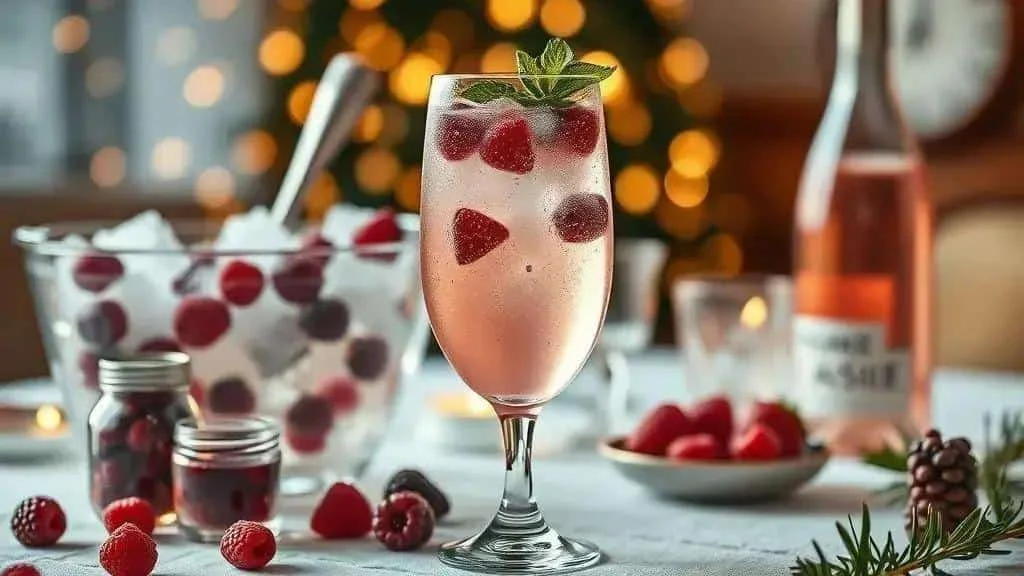
Gather the ingredients for a colourful berry rosé spritz, then assemble it just before serving.
Berry rosé spritz ingredients
- 90–120 ml well-chilled sparkling rosé — for example, prosecco rosé or brut rosé.
- 30 ml chilled sparkling water — or light tonic for extra bitterness.
- 20–30 ml raspberry syrup — or strained strawberry purée. Use a smaller amount of a more concentrated strawberry syrup or grenadine.
- Blackberries, raspberries or blueberries — washed fresh berries or frozen fruit explicitly suitable for eating without cooking.
- 1 mint sprig — or a little basil or thyme.
- 10–15 ml lemon juice, optional — or lime juice for a sharper balance.
How to make a berry rosé spritz
- Chill the glass: refrigerate a large glass or fill it with ice, discarding the ice before assembly.
- Add the syrup: measure 20–30 ml raspberry syrup into the glass.
- Add the berries: add 4–6 berries, using suitable ready-to-eat frozen fruit if you want it to help chill the drink.
- Add optional citrus: pour in 10–15 ml lemon juice if desired.
- Add the wine: slowly pour 90–120 ml chilled sparkling rosé into the tilted glass.
- Finish with sparkling water: add 30 ml and stir once, gently.
- Garnish and serve: add a mint sprig and an optional curl of lemon peel; serve immediately.
Variations and quick tips
- Drier spritz: reduce the syrup to 10–15 ml and use brut rosé.
- Alcohol-free version: replace the wine with sparkling water and alcohol-free pink grape juice.
- Extra fruit flavour: add a little strawberry purée. Raspberry liqueur is another option only for the alcoholic version.
- Presentation: use a roomy glass and suitable ready-to-eat frozen fruit if you want a chilled garnish without melting ice.
Orange and spice sparkling cocktail: detailed method
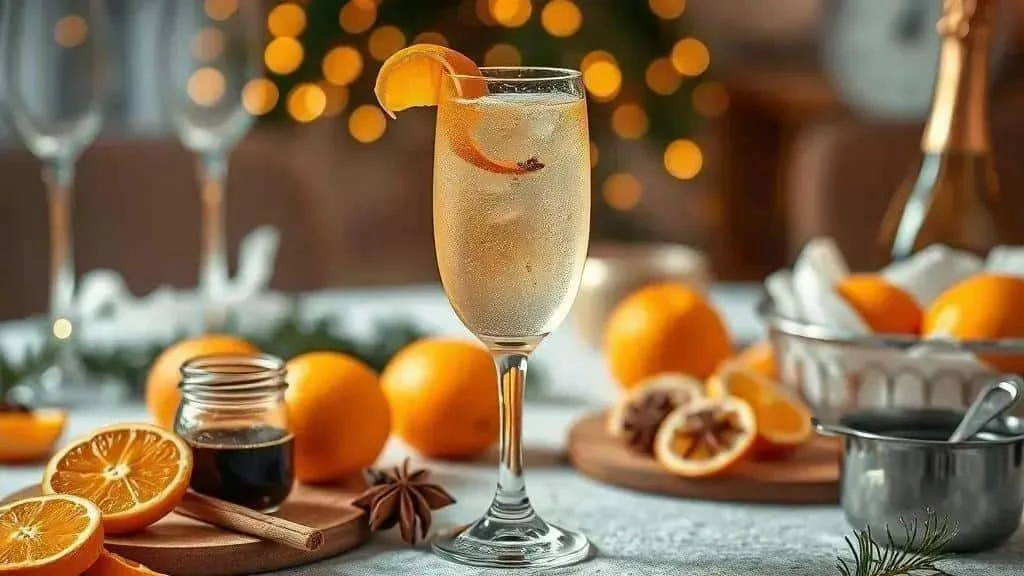
Sparkling wine with orange liqueur and spice combines bright citrus with cinnamon and star anise.
Ingredients
- 90–120 ml well-chilled brut sparkling wine — dry prosecco or cava are alternatives.
- 20–30 ml orange liqueur, such as Cointreau or triple sec — or clear orange curaçao.
- 10–15 ml cinnamon and star anise syrup — alternatively, dissolve 10 ml honey in 2 tablespoons water with a pinch of cinnamon, then measure 10–15 ml of that mixture, rather than adding the entire batch.
- 1 strip of orange peel — for garnish and aroma.
- 1 culinary star anise, optional — for decoration. Remove it before drinking; do not leave a loose whole clove in the drink as a substitute.
- Ice, optional — to chill the glass only.
- Alcohol-free version: replace all wine and liqueur with 90–120 ml sparkling water, 20–30 ml chilled concentrated orange tea and 10–15 ml spiced syrup.
Method
- Make a less sweet syrup variation: simmer 100 ml water, 80 g sugar, 1 cinnamon stick and 1 culinary star anise for 4–5 minutes. Strain and cool. This uses less sugar than the 100 g version above and makes several servings; measure only 10–15 ml into each cocktail.
- Chill the glass: refrigerate it or fill it with ice and discard the ice before pouring.
- Measure the liqueur: pour 20–30 ml orange liqueur into the glass.
- Add the syrup: measure 10–15 ml cooled spiced syrup into the liqueur.
- Add the wine: slowly pour 90–120 ml chilled sparkling wine into the tilted glass.
- Stir gently if needed: one light turn with a bar spoon is enough.
- Finish the garnish: twist the orange peel over the glass and add it. If using a whole star anise for presentation, remove it before sipping.
- Serve immediately: enjoy the drink while it is chilled and sparkling.
Variations and tips
- More citrus: use 30 ml orange liqueur and less syrup, remembering this contains more alcohol than the 20 ml version.
- Winter flavour: use a strained clove-infused syrup or a small pinch of freshly grated nutmeg for a different spice note.
- Adjust sweetness gradually: add syrup a little at a time so it does not overwhelm the wine.
- Presentation: use clear glasses and a simple garnish, keeping the bottles chilled until the toast.
Choose a cocktail for your New Year’s toast
Try a recipe and adjust its flavour to your taste. Keep the measures clear and offer an alcohol-free alternative so guests can choose.
Share your favourite combination with friends, and follow our social channels for more festive food and drink ideas.
Thank you for reading. Visit the I Love Christmas blog for more ideas for celebrating the festive season.
New Year’s Eve sparkling wine cocktails: frequently asked questions
Which five cocktails are included?
The recipes are a festive mimosa, a citrus kir royale variation, a peach and mint bellini variation, a berry rosé spritz, and sparkling wine with orange liqueur and spice.
How can I make a festive alcohol-free version?
Replace all sparkling wine with sparkling water or an alternative labelled 0.0%, and replace or omit every alcoholic liqueur and bitter. Keep the fruit purées, alcohol-free syrups and garnishes; check all ingredient labels.
What ratio of sparkling wine to flavouring should I use?
Three parts sparkling wine to one part juice or purée can be a starting point, but it is not a rule for every ingredient. Concentrated syrups and liqueurs vary considerably, so follow the individual recipe and taste a small trial serving.
Can I prepare anything before the party?
Prepare purées, syrups and infusions ahead, cool where necessary and refrigerate in clean covered containers. Add sparkling wine only when serving, and follow storage instructions for bought ingredients.
How do I keep several servings bubbly and attractive?
Keep bottles chilled, use chilled glasses, add sparkling wine last and stir gently. If using frozen fruit as a garnish, choose only fruit suitable for eating without cooking and follow the packet instructions.