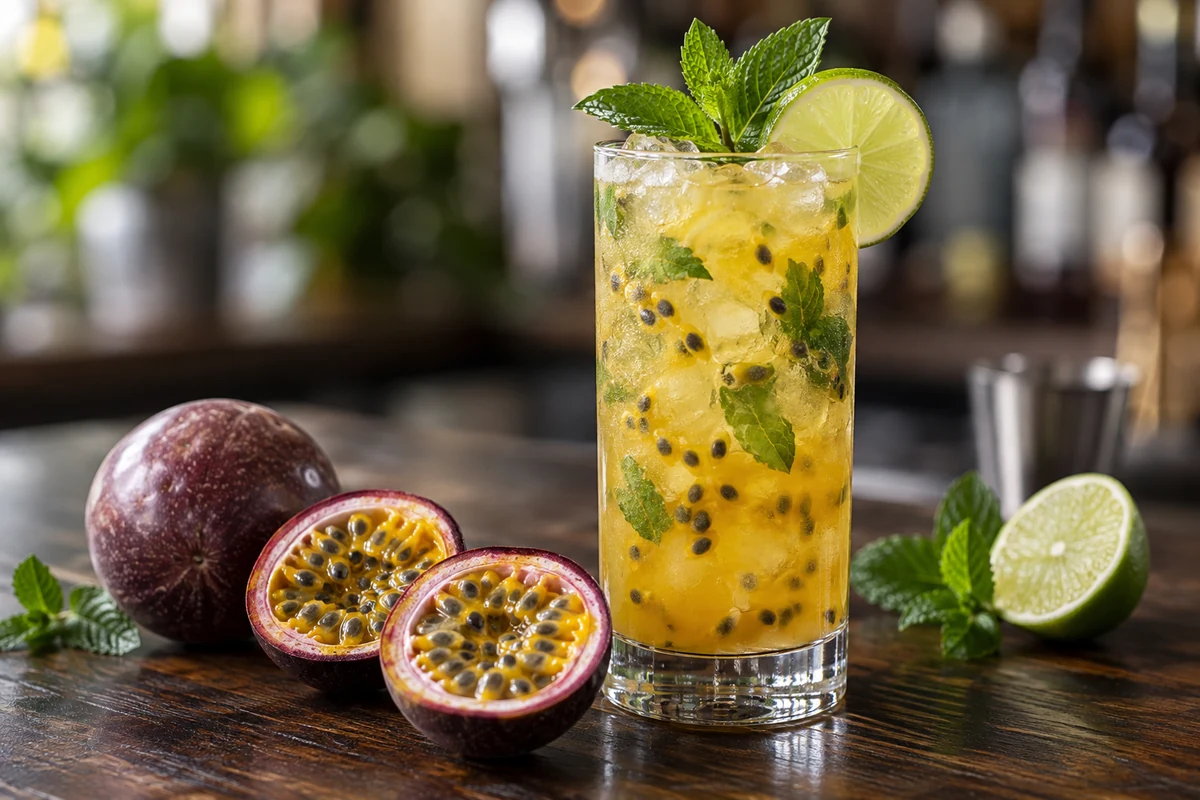
This passion fruit gin cocktail combines 60 ml gin, 40 ml passion fruit pulp, 15 ml lime juice and simple syrup, topped with chilled tonic. Mint and a little extra passion fruit make a fragrant garnish; an alcohol-free variation is included below.
A passion fruit gin cocktail brings bright fruit and aromatic botanicals to the glass. Here are the ingredients, preparation steps and variations for serving it at home, including a mocktail option.
Passion fruit gin cocktail ingredients
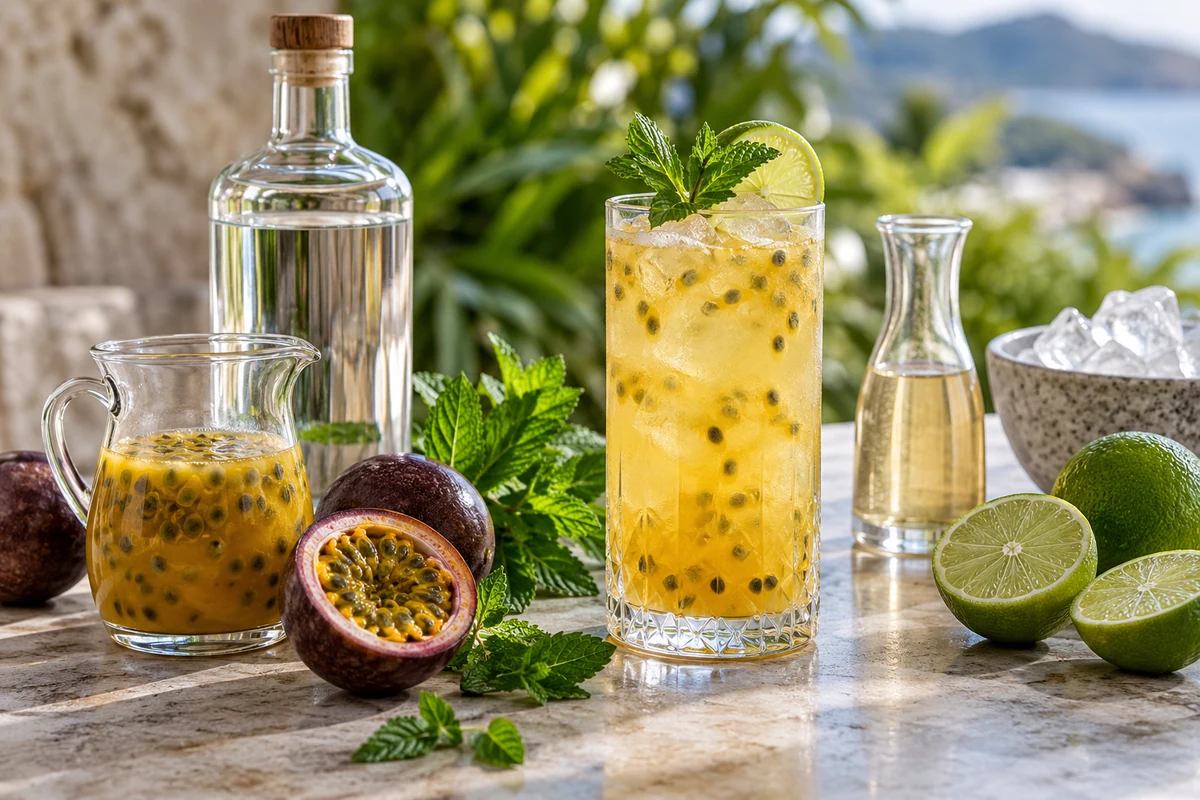
For a passion fruit gin cocktail, gather the following ingredients. Measure the fruit pulp rather than relying on a fixed number of fruits.
- 60 ml gin — London Dry or a floral gin both work; choose a flavour you enjoy.
- 40 ml fresh passion fruit pulp — the number of fruits varies with their size. Strain if preferred. Thawed unsweetened frozen pulp is an alternative; use its concentration and flavour to guide the quantity.
- 15 ml fresh lime juice — lemon juice gives a different citrus flavour. Bottled citrus juice is a practical substitute; vinegar is not a like-for-like replacement here.
- 20 ml simple syrup — dissolve 100 g sugar in 100 ml water for a small batch and cool before using. Diluted honey is an alternative, starting with less because sweetness varies.
- 100–120 ml chilled tonic water — or sparkling water for a less bitter drink. Sweetness depends on the mixer chosen.
- Ice cubes — enough for shaking and fresh ice in the serving glass.
- A mint sprig — or a small sprig of culinary basil or lemon balm.
- A little extra passion fruit pulp — for an optional garnish with visible seeds.
- A lime slice or thin strip of peel — for garnish.
- 2 drops aromatic bitters, optional — for extra aroma. Most traditional bitters contain alcohol, so omit them from an alcohol-free version unless the product is suitable.
Substitutions and quick tips
Fresh pulp adds both flavour and texture. For a less sweet drink, start with 10 ml syrup and use sparkling water or an appropriate lower-sugar mixer. A little pineapple juice gives another tropical note; passion fruit liqueur adds sweetness and alcohol. Keep ingredients chilled before mixing.
How to make a passion fruit gin cocktail
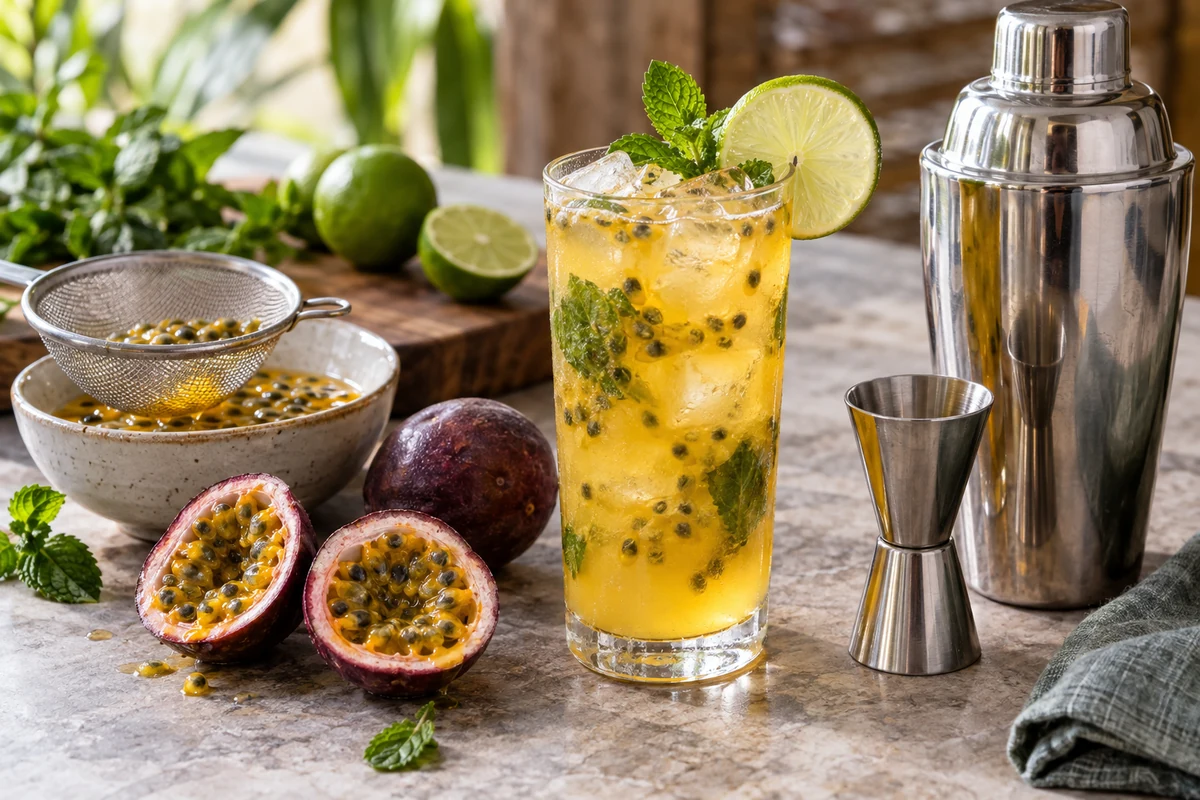
- Chill the glass and ingredients: put the glass in the fridge and chill the mixer. Avoid sudden temperature changes with delicate glassware.
- Prepare the passion fruit: wash and halve the fruit, scoop out the pulp and strain if desired. Measure 40 ml; you may need more than one small fruit.
- Measure the liquids: use a jigger for 60 ml gin, 15 ml lime juice and 20 ml simple syrup.
- Shake the base: add the gin, pulp, lime juice, syrup and plenty of ice to a shaker. Secure the lid and shake for 10–12 seconds. Do not add tonic or any other carbonated mixer to the shaker.
- Strain and top up: strain into a tall glass over fresh ice, add 100–120 ml chilled tonic water and stir gently just enough to combine.
- Alternatively, build in the glass: mix the still ingredients, add ice, then top with tonic. This gives a less aerated drink and works well when no shaker is available.
- Garnish: add a little passion fruit pulp, a mint sprig and a thin lime slice. Add the optional bitters only to the alcoholic version.
- Taste and adjust: add syrup in small increments if needed. To make the next drink drier, start with less syrup; for less bitterness, replace some tonic with sparkling water.
-
Tips for beginners
Measure before mixing, keep the tonic cold and add it last. A sturdy food-safe container with a secure lid can mix the still ingredients if necessary, but building the drink directly in the glass is simpler and avoids shaking unsuitable glass jars.
Passion fruit gin cocktail variations
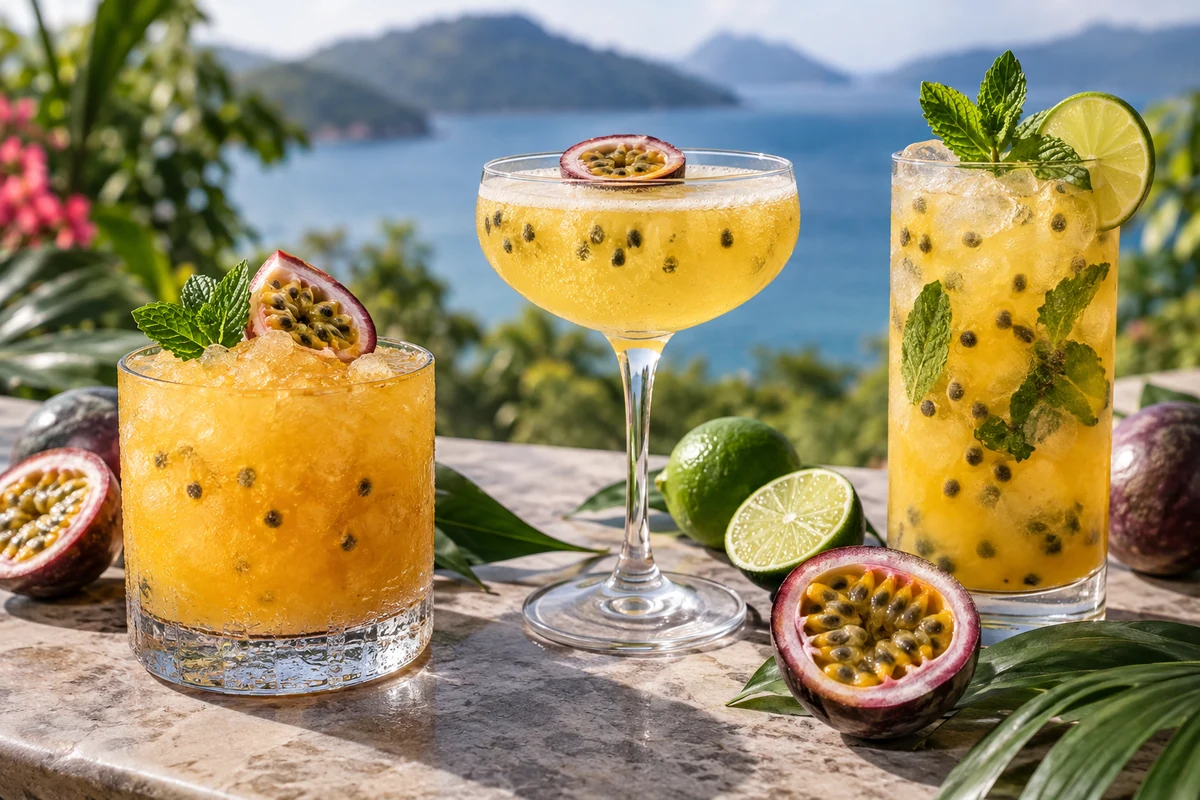
These variations change the flavour and texture of the passion fruit gin cocktail. Adjust the syrup to the fruit and mixer you use.
Alcoholic variations
- Tropical gin and tonic — use 60 ml gin, 40 ml passion fruit pulp, 15 ml lime juice and 100 ml tonic, adding syrup only to taste.
- Gin and white rum — replace half the gin with rum, using 30 ml of each. This changes the spirit flavour rather than necessarily making the drink sweeter.
- Sparkling variation — replace tonic with dry sparkling wine or Prosecco, added after shaking. This also increases the alcohol content.
Alcohol-free and less sweet options
- Passion fruit mocktail — combine 40 ml passion fruit pulp, 15 ml lime juice and 10–20 ml syrup, then top with sparkling water over ice and garnish with mint.
- Less sweet variation — start with 10 ml syrup and use sparkling water instead of sweetened tonic. Agave syrup still contains sugar; a reduced syrup measure does not make this a nutritionally verified low-calorie recipe.
Different textures and presentations
- Frozen cocktail — blend 60 ml gin, 40 ml pulp, crushed ice and 10–15 ml syrup into a slush. Add ice gradually to suit the blender and serve immediately.
- Fresh fruit infusion — for home use, steep a little pulp and washed lime peel in gin in a clean covered container in the fridge, then strain. Treat this as a fresh preparation, not a shelf-stable bottled product.
Garnish combinations
- Passion fruit and mint — a small spoonful of pulp and a mint sprig add colour and aroma.
- A lime twist — gently twist washed peel over the glass to release its oils.
- Edible flowers, optional — use only flowers specifically identified and sold for eating, never unidentified garden or florist flowers.
Serving a group
For a party, prepare the still base in a covered refrigerated jug, then add tonic to each glass at serving time. Clearly distinguish alcoholic drinks from mocktails and offer water alongside them.
Choosing gin and passion fruit
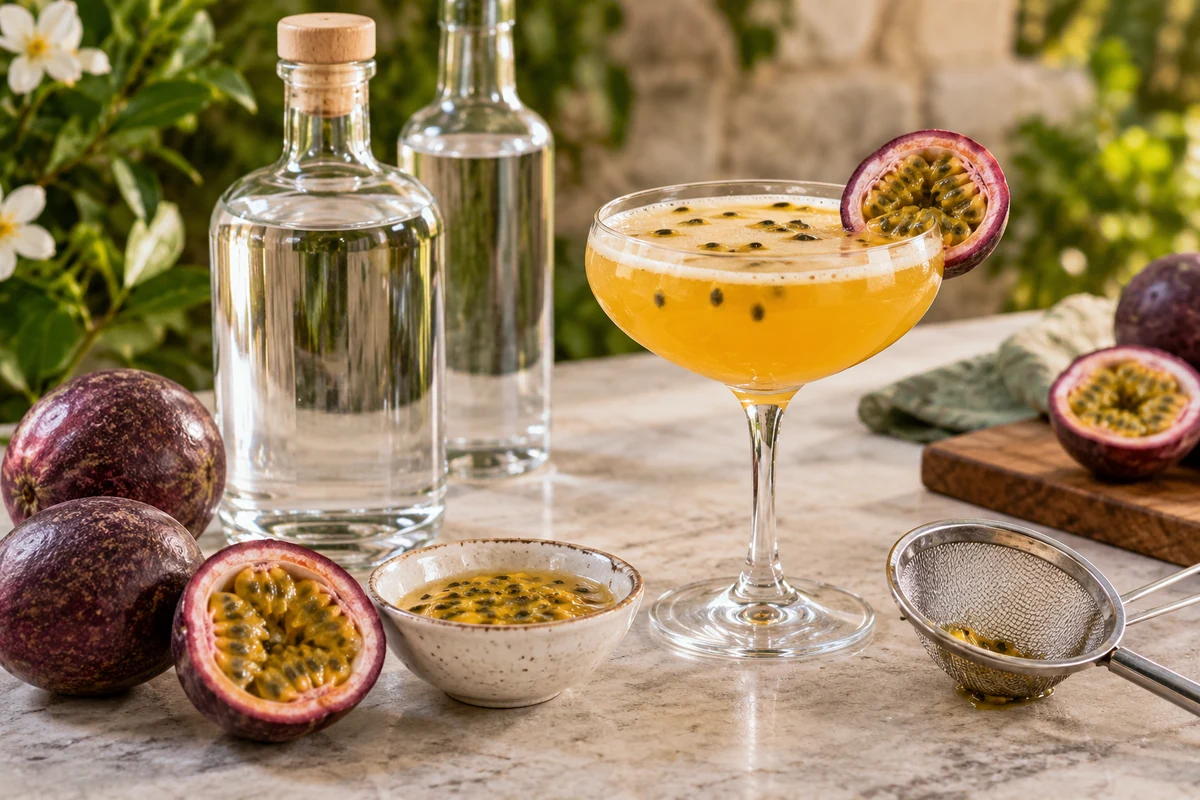
The gin and fruit change the balance of a passion fruit gin cocktail. Start with flavours you enjoy, then adjust the lime and syrup rather than treating the recipe as a fixed sweetness level.
Choosing a gin
Choose a gin whose botanicals complement the fruit without overwhelming it.
- London Dry — a juniper-led option. Check the bottle’s ABV rather than assuming all products have the same strength.
- Floral gin — floral botanicals can complement the passion fruit, but vary considerably between brands.
- Citrus-led gin — lemon or orange notes echo the lime juice.
- Barrel-aged gin — oak notes create a different, richer-tasting variation.
White rum or vodka can replace gin if preferred. Rum brings its own character, while vodka is usually more neutral; neither substitution removes alcohol.
Choosing passion fruit
Look for ripe fruit with a fragrant aroma and no mould, leaking damage or signs of spoilage.
- Ripeness: many purple passion fruits develop wrinkled skin as they ripen, but varieties differ. Fruit should still feel reasonably heavy for its size.
- Fresh pulp: look for yellow-orange juice surrounding small dark seeds, without an unpleasant fermented smell.
- Frozen pulp: thaw in the fridge and follow its label, including any requirement to cook before use. Acidity and sweetness depend on the product, not simply on whether it was frozen.
- Storage: refrigerate prepared fresh pulp promptly and use within 48 hours, or freeze portions. Around three months is a practical frozen quality guide; use thawed pulp within 24 hours or follow stricter packet directions.
- Seeds: keep some for texture or strain through a sieve for a smoother drink.
Practical flavour adjustments
- Balance: add a little syrup if the fruit is very sharp, or a little lime if it is too sweet.
- Temperature: chill ingredients and open the tonic just before serving.
- Proportions: the main recipe uses 60 ml gin and 40 ml pulp; you can use a smaller spirit measure and adjust the mixer to suit.
- Small infusion trial: steep a little pulp in a measured amount of gin in the fridge for a few hours, taste and strain. Do not assume that adding gin preserves fresh fruit indefinitely.
- Mixer choice: try a gentler tonic with a delicate gin, or a more bitter tonic if that suits your taste.
These adjustments help you find the balance you prefer, while keeping the fruit, botanicals and mixer distinct.
Mixing and presentation techniques
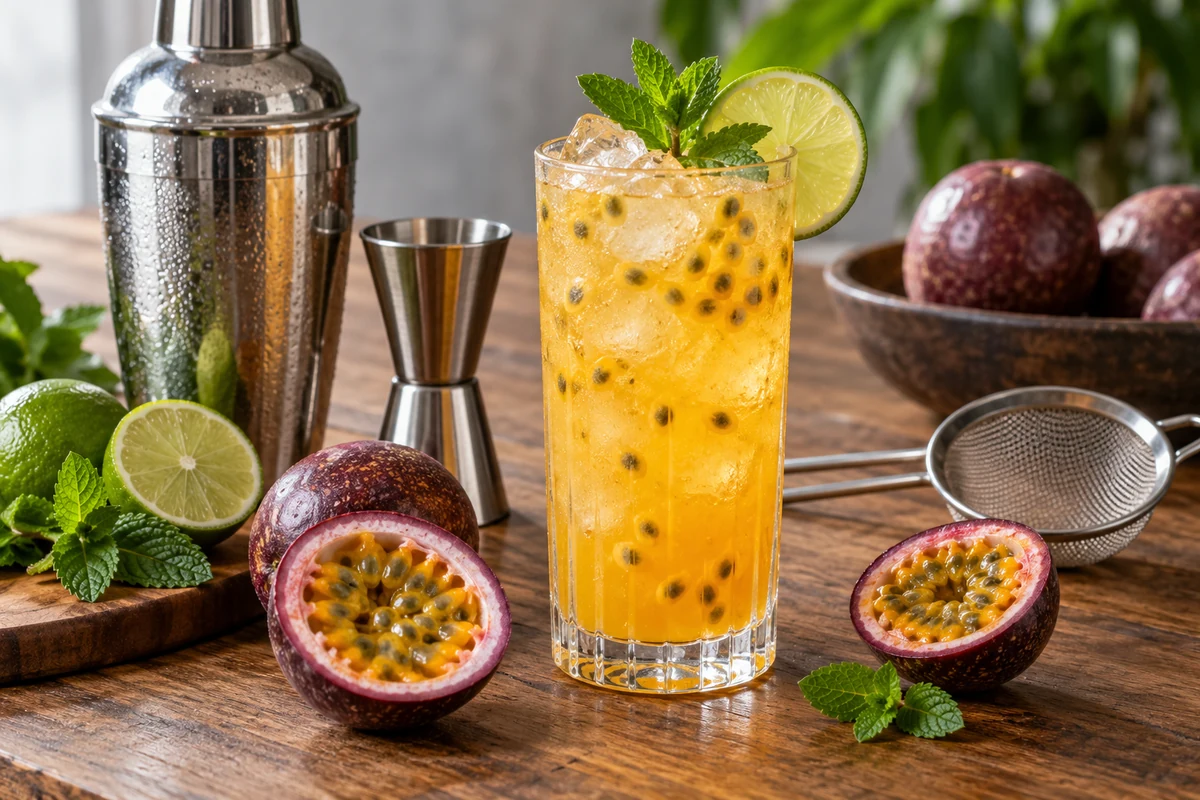
Keep the ingredients and glass chilled when preparing a passion fruit gin cocktail, and add carbonated mixers only after shaking.
Mixing techniques
- Measure consistently: use a jigger for the gin, pulp, syrup and lime juice, rather than pouring by eye.
- Prepare the pulp: scoop it from washed fruit and strain if preferred, then measure the amount needed.
- Shake or build: shaking the still ingredients gives a more aerated fruit base. Building directly in the glass is also possible, but never shake tonic or sparkling wine.
- Shake securely: fill the shaker roughly two-thirds with ice, secure its lid and shake for 10–12 seconds until cold. There is no need to clap or strike the shaker as part of mixing.
- Strain: use a cocktail strainer, followed by a fine sieve if you want to remove seeds and small ice fragments.
- Add tonic last: pour chilled tonic gently into the serving glass, avoiding unnecessary agitation.
- Combine gently: stir only enough to mix the base and tonic.
Presentation and garnish
- Glassware: choose a highball or large balloon glass with enough room for the liquid, ice and garnish.
- Ice: larger cubes generally melt more slowly than crushed ice under similar conditions. Use crushed ice when you want a slushy texture.
- Garnish: add a spoonful of passion fruit pulp, a gently bruised mint sprig and a thin lime slice.
- Citrus aroma: twist a strip of washed lime peel over the glass before adding it.
- Optional finish: a couple of drops of aromatic bitters change the flavour; omit alcohol-containing bitters from mocktails.
Serving tips
- Serve immediately while cold and fizzy.
- Batch the still base: keep gin, pulp, juice and syrup covered in the fridge, then add tonic individually.
- Keep glasses clean: wipe spills from the outside and dry the base before serving.
- Choose the texture: visible seeds give a fruit-filled appearance; strained pulp makes a smoother drink. Neither is more authentic than the other.
Food pairings and occasions
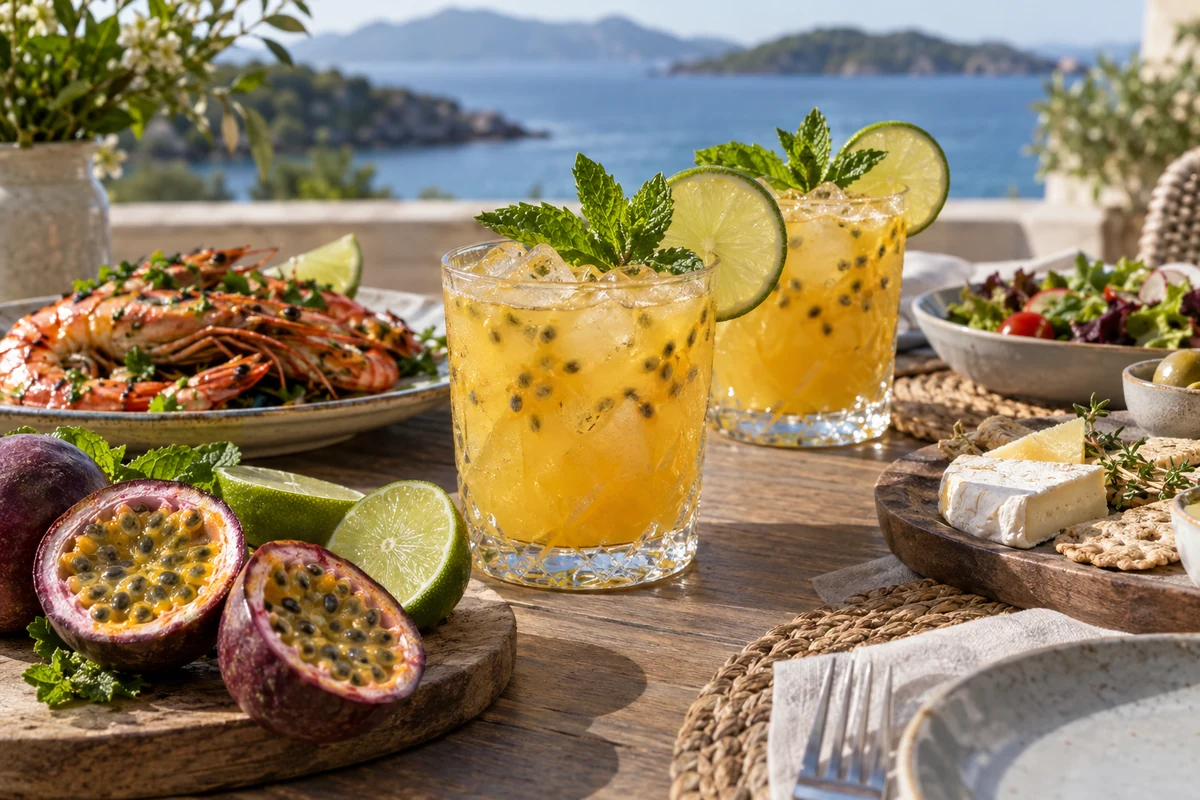
A passion fruit gin cocktail can accompany savoury starters or fruit-led desserts. Choose combinations that suit your guests rather than following rigid pairing rules.
Food pairing ideas
- Grilled seafood — cooked prawns or scallops pair well with the citrus and fruit.
- Citrus-dressed fish — cooked fish with a lime dressing is an accessible option. Ceviche and tartare require appropriate sourcing and handling; citrus does not make raw fish safe for everyone.
- Goat’s cheese salad — creamy cheese and crisp leaves contrast with the fruity drink.
- Spicy food — sweetness can complement chilli flavours, but alcohol may make heat feel stronger for some people. Offer a mild or alcohol-free option too.
- Crunchy snacks — plantain crisps, fried polenta or small cooked skewers are easy to share.
- Citrus desserts — lemon tart or a chilled fruit dessert repeats the sweet-and-sharp theme.
Occasions to try it
- Summer parties and barbecues — keep the base chilled and add tonic as each drink is served.
- An early-evening gathering — the fruit’s golden colour makes a simple presentation.
- Brunch or daytime events — offer a mocktail alongside any alcoholic option.
- An informal dinner — serve measured portions with a starter or light dish.
- Festive celebrations — the sparkling-wine variation provides another option, with a higher alcohol content.
Quick service reminders
- Temperature: use chilled glasses and cold tonic.
- Glass and ice: choose a large enough glass and fresh cubes.
- Batch preparation: refrigerate the still base and add tonic at serving time.
- Portions: 60 ml gin is the recipe quantity, not a standard UK single measure. At 40% ABV it supplies 2.4 UK alcohol units before any additional liqueur, bitters or wine. Smaller servings are easy to make by scaling all ingredients.
- Alcohol-free choice: use fruit, lime, syrup and sparkling water, checking any flavourings for alcohol.
- Finish: add a little pulp, mint and lime without overcrowding the glass.
With these choices, the passion fruit gin cocktail can fit different menus and occasions while keeping portions and ingredients clear.
Bottling and selling a fresh cocktail base
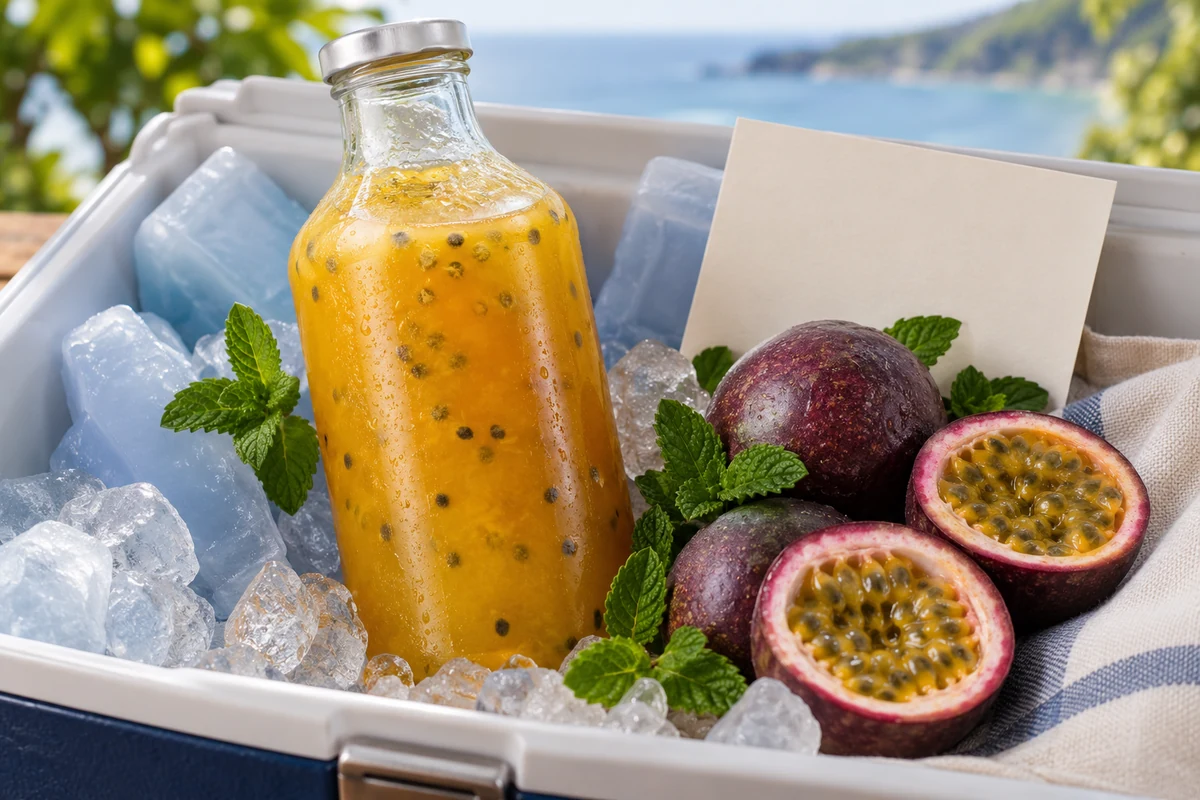
A fresh passion fruit gin preparation is not automatically suitable for retail sale or long storage. Before selling, establish the recipe, safe process and shelf life, and check licensing, food-business and labelling requirements with the relevant UK authorities.
Packaging considerations
- Bottle choice: use clean food-safe containers with a secure closure. A decorative bottle alone does not make the contents shelf-stable.
- Clear information: prepare accurate product, quantity, producer and storage details, with verified alcohol strength and applicable allergen information. Have the final label checked against the rules for that product.
- Transport protection: protect glass against impact and use packaging compatible with the required refrigeration.
- Useful extras: include a truthful serving suggestion. Do not add invented awards, certification marks or claims of authenticity.
- Material choices: use recyclable packaging where practical and make only environmental claims you can substantiate.
Planning sales
- Tastings: check the permissions for supplying alcohol at the event and apply age checks and responsible serving practices.
- Kits: sealed commercially made ingredients with a serving card may be simpler to manage than a fresh homemade bottled mixture, but sales requirements still apply.
- Online information: use accurate photographs and descriptions and make any delivery, refrigeration and age-verification conditions clear.
- Trade partnerships: discuss traceability, storage and supply requirements before offering a product to a bar or shop.
- Costing: account for ingredients, packaging, labour, refrigeration, delivery and compliance costs before setting a price.
Labelling and compliance
- Check the jurisdiction: alcohol licensing differs across the UK. In England and Wales, retail alcohol sales need the appropriate licence or authorisation; food-business registration and product-specific rules also need checking.
- Describe it accurately: adding fruit, sugar or water may affect the permitted product name. Do not assume every homemade gin-based mixture can legally be labelled simply as gin.
- Shelf-life information: use a period supported by the formulation and process, not an estimate copied from a different commercial spirit.
Storage and transport
- Home preparation: keep this fresh fruit cocktail base covered in the fridge and make only what you need. It is not a room-temperature preserve.
- Transport: maintain the required cold chain with suitable insulated packaging and protect bottles from damage.
- Use promptly: for home use, prepare fresh, refrigerate at 5°C or below and use within 48 hours. A commercial shelf life needs its own validation; a claim of 6–18 months is not supported by this recipe.
Presenting the product
- Tell a truthful story: describe the ingredients and preparation without inventing provenance or production credentials.
- Serving instructions: include a card for the passion fruit gin cocktail, keeping the measured portion and any added alcohol clear.
- Gift packaging: a box or ribbon can improve presentation, but must not obscure storage information or interrupt refrigeration.
Further planning ideas
- Small formats: check the applicable quantity and labelling rules before choosing sample bottles; small size does not remove sales obligations.
- Seasonal batches: use genuine batch records for traceability rather than implying rarity or certification without evidence.
- Customer feedback: request honest feedback and permission before sharing customers’ photographs or reviews.
Enjoying your passion fruit cocktail
Fresh fruit, measured ingredients and a cold mixer make this a straightforward cocktail to prepare at home. Adjust the sweetness to your ingredients and offer the mocktail variation for anyone avoiding alcohol.
Thank you for reading. Explore the I Love Christmas blog for more recipes and seasonal ideas.
If you try a variation, share the combination you enjoyed and return for more serving inspiration.
Passion fruit gin cocktail: frequently asked questions
What ratio of gin to passion fruit should I use?
The main recipe uses 60 ml gin to 40 ml pulp, with lime, syrup and tonic. Adjust syrup between around 10 and 20 ml to taste, or scale the whole recipe down for a smaller serving.
Can I use frozen passion fruit pulp?
Yes, if suitable for uncooked use according to the label. Thaw in the fridge, measure the pulp and adjust for its concentration and sweetness. Freezing does not consistently make fruit less acidic.
How do I make an alcohol-free version?
Mix 40 ml pulp, 15 ml lime juice and 10–20 ml syrup, then top with sparkling water over ice. Garnish with mint and omit gin and alcohol-containing bitters.
How should bottled passion fruit gin mixtures be stored?
Follow the label for a commercial product. This homemade fresh-fruit base should be refrigerated and used within 48 hours; it has no validated long shelf life. A product intended for sale requires its own safety and shelf-life assessment.
Which glass and ice work best?
Use a highball or large balloon glass with room for the drink and fresh ice. Large cubes suit the main recipe; crushed ice suits the frozen variation.
Sources and Further Reading
- NHS: calculating alcohol units
- UK Government: alcohol licensing
- UK Government: food labelling
- UK Government: labelling spirit drinks