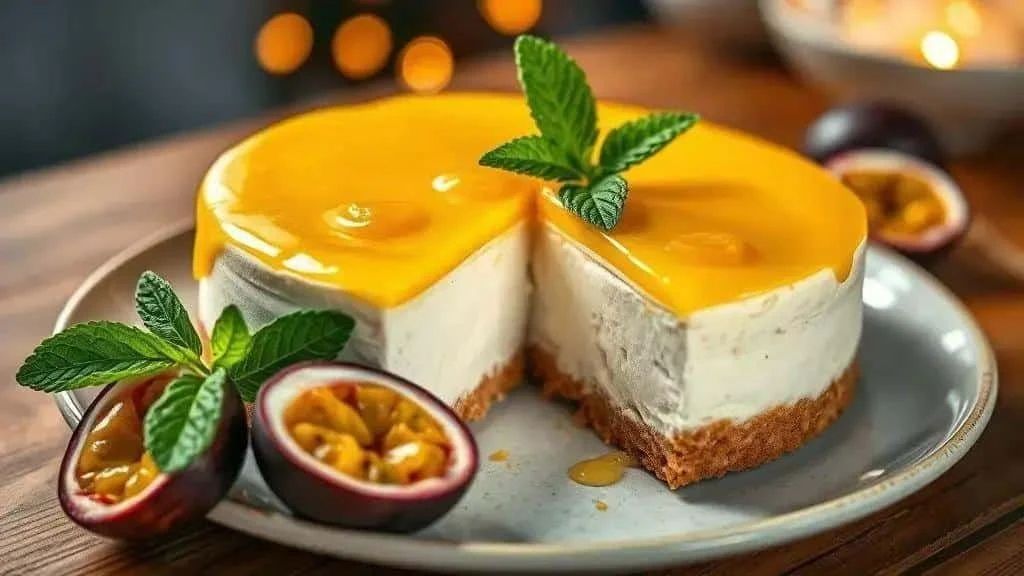
This no-bake passion fruit cheesecake has a pressed biscuit base and a creamy filling made with cream cheese, condensed milk and passion fruit pulp. Gelatine helps it set for slicing, while a chilled fruit topping adds a tangy finish. Prepare it ahead and keep it refrigerated. Vegan or reduced-fat adaptations need their own setting adjustments rather than automatic ingredient swaps.
A no-bake passion fruit cheesecake balances sweetness with a lively tropical flavour. Its biscuit base contrasts with the soft filling, making it an appealing finish to a festive meal. Allow plenty of chilling time before serving.
Ingredients for no-bake passion fruit cheesecake
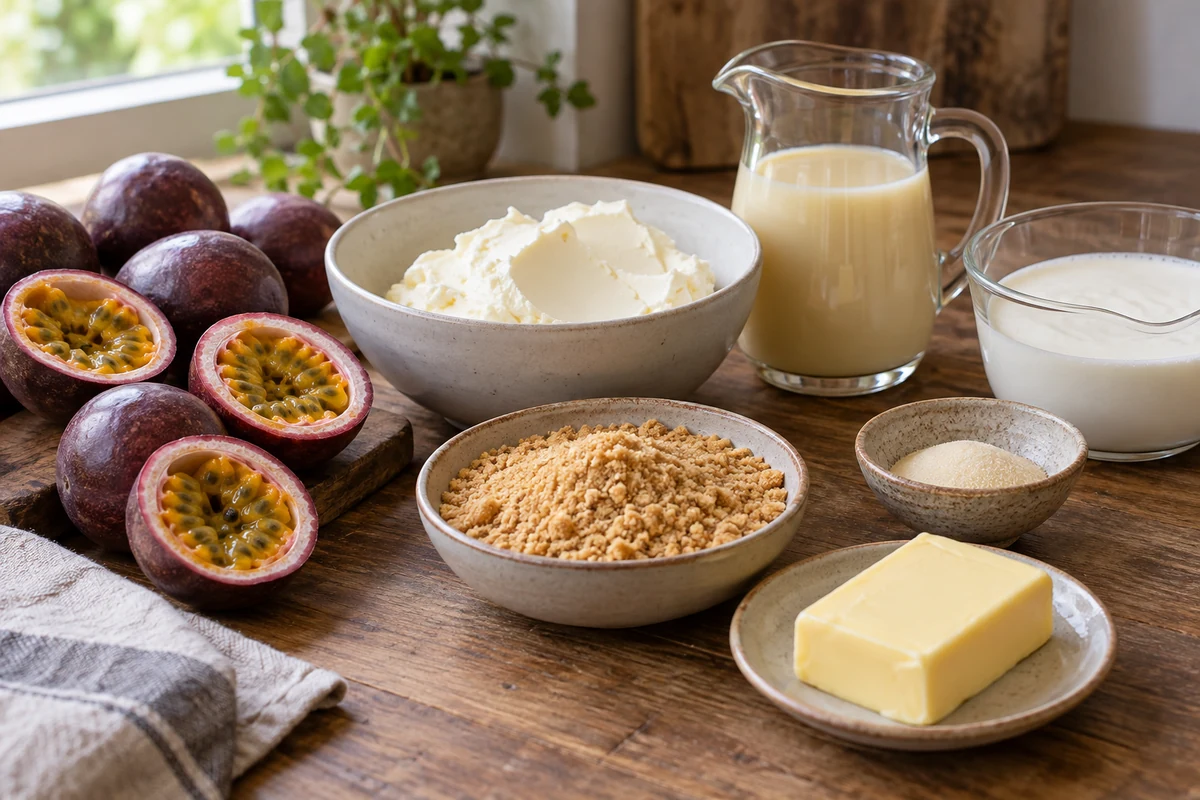
Gather the following ingredients for a no-bake passion fruit cheesecake in a 20–22 cm springform tin.
Ingredients
- 200 g plain sweet biscuits or digestives – finely crushed. Gluten-free biscuits, wholemeal biscuits or chocolate sandwich biscuits with the filling removed give different variations.
- 100 g unsalted butter – melted for the base. A suitable firm plant-based baking block is an alternative; coconut oil needs adjustment because its setting properties differ.
- 400 g full-fat cream cheese – briefly softened for mixing. Plant-based cream cheese or blended ricotta changes the texture and is not a guaranteed direct replacement.
- 395–397 g sweetened condensed milk – one standard tin, depending on brand. Reduced-fat and plant-based products vary in sweetness and consistency.
- 200 ml whipping cream – chilled and whipped to soft peaks. Single cream and Brazilian shelf-stable table cream do not whip in the same way. A plant-based alternative must be labelled suitable for whipping.
- 200–220 g passion fruit pulp – strained or with seeds, as preferred. Use unsweetened frozen pulp if fresh fruit is unavailable; follow any cooking directions on its packet.
- Up to 100 g sugar, optional and to taste – reserve 3 tbsp of this allowance for the small topping below. The condensed milk already sweetens the filling, so taste before adding any of the remaining sugar.
- 12 g unflavoured powdered gelatine – the original recipe’s quantity; check your product’s strength, liquid capacity and preparation instructions. Vegetarian setting agents need a different method and dosage.
- Up to 2 tbsp lemon juice – optional; omit or reduce if the pulp is already sharp.
- A pinch of salt – for the biscuit base.
- An extra 3–4 tbsp passion fruit pulp – for the topping, with the reserved sugar, adjusted to taste.
- White chocolate shavings or fresh mint – optional garnish.
Adaptation notes: use suitable gluten-free biscuits when needed. A vegan version also requires plant-based fat, cream cheese, condensed milk and whipping cream, plus a suitable non-animal setting method. Lactose-free does not mean dairy-free or vegan.
How to make no-bake passion fruit cheesecake
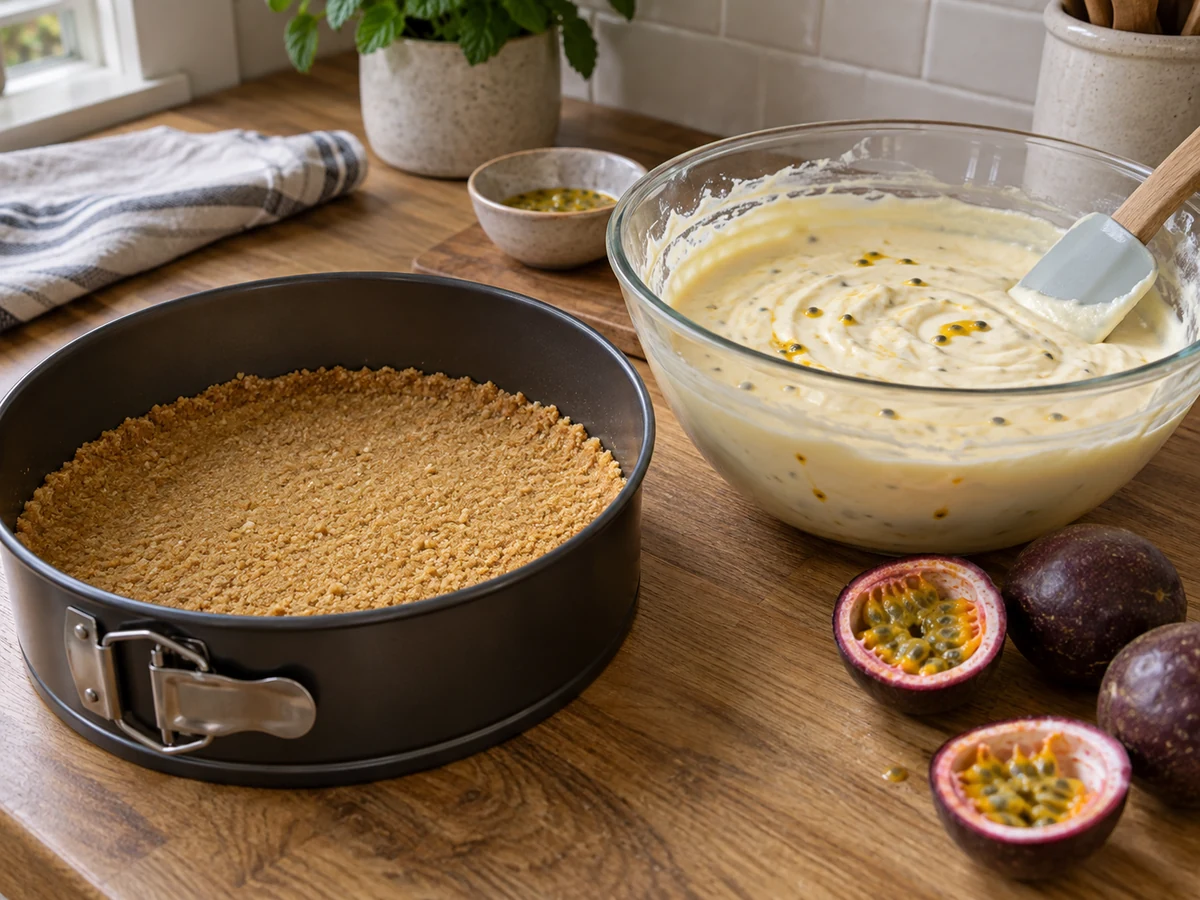
- Prepare the tin: line the base of a 20–22 cm springform tin with baking parchment.
- Make the biscuit base: mix 200 g finely crushed biscuits with 100 g melted butter and a pinch of salt. Press evenly into the tin with the back of a spoon or a flat-bottomed glass, then chill for 15–30 minutes.
- Prepare the gelatine: follow its packet for the amount of cold water, soaking time and gentle warming needed to dissolve it. Do not rely on a fixed microwave time or boil it. Keep it fluid and comfortably warm, not hot.
- Mix the cream cheese: beat the briefly softened cream cheese until smooth, then gradually mix in the condensed milk. Stir in the passion fruit pulp, optional lemon juice and only as much additional sugar as the flavour needs.
- Whip the cream: whisk the cold whipping cream separately to soft peaks. Set it aside briefly while you incorporate the gelatine into the cream cheese mixture.
- Combine the filling: first mix a few spoonfuls of the cream cheese mixture into the dissolved gelatine to equalise the temperature. Stir this smoothly into the main bowl, then gently fold in the whipped cream. Avoid pouring gelatine straight into an ice-cold mixture, which can form strands.
- Fill and chill: spread the filling over the cold base, level it and cover without touching the surface. Refrigerate for at least 4 hours, preferably overnight, until set throughout.
- Make the topping: warm the extra 3–4 tbsp pulp with the reserved sugar, using less sugar if preferred, until dissolved and slightly syrupy. If needed, add a little slurry made from ½ tsp cornflour and cold water, then simmer until thickened. Cool completely.
- Finish and serve: spread the cold topping over the fully set cheesecake and refrigerate for another 30–60 minutes. Run a thin knife carefully around the edge, release the ring and garnish with chocolate or mint. Serve chilled.
Tips and substitutions
- Without animal gelatine: choose a vegetarian setting agent suitable for a creamy, acidic dessert and follow its instructions. Agar is not interchangeable teaspoon-for-sachet: it needs heating and sets differently, so test a small batch before relying on it for slices.
- Vegan version: replace every dairy ingredient and the butter, check the biscuits and use a tested vegan setting method. If the texture is untested, serve the mixture in dessert glasses rather than promising a sliceable cake.
- Gluten-free base: use 200 g suitable gluten-free biscuits and adjust the fat slightly if their absorbency differs. Check all other labels and avoid cross-contact.
- An airy texture: whip the cream only to soft peaks and fold it in gently. Smooth the cream cheese first rather than trying to beat out lumps after the cream is added.
- Storage: keep covered at 5°C or below and use within 48 hours, or sooner if an ingredient’s instructions require. Freeze only if the ingredients are suitable, expect possible texture changes and thaw fully in the fridge.
Building a good biscuit base
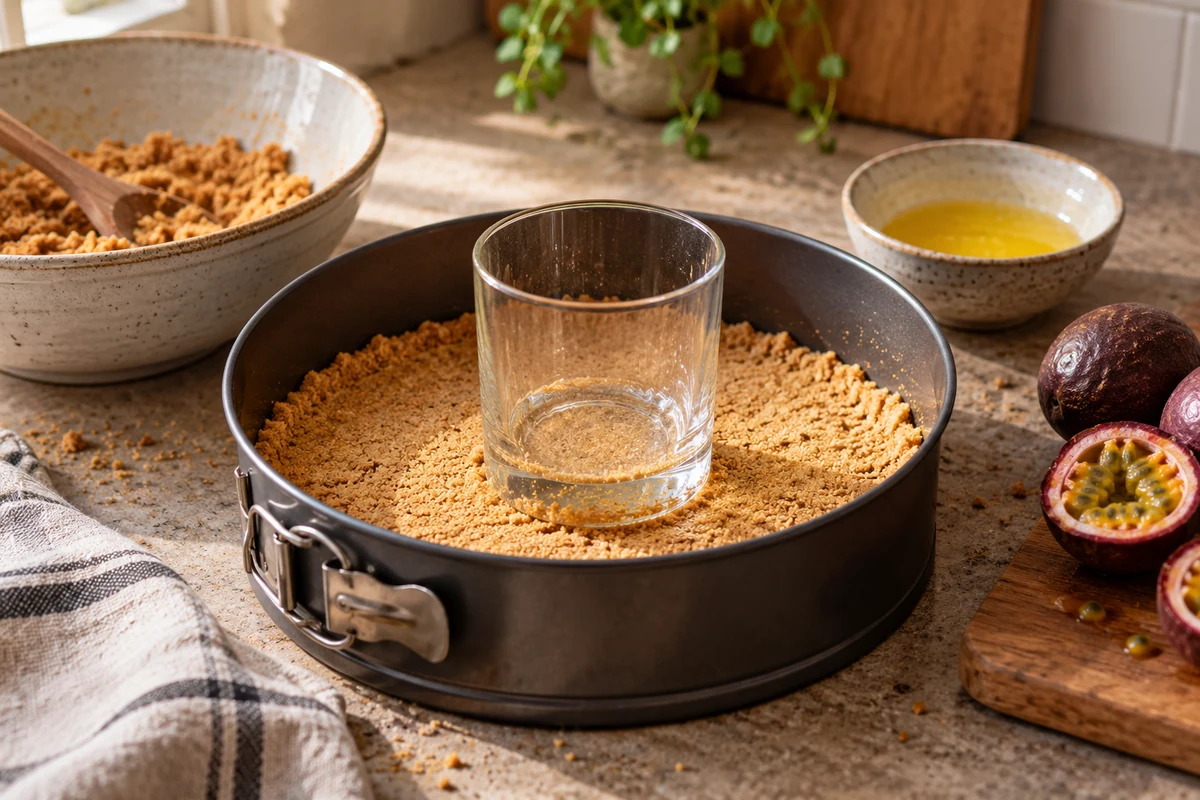
The base gives your no-bake passion fruit cheesecake its crumbly contrast. The starting ratio here is 200 g biscuits to 100 g butter, but different biscuits absorb fat differently. Aim for fine crumbs that hold together when pressed.
Step-by-step biscuit base
- Crush the biscuits: pulse 200 g in a food processor, or seal them in a sturdy food bag and crush with a rolling pin.
- Mix with butter: add the melted butter and salt, mixing until the crumbs resemble damp sand and clump when pressed.
- Prepare the tin: line the bottom of the 20–22 cm springform tin with parchment and lightly grease the sides if needed.
- Press evenly: use a spoon or flat-bottomed glass to compact the crumbs into a level layer.
- Add a low rim if desired: press a small amount of crumbs about 0.5–1 cm up the sides. The tin, rather than this low rim, supports the unset filling.
- Chill before filling: refrigerate for 15–30 minutes. For an optional baked base, cook at 180°C conventional/160°C fan for around 8–10 minutes, watching carefully, and cool completely. That variation is no longer entirely no-bake.
Practical base substitutions
- Biscuit choice: plain biscuits give a mild flavour, chocolate biscuits a darker base and wholemeal biscuits a more rustic texture.
- Alternative fats: firm plant-based baking fat may work, but coconut oil and soft spreads behave differently. Add gradually until the crumbs bind and test after chilling rather than assuming every product needs 100 g.
- Gluten-free biscuits: start with the same biscuit weight and adjust the binding fat only as needed.
- Extra crunch: add 30–40 g finely chopped walnuts or almonds if suitable for your guests, adjusting the crumb mixture to bind.
- Avoid a wet base: chill it fully, use a filling that sets properly and keep the topping above the set filling. A watery sauce poured directly onto the crumbs will soften them.
- Release carefully: wait until the filling has set throughout, then run a thin, warm, dry knife around the ring. A short spell in the freezer cannot rescue a filling that never set.
- Base thickness: aim for a roughly even layer around 0.5–1 cm thick, depending on the tin and whether you add a rim.
Common base problems
- A crumbly base: before filling, check that the crumbs are fine and compacted. If too dry, mix in a little more melted butter and chill again; avoid making it greasy.
- A base that baked too hard: use a shorter baking time or slightly lower temperature next time, judging your oven and biscuit type.
- An uneven layer: spread and press the crumbs level with a flat-bottomed glass before chilling.
Vegan, reduced-fat and gluten-free cheesecake variations
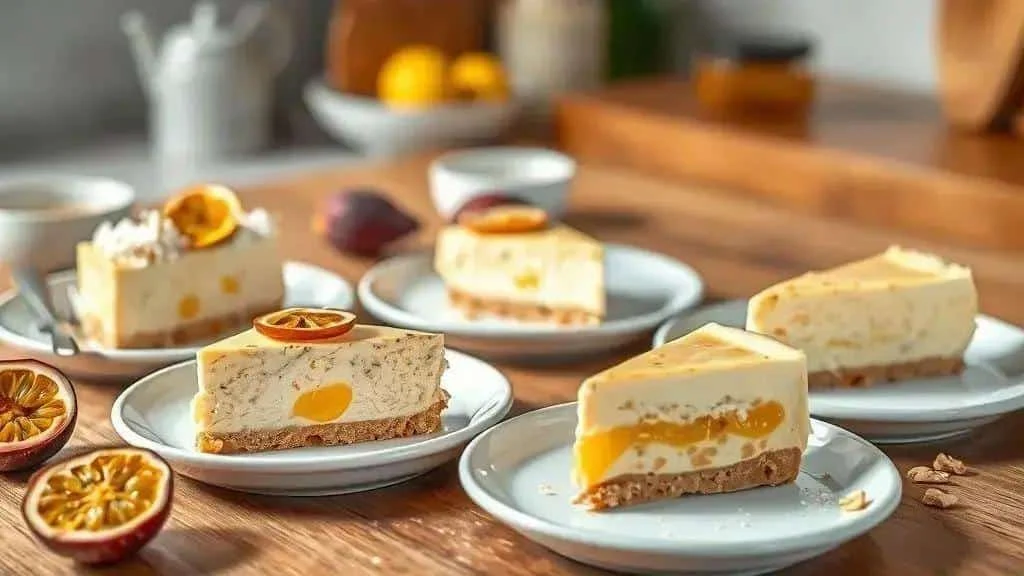
These are adaptation notes for no-bake passion fruit cheesecake. Changing the dairy, fat or setting agent changes the structure, so test a small portion before making a celebration cake.
Vegan
Replace all animal-derived ingredients, including butter and gelatine. Use a tested vegan setting method suitable for passion fruit rather than a fixed agar substitution.
- 200 g vegan biscuits – check for milk, butter, eggs and honey; a lactose-free label alone is insufficient.
- A suitable plant-based binding fat – add gradually to the crumbs; coconut oil sets differently from butter.
- 400 g plant-based cream cheese – choose a product suitable for desserts and check soy or nut allergens.
- Plant-based sweetened condensed milk – use a comparable dessert product. Coconut milk mixed with sugar is not automatically equivalent in weight, thickness or setting behaviour.
- 200 ml plant-based whipping cream – chill and prepare as directed. Not every coconut cream can be whipped.
- 200–220 g unsweetened passion fruit pulp – fresh or frozen, prepared as its packet requires.
- A suitable vegetarian setting agent – calculate the quantity and preparation method for the actual mixture using its instructions.
Setting adjustment: agar requires heating and begins setting as it cools; simply stirring a teaspoon into cold cream is unreliable. Follow a compatible tested method, or serve an untested mixture as spoonable desserts in glasses.
Reduced-fat
Lower-fat ingredients can change the filling’s moisture and firmness. Compare labels rather than assuming wholemeal biscuits or a product called light makes the complete dessert lower in calories.
- 200 g wholemeal biscuits – for a different flavour; check their nutrition rather than assuming fewer calories.
- A binding fat suitable for biscuit bases – reduced-fat spreads may contain too much water to replace butter directly.
- 400 g reduced-fat cream cheese – expect a softer or wetter mixture than full-fat cream cheese.
- A suitable reduced-fat condensed milk – if available. Yoghurt and honey are not equivalent replacements for an entire tin and would need a separately tested formulation.
- Cream appropriate to the adapted recipe – low-fat pouring cream does not necessarily whip, so it cannot automatically replace the 200 ml whipping cream.
- 200–220 g passion fruit pulp – use the same measured amount, with sweetness adjusted to taste.
- Gelatine appropriate to the mixture – follow the product’s guidance and test the firmness, rather than using the smallest quantity in an unspecified sachet.
Practical tip: use smaller portions and a modest topping if you prefer a lighter dessert. Extra chilling cannot compensate for a filling whose ingredient balance will not set.
Gluten-free
Use certified gluten-free biscuits and check the remaining ingredients and preparation surfaces for suitability and cross-contact.
- 200 g gluten-free biscuits – finely crushed.
- About 100 g butter – melted, with slight adjustment if the biscuits bind differently.
- Filling: keep the main recipe, checking the cream cheese, condensed milk, setting agent and decorations.
- 30–40 g chopped almonds, optional – for crunch if there is no nut allergy.
Other bases: oats must be certified gluten-free where needed. Oat or nut bases need their own binding proportions and are not a direct biscuit swap.
Flavour combinations and finishing touches
- Passion fruit and white chocolate: a few shavings balance the fruit’s sharpness. Choose vegan chocolate for a vegan version.
- Less sugar: keep the topping modest and taste before adding extra sugar. Citrus zest adds fragrance but does not neutralise acidity.
- Smooth texture: soften the cream cheese only briefly, whip cold cream separately and temper dissolved gelatine before combining. Vegetarian setting agents need their own temperature handling.
Storage
- Fridge: keep covered at 5°C or below and use within 48 hours, following any shorter ingredient instructions.
- Freezer: freeze promptly only if the ingredients are suitable, wrapping portions well. Thaw completely in the fridge and use within 24 hours; texture may change.
Flavourings, toppings and decoration
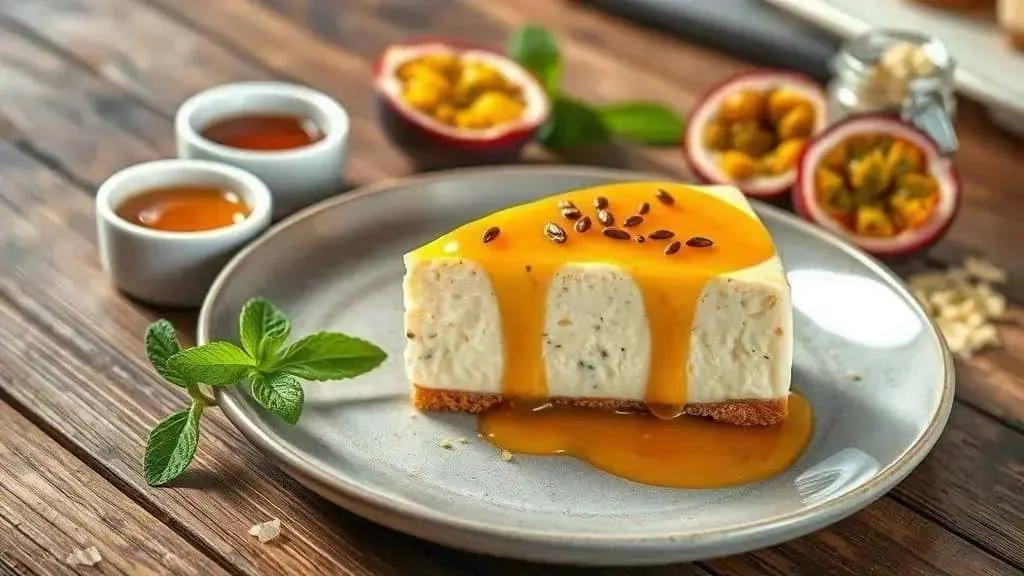
Small finishing touches give no-bake passion fruit cheesecake a balance of tangy fruit, sweet cream and crisp crumbs.
Useful flavourings
- Lemon zest – about 1 tsp for a fresh citrus aroma.
- Vanilla extract – about ½ tsp complements the cream cheese.
- A pinch of salt – especially useful in the biscuit base.
- Fresh mint – a few small washed leaves for colour and fragrance.
- Lemon basil – an optional small chopped leaf for a herbal note.
Topping options
A larger passion fruit topping, as an alternative to the small topping in the main recipe:
- 200–220 g extra passion fruit pulp
- 3 tbsp sugar, adjusted to taste
- 1 tsp lemon juice, optional
- ½ tsp cornflour mixed with 1 tbsp cold water, optional for thickening
- Warm the pulp and sugar gently, stirring until dissolved.
- Add the cornflour slurry if needed and simmer, stirring, until slightly thickened. Add only enough to make a pourable topping.
- Remove from the heat, add the optional lemon juice and cool completely before spreading over the set filling. Serve any excess separately.
A simple seeded passion fruit sauce:
- 200–220 g extra passion fruit pulp
- 2 tbsp brown sugar, to taste
- Warm and stir until the sugar dissolves, following any cooking requirement on frozen pulp. Cool fully before serving; retain the seeds for texture.
Decorating the cheesecake
- A washed passion fruit half – place beside a slice as a garnish; the shell is not eaten.
- White chocolate shavings – a small scattering, around 5–10 g, adds sweetness.
- Small mint leaves – one or two per portion provide a fresh contrast.
- Passion fruit seeds – a few from the pulp add a crisp texture.
- Edible flowers – only flowers sold for culinary use and identified as safe to eat, not florist flowers.
- Fine caramel decorations – optional, prepared separately and cooled completely; use sparingly.
Adding toppings neatly
- Use fully cooled topping so it does not soften the filling.
- Add it gradually and spread gently for an even layer.
- Decorate just before serving to keep fruit and mint fresh.
- Balance colours and textures with yellow fruit, white filling and a little green garnish.
- Avoid oversweetening; taste the pulp before deciding how much sugar to add.
Common topping mistakes
- Soaking the crumbs – keep thin sauces away from the biscuit base and add topping only above the fully set filling.
- Decorating too early – leaves and flowers can wilt in storage.
- Using hot sauce – this can soften the cheesecake and spoil the surface.
Making ahead, storing and serving
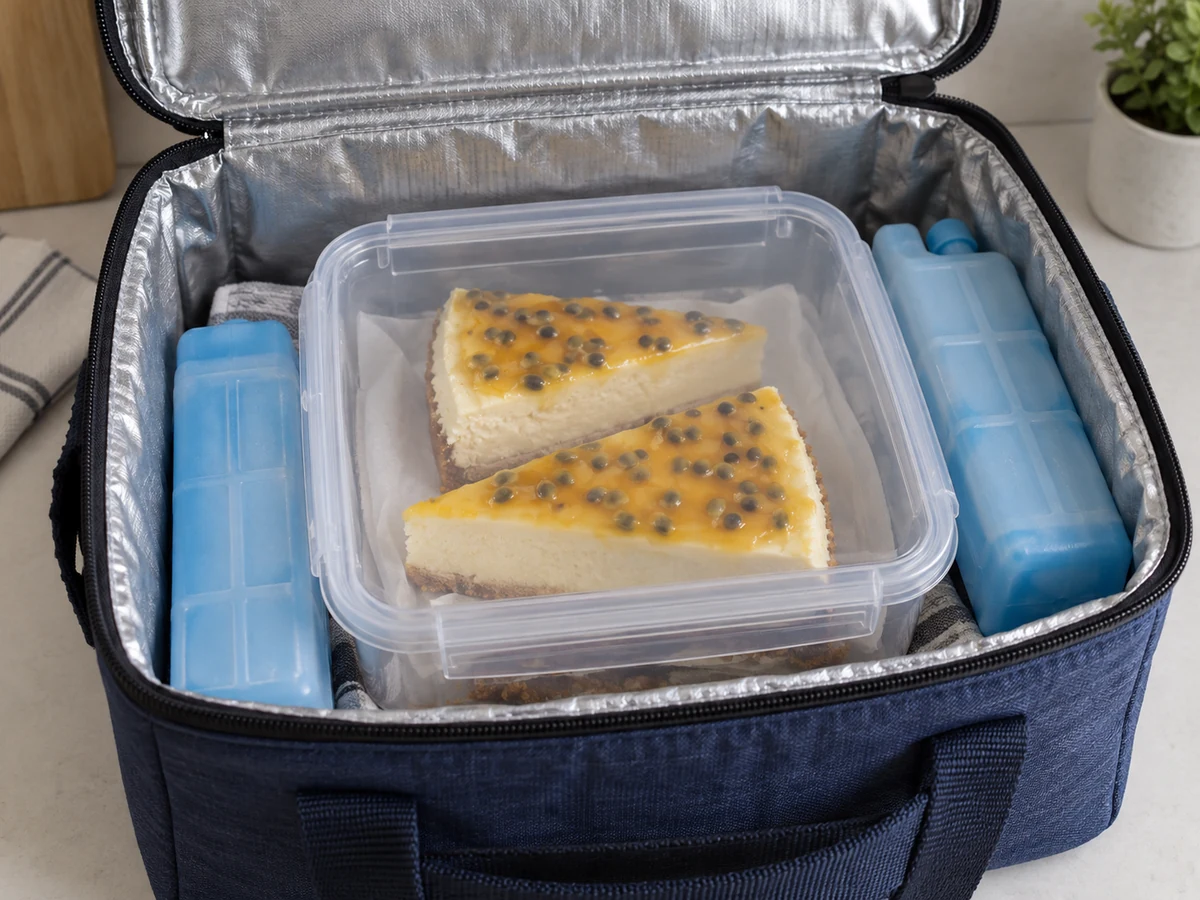
A little planning lets your no-bake passion fruit cheesecake reach the table properly chilled and set.
Make-ahead checklist
- Prepare the base and filling the day before: assemble and refrigerate overnight, allowing at least 8 hours if possible.
- Keep the topping separate: cool it promptly and store covered in the fridge, ready to add to the set cheesecake.
- Pre-portion for a larger gathering: cut clean slices with a warm, dry knife and store in a covered food container in the fridge.
- Keep chilling until serving: bring out only the portions needed rather than warming the whole cake in advance.
- Check the set: a small test portion can help when trying a new formulation, but also check the whole cake; a little sample cools faster.
Safe storage
- Refrigeration: keep covered at 5°C or below, preferably around 4°C, and use within 48 hours or any shorter ingredient limit.
- Freezing: if all ingredients permit freezing, wrap portions and freeze promptly. Around a month is a practical quality target, not a guarantee of unchanged texture. Thaw fully in the fridge and use within 24 hours.
- Separate the components: store the topping in a closed container and add it shortly before serving.
- Transport: use a rigid covered container in an insulated bag with sufficient ice packs to keep the dessert cold. Journey duration alone does not guarantee a safe temperature.
- Keep slices neat: use chilled plates and a clean warm knife, dried between cuts. There is no need to leave the cheesecake warming for 10–15 minutes.
Serving at a festive meal
- Portions: a slice around 80–120 g can suit dessert after dinner; adjust to appetite and other dishes.
- Finish at the end: add the cooled topping shortly before taking the dessert to the table.
- Garnish: add mint and a washed passion fruit half beside the portion just before serving.
- Serving tools: a broad cake slice and a thin, warm, dry knife help transfer portions cleanly.
- Keep the remaining cake refrigerated: serve in small batches instead of leaving it out throughout the meal.
Final practical reminders
- Avoid heat: keep the cheesecake away from sunshine, ovens and other warm areas.
- Test adaptations ahead: try a small separate batch before an important occasion, especially when changing the setting agent or dairy ingredients.
- Tell guests about allergens: identify milk, wheat, nuts or soy where present, and keep adapted portions protected from cross-contact.
To finish
A no-bake passion fruit cheesecake brings a creamy, tangy finish to a celebration. A well-pressed base, a correctly set filling and a cool topping make the difference.
Thank you for reading. Follow our social channels for more seasonal recipes, photographs and practical ideas.
Visit I Love Christmas for more festive inspiration and sweet recipes.
No-bake passion fruit cheesecake: frequently asked questions
Can I replace gelatine with a vegan setting agent?
Yes, but the quantity and method need to suit the product and this acidic, creamy mixture. Agar is not a teaspoon-for-sachet substitute and must be heated as directed. Use a tested vegan formulation, or serve an untested filling in dessert glasses. Replace all dairy ingredients and butter as well.
How can I stop the biscuit base becoming soggy?
Press the crumbs firmly, chill the base and let the filling set properly. Keep watery topping away from the crumbs and add it only over the set filling. An optional short bake can crisp the base, but cool it completely before filling.
How long does the cheesecake keep?
Keep covered at 5°C or below and use within 48 hours, or sooner if required by an ingredient. If suitable for freezing, freeze promptly in portions; about a month is a quality target. Thaw fully in the fridge and use within 24 hours. Freezing may change the texture.
Can I make a reduced-fat version without changing the texture?
Not necessarily. Reduced-fat cream cheese, pouring cream and yoghurt have different moisture and setting properties. Use a tested reduced-fat formulation or trial a small batch; longer chilling alone cannot guarantee a firm filling.
Can I prepare this cheesecake ahead of a celebration?
Yes. Assemble it the day before and keep it refrigerated overnight. Store the cooled topping separately and add it shortly before serving.