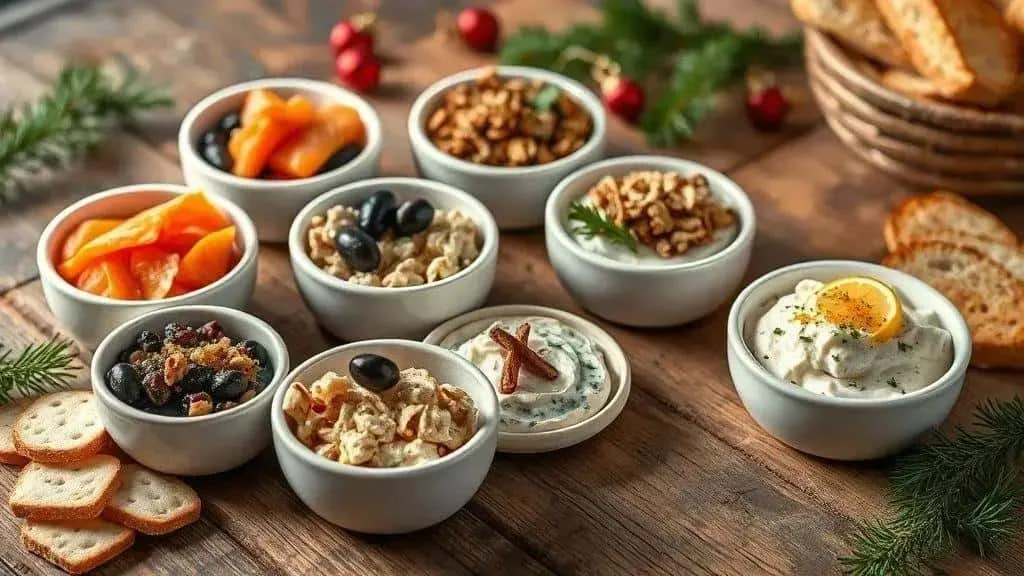
These six gourmet Christmas pâtés and spreads offer a colourful choice for a festive board: smoked salmon, black olive, walnut and Gorgonzola, lemon ricotta with a separate vegan option, roasted red pepper, and sun-dried tomato with goat’s cheese. Find ingredients, methods, variations and practical serving tips below.
Looking for gourmet Christmas pâté recipes? These six options combine simple preparation with a festive presentation. Check guests’ dietary needs before choosing: NHS advice is to avoid all types of pâté during pregnancy, including vegetable pâté. Cold-smoked fish also needs special care for people at higher risk of listeria; the references below explain the guidance.
Ingredients for Six Gourmet Pâtés and Spreads
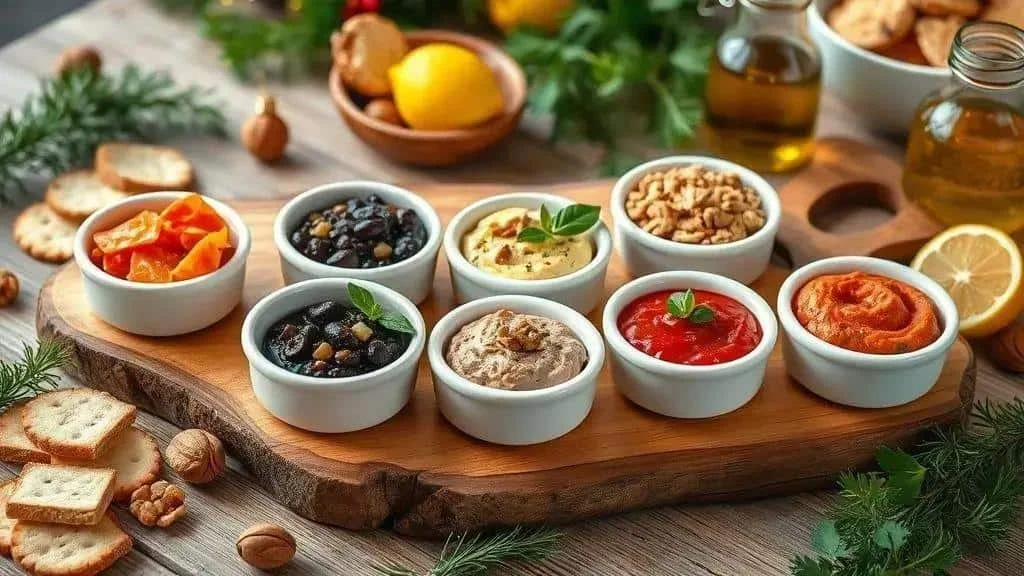
The ingredients are grouped by recipe. Choose the spreads you need, check allergens and substitutions, and measure everything before starting. Use pasteurised dairy products and follow the shortest use-by or opened-pack storage instruction among your ingredients.
Smoked Salmon Pâté
- 200 g smoked salmon, chopped into small pieces.
- 200 g cream cheese, softened briefly for mixing. A plant-based cheese changes the dairy component only; salmon is not vegan.
- 2 tbsp cream or Greek yoghurt, to adjust the texture.
- 1 tbsp fresh lemon juice, to balance the flavour.
- ¼ red onion, finely chopped.
- 1 tbsp chopped dill or chives.
- Salt and black pepper, to taste.
Black Olive and Herb Spread
- 250 g pitted black olives, drained.
- 50–100 g cream cheese or ricotta, for texture; ricotta gives a less dense finish.
- 2 tbsp olive oil, preferably extra virgin.
- 1 small garlic clove, optional, for a stronger flavour.
- 1 tbsp chopped parsley.
- 1 tsp oregano, fresh or dried.
- Lemon zest, optional, for freshness.
- Pepper, to taste.
Walnut and Gorgonzola Spread
- 150 g walnuts, toasted and roughly chopped.
- 150 g Gorgonzola, or another blue cheese you enjoy.
- 100–150 g cream cheese or requeijão, the Brazilian creamy cheese spread, to adjust the consistency.
- 1 tbsp honey, optional, for a sweet contrast; chilli jam is an alternative. Do not give honey to babies under one year.
- 1 tsp balsamic vinegar, to balance the cheese.
- Black pepper, to taste.
Lemon Ricotta Spread, with a Vegan Tofu Option
- 300 g fresh ricotta, or 300 g silken tofu for the vegan version.
- 2 tbsp cream, or a vegan plant-based cream with the tofu option.
- Zest and juice of 1 lemon; zest adds aroma and juice adds acidity.
- 1 tbsp extra virgin olive oil, to bring the mixture together.
- 1 tbsp chopped chives.
- Salt and black pepper, to taste.
Roasted Red Pepper and Garlic Spread
- 3 large red peppers, roasted, peeled and deseeded. Alternatively, use 1 cup well-drained jarred roasted peppers; this shortcut gives a different batch size, so adjust the creamy base to suit.
- 2 roasted garlic cloves for a mellow flavour, or 1 raw clove for a stronger version.
- 2 tbsp olive oil, to blend the spread.
- 50–100 g cream cheese or ricotta, for creaminess.
- 1 tsp white wine vinegar, to balance the flavour.
- 1 tbsp chopped basil or parsley.
- Salt and pepper, to taste.
Sun-Dried Tomato and Goat’s Cheese Spread
- 150 g sun-dried tomatoes, softened according to the pack if necessary; drain tomatoes packed in oil.
- 150 g soft goat’s cheese, preferably a pasteurised, rindless variety; use cream cheese for a milder flavour.
- 2 tbsp olive oil, for a smooth texture.
- 1 small garlic clove, optional.
- 1 tbsp honey or balsamic glaze, optional, for sweetness. Omit if preferred.
- Basil leaves, to finish.
- Toasted walnuts or pine nuts, optional, for crunch.
Quick tip: adjust salt and acidity at the end. A food processor gives a smoother spread; finely chopping and mixing by hand gives a more rustic texture.
How to Make the Six Recipes
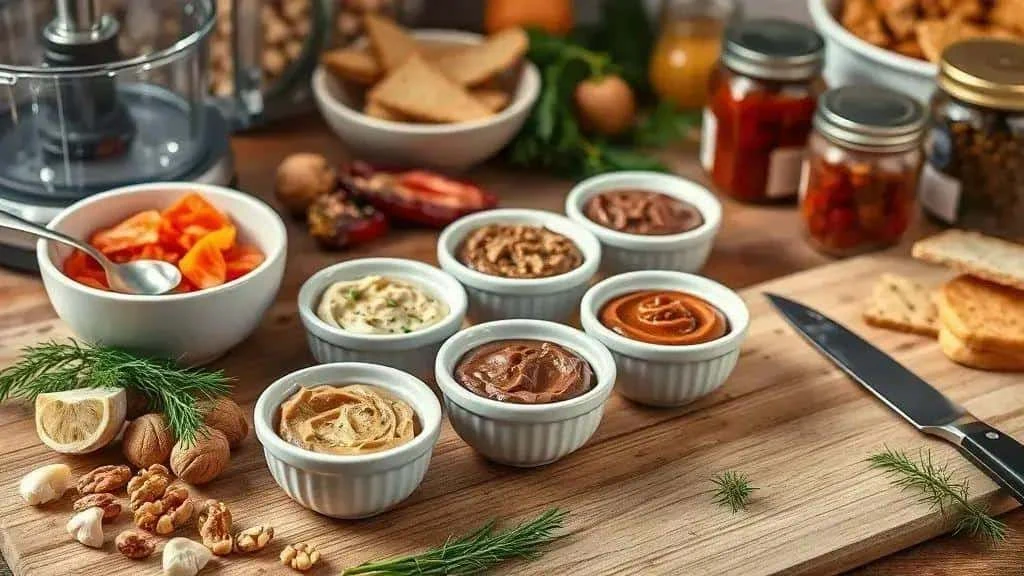
Follow these straightforward methods, then see the variations and serving suggestions. Preparation times are estimates, and chilling time is additional.
Smoked Salmon Pâté
- Prepare the ingredients: chop 200 g smoked salmon and soften 200 g cream cheese just enough to mix. Keep the fish chilled until needed.
- Combine fish and cheese: pulse the chopped salmon and cream cheese in a food processor until combined, leaving a few visible flakes.
- Adjust the texture: add 2 tbsp cream or Greek yoghurt and pulse briefly to incorporate.
- Season: add 1 tbsp lemon juice, ¼ finely chopped red onion, 1 tbsp chopped dill or chives, and pepper. Taste before adding salt, as smoked salmon is already salty.
- Chill: refrigerate for 30 minutes to firm up.
- Finish: taste before serving, adjust the lemon if needed, and garnish with dill or chives. Keep chilled until serving; lemon juice does not make cold-smoked fish safe for higher-risk guests.
Black Olive and Herb Spread
- Drain the olives: drain 250 g pitted black olives thoroughly.
- Blend: put the olives, 50–100 g cream cheese or ricotta, 2 tbsp olive oil and optional garlic clove into a food processor. Blend to a spreadable paste.
- Add herbs: add 1 tbsp chopped parsley and 1 tsp oregano, then pulse briefly.
- Balance the flavour: add optional lemon zest and pepper. Taste before deciding whether any salt is needed.
- Adjust the texture: if the mixture is too thick, add up to 1 tbsp extra olive oil, a little at a time.
- Chill: refrigerate for at least 20 minutes before serving.
Walnut and Gorgonzola Spread
- Toast the walnuts: toast 150 g walnuts in a dry frying pan for about 2–3 minutes, stirring and watching closely, then cool.
- Combine the cheeses: put 150 g Gorgonzola and 100–150 g cream cheese or requeijão into a food processor.
- Add the walnuts: pulse in the cooled toasted nuts until creamy with small pieces remaining.
- Balance the flavours: mix in 1 tbsp honey or chilli jam, 1 tsp balsamic vinegar and black pepper to taste.
- Adjust the consistency: add 1–2 tbsp cream if needed to loosen the spread.
- Store chilled: cover and refrigerate until serving. This uncooked blue-cheese spread is not suitable during pregnancy; choose an appropriate alternative in line with NHS advice.
Lemon Ricotta Spread, with a Vegan Tofu Option
- Choose the base: use 300 g fresh ricotta, or 300 g silken tofu for the vegan version.
- Blend the base: mix the ricotta or tofu with 2 tbsp cream until smooth. Use vegan plant-based cream with tofu.
- Add lemon: mix in the zest of 1 lemon, then add its juice gradually to taste.
- Season: add 1 tbsp extra virgin olive oil, 1 tbsp chopped chives, salt and black pepper.
- Taste and adjust: add a little more cream if too sharp, or more zest and seasoning if needed. Use the appropriate dairy or vegan cream for your chosen version.
- Chill and serve: refrigerate for 15–20 minutes and finish with lemon zest and fresh chives.
Roasted Red Pepper and Garlic Spread
- Roast the peppers: roast 3 red peppers in the oven until softened and the skin is blistered. Transfer to a heatproof bowl, cover with a plate for about 10 minutes, then peel when cool enough to handle. Do not put hot peppers in an ordinary plastic bag.
- Remove the seeds: remove the skin, stalks and seeds, then cut the flesh into strips.
- Blend: process the roasted peppers with 2 roasted garlic cloves or 1 raw clove, 2 tbsp olive oil and 50–100 g cream cheese or ricotta until smooth.
- Add acidity: stir in 1 tsp white wine vinegar.
- Add herbs and seasoning: mix in 1 tbsp chopped basil or parsley, salt and pepper to taste.
- Finish: refrigerate for 30 minutes, then serve with toasted bread.
Sun-Dried Tomato and Goat’s Cheese Spread
- Prepare the tomatoes: soften 150 g dry sun-dried tomatoes in warm water according to the pack, checking after about 10 minutes, then drain. Oil-packed tomatoes can simply be drained.
- Blend with cheese: process the tomatoes with 150 g soft goat’s cheese and 2 tbsp olive oil until creamy.
- Add garlic: add 1 small garlic clove if using, then pulse briefly.
- Add sweetness: mix in 1 tbsp honey or balsamic glaze if you would like a sweeter contrast.
- Add crunch: fold in optional chopped toasted walnuts or pine nuts.
- Serve: finish with basil leaves and refrigerate for 20 minutes before serving.
General tip: use a food processor for smooth spreads or finely chop and mix by hand for a rustic finish. Taste for salt, acidity and consistency before serving.
Quick Guide: Preparation, Portions and Presentation
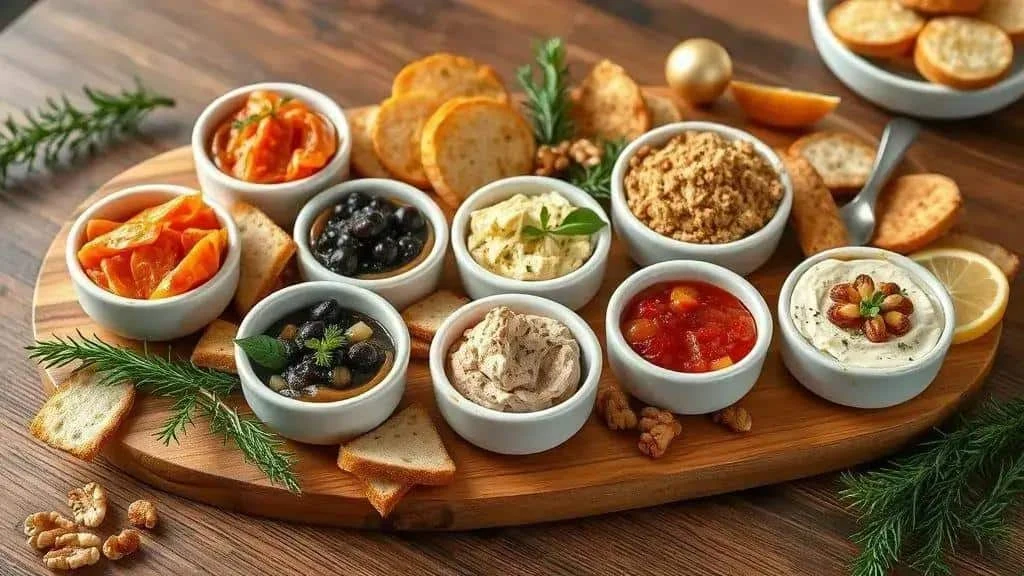
These timings are approximate planning guides. The original recipes gave finished weights smaller than the combined ingredients, so those unreliable yields have been removed. Weigh each finished batch and divide it into suitable starter portions rather than relying on an untested cup yield.
Smoked Salmon Pâté
- Preparation: about 10 minutes.
- Chilling: 30 minutes in the fridge.
- Portions: weigh the finished mixture. Salmon and cream cheese alone total 400 g before the remaining ingredients, so the batch cannot yield only 200–250 g as previously stated.
- Presentation: serve in pale bowls with dill and lemon zest, alongside rye bread and wholegrain crackers.
Black Olive and Herb Spread
- Preparation: about 8 minutes.
- Chilling: 20 minutes.
- Portions: weigh the finished spread and divide according to the rest of your menu. The olives alone weigh 250 g, before cheese and oil are added.
- Presentation: use rustic bowls, finish with olive oil and parsley, and offer thin toast and vegetable sticks.
Walnut and Gorgonzola Spread
- Preparation: about 12 minutes, plus any extra time needed to cool the toasted nuts.
- Chilling: 20–30 minutes.
- Portions: weigh the finished mixture; the nuts and two cheeses total 400–450 g before optional cream and seasoning.
- Presentation: garnish with walnuts and serve with chilli jam and pear or apple slices. Keep nuts separate if guests need an alternative.
Lemon Ricotta Spread, with a Vegan Tofu Option
- Preparation: about 7–10 minutes.
- Chilling: 15–20 minutes.
- Portions: weigh the finished batch; the base alone is 300 g, with cream, oil and lemon added afterwards.
- Presentation: use white bowls, lemon zest and fresh herbs, with thin toast on the side.
Roasted Red Pepper and Garlic Spread
- Preparation: allow time to roast, steam, peel and cool the peppers before blending. Using drained jarred peppers is quicker; a fixed 20-minute total is not reliable for fresh peppers.
- Chilling: 30 minutes after blending.
- Portions: weigh the finished spread, as pepper size, roasting losses and the jarred-pepper shortcut affect the yield.
- Presentation: serve in small rustic bowls with a little olive oil, basil leaves and toasted Italian bread.
Sun-Dried Tomato and Goat’s Cheese Spread
- Preparation: about 8–10 minutes, plus any time needed to soften dry tomatoes.
- Chilling: 20 minutes.
- Portions: weigh the finished mixture. Tomatoes and cheese total 300 g before oil, herbs and optional toppings.
- Presentation: finish with toasted pine nuts or basil and serve with breadsticks and baguette slices.
Putting Together a Pâté Board
- Arrangement: put each spread in its own bowl, spaced so guests can reach it easily.
- Textures: combine crunchy toast and crackers, softer bread or cooked polenta, and sharp accompaniments such as pickles and lemon.
- Temperature: keep the spreads chilled until shortly before serving. A brief 5–10 minutes on the table can soften the texture; avoid leaving the whole batch out through a long party.
- Colour: alternate pale, dark and red spreads to make the selection easy to see.
- Utensils: provide a separate spoon or spreading knife for each bowl and individual plates for guests.
- Pairings: try salmon with lemon, walnuts with blue cheese, or sun-dried tomatoes with goat’s cheese.
Variations and Substitutions
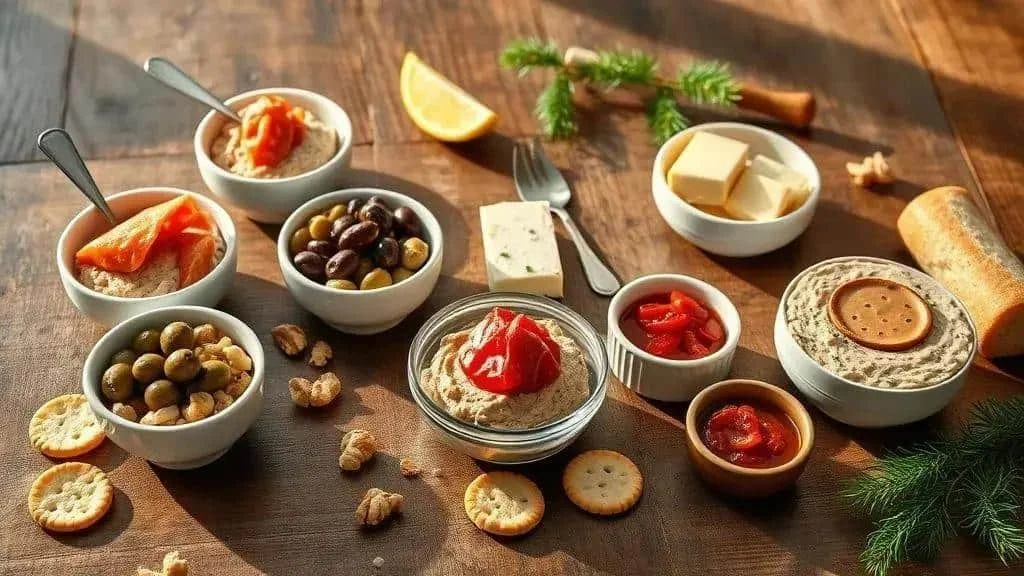
Adapt flavours to your ingredients and guests’ preferences. Dietary suitability depends on the whole recipe and preparation, not a single substitution. Check product labels and discuss allergies with the guest concerned.
Smoked Salmon Pâté
- Alternative fish: use 200 g smoked trout or drained tinned tuna. Cold-smoked trout has the same relevant listeria precautions as cold-smoked salmon.
- Different texture: replace 200 g cream cheese with 150 g ricotta and 50 g Greek yoghurt. Nutritional values depend on the products used.
- Vegan alternative: use 200–250 g vegan cream cheese and 100 g prepared smoked-carrot salmon alternative instead of all the fish; replace the cream or yoghurt with a vegan equivalent too.
- Salt: taste before adding any, particularly with preserved fish. Lemon adds freshness but does not remove sodium.
Black Olive and Herb Spread
- Different olives: use 250 g pitted green olives for a different flavour; their saltiness and intensity vary by product.
- Dairy-free base: replace the 50–100 g cream cheese with 70–100 g well-drained firm tofu, checking the product and other ingredients for the guest’s needs.
- Softer texture: add 1–2 tbsp extra virgin olive oil gradually, stopping when spreadable.
- Without garlic: omit it and use lemon zest for aroma.
Walnut and Gorgonzola Spread
- Alternative cheese: replace 150 g Gorgonzola with 150 g Roquefort, or a mild soft goat’s cheese for a different flavour.
- Alternative nuts: use 150 g toasted pecans or almonds for variety. These remain nuts and are not an automatic allergy-safe substitute.
- Sweet and spicy: replace 1 tbsp honey with 1 tbsp chilli jam to serve alongside a cheese or charcuterie board.
- Vegan version: combine 150 g vegan blue-style cheese with 100–150 g vegan cream cheese. Use plant-based cream if needed and replace honey with a suitable vegan jam or syrup.
Lemon Ricotta Spread
- Vegan version: replace the ricotta with 300 g silken tofu and the dairy cream with 2 tbsp vegan cream, retaining the recipe’s 1 tbsp olive oil. The complete version appears below.
- Creamier texture: add 1–2 tbsp extra cream or vegan cream as appropriate.
- A sweet note: add 1 tsp honey or agave syrup if you like; choose agave for a vegan version. Honey is unsuitable for babies under one.
- Different herbs: replace chives with basil or dill.
Roasted Red Pepper and Garlic Spread
- Jarred peppers: 1 cup well-drained roasted peppers is a shortcut variation, not an exact equivalent to 3 large fresh peppers. Add the creamy base gradually and taste before adding vinegar.
- Smokier flavour: add ½ tsp smoked paprika.
- Without cheese: omit the cream cheese or ricotta and use 3 tbsp olive oil in total, blending until smooth.
- Extra heat: add ¼ tsp chilli flakes or one deseeded small red chilli, adjusting to taste.
Sun-Dried Tomato and Goat’s Cheese Spread
- Dry tomatoes: use 150 g and soften according to the pack, checking after about 10 minutes in warm water; drain before blending.
- Milder cheese: replace 150 g goat’s cheese with 150 g cream cheese.
- Vegan version: combine 150 g sun-dried tomatoes with 150 g vegan cream cheese or firm tofu blended with the recipe’s olive oil. Omit honey or use a vegan balsamic glaze.
- Crunch: add 2 tbsp chopped toasted walnuts or pine nuts if suitable for your guests.
General Substitution Tips
- Overly salty flavour: mix in a little unsalted plain yoghurt, ricotta or cream cheese to dilute the salty taste. This increases the batch size; it does not remove the salt already present.
- Consistency: loosen with cream, Greek yoghurt or olive oil, starting with 1 tbsp and adjusting gradually.
- Nut alternatives: toasted sunflower seeds can provide a different texture, but only use them for an allergic guest after confirming suitability. Check cross-contact and every other ingredient; changing one ingredient does not make a dish allergen-free.
- Dairy-free or vegan versions: try plant-based cheeses in similar quantities and adjust texture and lemon juice. Replace all dairy, fish and honey where applicable. Lactose-free dairy is neither vegan nor suitable for a milk allergy.
Practical tip: test a small amount of an unfamiliar substitution before changing the full batch, then adjust seasoning and consistency.
Smoked Salmon Pâté: Ingredients and Method
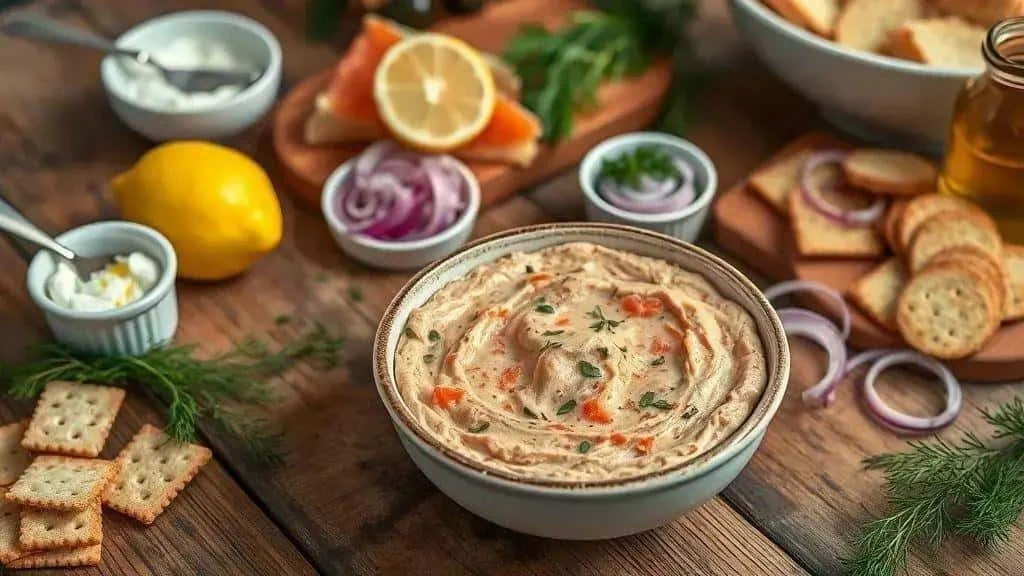
Smoked salmon pâté is a creamy option for a festive starter board. Follow the cold-smoked fish and pregnancy guidance noted above when deciding who it is suitable for.
- 200 g smoked salmon, chopped. Smoked trout or 150–200 g well-drained tinned tuna are alternatives with different flavours and yields.
- 200 g cream cheese, softened briefly for mixing. Plant-based cream cheese replaces the dairy only; it does not make fish vegan.
- 2 tbsp cream or Greek yoghurt, to adjust the texture. Use a suitable plant-based equivalent if avoiding dairy.
- 1 tbsp fresh lemon juice, for flavour.
- Zest of ½ lemon, optional.
- ¼ red onion, finely chopped, or chives for a milder flavour.
- 1 tbsp chopped dill or chives.
- Salt and black pepper, to taste.
- Toast, bread and crackers, to serve.
Method
- Prepare: soften the cream cheese briefly, just enough to mix, and chop the smoked salmon. Keep ingredients chilled whenever you are not actively preparing them.
- Blend: pulse the salmon and cream cheese in a food processor until combined, leaving a few visible fish flakes.
- Adjust the texture: add 2 tbsp cream or Greek yoghurt and process briefly until creamy.
- Add flavourings: add lemon juice, optional zest, red onion and dill. Pulse just enough to combine.
- Taste and season: add pepper, then decide whether any salt is necessary; smoked salmon can already be quite salty.
- Without a processor: soften the cream cheese with a fork, stir in finely chopped salmon, then fold in the remaining ingredients with a spatula.
- Chill: refrigerate for 20–30 minutes to firm up.
- Finish and serve: stir gently, adjust the lemon if needed, and garnish with fresh dill and an optional little olive oil. Serve with toast, bread or crackers.
Variation: replace half the cream cheese with ricotta or Greek yoghurt for a different flavour and consistency, adding gradually to avoid a runny spread.
Black Olive and Herb Spread: Ingredients and Method
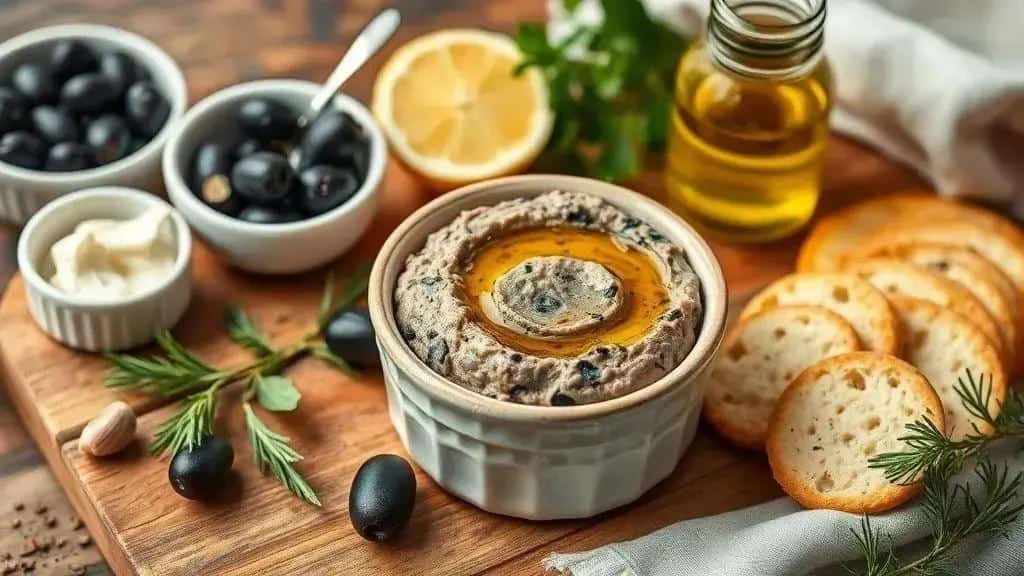
- 250 g pitted black olives, drained; use the same weight of green olives for a variation.
- 50–100 g cream cheese, softened briefly. For a dairy-free version, use 70–100 g well-drained firm tofu or a suitable vegan cream cheese.
- 2 tbsp extra virgin olive oil, to adjust texture.
- 1 small garlic clove, optional, or ½ tsp garlic powder for a different flavour.
- 1 tbsp chopped fresh parsley, or chives.
- 1 tsp oregano, or fresh or dried basil if preferred.
- Zest of ½ lemon, optional; alternatively, use 1 tsp white wine vinegar for acidity rather than citrus aroma.
- Freshly ground black pepper, to taste.
- Toast, crackers or vegetable sticks, to serve.
Method
- Prepare the olives: drain 250 g pitted black olives and pat dry with kitchen paper if very wet.
- Chop or process: pulse to a coarse paste, or chop very finely with a knife.
- Add the creamy base: pulse in 50–100 g cream cheese or the drained tofu alternative. Add the measured olive oil gradually until spreadable.
- Add herbs and garlic: add the optional garlic clove or garlic powder, 1 tbsp chopped parsley and 1 tsp oregano. Pulse briefly.
- Season: add lemon zest or 1 tsp vinegar and pepper. Taste before adding salt, as olives are already salty.
- Adjust the texture: add a little extra olive oil if too thick, up to 1 tbsp at a time.
- Chill: transfer to a small covered bowl and refrigerate for 15–20 minutes.
- Serve: take out shortly before serving, finish with a little olive oil and fresh parsley, and offer toast, crackers, carrot or cucumber sticks.
Texture tip: finely chop the olives and mix by hand for a rustic spread, or process longer for a smoother finish.
Walnut and Gorgonzola Spread: Ingredients and Method
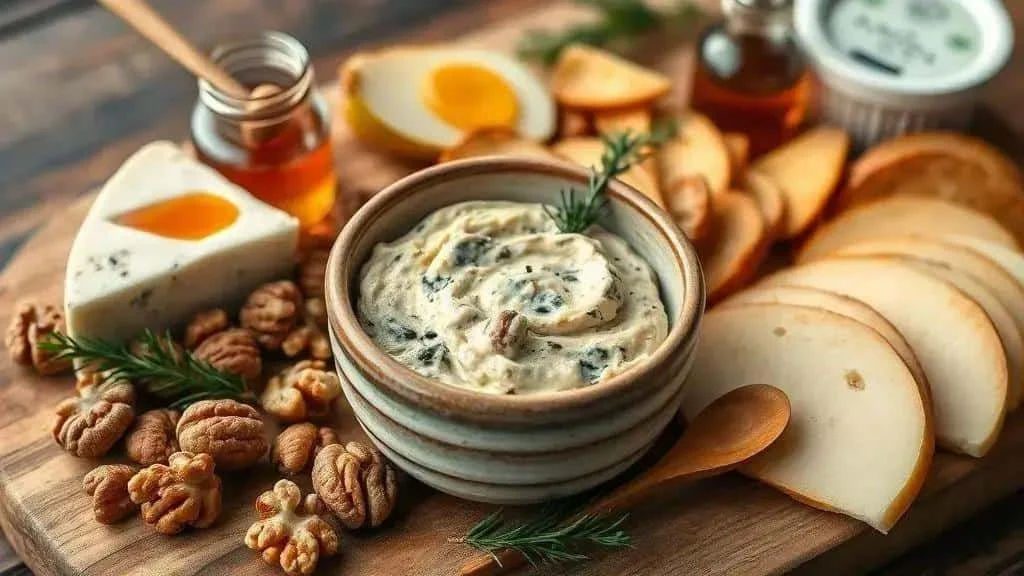
Walnut and Gorgonzola spread combines a creamy base with the sharpness of blue cheese for a festive board.
- 150 g walnuts, toasted and roughly chopped; 150 g toasted pecans or almonds offer a flavour variation, not a nut-free alternative.
- 150 g Gorgonzola, crumbled; Roquefort or another blue cheese can be used instead.
- 100–150 g cream cheese or Brazilian requeijão. Replacing only this cheese with a vegan product does not remove the dairy in Gorgonzola.
- 1–2 tbsp cream, if needed to loosen the mixture; a plant-based cream is an option, alongside the other substitutions required for a vegan version.
- 1 tbsp honey, optional, or chilli jam for a sweet and spicy contrast.
- 1 tsp balsamic vinegar, or balsamic glaze or 1 tsp lemon juice for a different balance.
- Freshly ground black pepper, to taste.
- Salt, only if needed after tasting the salty cheese.
- Toast, pear or apple slices and chilli jam, to serve.
Method
- Toast the walnuts: heat a dry frying pan and toast 150 g walnuts for about 2–4 minutes, stirring until fragrant and watching so they do not burn. Leave to cool.
- Prepare the cheese: crumble 150 g Gorgonzola into small pieces for blending; do not leave it unrefrigerated for a prolonged period.
- Blend the base: pulse 100–150 g cream cheese and the Gorgonzola until smooth.
- Add the walnuts: pulse in the cooled nuts, leaving small pieces for texture.
- Balance the flavour: add the optional 1 tbsp honey or chilli jam, 1 tsp balsamic vinegar and black pepper. Pulse briefly and taste before adding salt.
- Adjust the consistency: stir in 1–2 tbsp cream if too firm.
- Transfer and chill: spoon into a small bowl, cover and refrigerate for 20–30 minutes.
- Finish: garnish with walnuts and a little honey or balsamic glaze if using, then serve with toast and sliced fruit.
Variation: add 1 tbsp orange zest for citrus aroma. For a nut allergy, do not merely replace part of the walnuts: avoid the relevant nuts altogether and confirm an appropriate alternative and cross-contact controls with the guest.
Lemon Ricotta Spread: Method and Vegan Alternative
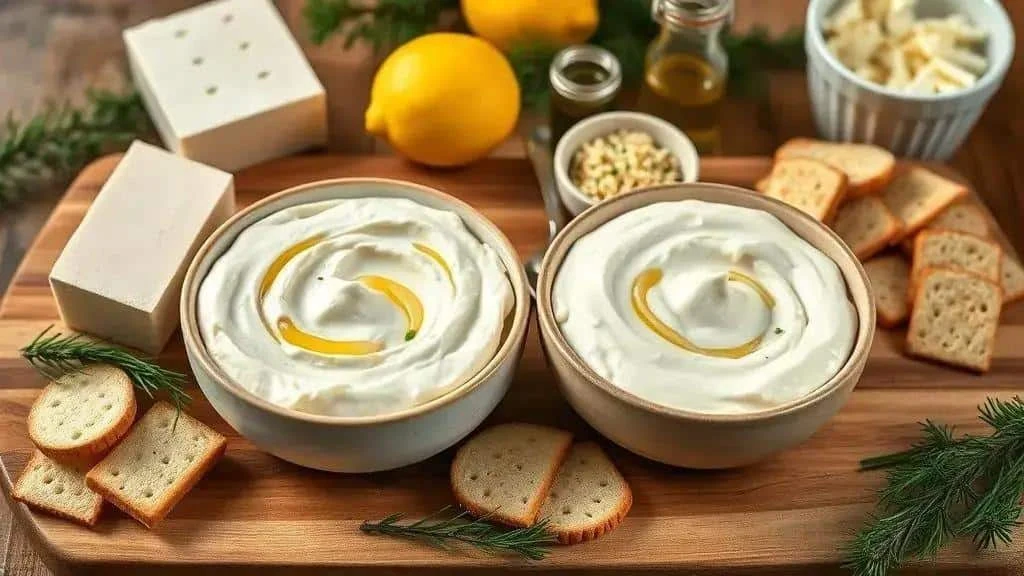
- 300 g fresh pasteurised ricotta, broken up with a fork.
- 2 tbsp cream, to adjust the texture. A plant-based cream alone does not make the ricotta version dairy-free.
- Zest and juice of 1 lemon, adding the juice gradually to taste.
- 1 tbsp extra virgin olive oil, to bring the spread together.
- 1 tbsp chopped chives, or parsley.
- Salt and black pepper, to taste.
- Toast, Italian bread or crackers, to serve.
Method
- Prepare the ricotta: put 300 g ricotta in a bowl and break it up with a fork.
- Add cream: mix in 2 tbsp cream until creamy.
- Add lemon and oil: stir in the zest of 1 lemon and 1 tbsp olive oil, then add the lemon juice gradually to your preferred sharpness.
- Season: add chopped chives, salt and pepper. Taste and adjust with small additions of lemon or seasoning.
- Choose the texture: blend briefly or whisk for a smoother finish, or leave slightly grainy for a rustic spread.
- Chill: refrigerate for 15–20 minutes.
- Serve: remove shortly before serving, garnish with lemon zest and chives, and offer toast or fresh bread.
Vegan Version
- 300 g silken tofu, lightly drained, as the creamy base.
- 2 tbsp vegan plant-based cream, to adjust the texture.
- Zest and juice of 1 lemon, adding the juice gradually as in the ricotta version.
- 1 tbsp extra virgin olive oil, to bring the mixture together.
- 1 tbsp chopped chives, or other fresh herbs.
- 1 tsp nutritional yeast, optional, for a savoury note.
- Salt and black pepper, to taste.
- Vegan wholegrain toast or crackers, to serve; check all ingredients, not just the absence of milk.
Vegan Method
- Drain the tofu: gently drain excess liquid, then put the silken tofu in a bowl.
- Mix the base: blend with 2 tbsp vegan cream until smooth.
- Add lemon and oil: stir in the lemon zest and 1 tbsp olive oil, then add lemon juice gradually to taste.
- Add savoury flavour: mix in the optional 1 tsp nutritional yeast and chopped chives.
- Taste: add salt and pepper in small amounts until balanced.
- Chill: refrigerate for 15 minutes before serving.
- Finish: garnish with lemon zest and fresh herbs, and serve with vegan toast or crackers. Lactose-free bread is not necessarily vegan.
Quick tip: add lemon juice gradually, as too much also loosens the texture. Swap some of the chives for dill or basil for a different aroma.
How to Arrange and Serve a Christmas Pâté Board
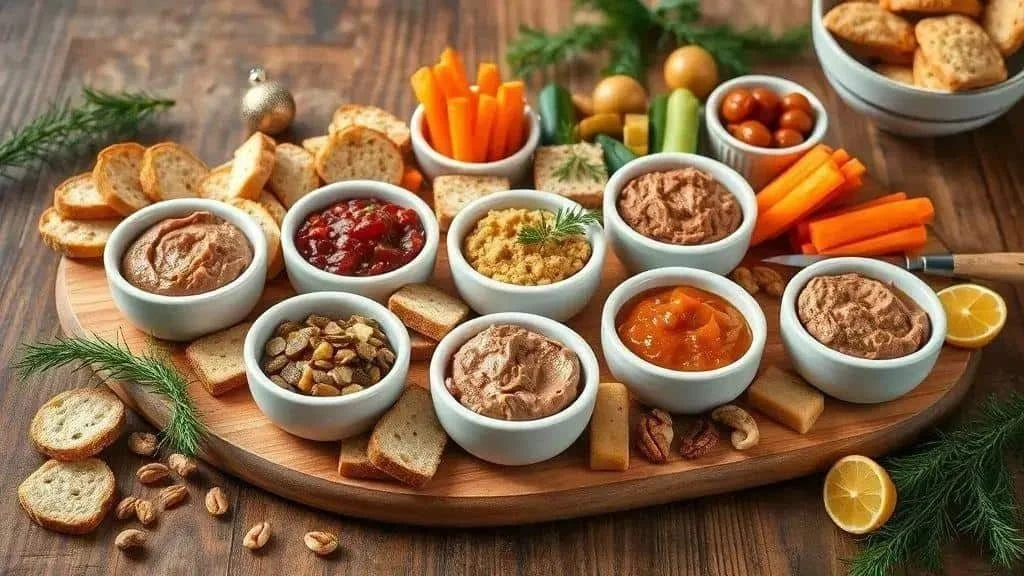
A well-organised board makes the selection inviting and easy to serve. Think about colour, texture, clear ingredient information and access for guests.
Arrangement Tips
- Bowls: use one small bowl or pot for each of your chosen spreads, leaving space between them.
- Varied textures: combine smooth, thick and slightly chunky spreads.
- Colour and contrast: alternate lighter and darker mixtures to make the board easy to navigate.
- Accompaniments: include sliced bread, toast, crackers and vegetable sticks.
- Serving utensils: provide separate spoons or small spreading knives for each bowl and plates for guests. Separate utensils help, but do not guarantee an allergen-free dish.
Assembling the Board
- Position the board: use one large board or two smaller ones, with enough space for guests to reach comfortably.
- Arrange bowls: set them in an arc or line, leaving room for bread and crackers.
- Add bread and crackers: arrange small stacks or separate dishes around the spreads.
- Add crunch: include toasted nuts, vegetable sticks or dried fruit where suitable. Keep nuts in a clearly identified separate dish rather than scattered across food intended for someone avoiding them.
- Add sharp accompaniments: use small dishes of pickles, pickled onions and lemon slices.
- Finish with herbs: add edible dill, parsley or basil and a little olive oil on selected spreads.
- Identify each spread: place readable names and ingredient or allergen information beside the bowls. Do not rely on guests recognising a mixture by its colour.
- Serving temperature: bring out small quantities shortly before eating and keep the rest refrigerated. As a cautious home-serving plan, limit total unrefrigerated time to two hours, and less in hot conditions; discard food left out too long rather than chilling it again.
- Replenishment: refresh bread and crackers as needed, and replace an empty spread bowl with a clean, freshly chilled one rather than topping up leftovers.
Pairings and Portion Planning
- Planning portions: around 30–40 g of spread per person in total can be a starting point for a small starter alongside bread and other food. Divide that amount between the chosen spreads; multiplying it by all six recipes would make a much larger serving. Adjust to appetite and the rest of the menu.
- Simple pairings: salmon and lemon, walnuts and blue cheese, tomatoes and goat’s cheese, or olives and herbs.
- Drinks: offer sparkling water and citrus drinks, with wine, sparkling wine or beer as optional adult choices.
- Reserve portions: keep extra spreads covered in the fridge, ready to bring out in fresh bowls as needed.
Festive finish: place decorations beside the board, away from the food. Use edible herbs on the food itself rather than unidentified greenery.
Choose the combinations that suit your guests, adjust the flavours and enjoy preparing a colourful Christmas starter board.
Thank you for reading! Follow our social channels for more recipes, practical tips and Christmas inspiration, and share these ideas with someone planning a festive gathering.
For more Christmas ideas, visit the I Love Christmas blog and explore the latest recipes for your festive table.
Frequently Asked Questions about Christmas Pâtés
Can I make these spreads ahead?
Yes, but prepare only as far ahead as the ingredients allow. Making them the day before is a practical approach; keep covered at 1–5°C and use within 48 hours of preparation or sooner if any ingredient’s use-by or opened-pack instructions require it. Mixing ingredients does not restart their storage time.
How should I store them?
Use clean, covered food containers in the fridge at 1–5°C. Follow the shortest ingredient storage limit and use within 48 hours; this replaces the original blanket three-day advice. Put out small servings and discard portions left unrefrigerated too long. Appearance and smell alone cannot confirm safety.
What can replace walnuts for a guest with a nut allergy?
Do not automatically substitute almonds or another nut. Ask the guest which ingredients are suitable; toasted sunflower seeds may be an option only if they are suitable for that person and cross-contact is controlled. Replace all the walnuts, check the other ingredients, and prepare separately with clean equipment.
How can I make a vegan version?
Replace every animal-derived ingredient, not just the cheese: use tofu or vegan cheese and cream, replace fish with a suitable plant-based alternative, and omit honey or use a vegan syrup. Check bread and garnishes too. Adjust lemon juice, seasoning and olive oil to the texture of your chosen products.
How do I make the board attractive and easy to use?
Use separate bowls, alternate colours and textures, and add bread, crackers and suitable crunchy accompaniments. Provide a dedicated utensil for each spread, readable ingredient information and fresh chilled refills.
How do I season spreads made with salty fish or olives?
Taste before adding salt; you may need none. Lemon changes the balance of flavour, while plain yoghurt or cream cheese dilutes the mixture. Neither removes the salt already in the recipe, so choose lower-salt ingredients where that matters.
Sources and Further Reading
- Food Standards Agency: chilling and storing food
- NHS: foods to avoid during pregnancy
- NHS: foods to avoid for babies and young children
- NHS: listeriosis and higher-risk foods