These five Christmas ham sauces cover orange and honey, mustard and beer, pineapple and cranberry, red wine and dried fruit, and creamy mustard and dill. Each includes ingredients, a method and variations, with serving suggestions to help plan a festive meal. Use a fully cooked, ready-to-eat ham suitable for reheating, and follow its packet instructions: these glazing methods are not instructions for cooking raw gammon.
Christmas ham sauces and glazes can bring fresh flavours to a familiar centrepiece. These five ideas draw on Brazilian festive tender, a small cured, usually smoked and fully cooked ham. In the UK, choose a comparable ready-cooked ham, not an uncooked gammon joint.
Why Choose Ham for Christmas Dinner?
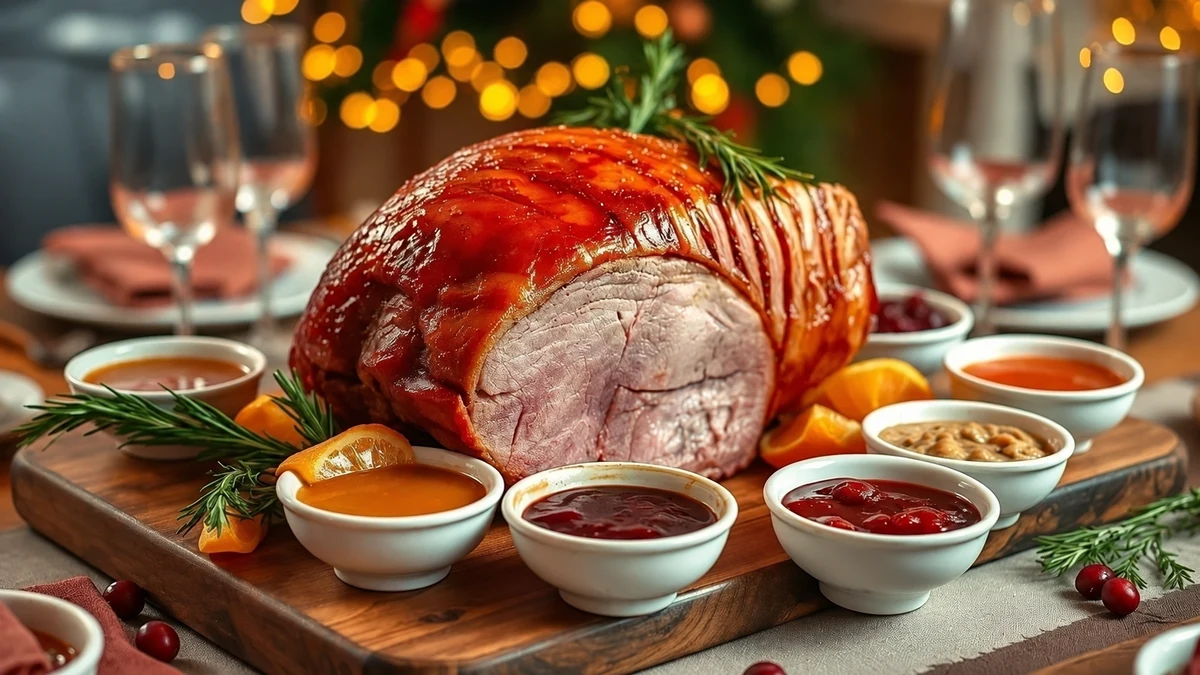
Brazilian tender is a convenient festive centrepiece, and a fully cooked ham can serve the same purpose on a British Christmas table. Its savoury flavour works with sweet, sharp or creamy sauces. Curing alone does not mean meat is cooked: check that the product is ready to eat and suitable for reheating before using these methods.
The Main Advantages
- Convenience: a ready-cooked ham avoids the lengthy first cooking of raw gammon. Reheat it according to its label before serving hot.
- Versatility: sweet, spicy and tangy sauces offer plenty of ways to suit different tastes.
- Value: one joint can provide several portions; compare its price and usable weight with other centrepieces.
- Presentation: a glossy glaze and simple garnish make an attractive addition to the festive table.
Varying the Sauce
A sauce can change the character of the whole dish. Citrus balances the ham’s richness and smokiness, mustard adds a sharp edge, and wine or dried fruit brings deeper flavour. Try sweet and savoury combinations and consider texture too: a rich glaze pairs well with smooth mashed vegetables.
Practical Benefits
- Planning ahead: make the sauce ahead and refrigerate it promptly. Heat the ham once, just before the meal, rather than repeatedly warming the whole joint.
- Easy carving: a boneless ham is straightforward to slice into even portions.
- Storage: follow the use-by date and instructions after opening; curing does not remove the need for refrigeration.
- Variety: changing the sauce and side dishes gives the same cut a different flavour.
Preparing the Ham Before Adding the Sauce
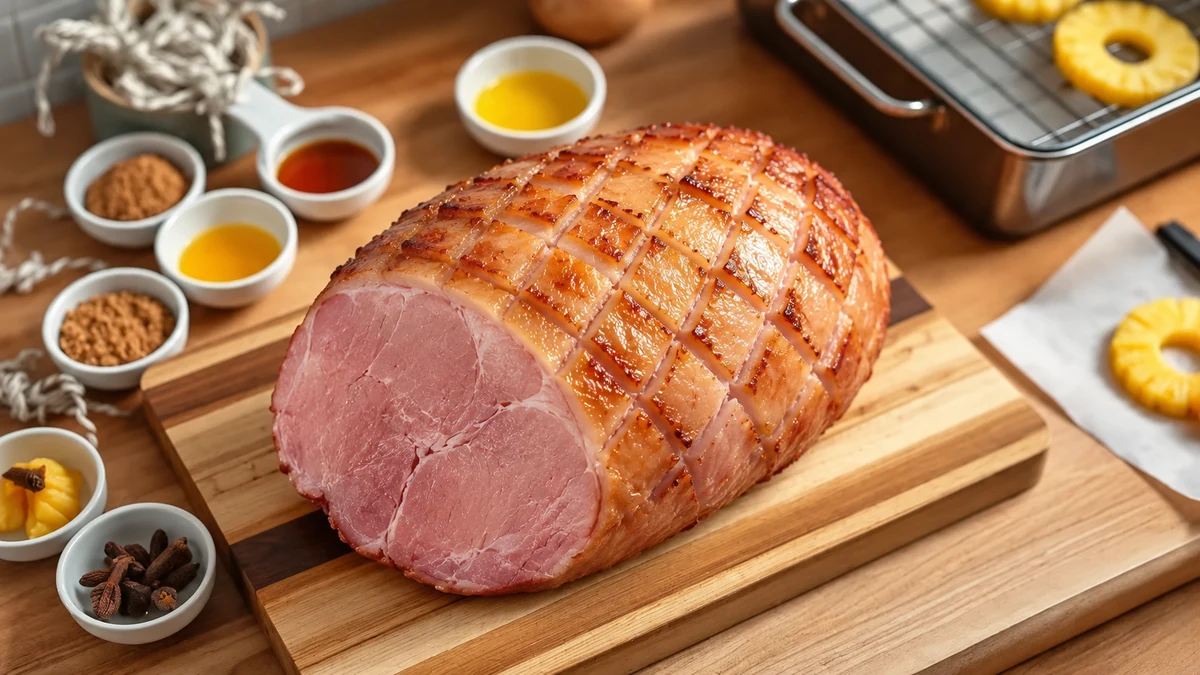
A few simple preparations help the ham keep its moisture and take on an attractive glaze. For every recipe below, the packet’s reheating temperature and time take priority. The quoted oven times describe approximate glazing periods, not a guarantee that a whole joint is hot enough.
Step-by-Step Preparation
- Defrost safely: thaw a frozen ham in the fridge in a container that catches any drips, following its label. A large joint may take longer than a day; it must be fully thawed before reheating unless its instructions say otherwise.
- Remove the packaging: take off plastic wrapping and remove netting or string as directed on the label. Use scissors carefully if necessary.
- Pat dry: use clean kitchen paper to dry the surface. There is no need to rinse a ready-cooked ham, and rinsing is not a way to remove preservatives.
- Trim excess fat: leave a thin layer to protect the meat while it heats.
- Score the surface: make shallow diamond cuts in the fat, without cutting deeply into the meat, to hold the glaze.
- Add optional decorations: cloves can sit at the intersections, or pineapple rings can be secured with cocktail sticks. Remove all cloves and sticks before serving.
- Season lightly: ham is already salty, so start with pepper, a little nutmeg or a thin layer of mustard and olive oil rather than extra salt. Vegetable oil and mild yellow mustard are alternatives to olive oil and Dijon.
- Set it in a roasting tin: use a rack if the packet recommends one, so heat can circulate. Preheat the oven to the temperature specified for the joint.
Quick Tips
- Check the centre: use a clean food thermometer in the thickest part and follow the product instructions. A browned glaze alone does not show that a chilled joint has heated through.
- Keep it chilled: leave the ham in the fridge until you are ready to prepare and heat it; there is no need for an extra half-hour on the worktop.
- Alternative aromas: peppercorns or star anise can flavour the sauce instead of cloves. Remove whole spices before serving.
- Keep preparation clean: wash hands and utensils and keep the cooked ham away from raw meat and its juices.
Five Sauces: Ingredients, Methods and Variations

Orange and Honey Glazed Ham — Ingredients
- 1 fully cooked ham, about 1.5 kg — ready to eat and suitable for reheating.
- 240 ml orange juice — preferably freshly squeezed; tangerine juice is an alternative.
- 4 tablespoons honey — light honey gives a milder flavour than a dark variety.
- 2 tablespoons soft brown sugar — or demerara sugar.
- 2 tablespoons butter — or vegetable oil if preferred.
- Finely grated zest of 1 orange — for a fresh citrus aroma.
- Cloves and freshly ground black pepper — as desired; remove whole cloves before serving.
Method
- Preheat the oven and start reheating the ham according to its packet. The original glazing temperature is 180°C conventional; adapt to the manufacturer’s instructions and save the sugary glaze for the final stage.
- Score shallow diamonds in the fat and add optional cloves.
- Combine the juice, honey, sugar and butter in a small pan. Heat until the sugar dissolves and the sauce reduces slightly, about 5–7 minutes, then stir in the orange zest.
- Brush on some of the sauce for the final glazing stage, keeping a separate portion for serving. Begin checking the surface after 20 minutes.
- Brush again at roughly 10-minute intervals as needed, watching closely. A glaze may take around 30–40 minutes, but remove or cover it sooner if it is darkening too quickly; the ham must also complete its packet reheating instructions.
- Rest for 10 minutes before slicing. Spoon over the hot roasting juices or the reserved sauce.
Variations
- Add a spoonful of grated ginger for a warm, peppery note.
- Replace the honey with orange marmalade for a thicker glaze.
Mustard and Dark Beer Ham — Ingredients
- 1 fully cooked ham, about 1.5 kg.
- 120 ml dark beer — use beef stock for an alcohol-free sauce; cooking beer does not guarantee the removal of all alcohol.
- 4 tablespoons Dijon mustard — or mild yellow mustard.
- 3 tablespoons soft brown sugar.
- 2 tablespoons butter.
- 1 tablespoon Worcestershire sauce — optional, for savoury depth.
Method
- Combine the beer, mustard, sugar, butter and Worcestershire sauce over a medium heat until smooth and the sugar has dissolved.
- Brush the ham with some sauce during the final stage of its packet reheating time. Use 180°C conventional only if compatible with the label; keep extra sauce separate for serving.
- Check after 20 minutes and brush again at roughly 10-minute intervals. The glaze may take about 35–40 minutes, but colour, oven behaviour and the ham’s instructions determine the finish.
- Watch the caramelisation and let the fully heated ham rest before carving.
Variations
- For a hot version, add up to 1 teaspoon cayenne pepper, starting with less if you prefer.
- Use an amber ale for a maltier flavour.
Sweet and Sour Pineapple and Cranberry Ham — Ingredients
- 1 fully cooked ham, about 1.5 kg.
- 250 g chopped pineapple in syrup — or fresh pineapple.
- 120 g cranberry preserve — or prepared cranberry sauce.
- 2 tablespoons cider vinegar — to balance the sweetness.
- 2 tablespoons sugar or honey.
- Pineapple rings to decorate and cocktail sticks to hold them; remove the sticks before serving.
Method
- Blend the chopped pineapple, cranberry preserve, vinegar and sugar until smooth.
- Strain if preferred for a smoother sauce.
- Brush the ham with sauce during its final glazing stage and arrange pineapple rings on top. Reserve some sauce separately.
- Glaze at 180°C conventional if compatible with the packet directions, checking and brushing at 10-minute intervals. Allow roughly 30–40 minutes for glazing, without treating that as the full reheating time for every joint.
- Rest the fully heated ham before carving. Simmer the reserved sauce in a pan to thicken it if needed, and serve alongside.
Variations
- Add a little chopped red chilli for a gently spicy version.
- Replace cranberry preserve with apricot jam for a sweeter flavour.
Ham with Red Wine and Dried Fruit Reduction — Ingredients
- 1 fully cooked ham, about 1.5 kg.
- 240 ml dry red wine — choose a wine whose flavour you enjoy.
- 80 g chopped dried fruit — apricots, dates and raisins.
- 2 tablespoons soft brown sugar.
- 1 tablespoon butter — to finish the sauce.
- Salt and pepper to taste — check the sauce before adding salt.
Method
- Heat the wine and sugar in a pan and simmer until reduced and slightly syrupy, about 10–15 minutes.
- Add the dried fruit and cook for another 5 minutes to soften it.
- Brush the reduction onto the ham for the final 25–35 minutes of its packet reheating process, basting occasionally. The original glazing temperature is 180°C conventional; follow the joint’s instructions and protect the surface if it darkens too quickly.
- Finish the reserved sauce with butter and adjust the seasoning before serving with the hot ham.
Variations
- Add a little balsamic vinegar for a sharper flavour.
- Replace some of the wine with port for a sweeter, richer reduction. Neither version is alcohol-free.
Ham with Creamy Mustard and Dill Sauce — Ingredients
- 1 fully cooked ham, about 1.5 kg.
- 120 g cream — a plant-based cooking cream is an alternative; check its ingredients for allergens.
- 3 tablespoons mild yellow or Dijon mustard.
- 2 tablespoons honey or sugar.
- 2 tablespoons chopped fresh dill — or parsley.
- Salt and pepper to taste.
Method
- Combine the cream, mustard and honey in a pan and warm gently until slightly thickened, without boiling hard.
- Stir in the dill off the heat and adjust the seasoning.
- Brush on some sauce during the final 15–20 minutes of the ham’s packet reheating time, so the cream does not dry out. Reserve the rest separately for serving.
- Serve the fully heated ham in slices with a little reserved warm sauce.
Variations
- Replace dill with chives for a milder herb flavour.
- Add a little lemon juice off the heat for freshness, tasting as you go.
Orange and Honey Ham: Presentation and Pairings

Orange and honey glazed ham combines caramelised sweetness with citrus tang. The sauce complements the meat’s savoury flavour and gives it an attractive sheen.
Presentation Ideas
- Slice the ham thinly and fan it out on a board or warmed serving platter.
- Decorate with orange slices and sprigs of rosemary or thyme.
- Add some crunch with toasted almonds or Brazilian farofa, a toasted cassava-flour side dish.
- Serve extra sauce separately so guests can add as much as they like.
Side Dishes
- Smooth mash made with potato, carrot or Brazilian mandioquinha provides a soft contrast to the glaze. Mandioquinha is also called arracacha.
- Roasted vegetables such as carrots, squash and broccoli add colour and savoury balance.
- Rice with nuts or farofa with dried fruit complements the sweet and savoury flavours.
- Green salads with citrus vinaigrette add freshness between bites.
Drinks to Serve Alongside
- An aromatic white wine such as dry Riesling or Gewürztraminer offers fruit and acidity alongside the orange glaze.
- Brut sparkling wine provides a crisp contrast to the honey.
- A light beer or pale lager can complement the sauce without dominating it.
- An alcohol-free option: sparkling water with orange slices, or chilled herbal tea with lemon.
Serve the ham promptly after heating and resting. Apply the sugary glaze towards the end of the reheating process, and keep reserved sauce ready for those who would like more.
Mustard and Dark Beer Ham: A Richer Glaze
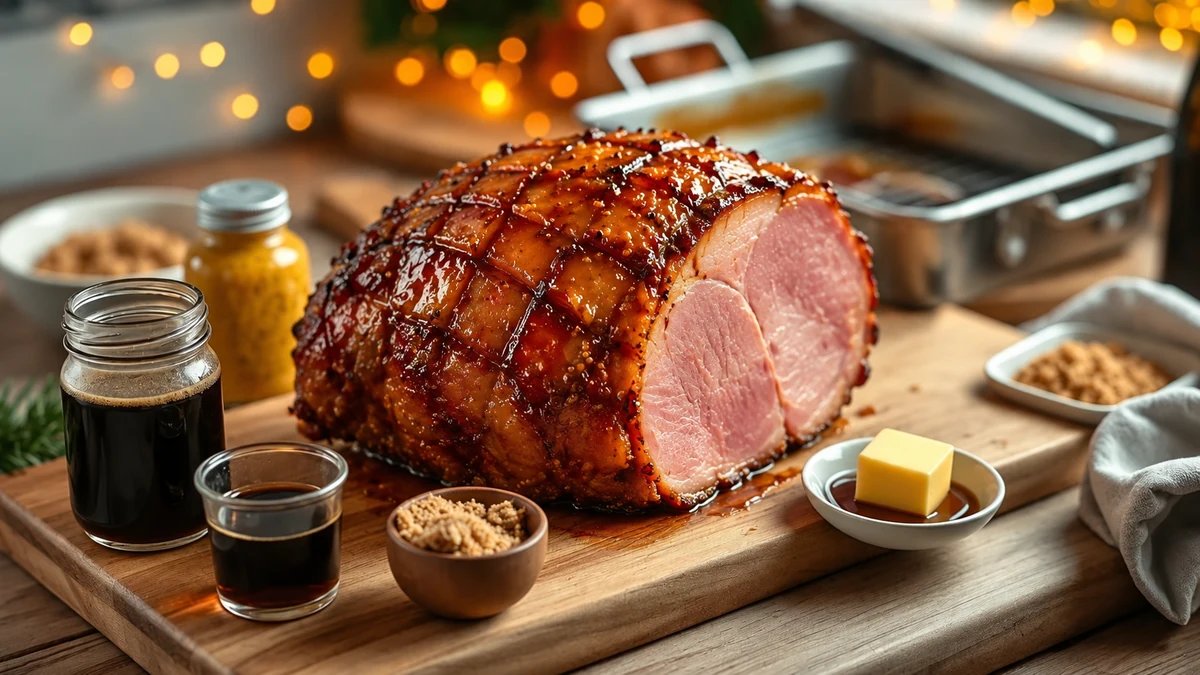
Mustard and dark beer ham has a robust, gently caramelised flavour for a more savoury festive centrepiece.
Ingredients
- 1 fully cooked ham, about 1.5 kg — ready to eat and suitable for reheating.
- 120 ml dark beer — replace with beef stock for an alcohol-free version.
- 4 tablespoons Dijon mustard — or mild yellow mustard.
- 3 tablespoons soft brown sugar — honey is an alternative, with a different sweetness and consistency.
- 2 tablespoons butter — or vegetable oil.
- 1 tablespoon Worcestershire sauce — optional, for savoury depth.
- 1 chopped garlic clove — optional.
- Freshly ground black pepper to taste.
- Cloves — optional decoration; remove before serving.
Method
- Preheat the oven: follow the ham’s label. A conventional 180°C oven is the starting point for the glaze, not a substitute for the manufacturer’s reheating instructions.
- Prepare the ham: remove wrapping and netting as directed, pat dry and score shallow diamonds in the fat.
- Make the sauce: combine the beer, mustard, sugar, butter, Worcestershire sauce and optional garlic in a pan. Heat until the sugar dissolves and the sauce reduces a little, about 5–8 minutes.
- Brush on a first coating: use about half the sauce for the final glazing stage and keep a separate portion for serving.
- Begin glazing: allow around 20 minutes before checking the surface, while ensuring the ham completes its packet reheating process.
- Brush at 10-minute intervals: add more glaze as needed, aiming for a glossy coating. About 35–40 minutes may be sufficient for glazing; stop sooner if the sugar is catching.
- Optional grill finish: for extra colour, use the grill briefly, around 2–3 minutes, watching continuously so the sugar does not burn.
- Rest: once fully reheated, leave the ham for 10 minutes before carving.
- Slice and serve: arrange thin slices on a platter with the reserved sauce.
Variations
- Spicy version: add up to 1 teaspoon cayenne pepper, adjusting to taste.
- Maple variation: replace the brown sugar with 2 tablespoons maple syrup for a different sweetness.
- Alternative beer: choose an amber ale for maltiness or a stout for roasted notes.
- Alcohol-free: use beef stock instead of beer and, if desired, 1 teaspoon soy sauce. Taste before adding more salt.
Sides and Drinks
- Roasted vegetables: carrots, sweet potatoes and squash with herbs complement the rich sauce.
- Creamy mash: potatoes or mandioquinha balance the robust flavours.
- Rice with nuts: nutty rice or crisp farofa adds texture.
- Drinks: try an amber ale or light red wine such as Pinot Noir. Citrus iced tea or sparkling water with lemon provides an alcohol-free alternative.
Pineapple and Cranberry Ham: A Milder Family Version

This variation uses milder flavours and a colourful presentation. It is still a salty processed-meat dish with a sweet sauce, so it is an occasional family option rather than a meal designed for babies or very young children.
Ingredients
- 1 fully cooked ham, 1.2–1.5 kg — choose the size for the whole family. Ready-cooked slices can be used for smaller portions, following their label.
- 250 g chopped pineapple in syrup — use fresh pineapple to avoid the added syrup.
- 120 g cranberry preserve — strawberry or raspberry jam is an alternative.
- 2 tablespoons honey or 1 tablespoon soft brown sugar — reduce or omit the added sweetener if the fruit and preserve are sweet enough.
- 1 tablespoon lemon juice — optional, for a little acidity.
- 1 tablespoon cornflour — mix with 1 tablespoon cold water before adding. If using the suggested 2 tablespoons plain flour instead, it will need a longer simmer to cook out its raw taste and the sauce will be less clear.
- 2 tablespoons butter or vegetable oil — use a suitable oil for a milk-free sauce and check every ingredient for the relevant allergen.
- Pineapple rings for optional decoration — omit whole cloves from children’s portions and remove any cocktail sticks before serving.
Method
- Preheat the oven: follow the ham’s packet reheating temperature. The original glaze uses 180°C conventional, where compatible with those instructions.
- Prepare the ham: remove wrapping and netting as directed, pat dry and score shallow diamonds in the fat.
- Make the sauce: blend the pineapple, cranberry preserve, optional honey or sugar, and lemon juice until smooth.
- Thicken lightly: heat the sauce in a pan, stir in the cornflour mixed with cold water and simmer until thickened, about 1–2 minutes. Stir in the listed butter or oil. Add a little water if needed for a brushable consistency.
- Brush on the first coating: reserve some sauce separately and apply the rest in stages towards the end of reheating. Add pineapple rings if desired.
- Glaze the ham: check after about 20 minutes and brush again at 10-minute intervals if needed. Around 30–40 minutes may give a glossy surface; avoid burning and complete the ham’s packet reheating instructions.
- Check the sweetness: taste the sauce before using it and reduce the optional sweetener. Adding water thins the sauce but does not remove its sugar.
- Rest and slice: leave the fully heated ham for 8–10 minutes, then carve thin slices. Cut children’s portions appropriately for their age and eating ability.
Serving the Family Version
- Small portions: serve manageable thin strips with suitable cutlery, without cocktail sticks or hard decorations.
- Colourful presentation: use star cutters for soft pineapple slices and arrange them on small plates.
- Sauce on the side: offer a small amount separately so diners can control how much they add.
- Simple sides: mashed potato, rice and soft cooked vegetables help make a varied meal. Prepare vegetables in an age-appropriate shape and texture for children.
- Mild flavours: omit cloves and adjust the lemon to taste; do not use alcohol in this family variation.
- Party portions: serve small pieces of ham and soft pineapple on plates rather than on skewers for young children.
- Allergens and suitability: check labels, including milk and mustard where used. Never give honey to a child under 12 months; salty ham and sweet glazes are not suitable everyday foods for babies.
Quick Tips
- Taste beforehand: adjust the sauce before brushing it onto the meat.
- Leftovers: cool promptly and refrigerate within 1–2 hours. Use within 48 hours, or sooner if the label says; once this cooked ham has been reheated for the meal, use safely chilled leftovers cold rather than heating them again.
- Let children help: they can choose fruit decorations while an adult handles knives, hot pans and the oven.
Ham with Wine and Dried Fruit: An Elegant Centrepiece
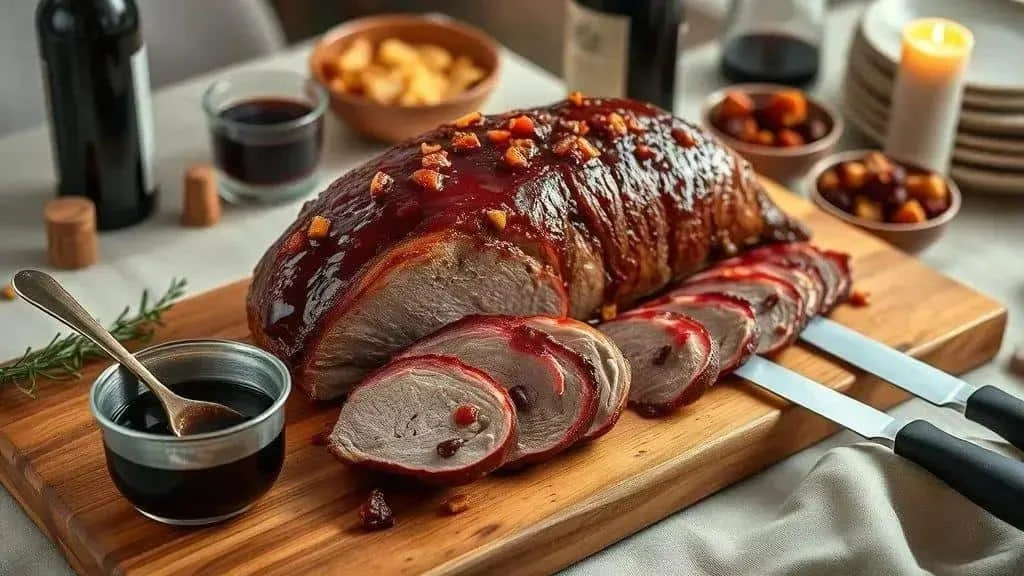
Ham with a wine and dried fruit reduction combines a rich sauce with a simple presentation for a festive dinner.
Ingredients
- 1 fully cooked ham, 1.5–2 kg — ready to eat and suitable for reheating; follow the instructions for its weight.
- 240 ml dry red wine — use grape juice for an alcohol-free variation and reduce the added sugar to taste.
- 80 g chopped dried fruit — apricots, dates and raisins, with dried figs as another option.
- 2 tablespoons soft brown sugar — or honey, adjusted to taste.
- 1 tablespoon butter — or vegetable oil.
- 1 teaspoon finely grated orange zest.
- Salt and black pepper — to taste; the ham is already salty.
- Cloves, optional — remove whole cloves before serving.
Method
- Preheat the oven: use the ham’s packet temperature and roasting arrangement. For glazing, the starting temperature is 180°C conventional if compatible with the label.
- Prepare the ham: remove packaging and netting as directed, pat dry and score the fat lightly.
- Start the reduction: bring the wine and sugar to a simmer and reduce by about half, stirring occasionally, approximately 10–12 minutes.
- Add the dried fruit: simmer for another 3–5 minutes to soften it and combine the flavours.
- Finish the sauce: take off the heat and stir in the butter and orange zest. Season cautiously.
- Brush the ham: reserve some sauce separately, then apply a coating for the final glazing stage. Add optional cloves at the scored intersections.
- Glaze and check: check the surface after about 20 minutes and brush again at 10-minute intervals. A total of 30–40 minutes may colour the glaze, but complete the product’s reheating instructions and protect the sugar from burning.
- Rest: leave the fully heated ham for 10 minutes before carving.
- Serve: fan slices out on a warmed platter and spoon over the reserved sauce.
Finishing Touches and Variations
- Port: replace part of the red wine with port for a sweeter, richer reduction.
- Fresh herbs: add thyme or rosemary to the sauce for a herbal note.
- Fruit garnish: decorate with halved figs or whole softened dried apricots.
Sides and Pairings
- Smooth mash: potatoes or mandioquinha balance the sauce’s richness.
- Roasted vegetables: glazed carrots and caramelised squash complement the fruit.
- Almond rice: a nutty pilaf brings a contrasting texture.
- Drinks: a light-to-medium red such as Pinot Noir or young Merlot, or a brut sparkling wine, offers different pairing options. Sparkling water is a neutral alcohol-free choice.
Final Tips
- Go easy on salt: taste the reduction before seasoning, as the ham is already salty.
- Adjust the consistency: simmer a thin sauce a little longer, or loosen a thick one with hot water or a little wine, then simmer again. A wine reduction is not reliably alcohol-free.
- Glaze towards the end: add the sugary sauce late in the packet reheating process to reduce the risk of burning.
- Store promptly: chill leftovers within 1–2 hours and use within 48 hours, or follow a shorter label limit. Because the ham has already been reheated for this meal, keep leftovers for cold dishes rather than a second reheating.
Presentation, Side Dishes and Storage
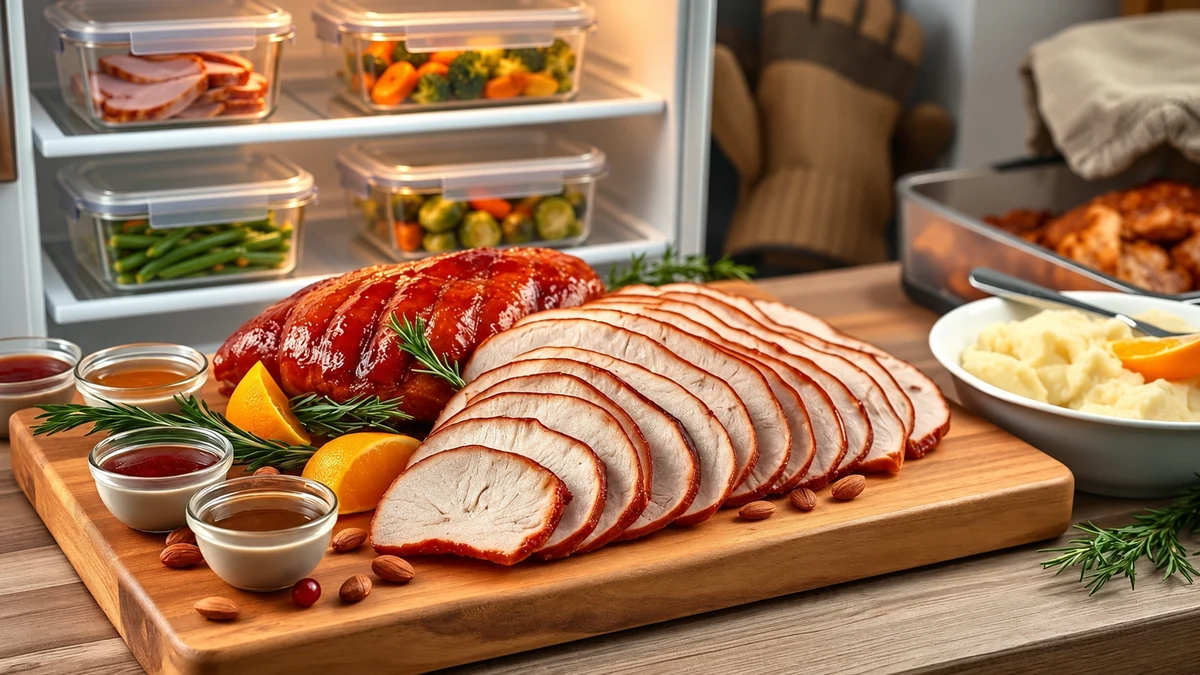
Thoughtful carving, a suitable platter and well-chosen sides help the ham look inviting and make serving easier. Keep the glaze glossy without letting the meat dry out.
Presentation
- Slice just before serving: carve thin, even slices to help retain moisture.
- Use a warmed platter: it helps at serving time, but is not a substitute for proper hot holding if the meal is delayed.
- Add contrasting colours: use rosemary or thyme, orange or pineapple slices, and cranberries as appropriate to the sauce.
- Finish with the glaze: brush it on late in reheating and keep a separate portion ready to serve.
- Offer crunch alongside: toasted almonds or crisp farofa contrast with the soft slices.
Side Dish Ideas
- Creamy mash: potatoes, mandioquinha or carrots pair well with a sweet glaze.
- Roasted vegetables: glazed carrots, squash and broccoli add colour and caramelised flavour.
- Rice and farofa: try nutty rice, pilaf or farofa with dried fruit.
- Fresh salads: leafy greens with citrus vinaigrette provide a sharp contrast.
- Sauces on the side: use small jugs so diners can adjust the amount.
Storage and Leftover Ideas
- Refrigeration: portion and cool leftovers promptly, then refrigerate in covered containers within 1–2 hours. Keep the fridge at 5°C or below and use within 48 hours, subject to any shorter label instruction.
- Freezing: if the label permits it, freeze promptly in well-wrapped portions, with a little sauce if desired. Around two months is a quality target, not a guarantee that mishandled food is safe.
- Defrosting: thaw in the fridge, allowing enough time for the centre to defrost fully. Use within 24 hours after defrosting, or sooner if the label requires it.
- Heat only once: these recipes reheat an already-cooked ham. Do not plan a second reheating of the leftovers; keep safely chilled portions for cold meals instead.
- Microwave option: if using a microwave for the ham’s first reheating, follow the packet’s method, including turning and standing. Check the centre, not just the hot edges; it is not a way to make repeated reheating safe.
- Freeze manageable portions: thaw only what you will use, and follow the product’s freezing instructions rather than repeatedly thawing and refreezing the ham.
- Use leftovers creatively: serve the safely chilled ham in sandwiches or cold salads. Reserve hot pies and risottos for a separate portion of cooked ham that has not already been reheated.
- Serving safety: put away portions promptly rather than leaving the joint on the table for hours. If safe storage limits have been exceeded, discard the food instead of trying to rescue it by reheating.
Quick Serving Tips
- Portions: allow roughly 150–200 g per adult as a main course, adjusting for appetites and side dishes.
- Extra sauce: set out small jugs for anyone who prefers a stronger glaze flavour.
- Organise the table: place a carving knife and serving tongs beside the platter.
- A fresh finish: a few drops of orange or lemon juice over the slices can brighten the flavour.
These five Christmas ham sauces offer different ways to serve a festive favourite. Choose the combination that suits your table and vary the sides to match.
Taste the sauce as you prepare it, adjust the seasoning for your guests and follow the ham’s own heating instructions. A good glaze should complement the meat rather than overwhelm it.
Thank you for reading. Share your variations and serving ideas on social media — there is always room for another festive combination.
Follow I Love Christmas for more seasonal recipes, decorating ideas and festive inspiration.
Happy Christmas, and enjoy your celebration!
FAQ — Christmas Ham Sauces and Glazes
How much ham should I allow per person?
For a main course, allow roughly 150–200 g per adult. If there are plenty of other dishes, about 100–150 g may be sufficient; adjust for appetites and the amount of usable meat.
Can I prepare the ham ahead?
Prepare and chill the sauce ahead if helpful, but heat a ready-cooked ham just once, close to serving, following its packet. Do not glaze, cool and then reheat the same ham again for the meal.
How should I store leftover ham?
Cool and refrigerate covered portions within 1–2 hours, and use within 48 hours or a shorter label limit. Freeze promptly if permitted; around two months is a quality guide. Leftovers from the reheated ham should be used cold after safe chilling or defrosting.
How can I heat the ham without drying it out?
Follow the product’s reheating instructions, using a little sauce and covering if directed. Apply sugary glazes towards the end. The centre must heat through, and ready-cooked ham should only be reheated once; do not rely on glaze colour or a fixed short oven time.
Can I adapt the sauces for dietary requirements?
Often, but check every ingredient. Oil can replace butter, and a suitable plant-based cooking cream can replace cream. Stock can replace beer or wine for an alcohol-free version. Mustard, beer, Worcestershire sauce, stock and other packaged ingredients may contain allergens; replacing honey with syrup does not make a sauce sugar-free.
How can I make a milder, less sweet family sauce?
Use fresh pineapple rather than fruit in syrup, reduce or omit optional honey or sugar, and offer a small amount of sauce separately. The preserve still contains sugar and the ham is salty, so this is not a baby-food recipe. Never give honey to a child under 12 months.
Sources and Further Reading
- Food Standards Agency — cooking food and reheating leftovers
- Food Standards Agency — chilling, freezing and defrosting
- NHS — foods to avoid giving babies and young children