New Year’s Eve fireworks mark a moment of celebration for many communities, but they also bring noise, smoke and safety risks. Professional planning, consideration for neighbours and animals, and suitable viewing arrangements matter. Light projections and drone displays offer alternatives, although these also require specialist planning and are not impact-free.
New Year’s Eve fireworks can turn a countdown into a shared memory. This guide explores how the tradition developed, the meanings people attach to it and ways to enjoy the occasion with greater consideration for others.
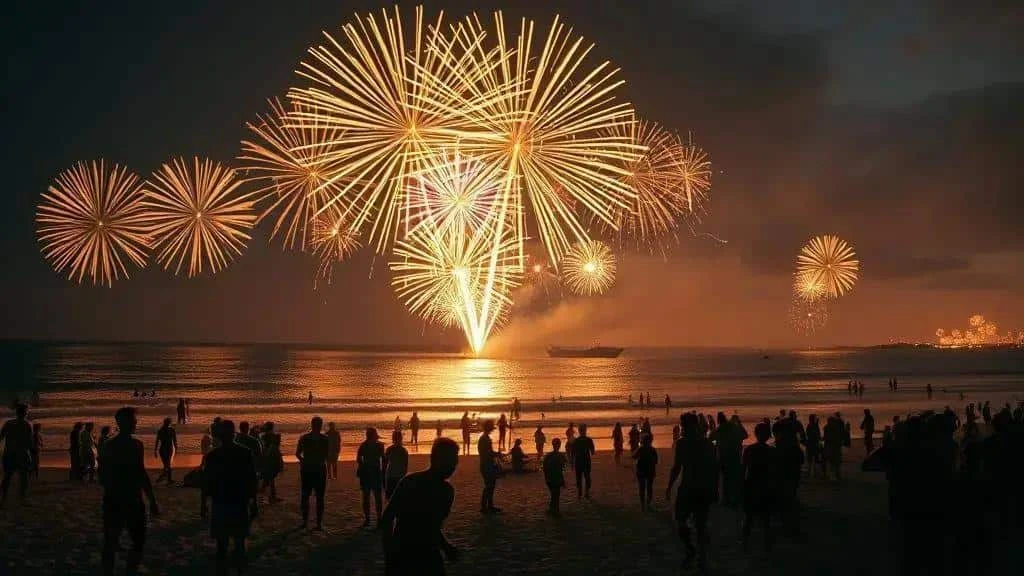
Illustrations in this article are conceptual images, not documentary photographs or evidence of a particular historical event, destination, venue or access route.
The History of New Year’s Eve Fireworks
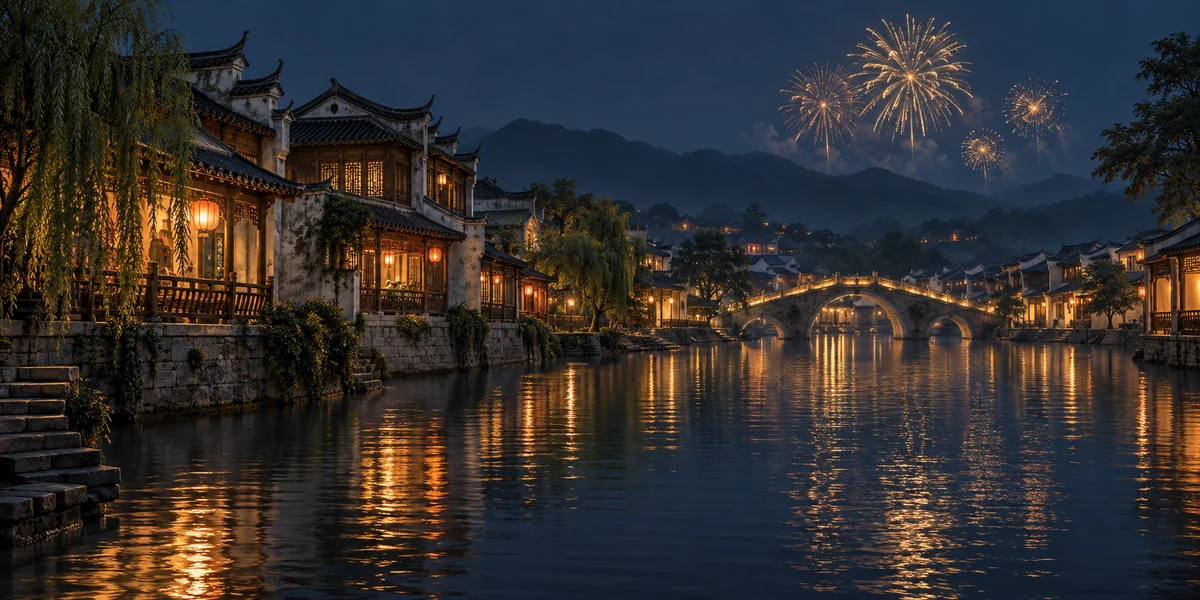
The history of fireworks is rooted in China and the development of gunpowder. Early devices and later rockets evolved through experimentation over a long period; there is no need to reduce that history to a single inventor or precise moment of discovery. Fireworks eventually became associated with celebrations as well as other uses of gunpowder technology. Source: Smithsonian National Air and Space Museum — The first fireworks
How Displays Developed and Spread
Knowledge of gunpowder and pyrotechnics spread between regions over centuries. In Europe, elaborate displays became part of court festivities and public celebrations. Their appearance continued to change as display design, chemistry and firing technology developed.
- Early development: Chinese experimentation with gunpowder contributed to the emergence of fireworks and rockets.
- Wider use: pyrotechnic knowledge travelled and was adapted for different purposes and audiences.
- Public celebrations: fireworks became features of civic festivities, commemorations and some religious occasions.
- Brazilian celebrations: today, fireworks appear at many popular festivities, including New Year’s Eve. Their use should not be attributed to one arrival date without specific historical evidence.
From Spectacle to New Year Tradition
Over time, fireworks became familiar parts of large public celebrations. At Réveillon, the Brazilian name for New Year’s Eve celebrations, light and sound can mark the shared transition into a new year. Coastal displays draw people to beaches and waterfronts, while other communities celebrate in parks, squares or at home.
Colour, Technology and Professional Planning
Different chemical compounds help produce firework colours: strontium compounds can give red effects and barium compounds green ones. This is an explanation of colour, not a recipe for making fireworks. Competent display specialists assess how an event can be managed, including the site, audience and relevant requirements. Electronic firing does not remove the need for that assessment. Source: American Chemical Society — Firework colours
Cultural Meaning
For some people, fireworks express renewal or the joy of celebrating together. Others dislike the noise or find it distressing. Recognising both experiences makes it easier to plan an occasion that considers the wider community.
Popular Beliefs and New Year Symbolism
Some families associate fireworks with good fortune, protection or a fresh start. These are cultural beliefs and personal interpretations, not demonstrated effects. The following colour associations are examples found in popular New Year symbolism, especially in clothing and decorations; they are not a universal code used by firework displays.
Colours and Popular Associations
- White: peace or harmony.
- Red: love, passion or energy.
- Green: hope or renewal.
- Yellow or gold: prosperity or good fortune.
- Blue: calm or balance.
- Several colours together: celebration or a variety of hopes for the year ahead.
Brazilian Customs and Personal Rituals
- Wearing white: a familiar Brazilian New Year custom with connections to Afro-Brazilian religious traditions, also followed by many people outside those faiths.
- Jumping seven waves: a custom some participants associate with wishes or devotion. This description is not a recommendation to enter the sea, especially at night or in unsafe conditions.
- Making a wish at the countdown: a personal way of expressing hopes rather than a guarantee of an outcome.
- Offering flowers to the sea: part of some devotional practices associated with Iemanjá. Respect the religious context and local environmental rules; do not leave packaging or other litter in the water.
- Coins or lentils: sometimes used symbolically in traditions connected with prosperity, with practices differing between families.
Different Communities, Different Meanings
Brazil’s New Year customs have varied cultural and religious histories. Devotion to Iemanjá is particularly important in some Afro-Brazilian traditions, but not everyone at a beach celebration shares the same beliefs. A secular countdown, a religious observance and a family custom should not automatically be treated as the same ritual. Source: Itaú Cultural — Copacabana and New Year rituals
Shared Memories and Personal Choices
Watching a display together can become part of a family’s memories. Simple rituals, such as an embrace or a quiet wish at midnight, can also mark the occasion. Nobody needs to enjoy loud fireworks to take part in celebrating a new year.
Celebrating Considerately
Respect viewing restrictions, consider people who are sensitive to noise and plan for pets before the event. A quieter celebration can preserve the sense of occasion without requiring everyone to tolerate a loud display.
Safety and Local Requirements
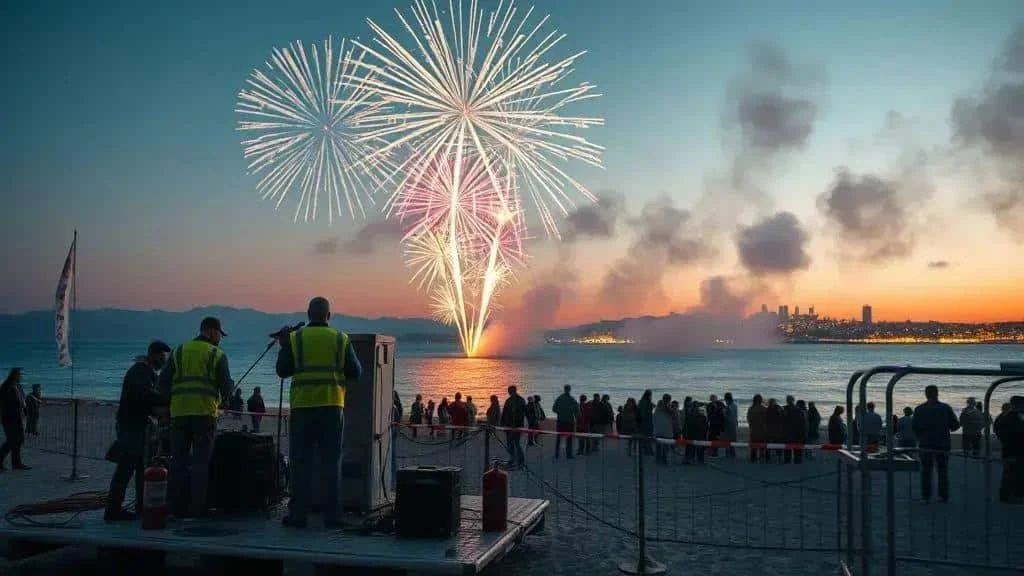
No firework display is completely risk-free. The following points are for choosing an event and discussing arrangements with competent organisers, not instructions for designing or firing a display yourself. Source: Health and Safety Executive — Organising firework displays
Check the Rules that Apply Locally
Requirements depend on the country, locality, event and equipment. Permissions and insurance arrangements should be checked with the relevant authorities and event professionals. In the UK, consult current national and local guidance rather than assuming the same rules apply everywhere or that a Brazilian municipal permit system applies here. Source: GOV.UK — Fireworks and the law
Questions about the Venue and Audience
- Restricted areas: ask how the organisers will separate spectators from operational areas. Follow the designated barriers rather than estimating a safe distance yourself.
- Site suitability: the competent operator should assess surrounding buildings, vegetation and other hazards before accepting a venue.
- Weather decisions: establish who can postpone or cancel the display if conditions make it unsafe.
- Public routes: ask how entrances, exits and accessible routes will be kept clear and easy to identify.
- Competence: choose an experienced professional operator with appropriate evidence of competence, insurance and any authorisations required for the work.
Handling and Storage Are Specialist Responsibilities
- Storage: leave display stock and its lawful storage arrangements to the responsible competent operator.
- Heat and ignition risks: keep visitors away from technical areas and follow the operator’s restrictions.
- No improvisation: never modify a firework or approach and relight one that has failed to go off. Source: London Fire Brigade — Firework safety
- Transport: ask the contractor to manage the transport requirements applicable to its display materials; do not treat fireworks as ordinary event supplies.
Animals and the Surrounding Community
Advance notice of a display can help neighbours make arrangements. Keep dogs and cats safely indoors, provide a familiar hiding place and seek veterinary advice if they struggle badly with fireworks. Consider quieter alternatives, while remembering that unfamiliar lights, crowds and other event noise can also affect animals. Source: RSPCA — Fireworks and pets
Emergency Planning and First Aid
- Emergency arrangements: check that the event has a suitable response plan rather than relying on spectators to deal with an incident.
- Trained help: make sure staff know whom to contact and where first-aid assistance is available.
- Burns: cool the affected area under cool running water for 20 minutes. Do not use ice or creams. Get urgent medical help for serious burns; in an emergency in the UK, call 999. Keep the rest of the person warm while cooling the burn. Source: NHS — Burns and scalds
- Communication: staff should have a reliable way to contact the event lead and emergency services.
These checks support better preparation, but they cannot promise an incident-free event. If arrangements seem unclear or unsafe, choose another way to celebrate.
Environmental Effects and Alternative Displays
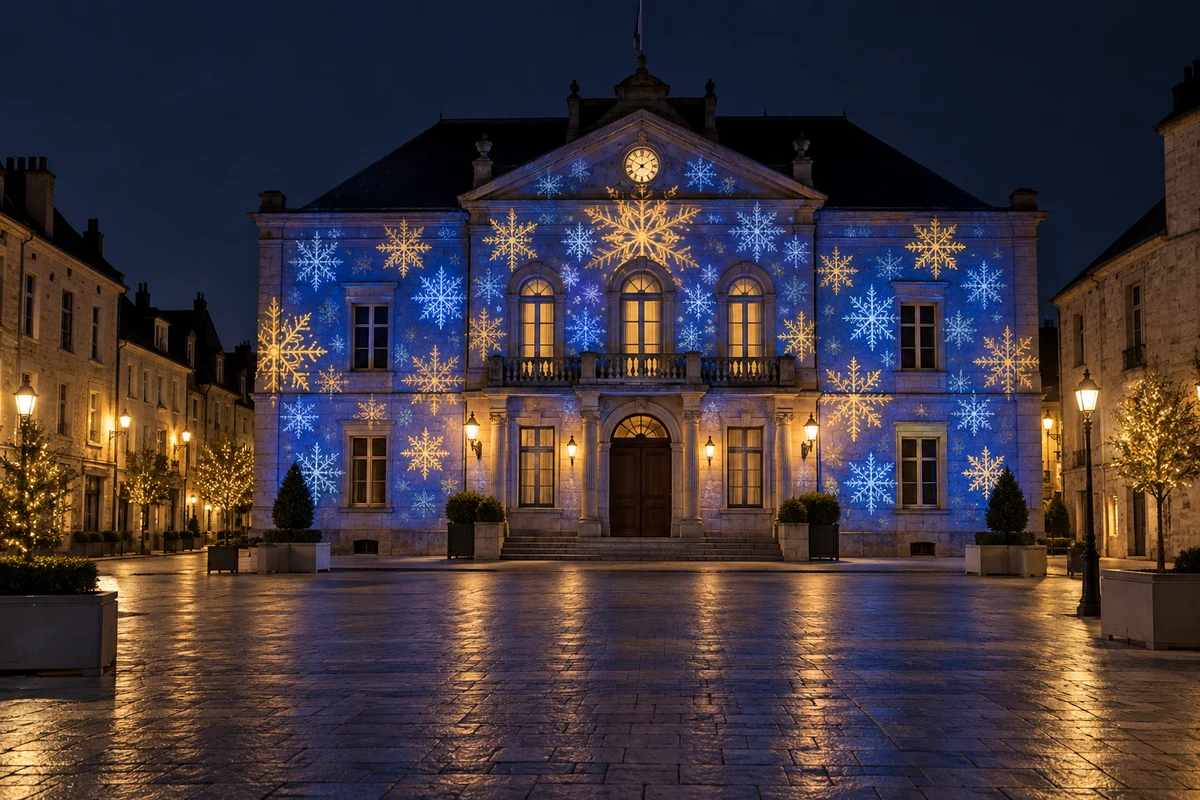
Fireworks produce smoke and debris as well as light. The effects vary with the type and scale of the display, weather and location, so broad claims that a product or event is harmless deserve scrutiny.
Air Quality and Exposure
- Air pollution: research has measured short-term increases in fine particles, including PM2.5, around firework displays. Pollution levels and how long they remain elevated vary between events. Source: NYU Langone — Fireworks and temporary air pollution
- Chemical residues: firework emissions can contain metals and other substances, with particles settling beyond the launch area.
- Health considerations: smoke exposure is a concern, particularly for people with respiratory conditions. Follow local air-quality advice and your usual clinical guidance rather than assuming a brief display cannot affect you.
Animals, Waterways and Sensitive Places
- Animal distress: sudden noise and flashes can frighten pets and wildlife, sometimes leading to panic or escape.
- Waterfront litter: debris and event rubbish can enter beaches and waterways if they are not properly managed.
- Sensitive habitats: event location and timing should take nearby wildlife into account, with advice from relevant local or conservation bodies where necessary.
Alternatives and Their Trade-offs
- Drone displays: avoid pyrotechnic smoke and explosive bangs, but still involve equipment, batteries, noise, aviation rules and potential wildlife disturbance. They are not impact-free. Source: Civil Aviation Authority — Drones
- Projection mapping and laser shows: can offer visual alternatives, but require suitable design and controls. Outdoor lasers can endanger aircraft or eyesight and belong in the hands of competent specialists. Source: Civil Aviation Authority — Displays and events guidance
- Lower-noise fireworks: may reduce some noise, but are not silent. Lower noise does not by itself establish lower chemical emissions or safety for nearby animals.
- Environmental product claims: ask what a term such as biodegradable actually refers to. A change to packaging does not prove that combustion emissions or all remaining debris are harmless.
- Mixed programmes: a shorter firework segment combined with other entertainment may use fewer fireworks, but the overall impact depends on the full event rather than its duration alone.
Considerate Event Choices
- Ask for evidence: discuss the operator’s practical arrangements and any claims about reduced emissions or noise.
- Give advance notice: publish the planned time and duration so nearby households can prepare.
- Plan a safe clean-up: the operator must first confirm that the area is safe. Spectators and volunteers should not handle unexploded fireworks or enter restricted areas to collect debris.
- Consider the location: discuss wildlife, neighbouring homes and the risk of debris reaching water or vegetation.
- Compare alternatives: a professionally planned projection or drone display may be appropriate, but it needs its own permissions and safety assessment.
Regulation and Oversight
Local requirements should be established before contracts or advertising commit an event to a particular format. Consult the appropriate authorities, and check aviation requirements where fireworks, drones or outdoor lighting may affect aircraft.
Choosing an Event or Commissioning a Display
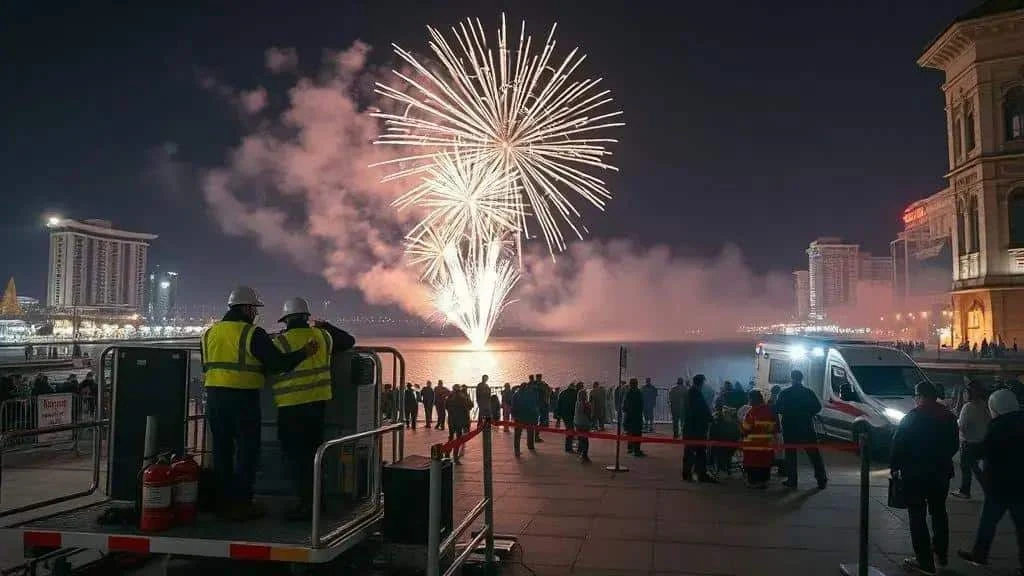
Clear information about the provider, venue and public arrangements helps you make a more informed choice. If you are commissioning an event, professional assessment is essential; this article is not a substitute for it.
Questions to Resolve Before Booking
- Authority requirements: who will establish which permissions, notifications and restrictions apply?
- Operator credentials: what experience, competence and insurance does the contractor have for this particular work?
- Venue assessment: has the operator confirmed that the proposed site is suitable?
- Audience management: who is responsible for keeping spectators in authorised viewing areas?
- After the event: who will inspect the site, deal with hazardous remnants and arrange the subsequent clean-up?
- Alternative formats: would a quieter celebration better suit the setting and the people attending?
Points to Confirm with the Organiser
- Written arrangements: the relevant permissions, responsibilities and insurance information should be clear.
- Public information: visitors need usable details about entrances, exits and facilities.
- Incident response: ask who provides first aid and how an incident will be escalated.
- Communication: establish a named contact for operational questions and changes.
- Neighbouring households: confirm how advance notices and concerns will be handled.
- Staff responsibilities: clarify which duties belong to the operator, venue and event team.
Assessing a Provider
- References: ask about comparable events and check references where appropriate.
- Contract: record what is included, who does what and how cancellation or postponement is handled.
- Method: ask the specialist to explain the proposed approach in understandable terms; impressive equipment alone is not proof of a safe event.
- Cost: request an itemised quotation covering the full service, including any required follow-up work.
On the Day
- Team briefing: staff should know their roles, points of contact and the arrangements if plans change.
- Technical checks: leave inspection of firing equipment and technical systems to the competent operator.
- Conditions: follow the organiser’s updates and accept postponement or cancellation where necessary.
- Viewing areas: keep the public within designated spaces and maintain clear routes.
- Help: make sure visitors know how to find staff and first-aid assistance.
- Afterwards: do not start collecting firework debris simply because the display has ended. Wait for the operator’s inspection and instructions.
Choosing between Fireworks and Another Celebration
- Environmental setting: consider nearby habitats and the handling of smoke, noise and debris.
- People attending: think about whether loud effects suit the audience and neighbouring community.
- Cost and practicalities: compare complete proposals; alternatives are not automatically cheaper or simpler.
- The experience: choose an occasion people can enjoy without assuming that a bigger spectacle is always better.
Choosing Where to Watch
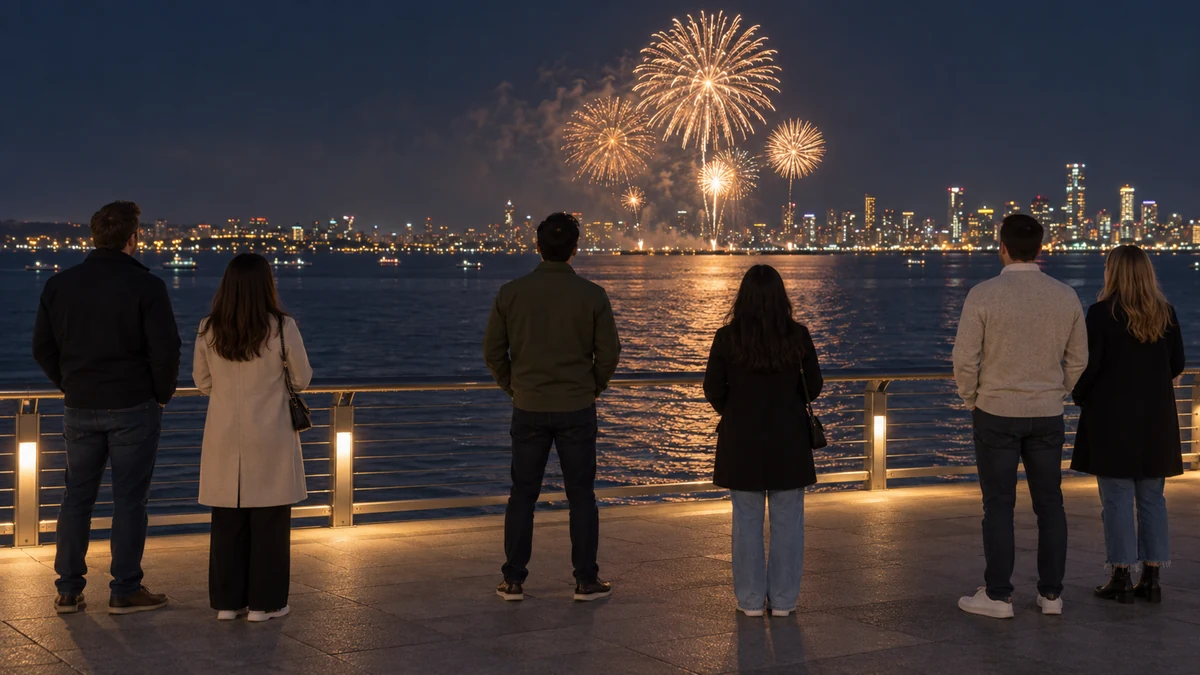
A suitable viewing area matters more than an impressive photograph. Official waterfront spaces, parks and other authorised sites may offer different views and facilities. Private rooftops, informal clifftop spots and boats should not be treated as safe or accessible simply because they have a clear outlook.
What to Check
- View: check the advertised sightline from the actual viewing area rather than entering a restricted place for a better angle.
- Event arrangements: look for clear boundaries, information and identifiable staff.
- Travel: confirm public transport, road restrictions and practical arrival and return options.
- Comfort: check whether seating, blankets or folding chairs are permitted and avoid blocking other visitors.
- Facilities: find out about toilets, lighting, drinking water and food before committing to a long wait.
- Crowds: a smaller or less central event may suit you better, but do not assume it will be quiet or have the same facilities.
Useful Things to Bring
- Weather-appropriate clothing: a Brazilian summer evening and a British winter night require very different preparation. Check the forecast for your destination.
- A blanket or seat: bring one only where permitted and keep routes clear.
- Water and snacks: check what the venue allows and use suitable reusable containers where possible.
- Hearing protection: use properly fitted protection suitable for the wearer and event. Ordinary headphones are not a substitute for rated hearing protection.
- A torch and power bank: useful for finding belongings and keeping your phone charged.
- A small rubbish bag: take your own litter away; leave hazardous display debris to the event team.
Accessibility and Family Arrangements
- Step-free access: confirm suitable routes, viewing positions and accessible toilets with the organiser.
- Pushchairs: check site rules, surfaces and how crowded the route may become.
- Noise sensitivity: consider watching remotely if the sound or crowd is likely to be distressing. A more distant position is not a guarantee of comfortable noise levels.
- Pets: do not bring pets to a fireworks display. Arrange a familiar, secure place for them and seek advice about significant distress.
Plan Arrival and Departure
Allow time for travel and entry checks, but remember that arriving early does not guarantee admission to a capacity-limited area. Agree a meeting point with your group and follow staff instructions when leaving, keeping emergency routes unobstructed.
At the Venue
- Respect barriers: stay out of launch and technical areas.
- Do not bring your own fireworks: unplanned use puts others at risk and may be unlawful.
- Take your litter home: do not leave containers or other belongings on beaches, pavements or grass.
- Follow instructions: use official information and listen to the event team.
New Year’s Eve fireworks combine spectacle with responsibilities to spectators, neighbours, animals and the environment. Thoughtful planning can reduce risks, while quieter celebrations offer equally meaningful ways to mark the occasion.
Thank you for reading. Follow our social channels for more end-of-year ideas, and visit the I Love Christmas blog for festive stories and inspiration.
Share your favourite New Year traditions in the comments and invite friends to plan a celebration that suits everyone.
FAQ — New Year’s Eve Fireworks
Are fireworks legal where I live?
Rules depend on location, the type of firework and how it is used. Check current national and local requirements. Do not assume that a public display and private use follow identical rules or that regulations are uniform across the UK.
How can I help pets cope with fireworks?
Keep dogs and cats securely indoors, provide a familiar retreat and maintain a calm routine. Close windows and curtains where appropriate and ask a vet for advice if your pet is very distressed. Do not take pets to a display.
What environmental effects do fireworks have, and are there alternatives?
Fireworks can produce particulate pollution, noise and debris. Projections and professionally operated drone displays avoid explosive effects but have their own impacts and safety requirements. Lower-noise or biodegradable claims do not establish that an option is harmless.
Can I safely set off fireworks at home?
No use is risk-free. Attending a properly organised display avoids taking on the firing yourself. Where private use is lawful, follow the applicable safety guidance and product instructions, never modify fireworks and never return to relight a failed device.
Where should I watch a display?
Choose an authorised viewing area with suitable access and facilities. Check crowd arrangements, weather, the return journey and any accessibility needs; do not enter restricted or unsafe places for a better view.
What should I do if someone is burnt or a fire starts?
Cool a burn under cool running water for 20 minutes and seek appropriate medical help. Call 999 for a serious emergency in the UK. If there is a fire, move away from danger, alert staff and emergency services, and do not attempt to tackle it unless trained and it is safe to do so.
Sources and Further Reading
- Smithsonian National Air and Space Museum — The first fireworks
- American Chemical Society — Firework colours
- Health and Safety Executive — Organising firework displays
- GOV.UK — Fireworks and the law
- RSPCA — Fireworks and pets
- NHS — Burns and scalds
- NYU Langone — Fireworks and temporary air pollution
- Civil Aviation Authority — Displays and events guidance
- Civil Aviation Authority — Drones
- Itaú Cultural — Copacabana and New Year rituals
- London Fire Brigade — Firework safety