New Year in Spain brings together the twelve grapes, shared dinners and celebrations in places such as Madrid’s Puerta del Sol. Menus, events and family customs vary, so check current arrangements, reserve ahead and plan a safe journey home.
New Year in Spain is often associated with the clock in Puerta del Sol and a plate of grapes ready for midnight. If you are considering a visit, this guide explains the customs and practical details without assuming that every city celebrates in the same way.
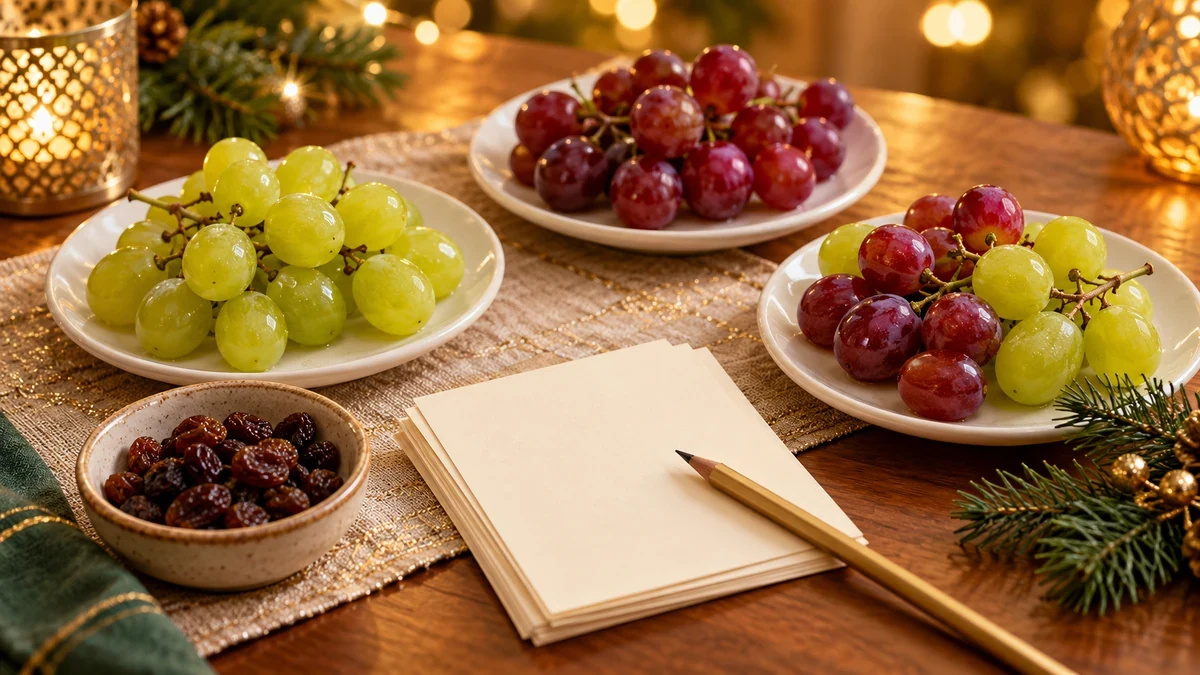
Illustrations in this article are conceptual images, not documentary photographs or evidence of a particular historical event, destination, venue or access route.
Popular New Year traditions in Spain
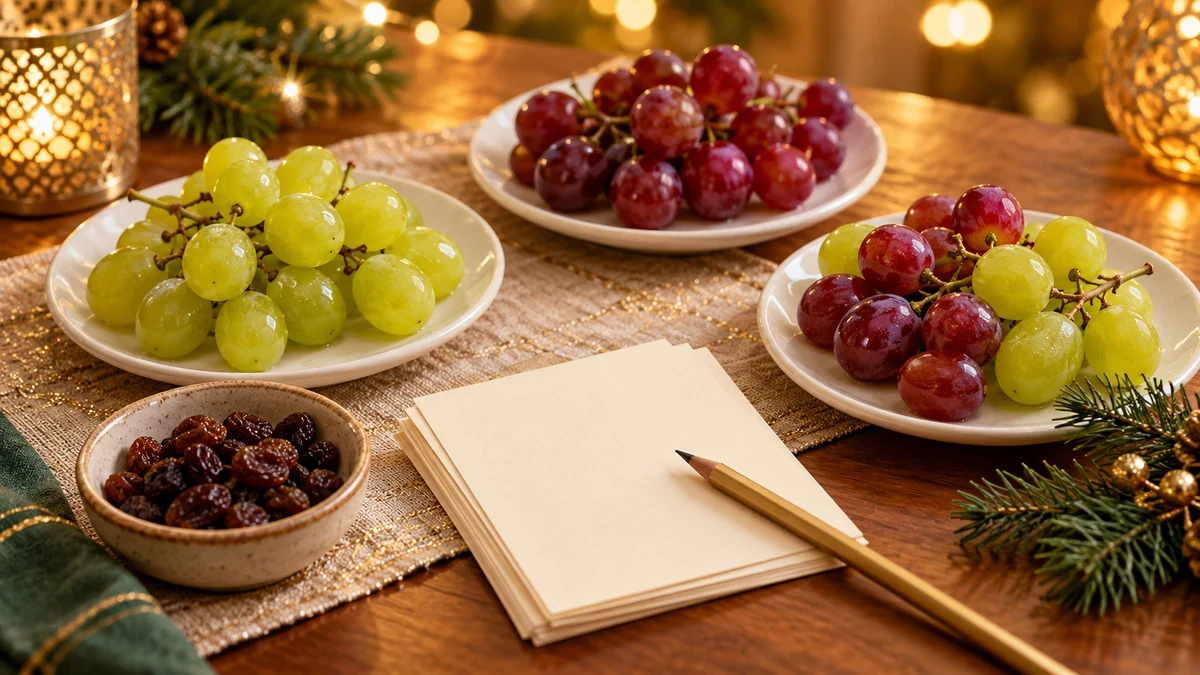
Nochevieja, New Year’s Eve, combines family celebrations with public gatherings and symbolic customs. Some people enjoy a lively night out; others prefer dinner at home. There is no single way to take part.
The twelve grapes and the midnight chimes
The best-known custom associates twelve grapes with the twelve midnight chimes, symbolising good fortune for the months ahead. This is a tradition, not a promise of luck. Do not turn it into a speed-eating challenge: enjoy food at your own pace and leave out toothpicks or other sharp serving aids. Source: Spain tourism: New Year traditions
Customs and superstitions
Some people wear red underwear as a playful symbol of hopes for love or good fortune. Other habits belong to particular families. These are optional beliefs, not ways to control the coming year; wave-jumping should not be treated as a general Spanish New Year custom.
Public gatherings and private parties
Celebrations range from family dinners to organised parties. Madrid’s Puerta del Sol is a famous gathering place for the clock chimes. Bars, clubs and hotels may offer a cotillón, a festive party often involving music and party accessories, but admission and finishing times vary.
Food and drink
Cava, Spanish sparkling wine, is a familiar choice for a toast; an alcohol-free drink is equally suitable. Dinner might include small appetisers, seafood, a roast or seasonal sweets. Confirm the meal’s timing rather than relying on a general expectation of a late Spanish dinner.
Practical ways to join in
Check entry rules before heading to a public square, keep valuables secure and agree a meeting place. Plan your return journey as well as your arrival. If bringing food or drink, check what the organiser permits; seedless grapes still require appropriate preparation and are not safe simply because they have no pips.
What the twelve grapes represent
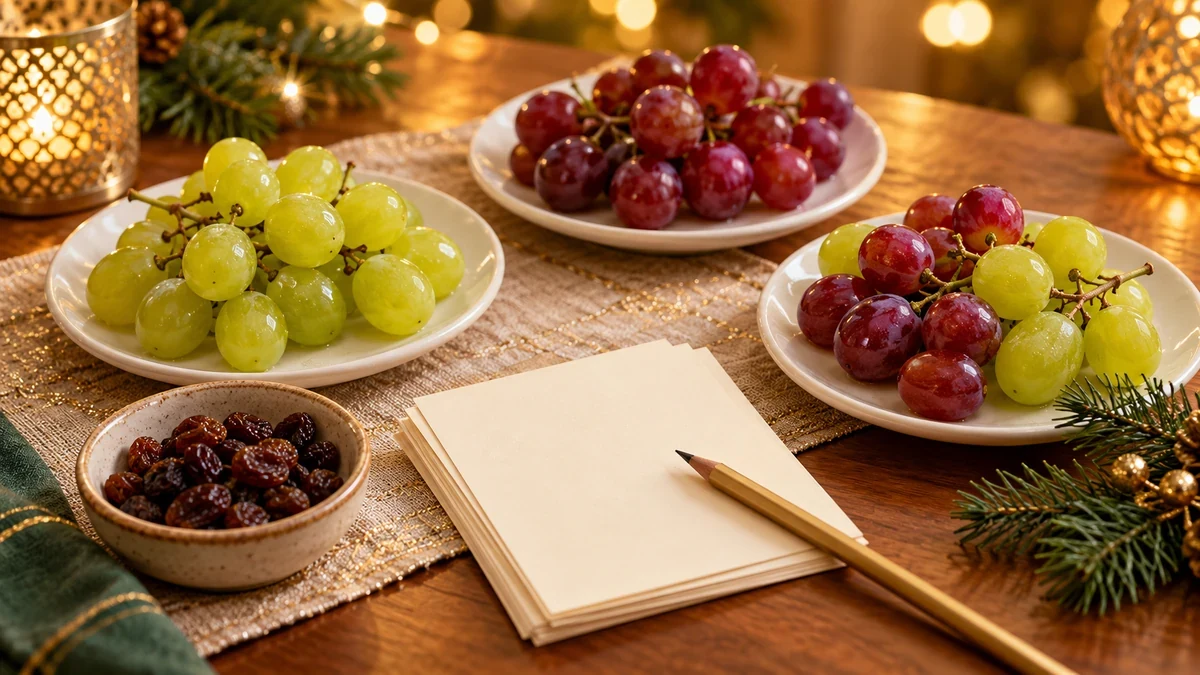
In the tradition of the twelve grapes, each grape is associated with one month of the coming year. The shared countdown matters more than finishing a plate on cue, and watching or counting along without eating is a valid way to join the occasion.
Origins and meaning
The custom has roots in the late nineteenth century. The often-told story of a large Alicante grape harvest in 1909 concerns its popularisation, not a securely established single invention date. Over time, it became a widely recognised symbol of shared hopes for the year ahead. Source: RTVE: origins of the twelve-grapes tradition
Preparing for the countdown
- Choose suitable food: seedless grapes may be convenient for adults who can eat them safely, but small size or removed pips does not eliminate the choking risk.
- Wash and prepare: wash the grapes and serve them on a clean plate. Keep food preparation separate from the bustle of the countdown.
- Count in advance: if following the symbolism, set out twelve grapes or twelve paper circles. The paper version lets everyone count without eating against the clock.
- Prepare grapes for young children: cut them lengthways into quarters, not just halves. Serve them separately from the countdown while the child sits upright and is supervised. Follow individual guidance for anyone with swallowing difficulties. Source: NHS: preparing food safely for babies and young children
- Follow the broadcast: listen to the presenter explain the clock sequence, including the preliminary sounds before the midnight chimes. There is no need to match swallowing to the bells.
- Keep the occasion relaxed: finish chewing and swallowing before talking or toasting. Stop eating if the crowd, excitement or pace makes it difficult to do so comfortably.
Family and local variations
- At Puerta del Sol, the clock and shared countdown are central to the gathering. Watching from home offers another way to follow the celebration without navigating a large crowd.
- Families may make their own arrangements for dinner and a toast, using sparkling wine or an alcohol-free alternative according to their preferences.
- If grapes are unsuitable, count twelve wishes or paper symbols instead. Do not assume raisins or small sweets are safer substitutes for young children or people with swallowing difficulties.
Important precautions
Cutting grapes appropriately and supervising eating are important, but they do not make hurried eating safe. Keep food in a clean container and allow anyone to opt out. A person with a diagnosed swallowing problem should follow their clinician’s advice rather than a generic festive suggestion.
Festive dinners and Spanish New Year food
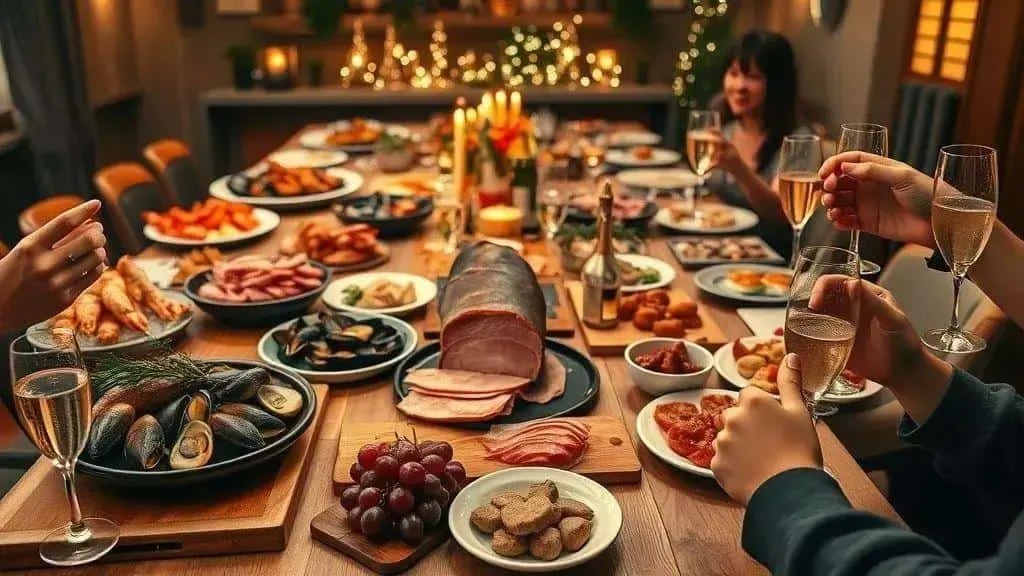
A Nochevieja dinner is an opportunity to share a meal, and menus differ by region, household and budget. The following are examples of dishes you may encounter, rather than a required national menu.
Foods you may find on the table
- Seafood: prawns, langoustines or mussels can form part of a festive meal. Check the actual menu, preparation and any shellfish allergies before ordering.
- Jamón and sharing platters: cured ham, cheese and bread may appear among the starters. Ask for suitable alternatives if someone does not eat pork or dairy.
- Roast lamb or suckling pig: cordero and cochinillo are possible centrepieces for a celebratory meal, especially where they are local specialities.
- Tapas and pintxos: a selection of small dishes offers a way to try different flavours. These terms cover varied regional styles, not one fixed New Year recipe.
- Soups and warm starters: a warming soup can fit a winter dinner alongside the richer dishes. Choose a menu that suits your group rather than ordering every traditional option.
Drinks and sweets
A toast with cava is one option after the countdown. Seasonal sweets such as turrón, a family of Spanish nougats, and crumbly polvorones may also feature. Check ingredients for nuts, gluten or other allergens, and offer alcohol-free drinks without making them an afterthought.
Regional variety
Coastal food traditions can inspire seafood-led menus, while Segovia is particularly associated with cochinillo. A regional speciality is not proof that every restaurant serves it on New Year’s Eve. Look at the venue’s published menu before deciding where to eat.
Choosing and booking dinner
- Reserve ahead if you want a particular restaurant, and confirm that its Nochevieja menu is available on your chosen date.
- Check the start and finish times. Some dinners are late or run across midnight, which may not suit children or anyone needing an early night.
- Ask about dietary needs before paying, including vegetarian options, allergens and how the kitchen handles cross-contamination.
- Decide whether to stay for the countdown or move elsewhere afterwards. Allow enough time for the journey and any entry checks.
Public celebrations in Madrid and other cities

Public programmes change from year to year. A familiar venue or last year’s fireworks display does not guarantee the same event this season. Use the city’s current official listings and the organiser’s instructions to make a plan.
Madrid: Puerta del Sol
Madrid’s Puerta del Sol is closely associated with the New Year chimes. Check the official tourism listing and police arrangements for entry controls, capacity limits and transport restrictions. Arriving early does not guarantee admission once an area is full. Source: Madrid tourism: New Year at Puerta del Sol
Barcelona: check the confirmed venue
Do not assume that Plaça Catalunya is the official countdown venue. Barcelona’s Christmas and New Year programme should be checked for the relevant year, including whether any Montjuïc celebration is scheduled and which areas are open to the public. Avoid choosing a viewpoint based solely on an old photograph or article. Source: Barcelona City Council: Christmas and New Year programme
Valencia, Seville and Málaga
These cities offer different settings for a festive visit, but street concerts, fireworks and waterfront parties need individual confirmation. Check municipal announcements for the date, location and access arrangements rather than assuming there will be a display everywhere.
The Canary Islands and Tenerife
If you choose Tenerife or another Canary Island, consult the relevant municipality’s programme. The islands can offer a milder winter setting than inland mainland Spain, but weather still varies. Check the local time for your countdown and booking confirmations.
What to check before attending
- Tickets and reservations: establish whether an event is free, ticketed or subject to controlled entry. Buy from the organiser or an authorised seller.
- Timing: match dinner, travel and entry times to the published schedule. There is no obligation to eat late simply to imitate a local routine.
- Transport: check the operator’s holiday timetable, station closures and the last useful connection for your accommodation.
- Crowds: agree a meeting point and choose a less crowded alternative if the main event is unsuitable for your group. Keep exits and official instructions in view.
- What to carry: take weather-appropriate clothing, essential medication and a charged phone. Check venue rules before bringing bottles, food or large bags.
- Quieter alternatives: a booked restaurant, hotel celebration or private meal may suit you better than a major square. Confirm what is included in the price.
Making the evening easier
Recheck official updates close to the date and before leaving your accommodation. Weather, crowd management or operational changes can affect plans. Follow stewards’ instructions and keep a practical alternative in mind.
Travel tips for New Year in Spain

Start with your group’s priorities: a shared dinner, a particular countdown or a quieter evening. Book around those priorities and leave enough time between activities, rather than trying to fit several busy venues into one night.
Accommodation and bookings
- Book ahead where needed: compare accommodation near your chosen celebration with somewhere quieter that has a workable return route.
- Read cancellation terms: check payment deadlines, refunds and what happens if your plans change. Keep a copy of your confirmation.
- Check the location: a short distance on a map can still involve road closures or a difficult walk. Ask the accommodation about access on the night.
Transport and timing
- Use the current timetable: holiday services can differ from ordinary schedules. Check your actual route, including any station used for the return journey.
- Plan an alternative: know where authorised taxis operate and whether a pre-booked transfer can reach your pick-up point. Do not rely on immediate availability after midnight.
- Consider road restrictions: central streets may be closed or difficult to access. Check parking and restrictions before deciding to drive, and never drive after drinking alcohol.
Personal belongings and group plans
- Keep valuables secure: carry essential documents and money in a secure, closed pocket or bag that you can keep in view.
- Keep your bag with you: avoid leaving it on a chair or unattended while taking photographs. Carry only what you need for the evening.
- Agree a meeting place: choose a specific, accessible point away from the busiest crowd and decide what to do if phone contact fails.
Joining the customs
- Prepare the twelve symbols: use grapes only if appropriate for the person eating them. For young children, use paper circles during the countdown and serve suitably quartered fruit separately under supervision.
- Choose a drink for the toast: cava is optional; water or an alcohol-free drink works just as well. Finish eating before raising your glass.
- Wear something red if you like: treat it as a light-hearted custom, not a requirement or a guarantee of luck in love.
Comfort and accessibility
- Dress for the forecast: layers and comfortable footwear are useful for waiting outdoors. Do not assume the whole country will be warm at night.
- Charge your phone: save booking details and useful routes offline as well. A portable charger can help during a long evening.
- Ask about accessibility: check step-free routes, accessible toilets, seating and the distance from transport before choosing a venue.
- Review travel cover: check that any insurance suits your trip and circumstances, and keep emergency contact details accessible.
Planning a memorable celebration
Spain’s New Year celebrations bring food, symbolism and time together into the same evening. You can enjoy those traditions without treating them as a checklist or competing to keep pace with a clock.
Choose the setting that suits your group, confirm current arrangements and make space for a comfortable journey home. Thoughtful preparation leaves more time to enjoy the occasion.
Thank you for reading. Follow our social pages for more seasonal ideas, recipes and travel inspiration, or share your own New Year customs in the comments.
Explore more seasonal articles on the I Love Christmas blog.
Frequently Asked Questions About New Year in Spain
What is the twelve-grapes tradition?
It links twelve grapes with the midnight chimes and the months ahead. You can watch or count along without eating. Do not rush to swallow grapes on cue, and use a non-food countdown for young children or anyone for whom the food is unsuitable.
Where can I celebrate in Madrid or Barcelona?
Puerta del Sol is Madrid’s well-known gathering place. For Barcelona, check the current municipal programme rather than assuming Plaça Catalunya or a previous Montjuïc event will be the venue. Confirm admission, access and transport for either city.
How should I plan transport on New Year’s Eve?
Check the current holiday timetable and any station or street closures. Agree a meeting point and an alternative route with your group. If using a taxi or transfer, confirm an authorised service and a pick-up location that will remain accessible.
How do I choose and book a Nochevieja dinner?
Look for a confirmed menu, clear prices, timings and cancellation terms. Discuss dietary needs before booking and allow enough time to reach any later celebration. A restaurant close to your accommodation may simplify the return journey.
What precautions are useful at public celebrations?
Keep belongings secure, agree what to do if separated and follow the organiser’s instructions. Choose a quieter setting if the crowd is unsuitable for your group, especially with young children or anyone who needs easier access and space.
Can children join the countdown?
Yes, with an age-appropriate activity such as counting twelve paper circles or wishes. Do not make it an eating race. If serving grapes separately, cut them lengthways into quarters for young children and supervise them sitting upright; raisins or small sweets are not automatically safer.
Sources and Further Reading
- Spain tourism: New Year traditions
- RTVE: origins of the twelve-grapes tradition
- NHS: preparing food safely for babies and young children
- Madrid tourism: New Year at Puerta del Sol
- Barcelona City Council: Christmas and New Year programme