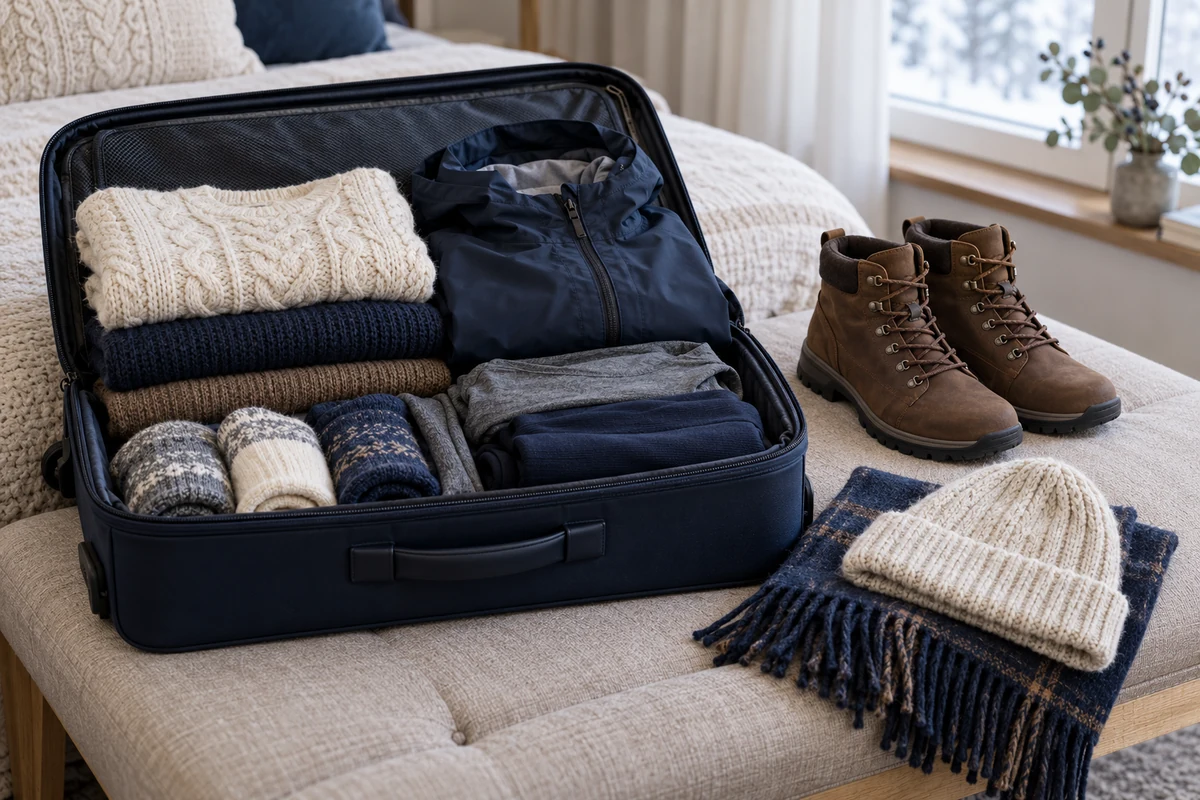
A winter packing list starts with layers: a base layer, insulation and weather protection suited to your destination. Add comfortable footwear, warm accessories and personal essentials in your hand luggage. Packing cubes can help organise the space, while checking airline rules protects you from avoidable baggage problems.
A winter packing list can feel like a puzzle when planning Christmas in Europe. You want to stay warm without carrying clothes you will never use. This guide offers practical suggestions to adapt to your route, trip length and forecast; a city break in Lisbon needs different preparation from a snowy Alpine visit.
Illustrations in this article are conceptual images, not documentary photographs or evidence of a particular historical event, destination, venue or access route.
A Basic Packing List for a European Winter Trip
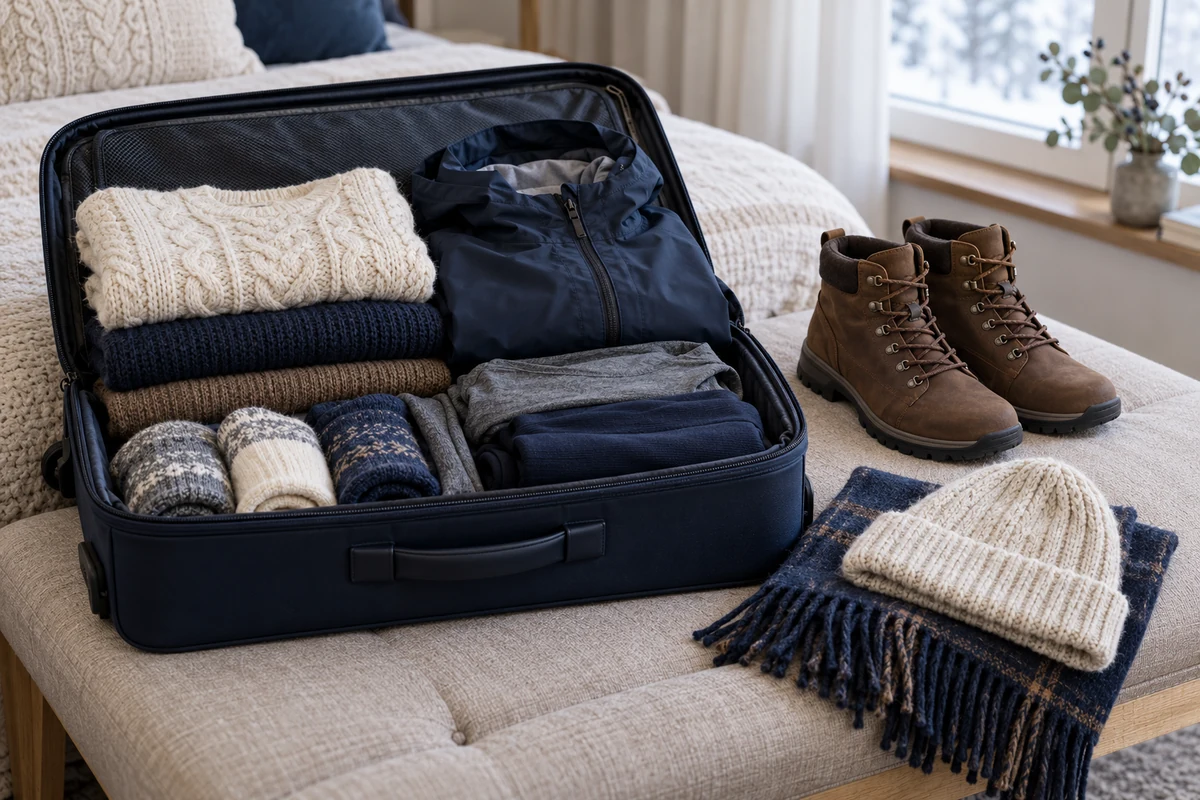
Choose clothes that combine easily and suit the conditions you will actually encounter. The quantities below are starting points for a short trip with possible laundry access, not a universal list for every climate or length of stay.
Clothing and Suggested Quantities
- One warm outer coat — a parka or suitable overcoat, with insulation and weather protection appropriate to the forecast. A heavy coat is not automatically waterproof, and no single coat suits every sub-zero condition.
- One lightweight insulated jacket — useful as an additional layer or for milder days, if your main coat leaves enough room for it.
- Two or three thermal tops — merino wool or technical synthetic fabrics are options. A long-sleeved synthetic top may work as a base layer, but assess its warmth and comfort rather than assuming all tops perform alike.
- Two jumpers or cardigans — choose comfortable fabrics and colours that work with the rest of your clothes.
- Two pairs of trousers — for example, a warmer pair and an everyday pair. Thermal leggings can go underneath when appropriate; they are not necessarily a weatherproof outer layer.
- One pair of suitable waterproof boots — with comfortable insulation and a sole suited to the terrain. Sturdy trainers may be enough for mild, dry conditions, but are not an equivalent substitute for snow or ice.
- Three to five pairs of suitable socks — adjust the number to trip length and washing arrangements. Wool blends or technical socks can be useful; avoid remaining in wet socks, whatever the fabric.
- A set of thermal base layers — useful for particularly cold outings. Several layers of ordinary underwear are not a reliable substitute for suitable winter clothing.
Accessories and Useful Extras
- A hat and scarf — for your head and neck, with coverage appropriate to wind and temperature.
- Warm gloves — consider water resistance for wet conditions and touchscreen-compatible fingers if useful.
- Optional hand warmers — a few may be useful for longer outings, but follow their instructions and check travel restrictions for the particular type.
- A compact umbrella or rain protection — chosen for your forecast. An umbrella may be impractical in strong wind.
- A suitable plug adaptor — check every country on your route and your devices’ voltage requirements. A plug adaptor does not convert voltage.
- Moisturiser and lip balm — pack products you already tolerate, in suitable travel containers.
- Your usual medicines and basic first-aid items — choose them with a pharmacist or clinician when needed, rather than buying a standard collection of medicines for everyone.
- A small weather-resistant bag — to help protect documents and electronics, kept secure and separate from leaking toiletries.
Organisation: packing cubes can separate layers and reduce clutter. Keep essentials and a warm layer in hand luggage in case a checked bag is delayed. Check weight limits, try your boots before travelling and leave some space for Christmas purchases.
Layers and Fabrics: Warmth Without Excess Bulk
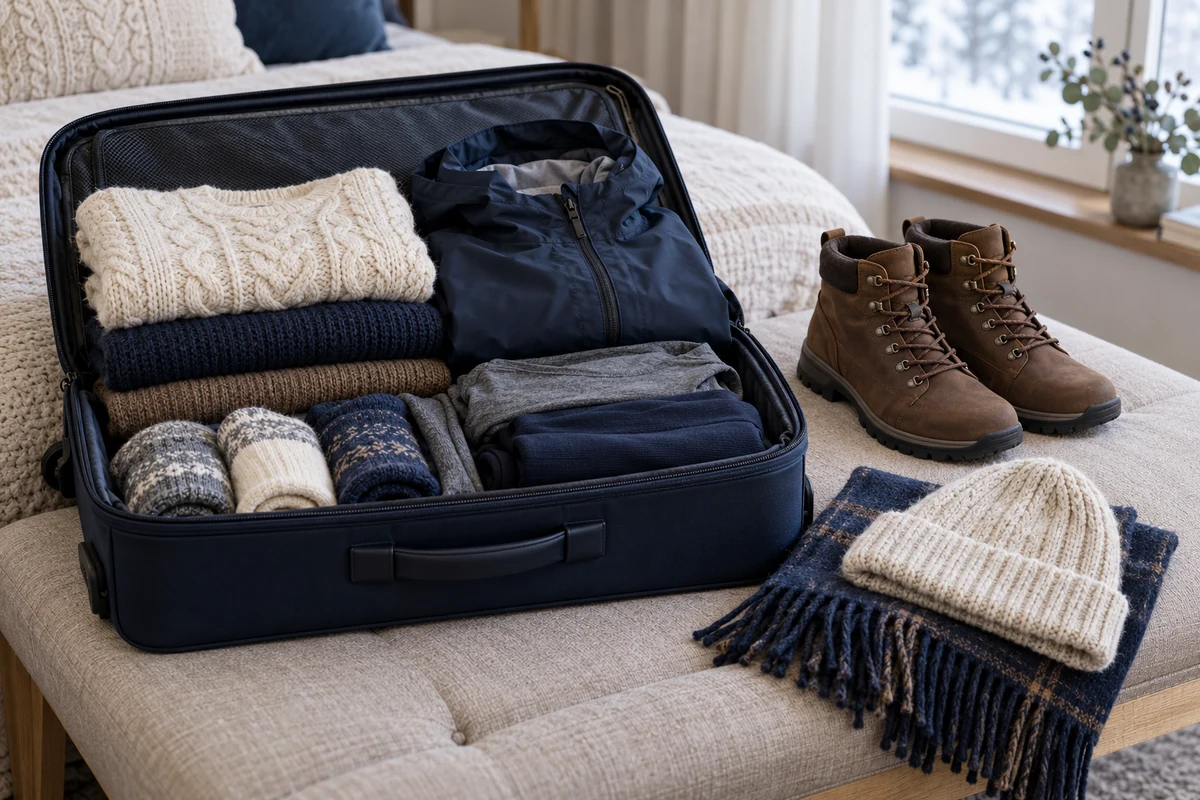
A layering system lets you adjust clothing as you move between cold streets and heated buildings. Think about a comfortable base, an insulating middle layer and an outer layer that protects against the weather. The exact combination depends on temperature, wind, rain and activity.
Three Useful Layers
- Base layer: a comfortable layer next to the skin, often made from merino wool or technical polyester. Cotton can stay wet after sweating, so consider how easily your clothing dries.
- Insulating layer: a jumper, fleece or lightweight insulated jacket, with room to move without restricting the layers underneath.
- Outer layer: suitable wind and rain protection. Check the garment’s specification; water-resistant fabric and a fully waterproof construction are not the same thing.
Fabric Choices and Alternatives
Merino wool: an option for base layers and socks, subject to personal comfort and care needs. Technical polyester: can provide a quick-drying alternative. Fleece: is useful as a middle layer but normally needs separate wind or rain protection. Down: can offer warmth for its weight, but needs appropriate protection from damp. Follow the manufacturer’s care and use guidance for each garment.
- Alternatives: you do not need a particular premium fabric. A suitable synthetic base layer and insulated jacket may work well for your plans. Compare the actual garment, fit and conditions rather than relying on the material name alone.
Compact Outfit Ideas
A city walk: thermal top, light jumper, insulated jacket and suitable trousers, with weather-appropriate boots and a scarf.
A cold Christmas market visit: thermal base layers, fleece, hooded coat, insulated boots, gloves and a hat. Allow for standing still outdoors, not only walking.
An evening out: a discreet base layer under a jumper, dark trousers and comfortable boots, with suitable outerwear for the journey. Dress for the weather as well as the venue.
Making Layers Work
- Prioritise clothes that can be combined in several ways.
- Adjust layers when entering heated buildings so you do not become uncomfortably hot or damp.
- A small, coordinated colour palette can make it easier to pack fewer clothes.
- Match spare base layers to the trip length and laundry options. You do not automatically need a separate spare for every day of a long trip.
Saving Space
- Use packing cubes to organise clothes and compress suitable items without damaging them.
- Roll light tops if that works for their fabric; fold anything that keeps its shape better that way.
- Wearing your main boots for travel can save suitcase space if they remain comfortable during the journey.
- Distribute weight within each bag’s allowance and keep a warm layer accessible in hand luggage.
Looking After Clothing Away from Home
- Change out of wet clothes and dry them according to their labels. Do not drape clothes over portable heaters or leave them close to an open fire; London Fire Brigade warns against using heaters to dry clothes. Source: London Fire Brigade: portable heaters and fires
- Wash socks and underwear only where permitted and allow enough drying time. Laundry facilities can reduce how much you need to carry.
- Protect delicate fabrics from zips, rough footwear and sharp objects inside the bag.
Boots and Socks for Comfortable Winter Walking
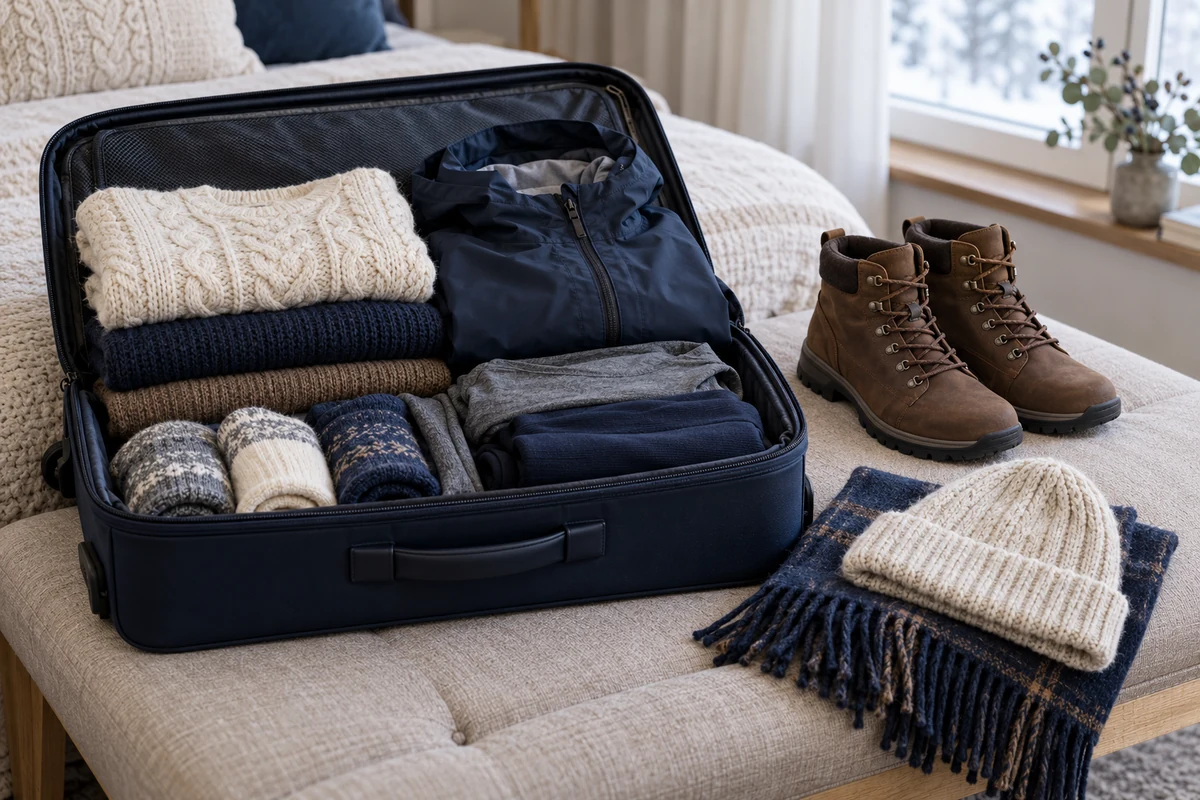
Suitable footwear can make long walks and market visits more comfortable. Consider waterproofing, grip, warmth and fit together. No ordinary sole guarantees that you will not slip on ice.
Types of Boots
- Insulated boots: consider them for colder conditions, checking the manufacturer’s guidance and leaving room for your chosen socks.
- Waterproof boots: look for a suitable waterproof construction if rain or wet snow is likely. A DWR water-repellent finish alone does not establish that a boot is fully waterproof.
- Walking boots: may suit longer outings, provided they fit comfortably and suit the terrain. An urban break does not automatically require a heavy mountain boot.
- Casual boots: may work for short outings in suitable conditions. Assess their sole and weather protection rather than relying on appearance.
Features Worth Checking
- Sole: look for a tread intended for your conditions and walk cautiously on slippery surfaces. Deep tread alone does not make smooth ice safe.
- Insulation: choose enough warmth for the trip without making the fit tight or your feet excessively sweaty.
- Weather protection: check how the boot is constructed, including seams and any waterproof lining.
- Boot height: a higher cuff can help keep out splashes or shallow snow, depending on the design.
- Weight: balance warmth and protection with a weight you can comfortably walk in.
Socks and Fit
Try the socks and boots together. One suitable pair of socks may be enough; adding a thin liner only makes sense if there is room and it improves comfort. Too many layers can make boots tight. Change damp socks rather than continuing in them.
- Merino-blend socks: one option for warmth and comfort, provided the fabric suits your skin and care arrangements.
- Technical synthetic socks: another option, including a thin liner where appropriate.
- Cushioned socks: may help with long walks, but check that the added thickness does not crowd your toes.
Finding a Comfortable Fit
- Try boots with the socks you intend to wear during the trip.
- Check that your toes have room and do not press against the front when walking downhill. Follow the brand’s fitting advice rather than relying on one universal gap measurement.
- Your heel should not slip excessively, and there should be no persistent rubbing or pressure points.
- If between sizes, try another size or shape with appropriate advice. Simply buying larger boots and filling the space with thick socks may not solve a poor fit.
Preparing Boots Before Travelling
- Gradual wear: try short walks before the trip and address discomfort early rather than hoping it will disappear abroad.
- Laces: adjust them for secure, comfortable support without overtightening.
- Care products: use only treatments suitable for the material, following the manufacturer’s instructions and ventilation advice.
- Check condition: inspect soles, seams and fastening systems. Do not deliberately walk onto slippery ground to test traction.
Footwear Care During the Trip
- If boots get wet, remove insoles where permitted and let them dry as directed, away from damaging direct heat.
- Air footwear and use care products only when appropriate for the material and your skin. Special deodorising products are optional.
- Carry enough dry socks for your plans, with a separate bag for wet ones.
Matching Footwear to the Activity
- Long city walks: comfortable, well-fitting walking footwear with suitable grip and socks.
- Cold markets or snowy surroundings: appropriate insulation and weather protection, with extra care on slippery ground.
- Dinners and events: comfortable footwear that works for both the venue and the walk there.
Optional extras: compatible insoles, a small cleaning kit or appropriate traction aids may be useful. Follow their instructions; traction devices may need to be removed indoors and are not suitable for every surface.
Gloves, Hats, Scarves and Hand Warmers
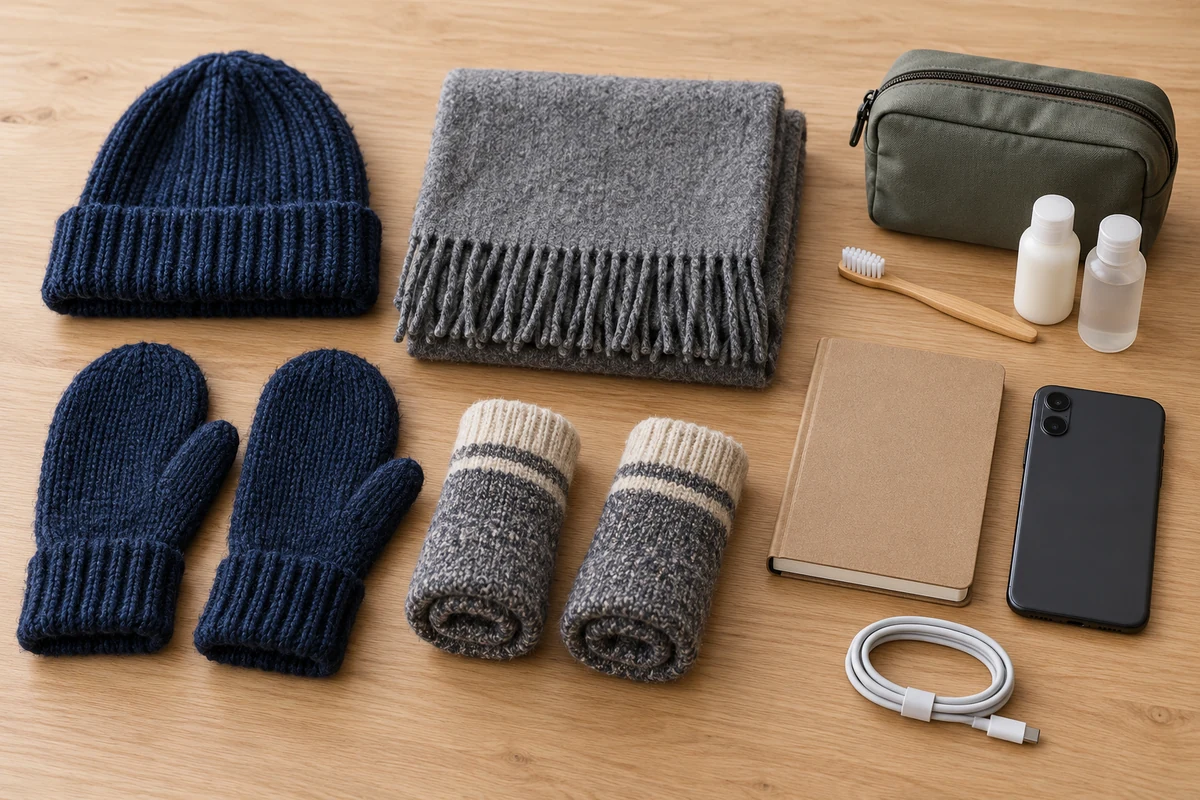
Accessories can make a considerable difference when waiting outdoors or walking in wind. Choose them for warmth, comfort and ease of movement, keeping the set small enough to carry conveniently.
Useful Accessories
- Insulated gloves: select a comfortable fit and weather protection suited to your plans, with a palm grip if useful.
- Touchscreen gloves: handy for quick photographs or navigation, though warmth varies between products.
- Thin glove liners: an optional extra inside larger gloves if they fit without constriction.
- A beanie or ear-covering hat: choose enough coverage for the weather without obstructing vision.
- A scarf or neck warmer: useful for your neck and, where comfortable, protection against wind around the lower face.
- Hand warmers: disposable and rechargeable versions differ in temperature, duration and restrictions. Check the actual product rather than assuming a fixed number of hours of warmth.
- Ear warmers or a balaclava: optional for particularly exposed conditions, depending on your activities and other clothing.
Quantities and Substitutions
- Gloves: one warm pair and, if useful, a lighter pair may be enough. A sleeve pulled over a thin liner is not equivalent to suitable gloves in severe cold.
- Hats: start with one suitable hat. A well-fitting hood can add protection, but assess whether it covers your ears and stays in place.
- Scarves: one versatile scarf or neck warmer may be sufficient; take a second only if it serves a practical purpose.
- Warmers: base quantities on their instructions and your outings. They supplement appropriate clothing and warm indoor breaks; they do not make prolonged exposure safe.
Using Accessories Comfortably
- Layer gloves only when they fit: leave enough room for comfortable movement and follow the product’s intended use.
- Cover your neck: adjust scarves or neck warmers for wind, while keeping breathing and vision unobstructed.
- Use warmers as directed: do not put a hand warmer in a boot unless it is explicitly designed for that use. Follow warnings about skin contact, pressure and reduced heat sensitivity.
- Rechargeable warmers: use the specified charger and check battery capacity and airline rules. There is no universal minimum power-bank size suitable for every model.
Packing Accessories
- Tuck thin gloves inside larger gloves or a designated pocket so the pairs stay together.
- Roll suitable scarves and keep them with the rest of your warm accessories.
- Keep disposable warmers unopened in their original packaging until needed, following the manufacturer’s storage guidance.
Care and Maintenance
- Wash gloves and hats according to their care labels and allow them to dry fully.
- Apply any suitable waterproofing treatment before the trip, following the instructions and testing an inconspicuous area where advised.
- Charge rechargeable warmers only as directed, while you can supervise them, on a suitable uncovered surface. Do not leave them charging under bedding or in a closed bag.
Convenience and Safe Storage
- Keep gloves accessible for the journey from the airport rather than buried at the bottom of your case.
- Store documents in a dry, secure compartment. Keep activated warmers separately and follow their instructions instead of sealing them with documents or electronics in a waterproof pouch.
- Add discreet contact identification to expensive accessories if useful, without displaying unnecessary personal information.
Toiletries, Medicines and First Aid in Hand Luggage
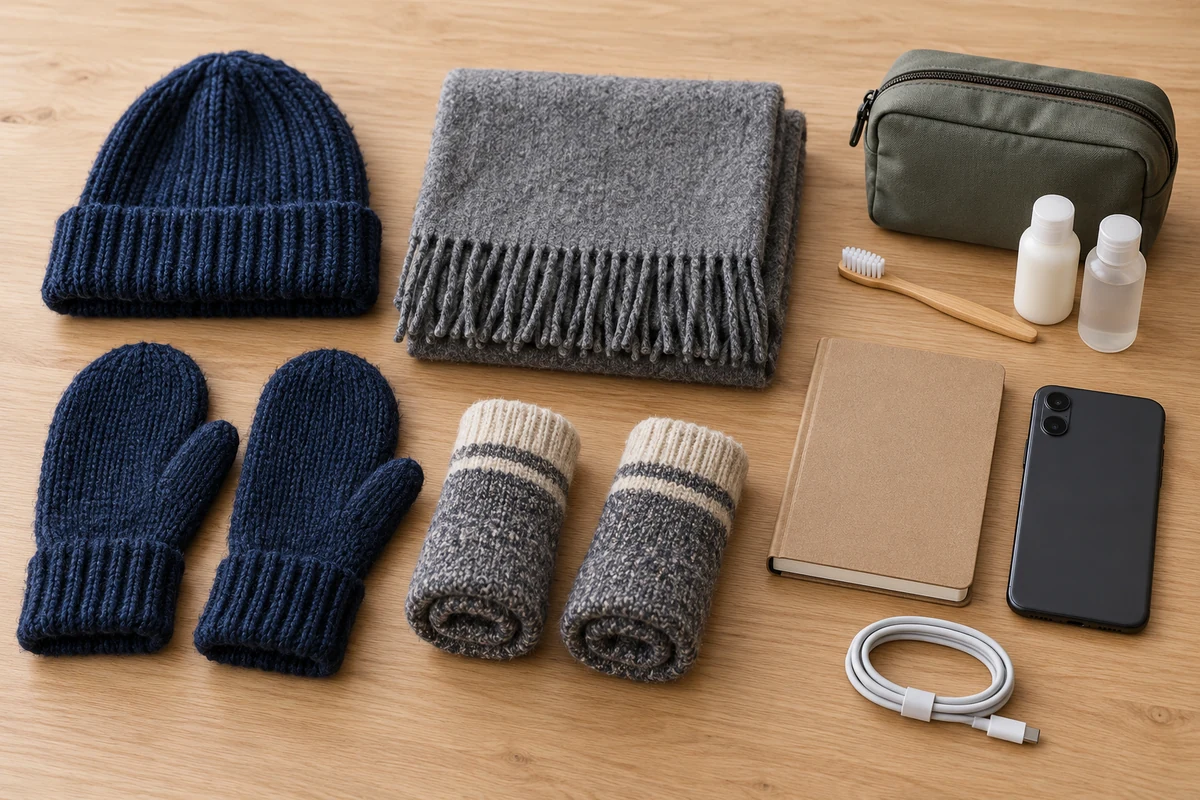
Pack the items you personally need for comfort and routine care. Check the security rules for every airport on your route, including connections and the return journey, before choosing container sizes.
Toiletries and Personal-Care Items
- A compact toiletry bag — reusable containers of 100 ml or less are useful where that limit applies. GOV.UK notes that liquid rules depend on the airport; check its instructions on containers and clear bags. Source: GOV.UK: airport liquid restrictions
- Toothbrush and travel toothpaste — plus floss or other items you normally use. Include liquids and pastes in your security allowance where required.
- Moisturiser and lip balm — in compact containers and products suitable for you.
- Deodorant — a solid option can simplify liquid packing, but check the rules for the actual product and packaging.
- Tissues and suitable wipes — useful for minor spills or personal care; dispose of wipes properly rather than flushing them.
- Menstrual and other personal-care supplies — enough for the journey and initial days, with a small spare supply where helpful.
- Contact-lens supplies or prescribed eye products — bring the products you normally use, in appropriate packaging, with a clean case if needed.
- A small grooming kit — check security restrictions before packing razors, scissors, tweezers or powered devices. Not every small tool is automatically allowed in the cabin.
Medicines and a Basic First-Aid Kit
- A suitable pain-relief medicine, if needed — use only a product appropriate for you, in its original packaging, and follow the label or professional advice. This list is not a dosing recommendation.
- Your usual allergy treatment — discuss what to carry with a pharmacist or clinician. An antihistamine is not a substitute for emergency treatment for a severe allergic reaction.
- Diarrhoea or rehydration supplies, where appropriate — ask a pharmacist what suits your circumstances rather than assuming a medicine is suitable for everyone.
- Travel-sickness treatment, if appropriate — check suitability, possible drowsiness and instructions with a pharmacist.
- Plasters and small dressings — a simple set for minor cuts or rubbing. Add other first-aid products only if suitable and familiar to you.
- A small digital thermometer — optional, depending on your needs and available space.
- Regular prescribed medicines — keep them accessible in hand luggage, with their original labels and any required documentation. Check destination rules and storage needs before travel.
Liquid Medicines and Documentation
- Security rules: requirements for ordinary liquids vary by airport. Essential liquid medicines can have different allowances and screening requirements; check the official guidance rather than assuming a standard toiletries rule covers them. Source: GOV.UK: medicines in hand luggage
- Documents: ask what evidence is required for your medicines, particularly controlled drugs, injections and medical equipment. A prescription alone does not override a destination country’s restrictions.
- Original packaging: keep medicines identifiable and carry a copy of the prescription or relevant letter where appropriate. Check with a pharmacist or clinician if special storage is needed.
Organising Hand Luggage
- Separate toiletries, medicines and other personal-care items so that leaks do not affect essential supplies.
- Keep required documents and medicines accessible but secure, rather than in an exposed outer pocket.
- Small pouches can help you locate items without unpacking the whole bag.
- Include spare underwear and a top in case checked luggage is delayed.
Comfort During the Flight
- Wash your hands when possible and use a suitable hand sanitiser if needed, within the applicable liquid rules.
- Use your usual moisturiser or lip balm when helpful, following the product instructions.
- Drink water regularly as appropriate for you. Do not add a decongestant simply because you are flying; ask a pharmacist if you have symptoms or questions about a product.
A Short Hand-Luggage Checklist
- Toiletries packed to the rules of all airports on your route.
- Toothbrush, toothpaste and other routine dental-care items.
- Moisturiser, lip balm and deodorant if wanted.
- Tissues, suitable wipes and personal-care supplies.
- Regular medicines in labelled packaging, with required paperwork.
- Any additional medicines selected for your needs, plus plasters and dressings.
- Optional thermometer and other appropriate first-aid items.
Packing Cubes, Compression and Hand-Luggage Organisation
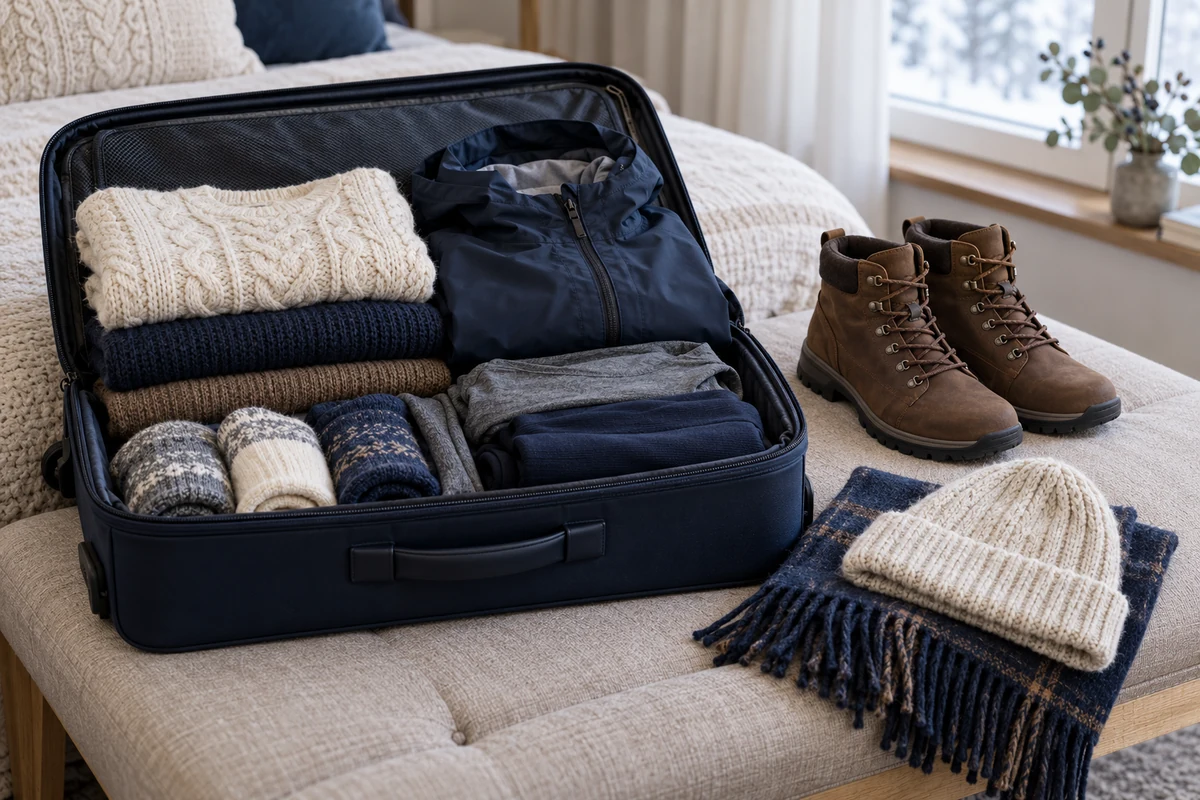
A consistent packing method makes things easier to find. Compression can reduce volume, but it does not reduce weight or increase your airline allowance. Avoid forcing a case shut or crushing objects that need protection.
Compression Techniques
Compression bags: use them for suitable clothing and follow garment care advice. Do not leave down or other insulation heavily compressed for longer than recommended.
Rolling or folding: roll light clothes if convenient and fold structured garments to protect their shape.
Compression cubes: choose sensible groups of clothing and close the zips without excessive force. A cube that fits neatly is more useful than one strained to its limit.
Dividing Items into Groups
- By purpose: separate base layers, jumpers, underwear and socks in whatever arrangement is easy for you to remember.
- By colour: differently coloured pouches can make items easier to find.
- By fragility: protect delicate objects with appropriate packaging, keeping them away from heavy shoes or hard items that could crush them.
Hand-Luggage Priorities
- Accessible essentials: keep your passport, wallet, medicines and tissues in a secure compartment you can reach without emptying the bag.
- Liquids: pack them to the rules of your departure and connecting airports, keeping them available for inspection where required.
- A warm layer: a jumper or light jacket can be useful in transit and if your checked luggage is delayed.
A Step-by-Step Packing Method
- Lay everything out: use a clean surface and remove unnecessary duplicates.
- Plan combinations: make three or four flexible outfits from the same pieces before adding more clothes.
- Group clothing: place items in suitable cubes or bags, compressing only as appropriate for the fabric.
- Position bulky clothing: pack suitable compressed layers where they help stabilise the case without crushing fragile contents.
- Separate footwear: use shoe bags and, if useful, tuck clean socks inside clean shoes. Do not place fragile objects where footwear can crush them.
- Secure documents and electronics: keep them organised in hand luggage, following battery and security rules.
Avoiding Excess Weight and Making Inspection Easier
- Weigh and measure each bag at home against the allowance for your actual fare.
- Keep items that may need separate screening accessible and follow the airport staff’s instructions.
- Leave space and weight allowance for purchases. An extra folding bag is useful only if your ticket permits the additional item or you arrange extra baggage.
Before Closing the Bag
- Passport and required travel documents in a secure, accessible place.
- Toiletries packed according to the applicable security rules.
- Spare clothing and essentials in hand luggage.
- Cables and chargers organised, with any permitted power bank in the cabin bag.
- Clothing groups arranged so they are easy to identify.
Flights, Connections and Protecting Christmas Purchases
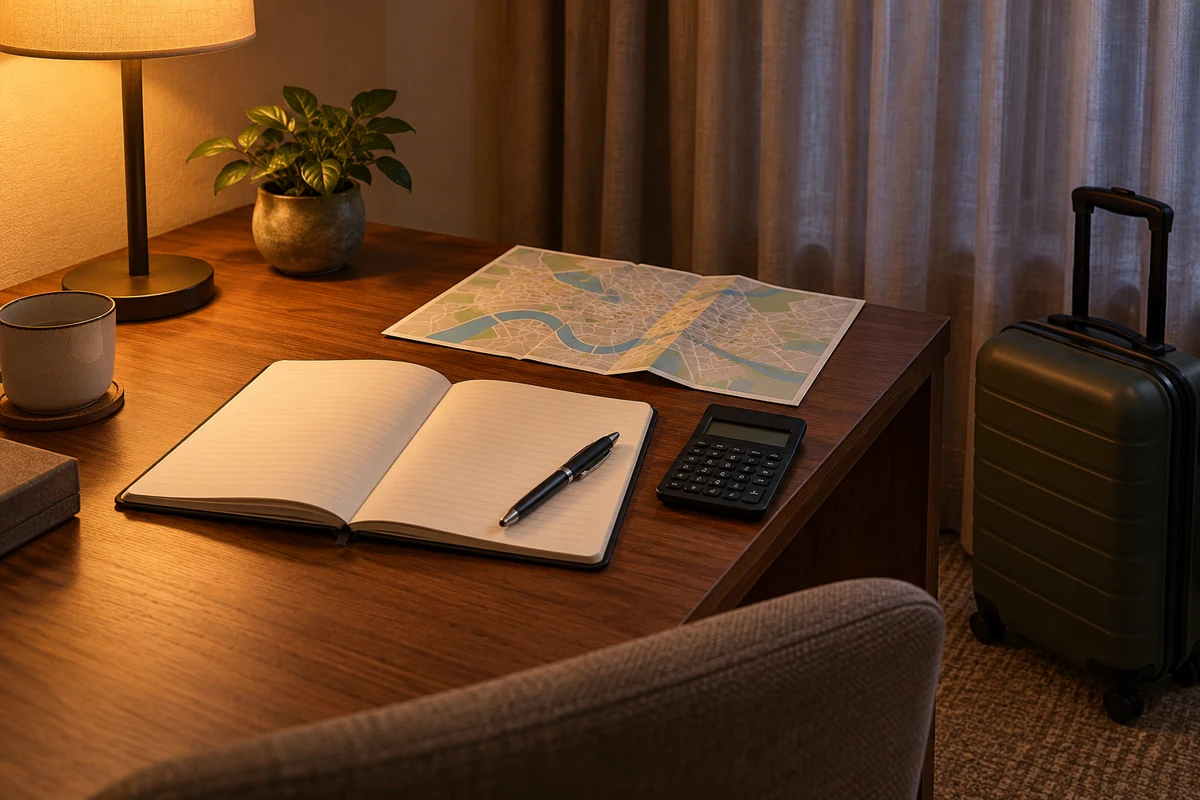
Think about baggage rules and fragile purchases before shopping. A little space left in the case is useful, but weight, security and customs requirements still apply.
Before Departure
- Weigh your luggage at home and leave a reasonable margin rather than depending on an airline overlooking excess weight.
- Check size, weight and number-of-bag allowances for every carrier and fare on your itinerary.
- Keep essentials in your permitted hand luggage so a delayed checked bag is less disruptive.
- Leaving around 10–20% of the case empty is one planning idea for souvenirs, not a rule. Keep the weight allowance in mind as well as the available space.
At the Airport
- Arrive in good time: follow the airport and airline’s guidance and allow for seasonal queues.
- If a bag is overweight: ask staff about the permitted options. Moving items to hand luggage is only possible within its own allowance and safety rules.
- Protect fragile purchases: use suitable packaging and tell the carrier if special handling is needed. Do not hide the nature of an item to avoid inspection or assume a fragile label makes handling worse.
- Extra baggage: compare advance and airport charges on your airline’s website before buying more than you can carry.
Packing Souvenirs
- Cushion fragile items with suitable wrapping and keep them away from heavy objects. Clothing can provide additional padding but may not be enough on its own.
- Put products that might leak in sealed protective bags, while still complying with any liquid restrictions.
- Ask the shop to package glass or ceramics for transport, then check that they can be carried safely within your baggage allowance.
- For large purchases, compare a shop’s shipping service with carrying them yourself. Check insurance, packaging, delivery charges and import requirements; shipping is not automatically cheaper or safer.
Weight Distribution and Identification
- Keep heavier permitted objects near the wheels for stability, without placing them against fragile purchases.
- Group gifts in a way that lets you show them for inspection without unpacking everything.
- Choose a suitable luggage lock and follow any carrier or security requirements. Keep valuables out of checked bags where possible and avoid labels advertising expensive contents.
Receipts, Customs and Tax
- Keep receipts and any relevant tax paperwork accessible for inspection or a refund application.
- Check the official import allowances for your destination and return country, and declare goods where required.
- If a visitor VAT-refund scheme applies to you, check eligibility and procedures before buying. Ask the retailer for the required documents and confirm whether goods must be inspected before checking in your bag; do not assume every purchase or traveller qualifies.
A Shopping-Trip Checklist
- A luggage scale and a way to check bag dimensions.
- Suitable wrapping and leak-resistant bags for permitted purchases.
- Pouches or compartments to separate gifts.
- Receipts and any required customs or tax documents.
- A suitable luggage lock and, if permitted, a power bank carried in hand luggage with its terminals protected.
Ready for a Winter Break
A useful winter packing list balances appropriate layers, comfortable footwear and realistic luggage limits. Plan for your actual destination and activities rather than trying to prepare for every possible European winter in one suitcase.
Try your footwear beforehand, protect purchases properly and keep essentials accessible. These preparations can reduce avoidable problems, while leaving flexibility for weather and travel changes.
Thank you for reading. Share your own practical packing tips and the items you found most useful on a festive trip.
Visit the I Love Christmas blog for more seasonal travel ideas, guides and inspiration.
Winter Packing for Christmas in Europe: Frequently Asked Questions
Can I take liquids in hand luggage?
Check every airport on your route. Many apply a 100 ml container limit, while rules at others differ. Essential medicines have separate requirements; consult official guidance and carry any necessary evidence.
What boots should I choose for winter walking?
Choose comfortable footwear suited to the forecast and terrain, with appropriate weather protection and grip. Try it with your travel socks before leaving. No ordinary boot guarantees traction on ice.
What does a layering system involve?
A base layer, an insulating layer and suitable outer weather protection. Two or three base tops, one or two middle layers and an outer coat may be a starting point, adjusted for your trip and laundry options.
How can I protect souvenirs?
Use suitable wrapping, separate fragile items from heavy ones and contain anything that could leak. Keep receipts accessible and check baggage and customs requirements before buying.
Can I take hand warmers and power banks on a flight?
Check your airline’s rules for the specific warmer and battery type. The UK CAA says power banks and spare batteries belong in cabin baggage, not checked luggage. Battery limits use watt-hours, not mAh alone, and airlines may restrict numbers, storage and onboard use. Source: UK Civil Aviation Authority: safe packing
What essentials belong in hand luggage?
Travel documents, regular medicines and required paperwork, a spare outfit, permitted toiletries, chargers and a warm layer. Carry any power bank in line with cabin-baggage rules and select first-aid items appropriate to your needs.
Sources and Further Reading
- GOV.UK: airport liquid restrictions
- GOV.UK: medicines in hand luggage
- UK Civil Aviation Authority: safe packing
- London Fire Brigade: portable heaters and fires