Christmas food traditions in Central and Eastern Europe vary by country, region and household. Polish pierogi and barszcz, Hungarian halászlé and Lithuanian kūčiukai are examples of foods associated with the season, alongside drinks such as dried-fruit kompot.
Christmas food traditions in Central and Eastern Europe offer a varied introduction to festive meals and family customs. A familiar dish can hold personal memories as well as cultural history. Explore some examples while keeping the differences between countries and celebrations in view.
The stories behind festive food traditions
The stories behind festive food traditions often connect a dish with family gatherings or religious observance. Origins and meanings can change over time, so a familiar food should not automatically be assigned one symbolic explanation.
In Poland, barszcz, a beetroot soup, is a well-known Christmas Eve choice, often served with small mushroom-filled dumplings called uszka. Recipes vary between regions and households.
The meaning of festive dishes
Lithuanian Christmas Eve, Kūčios, is associated with a traditional meat-free meal. Kūčiukai, small poppy-seed pastries, are a characteristic example. The selection of dishes reflects family practice as well as the wider tradition.
Food and community
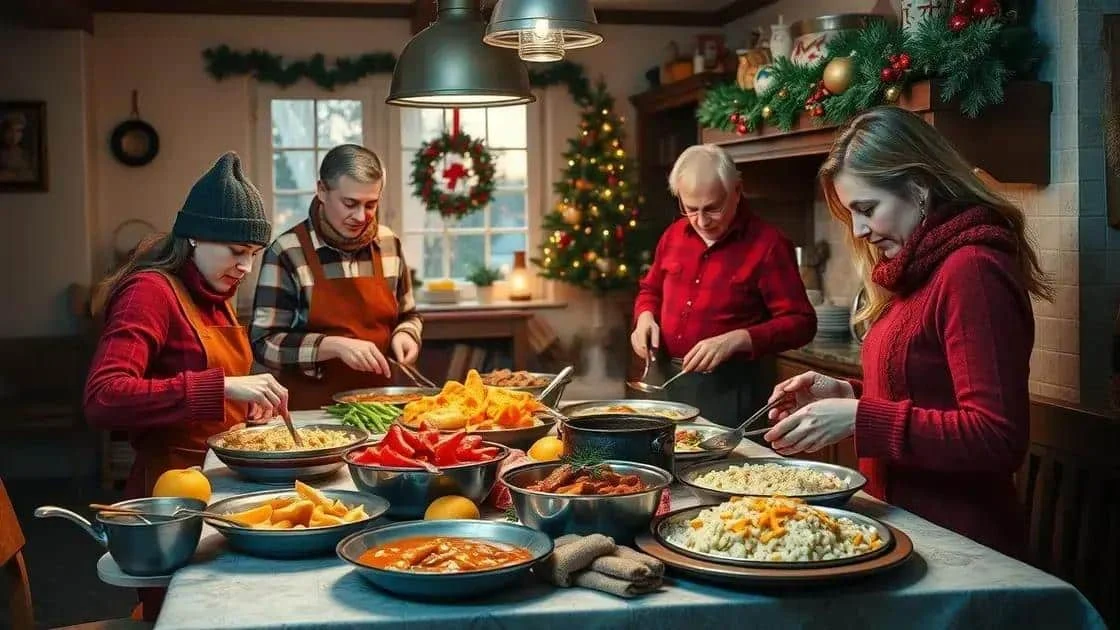
Preparing a meal together can help pass on recipes and skills. Different relatives may contribute their knowledge, allowing food to become part of a family’s culture and identity without assigning that role only to mothers or grandmothers.
Time around the table can bring earlier celebrations to mind. The significance of a particular dish often comes from the people who prepare and share it, rather than from a single national story.
Christmas dishes in Central and Eastern Europe
Christmas dishes in Central and Eastern Europe differ widely. Christmas Eve, Christmas Day and New Year may each have their own menus and customs.
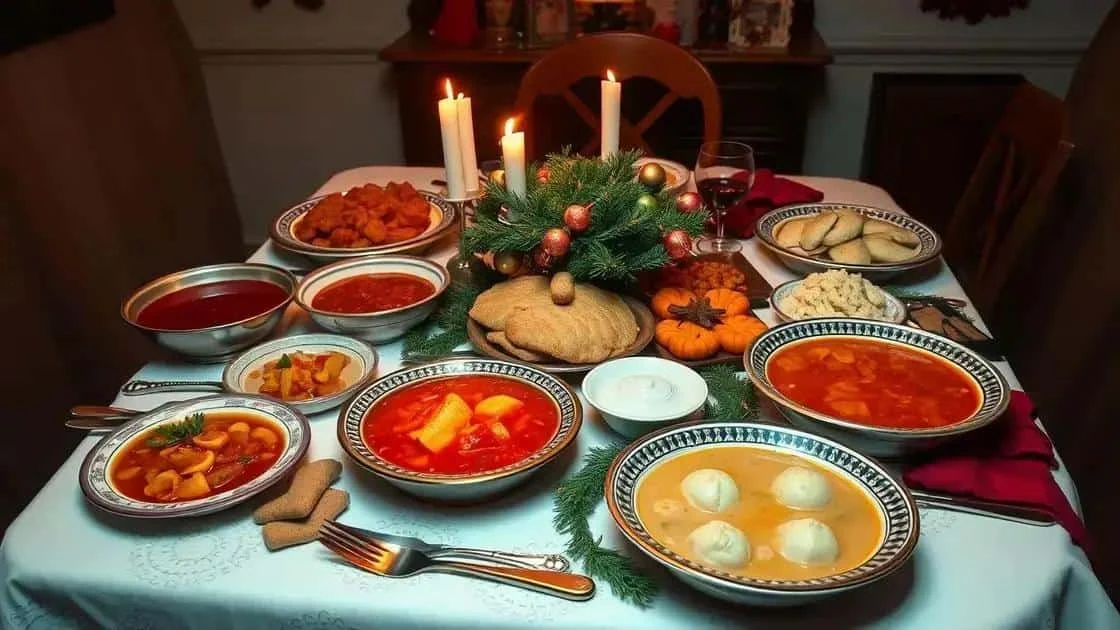
In Hungary, halászlé is a paprika-seasoned fish soup associated with festive meals. Depending on the recipe, it may be served with bread or have other regional accompaniments.
In Russia, Olivier salad is associated particularly with New Year celebrations. It may appear at other festive meals, but New Year and religious Christmas should not be treated as the same occasion.
Polish Christmas Eve dishes
In Poland, pierogi are filled dumplings with many variations. Sauerkraut and mushroom fillings are familiar Christmas Eve choices. Barszcz with uszka is another well-known part of the meal.
Christmas Eve in Lithuania
In Lithuania, kūčiukai are small poppy-seed pastries linked with Kūčios. Bread and grain dishes, mushrooms and herring also feature in accounts of the meal, with recipes and combinations varying between households.
These examples are an introduction, not a complete regional menu. The same dish can have different recipes and meanings in neighbouring households.
Drinks served during the festive season
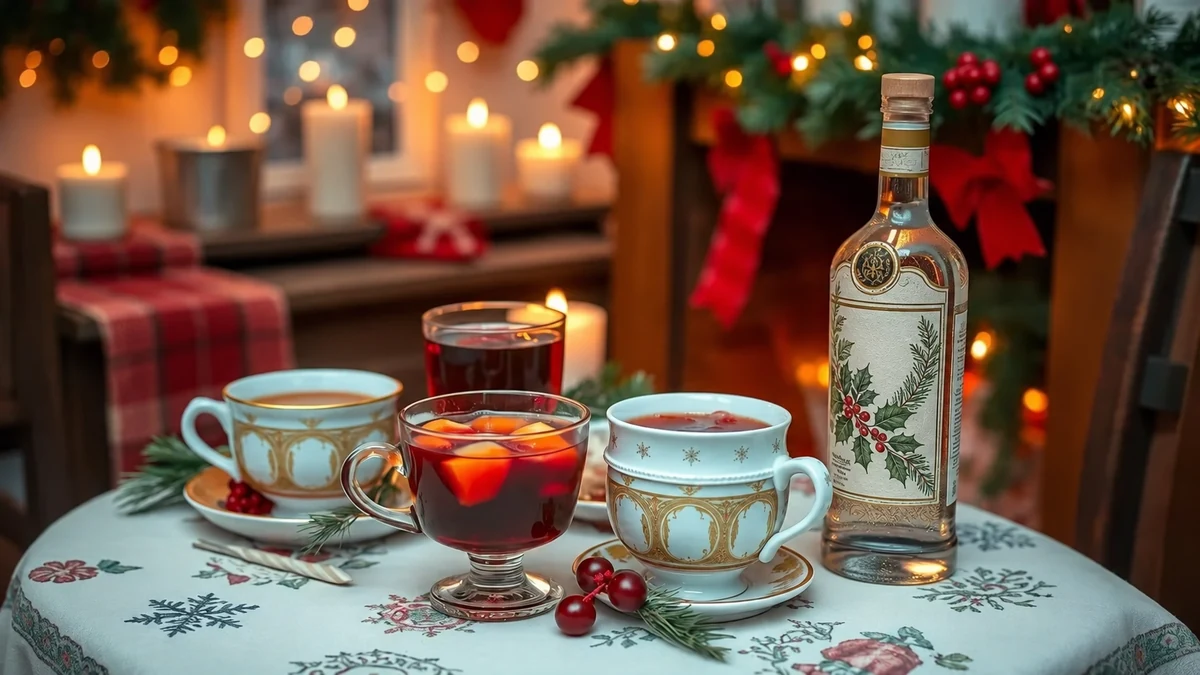
Traditional drinks can accompany a festive meal or a winter outing. Some are alcoholic, some are not, and not all are served hot.
In Russia, vodka may be offered at some celebrations, but drinking is a personal choice rather than a requirement of hospitality. Provide appealing alcohol-free options and avoid pressuring guests to drink.
Tea can accompany sweets or biscuits and offers another way to share time after a meal. Tea-drinking is not limited to Christmas.
A Polish dried-fruit drink
In Poland, Christmas Eve kompot is commonly made with dried fruit. It is a cooked fruit drink, not the same as a spoonable British fruit compote, and may be served cool or at room temperature.
Hungarian mulled wine
In Hungary, forralt bor is mulled wine flavoured with spices. It is a familiar winter drink; heating wine does not reliably make it alcohol-free.
Choose drinks to suit your guests and label alcoholic options clearly. A warm alcohol-free fruit drink can also fit a winter gathering.
How families shape Christmas recipes
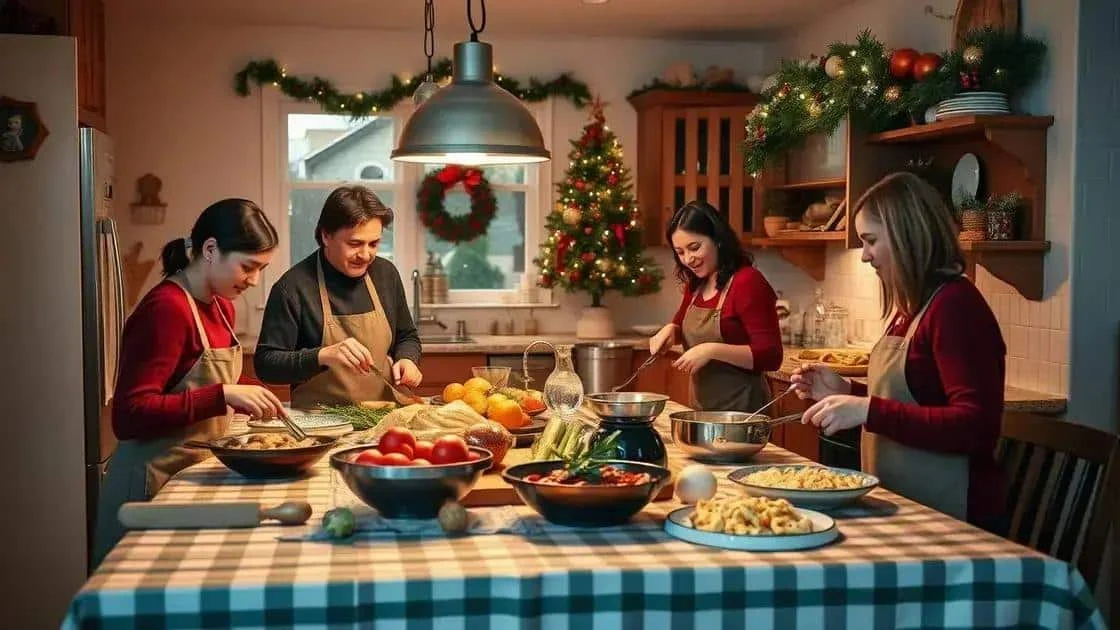
A family may develop its own collection of recipes, with each person contributing a favourite dish. What matters at one table may differ from what is served next door.
Making biscuits or a special pudding together can introduce younger relatives to kitchen skills and family stories. Adults should supervise tasks involving heat, sharp tools and food hygiene.
Recipes can carry personal memories. The smell or taste of a familiar dish may recall a particular gathering, while a new recipe can become part of later celebrations.
Adapting recipes
Adaptations may reflect available ingredients, allergies or dietary preferences. Explain significant changes when sharing a recipe, and do not assume that a meat-free dish is also dairy-free or vegan.
Inviting guests to contribute a dish can make the meal collaborative. Check dietary needs beforehand and agree quantities so that preparing the food remains manageable.
Planning a meal inspired by the region
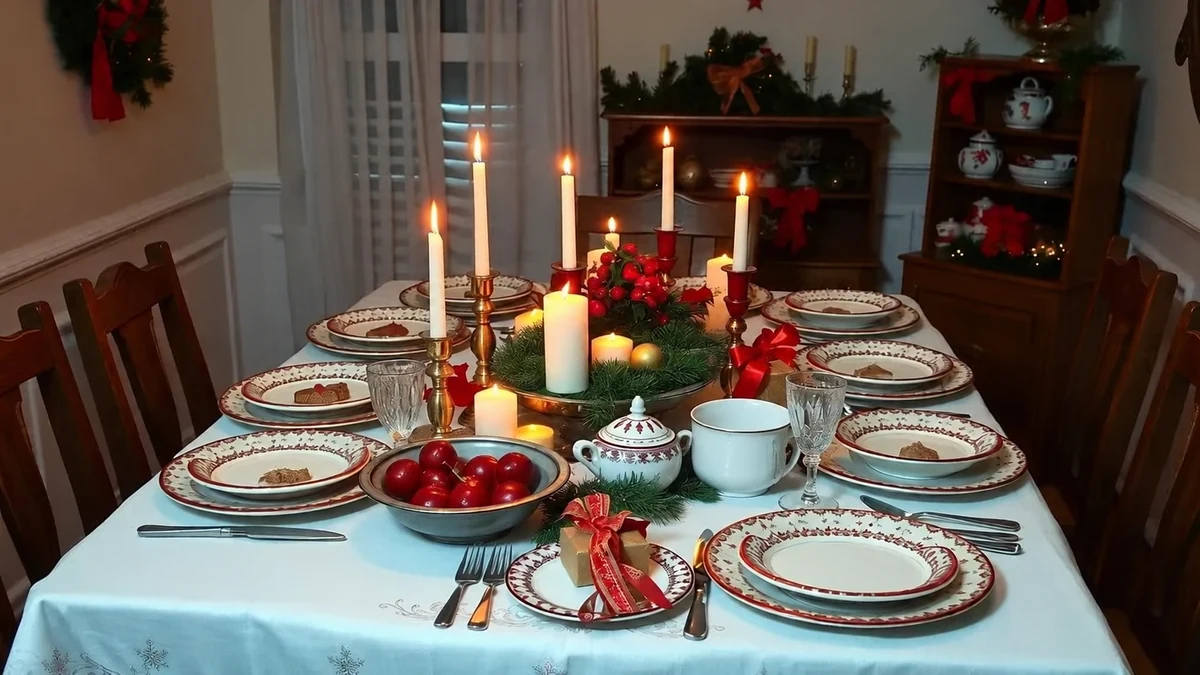
For a meal inspired by Central and Eastern Europe, begin with a few dishes rather than attempting to represent the whole region. These practical tips can help:
Choose a focused menu: Explore a tested recipe for pierogi, barszcz or halászlé. A mixed menu can be enjoyable, but label it as your own selection rather than one country’s traditional Christmas dinner.
Choose suitable ingredients: Check the recipe before shopping. Fresh, frozen, dried or preserved ingredients can each be appropriate; quality and correct handling matter more than insisting everything is fresh.
Set the table simply
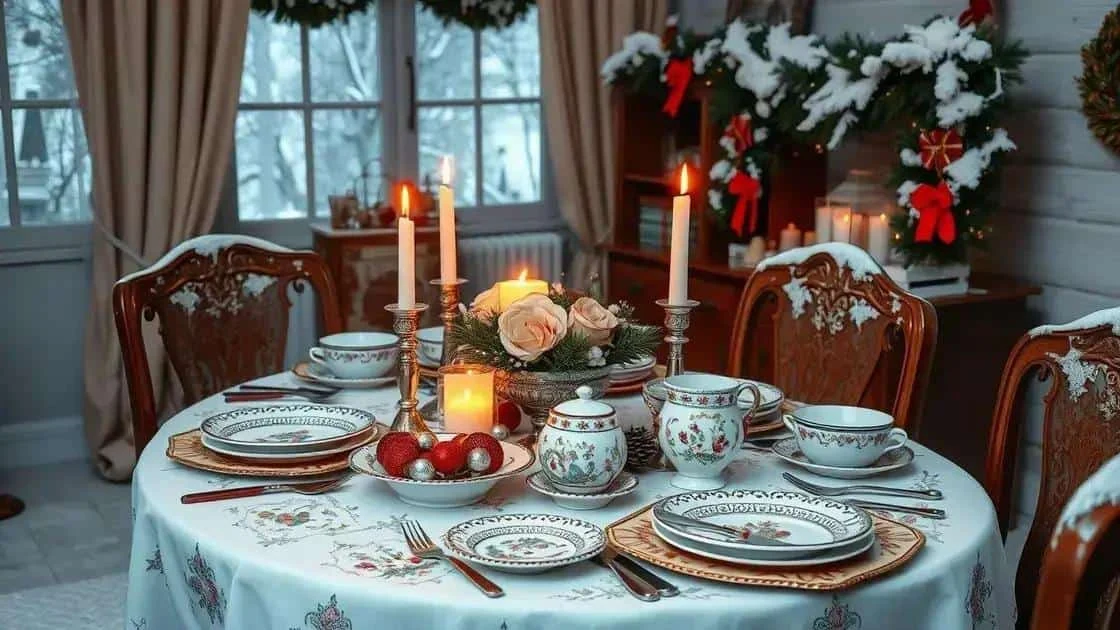
Colourful serving dishes and a few festive details can make the table welcoming. Leave room for food and conversation. Flameless candles are useful near decorations; a special tablecloth or candles are optional.
Prepare suitable dishes ahead
Some stews and cakes can be made ahead when the recipe and storage conditions allow. Follow the dish’s storage guidance; cool cooked food promptly, refrigerate perishable items and reheat suitable cooked dishes thoroughly only once.
Offer a choice of drinks
Mulled wine or kompot can accompany the meal. Make clear which drinks contain alcohol and provide an alcohol-free choice that suits your guests.
Share manageable preparation tasks with anyone who wants to help. A comfortable meal is more valuable than an elaborate menu that leaves the host exhausted.
Christmas markets and festive fairs
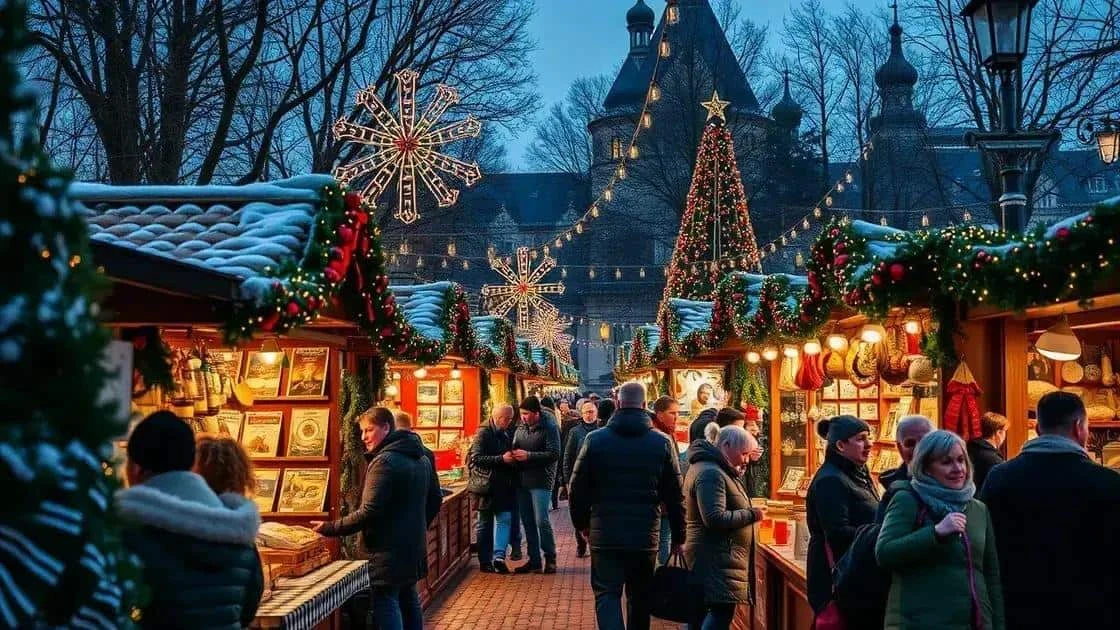
Christmas markets and festive fairs offer another introduction to local food and crafts. These features vary by destination and organiser.
Markets may take place in central squares or other public spaces, sometimes with musicians and performers. Check current dates and arrangements before travelling.
Stalls may sell handmade items, gingerbread or grilled sausages, alongside drinks such as mulled wine and spiced tea. Availability varies, and a market menu is not the same as a religious Christmas Eve meal.
Regional character
Nativity scenes and other local crafts may feature in Polish seasonal displays, while Hungarian food stalls may offer goulash or other regional dishes. Check the individual event rather than assuming every market has the same offerings.
Local trade and culture
Markets can provide opportunities for local traders and makers and bring visitors to a town. Their economic impact varies with the event, so a particular size of benefit should not be assumed without evidence.
For visitors, a market can be a chance to ask about a craft or try a regional food. Take time to distinguish locally made goods from more general seasonal merchandise.
Explore festive food with curiosity
Christmas food traditions in Central and Eastern Europe reflect diverse histories, faiths and households. There is more to discover than one menu or a fixed collection of national symbols.
A reliable recipe and a little cultural context make a useful starting point. Family stories can add another layer of meaning, while markets offer a different view of the festive season.
Choose a few dishes that interest you, acknowledge where they come from and adapt the meal openly to the people sharing your table.
Frequently asked questions about Christmas food in Central and Eastern Europe
Which dishes are associated with Christmas meals in the region?
Examples include Polish pierogi and barszcz, Hungarian halászlé and Lithuanian kūčiukai. The menu depends on the country, region, household and whether the meal is on Christmas Eve or another festive day.
What role do drinks play in Christmas celebrations?
Drinks can accompany a meal or gathering. Dried-fruit kompot is associated with Polish Christmas Eve, while mulled wine is a seasonal option elsewhere. Provide alcohol-free choices and label alcoholic drinks clearly.
How do families influence Christmas recipes?
Relatives pass on recipes, contribute favourite dishes and adapt them to changing needs. A family’s version may differ from a published recipe or a neighbour’s meal.
What makes Christmas markets interesting?
They may bring together regional food, crafts and entertainment. Offerings differ by location and year, so check the organiser’s current information.
How can I plan a meal inspired by Central and Eastern Europe?
Choose a few tested recipes, check dietary needs and plan preparation and storage. Describe a mixed menu as your own selection rather than a single country’s traditional meal.
How can I explore Christmas food traditions?
Read reliable local sources, try a tested recipe, ask relatives about their versions or visit a suitable market. Learn the context as well as enjoying the food.
Sources and Further Reading
- Lithuanian National Culture Centre: Christmas Eve
- Go Vilnius: tasting Christmas
- Visit Hungary: Christmas dishes
- Polish Tourism Organisation: culinary traditions