Christmas in Brazil brings together varied family and regional traditions. Celebrations may include a Christmas Eve meal, gift exchanges, roast pork, farofa and rabanadas, alongside religious services or local performances. Customs differ between households, and the festive season falls in the Brazilian summer.
Christmas in Brazil brings together a variety of traditions, foods and ways of celebrating. Many families gather to share a meal and exchange presents, while regional customs add further variety.
From festive tables to illuminated streets and decorations at home, the season offers different experiences across a large and culturally diverse country.
Here, we look at the background of Brazilian Christmas celebrations, familiar foods, family customs and a few regional examples. These are illustrations of the variety, rather than rules followed by every Brazilian household.
The Background to Christmas in Brazil
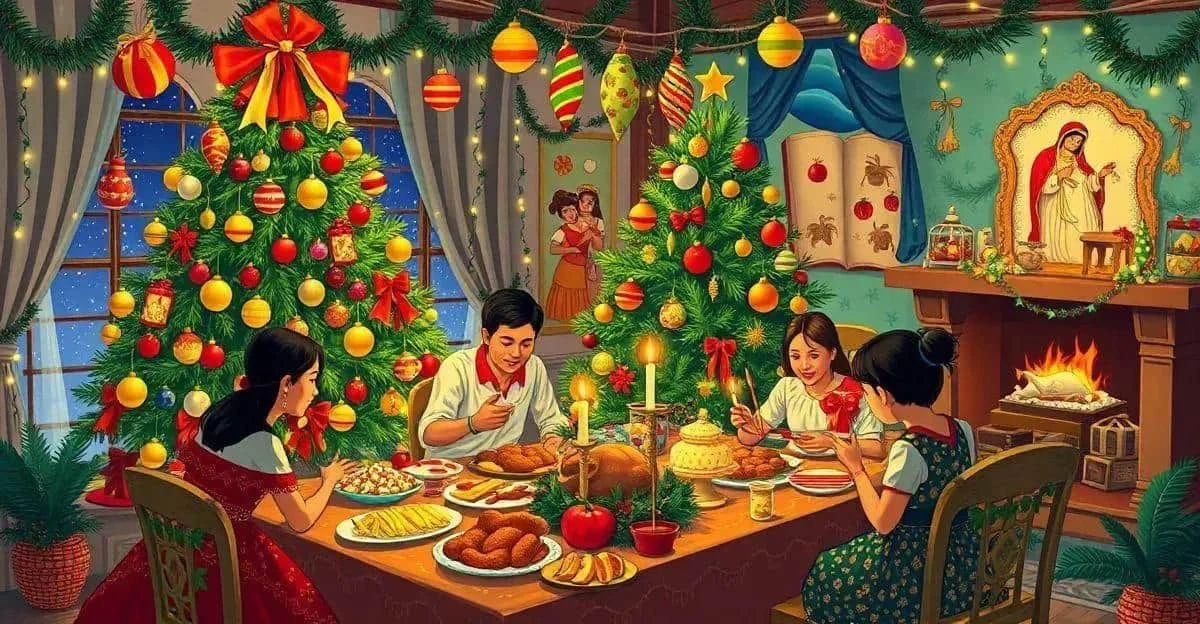
Christmas in Brazil is connected with the country's Portuguese colonial history and the spread of Christian celebrations, alongside the communities and traditions that have shaped Brazilian life. Over time, Christmas celebrations have taken different forms across regions and households; a single description cannot represent all of them.
In Pernambuco, places such as Olinda and Recife are associated with a rich programme of popular performance. Recife's municipal cultural records describe pastoril, reisado and other forms within its Christmas cycle. Religious services, festive food and local events also form part of the broader variety of Brazilian Christmas celebrations.
Christmas Traditions in Brazil
Brazilian Christmas traditions vary between regions and families. In parts of the north-east, pastoril and reisado performances combine music, movement and popular storytelling within the wider festive cycle.
A family in Minas Gerais might include local favourites in its Christmas Eve meal, perhaps tutu de feijão, a thickened bean dish, or roast pork. Menus depend on the household, and no single dish is compulsory.
In São Paulo, Rio de Janeiro and elsewhere, decorations may include nativity scenes and Christmas trees. Some families also attend Christmas religious services, while others celebrate in a more secular way.
Christmas music can be part of the atmosphere too, including Noite Feliz, the Portuguese version of Silent Night.
Food at a Brazilian Christmas Table
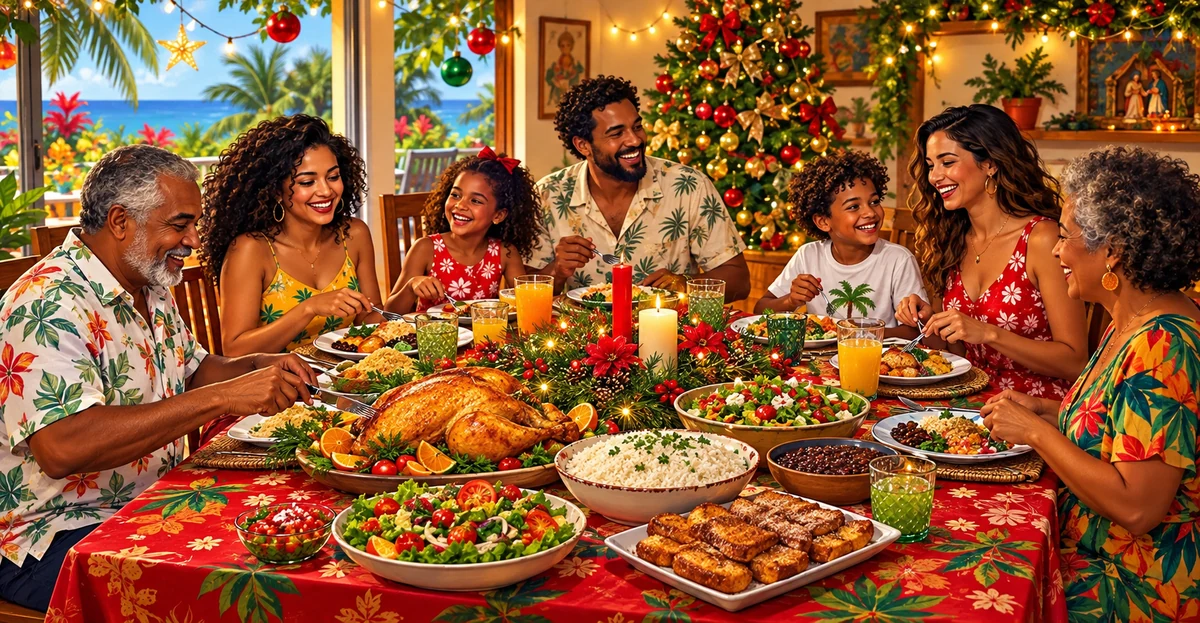
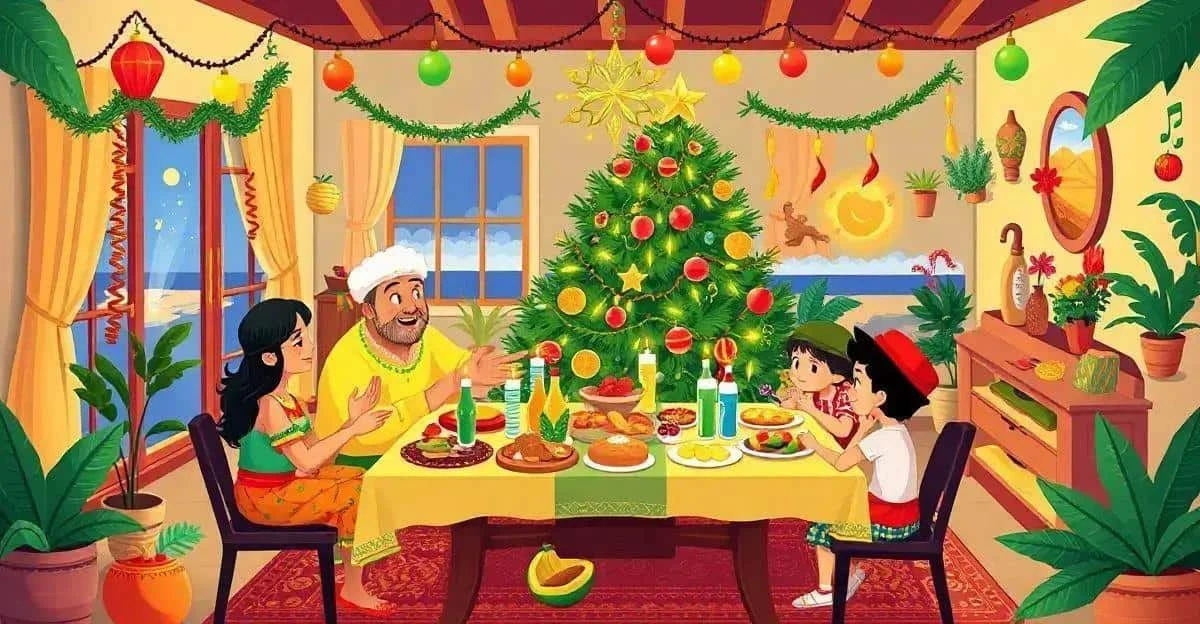
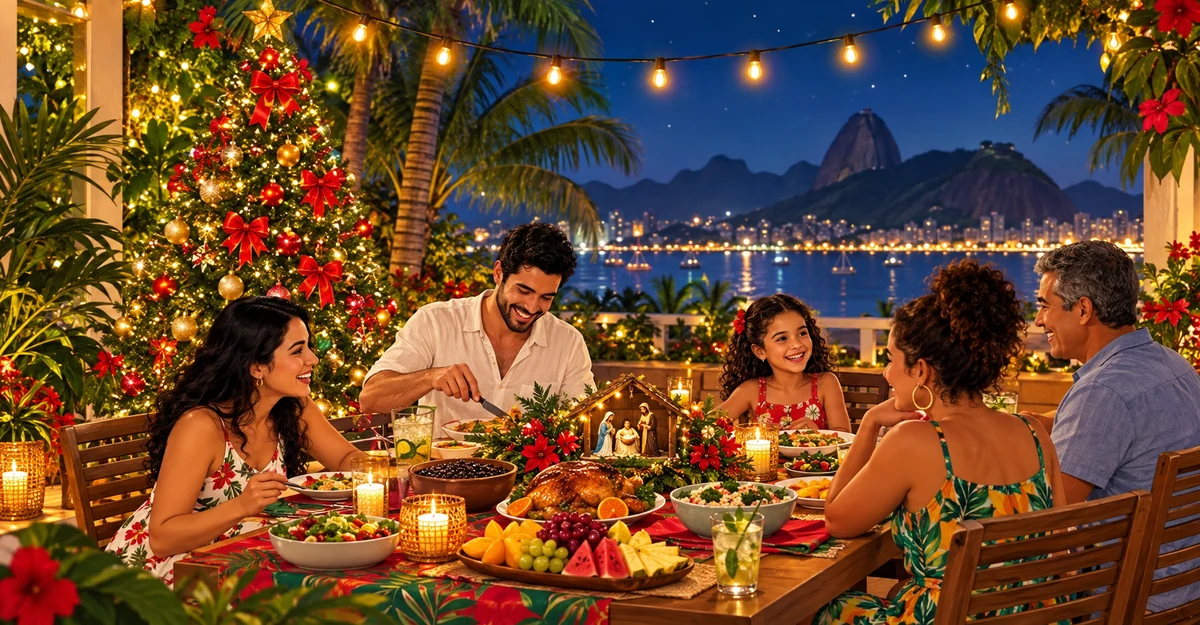
Brazilian Christmas food reflects different tastes, budgets and family histories. The Christmas Eve meal, or ceia de Natal, may include roast pork with farofa, a toasted cassava-flour accompaniment that has many variations. Rice with raisins and salpicão, often a chicken-and-vegetable salad, are other possible dishes.
For dessert, families may serve pavê, a layered dessert, or Christmas cake. Another festive option is rabanadas: slices of bread soaked in a milk-based mixture, usually coated in egg and cooked, then finished with sugar and cinnamon. Recipes vary between households.
Adults may choose drinks such as wine or cider, alongside soft drinks and other alcohol-free options. Sharing these festive foods can be as much about family memories as the menu itself.
Celebrating Christmas with Family
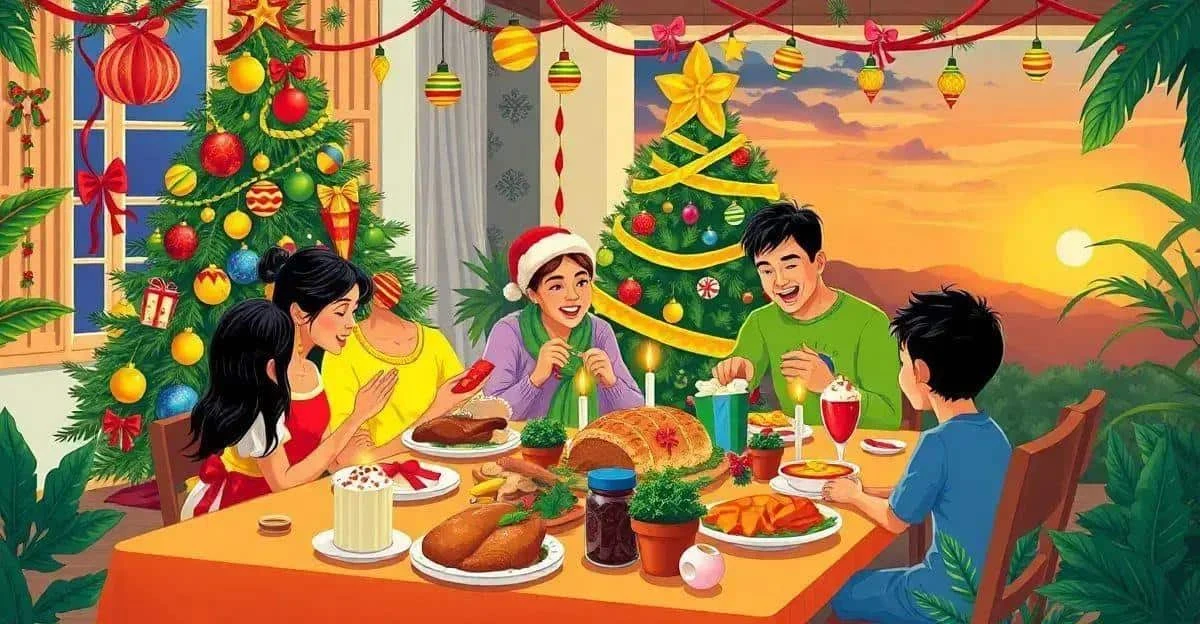
Christmas with family is important to many Brazilians, although the size and form of gatherings vary. Friends and chosen family may be part of the celebration too.
Many households gather for a Christmas Eve meal, making time to share dishes, conversation and memories.
Exchanging gifts may be part of the evening, sometimes through an Amigo Secreto draw. Some Christians attend Missa do Galo, a Christmas night Mass; service times depend on the church, so visitors should check local arrangements.
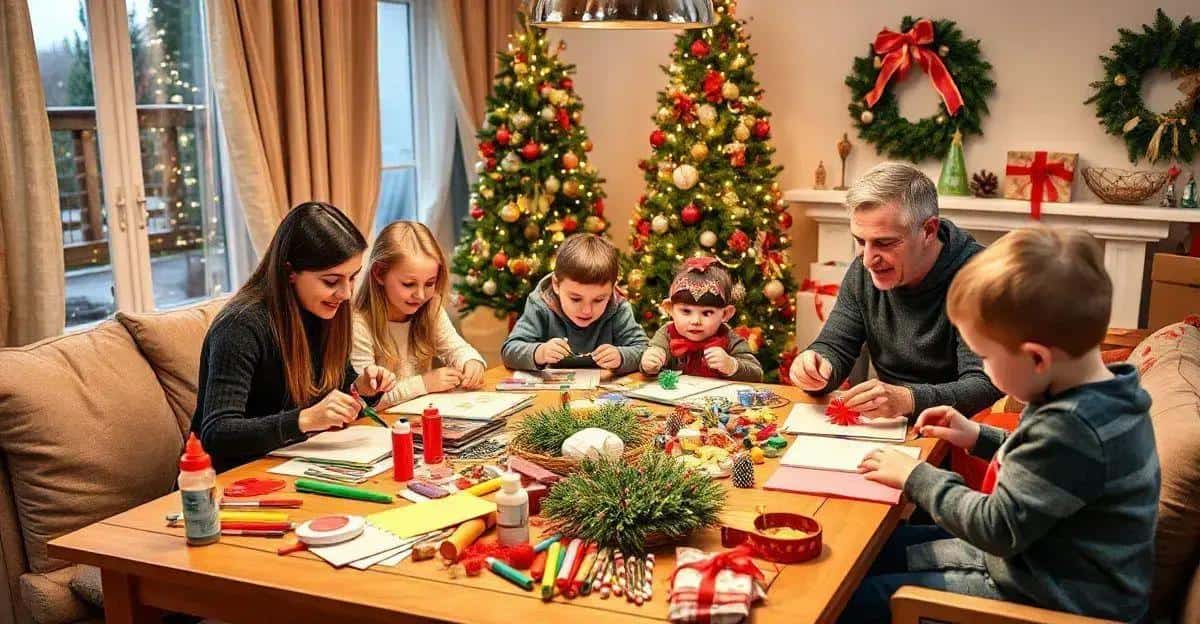
Games and simple creative activities can give different generations something to share. Making ornaments or telling favourite Christmas stories are options that families can adapt to the children involved.
The gathering may also offer time to reflect on the year and share hopes for the next one. There is room for different beliefs, circumstances and ways of spending the day.
Things to Know About Christmas in Brazil
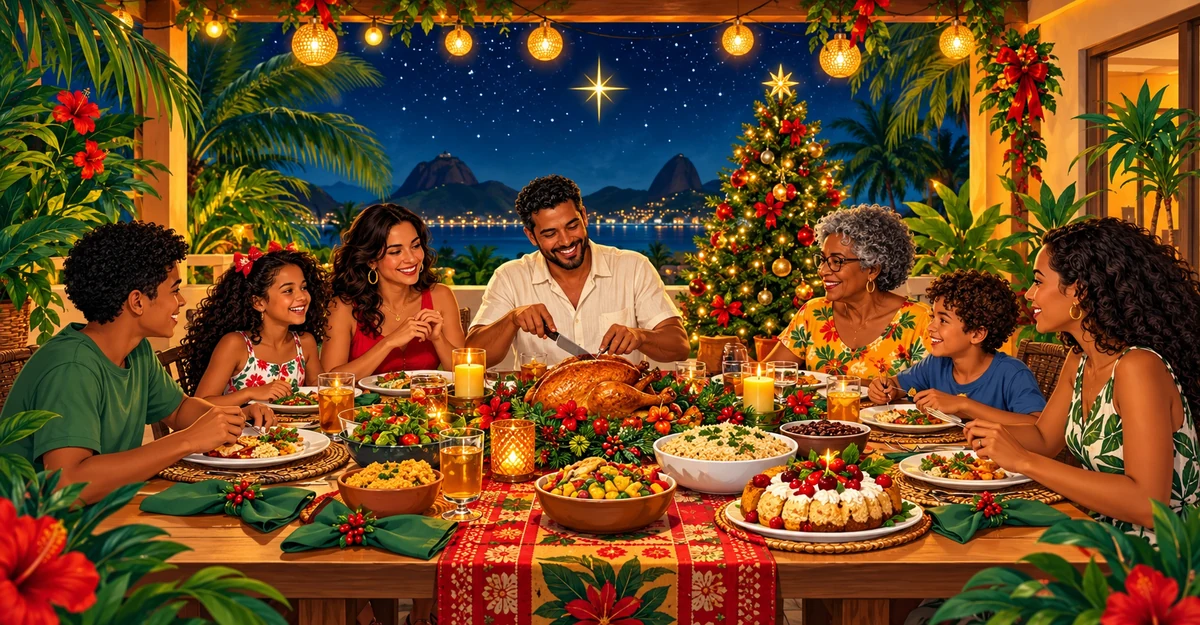
Among the familiar features of Christmas in Brazil is Papai Noel, or Father Christmas, also affectionately called Bom Velhinho. Families differ in how they tell the story and when children receive presents.
Regional celebrations can include popular performances such as pastoril and reisado. At home, people may display Christmas trees and nativity scenes, combining familiar decorations with their own traditions.
Customs differ between places such as Bahia and Rio Grande do Sul, but Christmas falls in summer throughout Brazil. Do not assume that a southern Brazilian Christmas is a winter celebration simply because the region has cooler winters than much of the country.
Sharing family stories can be another enjoyable part of a gathering. Memories and anecdotes often help connect older and younger relatives, without needing to be a formal national custom.
Enjoying the Variety of Brazilian Christmas
Brazilian Christmas celebrations bring together food, family customs and regional activities. Their variety reflects the country's cultural diversity, rather than one set of traditions followed by everyone.
Shared meals, presents, music and local performances can all play a part. The details change between households, regions and religious or secular celebrations.
For many people, warmth and care for one another matter more than following a particular menu or programme. Learning about the variety makes it easier to appreciate Christmas in Brazil without relying on stereotypes.
Christmas in Brazil: Frequently Asked Questions
What is the background to Christmas in Brazil?
It is connected with Portuguese colonial history and Christian celebrations, alongside the communities and regional customs that have shaped Brazilian life over time.
What are some familiar Christmas traditions in Brazil?
They may include a Christmas Eve meal, gifts, decorations and religious services. Some regions also have popular performances such as pastoril or reisado.
Which foods might appear at a Brazilian Christmas meal?
Roast pork, farofa, rice with raisins and salpicão are possible savoury dishes, with rabanadas or pavê for dessert. Menus vary, and there are vegetarian and other family adaptations.
How do Brazilian families celebrate Christmas?
Many gather for a meal, exchange gifts and spend time together. Some attend church services or local events, while others prefer a secular or smaller celebration.
What might surprise a visitor about Christmas in Brazil?
Christmas falls in summer. Father Christmas is called Papai Noel, also known as Bom Velhinho, and regional celebrations can include forms of music and performance unfamiliar to visitors.