
To write personal Christmas wishes, think about the recipient, recall a meaningful shared moment and express a sincere hope for them. A handwritten card can be a lovely choice, but a thoughtful typed or spoken message is equally valid.
Wondering how to write Christmas wishes that sound like you? You do not need elaborate language. A specific memory, a simple thank-you and a warm closing often say more than a long collection of festive phrases. The examples below are original suggestions to adapt, not quotations attributed to other writers.
Why Christmas Wishes Matter
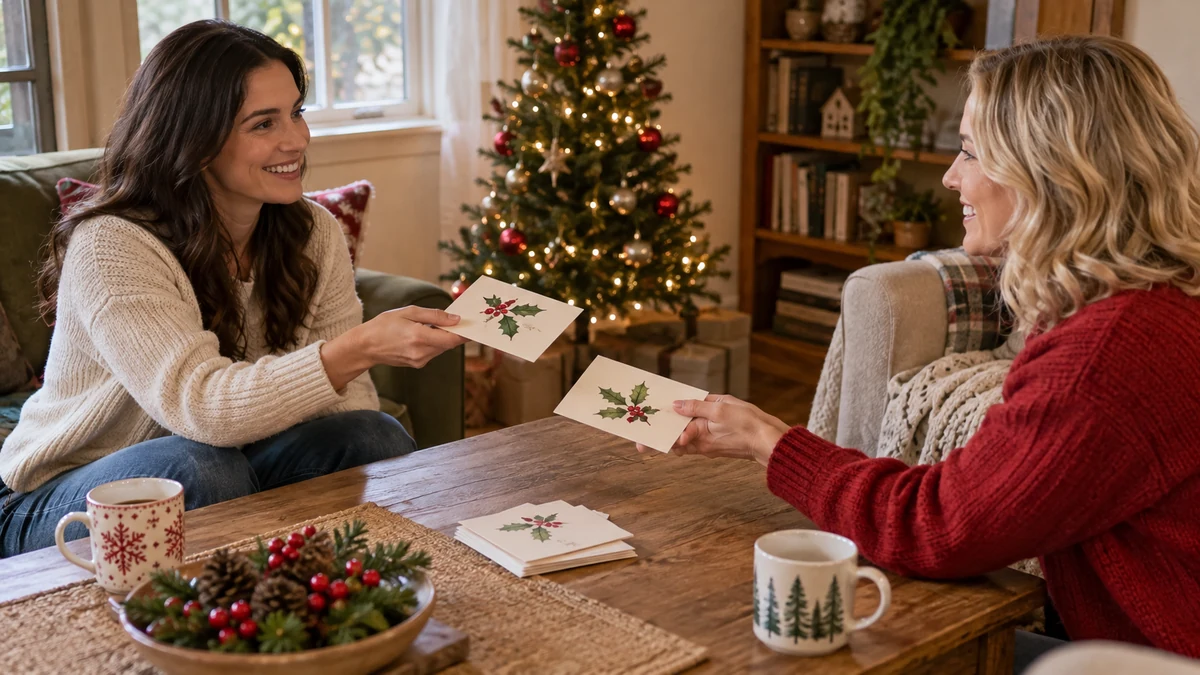
Christmas wishes offer a chance to express affection, appreciation or simply that someone is in your thoughts. Their meaning comes from the relationship and the attention you give the message, rather than from how polished it sounds.
A short message can be a welcome point of contact with a friend or relative. Taking time to choose your words shows consideration, but it does not require an expensive card or a grand emotional declaration.
Making Room for Connection
A warm greeting can open a conversation or acknowledge an existing bond. It cannot resolve every disagreement, so avoid using a Christmas message to pressure someone into reconciliation or a family gathering.
Keeping a Tradition in Your Own Way
For some people, writing cards is an established Christmas tradition; others prefer a call or a message. Choose the approach that suits you and the recipient rather than treating one format as the only meaningful option.
You can send your wishes privately, put them in a card or say them in person. Be thoughtful about sharing personal memories publicly on social media, especially when they involve someone else’s private life.
Starting Your Message Warmly

Starting your message warmly helps establish the tone. Think about how you normally speak to the recipient and use an opening that feels comfortable within that relationship.
For example: ‘This Christmas, I wanted to tell you how much you mean to me.’ If that feels too formal, try something simpler, such as ‘Thinking of you and sending lots of love this Christmas.’
Choosing Words That Feel Natural
Phrases such as ‘with love’, ‘with warm wishes’ or ‘thinking of you’ can provide a gentle opening or closing. Choose words you would genuinely use, rather than adding more emotion than the relationship supports.
Beginning with a Memory
You might begin: ‘I still smile when I remember last Christmas together. I hope we can make more memories like that.’ Use a real experience you both remember rather than borrowing an example as though it happened to you.
A gentle question can also invite contact: ‘How are you doing as Christmas approaches?’ Give the person space to answer honestly, including if the season is difficult for them.

Including shared memories makes a greeting more personal. A small, specific detail is often more convincing than a sweeping statement about how wonderful every Christmas has been.
Choose a memory the recipient is likely to welcome: a meal, a walk, a conversation or a moment of unexpected laughter. Avoid revealing something sensitive or assuming a difficult occasion was happy for everyone.
Examples of Memories to Mention
Adapt one of these only if it reflects your own experience:
- ‘I still remember how much we laughed over Christmas dinner last year.’
- ‘Putting the tree up together is one of my favourite memories of last Christmas.’
- ‘I always look forward to our Christmas lunches and the stories around the table.’
A genuine detail helps the message feel connected to the person receiving it. There is no need to include several memories when one says what you mean.
Why a Memory Can Help
Shared memories can remind someone of time spent together. Be sensitive if they involve bereavement or loss: acknowledge the person or occasion gently, without insisting that the recipient should feel cheerful.
A memory can make your Christmas wishes a small record of what you value in the relationship. Keep it kind, accurate and appropriate to the person reading it.
Christmas Wishes for Family

Christmas wishes for family can express affection and gratitude without assuming every family has the same traditions or circumstances. Include people who are far away as well as those you will see in person.
For example: ‘Wishing us all a Christmas with moments of peace, laughter and time for one another, wherever we are.’ This leaves room for different plans and circumstances.
Personalising a Family Message
Add a detail that reflects your own family rather than a general ideal of Christmas. For example:
- ‘I hope we get to share a few more of those wonderful laughs from last Christmas.’
- ‘I’m looking forward to spending time in the kitchen together again.’
- ‘Sending love to everyone, including those we can’t be with in person this year.’
Specific details show what you appreciate about the people involved. Use only the examples that fit your family and change the wording until it sounds like you.
Acknowledging People’s Presence
If you are meeting, you could write: ‘I’m so glad we’ll have time together this Christmas.’ If someone cannot attend, avoid making them feel responsible for an incomplete celebration; tell them you are thinking of them instead.
A simple wish for peace can work well: ‘I hope this Christmas brings you some restful moments and the company you would like.’ It offers warmth without assuming the season will be easy.
Christmas Wishes for Close Friends

Christmas wishes for close friends can reflect the humour, support or shared interests that make the friendship distinctive. A message does not have to sound like a formal card to be meaningful.
Try: ‘Thank you for being such a good friend this year. I’m very glad you’re in my life.’ Add a particular reason if you want to make the thanks more personal.
Warm Messages to Adapt
Other possibilities include:
- ‘Wishing you a Christmas with good company, a little rest and plenty to make you smile.’
- ‘Here’s to our friendship and all the memories we’ve made together.’
- ‘Thank you for being there for me. Sending lots of love this Christmas.’
These are starting points rather than fixed formulas. Let your own relationship guide whether the message is affectionate, understated or funny.
Adding a Personal Detail
A shared memory or a modest plan can make the greeting more specific:
- ‘I’m still laughing about our last Christmas get-together.’
- ‘I’m looking forward to another catch-up when we can arrange one.’
Choose details that you both recognise, and avoid promising plans you are unlikely to make.
A good message to a close friend expresses what you value and offers a sincere wish for the months ahead. It need not promise perfect happiness, health or a trouble-free year.
Heartfelt Phrases to Make Your Own

Heartfelt phrases can help when you know what you feel but cannot find an opening. Use these original examples as prompts, then change anything that does not fit your voice.
For Friends
For a close friend, you might write:
- ‘Your friendship has meant so much to me this year. Thank you.’
- ‘I hope this Christmas brings us another memory to smile about.’
For Family
For a family member, consider:
- ‘I’m grateful for the time we share, at Christmas and throughout the year.’
- ‘Thank you for all the little ways you show you care. Sending love this Christmas.’
For Your Partner
For your partner, you could say:
- ‘Sharing this Christmas with you means more to me than anything under the tree.’
- ‘I’m grateful for our everyday moments as much as our celebrations. I love you.’
Add a real memory or a detail about the person to make the wording your own. A short, sincere sentence is enough if that is what feels right.
Choosing a Handwritten Message

A handwritten Christmas message can become a keepsake. It is an option rather than an obligation: a typed message, recorded greeting or phone call can carry just as much thought.
If you enjoy writing by hand, choose a format you can complete comfortably. Your handwriting does not have to be decorative, and the message does not need to fill the entire card.
Reasons to Write by Hand
A handwritten note offers a few practical and personal possibilities:
- Individual style: Your handwriting and choice of card give the greeting a recognisable personal touch.
- A considered gesture: A card can show that you set aside time for the recipient, just as a thoughtful digital message can.
- A keepsake: A physical note can be kept and reread if the recipient wishes.
Small Details You Could Add
If you want to personalise the presentation, you could:
- Use a plain card, reused paper or a design the recipient would enjoy.
- Add a small drawing, such as a star or a heart, without covering the message.
- Include a short line of your own about something you appreciate in the person.
These details are optional. Clear, readable words and a genuine sentiment matter more than elaborate decoration.
Writing with Care
Christmas wishes can be a simple way to acknowledge the people who matter to you. Think about the recipient, include a real detail and choose a format that works for both of you.
Use suggested phrases to get started, then edit them into your own voice. Be especially gentle with anyone facing loss, illness or a difficult year, without insisting on festive cheer.
A brief message written with attention can say enough. You do not need perfect wording to tell someone they are remembered.
FAQ — Writing Christmas Wishes
Do Christmas wishes need to be handwritten?
No. A handwritten card can be personal, but a thoughtful typed message, recording or call is equally valid. Choose what suits you and the recipient.
How can I personalise a Christmas greeting?
Mention a real shared memory, give a specific thank-you or include a detail about the person. Keep private or sensitive information out of public messages.
What could I write to a friend?
Try ‘Thank you for being such a good friend this year’ or ‘I’m looking forward to another catch-up’. Adapt the wording to your relationship.
What should a family Christmas message say?
Express affection or appreciation in a way that fits your family. Include those who cannot attend without making them feel guilty about their plans.
Should I include a memory in the message?
A welcome shared memory can make the greeting specific and meaningful. Choose sensitively, particularly if the year has involved bereavement or other difficulties.
What paper should I use?
A plain card, reused paper or a favourite design can all work. Choose something readable and practical; special stationery is not necessary.