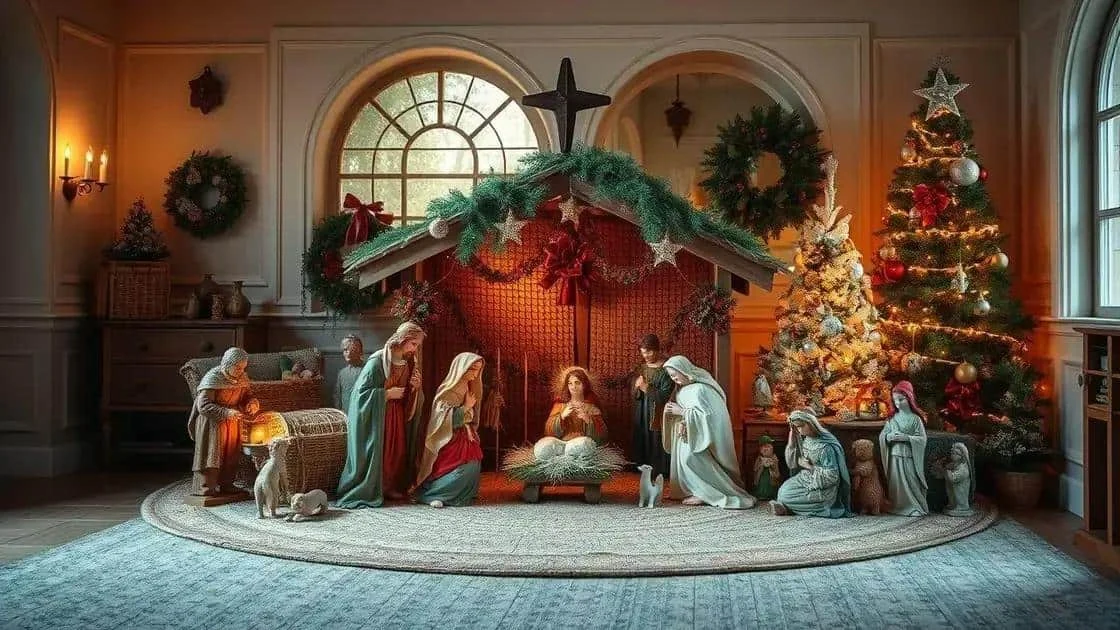
A Nativity scene represents the Christian story of Jesus’ birth. Mary, Joseph and the infant Jesus are central, while shepherds, Magi and other elements bring together biblical accounts and later traditions. Designs and interpretations differ between communities.
The history of Nativity scenes connects Christian worship with centuries of art and household tradition. Discover the importance of Francis of Assisi’s celebration at Greccio, explore regional variations and consider how to create a display that suits your home.
The history and roots of Nativity scenes
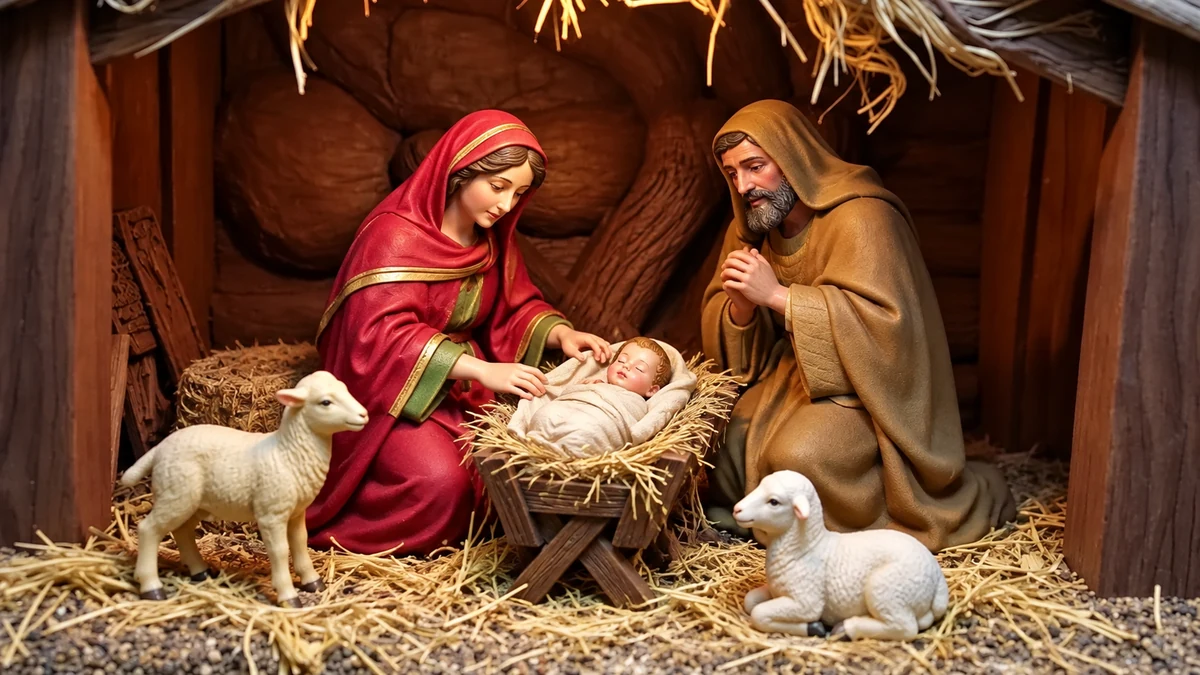
The Nativity scene is strongly associated with Francis of Assisi’s Christmas celebration at Greccio, Italy, in 1223. A manger, hay and animals helped evoke the circumstances of Jesus’ birth. Christian images of the Nativity existed earlier, so Greccio should not be called the first-ever depiction of the subject. It was an influential moment in the development of the tradition.
Later scenes brought together Mary, Joseph, the infant Jesus, shepherds and the Magi. These figures combine elements from different Gospel accounts with artistic convention; a familiar display is not a literal record of everyone arriving at the same moment.
The materials vary between makers and regions. Wood, clay, papier-mâché, ceramic and resin can each produce a different style. Local craft techniques contribute to the variety of Nativity displays.
For many Christians, a Nativity scene is more than a decoration: it offers a focus for faith and togetherness. Some families set up a scene each year as a time for reflection; other households celebrate differently.
The cultural importance of Nativity scenes
Nativity displays can transmit stories, craft skills and local traditions. Exhibitions give makers a place to show their work and visitors a chance to explore different interpretations. They can contribute to a community’s Christmas celebrations without every display having the same meaning.
Why can a Nativity scene matter at Christmas?
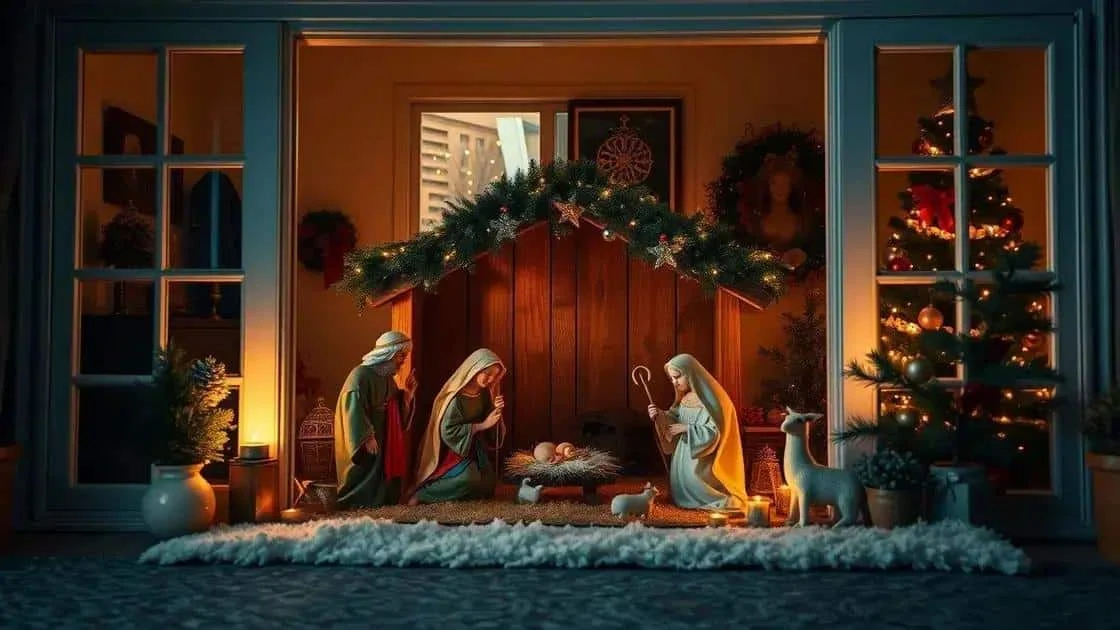
A Nativity scene can provide a focus for Christian faith and reflection on Jesus’ birth. Its role depends on the beliefs and practices of the people displaying it.
As a visual telling of the Christmas story, a Nativity scene can support conversation with children and adults. Explain which details come from biblical accounts and which belong to later art or family tradition.
Setting up a scene can create a sense of continuity. Families may share memories of earlier displays or explain why a particular figure matters. Participation should fit the household rather than become an obligation.
It is also a form of artistic expression. Makers may draw on local architecture, clothing and materials, producing a cultural interpretation rather than an archaeological reconstruction of Bethlehem.
For some households, the scene prompts reflection on the Christmas message of compassion and generosity. Others may approach it mainly as art or heritage. These different responses can be acknowledged respectfully.
Setting up a Nativity scene at home
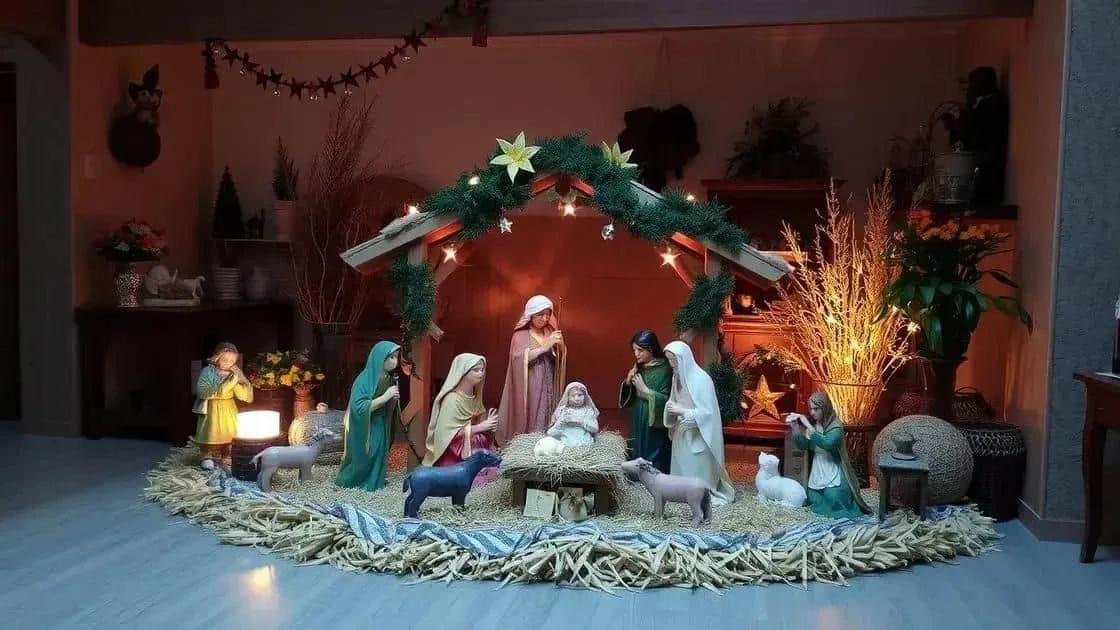
A Nativity scene can be simple or detailed. Begin with a safe location and a manageable set of figures, then add elements that have meaning for your household.
Choose the location: A stable table or shelf can work well. Keep the display away from edges, heat and walkways. Floor-level scenes need particular care around children and pets.
Choose suitable materials: Figures may be wooden, plastic or paper. A plain base is enough; loose stones, straw and moss are optional and may be unsuitable around young children or animals. Avoid sharp or contaminated materials.
Arrange the figures: Place the manger centrally, with Mary and Joseph nearby, then add shepherds and Magi if included. Some families add the infant Jesus on Christmas Eve or the Magi at Epiphany. There is no single arrangement required for every household.
Add suitable lighting: Low-heat LED lights can highlight the scene when used according to their instructions. Keep real flames away from straw, paper and fabric, and secure loose cables and battery compartments.
Make it personal: Include a family keepsake or a locally made figure if you wish. Choose additions that fit the display and remain stable, rather than overcrowding it.
Once the scene is ready, it can provide a setting for a story or a quiet moment of reflection. Sharing the activity need not mean everyone interprets the symbols in the same way.
Creative materials for a Nativity scene
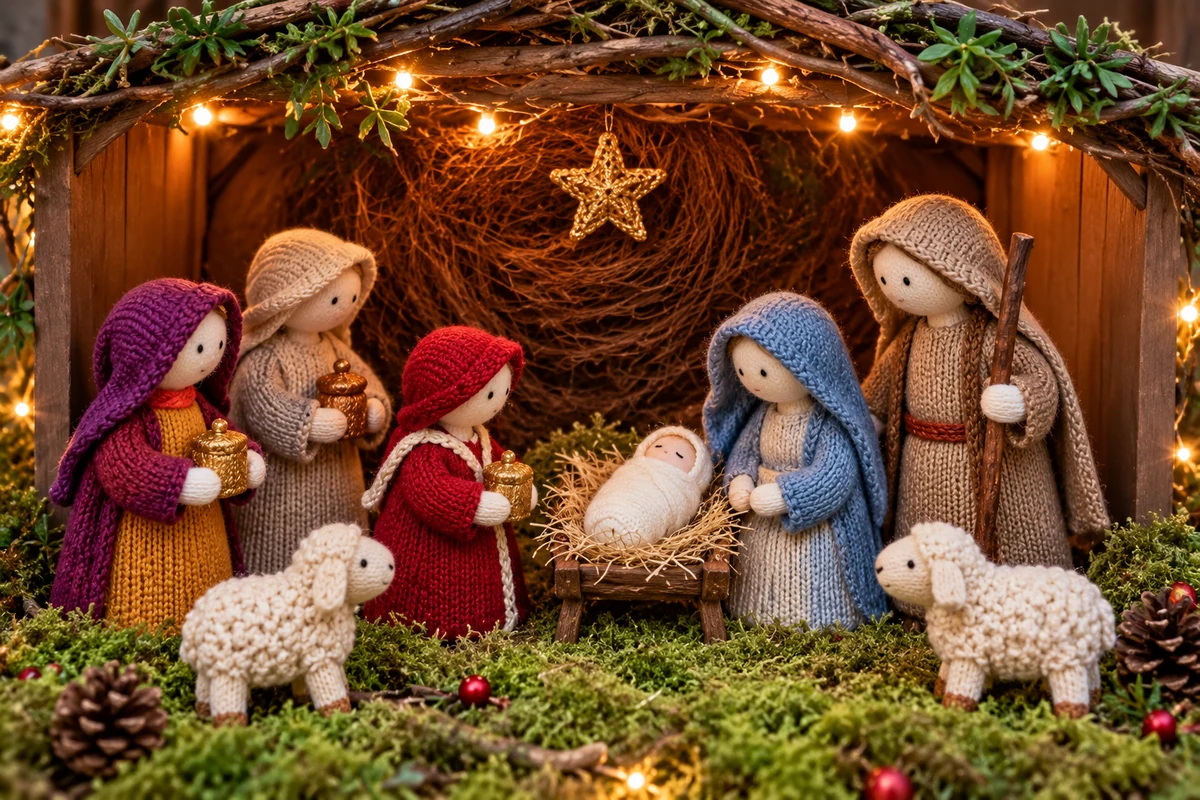
Choose materials that suit your skills, space and the people using the display. Reusing a well-kept set can be as meaningful as making something new.
Figures: Options include ceramic, plastic and wood. Consider durability, weight and fragile edges. A decorative figure is not automatically a safe toy.
The base: Cardboard or wood can provide a platform. Decorative moss or straw is optional; keep loose or combustible materials away from heat and out of reach where necessary.
Additional details: Figurines of animals, small plants or miniature objects such as baskets can add interest. Treat them as artistic additions rather than proof of precisely what was present at the birth.
Lighting: Use only suitable lights in good condition, following the product instructions. A display can also work perfectly well without electrical lighting.
Decoration: Small pieces of fabric can add colour or texture. Secure loose pieces and keep them clear of lights and fittings.
The materials do not have to be expensive. A simple, stable scene with a personal connection can be more useful than an elaborate display that is difficult to maintain.
Nativity traditions around the world
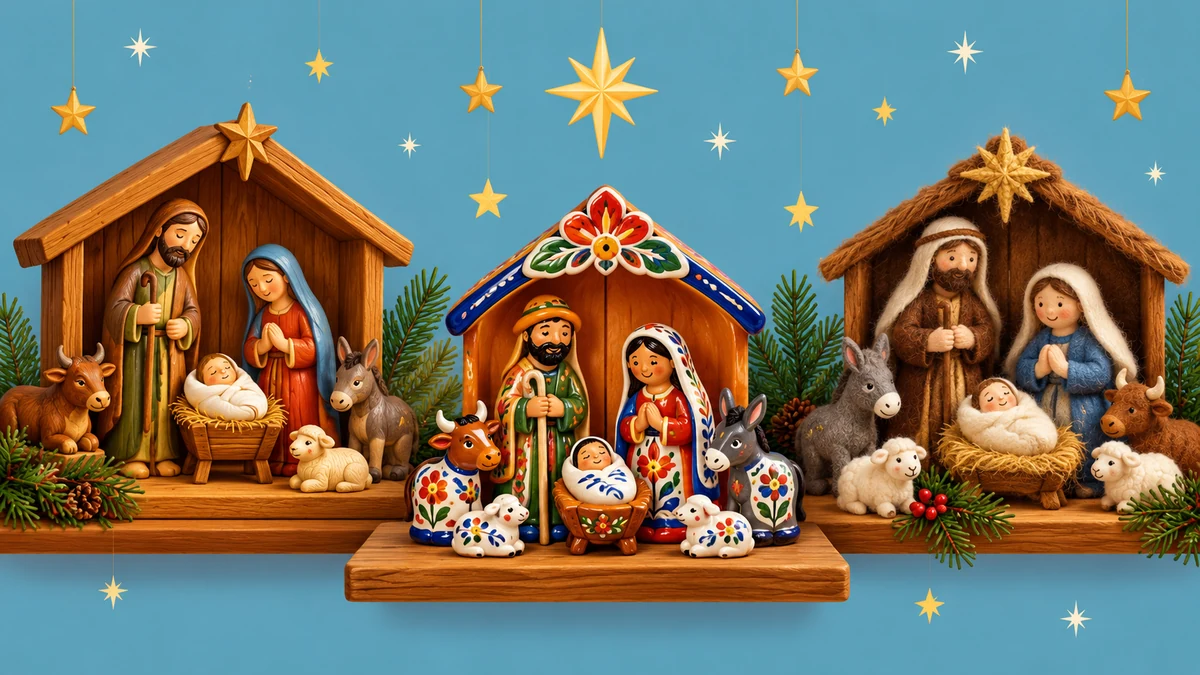
Nativity traditions vary between regions and makers. The examples below show different artistic approaches, rather than styles followed by every household in a country.
Italy: Presepi can range from small household scenes to elaborate displays with detailed settings and figures. Exhibitions and local craft traditions give visitors a chance to see different interpretations.
Latin America: Makers in countries including Brazil and Mexico may include local materials or cultural details. Such choices are regional or individual, not one style for the entire continent.
The Philippines: The belen, a Nativity display, and the parol, a star-shaped lantern, are distinct Christmas traditions that can appear together. A parol is not itself a Nativity scene; its star imagery connects with the Christmas story.
Poland: Kraków’s szopka tradition features intricate Nativity constructions inspired by the city’s architecture. It is a specific local craft tradition recognised by UNESCO, not a description of all Polish family displays or simply a puppet theatre.
Australia: Some contemporary makers incorporate local landscapes or wildlife into their Nativity art. This is an example of adaptation, rather than a universal custom of replacing sheep and camels with kangaroos and koalas.
These variations show how a religious story can be interpreted through local art. Learning about the maker and setting gives each display more context than a broad national label.
Involving the family in setting up a Nativity scene
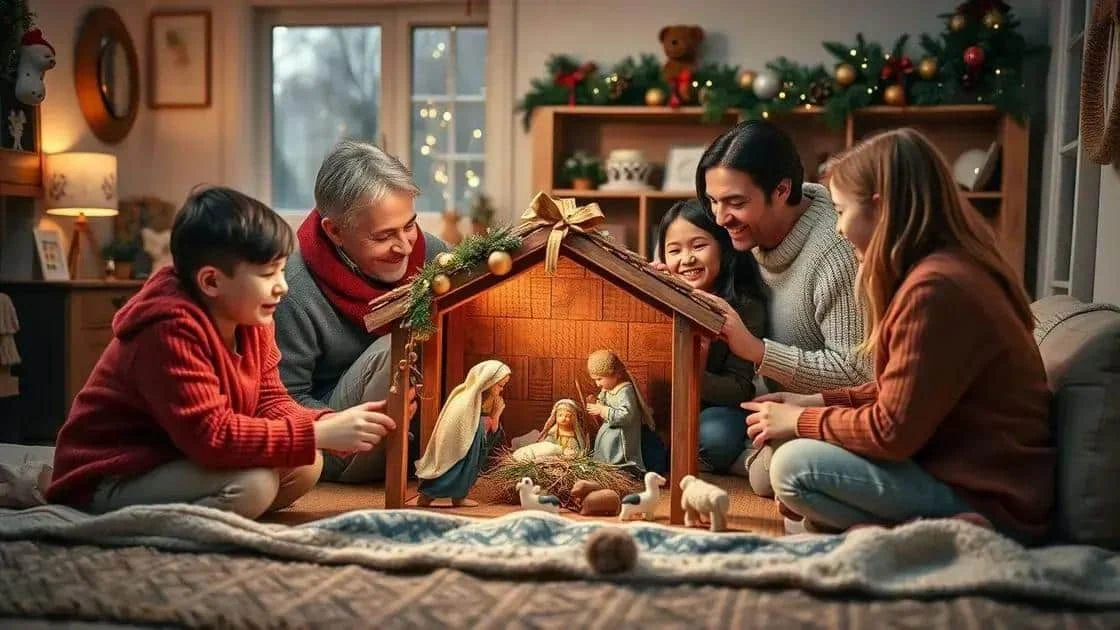
These ideas can make setting up a scene a shared activity. Adapt them to ages, abilities and beliefs, with participation left optional.
Choose a suitable day: Agree a time that fits the household. Early December or Christmas Eve may work, but there is no need to follow a date that adds pressure.
Share the tasks: Adults can position heavy or fragile pieces, while children help with safe, suitable items. Check that small parts and sharp edges are not within reach of younger children.
Create a welcoming setting: Play music if the group enjoys it and allow time for breaks. Keep food separate from craft materials and loose decorative pieces.
Tell the story: Explain the Christian Nativity account and the role of the figures. Distinguish religious belief, biblical narrative and later artistic convention, and welcome questions.
Add personal details: Invite a family keepsake or a handmade item that fits the scene. A personal addition can carry a memory without needing to represent a historical detail.
Allow time for reflection: Those who wish can share a thought, a prayer or a memory. Silence or simply observing is also a valid way to take part.
A flexible approach can make the activity enjoyable and help explain why the display matters to the household. The finished scene need not be elaborate.
Symbols in a Nativity scene
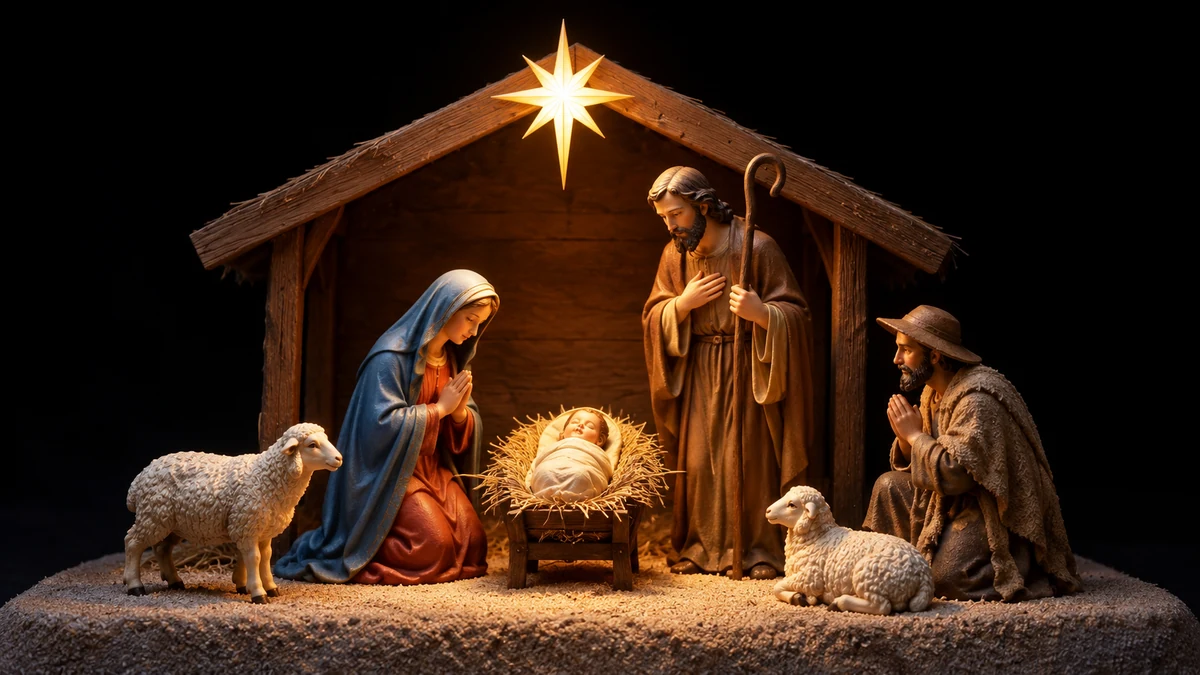
Elements of a Nativity scene have acquired symbolic interpretations in Christian tradition. Meanings vary between churches, artists and households; the following are familiar examples rather than an exhaustive set of rules.
Mary: As Jesus’ mother, Mary is associated in Christian devotion with faith, maternal care and acceptance of God’s calling.
Joseph: Joseph is associated with protection and responsibility through his care for Mary and Jesus.
The infant Jesus: Jesus is the centre of the scene. In Christian belief, his birth carries hope and the promise of redemption.
The shepherds: In Luke’s Gospel, shepherds receive the announcement of Jesus’ birth and visit him. Their presence is often interpreted as a sign that the message reaches ordinary people.
The Magi: Matthew describes visitors from the east bringing gold, frankincense and myrrh, without specifying their number or calling them kings. Later tradition commonly presents three. Their gifts have acquired interpretations linked with kingship, divinity and mortality.
The animals: An ox and donkey are familiar in Nativity art, although they are not explicitly placed at the manger in the Gospel birth accounts. Their presence belongs to later interpretation and can suggest creation, humility or the setting of a stable.
The star: In Matthew’s account, the star guides the Magi. Its light can symbolise guidance and hope in a Nativity display.
Understanding these distinctions helps explain both the religious narrative and the artistic tradition. A display can hold symbolic meaning without every detail being a literal historical claim.
The meaning of a Nativity scene
For many Christians, setting up a Nativity scene is a way to reflect on the birth of Jesus. For families and makers, it can also carry memories, local craft traditions and personal connections.
Sharing the story and the work of arranging the figures can connect generations. Keep the activity suited to the household and explain the meanings rather than assuming they are self-evident.
Whether simple or elaborate, a thoughtful display can offer a focus for reflection on faith, generosity and care for others.
FAQ: Nativity scenes and their traditions
Why set up a Nativity scene together?
It can provide time to share the Christian Christmas story, discuss family memories and explain why particular figures matter. Participation should suit the household.
Which figures are usually included?
Mary, Joseph and the infant Jesus are central. Many displays also include shepherds, Magi and animals, combining Gospel accounts with later artistic traditions.
How can I personalise a Nativity scene?
Use a family keepsake, a locally made figure or a handmade setting, keeping the display stable and suitable for the space.
Why do the symbols matter?
They can express religious interpretations such as faith, hope and care. Meanings vary, and some familiar details come from later art rather than directly from Gospel accounts.
What are examples of regional Nativity traditions?
Examples include Italian presepi and Kraków’s architectural szopka tradition. Local makers elsewhere also adapt materials and settings in individual ways.
How can children help?
Let them arrange safe, age-appropriate pieces, make simple decorations or ask questions about the story. Adults should manage fragile figures and small parts.