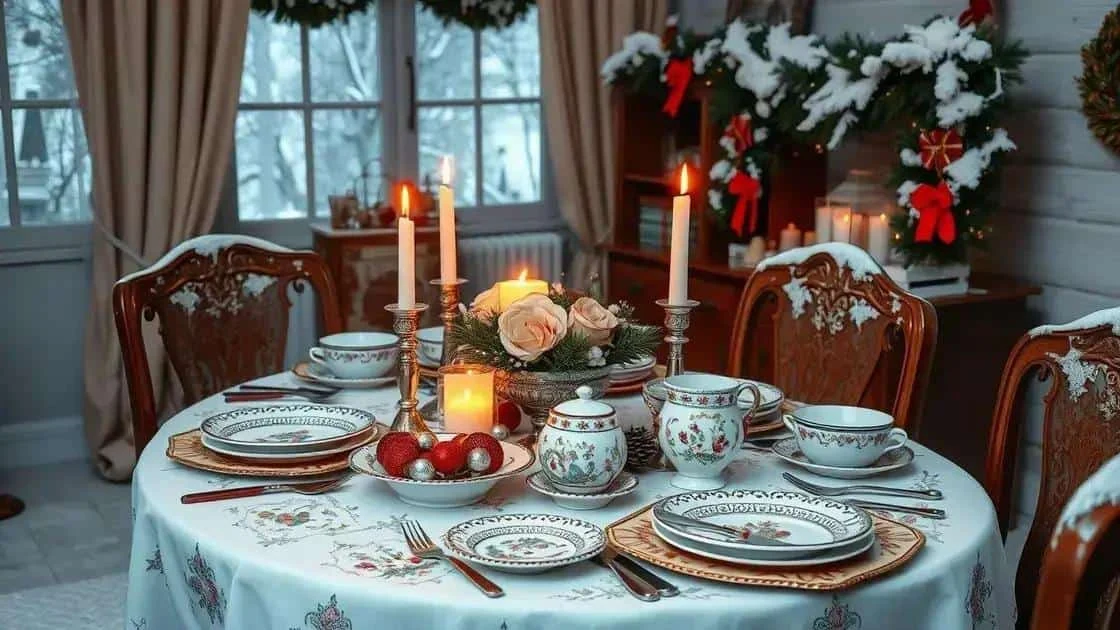
The decorated Christmas tree developed through changing European customs, particularly in German-speaking regions. Evergreen symbolism is older, but it does not establish one simple origin. Today, trees can hold religious, cultural or personal meaning for the households that display them.
The history and meaning of Christmas trees involve more than one story. Explore how decorated trees became familiar, what different ornaments can symbolise and how to choose a display that fits your home and family traditions.
The history of Christmas trees

The history of Christmas trees includes practices that changed across regions and centuries. Evergreens had earlier seasonal uses, but these should not be treated as proof of a direct, uninterrupted route to every modern Christmas tree. Decorated Christmas trees became associated particularly with German-speaking European traditions.
Early decorated trees
Accounts of decorated trees in German-speaking regions appear in the early modern period. Decorations could include food, paper ornaments and, later, candles. Their timing and form varied; there is no need to assign every ornament the same original meaning. Historic use of candles is not safe advice for a tree today.
The tradition spreading
Christmas trees became more widespread in Britain during the nineteenth century. Queen Charlotte had introduced the custom to the royal household earlier; Victoria and Albert helped popularise it. An 1848 illustration of their family around a decorated tree influenced public interest. Albert did not introduce the first tree to Britain.
Modern decorations
Glass ornaments, garlands and electric lights added to the variety of tree displays. Designs can reflect religious themes, family memories or personal taste, rather than one required decorating style.
Religious meanings
Some Christians interpret the evergreen tree as a sign of enduring life and its lights as a reminder of Christ. A star at the top can recall the star of Bethlehem. These are religious interpretations, not meanings shared by everyone who decorates a tree.
Christmas tree symbolism

A Christmas tree can hold different symbolic meanings. For some it suggests hope or faith; for others it is a familiar seasonal decoration linked with family memories. Its significance depends on the household and context.
Life and renewal
Evergreens retain foliage through winter and can suggest continuity or renewal. Older uses of greenery and modern Christmas interpretations are related topics, but should not automatically be presented as one proven chain of tradition.
Lights on the tree
Tree lights may carry a religious meaning or simply create a festive atmosphere. Use suitable electric lights in good condition according to their instructions. Never use real candles on a Christmas tree, even when discussing historical examples.
Ornaments and keepsakes
Tree ornaments may represent a memory, an inherited keepsake or a favourite design. Stars can connect with the Nativity story, while colourful baubles may be chosen simply because the household enjoys them. Meanings do not have to be universal to matter.
Connections and traditions
Decorating can give families and friends time together. Sharing the story behind an ornament can help pass on memories, while leaving room for new choices as the household changes.
Choosing a Christmas tree for your home

Choose a tree for the space, practical needs and budget you have. Size, stability, care and storage matter as well as appearance.
Real and artificial trees
Real trees, including different types of fir, spruce or pine, vary in shape, scent and care needs. Artificial trees can be reused but need storage. If you already own a serviceable tree, there may be no need to replace it.
Tree size
Measure the available height and width, allowing space for the stand and topper. Keep doors, walkways and access to sockets clear. A smaller tree can work well when a full-sized one would crowd the room.
Style and decorations
Choose a style that works with ornaments you already own. Traditional colours, a simple palette or a mixture of family keepsakes can all be effective. Matching a trend is optional.
Environmental considerations
For a real tree, ask about its source and plan how it will be collected or disposed of locally. For an artificial tree, durability and years of reuse matter. No single option is automatically the lowest-impact choice in every setting; avoid treating replanting or a product label as a complete environmental assessment.
Assembly and storage
Check how an artificial tree is assembled, how much storage space it needs and whether parts can be replaced. Follow the stand instructions and avoid unstable improvised supports.
Ideas for decorating your tree
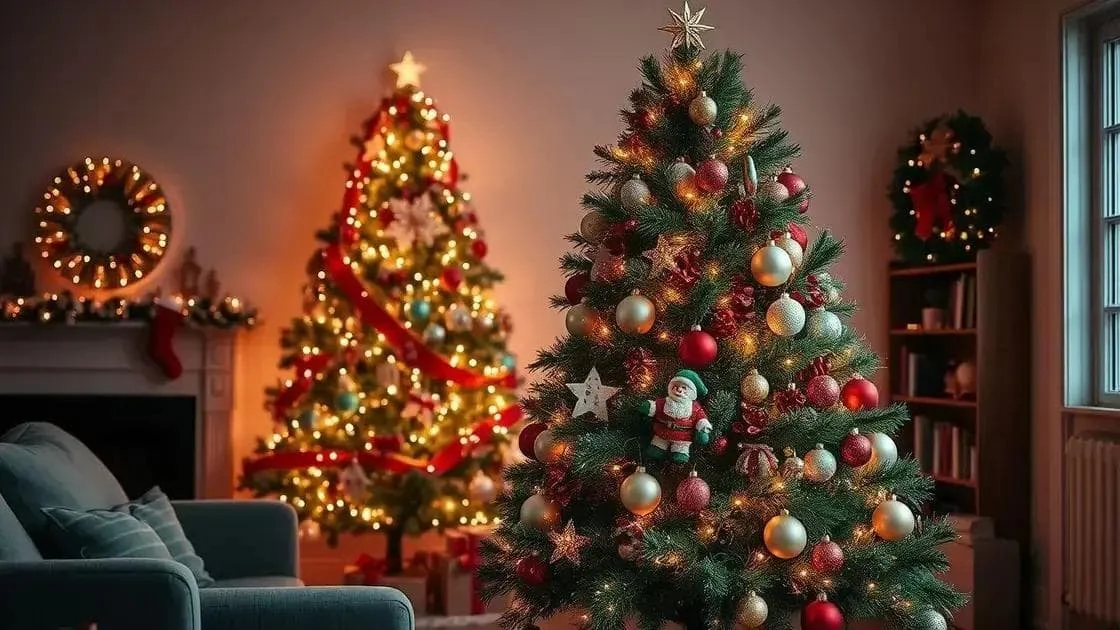
These decorating ideas can help you create a personal display. Start with a stable tree and suitable lights before adding ornaments.
Choose a theme if useful
A traditional, modern or vintage theme can guide colours and materials. You can also combine favourite ornaments without a formal theme.
Use the right stand
Use a stand suitable for the tree and follow its instructions. Position it on a stable surface away from heat and walkways. Keep real trees appropriately watered, and remove a dry tree promptly rather than relying on extra weights to make an unsuitable setup safe.
Layer the ornaments
Place ornaments at different depths for dimension. Heavier pieces need sturdy branches; lighter decorations suit the tips. Keep fragile or small items beyond the reach of young children and pets.
Suitable lighting
Warm white lights can create a soft look, while coloured lights offer another style. Check cables and fittings, avoid overloaded sockets, and follow product instructions. Switch lights off before going to bed or leaving the home.
Personal details
Include a handmade ornament, a small framed photograph or a keepsake if it can hang securely. A personal connection can matter more than a coordinated set of new decorations.
Adding a topper
A star, angel or another topper can finish the display. Check that its size and weight suit the tree and that it can be secured without damaging light cables.
Christmas traditions around the world
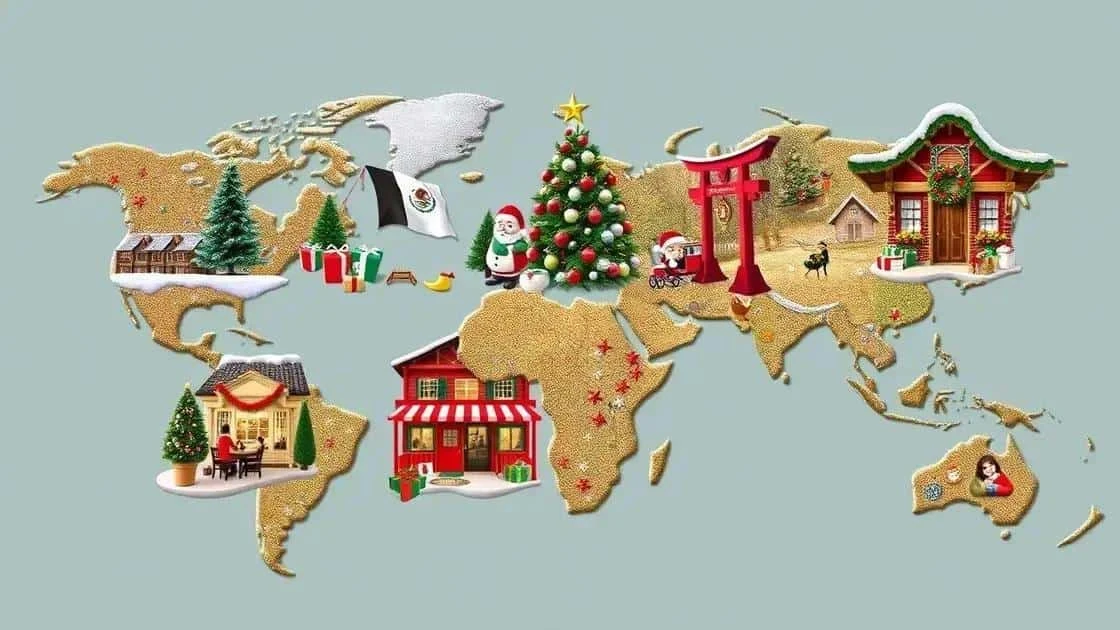
Christmas traditions differ between regions and households. These examples offer context rather than a complete picture of any country.
Germany
German Christmas markets are associated with crafts and seasonal foods such as Lebkuchen, spiced gingerbread. Advent calendars are another familiar seasonal tradition, although the calendar countdown and the religious Advent season do not always start on the same date.
Mexico
In Mexico, Las Posadas take place on the nine evenings from 16 to 24 December, recalling Mary and Joseph’s search for lodging through community observances. Participation and local details vary.
Japan
Christmas is not a national holiday in Japan, though seasonal outings and meals are familiar to many people. KFC’s Christmas fried chicken campaign began in 1974, rather than only in recent years. It is a popular commercial tradition, not a practice followed by everyone.
Italy
In some Italian households, La Vigilia di Natale, Christmas Eve, includes a meal featuring fish and avoiding meat. Menus differ by region and family, so one fish-based supper should not be presented as universal across Italy.
Brazil
Brazilian Christmas Eve menus can include turkey and rabanada, a festive fried-bread sweet, alongside farofa and other dishes. Father Christmas may appear at seasonal events. Customs differ across the country, and December is summer rather than winter.
Keeping family Christmas traditions meaningful

Keeping a family Christmas tradition can mean preserving a familiar activity or adapting it to new circumstances. Choose what remains useful and enjoyable rather than following a rigid programme.
Gatherings
Invite relatives or friends where practical, and consider travel, access needs and time for rest. A smaller meeting or a call can be meaningful too. Not every household has the same resources or relationships.
Family recipes
A Christmas turkey recipe or rabanada can carry family memories. Record ingredients and a complete method, and adapt preparation for dietary needs and food safety rather than relying on memory alone.
Decorating together
Give people the chance to add an ornament or explain a keepsake. Adults should handle ladders, electrical fittings and fragile pieces, while children take suitable tasks. Participation can remain optional.
Gift exchanges
A Secret Santa exchange or handmade gifts can suit some groups. Agree a comfortable budget and make it optional so that the tradition does not create financial pressure.
Sharing stories
Invite memories of earlier Christmases, whether through conversation or photographs. Ask before recording or publishing someone’s story, and make room for people who prefer to listen.
A tree with personal meaning
A Christmas tree can connect history, symbolism and family memory. Understanding its changing traditions offers more context than searching for one origin that explains every present-day custom.
Choose a practical tree, decorate it safely and keep the activities that suit your household. Traditions can continue through adaptation as well as repetition.
Whether the display is simple or elaborate, the meaning can come from the people and memories around it.
FAQ: Christmas trees and family traditions
How can I keep family Christmas traditions meaningful?
Share the stories behind them and adapt activities to the household’s needs, budget and beliefs. A tradition does not have to remain unchanged.
What activities could we do together at Christmas?
Decorating, preparing a familiar recipe, making cards or sharing photographs are options. Choose suitable tasks and optional participation.
Does a Christmas tree need a decorating theme?
No. A theme can help coordinate a display, but a mixture of meaningful ornaments can work just as well.
How can children join in safely?
Let them arrange suitable ornaments or make simple cards. Adults should manage electrical fittings, ladders, sharp tools and fragile pieces.
Which recipes are traditional at Christmas?
That depends on the community and household. Turkey, farofa and rabanada appear in some Brazilian menus, while other regions have different dishes.
How do Christmas traditions vary around the world?
Examples include German Christmas markets, Mexican Posadas and Japanese Christmas-season fried chicken. Each has its own context and none represents every household.
Sources and Further Reading
- Royal Collection Trust: a royal Christmas
- Victoria and Albert Museum: royal Christmas traditions
- London Fire Brigade: Christmas tree safety
- KFC: Christmas tradition in Japan