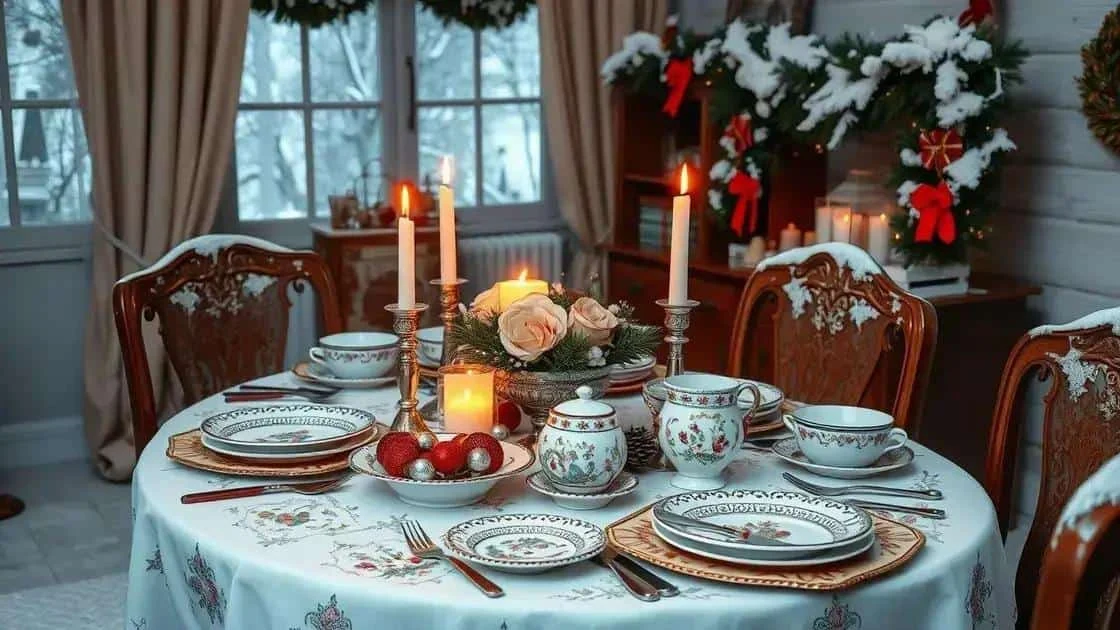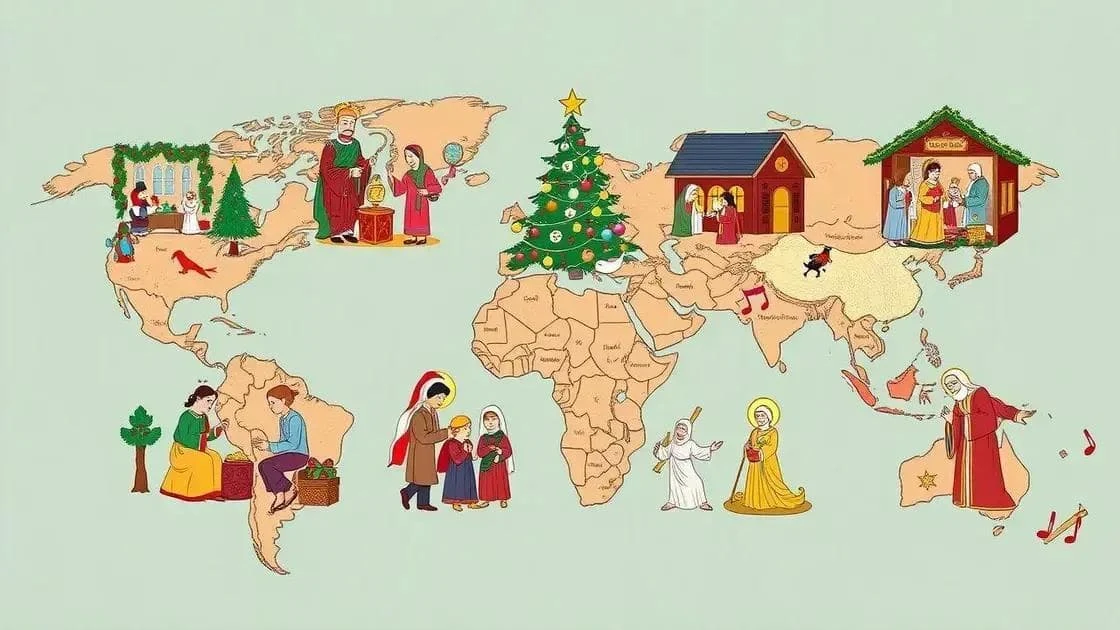
Religious and cultural Christmas customs carry different meanings across communities. Worship, family meals, music and decorations can connect generations, but traditions vary and not everyone observes Christmas in the same way.
Religious and cultural Christmas customs shape how people experience the season. Some centre on Christian worship; others are family or community practices that have changed over time. Looking at their context helps explain what people celebrate and why it matters to them.
The origins of religious Christmas customs
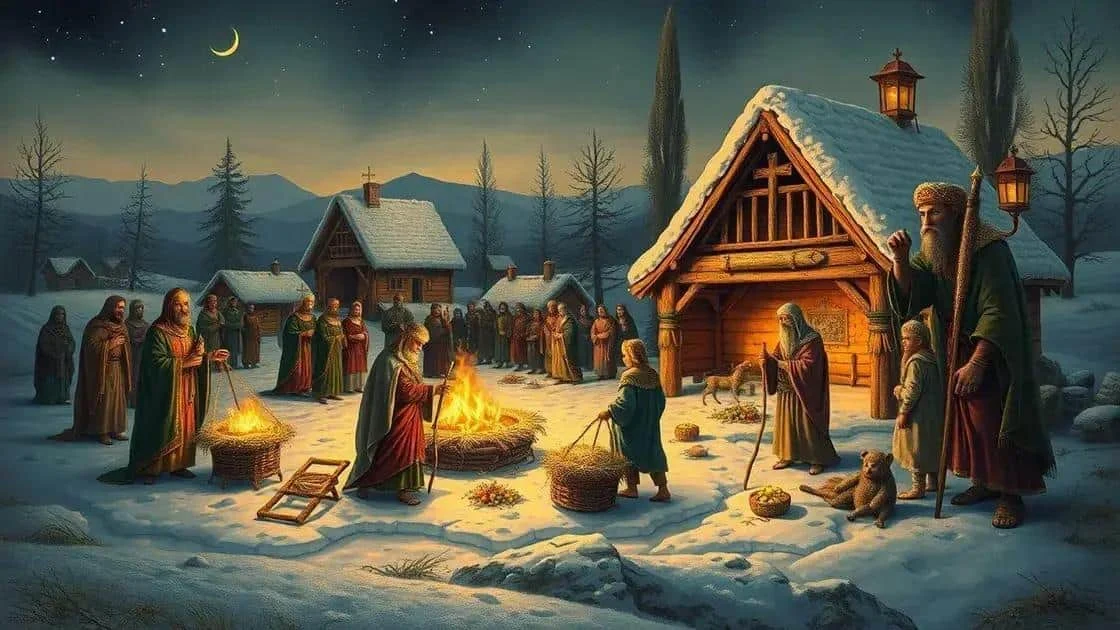
The origins of religious Christmas customs lie in Christian celebrations of the birth of Jesus and the traditions that developed around them. The history unfolded over centuries and differed between churches; not every familiar custom began at the same time.
Historical influences
Christmas developed in societies that also had existing seasonal festivals. Connections with winter customs are part of its history, but it is too simple to say that every Christmas tradition was directly adapted from a pagan festival. The choice of date and the origins of particular practices require separate evidence.
Early records
A fourth-century Roman record provides early evidence for a celebration of the Nativity on 25 December. This is a feast date, not proof of Jesus’ exact birth date or one decree that established every church’s practice. Christmas services and musical traditions subsequently developed in different places and periods.
Traditions spreading and changing
Over time, celebrations incorporated regional practices. Decorated Christmas trees, gift-giving and household customs have their own histories, rather than one common origin. Their spread also involved migration, trade, popular culture and changes in family life.
Religious communities
Churches have preserved worship and helped communities mark the Nativity through services, music and charitable activities. Peace, hope and care for others are important themes, although the forms of observance differ between denominations and congregations.
How different cultures celebrate Christmas
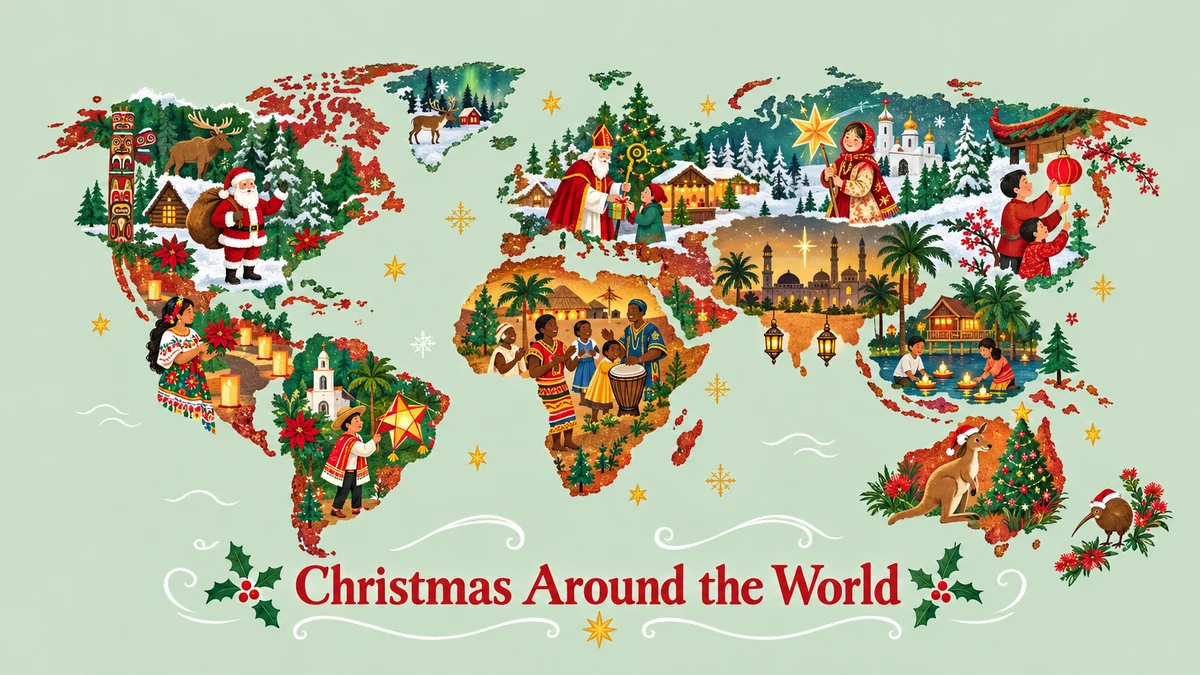
Christmas celebrations reflect diverse cultural traditions. A country can contain many forms of observance, including people who do not celebrate at all. The following examples describe selected customs rather than everyone’s experience.
Examples from Europe
In Germany, Christmas markets are familiar seasonal events offering food and decorations. In Italy, La Befana is a folklore figure associated with gifts around Epiphany on 6 January. These practices have different histories and are not observed identically in every household.
Traditions in North America
In the United States and Canada, some households decorate trees, exchange gifts or take part in church and community events. Seasonal light displays are familiar in many places, but celebrations differ across the countries’ many religious and cultural communities.
An example from Latin America
In Brazil, many families gather for a Christmas Eve meal. Some menus include turkey and farofa, a toasted cassava-flour accompaniment. Nativity scenes also feature in Christian households and public displays. These are examples, not requirements shared by all Brazilians.
Examples from Asia
In the Philippines, Christmas preparations can begin well before December. Star-shaped parol lanterns are associated with the season and the Christian story of the star of Bethlehem. In Japan, Christmas is often a seasonal social or commercial occasion, while Christian communities also hold religious celebrations. Neither description accounts for every household.
Diversity within traditions
Food, music and worship can reveal different aspects of Christmas. Learning about a particular community is more informative than assuming that one practice represents an entire country or continent.
Familiar Christmas traditions in Brazil
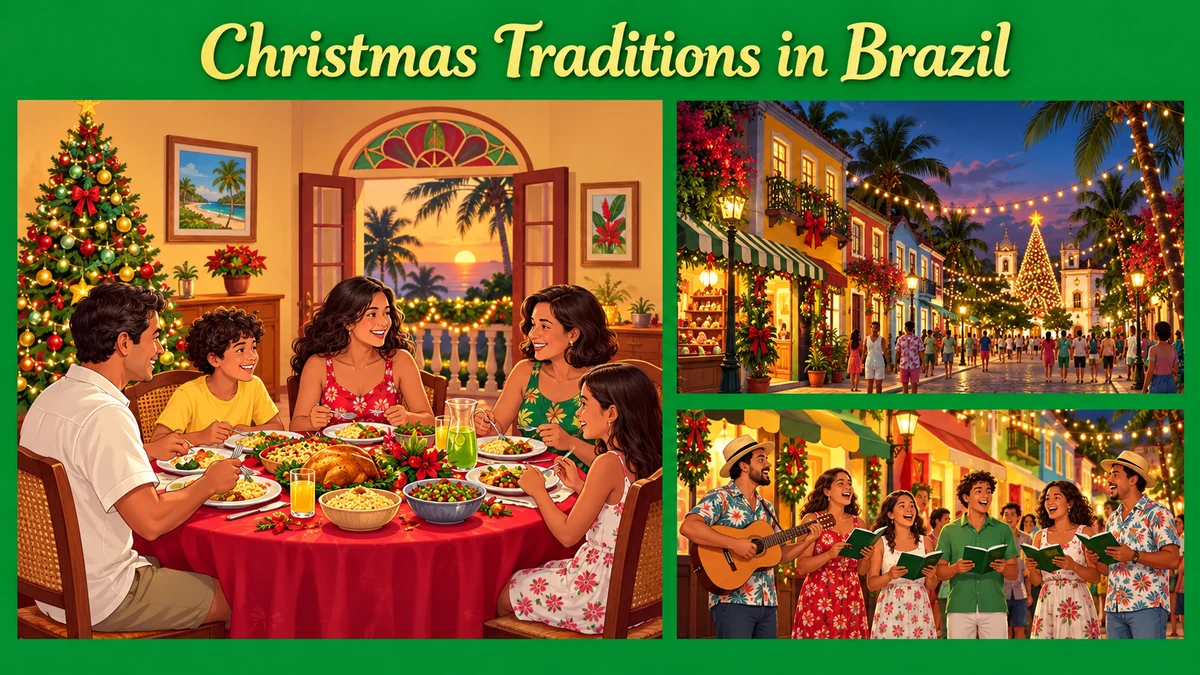
Christmas traditions in Brazil reflect varied family histories and regional influences. December falls in the Brazilian summer, so festive meals and decorations appear in a different seasonal setting from the UK.
The Christmas Eve meal
A Christmas Eve supper may include roast turkey, farofa, potato salad with mayonnaise and sweets such as rabanada, a festive fried-bread dessert, or panettone. Families choose their own dishes, and budgets, beliefs and dietary needs also influence the menu.
Seasonal decorations
Christmas decorations can include lights, tree ornaments and Nativity scenes. Some towns organise public displays or seasonal events, but their programmes and scale vary. A decorated home is a choice, not a measure of how much a family values the season.
Songs and music
Some families sing Christmas songs, and choirs may perform in churches or public spaces. Christmas music can be religious, popular or locally rooted. The selection depends on the gathering and those taking part.
Exchanging gifts
An exchange of gifts may take place on Christmas Eve or at another family gathering. Amigo oculto, similar to Secret Santa, is one way groups organise presents. Agreeing a spending limit and optional participation can keep the activity comfortable.
Community celebrations
Some places organise community celebrations with food, performances or parades. These events offer another way to take part, but are not a universal feature of every neighbourhood. Check local programmes and access arrangements.
Why Christmas customs can matter
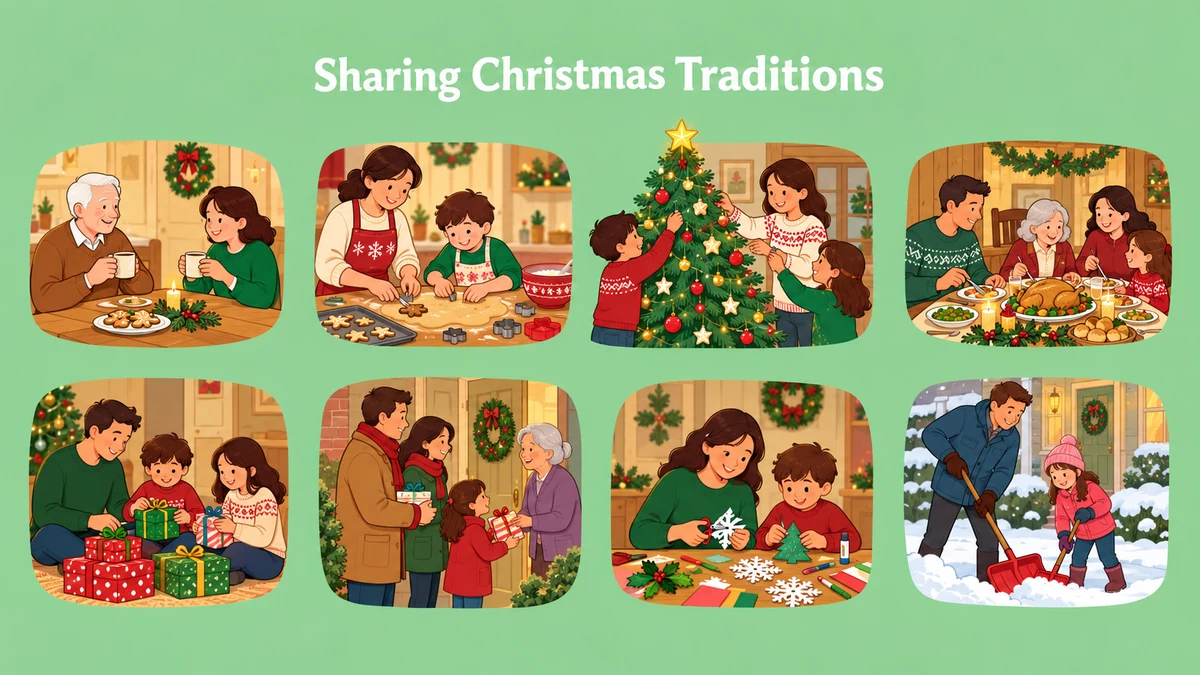
Christmas customs can carry cultural and emotional meaning. Their importance comes from the people practising them and the histories they share, rather than from following a fixed set of rules.
Family connections
When families gather, customs such as sharing a meal or exchanging presents can provide familiar moments. They can support connection, but should be adapted when costs, health or relationships make the usual plans difficult.
Values and learning
Activities can offer opportunities to discuss solidarity, care and generosity. Helping a community organisation is one example. Ask what is useful, involve children appropriately and respect the dignity and privacy of those receiving support.
Cultural heritage
Customs can reflect family and community histories. In Brazil, a festive supper or a Nativity scene may have particular household meaning; elsewhere, songs or local events may play a different role. These practices are diverse rather than interchangeable.
Community spirit
Shared events can encourage a sense of community by bringing neighbours and friends together. Welcoming arrangements, accessible venues and respect for people who do not celebrate help make participation genuinely optional.
Memories over time
Repeated activities can become familiar memories, while stories explain why a custom matters. Families can preserve that connection through photographs, recipes or conversations, without requiring each generation to repeat everything unchanged.
How customs can shape family Christmas celebrations
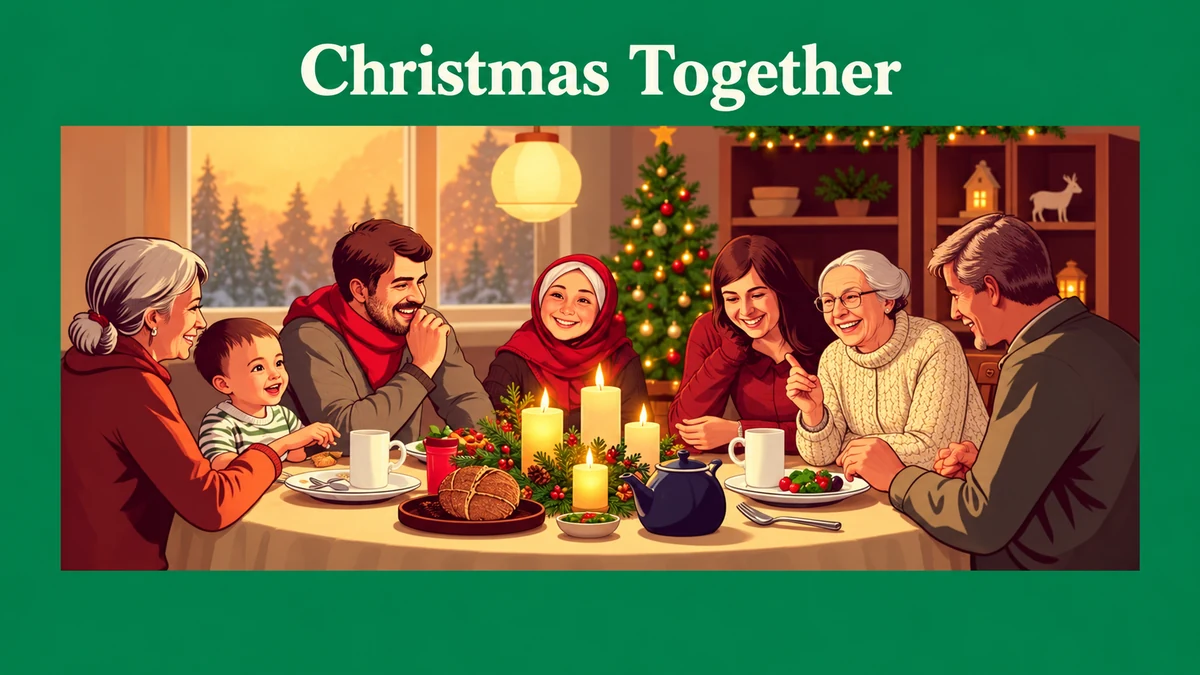
Christmas customs can give family celebrations a sense of continuity. Their effect depends on the household: a familiar activity may be comforting for one person and stressful for another.
Time to reconnect
A special meal can create time for conversation and shared work. Keep preparation manageable and share tasks where possible. Gathering around a table does not automatically resolve difficult relationships, so considerate boundaries still matter.
Passing on values and traditions
Gift-giving or helping others can introduce conversations about solidarity and generosity. Explain the purpose of an activity and welcome questions, rather than expecting children to understand a tradition simply by repeating it.
Creating shared memories
Setting up a Nativity scene or singing Christmas songs can become a family memory where those activities fit the household’s beliefs. Other families may prefer different traditions. Memories need not depend on one religious practice.
Emotional expectations
Decorations and familiar routines can feel welcoming, but Christmas can also bring grief, loneliness or pressure. Allow room for different feelings, simpler plans and rest. A celebration does not need to make everyone feel cheerful all the time.
Connections beyond the household
Community events can connect neighbours and friends as well as relatives. Choose gatherings that suit those involved and avoid assuming that everyone has a large family or wants the same level of activity.
Keeping Christmas customs meaningful
Christmas customs can connect people with faith, family history or community. Their value lies in the meaning they hold for those involved, rather than the scale of the celebration.
Preserving a recipe, a story or a song can maintain a link with earlier generations. Adapting the way it is shared can make it more welcoming to new family members and changing circumstances.
Keep the traditions that matter, explain their context and allow others to choose their level of participation. A flexible approach can help customs remain meaningful over time.
FAQ: Christmas customs and their meaning
Why can Christmas customs matter to families?
They can offer familiar moments, connect generations and provide time together. Their significance varies with family history, beliefs and circumstances.
How can Christmas traditions help children learn?
Adults can use shared activities to explain generosity, cultural history and religious meaning where appropriate. Invite questions and adapt tasks to the child’s age.
What are some familiar Brazilian Christmas traditions?
Examples include Christmas Eve meals, Nativity scenes, seasonal music and gift exchanges. Practices differ between regions and households.
Do Christmas customs always create positive feelings?
No. They can be comforting, but the season can also be difficult. Flexible plans and respect for different feelings help avoid unnecessary pressure.
How can Christmas customs connect a community?
Local services, music and shared events can bring people together. Accessible, welcoming arrangements and optional participation matter.
How can a family preserve a Christmas tradition?
Share its story, keep a recipe or record memories with permission. Adapt the activity when needed so that its meaning can continue without rigid expectations.
Sources and Further Reading
- Baylor University: Christmas
- Italia: Epiphany and Befana traditions
- Japan National Tourism Organization: December