Christmas wreaths can represent welcome, renewal and togetherness. Their circular shape and evergreen foliage also have religious meanings in some traditions, while other households enjoy them simply as festive decorations.
Have you ever wondered about the meanings of Christmas wreaths hanging on doors in December? Beyond their colours and textures, these decorations can hold religious associations, family memories and a warm welcome for visitors. Here are some ways to understand and personalise them.
The origins of Christmas wreaths
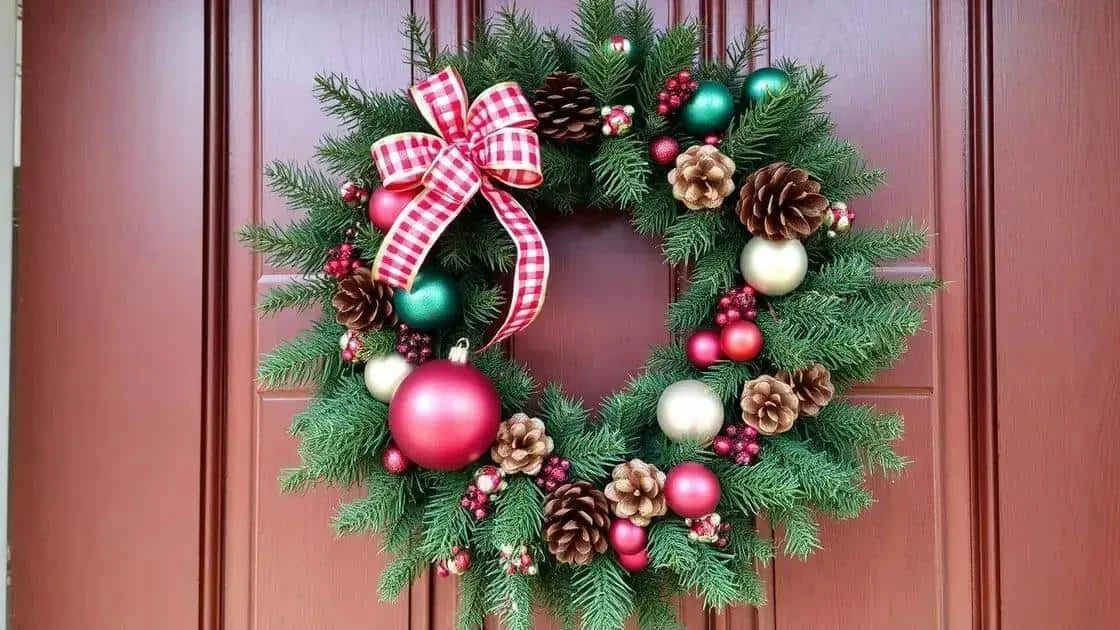
The origins of Christmas wreaths belong to a wider history of using foliage in celebrations. Ancient Greek wreaths could honour gods, mark special occasions or recognise achievement; materials differed between places and events. These older uses are not proof of one direct route to the modern Christmas decoration.
Roman wreaths also carried meanings of honour and celebration. Evergreen Christmas decorations developed through later European customs, with Christian interpretations of their circular form as eternal life. The candle-bearing Advent wreath has its own more recent history, associated with Johann Hinrich Wichern’s work in nineteenth-century Germany.
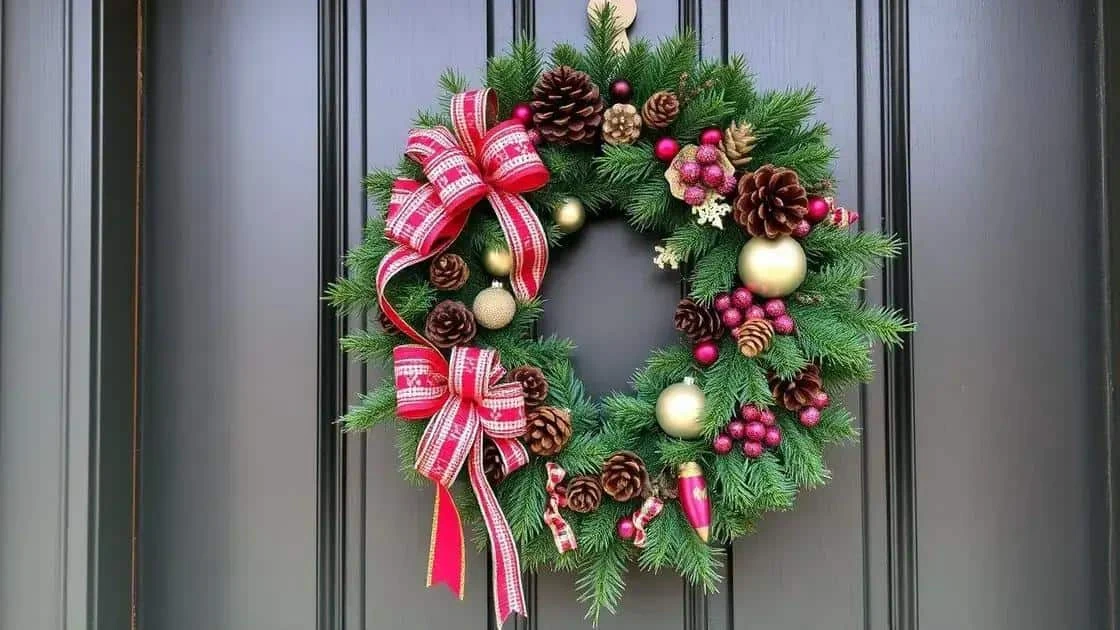
Modern Christmas wreaths often use evergreen branches, associated with endurance through winter and the renewal of life. Ribbons, bows and ornaments add colour, although materials and meanings vary from one household to another.
A wreath can also express hospitality. Hanging one on a front door is a simple way to share a festive welcome, whether its significance is religious, personal or purely decorative.
Wreath symbolism in different traditions
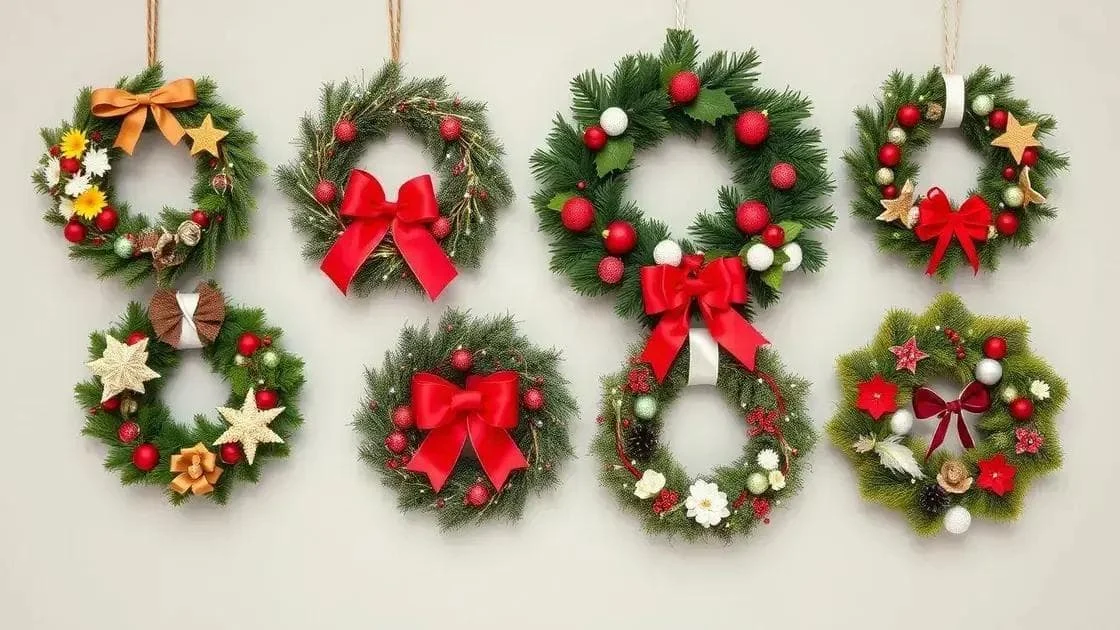
Wreath symbolism in different traditions is varied rather than fixed. A circle can suggest continuity and renewal, while seasonal plants connect a decoration with the landscape. In northern European winter settings, evergreen foliage can offer a reminder of life during the colder months.
In ancient Rome, wreaths could signal victory and public honour. Laurel wreaths are one familiar example. That association differs from the welcoming role of a wreath on a Christmas door today.
Flowers and foliage also appear in commemorative and seasonal customs. These uses should not all be attributed to a single ancient Celtic ritual. A modern wreath maker can choose natural materials to express appreciation of the changing seasons without claiming an undocumented historical origin.
At Christmas, wreaths on doors commonly create a welcoming entrance. Their festive details can suggest joy and togetherness. Associations with protection belong to particular beliefs or folklore; the decoration does not provide literal protection.
How to make a personalised Christmas wreath
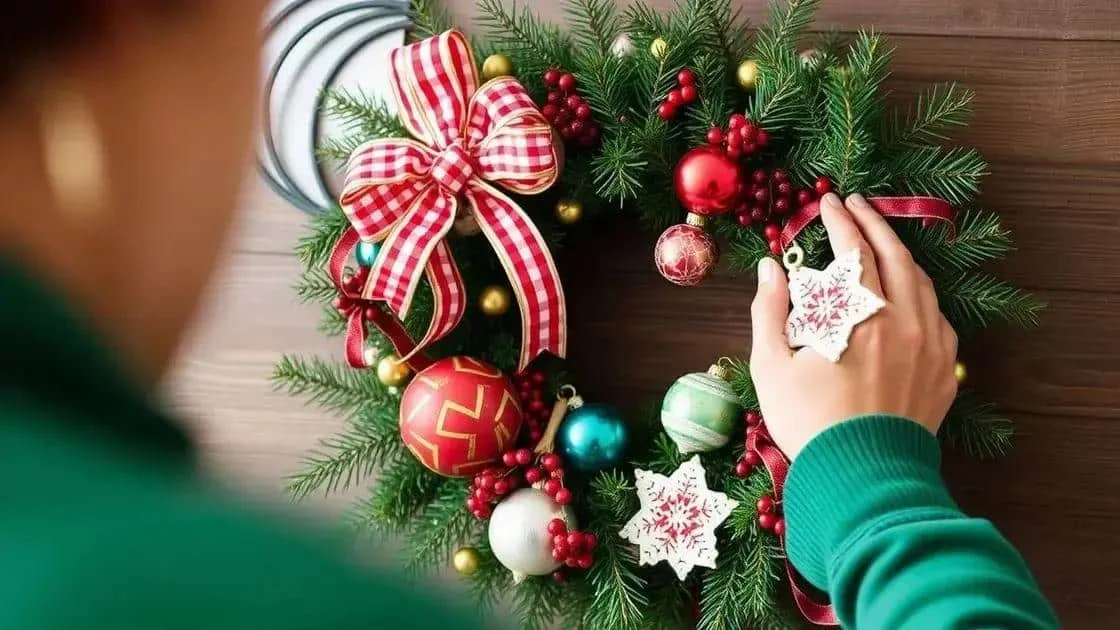
Making a personalised Christmas wreath is a creative activity to share. Gather a suitable base, foliage, ribbons and ornaments. Adapt tools and small decorations to children’s ages, and let an adult handle sharp wire or hot glue.
Step 1: Choose a firm base, such as a reusable metal ring or a purpose-made wooden or foam wreath form. Make sure it can support the finished decoration and its hanging attachment.
Step 2: Attach foliage evenly using suitable florist’s wire or fixings. Cover sharp ends and check that branches are secure. If using hot glue, an adult should follow the tool’s instructions and keep it away from children.
Step 3: Add colour with ribbons, bows, baubles or small bells. Try different arrangements before fastening everything, leaving enough room for the foliage and individual details to be seen.
Step 4: Include a personal detail, such as a weather-protected copy of a family photograph or a handmade ornament. Keep precious originals indoors and avoid fragile or loose pieces where young children can reach them.
Step 5: Hang your wreath securely without blocking the door or an escape route. Check its weight and exposure to rain or wind; an indoor wreath may need a sheltered position.
Decorating with wreaths: tips and inspiration
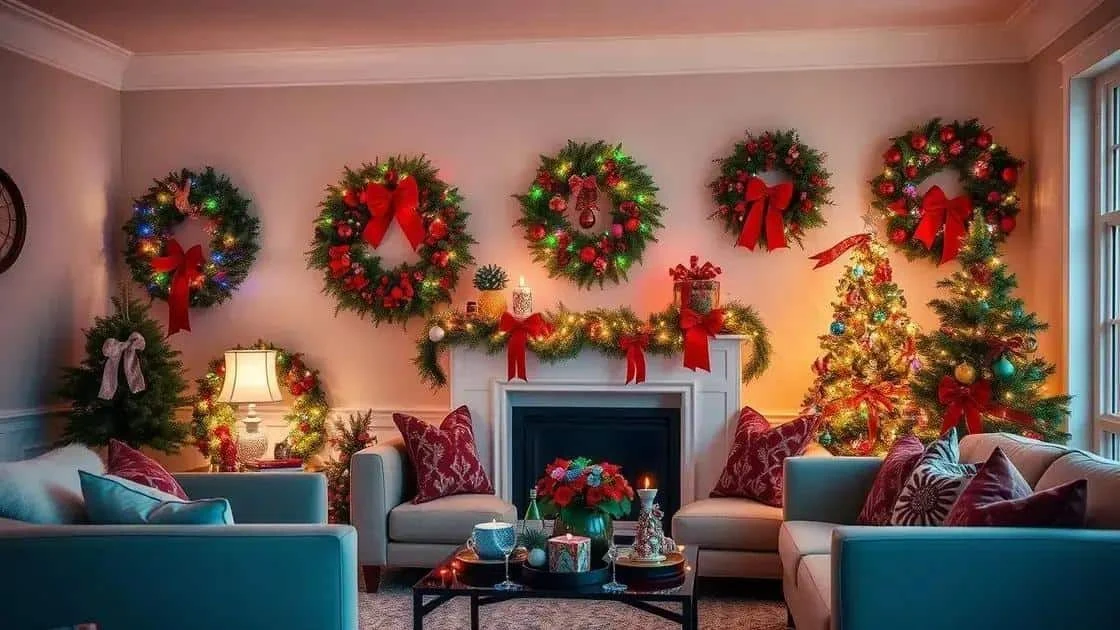
Decorating with wreaths can bring festive character to doors, windows and tables. Smaller, lightweight versions can also become tree ornaments, provided the branches can support them safely.
Tip 1: Match the wreath to your existing decorations. For a rustic look, try evergreen branches and cones collected responsibly, checking plants for suitability around children and pets.
Tip 2: Make the entrance a focal point. A colourful bow can lift a simple wreath without requiring lots of new ornaments.
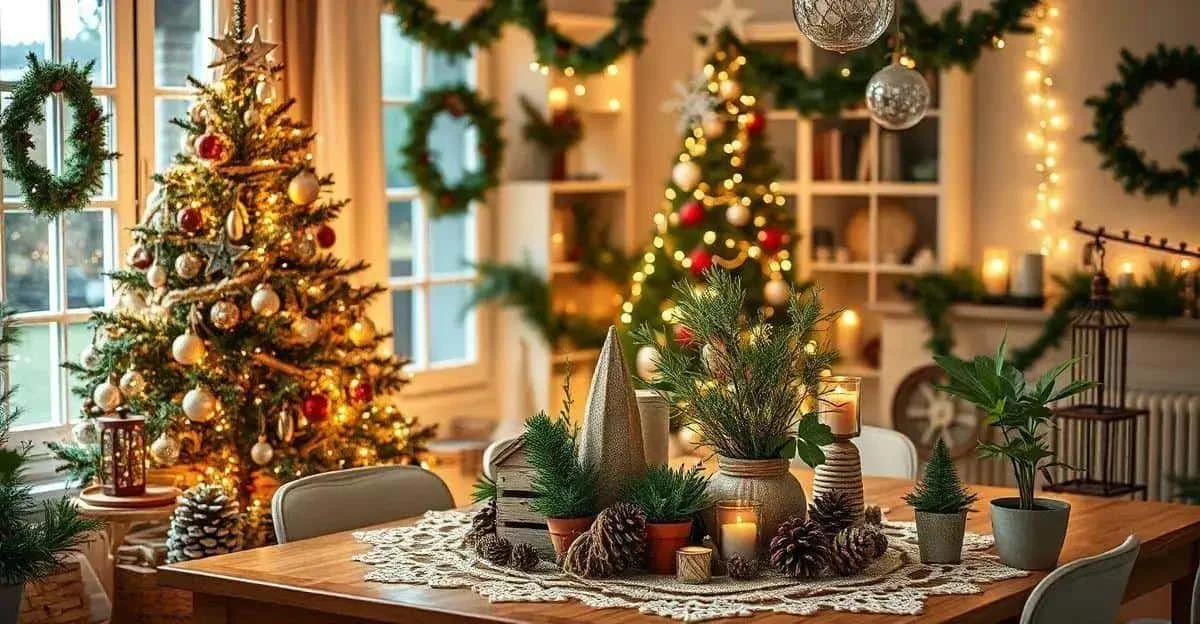
Tip 3: Use a wreath as a table centrepiece with battery-operated LED candles. Keep foliage clear of food and heat; never place an unprotected flame among dry leaves or ribbons.
Tip 4: Mix styles thoughtfully. A bright wreath can enliven a neutral room, while a restrained design may suit a space already filled with decorations.
Tip 5: Add lights rated for the intended location and follow their instructions. Check cables and fittings, keep battery compartments secure and switch lights off when leaving them unattended.
Wreaths and memories in family celebrations

Wreaths can become part of family Christmas celebrations, carrying stories and traditions alongside their decorative role.
For some families, a wreath represents togetherness and celebration. In Christian interpretations, the circle can suggest God’s eternity and evergreen foliage can express hope. Other households give it a different personal meaning.
A handmade wreath can be reused over several years, with ornaments recalling a holiday, a family occasion or someone special. A photograph or carefully chosen keepsake can make the decoration distinctive.
Making a wreath together offers time to exchange ideas and memories. Give everyone an age-appropriate task, and keep the atmosphere relaxed rather than expecting a perfect result.
Wreaths are also used at other times of year, including New Year and, in some countries, Thanksgiving. Changing the colours and materials can express renewal and hope in ways that suit the occasion.
Choosing a Christmas wreath with meaning
Christmas wreaths can combine decoration, tradition and memory. Understanding their cultural associations and the family memories attached to them helps us appreciate why the same circular shape means different things to different people.
A personalised wreath connects a familiar seasonal decoration with your own experiences. Its value can lie in a reused ribbon, a handmade ornament or the time spent making it together.
Whether simple or elaborate, a wreath can offer a welcoming touch at Christmas. Choose a design that suits your home, budget and the meaning you want it to carry.
FAQ — Christmas wreaths and their traditions
Where do Christmas wreaths come from?
Wreaths have a long history in celebrations and commemoration. Modern Christmas wreaths draw on later European decorating customs and Christian symbolism; the Advent wreath is a distinct tradition associated with nineteenth-century Germany.
How can I personalise a Christmas wreath?
Add ribbons, handmade decorations or weather-protected copies of photographs that recall your family or a special occasion. Secure each piece and choose materials suited to the location.
Where can I display wreaths at home?
Doors, windows and tables are common choices. Small, lightweight wreaths can also decorate a tree. Check hanging points, weight, weather exposure and access routes.
What can wreaths represent in family celebrations?
They can express welcome, togetherness and continuity, or carry religious meanings. The interpretation depends on the family’s beliefs and memories.
How can I reduce waste when making a wreath?
Reuse a durable base and decorations, collect foliage responsibly and separate materials for disposal. Natural or recyclable materials are not automatically the lowest-impact choice; repeated use and local disposal options matter.
Do wreaths have the same meaning in every culture?
No. Wreaths can mark honour, remembrance, religious observance or celebration. At Christmas they often suggest welcome and renewal, but meanings vary between communities and households.