
To write a Christmas story as a family, choose characters, a setting and a manageable problem. Plan a beginning, a turning point and an ending, then add traditions and details that matter to you. Children can contribute through words, drawings or ideas.
Wondering how to write a Christmas story as a family? You do not need to be an experienced writer. Start with a shared idea, let each person contribute and enjoy building a tale that reflects your own imagination.
Creating memorable, familiar characters
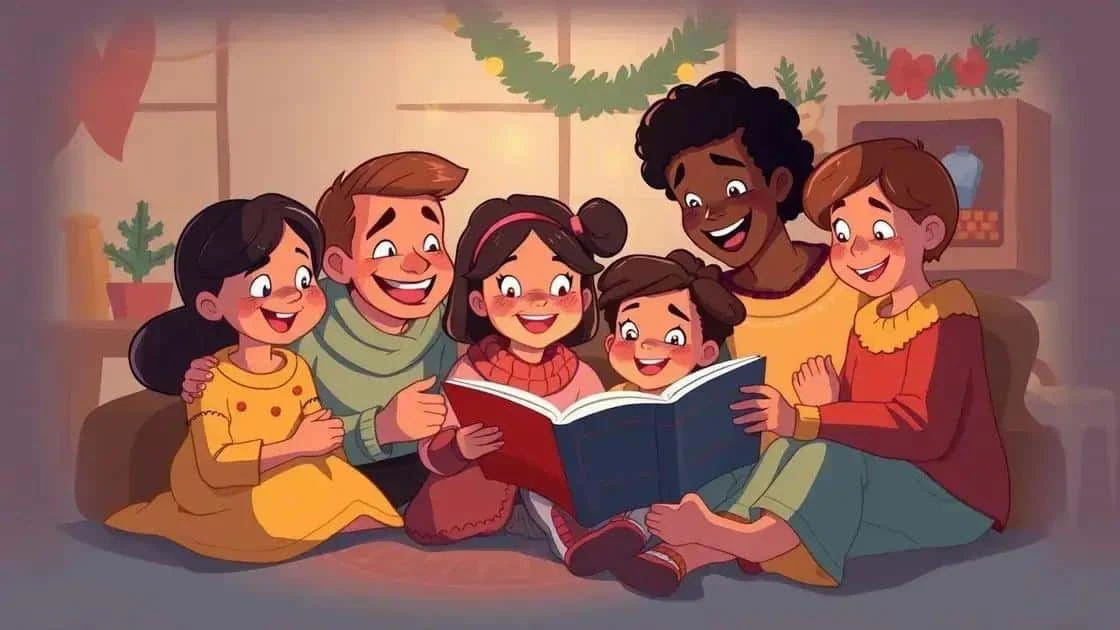
Memorable characters give readers someone to follow. You might borrow a favourite habit from a relative or invent someone entirely new. If using a real person’s private experiences, ask permission and consider changing identifying details.
Start with a few notes: what does the character want, what worries them and what do they enjoy? Appearance is only one detail. Contradictions and small habits can make a fictional person feel more believable.
Different kinds of characters
A curious child, an impatient grandparent or a neighbour with an unexpected hobby can all lead a story. Avoid making every older person wise or every mother responsible for caring; give each character an individual personality.
Building emotional connections
Think about relationships: what brings the characters together, and where do they disagree? Shared memories or traditions can create a sense of belonging, while a small misunderstanding gives them something to work through.
Distinctive ways of speaking
A repeated phrase or favourite expression can help readers recognise a character. Use it sparingly, and avoid making an accent or speech difference the target of a joke.
Aim for characters who feel believable rather than perfect. Their choices can explore the Christmas spirit in a way that suits your family, without making everyone agree at the start.
Building a simple Christmas plot

A Christmas plot needs a clear sequence more than a perfect formula. Choose a few useful elements: who the story follows, what they want, what gets in the way and what changes by the end.
Beginning: Introduce the place, characters and situation. Perhaps a family is preparing lunch, a child is waiting for Father Christmas or a neighbour has lost a treasured ornament. Snow is optional; choose weather that fits the setting.
Developing the problem
Give the characters a manageable difficulty: a missing recipe, a mixed-up invitation or a disagreement about a tradition. This provides direction for the story. For younger children, a small problem can be enough without threatening to ruin Christmas.
The turning point
The climax is the moment when the main situation changes. A character might admit a mistake, ask for help or see another person’s point of view. A surprise works best when earlier details have prepared the reader for it.
Resolution and meaning
After the turning point, show what happens next. A resolution might express family cooperation or generosity through an action rather than a speech. Not every problem needs a miraculous or complete solution.
Vary the pace. Allow quieter moments between busy scenes so readers can notice the characters’ feelings and understand why a decision matters.
Including Christmas traditions in the story

Christmas traditions can give a story a particular setting. Choose details that matter to the characters rather than adding every familiar decoration or custom.
Choose a tradition from your own experience, such as arranging a Nativity scene, sharing a meal or opening presents at a particular time. If borrowing a custom from another community, learn its context and avoid presenting it as universal.
Celebrations and sensory details
Describe a song, the smell of baking or a box of old ornaments. A few specific details can make decorating a tree feel more vivid than a long list of festive objects.
Family rituals
A shared story or visit to a Christmas market can reveal family relationships. Show what different characters enjoy or find difficult, rather than assuming a tradition makes everyone equally happy.
Reflection and discovery
A tradition can help a character discover something: why someone keeps a broken ornament, or why a recipe matters. Let the discovery emerge through the scene instead of adding a lesson after every paragraph.
Specific traditions can make a story rich in cultural detail. Their emotional value comes from the characters’ experiences, not a claim that every family celebrates the same way.
Ways to involve children in the story
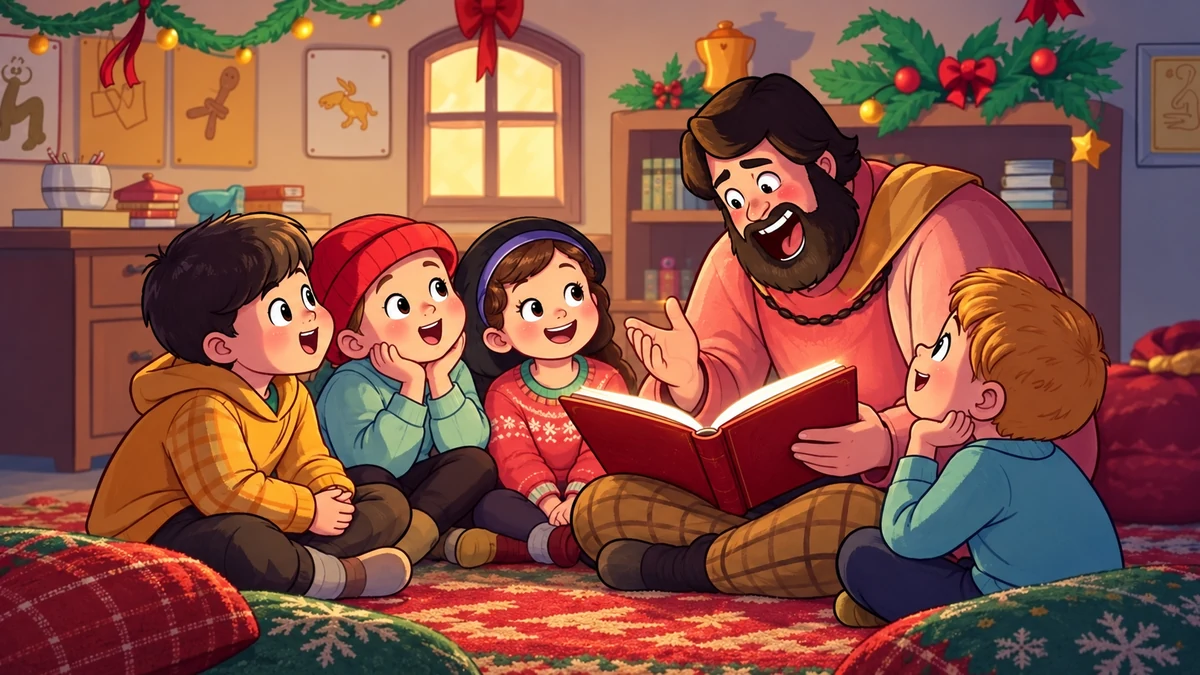
Children can contribute without writing a full page. These practical ideas let them help in ways suited to their age, interests and confidence.
Use clear language: Try short sentences and familiar words at first. An adult can write down a child’s spoken ideas, keeping the child’s voice rather than correcting every phrase immediately.
Add illustrations
Illustrations can develop the setting and characters before the text is finished. Draw, paint or make simple paper figures; a child may prefer to tell the story through pictures.
Bring characters to life
Make the characters easy to act out with a gesture, line of dialogue or simple prop. Invite voices or role-play without requiring a performance from children who prefer to listen.
Offer choices
Build in opportunities to contribute: ask what the character finds next or which of two routes they take. Too many questions can interrupt the flow, so choose a few useful moments.
Connect with familiar feelings
A character might feel excited, disappointed, shy or left out. Children can suggest what would help, but should never be pressed to share a personal upsetting experience for the story.
Keep the activity relaxed and allow uneven contributions. The aim is a shared creative experience, not a polished result or proof that everyone enjoyed Christmas in the same way.
Finding emotional ideas for a Christmas story

A Christmas story can explore seasonal wonder through fiction or a remembered event. Be clear which you are writing, especially if the finished work will be shared outside the family.
Personal experiences can provide a starting point: a reunion, a surprise or an ordinary meal that became memorable. Ask permission when another person’s private story is involved, and label invented additions appropriately.
Stories about difficulties
Working through a difficulty can create a moving plot. Show practical support and leave room for problems that remain unresolved; a happy ending should not imply that hardship disappears through positive thinking alone.
Meaningful traditions
Preparing a meal, choosing decorations or sharing a story can reveal how generations relate to each other. A change in a familiar custom may provide the central event of your tale.
Fictional examples and anonymous stories
A tale about an unnamed person helping a stranger can explore kindness. If you cannot verify a circulating anecdote, present it as fiction or a story prompt rather than claiming it is a true event.
Small, concrete actions often communicate Christmas warmth more effectively than repeated claims about magic. Show someone making room at a table, listening or offering useful help.
Developing your story’s climax

The climax is the turning point that addresses the main problem. It need not be loud or dramatic: a quiet decision can change the direction of a short family story.
Build towards it gradually. Introduce the relevant object, disagreement or worry earlier, then let events make a decision necessary. Avoid adding a completely new solution at the last moment.
A decisive moment
Give a character a meaningful choice. Perhaps they tell the truth about a mistake or ask someone to join them. The choice should connect with what readers already know about that character.
Emotional detail
Convey emotion through actions, thoughts and dialogue. A pause before an apology or a hand reaching for a familiar ornament can be more effective than several sentences saying everyone felt deeply moved.
Clear, active sentences
Use the active voice when it makes an action clearer: name who does what. Short sentences can quicken a scene, while longer ones may suit reflection. Vary them rather than treating one style as a rule.
Follow the turning point with enough resolution to show its effect. A final scene can answer the main question without explaining every future event in the characters’ lives.
Ending a Christmas story thoughtfully

A thoughtful ending connects with what came before. It may leave the reader with a question, a warm image or a small change in a relationship rather than an explicit moral.
Return to an important theme or detail. If the story began with an empty chair, for example, the ending might show how someone makes a guest welcome. This can create an emotional connection without repeating a lesson.
A moment of reflection
Let a character notice what has changed. Keep the reflection brief and specific, leaving readers room to think about their own experiences.
A hopeful ending
A hopeful ending often suits a family Christmas story, but it is not compulsory to solve everything or gather every relative in one room. A small improvement or new possibility can feel honest and satisfying.
Themes others can recognise
Belonging, kindness and hope can speak to many readers, although no message is universal. Show the characters’ particular experience rather than claiming that all families or beliefs are the same.
An ending can remain memorable through a simple image or action. Read it aloud to see whether it follows naturally from the story and stops at the right moment.
Enjoying your family’s Christmas story
Begin with characters, a setting and a small problem, then build towards a choice that changes something. Add a few meaningful festive details and give the ending room to breathe.
Read the draft together and ask what is clear, interesting or confusing. Revise gently, keeping the contributions that make it your family’s story rather than polishing away every individual voice.
The finished tale can become part of your own Christmas tradition. Keep a dated copy, add drawings if you like and ask everyone before sharing private details publicly.
FAQ — Writing a family Christmas story
How can I create memorable Christmas characters?
Give each one a wish, a worry and a distinctive habit. Develop relationships and choices rather than relying only on appearance or stereotypes.
What is the role of the climax?
It is the turning point that addresses the main problem. A decision or discovery can provide it, followed by a short resolution showing what changes.
How can children help create a story?
They can suggest characters, choose what happens next, draw pictures or dictate ideas. Adapt participation to their interests and let them stop when tired.
Why include Christmas traditions?
Specific customs can give the setting character and reveal relationships. Use traditions you understand, and avoid assuming that every family follows them.
How can I write a thoughtful ending?
Return to an earlier detail and show a meaningful change. A hopeful scene can work without a perfect solution or an explicit moral.
What can inspire an emotional Christmas story?
A shared memory, a small act of help or a changed tradition can provide ideas. Ask permission for private experiences and label invented events as fiction.