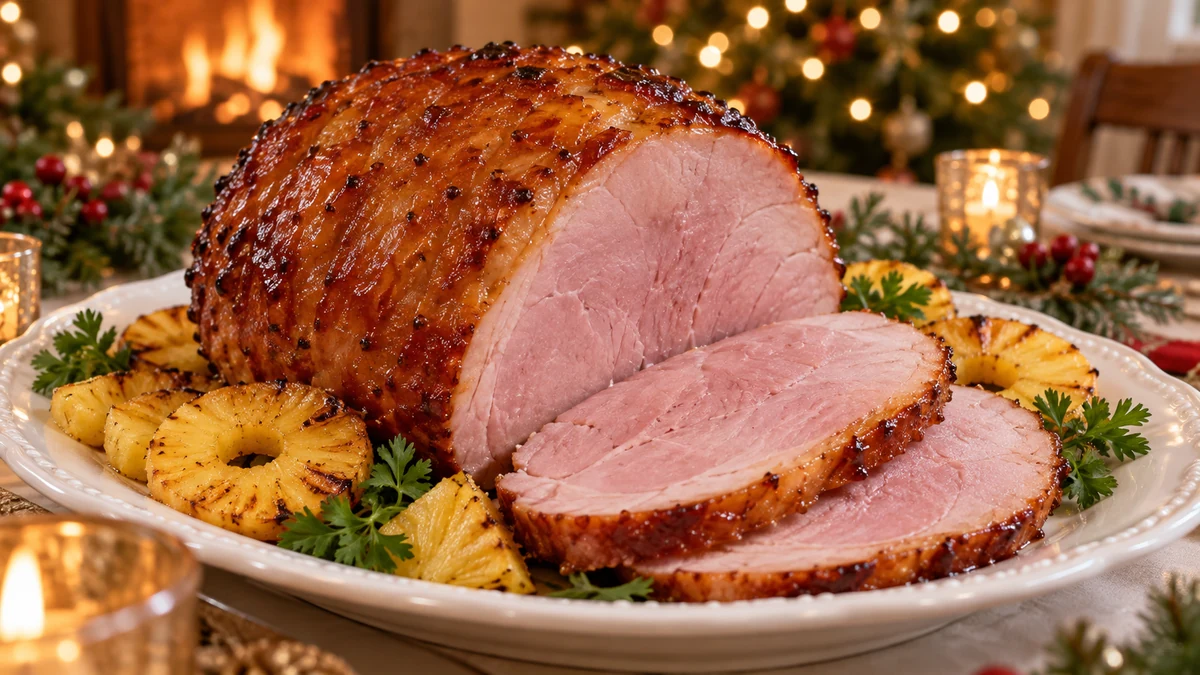
Prepare Brazilian-style Christmas ham with honey and cloves, from glazing and reheating to carving and serving. Explore optional fruit and spice combinations, and choose side dishes for your Christmas meal. This method requires a fully cooked ham and must be used alongside its packaging instructions.
This Brazilian Christmas ham is inspired by tender, the cured ham served at many Brazilian Christmas celebrations. Honey, mustard and orange make a sweet, tangy glaze. Reheating time depends on the product and its weight; do not substitute raw gammon in this method. This editorial adaptation has not been kitchen-tested by us.
Ingredients for Brazilian Christmas ham

For this Christmas ham with honey and cloves, gather the following ingredients:
- 1 fully cooked smoked ham, approximately 2 kg — check that the label explicitly says cooked and gives suitable reheating instructions. Smoked does not necessarily mean cooked; raw gammon needs a different method.
- 120 ml honey — apricot jam or light treacle can provide an alternative flavour. Do not serve honey to babies under one year, including in cooked dishes.
- 70 g soft brown sugar — or granulated sugar, for the glaze.
- 3 tbsp Dijon mustard — use a milder mustard if preferred; mustard is an allergen.
- 120 ml orange juice — or pineapple juice for a different fruit flavour.
- ¼ tsp ground cloves for the glaze, plus 20–30 whole cloves for studding the ham. Remove every whole clove before carving and serving.
- 2 tbsp unsalted butter — or a suitable alternative, checking its ingredients if catering for allergies.
- 60 ml rum or white wine, optional — replace with apple juice for an alcohol-free glaze. Heating does not reliably remove all alcohol.
- 6 pineapple rings in juice or syrup, drained — optional; grilled fresh pineapple is another option.
- Preserved cherries — optional, for serving with the pineapple.
- Black pepper and salt, if needed — taste cautiously before adding salt, as cured ham is already salty.
- 1 tsp cornflour mixed with 1 tbsp cold water, optional, to thicken the sauce.
Ingredient notes
Choose a fully cooked ham with clear storage and reheating instructions. If salt is a concern, compare products before buying rather than rinsing or soaking the ham. A diamond pattern gives the cloves an orderly arrangement. Honey and brown sugar provide sweetness, while mustard adds contrast. For a less sweet glaze, reduce the honey to 80 ml.
Use apple juice instead of rum for an alcohol-free version. If you have no ground cloves, omit them rather than adding excessive whole cloves. The butter already listed in the ingredients goes into the glaze; a second portion is not required.
How to glaze and reheat Christmas ham
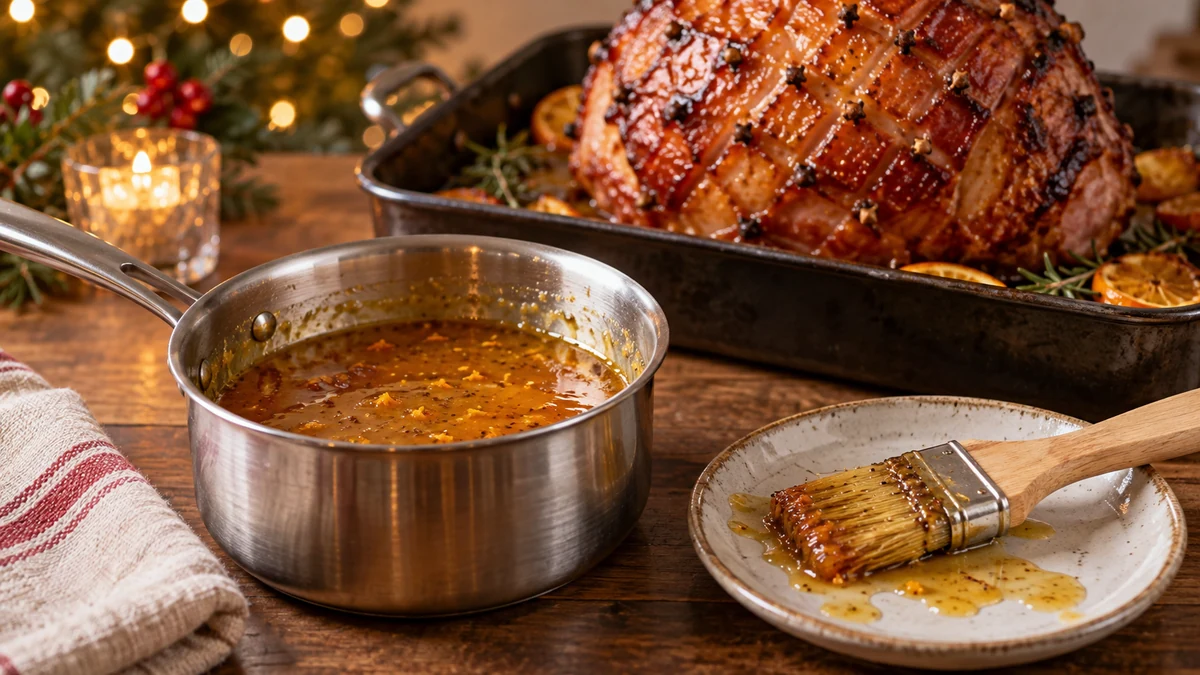
Prepare the Christmas ham with honey and cloves as follows, giving the product’s reheating instructions priority:
- Preheat the oven: use the temperature on the ham’s packaging. Where compatible with those instructions, 180°C conventional or 160°C fan is a starting setting, with a shelf in the centre.
- Prepare the ham: remove the packaging and any covering that the label says to discard before heating. Do not rinse the meat. If there is a layer of fat, score it shallowly in diamonds without cutting deeply into the ham.
- Add the whole cloves: place them at the diamond intersections. Keep track of the number used so that all can be removed before serving.
- Mix the glaze: combine 120 ml honey, 70 g brown sugar, 3 tbsp Dijon mustard, 120 ml orange juice, ¼ tsp ground cloves and 2 tbsp melted butter. Add 60 ml rum, white wine or apple juice if using.
- Arrange the roasting tin: place the ham in a suitable tin, using a rack if the packaging advises it. Arrange optional pineapple around it. Add cherries when serving; there is no need to use toothpicks to attach decorations.
- Brush on some glaze: coat the ham, keeping a separate, clean portion for the finished sauce. Do not return a used brush to that reserved portion.
- Reheat as directed: follow the packaging’s time and method for the ham’s weight, covering with foil if appropriate. There is no universal 30–40-minute reheating time for a 2 kg ham; allow enough time for the centre to become piping hot.
- Build up the glaze: brush on another layer towards the end of reheating. Open the oven only as necessary and take care when lifting foil, as steam can escape.
- Thicken the sauce, if wanted: heat the clean reserved glaze in a small saucepan. Stir in 1 tsp cornflour mixed with 1 tbsp cold water, then simmer and stir for 1–2 minutes until thickened.
-
Finishing the glaze
Uncover towards the end if the product instructions allow, and watch the sugary coating closely as it colours. Avoid leaving it under an unattended grill; a dark glaze is not evidence that the centre is hot.
- Check the centre: reheated food should be piping hot throughout. A clean food thermometer can check for 75°C for 30 seconds, or an equivalent safe time and temperature. Probe the thickest part without touching bone, and follow any specific product directions. This method is not for raw gammon.
- Rest briefly: leave the hot ham loosely covered for about 10 minutes before carving, then serve promptly.
- Carve and serve: remove all whole cloves, slice the ham roughly 1–1.5 cm thick and arrange it on a warmed serving dish. Spoon over hot prepared sauce and add the pineapple; rosemary can be used as a removable garnish.
-
Practical tips
For a less sweet glaze, use 80 ml honey rather than 120 ml. Replace rum with apple juice if avoiding alcohol. Keep any sauce intended for serving separate from brushes and utensils used during preparation.
How to carve and present the ham
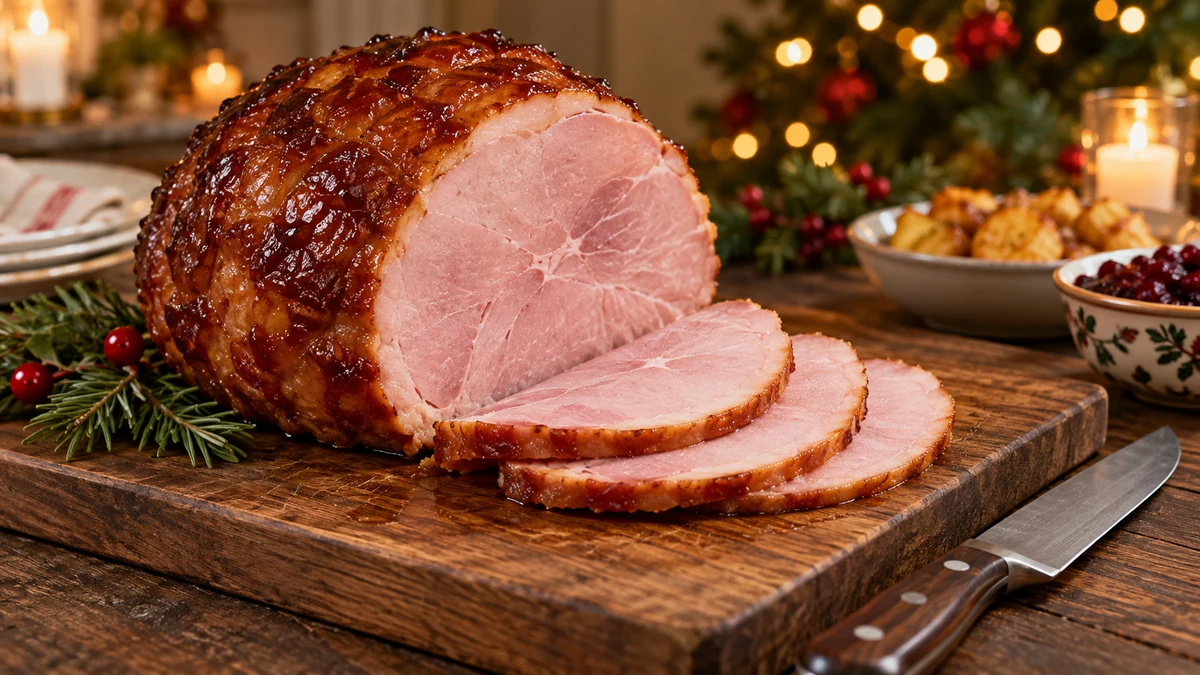
Careful carving makes Christmas ham easier to serve. Use a stable surface, suitable tools and a little space around the board.
- Rest the ham: allow approximately 10 minutes after reheating, loosely covered, before carving and serving.
- Prepare your tools: use a sharp carving knife and a carving fork or suitable tongs to hold the joint steady.
- Remove coverings and cloves: follow the label on when to remove any netting or string, and remove every whole clove before slicing. Discard any other inedible decoration.
- Set up the board: place the ham securely on a stable chopping board. Keep the supporting hand well clear of the knife’s path.
- Cut even slices: use long, controlled strokes to cut slices around 1–1.5 cm thick, or thinner if preferred. Avoid forcing the knife through an unstable joint.
- Cut across the grain: where the muscle fibres are visible, slice across them for an easier bite.
- Use the pan juices: transfer suitable juices to a saucepan and bring them to a simmer before serving as part of the sauce. Taste before adding salt.
- Arrange the platter: overlap the slices on a warmed dish, with optional pineapple rings and cherries alongside.
- Add the finishing sauce: heat the clean reserved glaze in a saucepan and spoon a little over the slices just before serving.
- Keep garnishes simple: use orange slices or a little rosemary, making clear which decorative stems should be set aside rather than eaten.
- Plan portions: approximately 120–180 g of cooked ham per adult can be a planning guide when serving sides; adjust for appetites and other dishes.
Quick serving tips
- Use a sharp knife and a stable board for controlled, tidy slices.
- Warm a suitable serving dish only if it is ovenproof and its manufacturer permits it. A warm platter does not replace safe food-temperature control.
- Choose hot or cold service deliberately: serve reheated ham promptly, or serve suitable fully cooked ham cold after correct refrigerated storage. Do not leave it sitting lukewarm.
- Offer sauce separately so guests can choose how much sweetness they want.
Christmas ham variations: fruit, spirits and spices
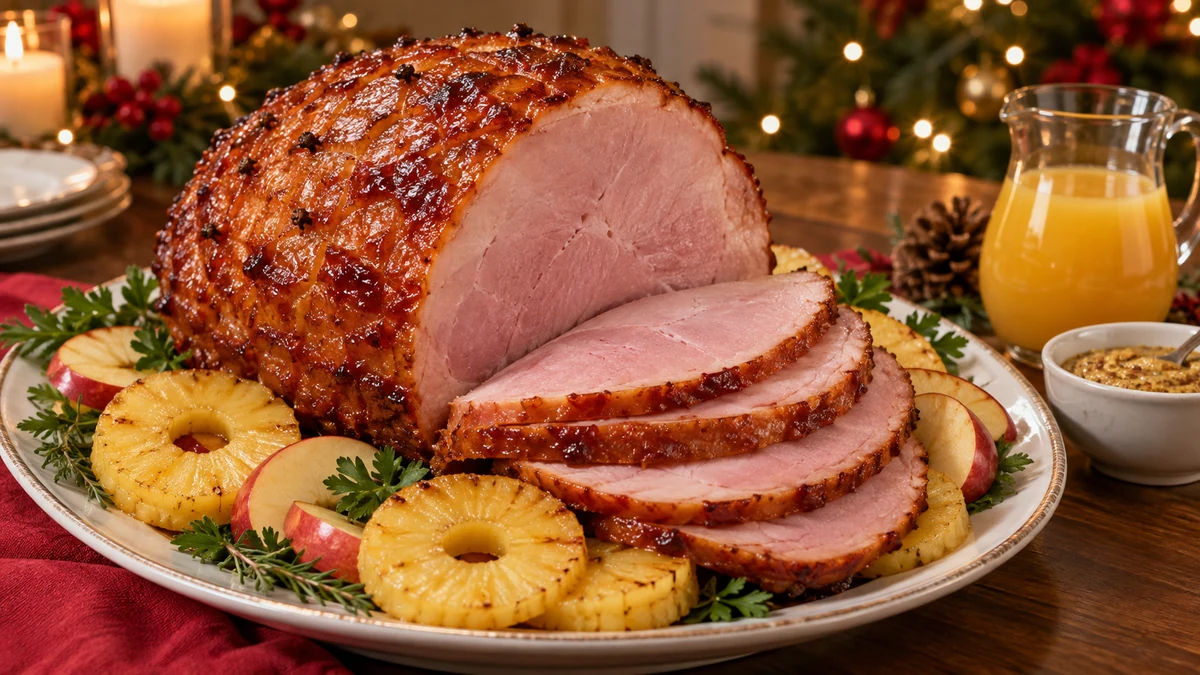
Vary the Christmas ham with one or two complementary ingredients rather than adding every option below. These are flavour suggestions, not additional requirements for the main recipe.
Fruit: pineapple, apricot and apple
Fruit brings colour and sweetness, with acidity depending on the variety. Choose fresh, dried or tinned fruit to suit the variation.
- 6 drained pineapple rings — use the quantity already listed in the main recipe, or replace with grilled fresh pineapple.
- 200 g dried apricots — soak in hot water for 10 minutes, drain, then warm alongside the ham or chop into a sauce.
- 2 medium apples, thickly sliced — roast alongside the ham until tender; pears offer another option.
Optional spirits: rum, brandy and orange liqueur
A small amount of a spirit changes the aroma of the glaze, but cooking does not guarantee an alcohol-free result. Use apple or orange juice when the dish needs to contain no added alcohol.
- 60 ml dark rum — use instead of, not in addition to, the optional liquid in the main glaze.
- 2 tbsp brandy — stir into the glaze as an alternative flavouring. There is no need to flambé it.
- 2 tbsp orange liqueur, such as Cointreau — or a little finely grated orange zest for an alcohol-free flavouring.
Spices: cloves, cinnamon and nutmeg
Use small quantities and taste the sauce as you go. These spices can easily dominate the glaze.
- 20–30 whole cloves — the same quantity as in the main recipe, for studding; remove all of them before serving.
- ¼ tsp ground cloves — the main recipe’s amount, mixed into the glaze.
- 1 cinnamon stick — infuse in the sauce and remove before serving, or try up to ½ tsp ground cinnamon instead.
- A pinch of freshly grated nutmeg — stir into the glaze for another warm spice note.
Suggested flavour combinations
- Pineapple, rum and cloves: arrange warmed pineapple around the ham and use rum only if suitable for everyone eating the dish.
- Apricot, orange and nutmeg: combine softened apricots with orange zest or optional orange liqueur and a small pinch of nutmeg.
- Apple and cinnamon: serve roasted apple slices alongside, with optional brandy in the glaze. Remove a whole cinnamon stick before serving.
- Alcohol-free variation: replace spirits with apple or orange juice. Reduce added sugar if using fruit in a sweet syrup.
- Adjust the sweetness: reducing the honey by one third means using 80 ml instead of 120 ml; add mustard gradually to taste.
- Finish the platter: arrange fruit around the sliced ham and add a little hot sauce immediately before serving.
Side dishes and Christmas serving ideas
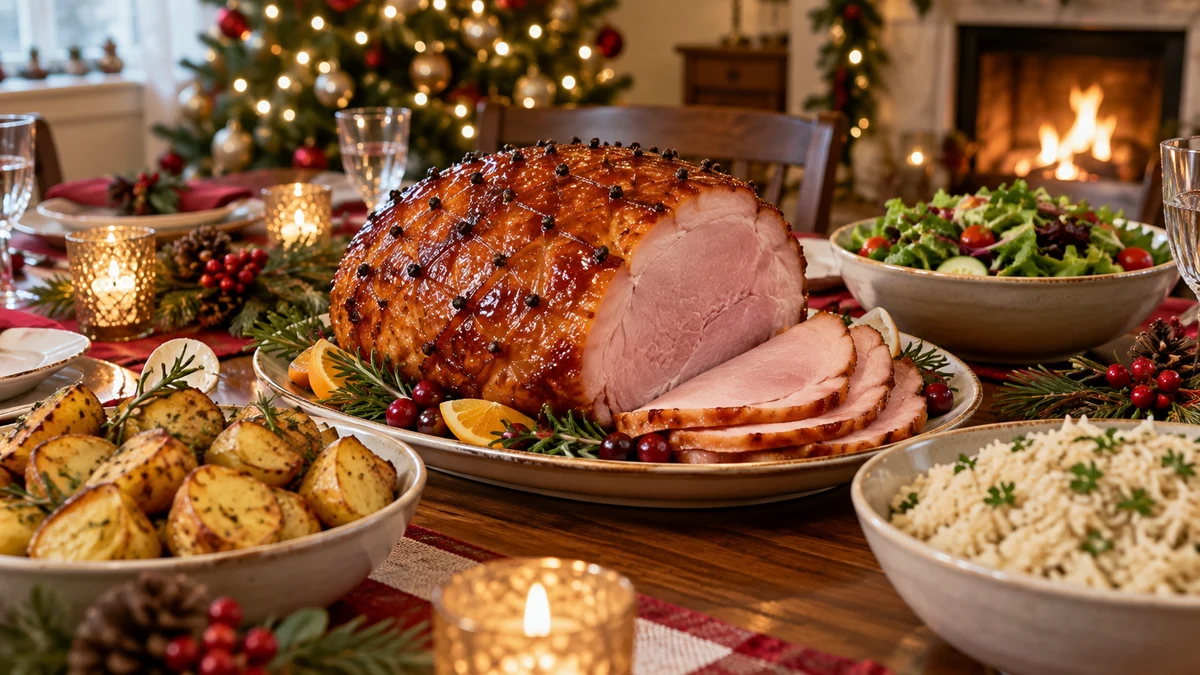
Choose sides that offer a contrast to glazed ham: roasted vegetables, rice, salad or Brazilian farofa. The portions below are rough alternatives for planning, not a suggestion to serve every dish.
Classic side dishes
- Brazilian arroz à grega — rice with vegetables such as carrots and peas, sometimes with raisins. Allow roughly ½ cup of cooked rice per person, adjusting for the other sides.
- Roast potatoes — around 150–200 g per person, seasoned with rosemary and olive oil if liked.
- Crisp farofa — around 50–70 g per person. This Brazilian toasted cassava-flour side can include bacon or nuts; disclose the ingredients to guests.
Salads and starters
- Green salad — mixed leaves with citrus dressing; around 40–60 g of leaves per person offers a fresh contrast.
- Apple and walnut salad — diced apple, leaves and toasted walnuts for contrasting textures; keep nuts separate where needed.
- Simple starters — bruschetta or a small cheese and dried-fruit board, if an extra course suits the meal.
Warm sides
- Roasted vegetables — courgettes, carrots and onions with oil and herbs; around 100–150 g per person as one of several sides.
- Creamy mashed potato — roughly 120 g per person, adjusted for appetites and the other dishes.
- Rice with toasted almonds — an alternative to vegetable rice, with nuts clearly identified.
Sauces and glazes
- Honey and orange glaze — reserve a clean portion before brushing the ham, then heat it to serve as a sauce.
- Red wine sauce — offer a small spoonful if wanted, but do not describe a wine reduction as alcohol-free.
- Mustard sauce — serve separately for guests who enjoy a sharper flavour, noting its mustard and any other allergens.
Dessert and drinks
- Dessert — passion fruit mousse or a small portion of Brazilian pavê can follow the main course. Choose portions and sweetness to suit the menu.
- Drinks — provide water, chilled apple juice or other alcohol-free options. Wine or sparkling wine is optional for adults who choose to drink.
Setting out the Christmas meal
- Leave serving space: put the ham within easy reach with sides nearby, without crowding the table or blocking access with decorations.
- Coordinate the timing: have sides and sauce ready when the ham is carved. Warm serving dishes only as their manufacturers allow, and serve hot food promptly.
- Plan realistic portions: use 120–180 g of cooked ham per adult as a guide with a few sides. Adjust quantities to your guests rather than preparing every suggested accompaniment.
- Present simply: overlap the slices, add pineapple and a little removable herb garnish, and keep the platter easy to serve from.
- Serve and store promptly: bring the sliced ham to the table with hot sauce. Cool leftovers and refrigerate within 1–2 hours; eat within 48 hours or freeze.
Tender at a Brazilian Christmas table
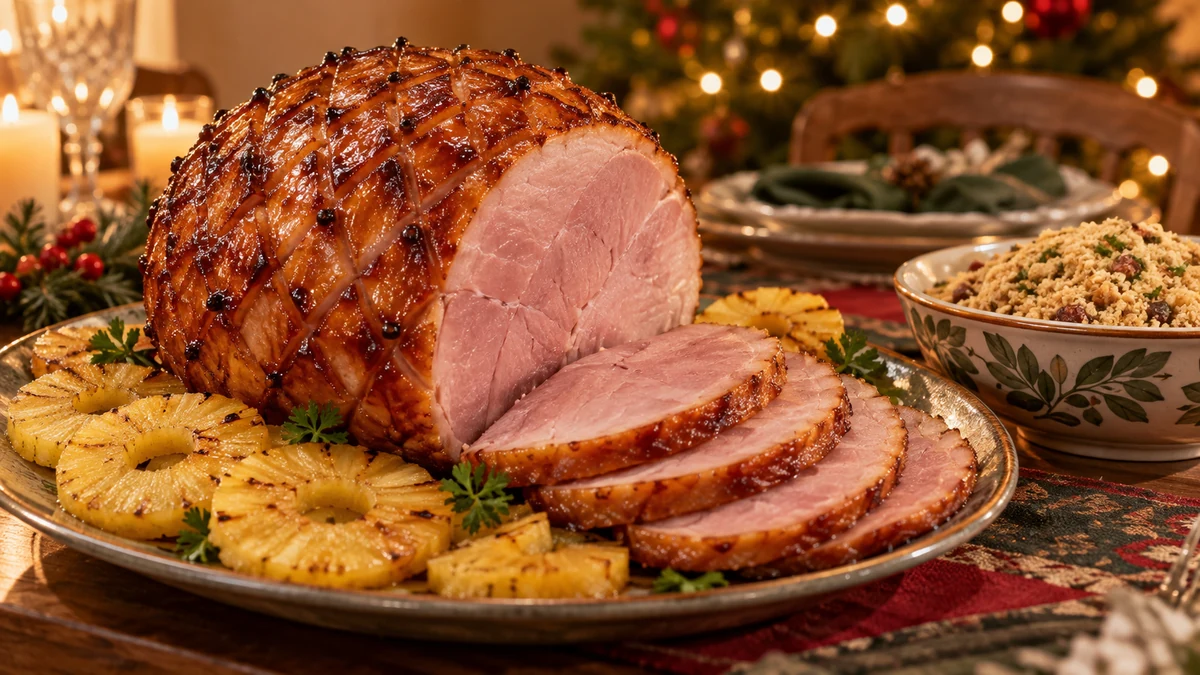
In Brazil, tender generally refers to a cured ham, often smoked and sold cooked, that is glazed for a festive meal. Products differ, so the label—not the name alone—must establish whether a joint is fully cooked and how it should be prepared.
Why it suits a festive meal
A cooked ham gives the host a different starting point from raw pork: the focus can be on the glaze and presentation, while still following safe storage and reheating directions. Its place on a Christmas menu varies from household to household.
Features of the dish
- Diamond scoring and cloves: shallow cuts and whole cloves give the joint its familiar decorated appearance. The cloves must be removed before anyone eats it.
- Different pork products: tender, raw gammon and a fresh pork leg are not interchangeable without changing the cooking method. Check exactly what you have bought.
- A sweet glaze: honey, brown sugar and orange juice are one way of creating the sweet-and-savoury contrast associated with this version.
- A cooked starting point: a fully cooked ham can simplify preparation, but a large chilled joint still needs enough time to reheat safely.
- Packaging matters: storage requirements, coverings and reheating instructions vary between brands and joints. Read them before planning the meal.
Safe preparation reminders
Reheat the ham thoroughly following its label, until piping hot throughout. A thermometer can check 75°C for 30 seconds or an equivalent safe combination; feeling a little warm liquid is not a reliable test.
Do not rinse or soak a cooked ham to try to make it less salty. Choose a product with a suitable salt content and avoid adding unnecessary salt to the glaze or sides. Sweetness changes the flavour balance but does not remove salt.
Making the recipe your own
Ham may sit alongside turkey or other dishes at a Brazilian Christmas celebration. Fruit, spices and optional spirits allow variations, while convenience, memories and family preferences shape the menu.
Sharing a family tradition
For some families, the dish is part of gathering around a festive table. Recipes passed between generations often include a favourite glaze or serving style; there is no single version followed by everyone.
Final thoughts
This Christmas ham with honey and cloves combines a sweet glaze with a fully cooked joint. Check the packaging, allow adequate reheating time and carve carefully before serving.
Choose one fruit or spice variation and a manageable selection of sides. Use juice instead of spirits whenever an alcohol-free dish is needed.
Thank you for reading. Explore the I Love Christmas blog for more festive recipes and ideas to adapt for your own celebration.
FAQ: Brazilian Christmas ham with honey and cloves
How should I store the ham before preparing it?
Follow the packaging’s storage instructions and use-by date. Keep refrigerated products chilled until needed, and freeze only as directed on the label. Defrost safely in the fridge if required.
How can I make the dish less salty?
Compare salt levels when choosing the ham, avoid extra salt in the glaze and serve with lightly seasoned sides. Do not rinse or soak cooked ham. Adding sweetness may balance the taste but does not lower its salt content.
Can I prepare the ham and glaze ahead?
You can mix the glaze ahead and keep it covered in the fridge until needed. Keep the ham correctly chilled, then reheat it fully once for the meal. Do not partly warm it, cool it and finish heating it later.
How do I reheat the ham without drying it out?
Follow the product’s reheating directions, using foil or a little liquid if those instructions allow. It must become piping hot throughout; check 75°C for 30 seconds or an equivalent safe combination with a clean food thermometer. Rest briefly and serve promptly.
What can I use instead of honey or rum?
Apple or orange juice replaces rum for an alcohol-free glaze. Apricot jam, maple syrup or light treacle can replace honey, with sweetness adjusted to taste. Honey must not be given to babies under one year, even after cooking.
How many people will it serve, and how should I keep leftovers?
Allow roughly 120–180 g of cooked ham per adult with sides, adjusting for the edible weight and appetites. Cool leftovers and refrigerate within 1–2 hours, then eat within 48 hours or freeze. Reheat leftovers only once, until piping hot throughout.
Sources and Further Reading
- Food Standards Agency: Christmas food hygiene
- Food Standards Agency: cooking food safely
- Food Standards Agency: chilling freezing and defrosting