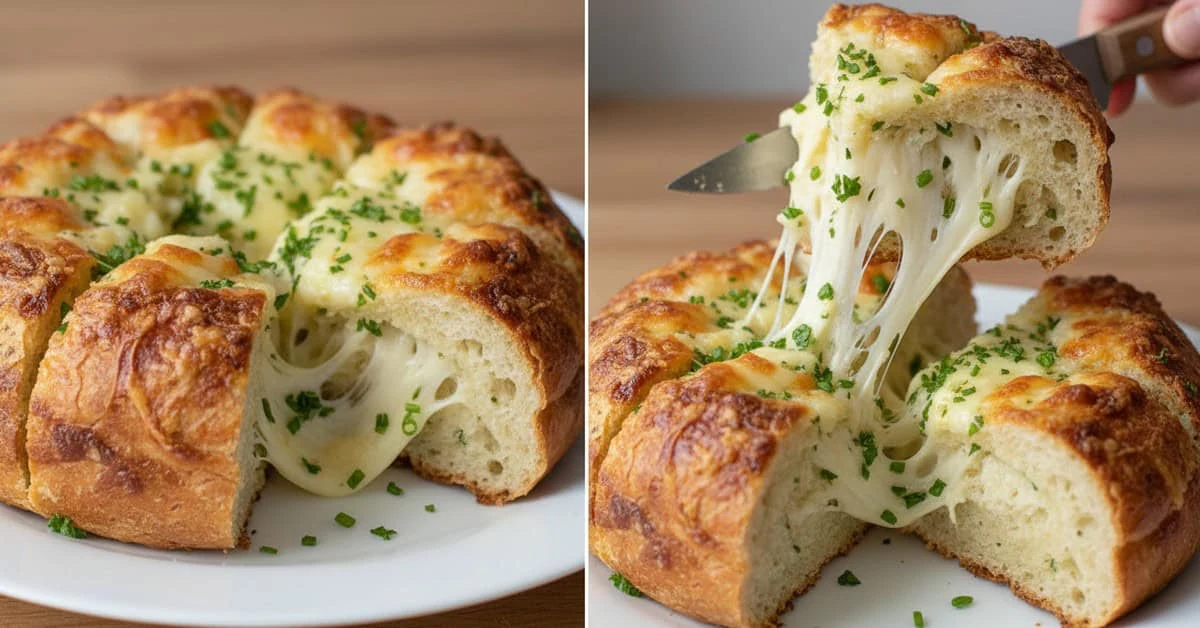
Cheese and herb pull-apart bread starts with a ready-baked crusty loaf, cut into a grid and filled with mozzarella, cream cheese and herbs. Bake covered to heat the centre, then uncover to crisp the top. It makes a warm Christmas starter, with options for preparing ahead and adapting the filling.
Cheese and herb pull-apart bread is an easy sharing starter for Christmas dinner: crisp bread outside, melted cheese and herbs inside. The method below uses an already baked loaf, so there is no dough to mix or prove.
Ingredients for cheese and herb pull-apart bread
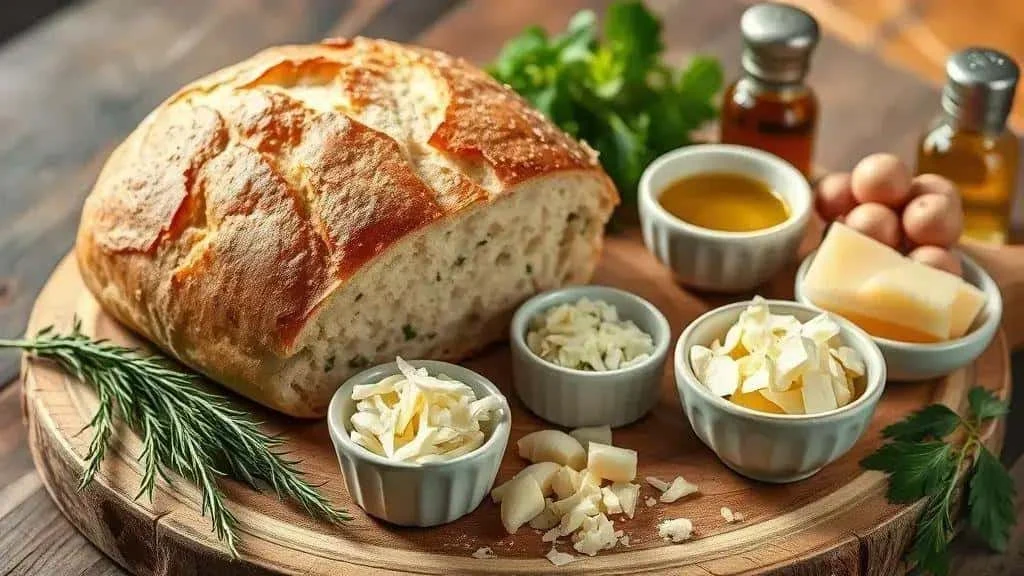
Gather the following ingredients for cheese and herb pull-apart bread. A sturdy loaf holds the filling better than a very soft sliced loaf.
- 1 large ready-baked crusty loaf, about 500 g – a round rustic loaf or sourdough works well. Use small crusty rolls for individual servings; flatbreads need a different folding method.
- 200 g grated low-moisture mozzarella for a stretchy filling; a suitable plant-based melting alternative can be used in the vegan version.
- 150 g cream cheese – or thick Brazilian requeijão. Well-drained, blended cottage cheese is an alternative but gives a different texture.
- 50 g finely grated Parmesan or vegetarian Italian-style hard cheese – choose a cheese labelled vegetarian when needed; traditional Parmesan is not vegetarian.
- 45 g melted butter – or 3 tbsp olive oil. Oil changes the flavour but is not automatically a lower-calorie substitute.
- 2 garlic cloves, crushed – or up to 1 tsp garlic powder, to taste, instead of the fresh garlic.
- 2 tbsp chopped fresh parsley – chives or basil are alternatives.
- 1 tbsp finely chopped fresh rosemary – or 1 tsp dried rosemary.
- 1 tbsp fresh thyme leaves – or 1 tsp dried thyme.
- Salt and black pepper, to taste – the cheeses may provide enough salt already.
- Optional: 50 g chopped ready-to-eat ham or cooked bacon – for a meat-free alternative, use 100 g cooked, well-drained mushrooms.
- Optional: a small drizzle of truffle-flavoured or plain olive oil to finish.
Quick ingredient tips
Mixing tip: soften the cream cheese briefly while preparing the loaf, but do not leave dairy ingredients out for an extended period. Use about one-third as much dried rosemary or thyme as fresh. For a dairy-free version, replace all the cheeses and butter and check the bread ingredients.
For a softer filling, stir in 1–2 tbsp milk or suitable plant drink only if needed. A light scattering of breadcrumbs on top adds crunch; avoid making the filling wet.
How to make cheese and herb pull-apart bread
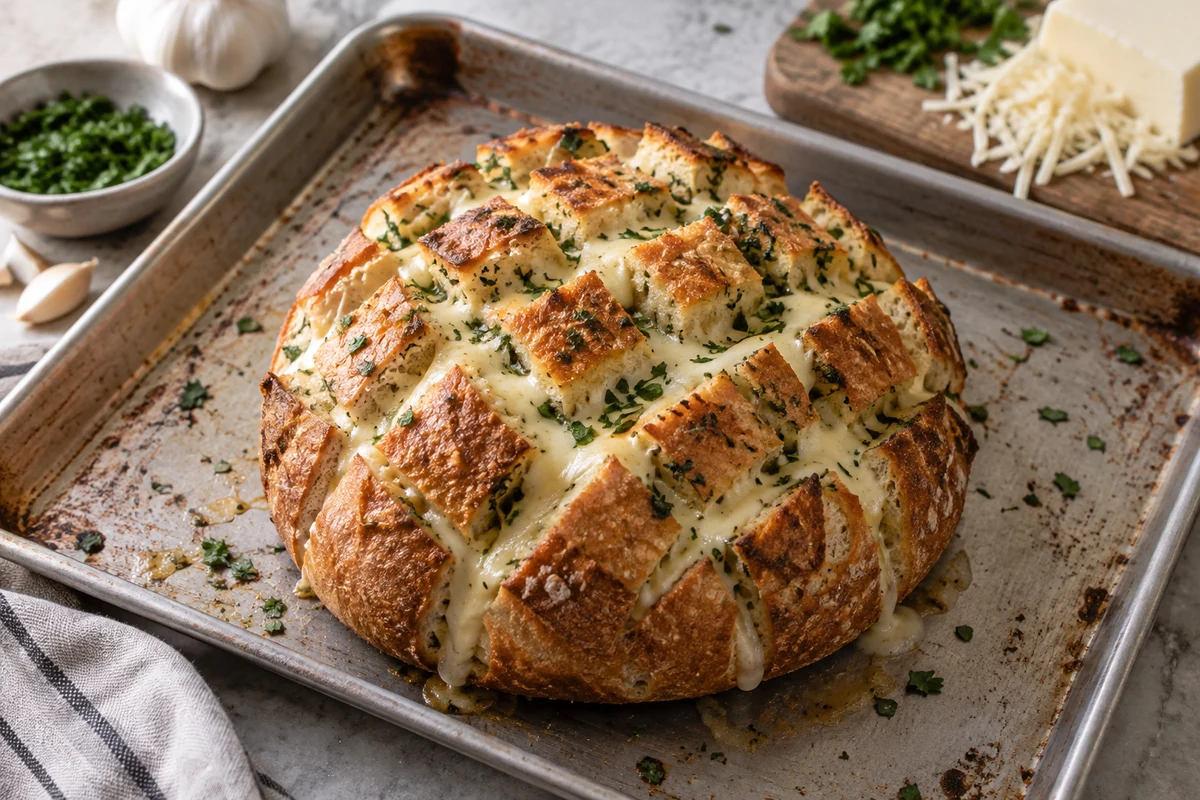
- Heat the oven: set it to 180°C conventional, 160°C fan, gas 4. Line a baking tray with baking paper suitable for the oven temperature.
- Cut the bread: use a serrated knife to cut the loaf in two directions, making a grid while leaving the base intact. Open the cuts gently. For a hollowed-loaf variation, remove a little crumb but leave a firm shell; do not combine both methods in a way that breaks the loaf.
- Make the filling: mix 200 g grated mozzarella, 150 g cream cheese, 50 g grated hard cheese, the garlic, parsley, rosemary and thyme. Add black pepper and only as much salt as needed.
- Add optional ingredients: fold in the ham, cooked bacon or cooked and drained mushrooms if using. For a vegan filling, use plant-based grated cheese and cream cheese, plus nutritional yeast in place of hard cheese, adjusting the amount to fit the loaf.
- Fill the cuts: spoon the mixture evenly between the pieces of bread, easing the cuts open without tearing the base. Do not force in more filling than the loaf can hold.
- Brush and wrap: brush the outside with the melted butter or olive oil. The garlic is already in the filling, so there is no need to add it again. Wrap loosely in foil and place on the tray.
- Bake: bake covered for around 15–20 minutes, then uncover for about 5–8 minutes to colour the top. These are starting points: a dense or refrigerated loaf may need longer for the filling to become steaming hot in the centre. If using the grill briefly, remove any exposed baking paper and watch closely.
- Check the centre: the filling should be steaming hot throughout, not merely melted at the surface, and the crust crisp and golden.
- Serve: rest for 2–3 minutes, then add fresh herbs and an optional light drizzle of oil. Serve promptly, warning guests that the cheese inside will be hot.
Practical tips
- Soften cream cheese briefly to make mixing easier; return the assembled loaf to the fridge if it is not going straight into the oven.
- Drain wet ingredients: cook mushrooms until their released liquid has evaporated, then cool before adding to a loaf that will be stored.
- Prepare ahead: assemble, cover and refrigerate for up to 8 hours before baking. For longer preparation, freeze well wrapped, then thaw fully in the fridge before baking. Do not assume a frozen whole loaf will heat through in the usual baking time.
- Extra crunch: sprinkle a little fine breadcrumb over exposed filling before the final uncovered bake.
Alternative fillings for Christmas pull-apart bread

Adapt Christmas pull-apart bread with vegetable, vegan, smoky or sweet fillings. Each combination below replaces the base filling rather than being added in full to it. Keep the amount manageable for your loaf.
Classic cheese and herbs
This variation keeps the familiar creamy, herby filling.
- 200 g grated mozzarella for melting and stretch.
- 150 g cream cheese for creaminess.
- 2 tbsp chopped parsley and 1 tbsp finely chopped rosemary, adjusting to taste.
Tip: soften the cream cheese just enough to mix, without leaving the dairy ingredients out for hours.
Vegetarian mushroom and spinach
A savoury vegetable filling with plenty of texture.
- 200 g mushrooms, sautéed and well drained – chestnut or shiitake mushrooms work well.
- 100 g cooked spinach, squeezed dry.
- 150 g ricotta or cream cheese, checking that it is suitable for vegetarians.
Seasoning: a small splash of soy sauce adds depth to the mushrooms; check allergens and avoid oversalting.
Vegan version
Replace every animal-derived ingredient, including the butter and any dairy in the loaf itself.
- About 300 g combined plant-based grated cheese and thick cream cheese alternative – choose products intended for heating.
- 1 tbsp nutritional yeast for a savoury flavour.
- Fresh herbs such as parsley and thyme.
Texture: adjust the balance of grated and creamy alternatives to suit the products, and brush the bread with olive oil instead of butter.
Smoked ham and caramelised onion
A richer filling with a smoky, savoury character.
- 150 g chopped ready-to-eat smoked ham.
- 1 large onion, caramelised and cooled.
- 100 g grated mozzarella.
Salt: taste before adding any, as the ham and cheese are already salty.
Sun-dried tomato and pesto
An aromatic, colourful filling for a different take on the starter.
- 100 g chopped sun-dried tomatoes, drained.
- 3 tbsp basil pesto – check for nuts, milk and non-vegetarian cheese where relevant.
- 100 g cheese of your choice.
To serve: offer fresh rocket alongside for contrast.
Sweet apple, cinnamon and cream cheese
Turn the bread into a sweet sharing dish or snack by replacing the savoury filling and omitting garlic and herbs.
- 2 apples, diced and cooked with 1 tbsp sugar and a little cinnamon, then cooled.
- 150 g cream cheese, lightly sweetened if desired.
Practical notes
- Cooking time: wetter or denser fillings may take longer to heat through. Check the centre rather than adding a fixed number of minutes.
- Moisture: cook and drain vegetables and mushrooms thoroughly to avoid soggy bread.
- Individual servings: small crusty rolls work well. Wraps can use similar fillings but need a different assembly and shorter cooking method.
- Freezing: assemble with cooled ingredients, wrap and freeze. Thaw fully in the fridge before baking, then check that the centre is steaming hot.
Making ahead and freezing
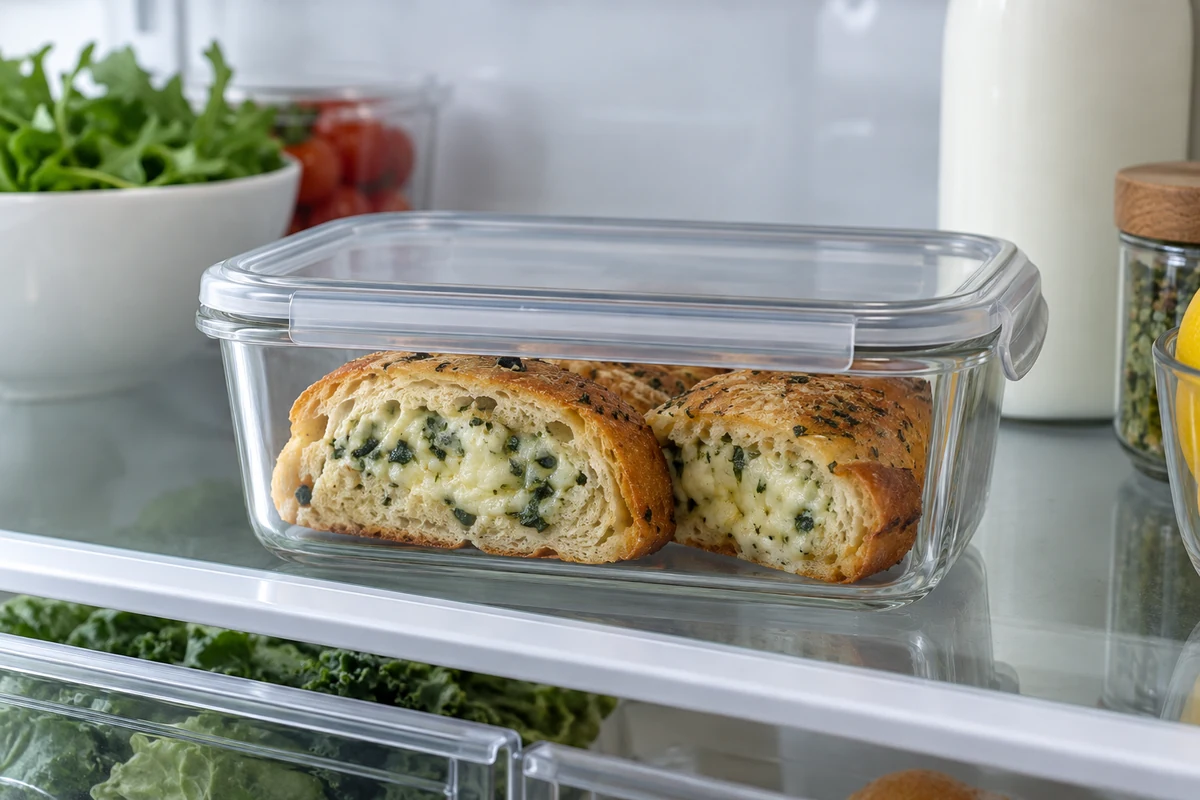
When preparing pull-apart bread ahead, manage moisture and chilling carefully so the loaf keeps its texture.
Before freezing
- Cool cooked bread promptly: divide leftovers into smaller portions so they cool quickly, and refrigerate or freeze within 1–2 hours. Do not leave a filled loaf on the counter for an extended cooling period.
- Drain the filling: cook vegetables and mushrooms, remove excess liquid and cool them before assembling for storage.
- Avoid overfilling: too much filling can leak or leave the centre slow to heat.
- Portion where possible: individual rolls or smaller portions thaw and reheat more predictably.
- Wrap for the freezer: use baking paper and suitable freezer wrapping or a freezer bag. Remove all plastic before putting the bread in an oven or air fryer.
- Label: record the filling and preparation date, and aim to use within 1–2 months for quality.
Freezing before or after the final bake
- Before the final bake: assemble the ready-baked loaf with its filling, then wrap and freeze. This is not raw bread dough. Thaw in the fridge before baking until hot throughout.
- After baking: bake fully, cool portions promptly and freeze. Do not deliberately leave a filling partly cooked for later finishing.
- Freezer quality: aim to use either version within 1–2 months. The bread and cheese may change texture slightly.
Thawing and reheating
- Thaw in the fridge: allow enough time for the size of the loaf or portion, usually overnight. Check the centre has thawed and use within 24 hours of full thawing.
- Oven reheating: heat the oven to 180°C conventional, 160°C fan, gas 4. Cover loosely with foil and heat until steaming throughout, uncovering near the end to crisp. Timing varies with size and starting temperature.
- A frozen whole loaf: thaw it in the fridge first rather than relying on a short extra baking time. The crust can brown while the centre remains cold.
- Air fryer: use small thawed portions at around 160–170°C, following the appliance instructions. Check frequently and make sure the centre is steaming hot.
- Microwave: a small portion can be heated in a microwave-safe dish, but the crust will soften. Heat evenly until steaming throughout. Reheat each portion only once.
Common make-ahead mistakes
- Wrapping hot bread tightly: traps condensation. Cool promptly in smaller portions before wrapping for storage.
- Poor wrapping: can cause freezer burn. Use suitable airtight freezer packaging.
- Rushing reheating: can leave the filling cold even though the bread is already baked. Check the centre.
- Wet fillings: drain vegetables thoroughly before assembly.
Final preparation tips
- Make smaller portions: they are easier to serve and reduce waste.
- Try a small portion beforehand: this helps you judge how your chosen loaf and cheese behave when frozen and reheated.
- Finish with fresh herbs: add them just before serving for their best aroma.
What to serve with pull-apart bread

Serve cheese and herb pull-apart bread with lighter accompaniments so the rich filling does not overwhelm the rest of Christmas dinner.
Drinks
- Brut sparkling wine: a chilled glass is one option for those who drink alcohol.
- Dry white wine: Sauvignon Blanc or a light Chardonnay can accompany the cheese and herbs.
- Rosé: a chilled, fruity style is another choice with smoky fillings.
- Light red wine: Pinot Noir is an option with ham or cooked bacon.
- Beer: lager or amber ale offers a different accompaniment.
- Alcohol-free options: sparkling water with lemon, sparkling apple juice or an iced herbal infusion work well.
Accompaniments
- A light salad: rocket with a citrus dressing gives a fresh contrast.
- Small dips: offer a little hummus or tapenade; check tapenade for anchovies if serving vegetarians.
- Olives and pickles: add a sharp, savoury contrast.
- Charcuterie: a small amount of ready-to-eat ham or salami can accompany a meat-eating version.
- Fresh fruit: grapes or sliced figs pair well with cheese.
Portions and serving temperature
- Portion guide: allow roughly 80–120 g of filled bread per person as a generous starter, or less when serving several starters. This loaf generally makes around 8–10 portions, depending on the filling and appetites.
- Serve promptly: bring it to the table after the centre has heated thoroughly and it has rested briefly, while the cheese is still soft.
Presentation
- Use a serving board: place the loaf on a clean board and provide a knife or serving utensil for separating pieces.
- Small accompaniments: a little herb butter, flavoured oil or chilli jam can be offered alongside, although the filling is already rich.
- Garnish: scatter over chopped parsley and a few herb leaves.
- Individual rolls: use small crusty rolls when individual servings are more convenient.
Christmas serving tips
- Plan the meal: serve modest portions before a substantial main course.
- Leftovers: cool promptly and refrigerate within 1–2 hours; use within 48 hours or freeze. Reheat once until steaming throughout, not simply until the crust feels warm.
- Label variations: clearly identify meat, vegetarian and vegan versions, and relevant allergens such as wheat and milk.
- Match guests’ preferences: offer a choice of drinks, including alcohol-free options.
Avoiding a soggy or uneven filling
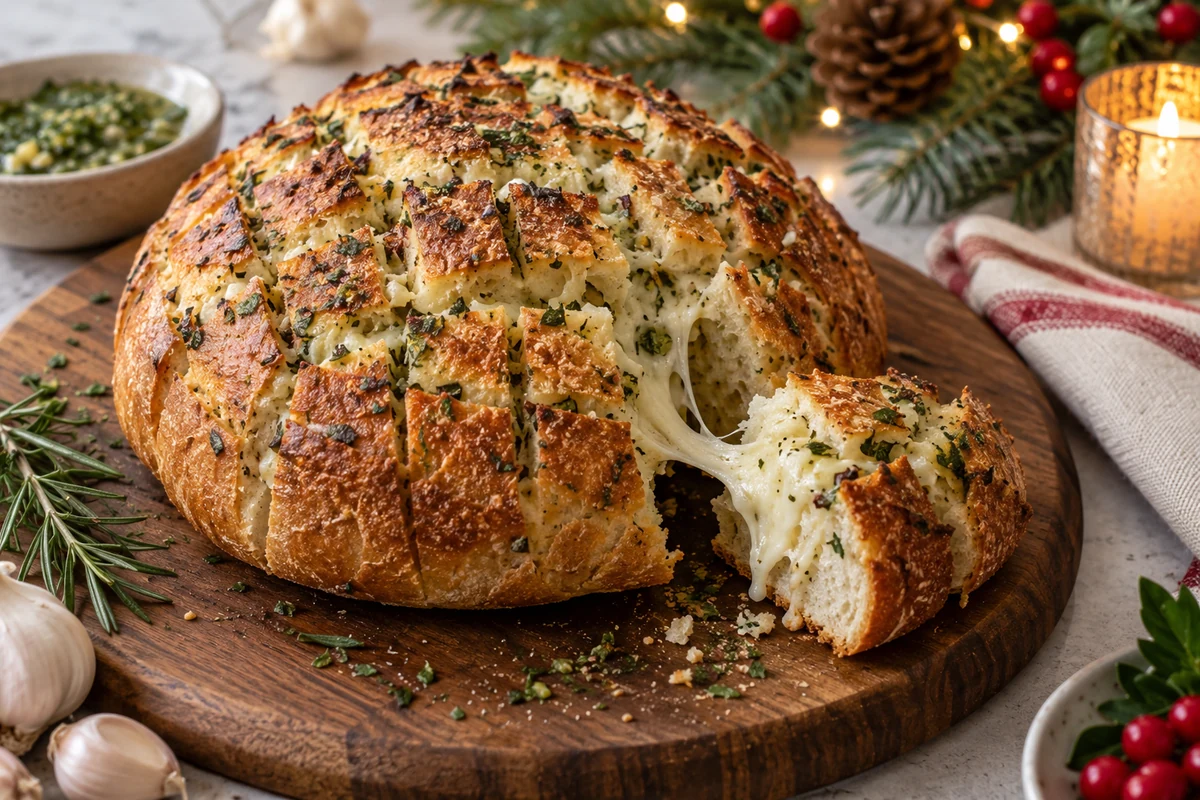
- A wet filling: vegetable liquid can soak the crumb. To prevent it, cook and drain mushrooms and squeeze cooked spinach dry before adding.
- Cheese that melts poorly: very hard cheese alone will not give a creamy filling. To prevent it, combine grated mozzarella with cream cheese and use hard cheese for flavour.
- Too much salt: cheese and cured meats can already be salty. To prevent it, taste the mixture before adding extra salt.
- A soggy centre: too much wet filling weakens the loaf. To prevent it, choose a sturdy crusty loaf, drain the ingredients and avoid adding unnecessary milk.
- Uneven filling: large clumps leave some pieces dry and others overloaded. To prevent it, spread the mixture evenly through the cuts.
Keeping the filling creamy
- Combine cheese styles: mozzarella gives stretch, while cream cheese or thick requeijão adds softness.
- Prepare vegetables properly: cook off excess moisture and drain or squeeze as appropriate before mixing.
- Balance the cheeses: the base recipe uses 250 g grated cheeses and 150 g cream cheese. Adjust slightly for your products without making the mixture runny.
- Season gradually: add pepper and herbs first, then decide whether salt is needed.
- Deal with moisture at its source: drain wet ingredients rather than adding raw flour or cornflour to the cheese mixture. A little breadcrumb is an option, but should not be needed in a well-drained filling.
- Do not overfill: use thin, evenly distributed layers between the bread pieces.
- Brush the outside: butter or olive oil encourages browning; it does not create a watertight seal.
- Control the bake: cover first to help heat the middle, then uncover briefly to crisp the crust.
- Rest briefly: wait 2–3 minutes before serving so the filling is easier to handle.
Quick substitutions
- Dairy-free: use suitable plant-based cream cheese, melting cheese and olive oil, and check the loaf. Dairy-free and lactose-free are not identical labels, particularly for someone with a milk allergy.
- Flavour without extra salt: use parsley, thyme or a little roasted garlic.
- A firmer filling: reduce the cream cheese slightly or add a little more grated cheese.
- Try the mixture first: heat a small spoonful separately to assess the texture before filling the whole loaf.
Cheese and herb pull-apart bread makes a flexible Christmas starter. Keep the filling well drained, check it heats through and choose modest portions to suit the rest of the meal.
Follow our social channels for more recipes and visit I Love Christmas for seasonal inspiration.
Enjoy making your own version for the Christmas table.
Pull-apart bread: frequently asked questions
How long can I freeze filled bread?
Wrap it in suitable freezer packaging, label it and aim to use within 1–2 months for quality. Freeze cooked leftovers promptly after cooling, or freeze the assembled ready-baked loaf before its final bake.
Can I assemble it before Christmas dinner?
Yes. Cover and refrigerate the assembled loaf for up to 8 hours. For longer preparation, freeze it and thaw fully in the fridge before baking. Check that the filling becomes steaming hot throughout.
How do I reheat it while keeping the crust crisp?
Use an oven at 180°C conventional, 160°C fan, gas 4. Cover loosely with foil at first, heat until the centre is steaming hot, then uncover briefly to crisp. Reheat only once.
How can I make the recipe vegan?
Use plant-based grated cheese and cream cheese, nutritional yeast instead of hard cheese, and olive oil instead of butter. Check the loaf is vegan and choose cooked vegetables rather than meat.
How can I stop the filling becoming soggy?
Cook and drain vegetables thoroughly, use a sturdy loaf and avoid overfilling. Add milk only if the mixture really needs loosening; there is no need to mix raw flour into it.
Sources and Further Reading
- Food Standards Agency: cooking food safely
- Food Standards Agency: chilling, freezing and defrosting food safely