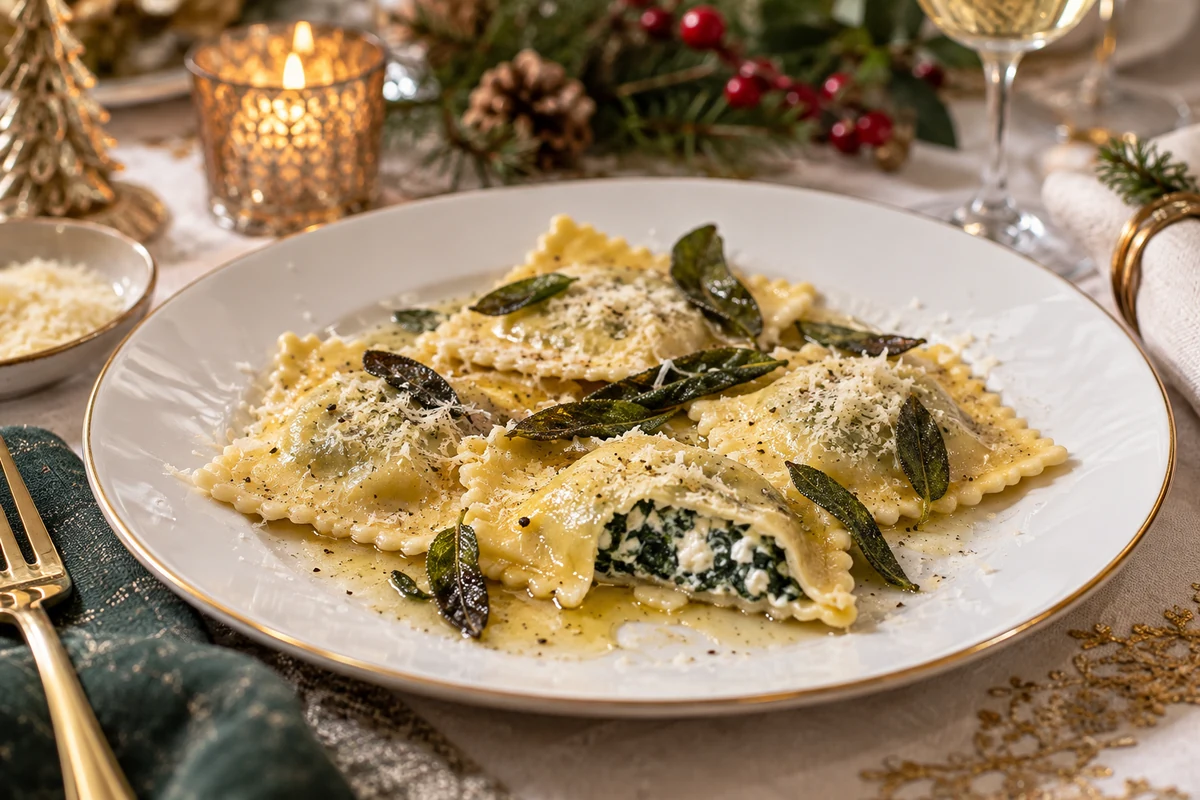
Vegetarian Christmas ravioli pairs homemade pasta with ricotta and spinach or other festive fillings. Use cheese labelled suitable for vegetarians, keep fillings cool and firm, seal the pasta carefully and cook it thoroughly. Vegan and gluten-free versions need suitable dough as well as changes to the filling and sauce.
Vegetarian Christmas ravioli can be a centrepiece or a smaller starter. This guide covers an egg-pasta version and separate filling ideas. It has been editorially reviewed, but not kitchen-tested, so make a small trial batch before a special occasion and adjust the dough for your flour and eggs.
Ingredients for Christmas ravioli
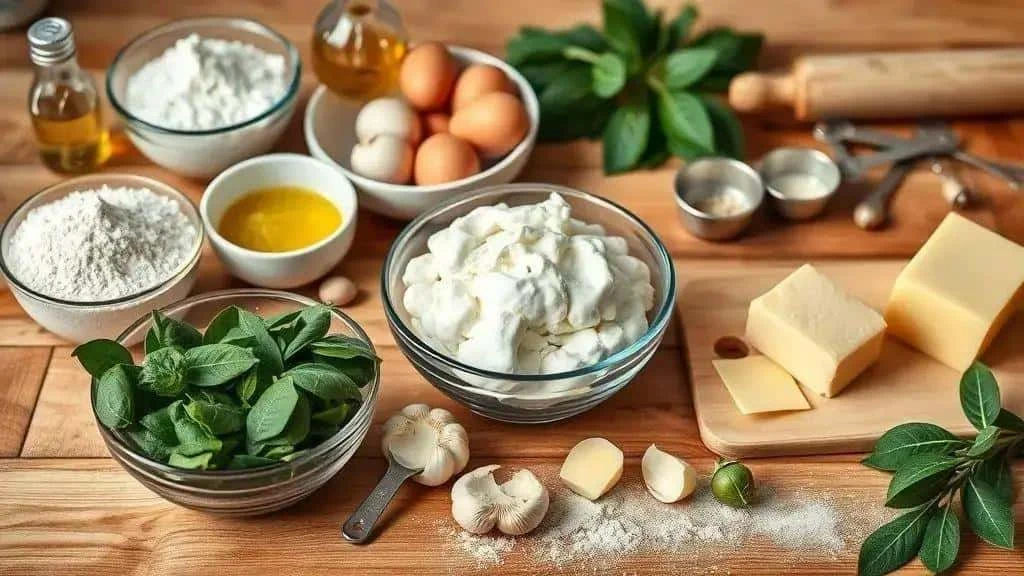
Organise the ingredients for the Christmas ravioli into dough, filling and sauce. Make one dough and choose one filling and sauce rather than adding all the variations together.
For the pasta dough
- 300 g plain or Italian 00 wheat flour in total – the optional semolina below replaces part of this amount. Gluten-free flour needs its own suitable pasta recipe, not a direct swap.
- Up to 100 g finely milled semolina, optional – replace up to 100 g of the flour, keeping the total at 300 g. Do not add it on top of the 300 g.
- 3 large eggs – this makes egg pasta. For vegan ravioli, use a tested egg-free dough with hydration appropriate to its flour, rather than assuming one fixed water replacement works.
- 1 tbsp olive oil – for the dough, plus a separate tablespoon for softening the filling’s onion and garlic.
- A pinch of salt – optional in the dough; the filling and cooking water are seasoned separately.
- A little extra flour for dusting – use sparingly.
For the ricotta and spinach filling
- 400 g firm ricotta, well drained – check it is suitable for vegetarians. The vegan filling below uses tofu and cashews instead.
- 200 g cooked spinach, weighed after squeezing dry – finely chopped. Cooked, well-drained chard or kale is an alternative with a different texture.
- 50 g grated vegetarian Italian-style hard cheese – check for vegetarian rennet; standard Parmesan is not a suitable automatic choice. Nutritional yeast is an option for a separate vegan filling.
- ½ small onion, finely chopped – or a little spring onion.
- 1 garlic clove, chopped – or ¼ tsp garlic powder.
- A small pinch of grated nutmeg.
- Salt and black pepper, to taste.
For the sauce and finishing
- 80 g butter – for the sage sauce. A suitable plant-based alternative or about 3 tbsp olive oil gives a different finish.
- 8 fresh sage leaves – thyme or basil can replace them, with a different flavour.
- 200 ml cream, only for an optional cream sauce – not an addition to the butter sauce. A suitable plant-based cooking cream is an alternative.
- Optional olive oil and vegetarian hard cheese for serving – use vegan toppings for an entirely vegan meal.
- Freshly ground black pepper – to finish.
Practical note: dry fillings are easier to seal. The amount of filling used depends on ravioli size and dough thickness; do not overfill to use it all. Refrigerate unused filling promptly and use it within its safe storage period.
How to make Christmas ravioli
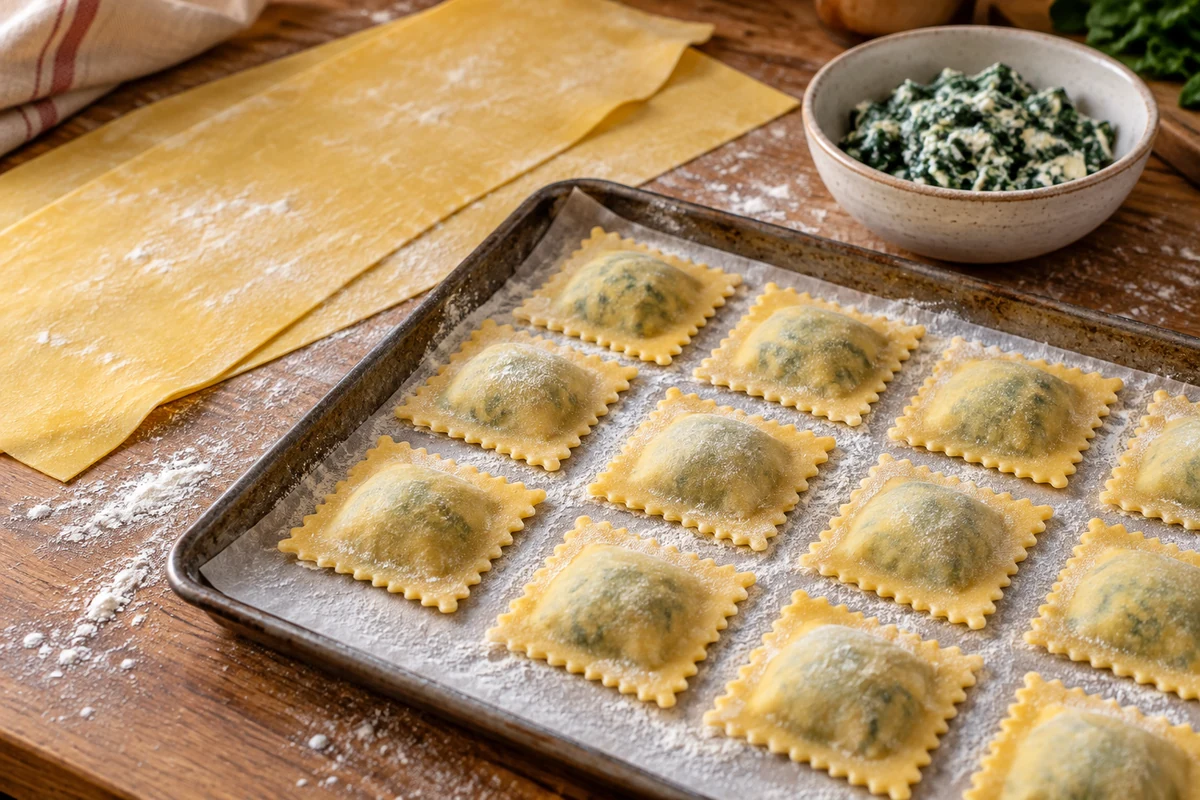
- Prepare your workspace: weigh the ingredients and have a little flour and water ready for dusting and sealing. Raw flour and raw egg dough should not be tasted.
- Combine the dry ingredients: mix 300 g total flour, including any semolina used as a replacement, with the optional pinch of salt. Make a well in the middle.
- Add the eggs and oil: break in the 3 eggs and add 1 tbsp olive oil. Mix gradually with a fork, drawing in flour until a rough dough forms.
- Knead: work the dough for about 8–10 minutes until smooth. If very dry, add water a few drops at a time; if sticky, dust sparingly with flour.
- Rest: wrap and rest for about 30 minutes. Keep preparation time at room temperature brief; refrigerate if delaying further, especially in a warm kitchen.
- Prepare the filling: soften the onion and garlic in the separate 1 tbsp oil, add the cooked, squeezed and chopped spinach, then cool promptly before combining with the dairy ingredients.
- Mix: combine the ricotta, cooled spinach mixture, vegetarian hard cheese and nutmeg. Season to taste and keep chilled while rolling the pasta.
-
Rolling and shaping
- Divide and roll: cut the dough into 4 portions, keeping unused pieces covered. Roll thinly with a pin or pasta machine, aiming for about 1 mm where practical, without tearing.
- Portion the filling: space small mounds on the sheet, leaving a generous clean border around each. Around 10 g may suit a medium raviolo, but the cutter size determines how much it can hold.
- Seal carefully: lightly dampen the border, fold or cover with another sheet, and press around the filling to expel air. Cut the ravioli and press the edges closed.
- Avoid overfilling: keep the filling firm and the borders clean. Wet spinach or loose ricotta makes sealing harder.
- Arrange on a tray: place the ravioli separately on a lightly floured tray. Cook promptly or refrigerate while finishing the batch rather than leaving filled pasta out to dry for a long time.
- Cook in batches: lower into a large pan of gently boiling salted water. Floating is not proof of doneness: check that the pasta is cooked, including the sealed edges, and that the filling is steaming hot throughout.
- Make the sage sauce: gently heat the 80 g butter with the sage until fragrant and lightly golden, without burning. Lift in the cooked ravioli and coat carefully. Use a separate suitable vegan sauce for vegan ravioli.
- Freeze ahead if wanted: freeze uncooked assembled ravioli in one layer until firm, then pack in freezer-safe containers. Cook from frozen in gently boiling water, allowing longer and checking the filling thoroughly rather than adding a fixed minute or two.
- Serve: finish with the appropriate cheese, pepper and herbs. Lemon zest or separately offered toasted nuts can add contrast; check guests’ allergies.
Christmas ravioli variations

These Christmas ravioli ideas offer different fillings and presentations. Vegan and gluten-free versions require a suitable dough as well as the right filling, sauce and toppings.
Ricotta and spinach: the base filling has a mild flavour that works with a simple sauce.
- Key ingredients: drained ricotta, squeezed cooked spinach, nutmeg and vegetarian hard cheese.
Squash and sage: roasted squash gives a sweet filling that suits sage butter or an appropriate plant-based sauce.
- Key ingredients: drained roasted squash, vegetarian goat’s cheese or thick plant-based cream, and a small pinch of nutmeg.
Mushroom ravioli: a well-reduced mushroom filling pairs with tomato sauce or a little balsamic glaze.
- Key ingredients: cooked mushrooms, onion, garlic and a little cream or thick cashew cream.
Vegan tofu and cashew filling: pressed tofu and a thick cashew mixture replace the dairy filling. Use egg-free dough and a vegan sauce too.
- Key ingredients: pressed tofu, cashews, nutritional yeast, lemon and herbs; check soy and nut allergies.
Gluten-free pasta: use a tested recipe or pasta mix designed for filled pasta, following its liquid and binder quantities. Wheat flour and semolina are not gluten-free.
- Work carefully: gluten-free dough may handle differently. Follow that recipe’s resting and rolling instructions rather than assuming the wheat method applies.
Baked ravioli: cook the ravioli through first, then transfer to a suitable baking dish with hot sauce and an appropriate topping for a brief browning stage.
- Sauce idea: tomato or plant-based cream sauce can work; choose cheese or crumbs suitable for the guests’ dietary needs.
Small starter ravioli: make smaller parcels and serve a few with oil, herbs and lemon zest.
- Filling amount: use less than for a medium raviolo, leaving enough border to seal. A fixed 6–8 g may still be too much for a very small cutter.
Sauce pairings
Sage butter: a simple option for ricotta or squash filling, if dairy is suitable.
Tomato sauce: works with mushroom and other savoury fillings.
Cashew or walnut sauce: can be vegan when all ingredients are suitable, but introduces nuts as an allergen.
Finishing touches: lemon zest, pepper or a few toasted nuts can be enough; avoid overwhelming a delicate filling.
Practical reminders: drain the filling, leave clean borders and freeze parcels separately before packing so they keep their shape.
Festive filling options
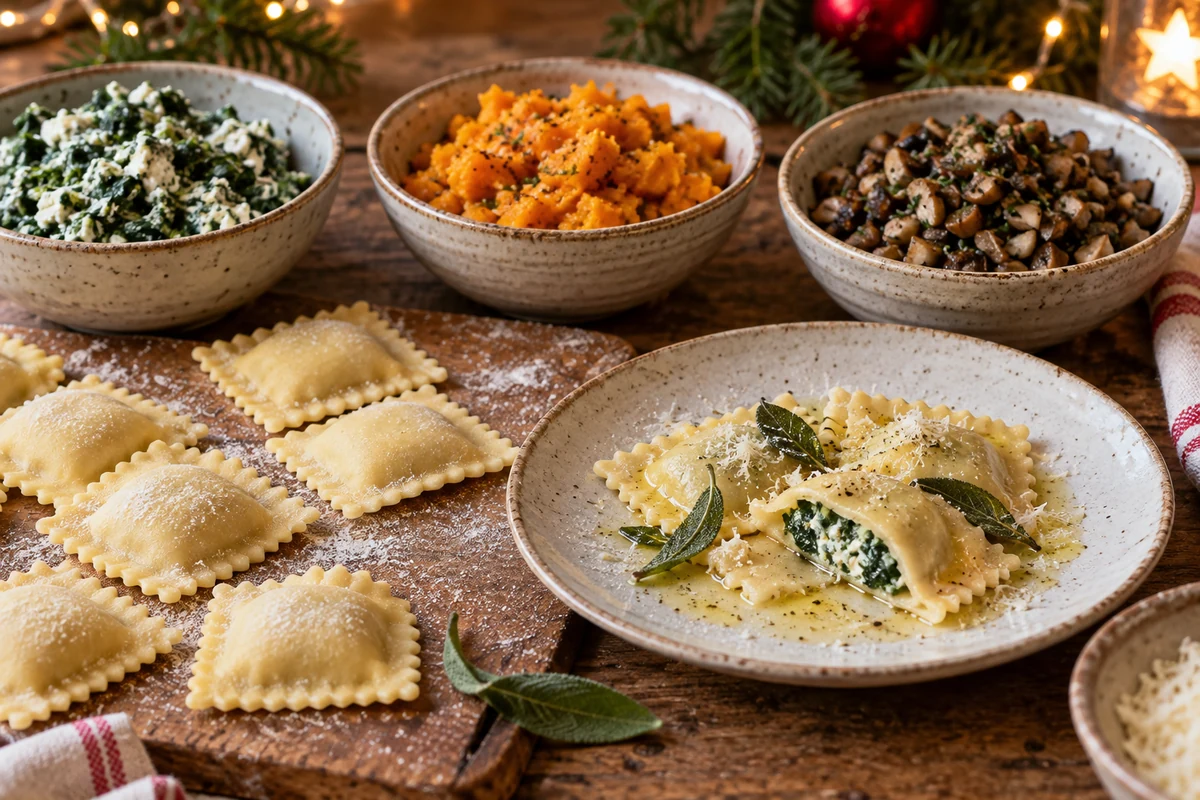
The ricotta filling below repeats the base recipe for reference; do not make it twice. The other fillings are separate alternatives with different yields, so adjust to your dough and ravioli size.
Ricotta and spinach filling
- 400 g firm, drained ricotta – check vegetarian suitability.
- 200 g cooked spinach, squeezed dry and chopped – weigh after draining.
- 50 g grated vegetarian Italian-style hard cheese – not standard animal-rennet Parmesan.
- ½ small onion, chopped.
- 1 garlic clove, chopped.
- A pinch of nutmeg, salt and black pepper – to taste.
- Soften the aromatics: use the separate 1 tbsp olive oil to soften onion and garlic, then cool promptly.
- Prepare the spinach: cook if needed, squeeze well and chop finely before weighing the 200 g.
- Combine: mix ricotta, spinach, cooled aromatics, cheese and nutmeg, season and keep chilled until filling the pasta.
Squash and sage filling
- 400 g roasted squash, drained and mashed – such as butternut or kabocha; weigh the cooked flesh.
- 50 g vegetarian goat’s cheese or cream cheese – or a thick plant-based alternative for vegan filling.
- A small pinch of grated nutmeg – with a few finely chopped sage leaves if desired.
- Salt and pepper, to taste.
- Roast the squash: prepare it safely, cut into pieces, coat lightly with oil and roast at 200°C conventional/180°C fan until tender. Cool and drain any excess moisture.
- Mash and mix: weigh 400 g cooked flesh, mash and combine with the cheese or thick plant-based alternative.
- Season: add nutmeg, optional sage, salt and pepper. Chill the firm filling until needed; do not use it warm or runny.
Creamy mushroom filling
- 300 g cultivated edible mushrooms – such as chestnut mushrooms and shiitake, cleaned and finely chopped.
- ½ onion, chopped.
- 1 garlic clove, chopped.
- 2 tbsp cream – or thick cashew cream for a vegan option.
- Salt, pepper and thyme – to taste, with a little oil for the pan.
- Cook the mushrooms: sauté in a little oil until thoroughly cooked and their released moisture has evaporated.
- Add aromatics: stir in onion, garlic and thyme and cook until softened, without burning the garlic.
- Reduce with cream: add the cream and cook until the mixture holds together rather than running. Season, cool promptly and refrigerate until needed.
Vegan tofu and cashew filling
- 400 g firm tofu, pressed – remove excess moisture and follow the product’s handling instructions.
- 60 g cashews, weighed before soaking – soak according to a suitable preparation method, keeping any overnight soak refrigerated, then drain.
- 1 tbsp nutritional yeast.
- Juice of ½ lemon, salt, pepper and herbs – add gradually to avoid a wet filling.
- Blend the cashews: process the drained nuts with lemon juice, adding only enough liquid for a thick paste.
- Crumble the tofu: combine with the cashew paste and nutritional yeast.
- Season and chill: add herbs, salt and pepper and keep the filling firm. Use it with a suitable egg-free dough and cook the filled pasta thoroughly.
Filling tip: squeeze excess moisture from vegetables and tofu, keep the mixture chilled and use a quantity appropriate to each parcel’s size. Around 10 g suits some medium ravioli, but not every cutter.
Rolling, sealing and cooking ravioli
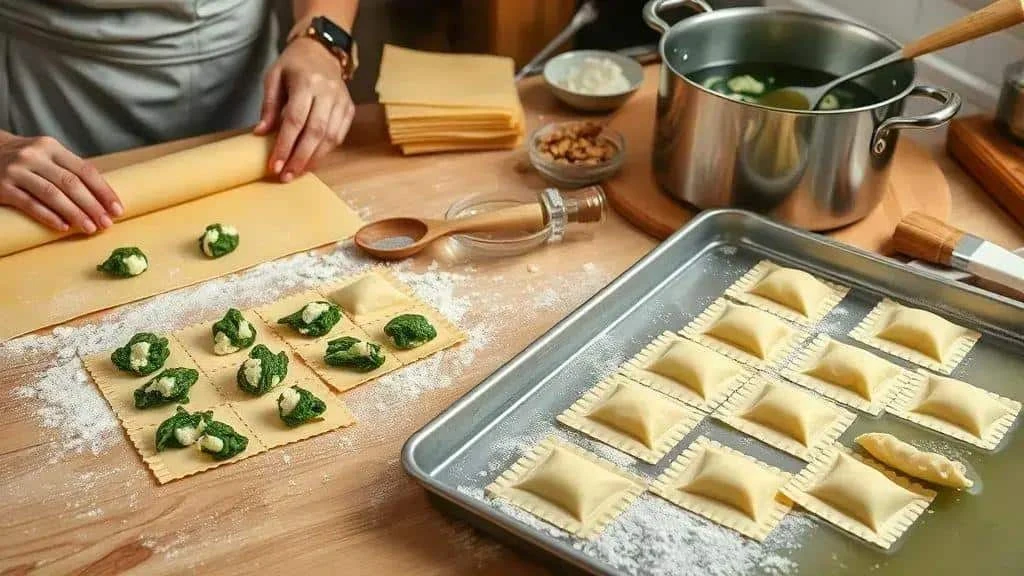
Have a rolling pin or pasta machine, a small bowl of water, a pastry brush if wanted, and a lightly floured tray ready.
- Dust lightly: use enough flour to prevent sticking while keeping unused dough covered so it does not dry out.
- Roll thinly: work in manageable sections and aim for an even sheet about 1 mm thick where possible. Thick doubled edges take longer to cook.
- Space the filling: leave room for the cutter and a clean sealing border around each mound. Do not crowd 10 g portions into gaps too small to close properly.
- Dampen lightly: brush a little water on the borders, avoiding puddles or wet filling smeared across the seal.
- Cover and press: lay the second sheet over the filling and press gently around each mound to expel trapped air before cutting.
- Reinforce the edge: use fingertips or a fork gently, without piercing the pouch. A suitable cutter or mould can help keep the shapes consistent.
- Use firm filling: drain before assembling. Adding more cheese or tofu may change the proportions, so do so only if it suits the particular filling.
- Keep ready parcels cool: arrange separately on the tray and refrigerate if they are not going straight into the pan.
- Use enough water: cook in a large pan of gently boiling water, salted to taste, leaving room for the parcels to move.
- Check a sample: floating alone is not enough. Cut one open to check the pasta, including the edge, and that the filling is steaming hot throughout. Timing depends on size, thickness and starting temperature.
- Lift and drain: use a slotted spoon rather than roughly tipping delicate parcels into a colander, then transfer to the hot sauce.
- From frozen: cook small batches without thawing, allow longer and check the centre. Keep the water bubbling gently enough not to batter the seals.
- If a parcel opens: remove it carefully and check the remaining seals before cooking more. Oil in the water will not repair an open raviolo.
- Serve promptly: coat gently in the sauce with a spoon and bring to the table while hot.
Improving the seal
- Press around the filling: work from close to the mound outwards to expel air; do not press an X through the filling and split the pasta.
- Water is usually enough: a light brushing helps the edges adhere. Egg white is optional for egg pasta but is not vegan and must be handled as raw egg.
- Use a suitable mould: follow its instructions, dust lightly and avoid overfilling the cavities.
Test before the full batch: cook one parcel fully to check its seal, texture, filling temperature and seasoning.
Making, freezing and storing ravioli ahead
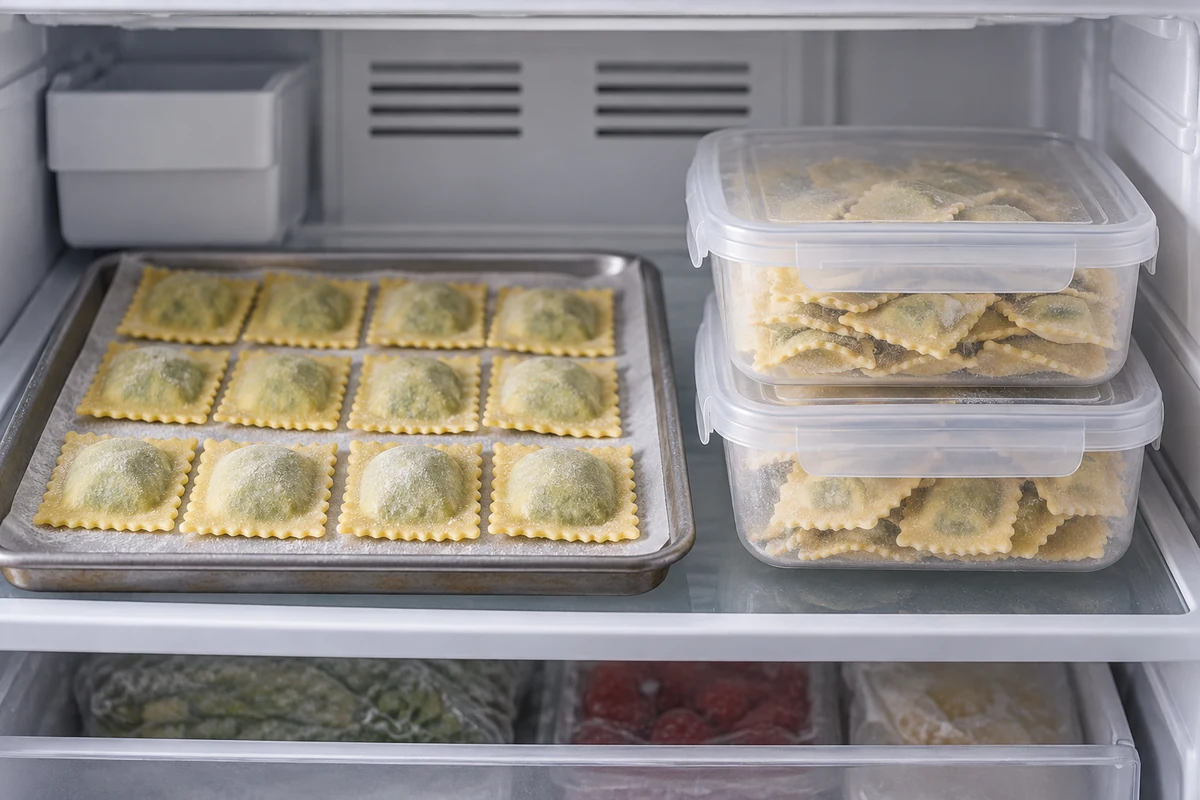
- Start with cool filling: work with small amounts while keeping the remainder chilled and the dough covered.
- Portion consistently: use a spoon or piping bag, adjusting the amount to the cutter and leaving enough clean border around each mound.
- Seal: lightly dampen, cover, expel air and cut. Reinforce gently without piercing the filling pouch.
- Arrange separately: place on a floured or parchment-lined tray without letting the parcels touch.
- Keep chilled: refrigerate while completing the batch, or freeze promptly if preparing further ahead.
Freezing uncooked assembled ravioli
- Freeze in one layer: put the tray in the freezer until the parcels are firm, often about 1–2 hours depending on size and freezer performance.
- Pack carefully: transfer to freezer-safe bags or containers and separate layers with parchment if needed.
- Limit trapped air: close bags without crushing the pasta. Vacuum packing is not necessary and does not automatically extend safe storage.
- Label and date: note the filling, preparation date and cooking instructions. Aim to use within two to three months for best quality.
Refrigerator storage
- Uncooked assembled ravioli: keep covered and refrigerated, preferably cooking within 24 hours and always within the shortest ingredient use-by limit.
- Cooked leftovers: cool and refrigerate within one to two hours and eat within 48 hours, or freeze promptly. Reheat only once until steaming hot throughout.
- Keep sauce separate where practical: it helps preserve texture; observe the same safe cooling and storage requirements.
- Keep the fridge at 0–5°C: minimise time out during preparation and service. Earlier storage of a filling still counts; assembling pasta does not reset its shelf life.
Cooking directly from frozen
- Use a large pan: bring plenty of water to a gentle boil and salt to taste.
- Work in small batches: avoid dropping the water temperature sharply or crowding the parcels together.
- Check the centre: allow enough time for the pasta edges to cook and the filling to become steaming hot throughout. Do not count only a fixed number of minutes after floating.
- Finish in hot sauce: lift with a slotted spoon and coat gently. Avoid prolonged simmering that makes the pasta break apart.
- For a baked finish: cook the frozen ravioli through in water first, then combine with hot sauce in an oven-safe dish and brown the topping. Do not assume every raw frozen parcel cooks safely in a short covered bake.
Defrosting considerations
- Cooking from frozen: can help the parcels keep their shape, provided you allow enough time to cook them through.
- If thawing: use the fridge, keeping the pasta covered on a tray, and cook within 24 hours of complete defrosting.
- Avoid repeated thawing and freezing: pack portions you can use in one session and follow the filling ingredients’ guidance.
Packing and labelling
- Suitable containers: use freezer bags or boxes, protecting the parcels from crushing and freezer burn.
- Clear instructions: label the filling and date, plus ‘cook from frozen until the pasta is cooked and the filling is steaming hot’.
- Quality guide: aim for two to three months in the freezer. Packaging alone does not justify a universal six-month quality guarantee.
Plan a trial: cook a small sample before the celebration to check the dough, filling and method, keeping the sauce separate until serving.
Drinks and presentation for Christmas

Keep the presentation simple enough that the ravioli reach the table hot. Choose a sauce and garnish that complement the filling.
Drink pairings
- Optional white wine: Sauvignon Blanc or an unoaked Chardonnay may suit ricotta and spinach if guests choose to drink alcohol.
- Optional red wine: Pinot Noir or a fruitier Merlot can accompany mushroom or squash fillings.
- Optional sparkling wine: a dry style offers another pairing; check vegetarian or vegan suitability if that matters to your guests.
- Alcohol-free options: sparkling water with lemon, sparkling apple juice or a chilled fruit infusion. Ordinary cider contains alcohol and should not be listed as an alcohol-free drink.
Putting the plate together
- Combine while hot: lift the cooked ravioli into the warm sauce and coat gently just before serving.
- Use suitable warmed plates: follow the crockery’s heat instructions and avoid handling excessively hot dishes.
- Adjust the portion to size: a few large parcels may make a starter, while small ravioli need more per serving. Four tiny pieces are not equivalent to four large ones; test the yield before planning the guest count.
- Garnish sparingly: a little washed herb, zest or optional toasted nuts adds interest without hiding the pasta.
- Arrange gently: spread the parcels in a shallow layer rather than stacking them so tightly that they stick or split.
- Check the sauce consistency: reduce a watery sauce separately before coating the ravioli.
Festive finishing details
- Add colour: herbs and lemon zest contrast with the pasta without requiring elaborate decoration.
- Offer crunch separately: toasted nuts or seasoned crumbs suit some fillings, but introduce allergens or gluten that need checking.
- Use an aromatic finish: sage or a small amount of lemon zest can be enough; a sweet glaze is optional rather than necessary.
- Keep table decorations clear of food: simple napkins and a small arrangement away from serving space leave room for the dishes.
- For a buffet: serve smaller batches and replenish them, using appropriate hot holding if service is prolonged rather than leaving pasta lukewarm.
Try a serving beforehand: check portion size, seasoning and how the pasta handles before relying on it for a large meal.
Enjoy your festive ravioli
Homemade filled pasta offers plenty of possibilities for a vegetarian Christmas meal. A suitable cheese, a firm filling and a sound seal matter more than elaborate presentation.
Test a small batch ahead, then prepare or freeze manageable portions using the storage guidance above. Keep dietary substitutions consistent across dough, filling, sauce and garnish.
Thank you for reading. Explore the I Love Christmas blog for more festive recipes and serving ideas.
Vegetarian Christmas ravioli: frequently asked questions
How can I stop ravioli opening in the pan?
Use a firm, well-drained filling, leave clean borders, dampen lightly and expel air before sealing. Match the filling amount to the cutter, cook gently and test one parcel before the full batch.
Can I freeze uncooked ravioli and cook them from frozen?
Yes. Freeze assembled parcels separately until firm, then pack and label them. Cook in gently boiling water from frozen, allowing enough time for cooked pasta edges and a steaming-hot filling; a fixed extra minute or two is not reliable for every size.
How do I make vegan or gluten-free ravioli?
Vegan ravioli need egg-free dough, a suitable plant-based filling, sauce and toppings. Gluten-free versions need a tested gluten-free pasta recipe and suitable ingredients throughout; wheat flour and semolina cannot remain in the dough. Prevent cross-contact where needed.
Which sauce works well?
Sage butter suits ricotta or squash, tomato sauce suits mushrooms, and a suitable plant-based sauce works for vegan ravioli. Check nuts, milk and other allergens in every option.
How long can I store ravioli?
Preferably cook uncooked assembled ravioli within 24 hours in the fridge, respecting the shortest ingredient limit. Cool cooked leftovers promptly and use within 48 hours, reheating only once if appropriate. Frozen parcels are best used within two to three months for quality.
How can I fix a filling that is too wet?
Drain and squeeze vegetables or tofu before mixing, use firm ricotta and reduce cooked mushroom moisture before cooling. Additions such as cheese or crumbs change flavour and allergens, so use them only if suitable. Keep the filling cool and avoid overfilling.
Sources and Further Reading
- Food Standards Agency: Cooking Your Food
- Food Standards Agency: Chilling, Freezing and Defrosting Food