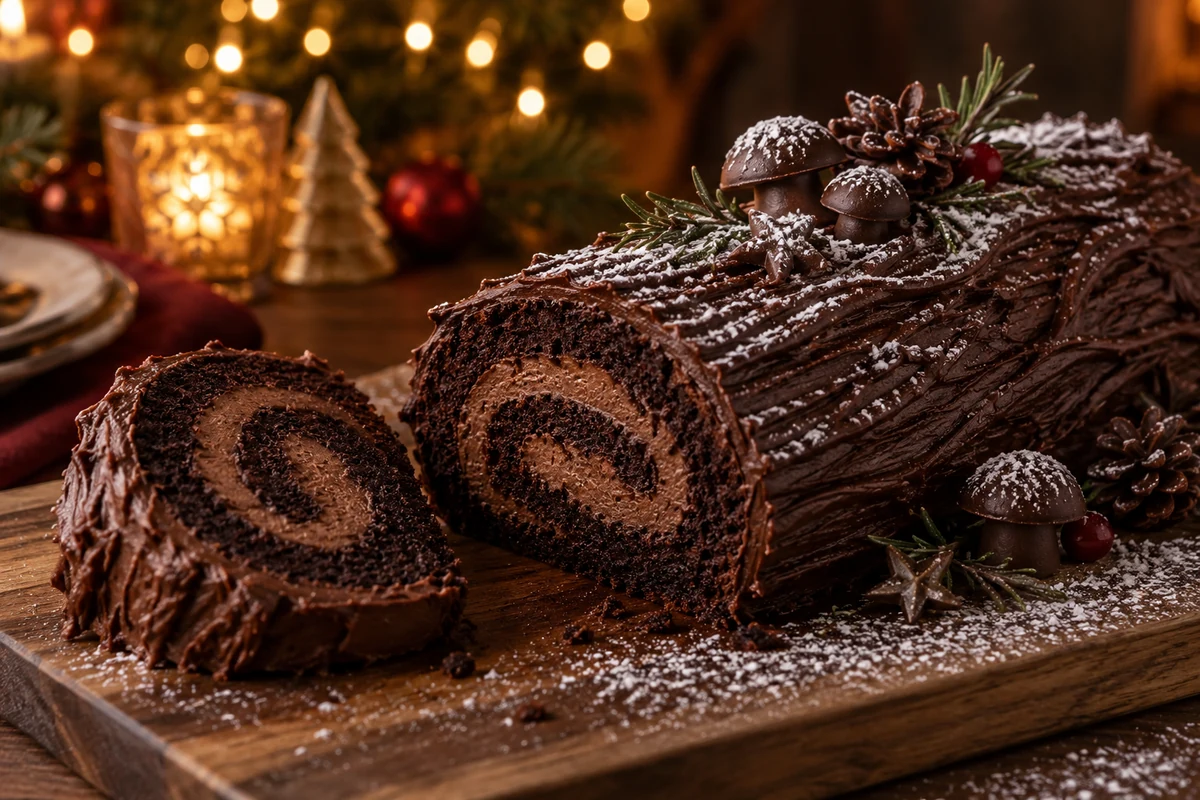
A chocolate Yule log combines a light cocoa sponge with spreadable chocolate ganache, rolled and decorated to resemble a log. This recipe includes shaping and chilling tips, flavour ideas and guidance on dietary adaptations. A 30 × 40 cm sponge makes approximately 10–12 slices.
This chocolate Yule log makes a festive centrepiece without needing a perfectly smooth finish. The rustic ganache bark can disguise small cracks, while careful baking and rolling help the sponge stay flexible.
Ingredients for a chocolate Yule log
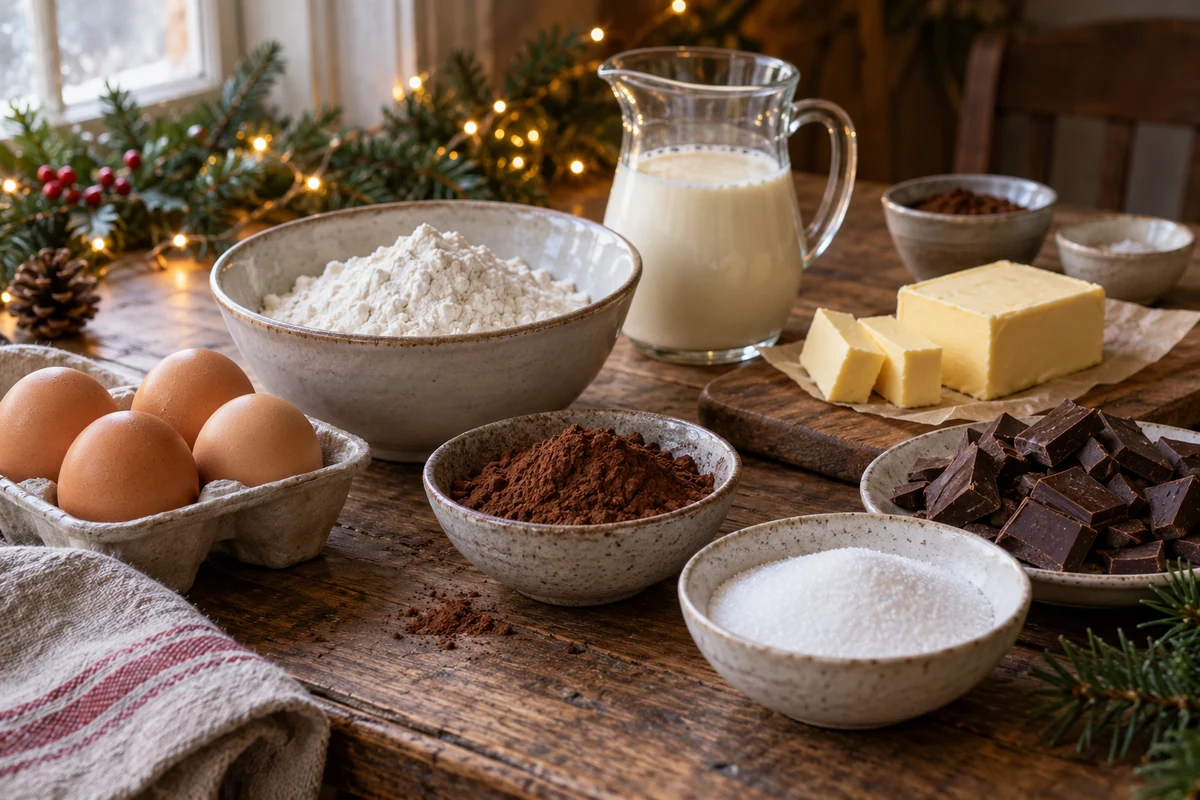
- 4 large eggs, separated – use the stated size rather than automatically adding an extra medium egg, which changes the batter volume.
- 120 g caster sugar – fine sugar dissolves more readily in the eggs. Coconut sugar changes the colour, flavour and texture rather than making an identical substitute.
- 1 teaspoon vanilla extract, optional.
- 90 g plain flour, sifted – for gluten-free baking, see the adaptation notes below.
- 30 g unsweetened cocoa powder – drinking chocolate contains added sugar and is not a direct replacement.
- A pinch of salt – to balance the chocolate flavour.
- 30 g unsalted butter, melted and cooled until just lukewarm – 30 ml neutral vegetable oil is an alternative, with a slightly different texture.
For the ganache filling and coating
- 200 g dark chocolate, finely chopped – use around 60–70% cocoa solids. Milk chocolate sets differently and needs an adjusted ganache recipe.
- 200 ml double cream – a suitable plant-based cream can be trialled for a dairy-free ganache, checking the chocolate and other ingredients as well.
- 50 g unsalted butter, cubed – adds richness to the ganache. A firm plant-based baking block can be used in a fully dairy-free adaptation.
- 100 g mascarpone or cream cheese, optional – use only as an alternative filling addition, mixing it into the cooled portion reserved for the inside. Omit it for the main chocolate ganache version.
- 30–50 g icing sugar, optional – only if sweetening the optional cream cheese filling, to taste. The main ganache does not need it.
Decoration
- Extra cocoa powder – for lightly shading the bark effect.
- A little icing sugar – sift over the top to suggest snow.
- Clean culinary rosemary or edible mint – optional greenery for the serving plate. Remove woody rosemary sprigs before eating.
- Washed edible berries, optional – raspberries or redcurrants add colour. Never substitute decorative holly berries or unidentified foliage.
- Ready-made meringue decorations – or use a separate meringue recipe to make mushroom shapes.
- Extra chocolate, optional – for curls or small edible decorations.
- Rum or brandy, optional – add up to 1–2 tablespoons to the ganache, allowing for a softer set. Concentrated rum flavouring needs only the amount on its label, not tablespoons.
How to make a chocolate Yule log
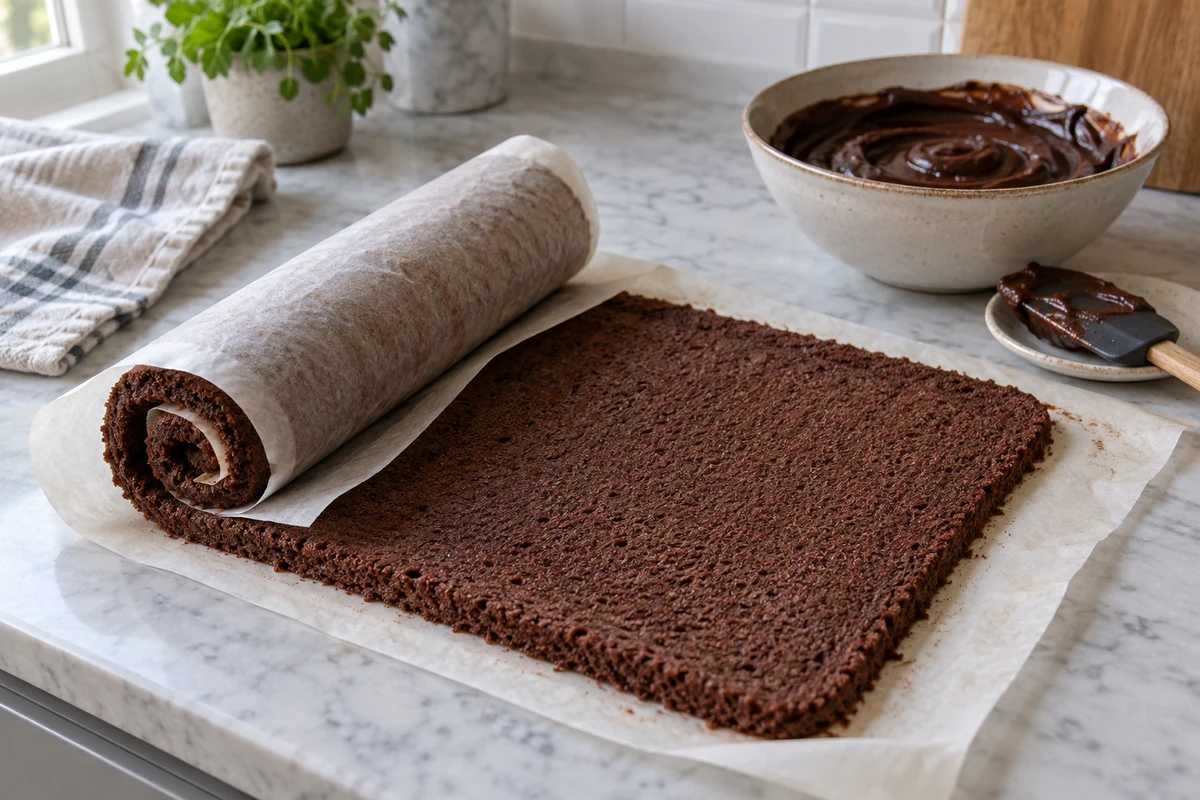
- Preheat to 200°C conventional or 180°C fan. Line a 30 × 40 cm Swiss roll tin with baking parchment and grease the parchment lightly.
- Separate the 4 eggs, placing the whites in a clean, grease-free bowl and the yolks in another bowl.
- Whisk the whites to firm, glossy peaks without beating them until dry.
- Beat the yolks with 120 g caster sugar and optional vanilla until pale and thick. The mixture should leave a ribbon on the surface when the whisk is lifted.
- Fold in the whites gently, first adding a spoonful to loosen the yolk mixture and then folding in the rest.
- Sift over 90 g flour, 30 g cocoa and the salt. Fold carefully until no dry pockets remain, keeping as much air as possible.
- Add the 30 g melted butter while just lukewarm and liquid. Mix a spoonful of batter into it first, then fold this back into the bowl to reduce sinking.
- Spread into the tin in an even layer, reaching the corners without repeatedly knocking the air out.
- Bake for about 10–12 minutes until set and lightly springy in the centre. Check promptly, as a dry, overbaked sponge is more likely to crack.
- Turn out while warm onto a clean tea towel or fresh parchment lightly dusted with icing sugar. Protect your hands from the hot tin and peel away the baking parchment carefully.
- Roll gently from a short end with the towel or parchment inside the spiral. Do not compress it tightly. Leave to cool completely in this shape, which may take 30–60 minutes.
Making the chocolate ganache
- Warm 200 ml double cream until steaming and small bubbles appear around the edge; remove from the heat.
- Pour over 200 g chopped dark chocolate, leave for a minute, then stir gently until smooth.
- Stir in 50 g cubed butter until incorporated. Keep the main ganache plain unless choosing one of the optional filling variations.
- Cool until spreadable, using short spells in the fridge and stirring as needed. Reserve about one-third for the inside and two-thirds for the outside. Do not leave perishable ganache unrefrigerated for hours while waiting for it to thicken.
Assembling and decorating
- Unroll the cold sponge carefully and remove the towel or parchment without forcing the innermost curl completely flat.
- Spread the filling portion of ganache in a thin, even layer, leaving a 1–2 cm border. Keep the reserved coating separate.
- Roll up again gently, using the parchment to guide the cake without trapping it inside. Place seam-side down.
- Trim one end diagonally if you want a small side branch. Keep the cut piece to attach with ganache.
- Coat with the reserved ganache, spreading a relatively thin layer over the log and branch. If you prefer a thick coating, prepare an additional half batch of ganache rather than using up the filling allocation.
- Make bark marks with a fork or palette knife, following the length of the log.
- Add a light dusting of cocoa and icing sugar where you want shaded bark and snowy highlights.
- Add edible decorations such as berries, chocolate curls and meringues. Use small dots of ganache to hold them, keeping any woody herb sprigs separate or removing them before serving.
- Chill for 1–2 hours before slicing. Store at 5°C or below and eat within 48 hours of preparing the ganache or any other perishable filling, whichever was made first.
- If the ganache is too firm: let it soften briefly or warm very gently over warm water, stirring until spreadable. It should not be hot when applied to the sponge.
Yule log flavours and ingredient variations
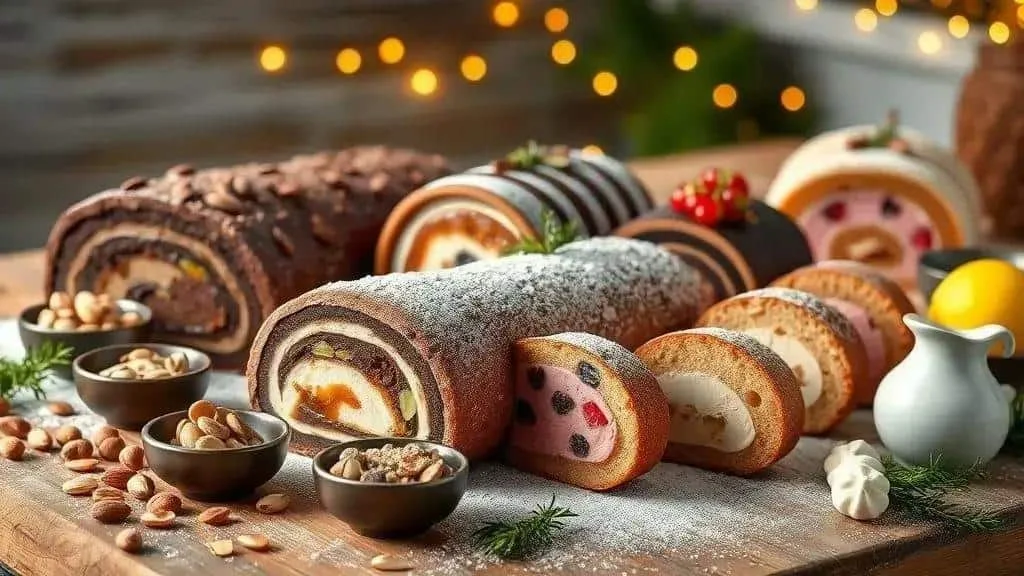
These ideas give your Yule log a different flavour. Test substantial changes before a special occasion, particularly those affecting the sponge’s ability to roll.
Flavour ideas
- Classic chocolate: keep the cocoa sponge and dark chocolate ganache. Reserve enough ganache for the coating before filling the roll.
- Coffee and almond: dissolve 1–2 teaspoons instant coffee in the warm cream for the ganache and scatter a small amount of finely chopped toasted almonds over the filling. Large pieces can tear the sponge.
- Salted caramel: spread a thin layer of thick, cooled salted caramel inside the roll, with ganache for the outer coating. Use a complete caramel recipe; a list of sugar, butter and cream quantities alone is not a safe cooking method.
- Berry and cream cheese: try a thin layer of thick, cooled berry compote with a firm cream cheese filling. Do not mix a large volume of runny fruit purée straight into cream cheese and expect it to hold.
- Pistachio and lemon: flavour a prepared buttercream with pistachio paste and lemon zest. For a plain sponge, use a suitable vanilla Swiss roll recipe rather than simply leaving the cocoa out of this batter.
- White chocolate and passion fruit: use a white chocolate ganache recipe specifically balanced for fruit purée. Replacing the dark chocolate and adding 100 g juice here can make the filling too loose.
Dietary adaptations
- Gluten-free: use a plain gluten-free blend intended for cakes, following its substitution guidance. Do not add xanthan gum automatically if the blend already contains it. Test rolling and check all decorations for gluten too.
- Vegan: use a complete vegan Swiss roll recipe. Replacing 4 whole eggs with 120 ml aquafaba alone does not reproduce the yolks’ fat and structure. Use suitable plant-based chocolate, cream and fat for the filling and coating.
- Dairy-free: replace the butter in both sponge and ganache, use plant-based cream and dairy-free chocolate, and omit the optional mascarpone or use an appropriate alternative. Check decorations and avoid assuming lactose-free means milk-allergy-safe.
- Less sweet: choose a darker chocolate and omit optional icing sugar in the filling. Replacing the sponge sugar 1:1 with a sweetener can change its structure and flexibility, so use a recipe developed for that change.
- Alcohol-free: omit rum or brandy and use a little coffee or alcohol-free flavouring instead. Check flavouring labels if avoiding alcohol completely.
Other fillings and additions
- Simple ganache: pour 200 ml hot cream over 200 g chopped dark chocolate, stir until smooth and cool until spreadable. This version without added butter will have a different firmness from the main recipe.
- Vanilla buttercream: beat 150 g softened butter with 200 g sifted icing sugar and 1 teaspoon vanilla until smooth. Spread a thin layer inside the roll; make separate ganache for the outside.
- Fruit and cream: use a firm whipped-cream filling with a little thick, cooled compote. Large amounts of fruit purée can make it runny; a complete fruit-mousse filling recipe gives more reliable setting proportions.
- Citrus curd: use a small amount of fully cooked, chilled lemon or passion fruit curd. Follow a complete curd recipe with an appropriate cooking method, rather than treating thickening alone as proof the eggs are safely cooked.
- Crunch: add a little finely chopped praline or biscuit crumb between sponge and filling, avoiding a thick layer that makes rolling difficult. Check allergens.
Decoration and presentation
- Bark effect: mark the spreadable ganache with a fork along the length of the log.
- Snow and shade: use a light dusting of icing sugar and cocoa, leaving the bark detail visible.
- Natural-looking details: arrange edible berries and clean culinary herbs on the plate. Do not use holly, florist greenery or unidentified plants in contact with the cake.
- Finishing touches: meringue mushrooms, chocolate curls or clearly identified nuts add texture.
- Drinks alongside: coffee, tea or a suitable alcohol-free drink work well. Port or sparkling wine can be offered separately for those who want them.
Rolling and decorating tips
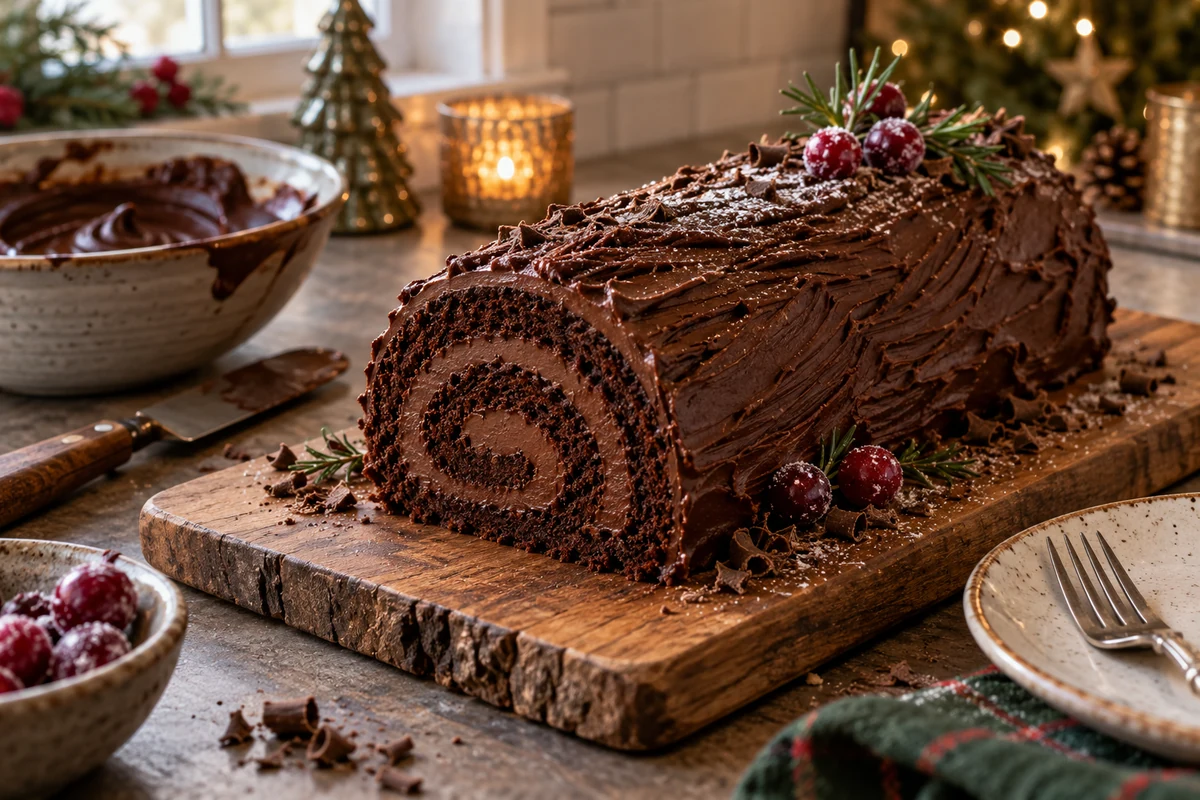
A few practical details help your Yule log hold its shape. Concentrate on a flexible sponge and a filling that is spreadable rather than liquid.
Assembly checklist
- Cool in a roll: rolling while warm encourages the sponge to take the shape. Let it cool completely before adding filling.
- Use a thin crumb coat outside: once the cake is filled and rolled, a thin layer of ganache can trap loose crumbs before the final bark coating.
- Leave a border inside: keep 1–2 cm around the filling so that it does not squeeze out as you roll.
- Guide rather than squash: roll with gentle pressure and finish seam-side down.
- Trim at an angle: a small diagonal slice from one end can become a side branch without shortening the log too much.
- Attach the branch: use a little ganache to secure the cut piece against the main log.
- Texture the coating: use shallow fork marks or palette-knife strokes to suggest bark.
- Dust sparingly: too much icing sugar hides the texture, so add it through a fine sieve near serving time.
- Chill before slicing: allow 1–2 hours for the ganache to firm up.
Solving common problems
- Cracks in the sponge: small cracks can be joined with a little ganache and hidden under the coating. Syrup will not undo a badly broken sponge; avoid saturating it. Next time, check for overbaking and roll while warm.
- Runny filling: chill ganache until spreadable and use a thinner layer. Do not try to roll the cake around warm, liquid chocolate.
- An overly smooth coating: draw a fork or palette knife through it before it sets completely.
- Very firm ganache: soften it briefly over warm water, stirring gently. Keep water out of the chocolate mixture.
- Loose decorations: small dots of ganache can hold edible berries, chocolate pieces and meringues in place.
Serving presentation
- Add colour: washed edible berries and a little mint contrast with the chocolate. Position them once the coating has set.
- Create depth: use cocoa in the grooves and a little icing sugar on raised areas.
- Keep decorations edible: chocolate curls, meringues and nuts are simple options, with allergens made clear to guests.
- Choose a serving board: use a clean, food-safe board or platter, with parchment underneath if helpful.
- Before cutting: let the required portion stand for about 10 minutes if the ganache is very firm, then return any remainder promptly to the fridge.
The Yule log tradition
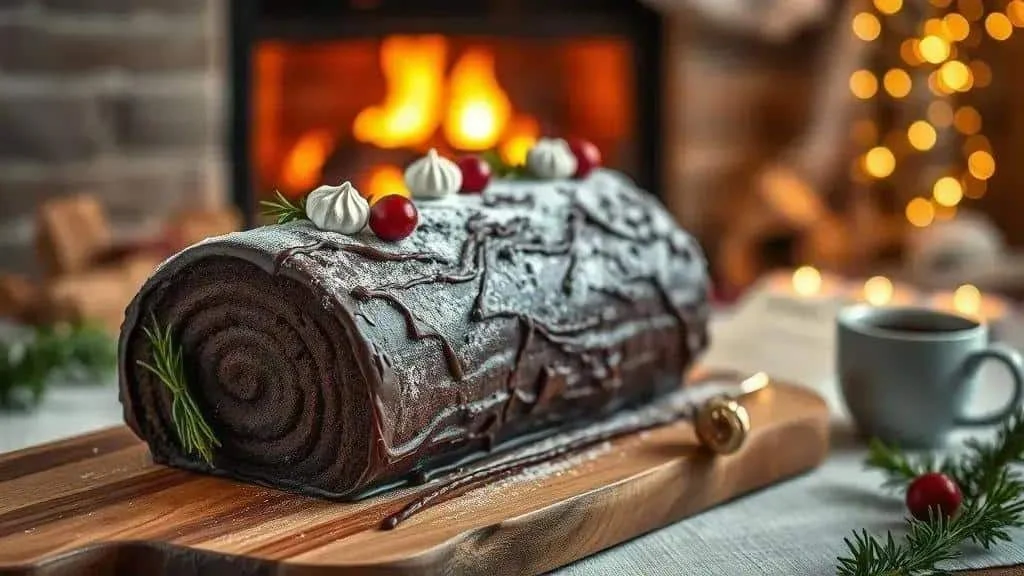
The Yule log cake borrows its shape from a real log burned as part of Christmas traditions. Its woodland appearance gives bakers plenty of scope for a personal interpretation.
From a log to a cake
The French bûche de Noël takes its name and appearance from the Christmas log. The cake developed as a sweet interpretation of that custom, with sponge, filling and decoration standing in for the wooden log. Accounts of its precise invention vary.
Different festive interpretations
- France: bûches can range from rolled sponge cakes to elaborate modern pâtisserie desserts; chocolate ganache is one option, not the only traditional form.
- Britain: the chocolate Yule log is a familiar alternative or addition to other Christmas desserts.
- Latin American adaptations: local bakers may use fruit, different creams and regional flavours, while keeping the log shape.
- A family occasion: sharing the first slice can become your own festive ritual; there is no need to present this as a universal custom.
Details behind the decoration
- Meringue mushrooms suggest fungi growing on a woodland log and add a contrasting texture.
- Orange zest and optional spirits add flavour. A small amount of rum or brandy does not preserve a cream filling or remove the need for refrigeration.
- An edible symbol: the cake brings the appearance of the Christmas log to the table, whether or not a home has a fireplace.
- Woodland decoration: bark marks, snowy icing sugar and edible greenery create the visual connection with a winter log.
Making the tradition your own
- Choose familiar flavours: a little coffee, fruit or chopped nuts can connect the cake with your family’s preferences.
- Share the moment: bring the log to the table before slicing so everyone can enjoy the decoration.
- Decorate thoughtfully: use edible details and reusable serving pieces rather than non-food foliage touching the cake.
A festive cake with a forgiving finish
A Yule log does not need flawless bark to look attractive. Focus on baking a flexible sponge, cooling the filling properly and rolling gently before adding the rustic coating.
Try a flavour variation once you are comfortable with the basic method, and share a photo of your Christmas creation.
Visit the I Love Christmas blog and follow our social pages for more seasonal recipes and decorating ideas.
Chocolate Yule log: frequently asked questions
Can I make the Yule log ahead?
Yes. Making and assembling it the day before is practical. Refrigerate the ganache and filled cake at 5°C or below, and eat within 48 hours of preparing the earliest perishable filling. Keep a separate plain sponge well wrapped once cold; assembling later does not restart the filling’s storage clock.
How do I stop the sponge cracking?
Avoid overbaking, roll gently while warm with parchment or a clean towel inside, and cool in that shape. Unroll carefully without forcing the centre flat. Small cracks can be hidden with ganache, but soaking with syrup will not repair a badly broken sponge.
How many portions does it make?
A log baked in a 30 × 40 cm tin makes about 10–12 slices, depending on thickness. For more servings, bake a second log rather than making one excessively thick sponge.
Can I make a gluten-free or vegan version?
For gluten-free baking, use an appropriate cake flour blend and follow its guidance, testing the sponge’s flexibility. For a vegan log, use a complete vegan Swiss roll recipe: aquafaba alone is not a reliable replacement for all the whole eggs here. Check every filling and decoration too.
How do I slice it neatly?
Chill for 1–2 hours so the ganache is firm, then allow a brief softening period if needed. Use a long, sharp knife warmed in hot water and dried, wiping it between slices. Keep the remaining cake refrigerated.
Sources and Further Reading
- Food Standards Agency: chilling, freezing and defrosting food safely
- Campus France: French celebration desserts