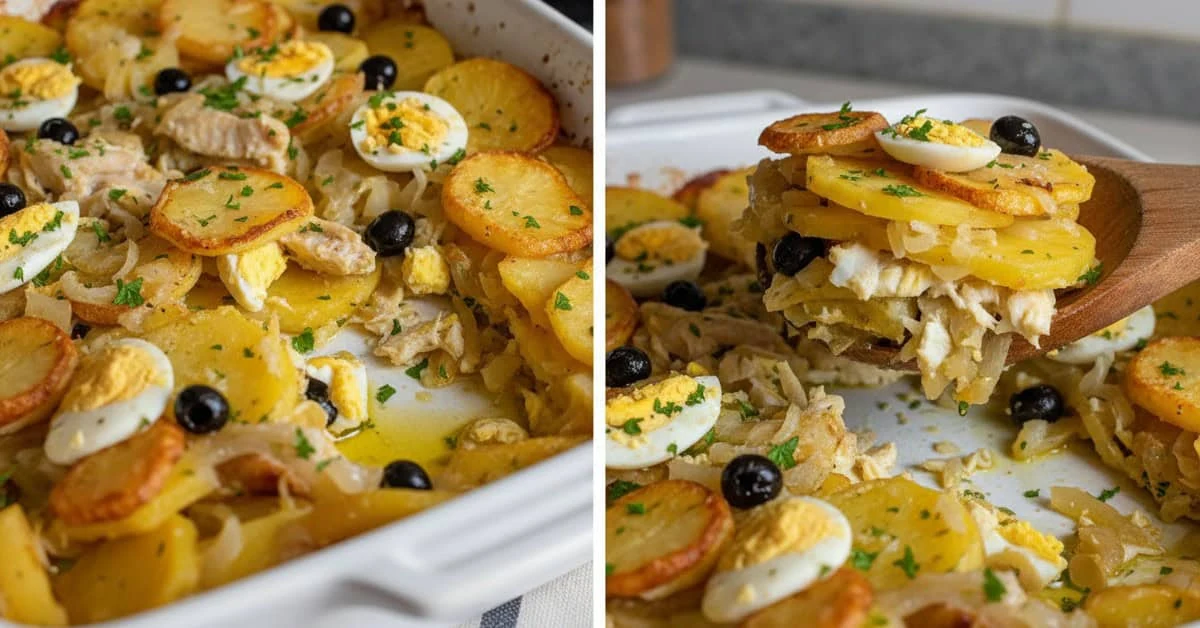
Christmas bacalhau à Gomes de Sá combines flaked salt cod, sliced potatoes, softened onions, hard-boiled eggs and black olives with olive oil and parsley. This festive version of the Portuguese dish explains soaking, cooking and assembly, with optional adaptations clearly distinguished from the classic combination.
Christmas bacalhau à Gomes de Sá brings Portuguese flavours to a festive table, including the Brazilian Christmas celebrations where salt cod is also enjoyed. Its appeal lies in simple layers of fish, potato and onion rather than a complicated sauce.
Ingredients for Christmas bacalhau à Gomes de Sá
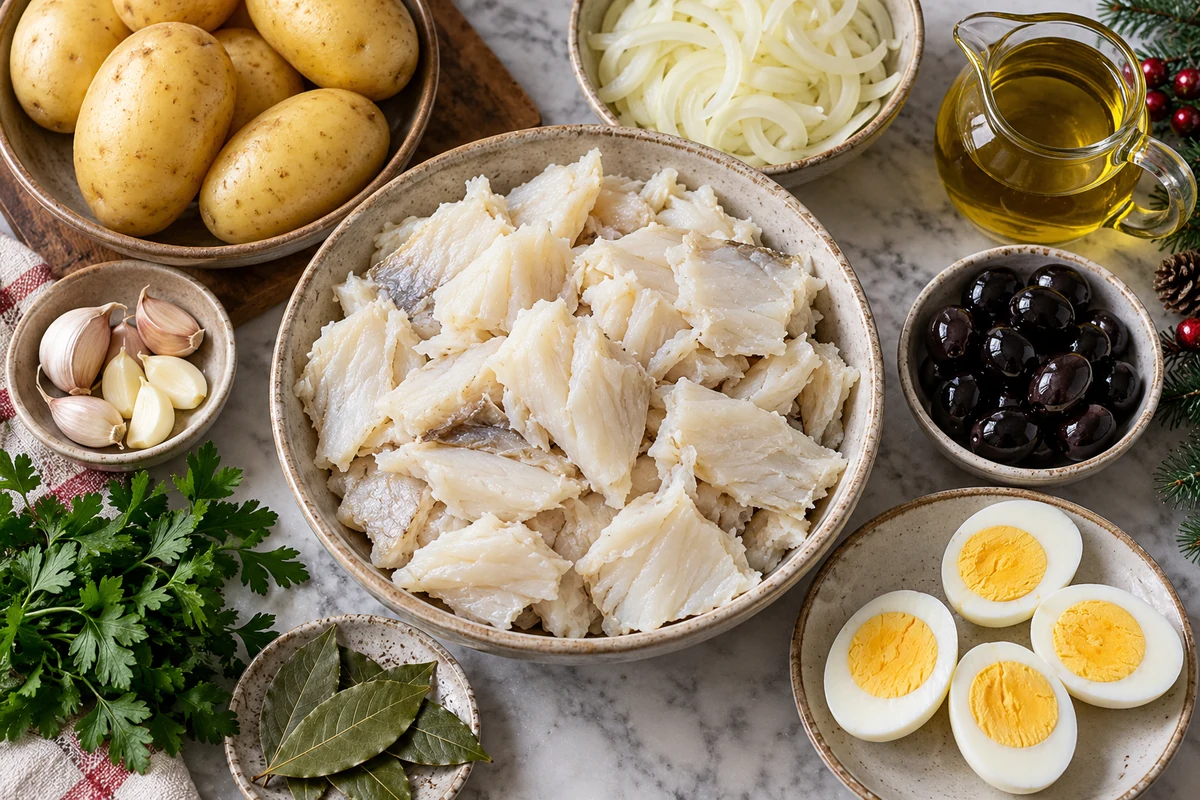
To prepare Christmas bacalhau à Gomes de Sá, gather the following ingredients:
- 800 g–1 kg salt cod, weighed before soaking – soak according to its supplier’s instructions; timing depends on thickness and curing. Alternatively, use about 1 kg ready-desalted cod, following its storage and cooking directions. The yields are approximate, not identical.
- 1 kg potatoes – choose a waxy or all-purpose variety that holds its shape when sliced.
- 3 medium onions – thinly sliced.
- 4 garlic cloves – finely chopped; optional if you prefer a milder flavour.
- 4 eggs – hard-boiled, peeled and sliced.
- 150 g pitted black olives – drained; they add salt as well as flavour.
- 120 ml extra virgin olive oil – the total for frying, assembly and finishing. A neutral oil works differently and loses some of the characteristic flavour.
- 100 ml milk, optional – for briefly resting the cooked cod before assembly, not for speeding up desalting. Omit for a dairy-free version.
- 1 small bunch fresh parsley – chopped, for finishing.
- 2 bay leaves, optional – for the onions; remove before serving.
- Black pepper and salt only if needed – taste the cooked fish before adding salt. White pepper is an alternative.
- Lemon slices, optional – to serve alongside.
- A small pinch of nutmeg, optional – a festive adaptation rather than an essential ingredient.
Notes and substitutions
Desalting: begin early and follow the supplier’s instructions for soaking in cold water in the fridge. Cook a small sample before tasting to assess saltiness; do not taste the uncooked soaked fish.
Olive oil: use an oil whose flavour you enjoy. You can reduce the total to 80–100 ml for a less oily dish, adjusting the frying and finishing quantities together.
Alternatives: ready-desalted cod saves preparation time but is not necessarily low in salt. For a vegetarian adaptation, use drained artichoke hearts, hearts of palm or cooked mushrooms instead of fish.
How to make Christmas bacalhau à Gomes de Sá
- Soak the salt cod: cover with plenty of cold water in a food-safe container in the fridge, changing the water as directed by the supplier. Depending on the cut, soaking may take 24–48 hours or longer. Skip this only if the product is already desalted and ready to cook.
- Prepare the potatoes: scrub and simmer them whole in their skins until just tender, around 20–25 minutes for medium potatoes. Cool enough to handle, peel if desired and slice about 5 mm thick.
- Cook the cod: gently poach the desalted pieces in fresh water until the flesh is opaque and flakes easily, roughly 8–10 minutes depending on thickness. Drain, reserving a little cooking liquid. If using the optional milk, pour it over the cooked flakes briefly, then drain before assembly; do not leave them standing at room temperature.
- Flake and check: use clean forks to separate the fish into broad flakes, removing skin and bones carefully. Check again as you assemble the dish.
- Soften the onions: heat about 80 ml of the measured olive oil with the bay leaves in a large frying pan. Cook the sliced onions over a low to medium heat for 15–20 minutes, or until soft and lightly golden. Add garlic for the final 2 minutes, then remove the bay leaves.
- Combine gently: mix the potato slices, cod flakes and onions with their cooking oil. Add a small splash of reserved cod liquid only if needed. Taste the cooked mixture before adding salt, and season with pepper.
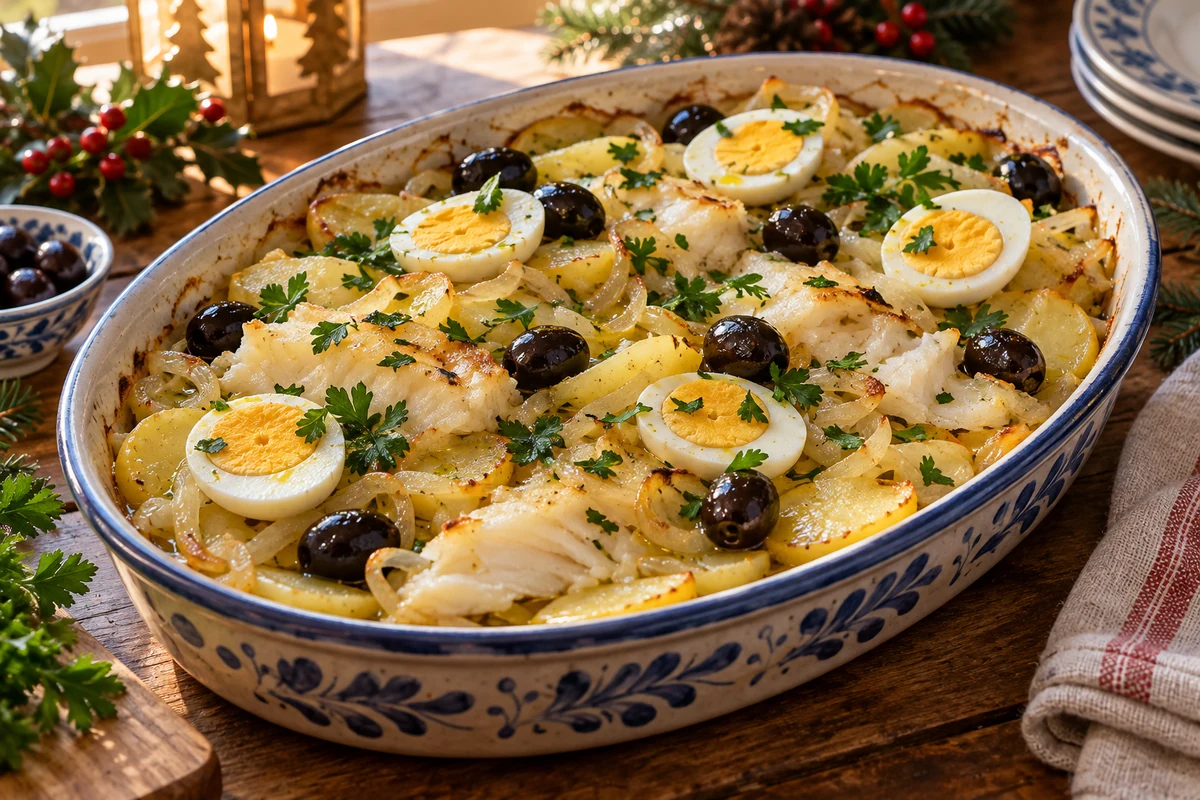
- Bake: transfer to an ovenproof dish and drizzle with most of the remaining measured oil. Bake at 190°C conventional or 170°C fan for about 15–20 minutes, until hot throughout and lightly coloured. A chilled dish needs longer: check the centre rather than relying on this estimate.
- Add eggs and olives: arrange the hard-boiled egg slices and olives on the hot dish. Finish with the parsley and the final small amount of measured olive oil.
- Serve: offer lemon slices alongside and add the optional nutmeg sparingly. Serve promptly while hot.
- Store and reheat: cool portions and refrigerate within 1–2 hours. Use within 48 hours of the first cooking, or freeze promptly. Reheat once until steaming hot throughout; food already reheated from a chilled make-ahead dish should not be reheated again.
- Make-ahead option: cool the cooked components promptly, assemble and refrigerate for up to 12 hours before the final heating. That heating counts as the one reheating. Roasted peppers or a little cream are optional adaptations, not part of the basic version.
Practical tips
- Taste only a cooked sample: poach a small piece after soaking to check the salt level before cooking the main batch.
- Choose your olive oil: its flavour is prominent, so avoid an oil you find unpleasantly bitter or stale.
- Keep potato slices intact: cook until tender but not falling apart, then handle gently.
- Check for bones: work on a clean, light-coloured surface and inspect every flake, especially when serving children.
- Adapt thoughtfully: longer soaking changes saltiness but does not establish a low-sodium nutritional claim. For a meat-free alternative, use drained hearts of palm or roasted mushrooms and label the dish as an adaptation.
Festive variations on bacalhau à Gomes de Sá
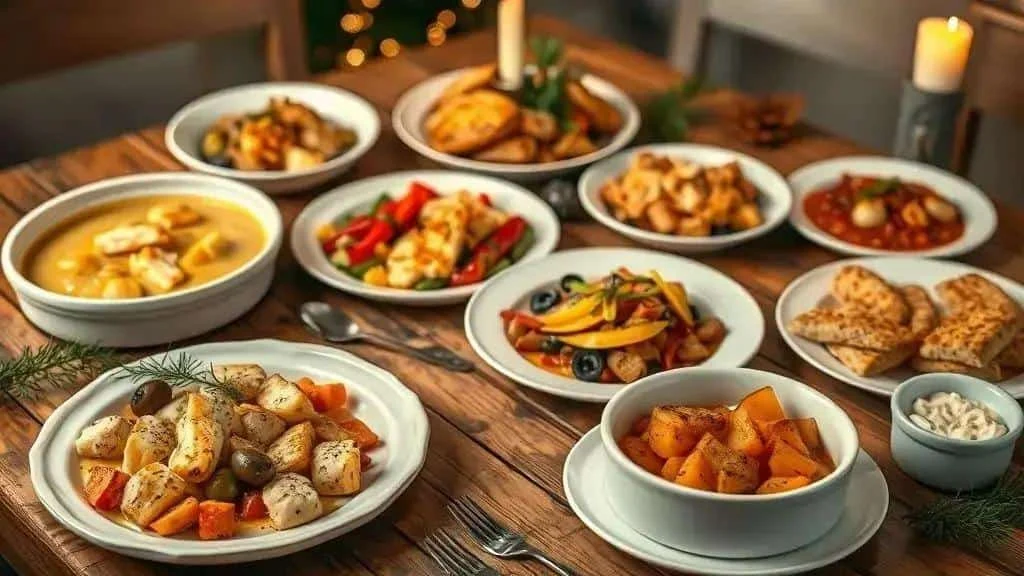
The following ideas adapt bacalhau à Gomes de Sá to different tastes. They change the classic dish, so choose the version that suits your meal rather than adding every variation at once.
Creamy variation
Fold in 100 ml cream or a little béchamel before baking. This gives a richer, softer texture and adds dairy to the dish; it is an optional adaptation.
Cheese-topped gratin
Scatter over 100–150 g grated cheese, such as mozzarella, Portuguese Flamengo or Parmesan, and bake until the dish is hot and the topping golden. Account for the extra salt in the cheese.
Roasted peppers and olives
Add 1 roasted red pepper and 1 roasted yellow pepper, sliced, and use 100 g green olives instead of the black olives if preferred. The peppers add colour and sweetness.
Less oil and careful seasoning
Prepare the salt cod properly, reduce the total olive oil to 80–100 ml if desired, and add more herbs or softened leek. Desalted fish and olives can still contain substantial salt, so avoid presenting this automatically as a low-salt dish.
Vegetarian adaptation
Replace the fish with sliced hearts of palm, roasted mushrooms or drained artichoke hearts. Season with olive oil, garlic and bay and retain the potatoes and onions. These ingredients give a different flavour and protein content from cod.
Sweet potato variation
Replace up to half the 1 kg potatoes with 500 g sweet potato. Cook the two types separately if their timings differ, keeping both firm enough to slice and assemble.
Brandade-inspired mash
For a different dish, mash cooked cod and potato with olive oil and a little milk until creamy. Serve in small dishes or as a spread for toast. This is inspired by brandade rather than a layered Gomes de Sá preparation.
Tips for adaptations
- Salt: taste the cooked mixture before adding more; soaking time, olives and cheese all affect the result.
- Oven time: allow roughly 15–20 minutes for a freshly assembled warm dish, checking it is hot throughout. Chilled mixtures and deeper dishes take longer.
- Potato texture: use slices that hold together and avoid vigorous stirring.
- Drinks: a light dry white wine or sparkling wine is an option for adults who drink alcohol; sparkling water with lemon also works well.
Choosing and soaking salt cod
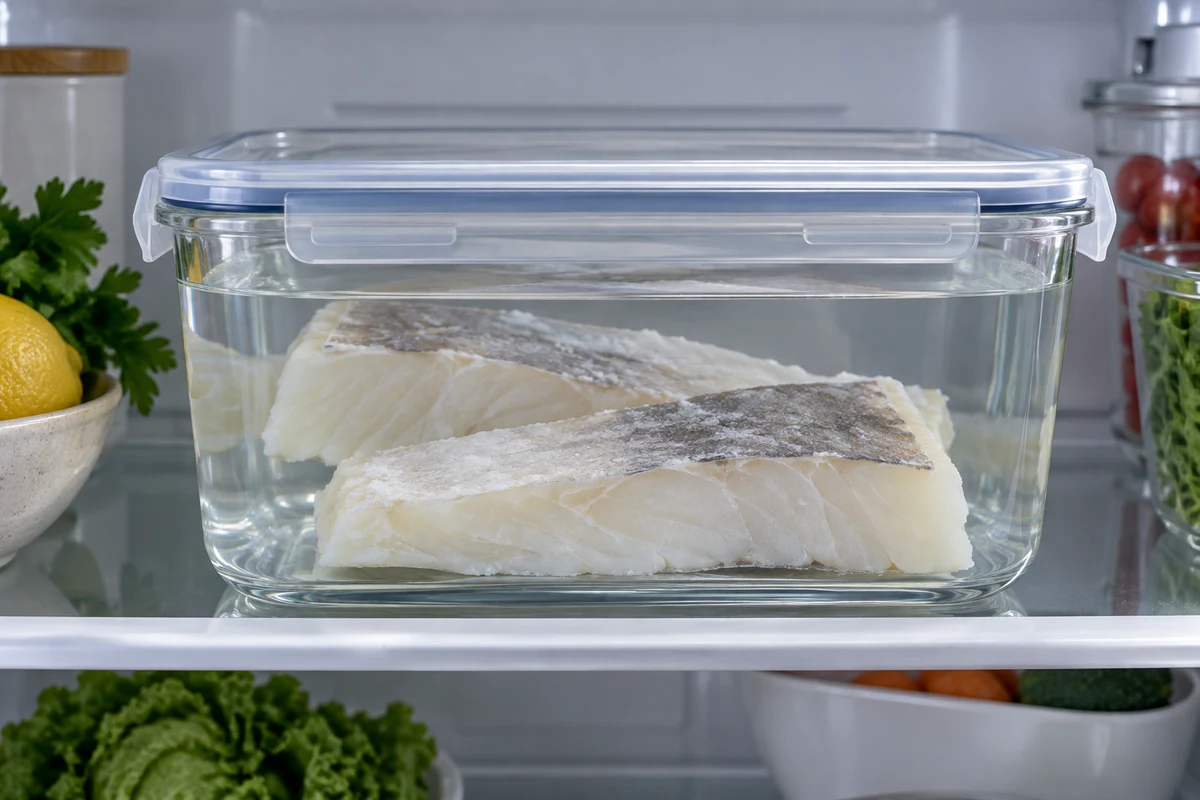
Choosing suitable fish and soaking it correctly takes a little planning. Follow product-specific directions: thick salt-cured pieces and ready-desalted frozen portions need different treatment.
Soaking step by step
- Use evenly sized pieces where practical. Very thick and thin cuts will not lose salt at the same rate.
- Remove surface salt: follow the supplier’s advice for a brief cold rinse, avoiding splashes. Clean the sink and nearby surfaces afterwards.
- Cover with cold water: use a large food-safe container, keep the fish submerged and refrigerate throughout soaking.
- Change the water: follow the supplier’s recommended frequency and duration. Some cuts need 24–48 hours and others several days; thickness and curing determine the schedule.
- Check with a cooked sample: cook a small piece before tasting. If it remains too salty, continue soaking within the supplier’s handling guidance, using fresh cold water.
- Do not speed soaking with warm water: keep the fish cold. Milk is not a shortcut for removing salt; the optional milk in this recipe is used after cooking, immediately before assembly.
- Drain before cooking: discard the soaking water, drain the fish and use fresh water for poaching.
Buying suitable salt cod
- Species and cut: check that the product is cod if that is what you intend to buy. Saltfish can refer to several species; choose cuts suited to flaking and your soaking schedule.
- Condition: buy from a reliable supplier and avoid damaged packaging or obvious spoilage. Colour varies with curing, so do not use colour alone as a safety test.
- Texture and storage: follow the label’s storage conditions. Unexpected sliminess or an unpleasant smell is a reason not to use the fish, but their absence does not guarantee safety.
- Thickness: similar-sized portions soak and cook more evenly. Thicker pieces generally need more time to desalinate.
- Product information: look for clear species, storage, date and preparation information rather than assuming every salted fish product is interchangeable.
- Ready-desalted fish: check whether it is chilled or frozen, raw or cooked, and follow the relevant instructions. Thaw frozen portions in the fridge if required.
Final preparation tips
- Cook a sample: assess saltiness before cooking all the fish and seasoning the rest of the dish.
- Use promptly after soaking: desalted fish must be treated as fresh fish. Keep refrigerated and follow the supplier’s limit; do not assume the original salt-cured shelf life still applies.
- Keep utensils clean: separate raw fish preparation from cooked fish, eggs and salad ingredients.
- Plan ahead: allow enough soaking time and fridge space rather than relying on a last-minute warm-water shortcut.
Assembling and presenting the Christmas dish
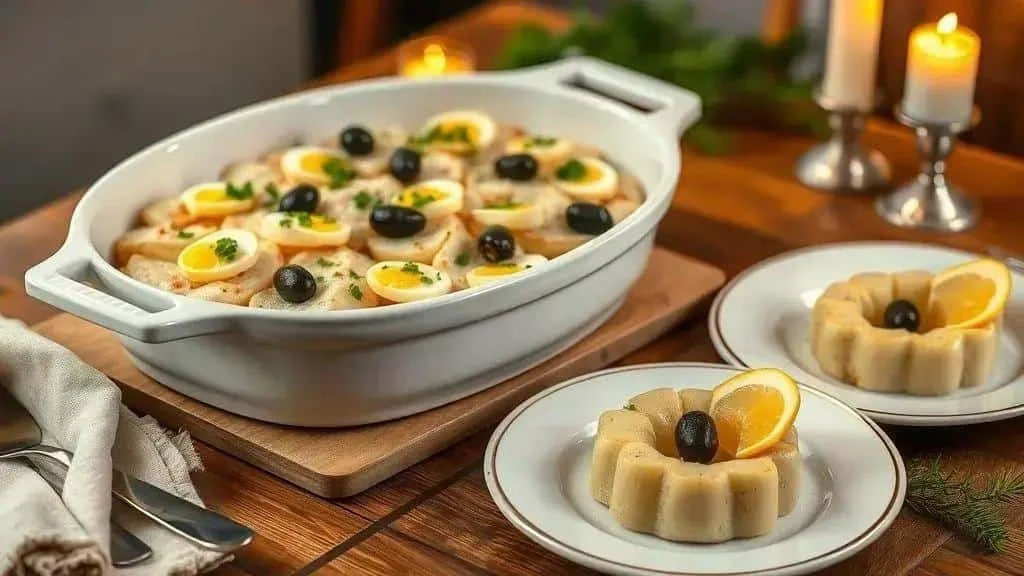
- Colour: pale fish and potatoes, green parsley, yellow egg yolks and black olives make a naturally attractive combination.
- Texture: keep the potatoes in slices and the fish in broad flakes, with soft onions and a light coating of oil.
- Portion size: start with modest portions of the finished dish and offer seconds. The amount per person depends on how many other dishes you serve; fish weight and total casserole weight are not the same measure.
- Serve promptly: bring the hot dish to the table once it is ready rather than leaving it lukewarm for an extended period.
Layering in a serving dish
- Arrange the potato slices in an even layer in an ovenproof dish, without packing them tightly.
- Add the cod flakes evenly, keeping them as intact as practical.
- Spread over the onions with their cooking oil to carry the flavour through the layers.
- Finish before baking with some of the reserved measured oil. Remove bay leaves rather than hiding them in the layers.
Individual portions
- Use a serving ring if desired, layering gently on a warm plate and lifting the ring away carefully. This is optional, not essential to the dish.
- Add sliced hard-boiled egg and a few olives to each portion, dividing the prepared garnish between guests.
- Finish with olive oil and parsley, using the remaining measured oil sparingly.
- Offer a lemon slice alongside for anyone who wants more acidity.
Christmas table details
- Festive decoration: place pinecones or greenery away from the food and serving surfaces. They are table decorations, not edible garnishes.
- Citrus fragrance: a little finely grated lemon zest adds aroma; lemon juice provides the sharper acidity.
- Keep it practical: do not place non-edible decorations on the dish or where they could fall into the food.
Drinks and serving arrangements
- Wine options: dry white or light sparkling wine can suit the dish. A fuller white may work with a creamy adaptation; offer alcohol-free choices too.
- Sides: a crisp green salad, simple grains or rustic bread complement the olive oil and salt cod. The dish already contains potatoes, so extra starch is optional.
- Serving utensils: a large spoon or fish slice makes it easier to lift portions without breaking them apart.
Planning the Christmas meal
- Make ahead carefully: cool the cooked components promptly, assemble and refrigerate for up to 12 hours. Heat thoroughly once just before serving.
- Allow longer from chilled: a refrigerated dish takes longer to heat than freshly cooked components. Cover to limit drying and check that the centre is steaming hot.
- Buffet service: use equipment intended for safe hot holding, not just a warm plate. Otherwise serve smaller portions promptly. Identify fish, eggs, optional milk and other allergens for guests.
Side dishes and drink suggestions
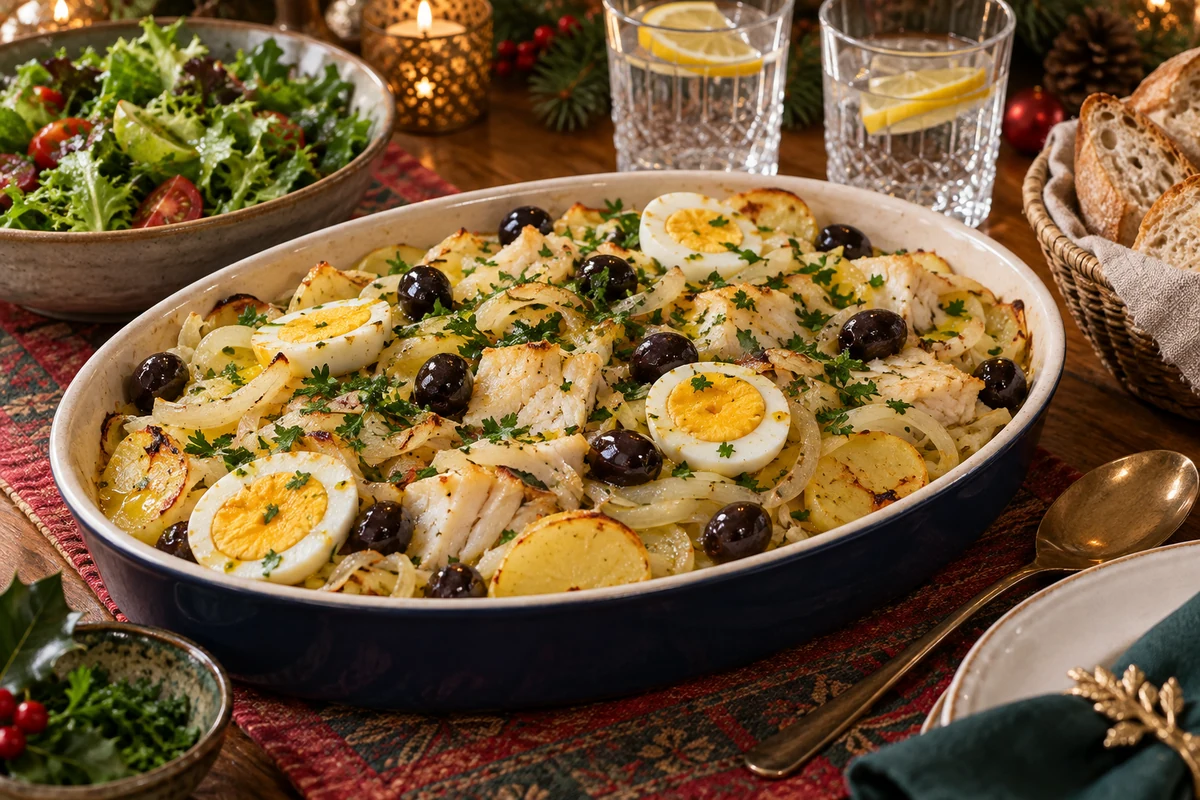
These accompaniments offer texture and freshness alongside bacalhau à Gomes de Sá without needing to add several heavy dishes.
Simple side dishes
Green salad with citrus dressing
- Wash and dry lettuce, rocket and watercress as appropriate to their packaging.
- Make the dressing: whisk 3 tablespoons olive oil with 1 tablespoon lemon juice, pepper and salt to taste.
- Dress just before serving: toss the leaves lightly and add a little lemon zest if desired.
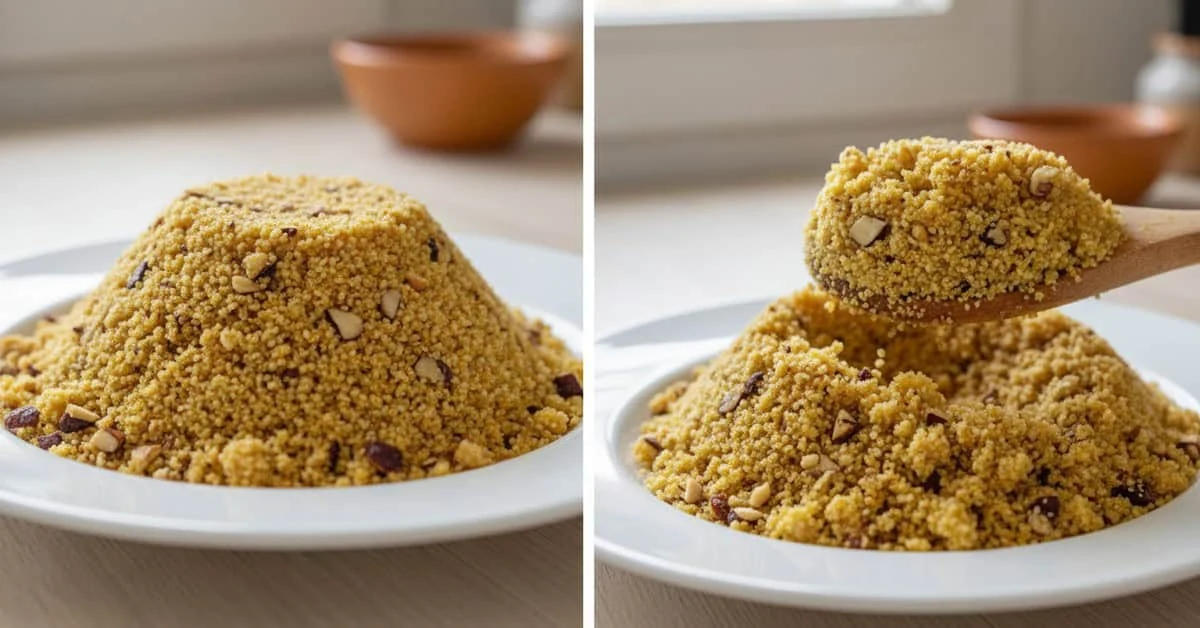
Simple Christmas farofa
- Heat: melt 2 tablespoons butter in a frying pan.
- Cook the onion: soften ½ chopped onion, then add 150 g coarse Brazilian farinha de mandioca and stir until lightly toasted. Use the flour intended for farofa, not tapioca starch.
- Finish: stir in 50 g raisins and 50 g chopped nuts, if suitable for your guests, and adjust the salt.
Herb-roasted vegetables
- Cut: chop carrots, courgettes and peppers into medium pieces, making the carrot pieces smaller so they cook evenly.
- Season: toss with olive oil, salt, pepper, rosemary and thyme.
- Roast: cook at 200°C conventional or 180°C fan for about 20–30 minutes, or until tender and lightly golden, turning as needed.
Quick broccoli rice
- Cook the rice: measure 2 cups using a consistent measuring cup and follow the rice packet’s water ratio and cooking time.
- Cook the garlic: gently fry 1 chopped garlic clove in a little olive oil, then stir in cooked chopped broccoli.
- Combine: fold into the freshly cooked rice, season and finish with parsley. Serve promptly.
Rustic bread and herb butter
- Slice and warm rustic bread in the oven.
- Mix the butter: combine softened butter with chopped parsley, chives and a little lemon zest.
- Serve: offer the herb butter separately.
Drinks to pair with the meal
- Dry white wines: a dry Vinho Verde, Verdelho or lightly oaked Chardonnay can complement the fish and olive oil.
- Sparkling wines: brut white or a light rosé offers another option for adults who drink alcohol.
- Young red wines: a light, low-tannin red may suit a cheese-topped variation, depending on your preference.
- Alcohol-free options: sparkling water with lemon or sparkling apple juice work well alongside the meal.
Combining dishes and planning portions
- Keep the menu balanced: choose a fresh salad and perhaps one vegetable side. Add bread or rice only if you want it, as potatoes are already part of the main dish.
- Fish portions: around 120–180 g prepared fish per adult is a planning starting point when other dishes are served. Appetites and the amount of potato vary; do not confuse this with the total plated weight.
- Texture: a little farofa or a few nuts in a separate side add crunch beside the soft fish and potatoes.
Serving tips
- Keep service prompt: serve the dish hot. If using hot-holding equipment, follow its instructions and check temperatures rather than assuming a warm plate is sufficient.
- Make serving easy: put appropriate spoons beside each dish and leave enough room for guests to help themselves.
- Identify variations: label allergens accurately and keep vegetarian or gluten-free alternatives separate, including their utensils.
- Finish simply: a little parsley and the reserved measured oil are enough; extra oil is optional, not essential.
Storage, leftovers and advance preparation
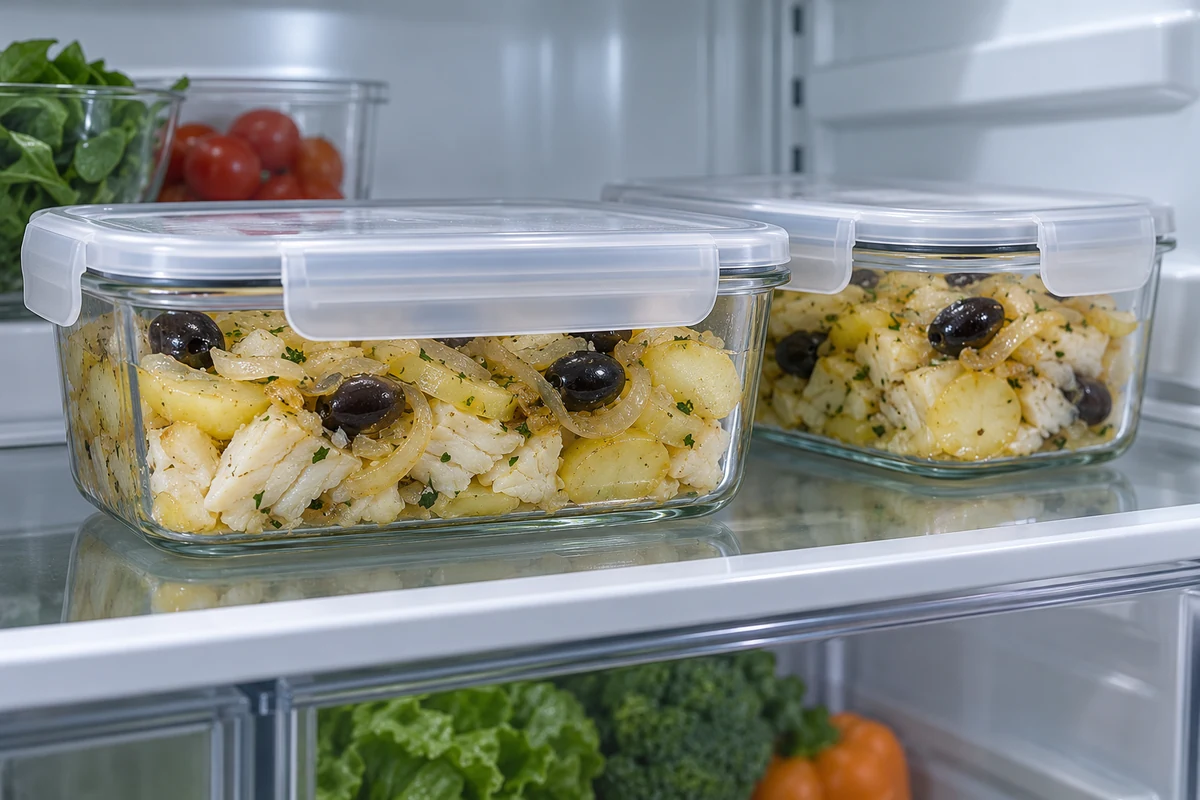
Storage, leftovers and advance preparation are easier if you keep track of when the fish was first cooked and whether it has already been reheated. Preparing ahead does not restart the storage clock.
Storage limits
- In the fridge: cool in shallow portions and refrigerate within 1–2 hours. Use within 48 hours of the first cooking, or a shorter ingredient-specific limit.
- In the freezer: freeze promptly in suitable containers. Using the dish within 2–3 months is a quality target; potatoes and eggs may change texture. Follow any product restrictions on freezing.
- Label portions: record the contents, cooking date and freezing date, and portion according to your household’s appetite.
- Do not leave it out: plan cooling and refrigeration within 1–2 hours, rather than waiting until the end of a long meal.
Reheating without drying the dish
- In the oven: use a covered ovenproof dish with a small splash of water if needed. Heat until steaming hot throughout, checking the centre; the required time depends on depth, portion size and starting temperature.
- Finish briefly uncovered: remove the foil near the end if you want a little colour, taking care not to dry the fish.
- Countertop oven or air fryer: use suitable cookware and follow the appliance instructions. Check that the centre heats fully rather than judging only the browned surface.
- In the microwave: cover suitably, stir or rearrange the food and follow the standing-time instructions. It is a valid option when the whole portion is thoroughly heated.
- Gentle heating on the hob: use a covered pan with a little liquid and stir carefully until steaming hot throughout. Reheat only once; merely warming a dish is insufficient.
Preparing ahead step by step
- Prepare the fish: complete soaking according to the supplier’s instructions, then cook the fish and potatoes before assembly.
- Assemble and chill: cool the components promptly, combine in a suitable dish and refrigerate within 1–2 hours. Keep for up to 12 hours before the final heating, within the overall storage limit.
- Heat before serving: allow enough time for a chilled dish to become steaming hot throughout. This counts as its one reheating, so do not subsequently use those leftovers in another reheated dish.
- Individual portions: use suitable ramekins if convenient. The ingredients are already cooked, not raw. If freezing is suitable, freeze promptly and thaw in the fridge before heating once.
Ideas for using leftovers
Quick salt cod fritters
- 500 g properly chilled bacalhau and potato mixture that has not already been reheated
- 1 egg
- 3 tablespoons plain flour; for a gluten-free adaptation use a suitable labelled gluten-free flour or breadcrumbs, not ordinary wheat breadcrumbs
- 1 tablespoon chopped parsley
- Oil for frying, or a little oil for a baking tray
- Mix: remove olives and large egg pieces if necessary, check for bones again and mash the fish-and-potato mixture lightly. Combine with the raw egg, flour and parsley.
- Shape: form small fritters with two spoons or clean hands, adjusting the flour only enough to hold them together.
- Fry carefully: cook in hot oil until golden and fully cooked in the centre. Drain on kitchen paper and serve immediately; colour alone does not confirm the egg mixture is cooked.
- Or bake: arrange on a lightly oiled tray at 200°C conventional or 180°C fan. Start checking small fritters after 15 minutes, turning if needed, and continue until cooked through. Do not reheat again.
Salt cod crostini
- Toast slices of rustic bread in the oven.
- Add the topping: use a portion of cod mixture suitable for its first reheating, heat it thoroughly and spoon onto the toast with parsley. Alternatively, use safely stored cooked mixture cold and serve promptly.
Quick brandade-inspired spread
- Starting ratio: combine 300 g cooked flaked cod with 100 g mashed potato and 2–3 tablespoons olive oil. If using the assembled dish, account for potatoes and oil already present.
- Prepare: mash to a spread, check seasoning and serve promptly with toast. Keep to the original cooking date and storage limit; do not repeatedly warm leftovers.
Final preparation tips
- Season carefully: taste only safely stored cooked food before adding salt. Olives and cheese can already provide plenty.
- Freeze promptly: cool shallow portions quickly before freezing, without leaving the dish out for hours.
- Avoid repeated thawing: freeze in useful portions and thaw only what you need. Freezing does not erase previous storage time or reheating history.
- Fresh garnish: add parsley, olives and freshly cooked egg if desired, but remember that a new garnish does not extend the leftovers’ safe storage time.
A festive Portuguese-inspired dish
Christmas bacalhau à Gomes de Sá combines flaky fish, tender potato and onion with a simple egg-and-olive finish. Allow enough soaking time, use the right product instructions and choose optional variations to suit your table. The adaptations here are not all kitchen-tested recipes.
Thank you for reading. Follow our social channels for more festive recipes and ideas for preparing a Christmas meal.
Visit the I Love Christmas blog for more seasonal inspiration. Enjoy your festive cooking.
FAQ: Christmas bacalhau à Gomes de Sá
How long should I soak the salt cod?
Follow the supplier’s instructions, keeping it in cold water in the fridge and changing the water as directed. Some cuts take 24–48 hours and thicker pieces can need longer. Cook a small sample before tasting to check saltiness.
Can I buy ready-desalted cod?
Yes. Check whether it is raw or cooked, chilled or frozen, and follow its preparation instructions. Do not soak it again unless directed; taste only after cooking before adding salt.
How do I prevent drying when reheating?
Cover the dish and add a small splash of water if needed. Heat until steaming hot throughout, checking the centre rather than relying on a fixed time. Reheat only once.
What can replace the fish in a vegetarian version?
Drained hearts of palm, roasted mushrooms or artichoke hearts make a different but useful adaptation with the potatoes and onions. For a vegan version, also omit eggs and any optional milk, cream or cheese.
Can I prepare the dish ahead?
Yes. Cool the cooked components promptly, assemble and refrigerate for up to 12 hours within the overall 48-hour cooked-food limit. Heat thoroughly once before serving. Do not then reheat the same leftovers again.
Which wines go well with the dish?
Dry Vinho Verde, Verdelho or brut sparkling wine are options for adults who drink alcohol. A light young red may suit a cheese-topped version. Sparkling water with lemon is an alcohol-free alternative.
Sources and Further Reading
- Fiskkaup: preparing and desalting salt fish
- UK government: cooking and reheating food safely
- UK government: chilling, freezing and defrosting food safely