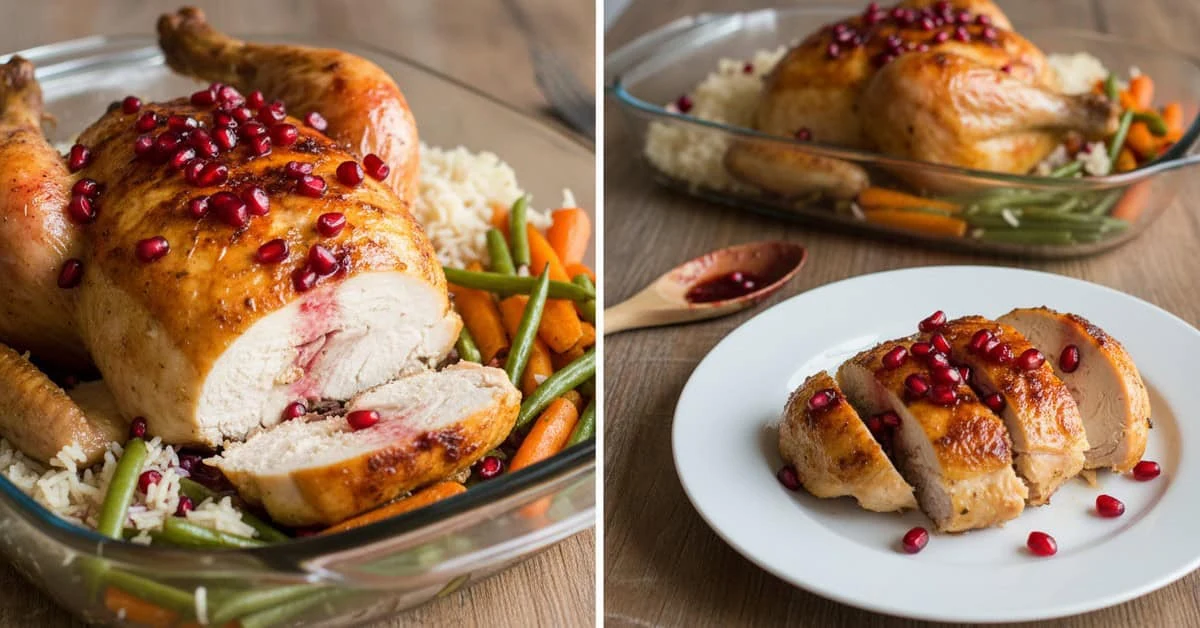
Roast chicken with pomegranate sauce makes a colourful Christmas centrepiece. This guide covers herb seasoning, roasting in two stages, reducing the sauce and choosing accompaniments, with advice on checking doneness and storing leftovers.
Roast chicken with pomegranate sauce brings together fragrant herbs and a glossy, sweet and tangy finish. The recipe below explains the steps for a whole bird, followed by variations for smaller portions and ideas for planning your festive meal.
Ingredients for roast chicken with pomegranate sauce
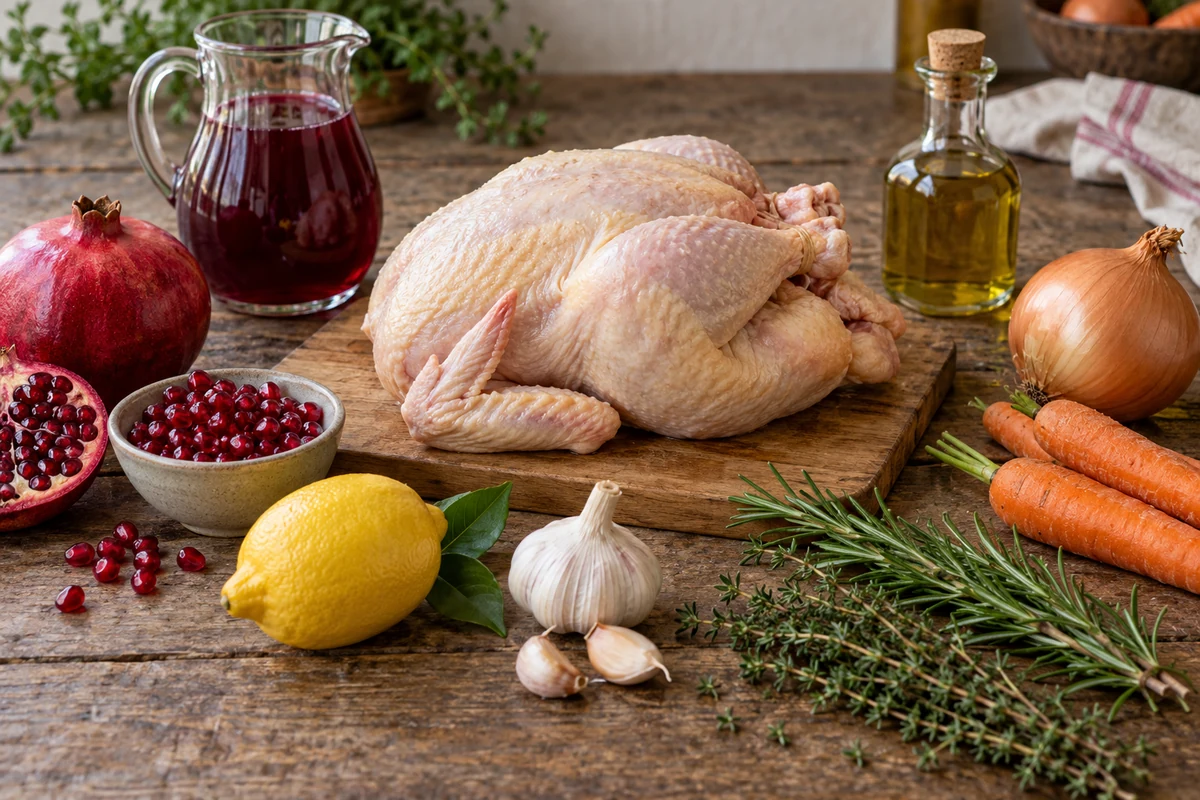
- 1 whole chicken, 1.5–2 kg — remove any giblets and pat dry; do not wash raw poultry. Alternatively, use about 1.2–1.5 kg of drumsticks and thighs and adjust the cooking time.
- 2 tablespoons olive oil — or melted butter.
- Salt, to season — start with 1 teaspoon of fine salt for an unseasoned bird; omit additional salt if it is already brined or seasoned.
- 1 teaspoon ground black pepper — for seasoning.
- 1 teaspoon sweet paprika — use smoked paprika if preferred.
- 3 garlic cloves, finely chopped — or 1 teaspoon garlic powder.
- 1 lemon — zest and juice; orange is an alternative.
- 1 tablespoon chopped fresh rosemary — or 1 teaspoon dried.
- 1 tablespoon fresh thyme leaves — or 1 teaspoon dried.
- 1 medium onion — quartered, for the roasting tin; leave the bird’s cavity unfilled.
- 2 carrots and 2 celery sticks — roughly chopped, optional, for the tin.
- 240 ml pomegranate juice — for the sauce. Pomegranate molasses is much more concentrated and varies by brand; dilute to taste rather than replacing the juice measure for measure.
- 120 ml red wine or chicken stock — for the sauce; choose stock for an alcohol-free version.
- 2 tablespoons honey — or maple syrup; reduce if the juice is sweetened.
- 1 tablespoon balsamic vinegar — to balance the sweetness.
- 1–2 tablespoons cold butter — optional, to finish the sauce.
- A small handful of pomegranate seeds — to garnish.
Practical notes
Season ahead when convenient, keeping the chicken refrigerated and within its use-by date. Balance the sauce’s sweetness, acidity and salt gradually. Let the roast chicken with pomegranate sauce rest for 10–15 minutes before carving, but first check the thickest parts of both breast and thigh: a clean food thermometer should read 75°C for at least 30 seconds, or 70°C for 2 minutes, without touching bone.
How to make roast chicken with pomegranate sauce
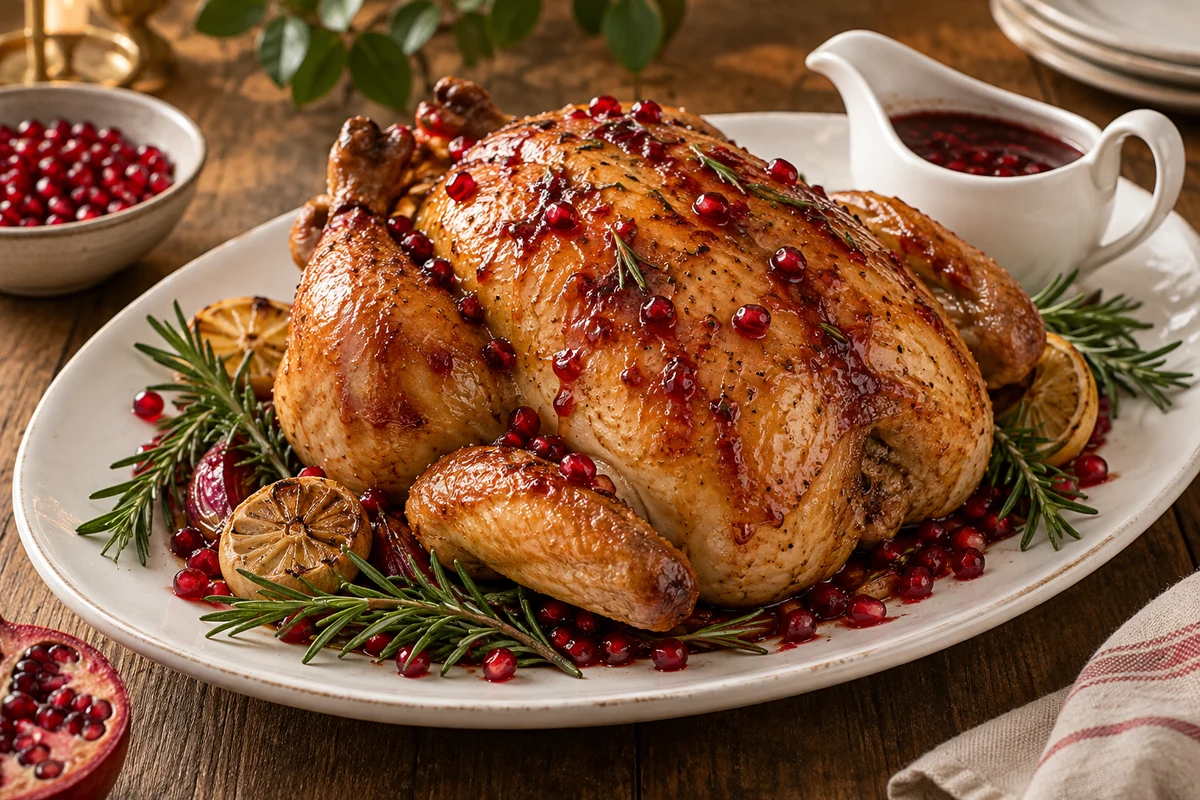
- Preheat the oven to 200°C, or 180°C fan. Remove the giblets, pat the chicken dry with kitchen paper and discard the paper promptly. Do not rinse the bird. Keep the cavity empty and wash your hands and any surfaces that touched raw chicken.
- Make the seasoning mixture: combine the oil, garlic, lemon zest and juice, rosemary, thyme, paprika, salt and pepper. Rub over the outside and carefully under the breast skin. Do not add extra lemon zest beyond what the lemon provides.
- Position the bird: tuck the wing tips under and, if desired, tie the legs loosely with kitchen string. Place on a rack over a roasting tin containing the onion, carrots and celery. Keep raw-poultry utensils separate from serving utensils.
- Add water to the tin: pour about 120 ml water underneath the rack to keep the vegetables from catching. The measured pomegranate juice and stock or wine are reserved for the separate sauce, so they are not counted twice.
- Roast in two stages: roast for 25–30 minutes at 200°C, or 180°C fan, then reduce to 180°C, or 160°C fan. Continue following the bird’s packaging guidance and checking its centre temperature. Size, shape and oven performance vary, so do not treat a fixed 60–85-minute total as proof that it is cooked.
- Baste sparingly: if desired, spoon a little hot roasting liquid over the bird during cooking. Avoid repeatedly opening the oven. Keep honey in the separate sauce to reduce the risk of burning, and use a clean brush for the final glaze.
- Check doneness: test the thickest breast and thigh, avoiding bone. Aim for 75°C for 30 seconds or 70°C for 2 minutes. The meat should also be steaming hot throughout with no pink flesh and clear juices; colour alone is less reliable than a thermometer.
- Make the sauce while the chicken roasts: simmer all 240 ml pomegranate juice with the 120 ml stock or wine, honey and balsamic vinegar in a small saucepan. Start checking after 8–12 minutes and reduce until lightly syrupy; the actual time depends on the pan and the juice.
- Finish the sauce: strain if you prefer a smooth texture. Remove from the heat and whisk in 1–2 tablespoons cold butter, if using. Taste and adjust the seasoning and acidity.
- Rest before carving: once cooked through, loosely cover the chicken with foil and rest for 10–15 minutes. Do not rely on resting to finish cooking an underdone bird.
- Glaze and serve: brush with some of the freshly made pomegranate sauce, scatter over the seeds and add fresh herbs. Serve the remaining sauce separately using clean utensils.
- Carve carefully: remove all string, separate the legs at the joints, then slice the breast across the grain. Use a stable board and check portions for small bones.
- Store leftovers: cool promptly in shallow portions and refrigerate within 1–2 hours at 5°C or below. Eat within 48 hours or freeze. Reheat only once until steaming hot throughout; properly chilled chicken can also be served cold in salads or sandwiches.
Quick tips
- For crisp skin: pat the chicken dry before seasoning and leave space around it for the hot air to circulate.
- Balance the sauce: add extra honey or vinegar a little at a time, tasting the cooked sauce between additions.
- For a smaller meal: use drumsticks and thighs instead of a whole bird. Adjust the roasting time and check each thickest piece, keeping the same sauce method.
Seasoning and techniques for juicy chicken
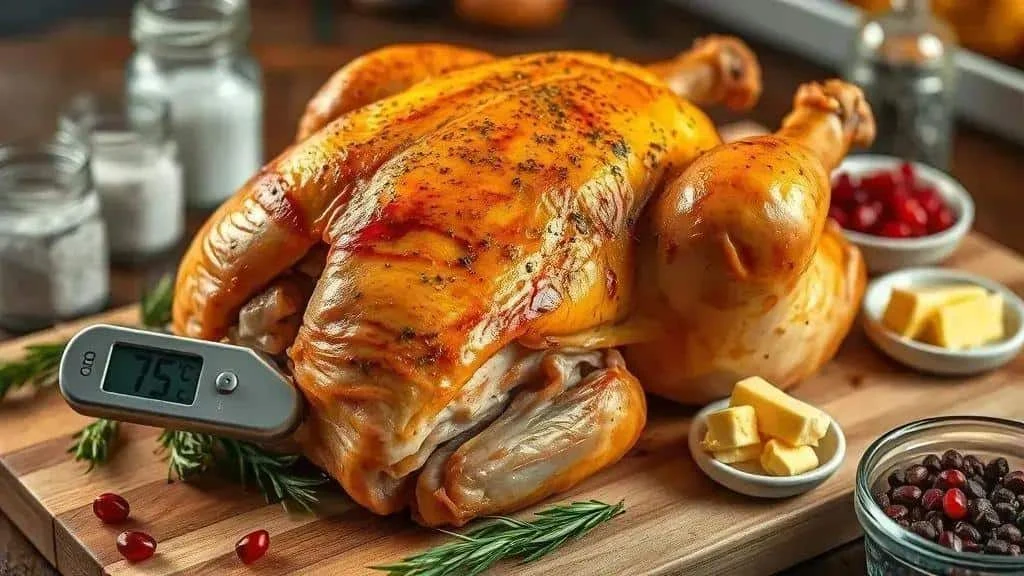
For juicy roast chicken, combine suitable seasoning with careful temperature checks. The following are alternatives to the basic seasoning, not extra layers of salt to add on top of it.
Dry seasoning and wet brining
- Dry seasoning: apply the salt allowance from the recipe to an unseasoned bird and refrigerate for 8–24 hours, within its use-by date. Keep it in a tray on the bottom shelf, away from ready-to-eat foods. Do not add another tablespoon of salt per kilogram.
- Wet brining: use a poultry-brining recipe or product with clear quantities and chilling instructions, and omit the recipe’s additional salt. Keep the bird and brine refrigerated throughout. Drain carefully and pat dry rather than rinsing raw chicken, which can spread bacteria around the sink.
Herbs and flavoured butter
A layer of seasoned fat under the skin adds flavour. Choose one of these alternatives instead of duplicating the main seasoning mixture.
- Herb butter: mix 60 g softened butter with 1 tablespoon chopped rosemary, 1 tablespoon thyme and 1 crushed garlic clove. Spread carefully beneath the skin in place of the oil mixture.
- Dry rub: combine 1 tablespoon paprika, 1 teaspoon black pepper, 1 teaspoon garlic powder and the zest of 1 lemon. Rub over the outside, using the recipe’s salt allowance only once.
- Substitutions: use olive oil instead of butter and omit butter from the sauce for a dairy-free version, checking the stock and other labels. Sage or oregano can replace rosemary.
Roasting and temperature checks
- Preheat properly: start at 200°C, or 180°C fan, to brown the skin during the first 25–30 minutes.
- Lower the heat: reduce to 180°C, or 160°C fan, and continue until the thickest breast and thigh reach a safe temperature. Follow the bird’s packaging for timing guidance.
- Spatchcocking: removing the backbone and flattening the bird can help it cook more evenly and quickly. Ask a butcher to do this if you are unfamiliar with the technique.
- Positioning: tie the legs only loosely if using string. A rack keeps the bird above the liquid and encourages air circulation.
- Use a thermometer: probe the thickest breast and thigh without touching bone. Check for 75°C for 30 seconds or 70°C for 2 minutes. Clean the probe between checks.
- Controlled basting: occasional basting is enough; frequent opening slows cooking. Save the sweet pomegranate sauce for glazing the cooked bird or for the final few minutes, watching for scorching.
Finishing and resting
- Resting: cover loosely with foil and rest the fully cooked chicken for 10–15 minutes before carving.
- Slicing: cut breast meat across the grain for easier-to-eat slices.
- Final garnish: add pomegranate seeds and fresh herbs just before serving.
- If the meat is dry: serve it with extra sauce, or chill it promptly for sandwiches or salads. Sauce improves texture but cannot make improperly stored chicken safe.
Pomegranate sauce: method and flavour balance
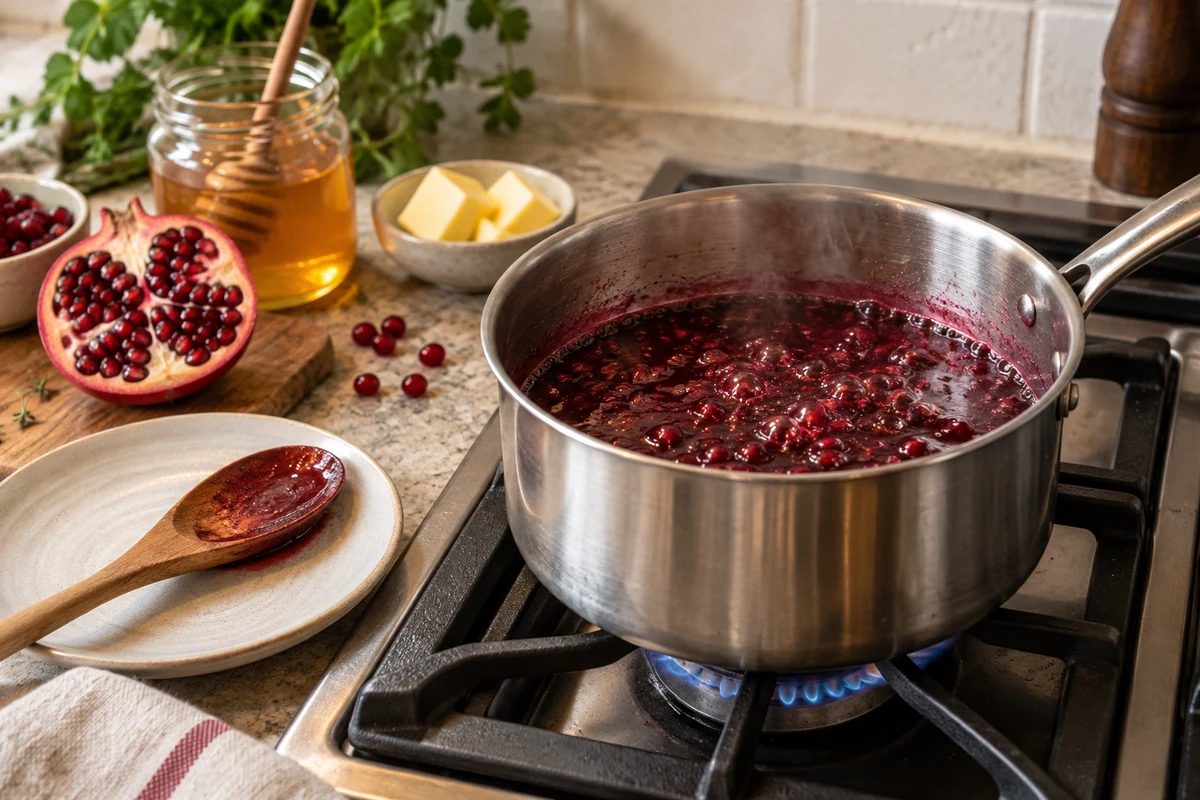
The pomegranate sauce should taste sweet and tangy, with enough body to coat a spoon. This is a detailed explanation of the same sauce in the main recipe, not an additional batch.
- Combine the liquids: put the 240 ml pomegranate juice and 120 ml stock or red wine in a small saucepan.
- Add sweetness and acidity: stir in 2 tablespoons honey or maple syrup and 1 tablespoon balsamic vinegar. Use stock if avoiding alcohol; simmering wine does not guarantee that all alcohol disappears.
- Optional aromatics: a little extra lemon zest or 1 additional crushed garlic clove gives a stronger flavour. These additions are optional and separate from the chicken’s seasoning.
- Heat gently: bring to a simmer over medium heat, stirring to dissolve the honey.
- Reduce: lower the heat and start checking after 8–12 minutes. Continue until the sauce lightly coats a spoon; it will thicken further as it cools.
- Strain if desired: pass through a fine sieve to remove pulp or added aromatics.
- Finish with butter: take off the heat and whisk in 1 tablespoon of the optional cold butter, adding the second only if wanted.
- Adjust the flavour: if too sharp, add a little honey; if too sweet, add a small splash of vinegar or lemon juice. Taste between additions.
- Store safely: cool promptly, cover and refrigerate at 5°C or below. Use within 48 hours or freeze. Reheat once until steaming hot, stirring gently to bring the sauce together.
Balancing tips
- Salt: taste the finished sauce before adding salt, especially if the stock is already salted.
- Sweetness and acidity: adjust honey and vinegar gradually rather than adding another full spoonful at once.
- Consistency: loosen an overly thick sauce with 1–2 tablespoons hot water or stock.
- Intensity: reduce further for a more concentrated flavour, or dilute with stock for a lighter finish.
- Alternatives: maple syrup gives a different sweetness, while red wine vinegar can replace balsamic. Adjust quantities to suit the ingredients you use.
Christmas dinner accompaniments
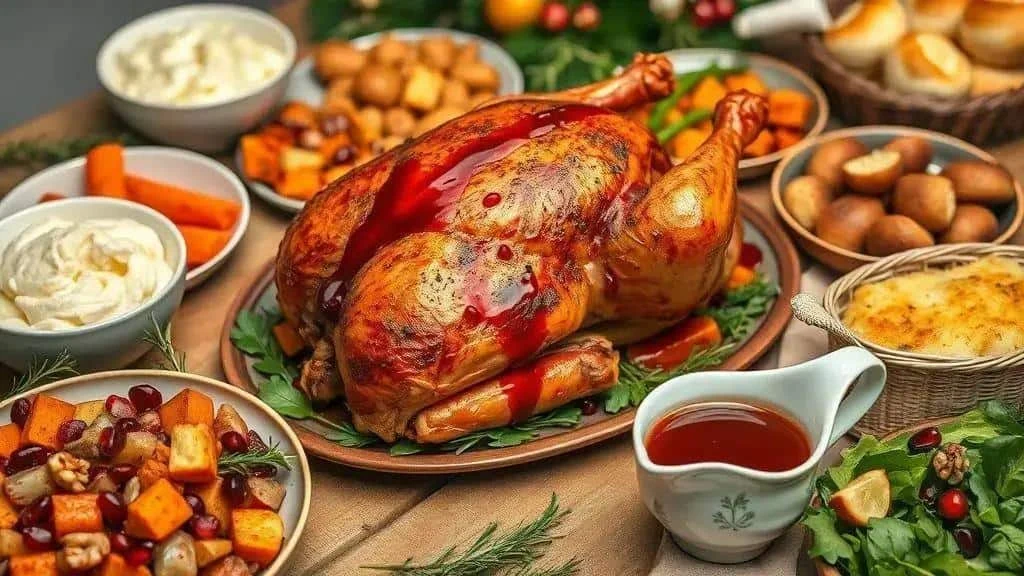
Serve roast chicken with pomegranate sauce alongside a mixture of creamy, crisp and fresh dishes. Choose sides that fit your oven space and the time available.
Rice, potatoes and bread
- Creamy mashed potatoes — boil 800 g potatoes until tender, drain, then mash with 50 g butter and about 120 ml warm milk. Season to taste; avoid overworking the potatoes.
- Rice with almonds and herbs — stir 3 tablespoons toasted almonds and chopped parsley into about 2 cups freshly cooked rice. If using leftover rice, cool it within 1 hour, refrigerate, use within 24 hours and reheat only once until steaming hot.
- Bread or rolls — serve warm for mopping up the sauce.
Vegetables and salads
- Roasted vegetables — toss carrot, sweet potato and onion pieces with oil, salt and rosemary. Roast at 200°C, or 180°C fan, for roughly 30–40 minutes, checking that they are tender and golden.
- Leaf salad with pomegranate — combine mixed leaves, a handful of pomegranate seeds, toasted walnuts and a light vinaigrette.
- Steamed broccoli — cook until just tender and finish with lemon zest and a little cooked garlic if desired.
Root vegetable sides
- Mashed mandioquinha — this Brazilian root vegetable is also called arracacha or batata-baroa. Mash 600 g cooked root with 30 g butter and nutmeg to taste. Parsnip makes a different but accessible UK alternative.
- Potato gratin — bake thin potato slices with cream and cheese until tender throughout and bubbling, following your chosen gratin recipe.
Extra sauces and garnishes
- Pan gravy — skim excess fat from the roasting juices, add a little stock or wine and bring to a thorough boil before serving. Do not serve juices that have only warmed beside raw chicken.
- Fresh fruit relish — finely chopped apple or pear with herbs and lemon adds a fresh contrast.
Serving and planning
- Balance textures: pair mash with something crisp, such as toasted nuts or bread, and a fresh salad.
- Plan oven space: choose vegetables that can share the oven, keeping them in a separate tray and allowing extra time if the oven is crowded.
- Prepare ahead: chop vegetables or make suitable sides in advance. Cool cooked food promptly, refrigerate and reheat once until steaming hot.
- Plan portions: base quantities on the number of guests, their appetites and how many sides you serve, rather than treating a fixed weight as suitable for every meal.
Variations on roast chicken with pomegranate sauce
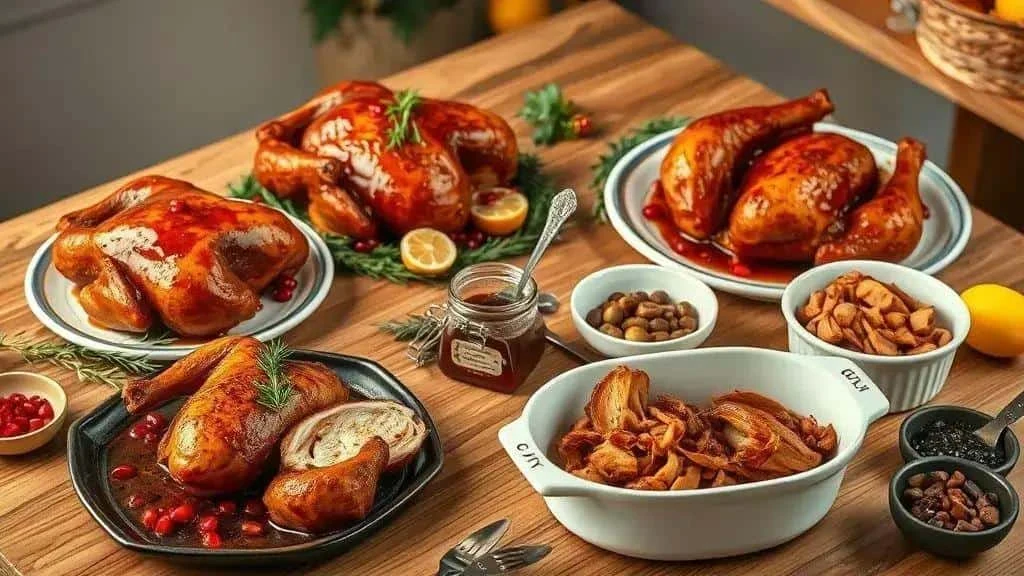
These ideas adapt roast chicken with pomegranate sauce to different cuts and equipment. They are suggestions, not claims of individually tested cooking schedules: follow the appliance instructions and check the meat’s temperature.
Drumsticks and thighs
Chicken pieces are convenient for a smaller meal and may cost less than a whole bird, depending on where you shop.
- Quantity: use about 1.2–1.5 kg drumsticks and thighs.
- Seasoning: use the same herb mixture, adjusting salt to the weight and whether the pieces are already seasoned.
- Roasting: cook at 200°C, or 180°C fan, following the pack’s guidance. Start checking after about 35–45 minutes, but continue until each thickest piece reaches 75°C for 30 seconds or 70°C for 2 minutes.
Spatchcock chicken
Flattening the bird exposes more skin and can shorten cooking time.
- Preparation: use sturdy poultry shears to cut along either side of the backbone, then open and flatten the bird, or ask your butcher to prepare it. Clean the board and shears thoroughly afterwards.
- Timing: use 200°C, or 180°C fan, and follow guidance for the weight of the flattened bird. Do not assume that 35–50 minutes is enough; check breast and thigh temperatures.
- Benefit: a flatter shape can encourage more even cooking and crisp skin.
Air fryer portions
An air fryer suits smaller batches, provided the pieces fit with room for air to circulate.
- Cuts: use drumsticks, thighs or suitably sized breast portions.
- Heat and time: follow the appliance’s poultry instructions; 190°C may be a suitable setting, but size and equipment affect timing. Turn as directed and check the centre of each piece rather than relying on a 20–30-minute estimate.
- Glazing: brush on a little sauce towards the end, watching carefully because sugar can burn quickly. Serve extra freshly heated sauce separately.
Slow cooker shredded chicken
Boneless pieces can be cooked for serving immediately or chilled safely for another meal.
- Cuts: use 1.2–1.5 kg fully thawed boneless chicken breast or thigh.
- Method: follow your slow cooker’s instructions for chicken, loading and liquid volume. The original variation uses 120 ml pomegranate juice and 60 ml stock, but this may need adjustment for your appliance. Do not rely on a universal 4–6-hour low setting; check that the chicken is thoroughly cooked.
- Finish: transfer the cooking liquid to a saucepan, bring to a thorough boil and reduce into a sauce. Stir through the cooked, shredded chicken and serve hot.
Honey-free sauce
Changing the sweetener does not make the chicken dish vegan. A fully plant-based sauce also needs vegetable stock and no dairy butter.
- Substitute: use 2 tablespoons maple syrup instead of honey. Molasses has a stronger flavour, so add it in smaller amounts and taste.
- Adjust: watch the sauce as it reduces, particularly with dark syrups that make browning harder to judge.
Warmly spiced sauce
A little spice adds another festive note to the pomegranate sauce.
- Optional additions: try ¼ teaspoon cinnamon, a pinch of allspice and ¼ teaspoon ground ginger.
- Balance: taste the cooked sauce before adjusting honey or vinegar. Spices change the flavour but do not automatically make the sauce more acidic.
Dried fruit and herb accompaniment
Serve the fruit and nut mixture alongside the bird rather than packing the cavity, which changes cooking time and can leave the centre undercooked.
- Suggested mixture: combine 100 g chopped dates or dried apricots, 50 g chopped walnuts, 1 tablespoon parsley and a little orange zest.
- Method: warm separately in a small covered ovenproof dish with a splash of water to prevent drying, then serve beside the cooked chicken. Keep the bird’s cavity empty.
- Variation: replace walnuts with toasted almonds for a different crunch. Check guests’ nut allergies.
Choosing a variation
- Limited time: smaller pieces or a prepared spatchcock bird may be convenient; safe cooking still comes first.
- Budget: compare the cost of drumsticks and thighs with a whole chicken.
- Festive serving: pair the separate dried-fruit accompaniment with the spiced sauce.
- Planning: a slow cooker can free up oven space, provided you follow the appliance instructions and serve or chill the cooked food promptly.
Preparing ahead and using leftovers
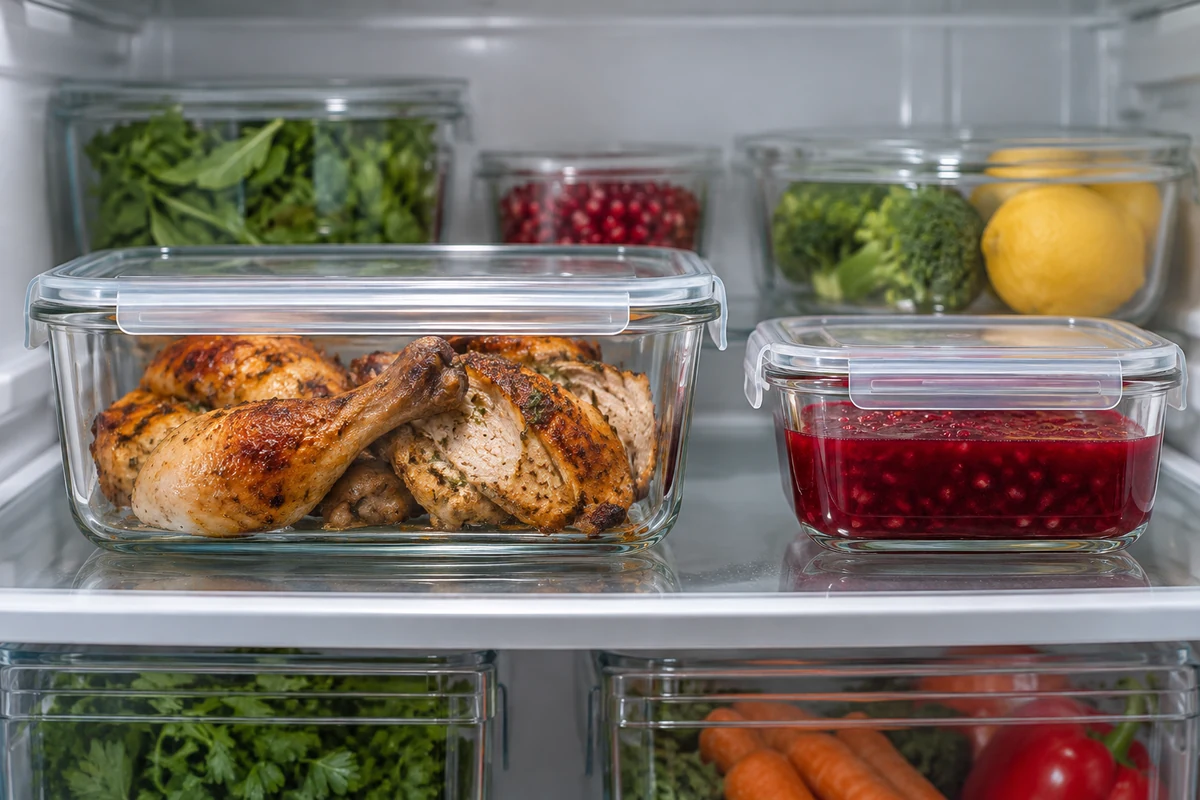
A little preparation helps the meal run smoothly. Plan which foods will be cooked fresh, which will be chilled, and which will need their single reheating before serving.
Preparation in advance
- Season ahead: refrigerate the seasoned chicken for 8–12 hours within its use-by date, covered and separated from ready-to-eat food.
- Roast the day before: cook thoroughly, carve into shallow portions, cool promptly and refrigerate within 1–2 hours. Reheat once until steaming hot; cold glaze alone is not reheating.
- Make the sauce separately: prepare up to 48 hours ahead, cool and refrigerate promptly, or freeze it. Reheat once until steaming hot before serving.
- Prepare sides: mash or gratin can be made ahead if cooled and chilled safely, then reheated once throughout. Rice needs the shorter storage guidance given above.
Safe storage
- Cool promptly: after serving, divide chicken into smaller portions and refrigerate within 1–2 hours. Do not leave a whole warm bird on the worktop for prolonged cooling.
- Containers: use clean, shallow, covered food containers. Store sauce separately for easier portioning.
- Fridge storage: keep at 5°C or below and use within 48 hours of cooking, or freeze sooner.
- Freezing: label individual portions and freeze promptly. Use within about 3 months for best quality; this is a quality guide, not a way to rescue leftovers already stored too long. Thaw in the fridge and use within 24 hours of full defrosting.
Reheating without drying out
- Oven: cover portions with foil, add 2–3 tablespoons stock or sauce and heat at 160–170°C, or 140–150°C fan, until steaming hot throughout. Timing depends on portion size; check the centre rather than assuming 15–25 minutes is sufficient.
- Hob: warm pieces in a covered pan with a little stock, turning and stirring as needed until thoroughly hot.
- Microwave: use a microwave-safe covered dish with a vent. Heat in stages, turning or stirring between them, and check for cold spots. Follow the appliance’s standing-time instructions.
- Final check: reheat until steaming hot throughout; a probe reading of 75°C for 30 seconds is one suitable check. Reheat only once.
Leftover ideas
- Chicken and pomegranate salad: combine chilled cooked chicken, leaves, pomegranate seeds and walnuts with a light vinaigrette, within the chicken’s storage limit.
- Festive sandwich: layer cold chicken with a little sauce, cream cheese and rocket in crusty bread.
- Quick pasta: combine 300 g cooked pasta with chicken, a little sauce and herbs. Heat until the chicken is steaming hot throughout; use chicken that has not already been reheated.
- Chicken soup: use promptly chilled bones and meat with vegetables for a properly cooked stock or soup. Keep within safe storage times and reheat the chicken only once.
- Stuffed jacket potatoes: mix chicken with sauce and cheese, spoon into hot baked potatoes and heat until the filling is steaming throughout. This counts as the chicken’s reheating.
- Tacos or wraps: reheat chicken once with spices until thoroughly hot, then add crisp salad and pomegranate seeds.
Planning and reducing waste
- Portion before freezing: small labelled portions let you thaw only what you need.
- Plan the next meal: reserve suitable leftovers promptly rather than leaving them on the serving table. If the chicken was already reheated for dinner, choose cold uses within its storage limit instead of heating it again.
- Safety: refrigerate cooked food within 1–2 hours and reheat no more than once. Discard food left out too long or with uncertain storage history; appearance and smell do not establish safety.
Conclusion
Roast chicken with pomegranate sauce offers a colourful Christmas main with a balance of herbs, sweetness and acidity. Choose the cut and sides that suit your meal, and use temperature checks to guide cooking.
Thank you for reading. Follow our social channels for more recipes, preparation tips and festive ideas.
Visit I Love Christmas for more seasonal inspiration. Happy Christmas!
FAQ — Roast Chicken with Pomegranate Sauce
How far ahead should I season the chicken?
You can season an unseasoned bird and refrigerate it for 8–24 hours, within its use-by date. Use the salt allowance once, keep the bird on the bottom shelf and follow a separate validated recipe if choosing a wet brine.
How can I tell when the chicken is cooked?
Use a clean food thermometer in the thickest breast and thigh, avoiding bone. Check for 75°C for 30 seconds or 70°C for 2 minutes. The chicken should be steaming hot throughout, with no pink flesh and clear juices; visual signs alone are less reliable.
Can I make the chicken and sauce in advance?
Yes. Cool cooked chicken and sauce promptly, refrigerate at 5°C or below and use within 48 hours, or freeze. Chicken cooked the day before must be reheated once until steaming hot throughout if served hot. Adding glaze is not a substitute for reheating.
How can I reheat the chicken without drying it out?
Cover portions with foil in the oven or use a covered pan on the hob, adding a little stock or sauce. Heat until steaming hot throughout, checking the centre. Reheat only once and only within the storage period.
What can replace pomegranate juice or honey?
Cranberry or red grape juice with a little lemon gives a different but suitable fruit sauce. Maple syrup can replace honey. Pomegranate molasses is concentrated, so dilute and adjust gradually rather than using the same volume as juice.
Sources and Further Reading
- Food Standards Agency: cooking and reheating food safely
- Food Standards Agency: chilling, freezing and defrosting food safely
- Food Standards Agency: cooking and reheating safely, including rice