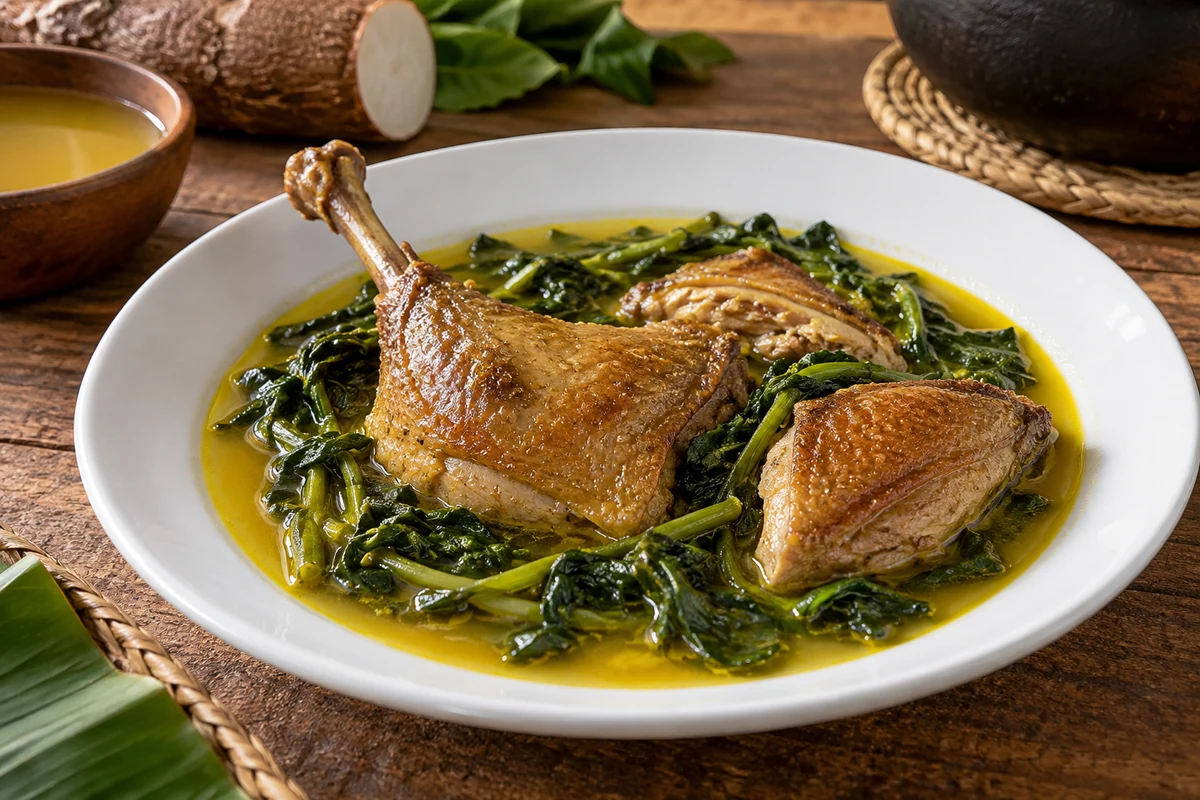
Pato no tucupi is an Amazonian duck dish made with tucupi, a processed cassava sauce, and jambu leaves. This Christmas version browns the duck before simmering it gently in properly processed, food-safe tucupi. Cook the duck thoroughly, add the greens and serve with cooked cassava or rice. Never substitute raw cassava liquid for prepared tucupi.
Pato no tucupi brings a distinctive taste of northern Brazil to Christmas dinner. This version combines duck with tangy tucupi and jambu, with practical guidance on sourcing the ingredients and preparing them safely.
Ingredients for pato no tucupi
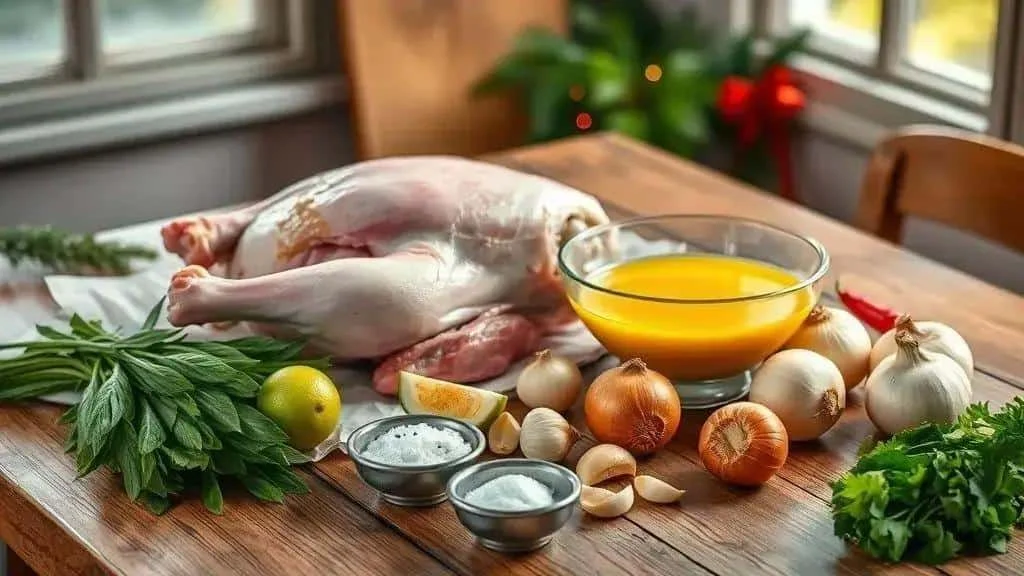
For this Christmas pato no tucupi, gather the ingredients below. The suggested alternatives make a different dish when specialist Amazonian ingredients are unavailable.
- 1 whole duck, approximately 2 kg – oven-ready and fully defrosted if frozen. Duck legs or a large chicken are alternatives, with cooking adjusted to the cut and weight.
- 1.5–2 litres properly processed tucupi – buy a labelled food product from a reputable supplier and follow its preparation instructions. If unavailable, use 1.5 litres chicken stock with 1 teaspoon turmeric and 1 tablespoon lemon juice for an inspired alternative, not an equivalent tucupi sauce.
- 200 g jambu leaves – washed, with tough stalks removed. Spinach provides greens but not jambu’s characteristic tingling sensation.
- 1 kg food-grade sweet cassava, also called mandioca or aipim – preferably commercially prepared frozen pieces with cooking instructions. Sweet potatoes or commercially prepared cassava mash are alternatives.
- 4 garlic cloves – crushed; or 1 teaspoon garlic powder.
- 2 medium onions – chopped; red onions may also be used.
- 3 bay leaves.
- 1 pimenta-de-cheiro or dedo-de-moça chilli – deseeded and chopped. A mild chilli is an alternative; adjust the heat to taste.
- 2 tablespoons butter or vegetable oil – for browning, using less if the duck releases plenty of fat.
- Juice of 1 lemon – for flavour in the marinade, not for washing or disinfecting the duck.
- Salt, to taste – start sparingly because prepared tucupi and stock may already be salted; adjust the finished sauce.
- 1 teaspoon ground black pepper – or to taste.
- 1 sprig fresh coriander – chopped to finish; use parsley if preferred.
- 1 chicken stock cube, optional – usually unnecessary if the tucupi is well seasoned; check salt and allergens before adding.
Before you start
Use tucupi whose processing and intended culinary use are clear, following the label; do not assume every bottled product is ready to consume. Raw cassava liquid contains cyanogenic compounds, and an improvised short boil is not a reliable safety process. This recipe does not make tucupi from scratch. Jambu supplies the characteristic mouth-tingling effect. Marinate the duck in the fridge and prepare the cassava separately according to its supplier’s instructions.
How to make Christmas pato no tucupi
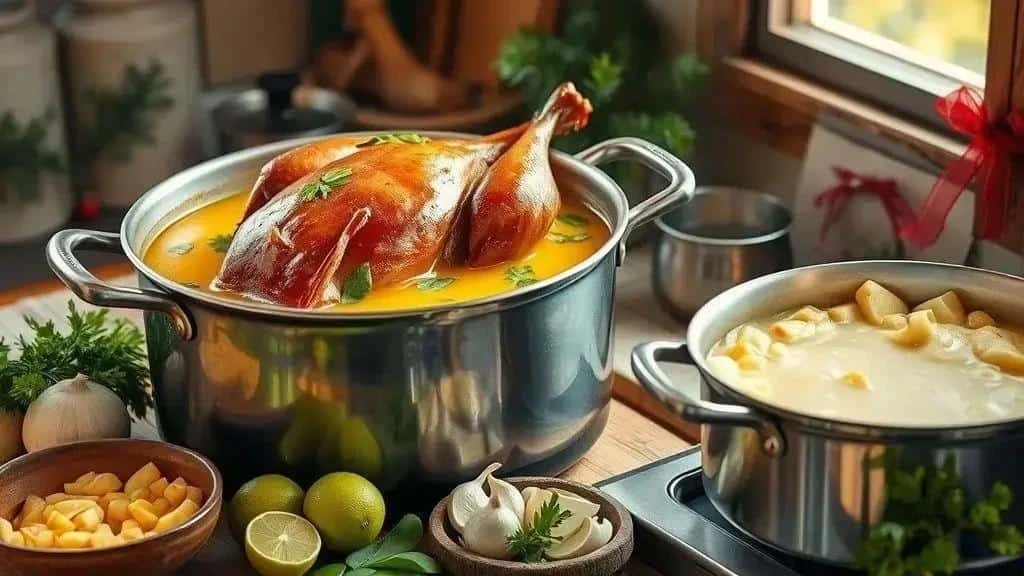
- Season the duck: Do not wash raw poultry. Pat it dry with kitchen paper, keeping utensils and surfaces separate from ready-to-eat food. Rub with the lemon juice, garlic, black pepper and a little salt. Cover and marinate in the fridge for 30 minutes to 2 hours.
- Prepare the tucupi and jambu: Follow the processing and cooking directions on your purchased tucupi. Strain if necessary for texture; straining does not remove dissolved toxins. Wash the jambu and remove tough stalks. Keep any leaves intended for garnish aside to cook separately, rather than serving them raw by default.
- Brown the duck: Heat the butter or oil in a large, deep pan and brown the duck on all sides, roughly 3–4 minutes per side. Use sturdy utensils and take care with hot fat. Browning adds flavour; it does not seal in juices or cook the centre safely.
- Cook the aromatics: Lift out the duck and pour off excess fat safely, leaving a little in the pan. Lower the heat and soften the onions, chilli and bay leaves for about 4–5 minutes. Add the optional stock cube only if needed.
- Add the sauce: Return the duck to a suitably large pan or deep roasting dish. Pour in enough prepared tucupi to come about halfway up the bird. Bring the liquid to a simmer and cover; add the jambu near the end so the leaves cook without losing all their texture.
- Cook gently: Simmer, covered, on the hob, or cook in a covered ovenproof dish at 180°C conventional/160°C fan. Allow roughly 1½–2 hours as a starting estimate, turning carefully and checking the liquid level. It may take longer. Check both the thickest breast and thigh, away from bone, for 75°C for 30 seconds or 70°C for 2 minutes, and continue until tender. Add the jambu in time to cook fully. For a pressure cooker, use a tested recipe and the appliance’s capacity, liquid and release instructions instead of transferring this timing directly.
- Cook the cassava separately: Follow the packet or supplier’s instructions for the food-grade sweet cassava. It must be properly peeled and thoroughly cooked in water, which is then discarded. Never use unknown or bitter cassava here, eat it raw, or treat a fixed 20-minute boil as suitable for every product. Sweet potatoes are a simpler alternative if sourcing is uncertain.
- Adjust the sauce: Once the duck is fully cooked, transfer it to a clean platter. Simmer the sauce uncovered if it needs concentrating, then taste with a clean spoon and adjust seasoning. This reduction is for flavour and consistency, not a substitute for safe tucupi processing.
- Rest briefly: Let the cooked duck rest for about 10 minutes while you finish the sauce and accompaniments.
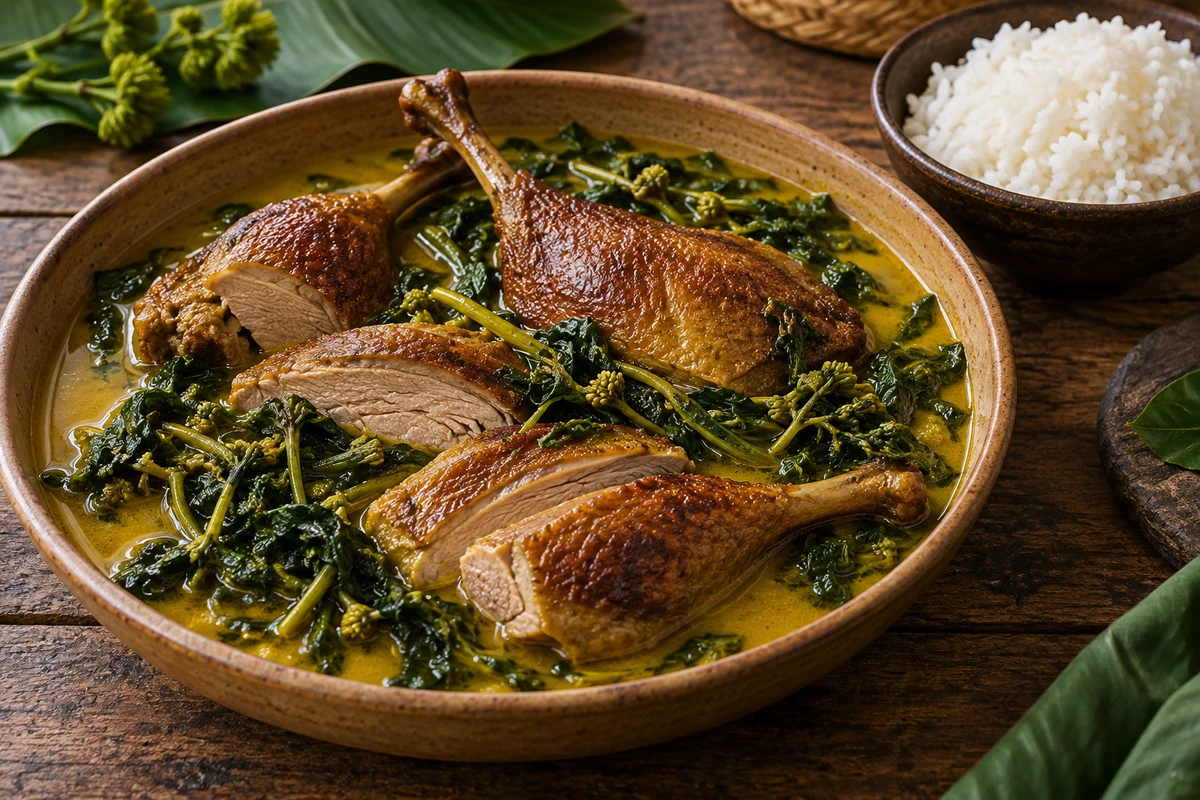
- Serve: Joint or carve the duck, removing bones as appropriate. Spoon hot tucupi and cooked jambu over it, finish with the coriander and serve promptly with the hot cassava.
Practical tips
A longer marinade of up to 12 hours in the fridge can develop the flavour, provided it stays within the use-by date. If tucupi is unavailable, the stock, turmeric and lemon mixture makes a different but useful alternative. Leave out the chilli for a milder dish.
Variations on pato no tucupi

- Duck with tucupi and jambu: Keep the main ingredients and the gentle cooking method, using properly processed tucupi. Cook the jambu towards the end, check the duck’s core temperature and tenderness, and serve with cooked cassava. Roasting the duck separately before finishing in tucupi is another traditional approach, but requires its own roasting schedule.
- Duck legs braised in tucupi: Brown the legs, then simmer gently in the prepared sauce until thoroughly cooked and tender. This is braising, not confit in fat. A brief oven finish can brown the skin, although sauce softens it again. Chicken thighs can be used with an appropriate cooking time; duck breasts need a different, shorter schedule and should still be cooked thoroughly for this recipe.
Other serving variations
- Orange and spice duck: Add the juice and zest of 1 orange, 1 cinnamon stick and 2 cloves to the sauce before cooking. This is a festive variation rather than the standard preparation; taste before adding more citrus, as tucupi is already tangy.
- Duck and cassava bake: Shred the fully cooked duck and combine with reduced tucupi and softened onion. Top with properly prepared cassava mash and bake until steaming hot throughout. When using leftovers, keep within 48 hours of the original cooking and reheat only once.
- Vegetarian tucupi with hearts of palm: Replace the duck with ready-to-use peach-palm hearts or sautéed mushrooms. Use vegetable stock if diluting the prepared tucupi, cook the jambu and serve with cassava or rice. Check the sauce contains no animal stock.
Balancing the flavours: Keep the tang of the tucupi in balance with the duck’s richness and any sweeter additions. Reduce only as much as needed, since salt and acidity also concentrate. Choose a milder chilli for less heat.
Serving at Christmas
- Plan the final stages: Have the sides ready when the duck finishes, allowing a short rest while you adjust the sauce.
- Warm suitable plates and platters: Follow their manufacturer’s instructions and handle them carefully. A warm plate helps serving, but a barely warm oven is not a safe way to hold cooked food for a long time.
- Choose shared or individual plates: A central platter suits a family meal. For individual portions, carve in the kitchen and spoon over the hot sauce just before serving.
- Plan portions: Around 300–350 g raw bone-in duck per person is a rough shopping guide, depending on the bird’s yield, appetites and other courses. Separate legs and breast meat so it is easier to share.
- Serve promptly: Keep the sauce hot for serving and avoid leaving duck and sauce lukewarm on the table for a prolonged buffet.
- Explain the jambu: Tell guests about its distinctive tingling sensation. Cooked leaves can be offered separately for those who prefer not to have them.
Keeping the duck moist
Keep the duck with a little of its hot sauce during the brief rest, loosely covered. Serve as soon as the accompaniments are ready. If there is a long delay, cool and refrigerate promptly and reheat once until steaming hot throughout, rather than leaving the food in a 60°C oven.
Accompaniments and drinks
- Properly cooked cassava: a traditional accompaniment with a mild flavour.
- Plain rice: to absorb the sauce; cook near serving time where possible.
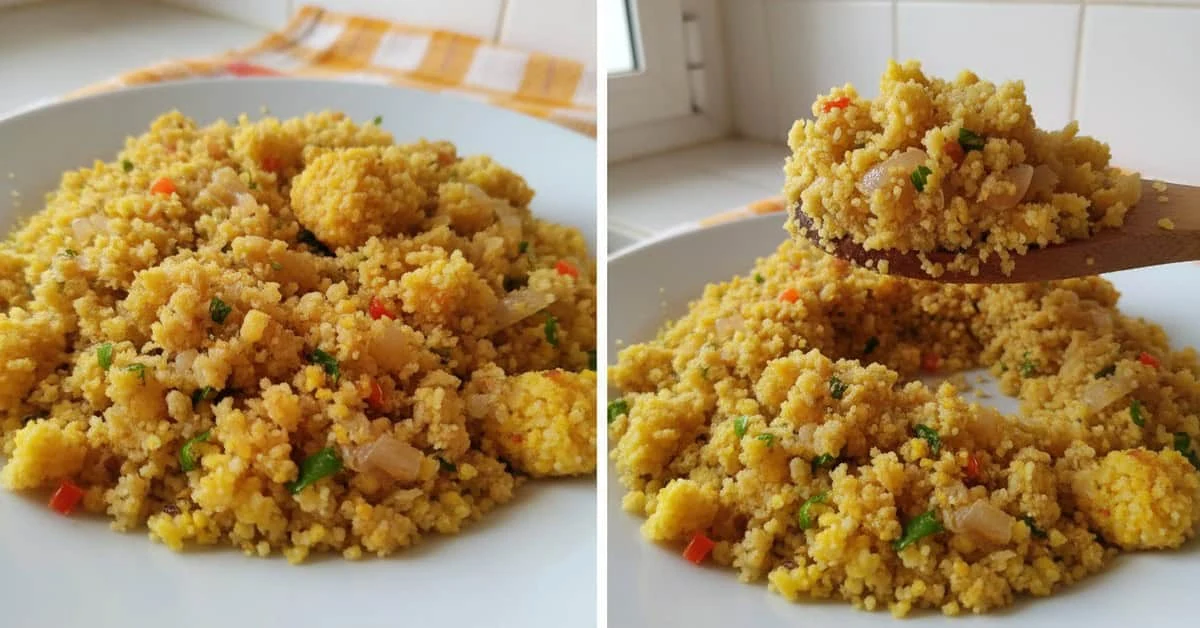
- A light farofa: Brazilian toasted cassava flour with onion and optional nuts for crunch.
- Drinks: an unoaked Chardonnay or brut sparkling wine, or passion fruit juice and sparkling water for alcohol-free options.
Presentation and garnishes
Use cooked whole jambu leaves and a little coriander for colour. Spoon the hot sauce over the duck just before serving and offer citrus wedges separately. Keep the presentation simple so the duck and its golden sauce remain the focus.
Practical table service
- Set out serving utensils, suitable platters and plates before the food is ready.
- Let guests know about jambu and check the ingredients of stock, sauces and garnishes for relevant allergens.
- For a larger group, carve manageable portions just before serving rather than leaving a whole platter cooling on the table for a long time.
About tucupi and jambu
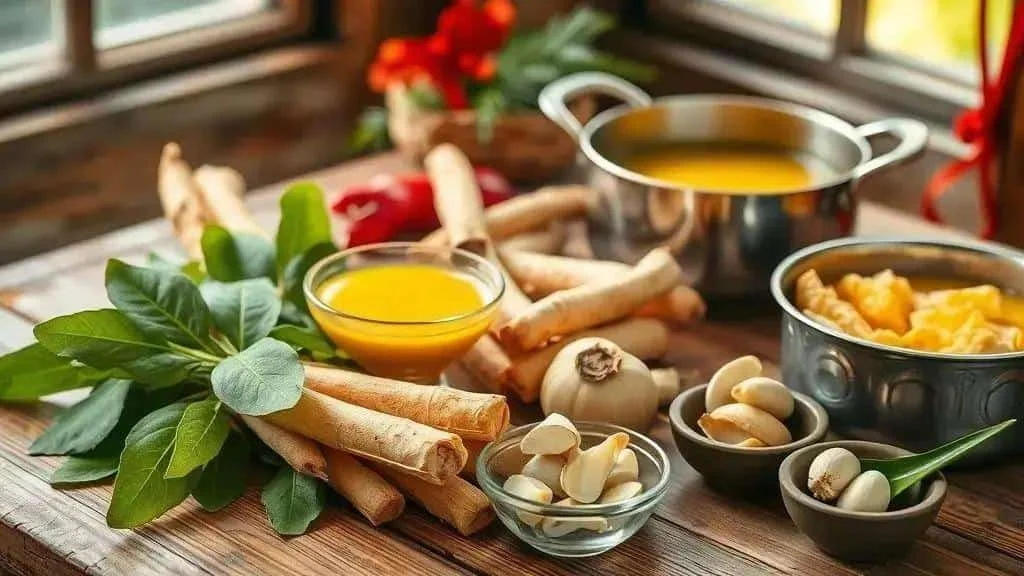
Tucupi is a yellowish cassava-derived sauce associated with Amazonian cooking. Producing it involves controlled processing, including fermentation and cooking; raw liquid pressed from bitter cassava is not a ready-to-use food.
Regional tradition
Tucupi and jambu are closely associated with Indigenous food traditions and the cuisine of northern Brazil, particularly Pará. This Christmas adaptation keeps that regional identity rather than presenting it as a British dish.
Processing and the tingling sensation
Cassava liquid can contain cyanogenic compounds. Do not rely on a universal 20–30-minute boil to make raw tucupi safe: its production needs a controlled process, and this recipe begins with a properly processed food product. Jambu’s characteristic mouth-tingling effect is associated with spilanthol; it is a sensory feature of the ingredient, not a health claim.
Flavour and culinary uses
Tucupi’s tangy flavour contrasts with rich duck, while jambu adds greens and its distinctive sensation. Together they create the recognisable character of pato no tucupi.
Buying and storing the ingredients
Choose labelled tucupi from a reputable food supplier, checking the use-by date, processing information and instructions before and after opening. Follow the label’s refrigeration and freezing directions rather than assuming a universal five-day shelf life. Keep fresh jambu chilled and use while fresh, or follow the instructions on a frozen product.
Accompaniments and substitutions
Cassava, plain rice and a little farofa work well with tucupi. Spinach is a practical green alternative where jambu is unavailable, but it does not reproduce the tingling sensation.
A few points to remember
- Regional identity: Tucupi belongs to a living Amazonian culinary tradition, with preparation varying between cooks and producers.
- Jambu’s effect: Its tingling is part of the eating experience. Avoid it if you have a known sensitivity; do not test a suspected allergy by tasting a little.
- Festive meals: Tucupi dishes feature in regional celebrations and can also be included in a family’s Christmas menu.
Christmas pato no tucupi is a way to share northern Brazilian flavours at the festive table. Source the specialist ingredients carefully and give the duck enough time to cook through and become tender.
Prepare the accompaniments in advance, keep raw and cooked food separate and adjust the seasoning once the sauce has reduced.
Visit the I Love Christmas blog for more festive recipes and ideas, and share the regional dishes that appear on your own Christmas table.
Christmas pato no tucupi: frequently asked questions
Is tucupi safe to eat?
It needs proper processing. Use a labelled, properly processed food product from a reputable supplier and follow its cooking and storage instructions. Do not use raw cassava liquid or assume a short home boil makes an unknown product safe.
What causes jambu’s tingling, and can everyone eat it?
Spilanthol contributes to the tingling and mild numbing sensation. Tell guests it is present and offer an alternative where needed. Anyone with a known allergy or sensitivity should avoid it; tasting a small amount is not a safe allergy test.
Can I use a different protein?
Duck legs or chicken are possible, with cooking adjusted and poultry cooked thoroughly. Hearts of palm or mushrooms with vegetable stock make a vegetarian variation. These changes affect flavour and cooking time.
How should I store leftover pato no tucupi?
Cool in smaller portions and refrigerate within 2 hours. Keep at 0–5°C and use within 48 hours or freeze promptly; three months is a practical freezer quality guide, not an extension of time already spent in the fridge. Defrost in the fridge and reheat only once until steaming hot throughout. Cool rice more quickly, ideally within an hour, refrigerate for no more than 24 hours and reheat once.
How far ahead should I prepare it?
Marinate the duck for 2–12 hours in the fridge, within its use-by date. Cook on the day where convenient and plan the sides around the duck’s actual doneness, allowing a short rest before serving.
Which sides and drinks go well with it?
Properly cooked cassava, plain rice and a light farofa are useful accompaniments. Choose a light white wine, brut sparkling wine, passion fruit juice or sparkling water according to your guests’ preferences.
Sources and Further Reading
- Food Standards Agency: cooking and reheating food safely
- Food Standards Agency: chilling, freezing and defrosting food safely
- Food Standards Agency: cooking and reheating safely, including rice
- Embrapa: study of cyanide levels and tucupi processing