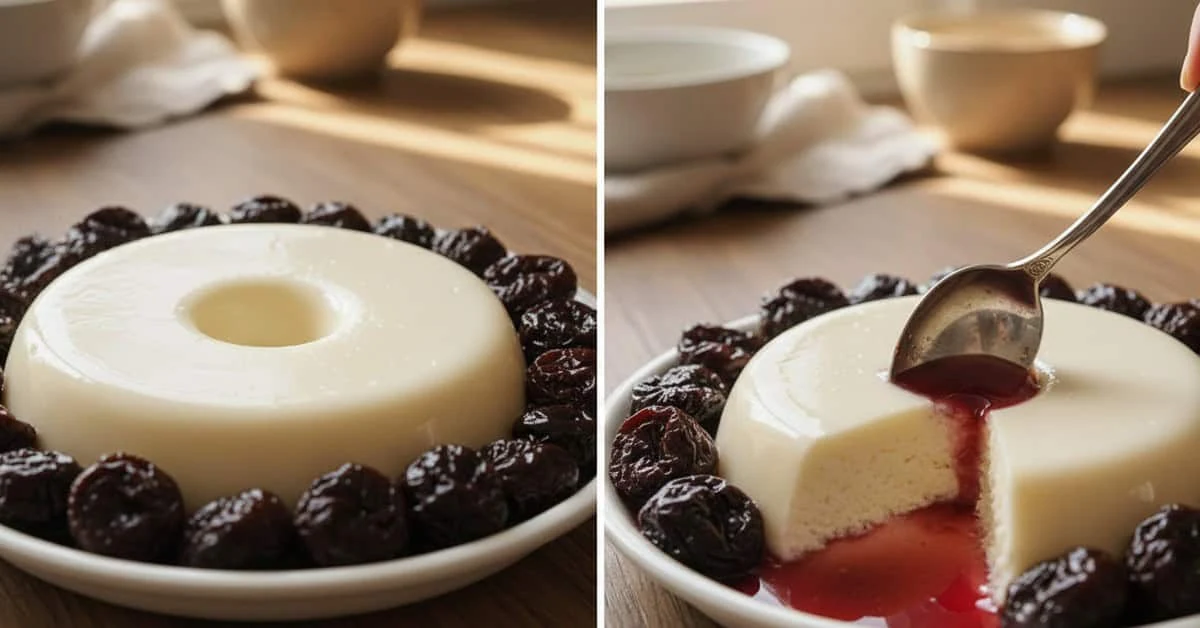
Manjar de coco is a Brazilian coconut pudding thickened with cornflour, chilled in a mould and served with prunes in syrup. Milk and coconut milk give it a creamy texture, while the fruit sauce adds a contrasting flavour and colour. This recipe makes roughly eight generous portions, or more smaller servings.
This Brazilian coconut pudding with prunes makes a refreshing dessert for the Christmas table. A smooth white pudding and dark, glossy fruit sauce create an attractive finish with straightforward ingredients.
Ingredients for coconut pudding with prunes
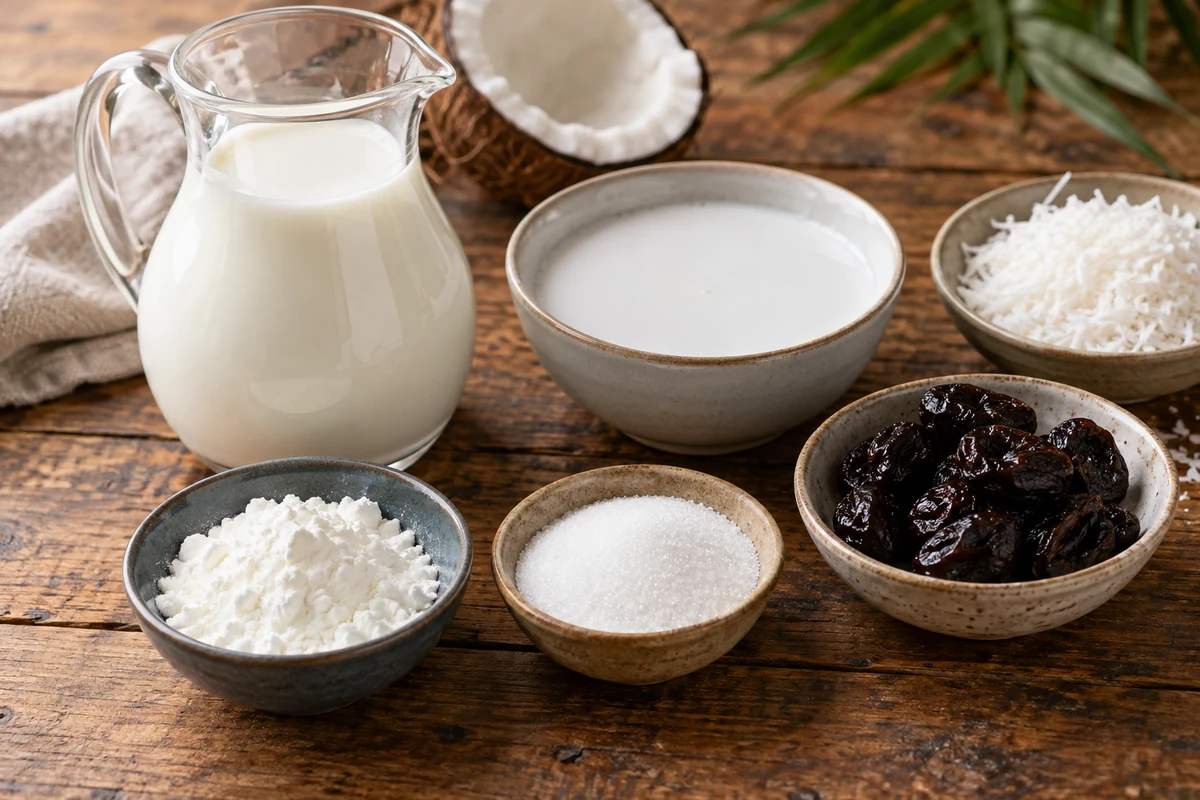
Gather the ingredients below for Brazilian coconut pudding with prunes. Expect about eight generous portions, with the exact yield depending on the mould and serving size.
Ingredients for coconut pudding with prunes
- 1 litre whole milk in total, divided. Reserve 240 ml to mix with the cornflour and heat the remaining 760 ml. Unsweetened plant-based milk can be used for a dairy-free variation.
- 400 ml canned coconut milk for the main recipe. Carton sizes vary, so measure the amount. If using only 200 ml for a milder flavour, replace the missing 200 ml with milk to keep the total liquid unchanged.
- 200 g sugar for the pudding, plus up to 2 tablespoons for the prune sauce. The sauce sugar is optional if the fruit is already sweet. Demerara changes the colour and flavour; it is not automatically less sweet or lower in sugar.
- 120 g cornflour, meaning the fine white starch sold as cornflour in Britain. It is already plant-based. Agar produces a different set and is not a direct gram-for-gram replacement; use a tested agar recipe and the product’s instructions if changing the thickener.
- A pinch of salt to balance the coconut flavour.
- 1 teaspoon vanilla extract, optional, for extra aroma.
- 250 g pitted prunes. Alternatively, use about 300 g ready-to-eat prunes in syrup, checking for stones and adapting the sauce as described below.
- 120 ml water initially, plus more if needed, for softening the prunes and making the sauce. A tablespoon of orange juice or port can replace the same amount of water for a variation.
- Desiccated coconut or finely grated lemon zest, optional, to finish.
Tip: for more coconut flavour, replace 100 ml of the milk with the same amount of extra coconut milk before cooking. Reducing the cornflour gives a softer dessert that may be better served in glasses. A baking sweetener changes flavour and texture; follow its instructions rather than assuming an equal-weight substitution.
How to make coconut pudding with prunes
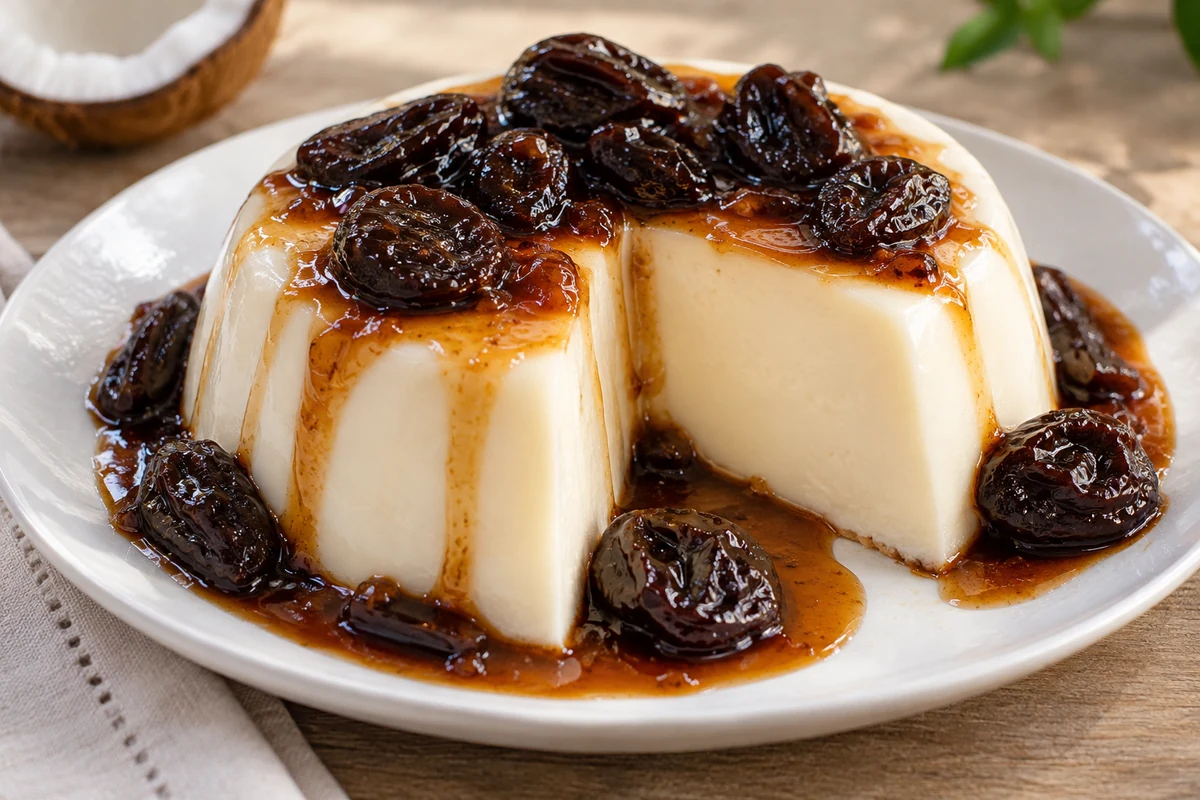
Follow these steps to make Brazilian coconut pudding with prunes, allowing plenty of time for it to chill before serving.
- Soften the prunes: put 250 g pitted prunes in a heatproof bowl with 120 ml hot water. Leave for 10–15 minutes, stirring occasionally, until softened. Add a little more water if the fruit absorbs it all, and reserve the soaking liquid.
- Make the prune sauce: put the softened prunes and their liquid in a small saucepan with up to 2 tablespoons sugar, if needed. Simmer gently for around 8–10 minutes until the liquid becomes lightly syrupy, adding a little water if the pan gets dry. Cool promptly in a shallow container and refrigerate within two hours.
- Mix the cornflour: whisk 120 g cornflour with 240 ml cold milk taken from the measured litre until smooth. This prevents dry lumps when it meets the hot liquid.
- Heat the remaining liquids: combine the remaining 760 ml whole milk, 400 ml coconut milk and 200 g sugar in a suitably large saucepan. Heat gently, stirring until the sugar dissolves.
- Add the cornflour mixture: stir the cold mixture again because the starch can settle, then pour it gradually into the hot milk over a low heat, whisking continuously.
- Cook until thick: bring to a gentle bubbling simmer while stirring, then cook according to the cornflour packet’s instructions until thick, smooth and glossy, with no raw starch taste. Allow roughly 5–8 minutes as a guide, adjusting to the pan and heat. The pudding becomes firmer as it cools.
- Finish the mixture: take off the heat and stir in the salt and optional vanilla. Do not add an extra splash of coconut milk at this stage without accounting for it in the recipe’s total liquid, as that can weaken the set.
- Strain if needed: while the mixture is still hot and workable, carefully press it through a fine sieve to remove any lumps. Skip this if it is already smooth.
- Fill the mould: lightly wet a suitable pudding mould with cold water, or coat it very thinly with neutral oil. Use a mould with enough capacity for the mixture, with space at the top. Pour in the hot pudding and smooth the surface; smaller moulds are another option.
- Keep the sauce separate: for a neatly unmoulded pudding, chill the prune sauce separately and add it after turning out. If serving directly from small dishes, spoon the cooled sauce over the thoroughly chilled pudding near serving time.
- Refrigerate: cool promptly and refrigerate within two hours. Use suitable food-safe covering to prevent a skin, following the wrap manufacturer’s temperature instructions. Chill for at least four hours, or preferably overnight for a large mould, until cold and firm throughout.
- Turn out and serve: gently loosen the edge if necessary. Briefly dip the outside of the mould in warm water, keeping water out of the pudding, then invert onto a serving plate. Add the chilled prunes and sauce, with optional coconut or lemon zest.
- Storage: keep the pudding and sauce covered at 5°C or below and eat within 48 hours, or sooner if an ingredient’s instructions require it. Freezing is not recommended for quality because the starch-thickened pudding can separate.
- Avoiding common problems: dissolve the cornflour in cold milk first, stir continuously and keep the heat controlled to avoid scorching. If lumps appear, whisk or strain the hot mixture carefully. Avoid splashing yourself with the thick, hot pudding.
Tips and variations
Dietary and flavour options: replace the whole milk with a suitable unsweetened plant-based milk for a vegan version; the cornflour does not need changing. For a different prune sauce, replace 1 tablespoon of its water with orange juice or port. Port remains an alcoholic ingredient and should be omitted when unsuitable for guests.
Presentation: serve slices with prune sauce, a little optional plant-based whipped topping or finely grated lemon zest.
Coconut pudding variations
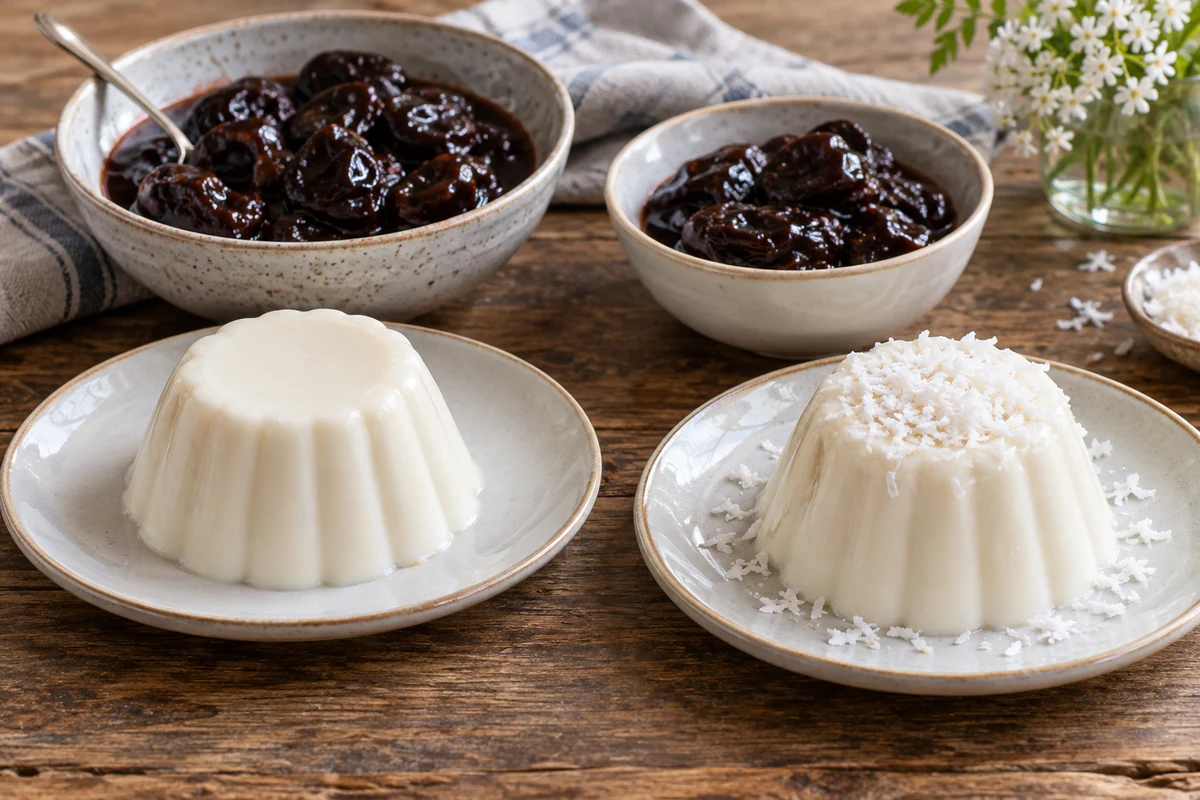
Adapt your coconut pudding with prunes to different tastes and dietary needs, remembering that changes to the liquid or thickener affect its texture.
Quick variations and substitutions
- Main version: use 1 litre whole milk, 400 ml coconut milk and 120 g cornflour as listed, keeping the slurry milk within the measured litre.
- Vegan: replace the litre of dairy milk with an unsweetened plant-based alternative and keep the cornflour. Products differ in richness and setting behaviour. Agar is an alternative thickener for a separately adapted recipe, not a requirement for making this pudding vegan.
- Adjusting sweetness: a suitable cooking sweetener can replace some or all of the sugar according to its manufacturer’s directions, but flavour and texture may change. Check the prune sauce too. A substitution alone does not establish that the whole dessert is suitable for a particular medical diet.
- A firmer slice: first check the measurements, cook the starch properly and chill fully. Adding agar on top of the listed cornflour can make the pudding excessively firm; follow a tested agar-based recipe rather than combining arbitrary quantities of thickeners.
- Flavoured prune sauce: simmer the 250 g prunes with their soaking liquid and up to 2 tablespoons sugar, replacing 1 tablespoon water with orange juice or port if wanted. Keep enough liquid in the pan to prevent scorching.
Presentation and accompaniments
Useful toppings include whole or sliced prunes with their sauce, lemon zest, toasted coconut, chopped nuts or a spoonful of plant-based whipped topping, chosen to suit your guests.
Serving format: make one large moulded pudding to slice, or divide the mixture between small dishes for individual portions. Chilled individual portions can also be given as a gift when safe cold storage is available.
Practical tips
- Stronger coconut flavour: increase the coconut milk by 50–100 ml and reduce the ordinary milk by the same amount, keeping the total liquid unchanged.
- Using prunes in syrup: they may not need soaking or extra sauce sugar. Taste the syrup separately and use only as much as you want; it is easier to control sweetness at serving than to make an unmeasured change to the pudding.
- Storage: cool promptly, refrigerate within two hours and keep covered at 5°C or below for up to 48 hours. Freezing can spoil the smooth texture.
- A lump-free mixture: dissolve the cornflour in cold milk before heating, stir again before pouring it in, and strain the cooked mixture if necessary.
Serving suggestion: offer coffee or tea alongside. Adults who want wine could choose a small dessert-wine serving; a citrus note in the prune sauce works without alcohol.
Serving, storing and giving as a gift
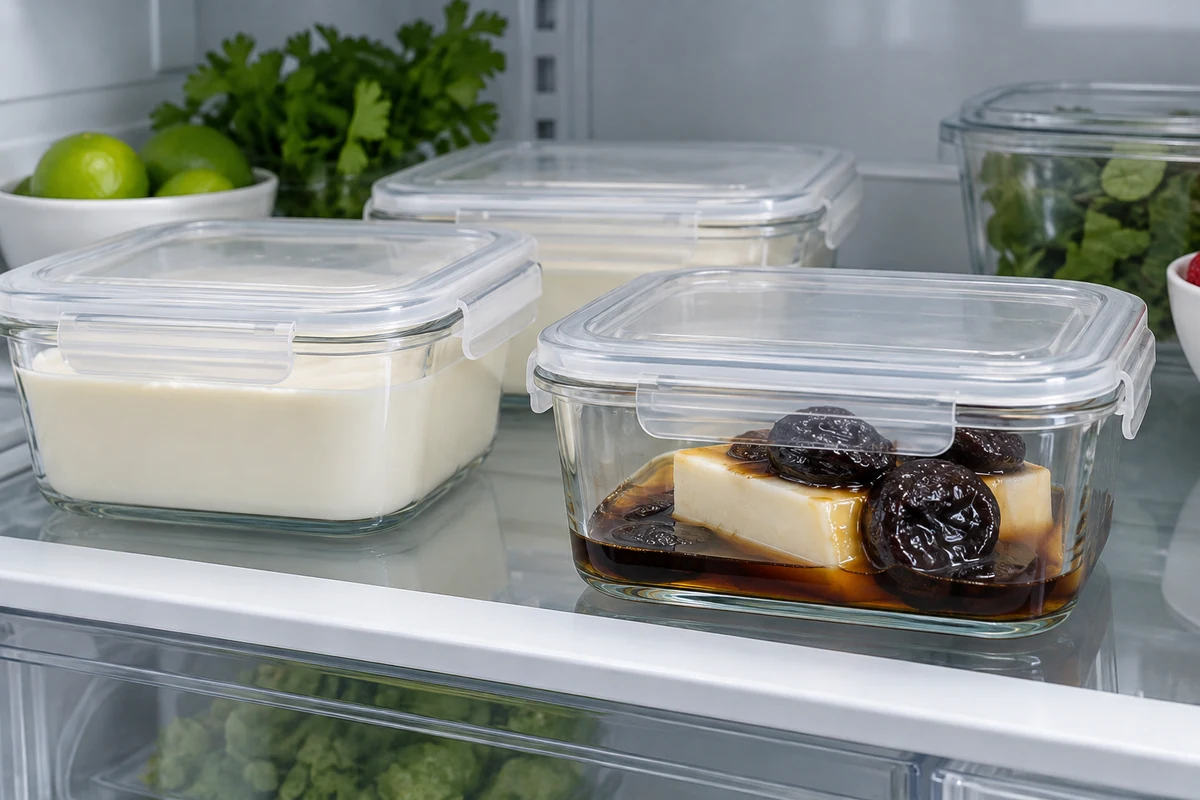
Keep the presentation of your coconut pudding with prunes simple so the contrast between the white pudding and dark fruit sauce stands out.
Serving
- Temperature: serve chilled, taking the pudding out of the fridge shortly before it is needed. Keep it at 5°C or below during storage rather than deliberately holding it at a warmer serving temperature.
- Portions: cut slices from a large pudding or serve individual dishes for easier portioning at a gathering.
- Decoration: finish with whole or sliced prunes and a little coconut or lemon zest.
- Accompaniments: coffee, black tea or an optional dessert wine for adults can complement the sweet coconut flavour.
Storage
- Refrigeration: use a clean covered container. Suitable food-safe wrap against the surface can reduce skin formation, but it does not replace prompt chilling.
- Storage time: eat within 48 hours of preparation, keeping refrigerated at 5°C or below and following any shorter ingredient instructions. Freezing is not recommended because the texture may separate.
- Containers: use clean, food-safe containers with lids for storage and transport. Protect glass containers from knocks.
- Transport: use an insulated container with frozen packs and keep the dessert at 5°C or below. Keep the journey short and refrigerate on arrival.
Giving individual puddings as a gift
- Small portions: use clean, lidded food containers or suitable small glass dishes for convenient individual servings.
- Packaging: decorate the outside with paper or fabric and ribbon, keeping decorative materials away from the food. Add a label with the preparation date, ingredients and storage instructions.
- Instructions: tell the recipient to keep the dessert refrigerated at 5°C or below and eat it within 48 hours of preparation, not 48 hours after receiving it. Only give it when safe cold transport and storage are practical.
- Finishing touch: attach a clean, wrapped dessert spoon to the outside of the container if useful.
Practical tip: for a celebration elsewhere, transport the chilled pudding in its mould and turn it out at the venue. This reduces the chance of damaging it in transit.
Background and Christmas serving ideas
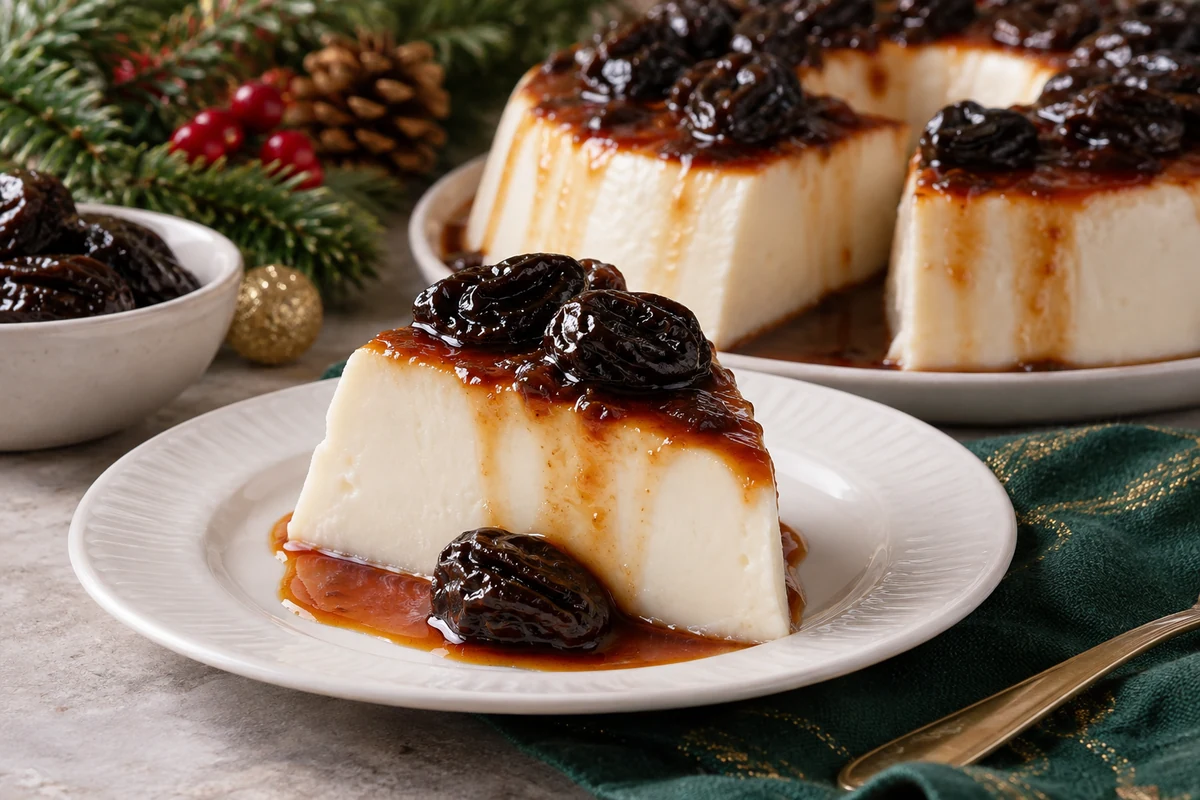
Brazilian coconut pudding with prunes offers a smooth, chilled contrast to a rich Christmas meal, with a fruit sauce guests can add to taste.
Points of interest
- Related puddings: the name manjar branco is used for different white puddings in Portuguese-speaking cookery. This page focuses on the Brazilian coconut version rather than assigning a precise origin to this particular recipe.
- The role of prunes: prunes add sweetness, colour and a soft fruit texture. They do not preserve the milk pudding or extend its safe refrigerated storage time.
- A simple presentation: a mould gives the dessert a decorative shape without requiring elaborate icing or decoration.
- Adaptability: plant-based milks and carefully chosen sweetness adjustments offer different versions, although their texture will not necessarily match the original exactly.
Ideas for the Christmas table
- Portions: the recipe makes approximately eight generous servings, or more small portions when several desserts are offered. Choose the mould by its capacity, not by an assumed serving weight.
- Presentation: serve slices with chilled prune sauce or use individual dishes. If you prefer warm sauce, add it only to the portion about to be eaten rather than warming the whole pudding.
- Drinks: coffee, herbal tea or an optional dessert wine for adults can accompany the pudding.
- Festive finishing touches: add lemon zest, toasted coconut or a little chopped nut for colour and texture, checking dietary requirements first.
- Make ahead: prepare the pudding the day before and keep it covered in the fridge. Count that time within the overall 48-hour storage period.
- Dietary variations: clearly identify the ingredients in any plant-based or sweetener-based version. Do not assume one substitution makes it appropriate for every allergy or dietary requirement.
- As a gift: decorate individual lidded containers and include the preparation date and chilled-storage instructions. Maintain the cold chain while delivering them.
- Serving at the venue: turn out the pudding on arrival or take ready-portioned dishes, keeping them refrigerated until needed.
Practical finishing touch: put some prune sauce in a separate serving bowl so guests can choose how much to add.
Conclusion
Brazilian coconut pudding with prunes is a straightforward chilled dessert with a striking contrast of colour and texture. Measure the liquids carefully, cook the cornflour thoroughly and allow enough chilling time for a smooth result.
Thank you for following this recipe. Find more practical tips and festive inspiration on our social channels and the I Love Christmas blog.
If you try it, share your photographs and comments. Your experience can help other readers choose serving ideas and variations.
Coconut pudding with prunes: frequently asked questions
Can I replace whole milk with plant-based milk?
Yes, use an unsweetened plant-based alternative in the same measured quantity. Different products give different richness and texture. If adding more coconut milk, replace an equal amount of the other milk rather than increasing the total liquid. Cornflour is already plant-based.
How can I avoid lumps?
Mix the cornflour with cold milk until smooth, using part of the measured litre. Stir it again before slowly adding it to the hot liquid while whisking. Keep stirring as it cooks, and strain the mixture carefully if necessary.
How should I soften the prunes?
Soak them in hot water for 10–15 minutes, adding a little more if they absorb it all. Reserve the liquid for the sauce. For a flavour variation, replace a tablespoon of water with orange juice or optional port, remembering that port adds alcohol.
How long will the pudding keep in the fridge?
Cool promptly and refrigerate within two hours, then keep covered at 5°C or below and eat within 48 hours of preparation, or sooner if an ingredient’s instructions require it. Freezing can damage the texture.
Can I make it ahead for Christmas?
Yes. Make it the day before and chill thoroughly, keeping within the overall 48-hour refrigerated storage period. Cover to prevent a skin and add the chilled prune sauce after turning it out, shortly before serving.
How can I make it firm enough to slice?
Measure the listed liquids and cornflour accurately, cook the starch thoroughly and chill the pudding completely, preferably overnight in a large mould. Do not add unmeasured extra liquid. If using agar instead, follow a tested agar-based recipe and the product instructions rather than adding it on top of the full cornflour quantity.
Sources and Further Reading
- Food Standards Agency: chilling, freezing and defrosting safely
- Receitas Nestle: another Brazilian coconut pudding with prunes, in Portuguese