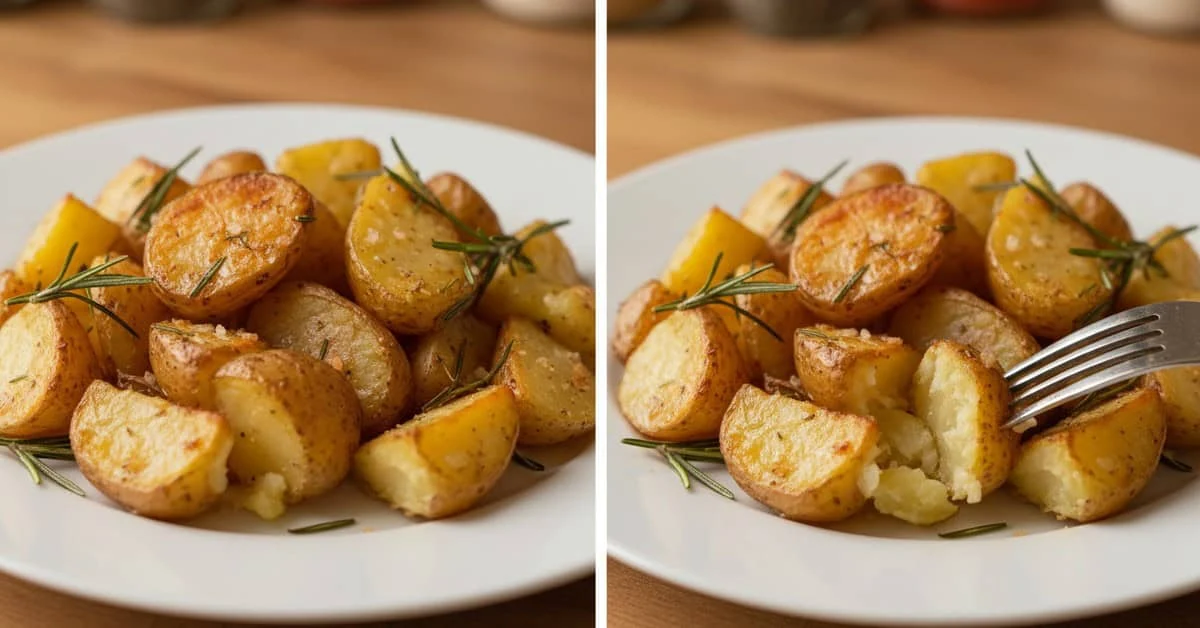
Rosemary roast potatoes are a simple, aromatic side: evenly cut potatoes are coated with oil, garlic and rosemary, then roasted until golden outside and tender within. Try Parmesan, paprika or a sweet potato variation to change the flavour and texture.
Rosemary roast potatoes bring crisp edges, soft centres and a warming aroma to a family meal. A few practical techniques help them cook evenly, while simple variations make the recipe easy to adapt.
Ingredients for rosemary roast potatoes
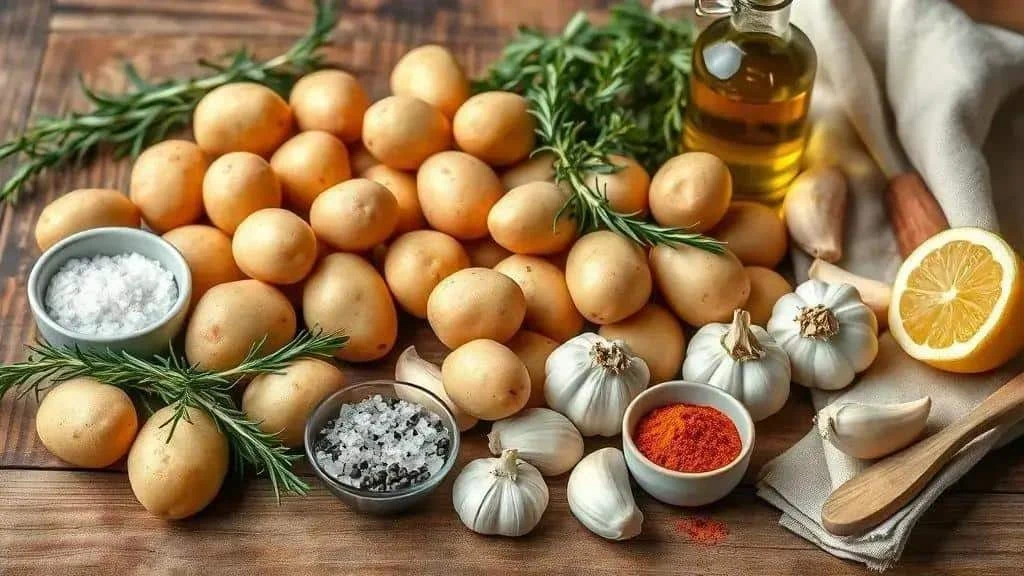
For rosemary roast potatoes, gather the following ingredients. These quantities make about four generous side portions.
- 1 kg small or medium potatoes – scrubbed and cut into evenly sized pieces. Sweet potatoes are an alternative, with adjusted cooking as described below.
- 3 tbsp olive oil – or sunflower oil. Butter adds a different flavour but can burn more readily at high heat.
- 2–3 sprigs fresh rosemary – leaves stripped and roughly chopped. Alternatively, use 1 tsp dried rosemary.
- 4 garlic cloves – crushed or chopped. Alternatively, use up to 1 tsp garlic powder, adjusting to taste.
- Up to 1 tsp coarse salt – adjust to taste; use less if substituting fine salt.
- ½ tsp ground black pepper – or to taste.
- 1 tsp sweet paprika, optional – for colour and flavour. Use a smaller amount of chilli flakes if you prefer heat.
- Zest or juice of ½ lemon, optional – add just before serving.
Quick tips and substitutions
Leave the skins on small potatoes for texture and convenience, scrubbing them well first. You can reduce the oil to 2 tbsp, although the finish may be less crisp. Do not spray water into the hot tray: extra moisture works against browning and can make hot oil spit.
For a different aroma, add the leaves from a small sprig of thyme. A little grated Parmesan can go on near the end of cooking; check its suitability if serving vegetarians.
How to make rosemary roast potatoes
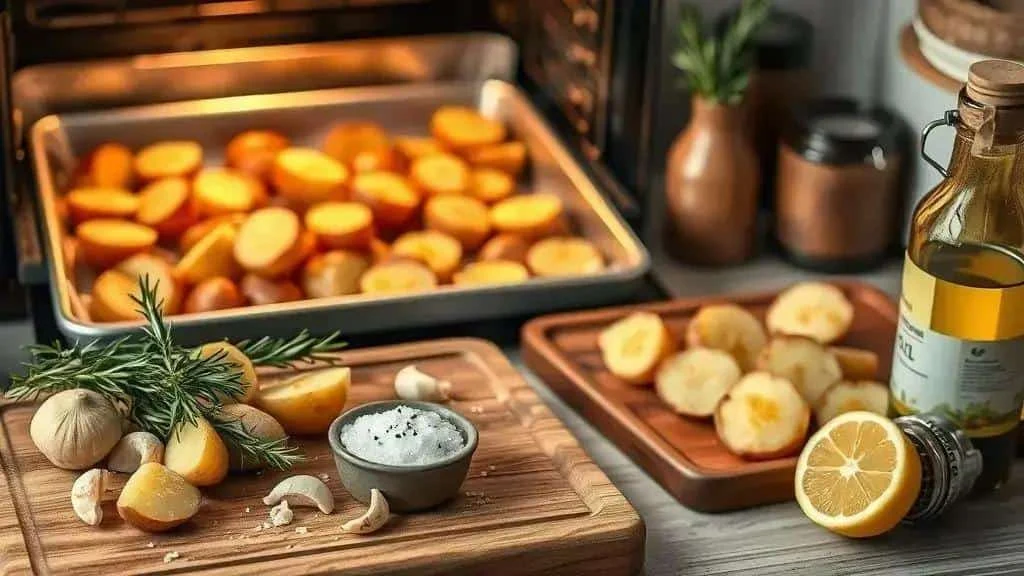
Follow these steps for rosemary roast potatoes with golden edges and a tender centre.
Method
- Preheat the oven: Set it to 220°C, or 200°C fan, with a shelf near the centre. Follow your oven’s guidance where it differs.
- Wash and cut: Scrub the 1 kg potatoes and cut into roughly 3 cm pieces, halving or quartering larger ones so they cook at a similar rate.
- Optional parboiling: Simmer the pieces for about 5–8 minutes until they start to soften at the edges, then drain thoroughly. They should still hold their shape.
- Dry well: Let parboiled potatoes steam-dry briefly after draining. For raw potatoes, blot with clean kitchen paper or a clean cloth.
- Prepare the seasoning: In a large bowl, combine the 3 tbsp oil, salt and pepper, plus optional paprika. Reserve the chopped garlic and rosemary from the ingredient list to add partway through roasting, helping them avoid burning.
- Coat: Toss the potatoes in the seasoned oil with a large spoon until evenly coated. The oil does not need preheating for this method.
- Spread out: Arrange in a single layer on a roasting tray, leaving gaps. If using baking paper, check that it is suitable for the cooking temperature; do not use it under a grill.
- Roast: Cook at 220°C, or 200°C fan, for about 35–45 minutes. Parboiled pieces may take around 25–35 minutes. These are guides: size, variety and oven affect the result.
- Turn and add the aromatics: Turn the potatoes about halfway through. Toss in the reserved garlic and rosemary for the final 15 minutes or so, watching that the small pieces do not scorch.
- Check: A fork should slide into the centre easily, with golden, crisp edges outside. Continue cooking if the centres remain firm.
- Finish: Add optional lemon zest or juice and taste before adding more seasoning. A little Parmesan is another optional finish.
- Serve and store: Serve hot. Cool leftovers in shallow portions and refrigerate within 2 hours, keeping covered at 5°C or below. Use within 48 hours or freeze promptly; reheat only once until steaming hot throughout.
Rosemary roast potato variations
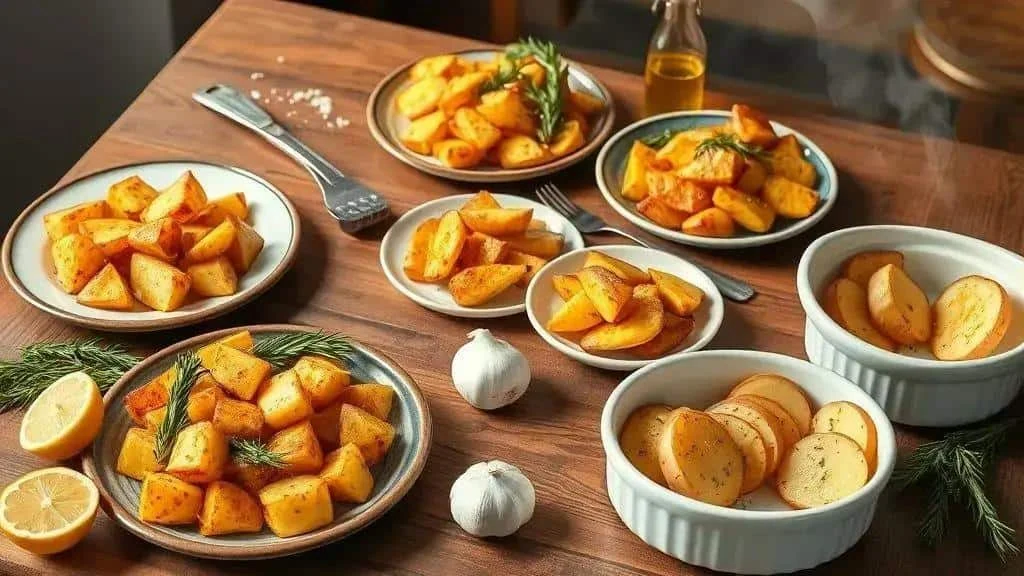
Try these versions of rosemary roast potatoes to suit your meal. Check tenderness and browning rather than relying on the clock alone.
Flavour variations and adjustments
- Classic garlic and rosemary: Use the main quantities: 1 kg potatoes, 3 tbsp oil, leaves from 2–3 rosemary sprigs and 4 garlic cloves. Roast at 220°C, or 200°C fan, adding the aromatics towards the end. Substitute 1 tsp dried rosemary if needed.
- Crisp Parmesan topping: Sprinkle 50 g grated Parmesan over the potatoes for the final few minutes. A brief finish under a grill is optional, using grill-safe cookware without baking paper and watching constantly. Pecorino or a suitable vegetarian hard cheese gives a different flavour.
- Smoky and spicy: Use 1 tsp smoked paprika and up to ½ tsp chilli flakes. Adjust the chilli to taste; smoked paprika is not necessarily hot.
- Sweet potato version: Use 1 kg sweet potatoes and 2 tbsp oil. Roast at 200°C, or 180°C fan, checking from about 30 minutes; they may take 30–40 minutes or longer depending on size. An optional 1 tbsp honey or maple syrup can be added near the end to reduce scorching, or omitted for less sweetness.
- Skin-on mixed herbs: Keep the skins on and use 3 tbsp oil with 1 tbsp each of chopped fresh rosemary, thyme and oregano. Add the herbs towards the end and roast until tender and golden; larger pieces may take 40–50 minutes.
- Lemon and rosemary: Follow the classic method, then finish with zest from 1 lemon and juice from ½ lemon. Add juice gradually so the potatoes do not become wet.
- Creamy rosemary gratin: This is a different, soft-textured dish: layer 800 g thinly sliced potatoes with 200 ml cream, 1 crushed garlic clove and 1 tbsp chopped rosemary in an ovenproof dish. Bake at 180°C, or 160°C fan, for about 45–60 minutes or until all layers are tender, allowing longer if needed. Milk with 1 tbsp butter gives a thinner sauce rather than an identical result.
Tips for the roasted variations
A single layer allows the roast potatoes to brown more evenly. Dry well, avoid crowding the tray and turn during cooking. The layered cream gratin is an exception and does not need turning.
Choosing potatoes and cutting them evenly
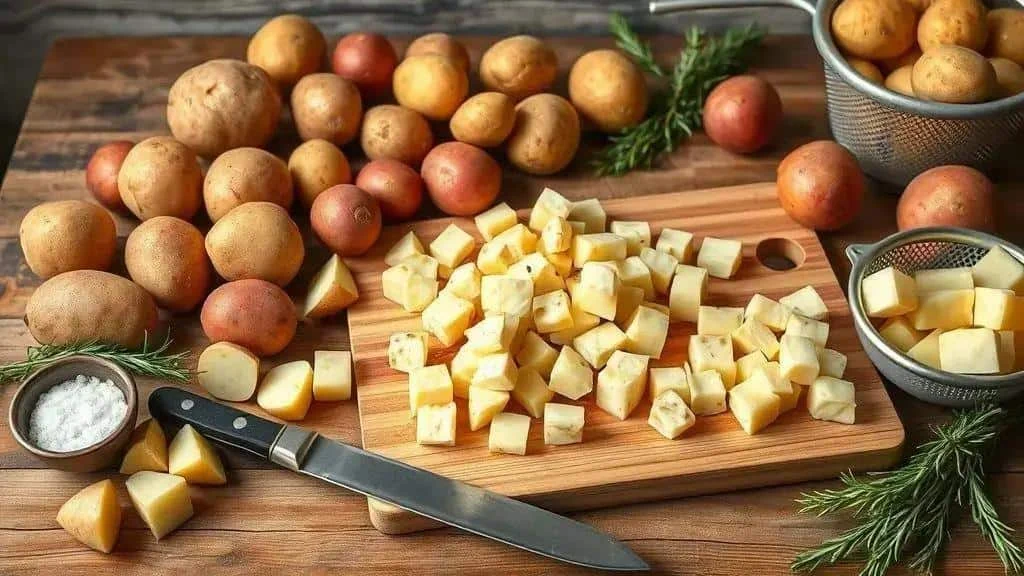
Variety and even cutting affect the texture of rosemary roast potatoes. Choose firm potatoes in good condition and avoid green, badly sprouted, damaged or soft ones.
Potato types and their textures
- Floury potatoes – give a fluffy centre and can develop rough, crisp edges. Handle gently after parboiling so they do not break apart. The Brazilian term batata inglesa is a general name for potato, not a guarantee that it is a Russet variety.
- All-purpose potatoes – offer a middle ground between a fluffy and a firmer texture. Check the packet’s suggested uses rather than equating a local grading category with a named variety.
- New or baby potatoes – have thin skins and a firmer texture. Small ones can roast whole, although halving them exposes more surface for browning.
- Waxy potatoes – hold their shape well in cubes or wedges and have a denser centre. Skin colour alone does not establish how floury or waxy a potato is.
What to look for when shopping
Choose firm potatoes without green areas, extensive sprouting, soft patches or deep damage. Similar sizes make preparation easier, but you can cut larger ones down to match.
Useful cuts for roasting
Even size helps the pieces finish together. For 1 kg potatoes, these are practical options:
- Medium chunks: about 3 cm across, giving a balance of browned surface and tender centre.
- Halves or quarters: useful for small to medium potatoes and a rustic skin-on finish.
- Whole: suitable for genuinely small baby potatoes, scrubbed well; check the centres before serving.
Preparing the pieces
- Wash: Scrub the skins under running water to remove dirt.
- Inspect: Trim minor surface blemishes with care. Do not use potatoes that are green, badly sprouted or spoiled.
- Match the sizes: Halve or quarter larger potatoes so the pieces are similar.
- Cut safely: Use a stable board and a flat cut surface, then slice into wedges or chunks. Keep fingers away from the blade.
- Dry: Blot raw pieces or let drained, parboiled potatoes steam-dry briefly before coating.
Optional parboiling: Simmer for roughly 5–8 minutes to start softening the edges, then drain thoroughly. Small baby potatoes can also go into the oven raw; timings will differ.
Seasoning and techniques for crisp edges
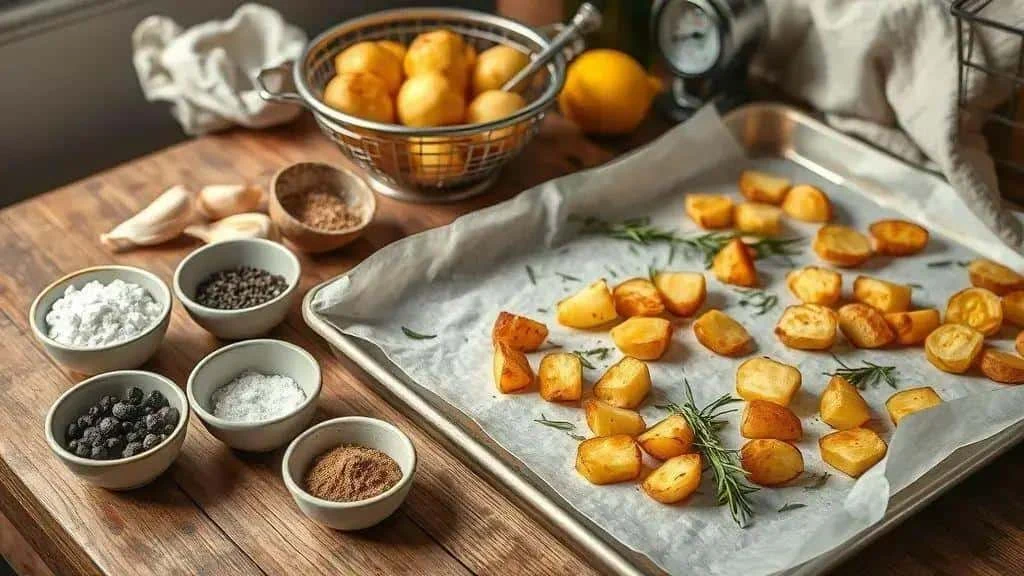
Good seasoning, dry surfaces and enough space help develop crisp edges while the centres cook through.
Seasonings to use
- Rosemary: Use leaves from 2–3 fresh sprigs, roughly chopped, or 1 tsp dried, as in the main recipe.
- Garlic: Use 4 cloves or up to 1 tsp garlic powder. Add chopped garlic towards the end so it has time to cook without burning.
- Olive oil: Use 3 tbsp for the main recipe, or 2 tbsp for a less oily finish. Coat evenly; there is no need to heat the oil first in this method.
- Salt: Use up to 1 tsp coarse salt, less if using fine salt, and check the flavour before adding more.
- Black pepper: About ½ tsp, freshly ground if available, or to taste.
- Paprika: An optional 1 tsp sweet or smoked paprika changes the colour and flavour.
- Lemon zest: Zest from ½ lemon is a fresh-tasting finish.
Techniques for a crisp finish
- Preheat: Use 220°C, or 200°C fan, for the main potato recipe.
- Cut evenly: Aim for pieces around 3 cm so they cook at a similar rate.
- Dry well: Surface moisture slows browning, so drain and dry before coating.
- Parboil if wanted: Start cooking in simmering water for about 5–8 minutes, then drain without breaking the pieces.
- Optional light coating: A tablespoon of cornflour or plain flour can be tossed over the dry potatoes before the oil. This is optional; plain flour adds gluten.
- Coat evenly: Toss with the oil and seasonings. Oil helps browning but does not seal moisture inside the potato.
- Leave gaps: Arrange in one layer so steam can escape rather than crowding the tray.
- Watch the finish: Use the fan temperature if applicable. A brief grill finish is optional with suitable cookware and close supervision; keep baking paper away from the grill.
- Turn once: Turn roughly halfway through to expose the other sides to the hot tray.
- Finish sparingly: Add zest and check seasoning just before serving. Too much lemon juice softens the crisp exterior.
Air-fryer alternative: For a small, uncrowded batch, 180°C for around 20–25 minutes is a starting guide, turning halfway; follow the appliance instructions and check tenderness. For leftovers, use the reheating guidance below rather than treating browning alone as proof they are hot enough.
Storing, reheating and serving
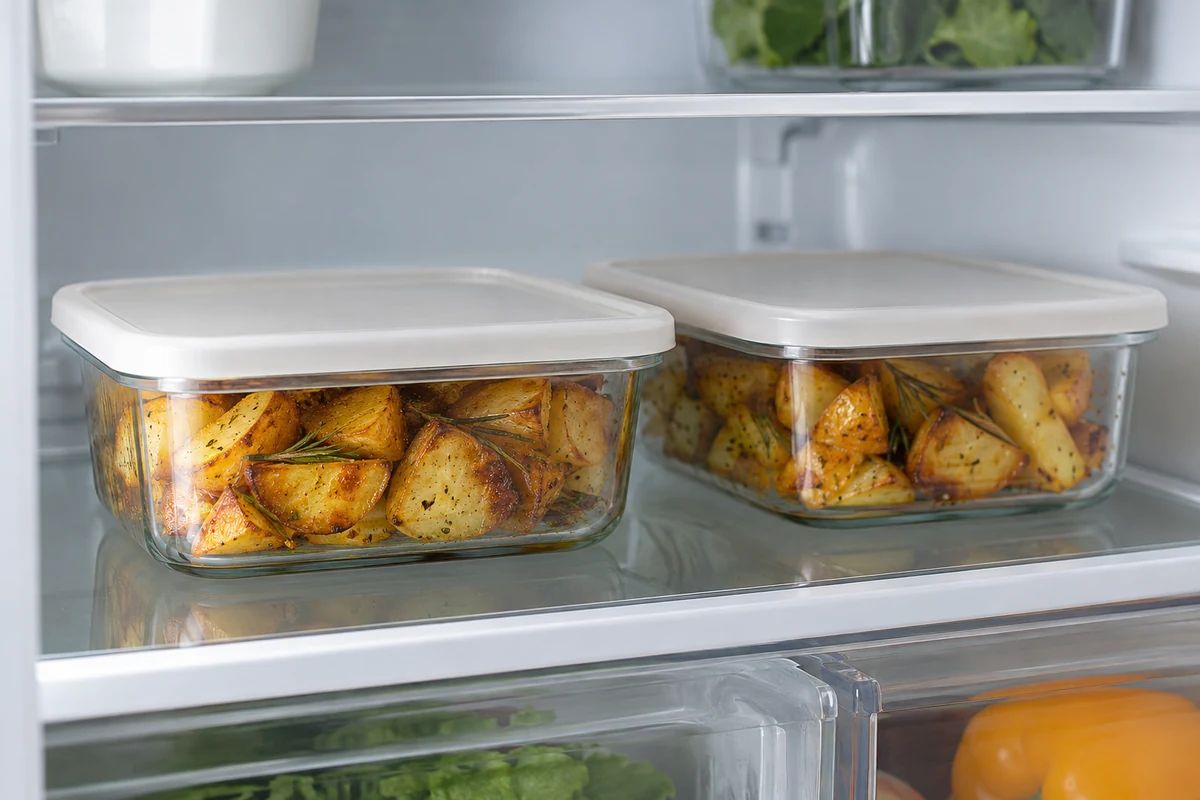
Keep rosemary roast potatoes at their best with prompt cooling, safe storage and thorough reheating.
Storage
- Cool promptly: Divide into shallow portions and refrigerate within 2 hours. Do not leave a large, deep pile out to cool slowly.
- Refrigerate: Store covered at 5°C or below and use within 48 hours, or freeze promptly.
- Freeze: Once cooled safely, freeze pieces on a suitable tray and transfer to a freezer container or bag. Around 2 months is a practical quality guide; label and follow freezer guidance.
- Avoid deep piles: Shallow portions cool more quickly. Preventing condensation is less important than getting the potatoes refrigerated promptly.
- Label: Record when they were cooked and frozen, and use older portions first.
Reheating
The following timings are starting guides. Reheat only once until steaming hot throughout, checking the centres as well as the surface.
- Oven: Preheat to 200°C, or 180°C fan. Spread chilled potatoes in one layer and add up to 1 tsp oil per 500 g if needed. Start checking after 10–15 minutes, turn during heating and continue until steaming hot throughout.
- Air fryer: Use a single layer at around 180°C, following the appliance guidance. Check from 8–12 minutes, turn during heating and continue until the centres are steaming hot.
- Frying pan: Heat a little oil over a moderate heat, add the potatoes and turn regularly. Allow roughly 6–8 minutes as an initial guide, but continue until hot throughout without burning the outside.
- Microwave and oven: A microwave can heat the centre before an immediate oven or air-fryer finish for texture. Follow appliance instructions and complete both steps as one continuous reheating, checking that the whole portion is steaming hot.
- Frozen portions: For a straightforward approach, thaw fully in the fridge, use within 24 hours and reheat as above. Cooking from frozen needs enough time to heat the centres thoroughly, not just brown the surface.
- Check safely: Reheat until steaming hot throughout. Do not use touching the food as a safety test; a clean food thermometer can check a suitable time–temperature combination, such as 75°C for 30 seconds.
Serving at a festive meal
Serve the potatoes hot, with their aromatic topping added near the end of cooking.
- Garnish: Add a little lemon zest and remove woody rosemary stems before serving.
- Optional cheese: Add 30–50 g grated Parmesan near the end for a browned topping.
- Portions: Around 150–200 g finished potatoes per adult is a starting guide for a side, adjusted for appetite and other dishes.
- Pairings: Serve with roast meat, poultry, fish or a vegetarian main, alongside green vegetables or salad.
- Timing: Aim to finish roasting close to serving. If using chilled cooked potatoes, follow the full reheating guidance rather than warming them briefly for appearance alone.
Make ahead: Fully cook the potatoes, cool promptly and refrigerate safely. Reheat once until steaming hot throughout and crisp the edges before serving.
Rosemary: flavour, uses and storage

Rosemary is valued in cooking for its strong, woody aroma. A little goes a long way in potatoes, roasts and breads.
A familiar kitchen herb
Rosemary appears in many styles of cooking. For this dish, its practical appeal is the contrast between its bold herbal flavour, the potatoes and a little lemon.
Flavour rather than health promises
Descriptions of rosemary sometimes discuss antioxidants, but a sprinkle in a recipe does not establish a memory, digestive or anti-inflammatory benefit. Enjoy it here as a seasoning rather than a treatment.
Culinary and aromatic uses
Rosemary suits roast potatoes and meat. Fresh leaves release aroma when chopped or lightly crushed; dried leaves have a different intensity, so start with less volume and adjust to taste.
Ways to use it
- Herbal infusion: If you enjoy rosemary as a drink, choose a product intended for that use and follow its directions. This recipe does not make a claim that rosemary tea is calming or aids digestion.
- Herb-flavoured oil: For this meal, mix rosemary with oil for immediate cooking. Do not store fresh herbs in oil at room temperature; this is not a shelf-stable preserving recipe.
- Direct seasoning: Chop the leaves or use a sprig during cooking, removing the woody stem before serving.
Keeping rosemary
Store fresh leaves in the fridge, following the packet guidance and discarding any that have spoiled. Keep dried rosemary in a closed container away from heat and light. Concentrated supplements and essential oils are different from ordinary culinary use and are outside this recipe’s scope.
A practical tip
Add a small fresh sprig towards the end of roasting for extra aroma, watching that it does not burn. Remove the woody stem before serving.
Ready to roast
Choose sound potatoes, cut evenly, dry well and leave space on the tray. Add the garlic and rosemary towards the end, then try lemon zest or a little cheese for a different finish. Check the centres are tender as well as looking for golden edges.
For more seasonal recipes and meal ideas, follow our social channels and explore I Love Christmas.
Rosemary roast potatoes: frequently asked questions
Which potatoes are best for roasting?
Choose firm potatoes in good condition. Floury varieties give a fluffier centre, while waxy or baby potatoes hold their shape more firmly. Check the packet’s cooking guidance and cut into even pieces.
Do I need to parboil the potatoes?
No, but simmering evenly cut pieces for about 5–8 minutes starts softening the edges and can shorten roasting time. Drain and steam-dry before coating with oil.
How can I get crisp potatoes without burning the rosemary?
Dry the potatoes, coat evenly with oil and roast in a single layer at 220°C, or 200°C fan. Add the chopped garlic and rosemary for roughly the final 15 minutes and watch for scorching.
Can I make them ahead and reheat them?
Yes. Fully cook, cool in shallow portions and refrigerate within 2 hours. Keep covered at 5°C or below and use within 48 hours. Reheat only once until steaming hot throughout; an oven or air fryer helps restore the crisp edges.
What simple variations can I try?
Add Parmesan near the end, use smoked paprika and a little chilli, or try sweet potatoes at 200°C, or 180°C fan. Check tenderness and adjust cooking time for the size and variety.
Sources and Further Reading
- Food Standards Agency: cooking and reheating safely
- Food Standards Agency: chilling, freezing and defrosting safely