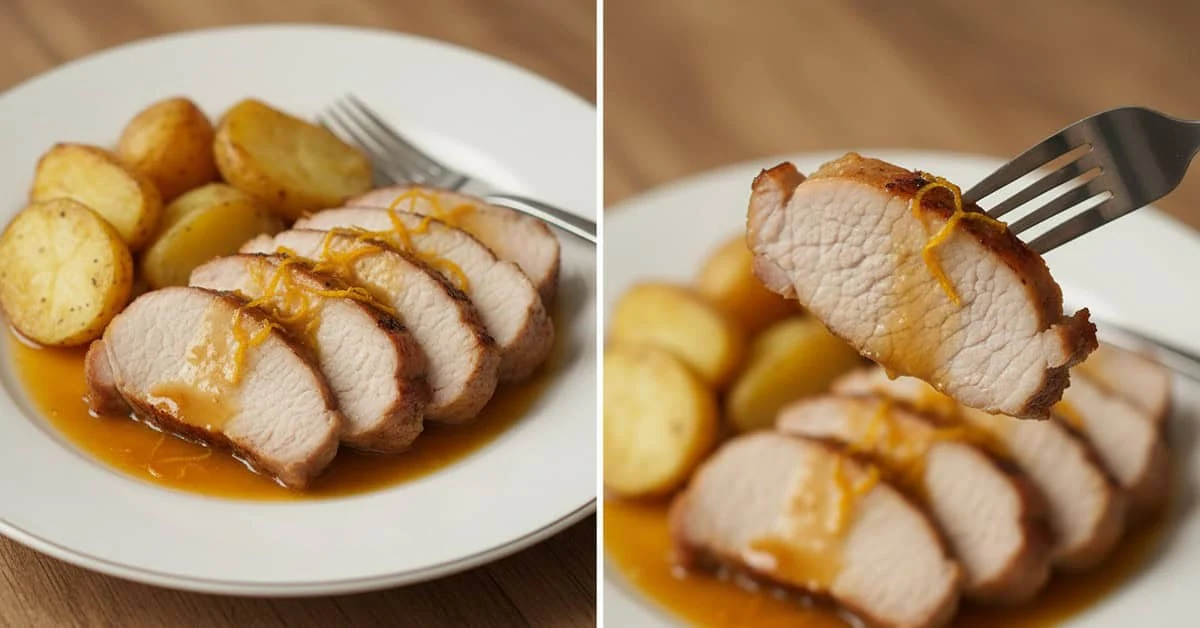
Christmas roast pork loin with orange sauce combines garlic, citrus zest and a sweet-sharp glaze. Roast the joint until safely cooked throughout, check it with a thermometer and rest before carving. Serve with the orange sauce and your favourite festive vegetables.
Christmas roast pork loin is a versatile centrepiece for a festive meal. This version pairs a garlic-and-orange seasoning with a glossy sauce, plus practical ideas for preparation and serving.
Ingredients for Roast Pork Loin with Orange Sauce
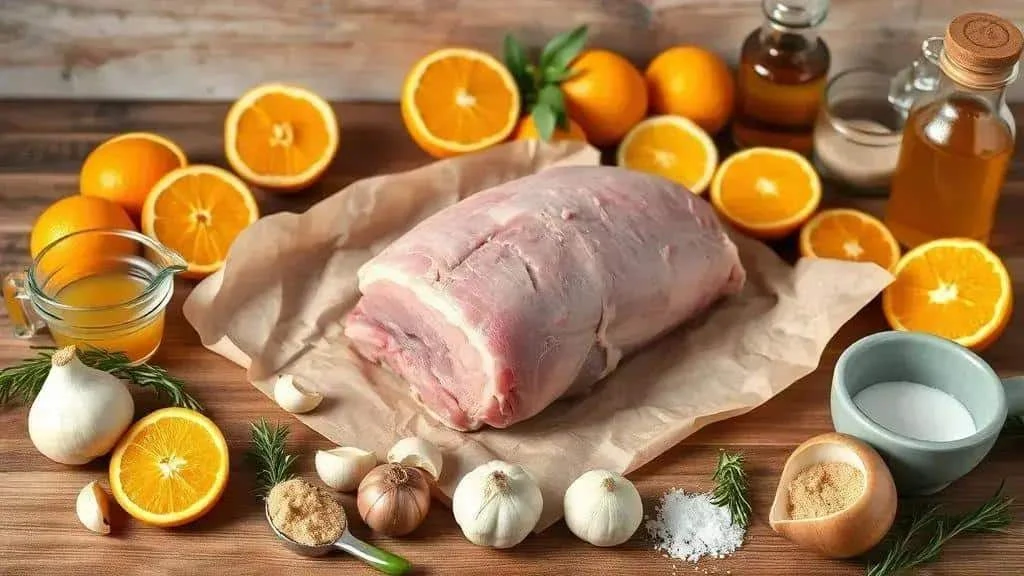
Gather the following ingredients for roast pork loin with orange sauce.
- 1.8–2.2 kg boneless pork loin joint – trim excess fat if desired. Pork fillet and pork leg are different cuts and require their own cooking instructions, so do not substitute them using this timing.
- 4 garlic cloves, crushed – or 1 teaspoon garlic powder.
- 2 tablespoons olive oil – divided between seasoning and browning; vegetable oil also works.
- 2 tablespoons butter, optional – 1 for browning and 1 for finishing the sauce. Use a suitable dairy-free spread if needed.
- Salt, to taste – use less if adding soy sauce or salted stock, and check whether the pork is already seasoned.
- 1 teaspoon ground black pepper – or white pepper or a peppercorn blend.
- Zest of 2 oranges – divided between the pork and sauce. Lemon zest gives a different citrus flavour.
- 250 ml fresh orange juice in total – reserve 100 ml for the roasting tin and 150 ml for the sauce; the number of oranges needed will vary.
- 3 tablespoons honey or 4 tablespoons brown sugar – adjust to taste rather than assuming equal sweetness.
- Up to 2 tablespoons soy sauce, optional – add gradually. Worcestershire sauce gives a different flavour and may contain fish; neither is automatically low in salt.
- 1 tablespoon Dijon mustard – or a milder prepared mustard.
- 2 fresh rosemary sprigs – or 1 teaspoon dried thyme.
- 1 medium onion, sliced – brown or red onion.
- 200 ml beef stock or water – for the roasting tin; dry white wine is another option. Have a little extra water available if the tin dries out.
- 1 bay leaf, optional
- 1 teaspoon cornflour, optional – mixed with 1 tablespoon cold water if the sauce needs thickening.
Substitutions and Quick Tips
- Marinating: season with garlic, zest and oil, then refrigerate for 2 hours or overnight if time allows. Keep the measured juice for the tin and sauce, so none needs to be reused after contact with raw meat.
- Portions: allow roughly 200–250 g raw boneless pork per adult when serving side dishes, adjusting for appetites and the rest of the menu.
- Sauce balance: adjust sweetness gradually. More zest adds aroma; a small splash of citrus juice can sharpen the sauce if it becomes too sweet.
How to Make Roast Pork Loin with Orange Sauce
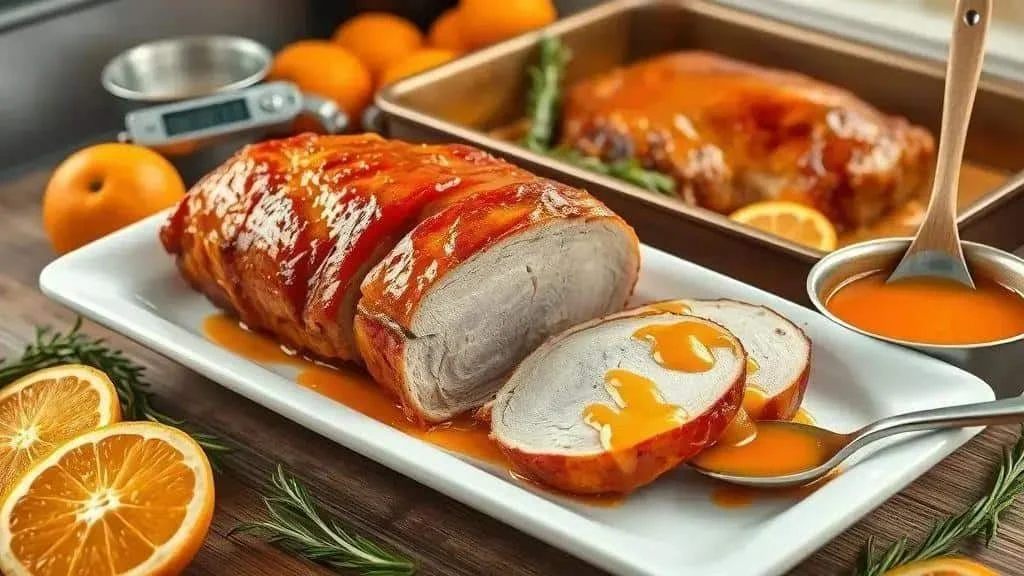
- Preheat the oven: set it to 180°C conventional/160°C fan, unless the joint’s packaging specifies another method. Position a shelf centrally and lightly oil a suitable roasting tin.
- Dry and season the pork: pat it dry without washing it. Mix the garlic with 1 tablespoon of the olive oil, the zest of 1 orange, pepper and salt as needed. Rub over the joint, then wash hands and utensils that have touched raw pork.
- Marinate if desired: cover and refrigerate for 2 hours or overnight, within the meat’s use-by date. Keep chilled until preparation rather than leaving it out to reach room temperature.
- Brown the joint: heat the remaining 1 tablespoon oil with 1 tablespoon of the optional butter in a large pan. Brown the pork for about 2–3 minutes on each side, without burning the garlic. Browning adds flavour; it does not seal juices inside.
- Prepare the tin: arrange the onion, rosemary and optional bay leaf underneath the pork. Add the 200 ml stock or water and the reserved 100 ml orange juice.
- Roast and check the centre: follow the joint’s weight-based packet instructions, allowing time for checking and resting. Do not rely on a fixed 90–110 minutes for every joint. The thickest centre should reach 70°C for 2 minutes or 75°C for 30 seconds before resting; avoid touching the tin with the probe.
- Check the pan occasionally: spoon pan juices over the pork if desired and add a little water if the tin dries out. Work quickly to minimise heat loss, and cover loosely with foil if the surface browns too fast.
- Make the sauce: combine the remaining 150 ml orange juice, honey or brown sugar, optional soy sauce, Dijon mustard and zest of the second orange in a small saucepan. Simmer gently until slightly reduced, tasting for balance; add water if it becomes too strong or sticky.
- Thicken and finish: if needed, stir in the cornflour mixed with 1 tablespoon cold water and simmer for 1–2 minutes until thickened. Stir in the remaining optional tablespoon of butter. Taste before adding salt.
- Rest the cooked joint: once the centre has reached the safe temperature and holding time above, remove from the oven and cover loosely with foil for 10–15 minutes. Do not rely on an assumed temperature rise during resting to finish undercooked pork.
- Carve and sauce: slice across the grain into pieces about 1–1.5 cm thick. Spoon over some hot orange sauce and keep the remainder in a clean jug for the table.
- Serve: arrange on a platter with clean orange slices and rosemary sprigs. Use utensils and a board that have not been in contact with raw pork.
- Quick tips: use a thermometer, adjust sweetness gradually and check labels for allergens. For a gluten-free meal, check the stock, mustard and sauces and use certified gluten-free tamari if including a soy-based seasoning.
Orange Sauce
Variations on Roast Pork Loin with Orange Sauce
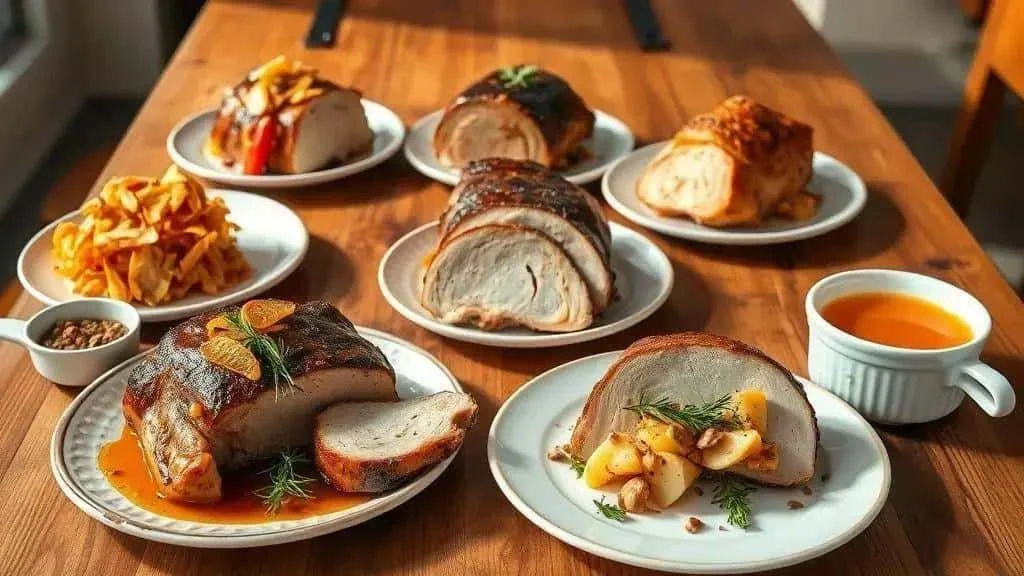
Adapt roast pork loin with orange sauce with one of these flavour combinations. Quantities replace the corresponding ingredients in the main recipe unless described as an addition.
Classic Honey and Orange Zest
The main version balances citrus with a glossy, lightly sweet sauce.
- 250 ml orange juice in total – 100 ml for the tin and 150 ml for the sauce.
- 3 tablespoons honey – or brown sugar adjusted to taste.
- Zest of 2 oranges – divide between seasoning and sauce.
Tip: for a glazed surface, reserve a small separate portion of sauce for brushing on near the end of cooking. Keep the serving sauce untouched by the basting brush and watch for burning.
Ginger and Chilli
Ginger adds warmth and a fresh contrast to the orange.
- 1 tablespoon grated fresh ginger
- 1 red chilli, deseeded and sliced – adjust to your preferred heat level.
- 2 tablespoons honey or brown sugar – instead of the main recipe’s sweetener quantity.
Tip: simmer the ginger and chilli in the sauce and taste before serving. Reserve any portion for glazing before it touches a basting brush.
Balsamic and Herb Glaze
Balsamic vinegar adds a darker, sweet-sharp flavour.
- 2 tablespoons balsamic vinegar – add to the orange sauce.
- Rosemary and thyme sprigs – to flavour the roast.
- 1 tablespoon soy sauce – replacing the original optional 2 tablespoons; Worcestershire sauce is another flavour option, with different allergens.
Tip: simmer until glossy but still pourable, adding a little water if the reduction becomes too thick.
Apple and Nut Accompaniment
A festive combination that is simpler to cook separately than inside a rolled joint.
- 2 chopped green apples – for a sharp, fruity contrast.
- 100 g chopped walnuts or Brazil nuts
- Ground cinnamon, optional and to taste – add gradually for warmth without overpowering the fruit.
Tip: cook the apples separately until tender, adding nuts towards the end, and serve alongside the pork. Stuffing and rolling a joint changes its cooking requirements; use a tested stuffed-joint recipe if choosing that method. Flag the nuts for guests with allergies.
A Less Sweet Version
Omit or reduce the added sweetener if you prefer a sharper sauce. Orange juice still contains sugar, so this is not a sugar-free or calculated low-sugar recipe.
- 250 ml orange juice with no added sugar – divided as in the main recipe.
- Optional sweetener, to taste – it is not essential; if using a product, follow its cooking directions rather than assuming a tablespoon-for-tablespoon replacement.
- Stock or water – to loosen the sauce if needed.
Tip: keep the same safe roasting method. Sweetness can be adjusted in the sauce without lowering the oven temperature or changing the pork’s required centre temperature.
Keeping Pork Loin Juicy and Trying Other Seasonings
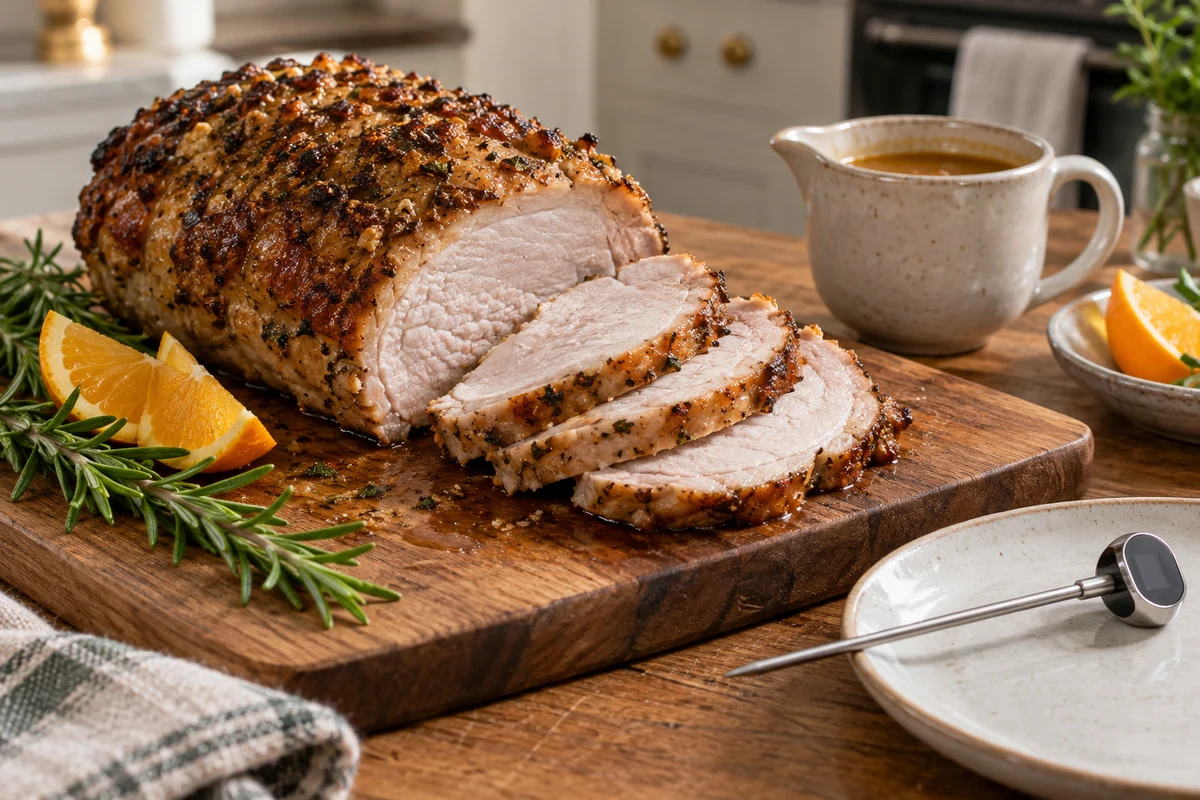
These practical tips help you season the pork, avoid unnecessary overcooking and choose a flavour combination for your meal.
Practical Techniques
- Brining: it is optional and not needed for this recipe. If using a separate tested brine, match it to the joint’s weight, refrigerate throughout and reduce subsequent salt. Do not brine already-seasoned pork or rinse raw meat afterwards.
- Balanced marinating: the garlic, zest and oil mixture adds flavour while refrigerated. If experimenting with a citrus marinade, use a separate measured recipe and discard liquid that has touched raw meat rather than treating it as ready-to-serve sauce.
- Injecting marinade: is unnecessary for this roast. Surface seasoning and careful temperature control are simpler and avoid extra handling of raw meat.
- Browning first: a hot pan develops colour and flavour, but does not form a waterproof seal that traps juices.
- Controlling the heat: follow the chosen roasting method consistently and use a thermometer instead of guessing from colour alone.
- Safe centre temperature: reach 70°C for 2 minutes or 75°C for 30 seconds before the resting stage. Avoid cooking far beyond the required temperature once all parts are done.
- Basting: spoon pan juices over the surface during occasional checks, and keep serving sauce separate from any brush used on undercooked pork.
- Resting and carving: cover loosely for 10–15 minutes after cooking and slice across the grain for easier eating.
Choosing a Cooking Method
- Low and slow: pork loin is relatively lean and is not the same as a collagen-rich shoulder joint. Prolonged cooking can dry it out; use a recipe specifically designed for the cut rather than assuming longer is better.
- Two-stage roasting: a hotter start and cooler finish require their own tested timing. The pan-browning and steady-oven method above avoids adding another set of temperatures to this recipe.
- Sous vide: use only validated guidance matched to meat thickness, starting temperature, equipment and food-safety holding time. A blanket instruction of 60°C for 2–4 hours is not sufficient for every joint, so this article uses conventional roasting.
Alternative Seasonings: Suggestions per Kilogram of Pork
- Fresh rosemary – 2 sprigs, with leaves roughly chopped.
- Thyme – 1 tablespoon fresh leaves.
- Smoked paprika – 1 teaspoon for colour and smoky flavour.
- Garlic powder – 1 teaspoon, replacing rather than automatically doubling the garlic seasoning.
- Turmeric – half a teaspoon for colour and an earthy note.
- Mustard powder – 1 teaspoon for a sharper flavour; mustard is an allergen.
- Orange zest – zest of 1 orange for citrus aroma.
- Grated ginger – 1 teaspoon for a warm, aromatic variation.
- Bay and herbs – add bay leaves and herb sprigs to the roasting tin if desired. These suggestions are alternatives, not a requirement to add every seasoning at once.
Quick Substitutions
- Less salt: reduce added salt and use citrus zest, garlic and herbs for flavour; also check the stock and sauces.
- Sweetness: try brown sugar or maple syrup instead of honey, adding gradually because flavour and sweetness differ.
- Savoury flavour: use a little reduced-salt soy sauce or diluted miso instead of part of the original seasoning, not automatically in addition to it. Both can contain soy, and some products contain gluten.
- Extra colour: add paprika before browning, but save sugary glazes for the end so they do not scorch in the hot pan.
- Avoid drying out the meat: check the thermometer regularly towards the end and remove the joint once it has safely reached the required temperature and holding time. Rest before carving.
Planning a Christmas Meal Around the Roast

Plan flavours, oven space and serving times so that Christmas roast pork loin and its accompaniments reach the table together.
Choosing Side Dishes
- Roast potatoes with herbs, crisp outside and tender within.
- Fragrant rice with nuts or dried fruit, served freshly cooked.
- Grilled vegetables such as carrots, courgettes and peppers.
- Crunchy farofa, the Brazilian toasted cassava-flour side, with dried fruit or thoroughly cooked bacon.
- Extra orange sauce in a clean jug for guests to add at the table.
- Green salad with a simple, sharp dressing.
Drinks to Serve
- A fuller-bodied white wine such as Chardonnay, or a fresh rosé, can complement the citrus sauce.
- A lighter red wine such as Pinot Noir is another option, according to your guests’ preferences.
- Alcohol-free choices: sparkling water with orange slices, apple juice or a cranberry mocktail.
Presentation
- Arrange the sliced pork on a warm platter, overlapping the slices slightly.
- Spoon over a little sauce and serve the rest separately.
- Garnish simply with clean orange slices and rosemary; if adding nuts, make their presence clear to guests.
- Serve sides separately so that guests can choose portions easily.
A Practical Schedule
- Earlier in the day: prepare the sauce and suitable vegetables, keeping them refrigerated as needed and away from raw meat.
- Before roasting: allow the full packet-based cooking time plus preparation, temperature checks and resting. Keep the pork chilled until preparation; do not leave it out for hours to warm up.
- Near serving time: finish dishes that are best crisp or freshly cooked, such as roast potatoes and grilled vegetables, allowing enough time for each recipe.
- When the pork is cooked: rest for 10–15 minutes while finishing the sauce and arranging serving dishes.
- At the table: carve, add the sauce and serve promptly with hot accompaniments.
Portions and Organisation
- Portion planning: roughly 200–250 g raw boneless pork per adult is a useful starting point with side dishes; adjust to appetites and other mains.
- Prepare some components ahead: sauces and suitable sides can be made the day before, cooled promptly and refrigerated. Reheat once until steaming throughout.
- Keep food safely hot: if holding dishes before serving, suitable equipment must maintain 63°C or above. Warm plates alone do not guarantee this.
- Make serving easier: set out cutlery, plates and serving utensils in advance, keeping raw-meat equipment separate.
To Finish
Christmas roast pork loin with orange sauce brings a sweet-sharp flavour to a festive meal. Careful seasoning, thermometer checks and a short rest make the method easier to manage.
Try a flavour variation and serve with roast potatoes, rice or a green salad. Choose the combination that suits your table and share how you served it.
Thank you for reading. Follow us on Instagram, Facebook and Pinterest for more seasonal ideas, and visit the I Love Christmas blog for recipes and festive inspiration.
Christmas Roast Pork Loin: Frequently Asked Questions
How long and at what temperature should I roast the pork?
Use 180°C conventional/160°C fan unless the joint’s label specifies otherwise, and follow its weight-based timing. Confirm the thickest centre reaches 70°C for 2 minutes or 75°C for 30 seconds before resting for 10–15 minutes. Do not assume resting will make undercooked pork safe.
Can I make the orange sauce ahead?
Yes. Cool promptly, refrigerate within 2 hours and use within 48 hours, or freeze. Reheat once until steaming throughout, stirring well, and loosen with a little water if needed. Keep it separate from raw-meat juices and used basting utensils.
How can I keep the pork juicy?
Season ahead in the fridge if convenient, brown for flavour, follow a suitable roasting method and avoid cooking unnecessarily beyond the safe centre temperature. Rest before carving. Brining and injecting are not essential.
Which side dishes and drinks work well?
Try roast potatoes, fragrant rice, grilled vegetables, farofa or a green salad. Chardonnay, rosé or Pinot Noir are possible wine pairings; sparkling water with orange, juice or a cranberry mocktail provide alcohol-free choices.
How do I store and reheat leftovers?
Refrigerate shallow portions within 2 hours and use within 48 hours or freeze promptly. Defrost frozen portions in the fridge and use within 24 hours. Reheat once with a little sauce, covered, until steaming throughout and reaching 70°C for 2 minutes or 75°C for 30 seconds; do not rely on a fixed short reheating time.
Sources and Further Reading
- Food Standards Agency: cooking food safely
- Food Standards Agency: chilling, freezing and defrosting food