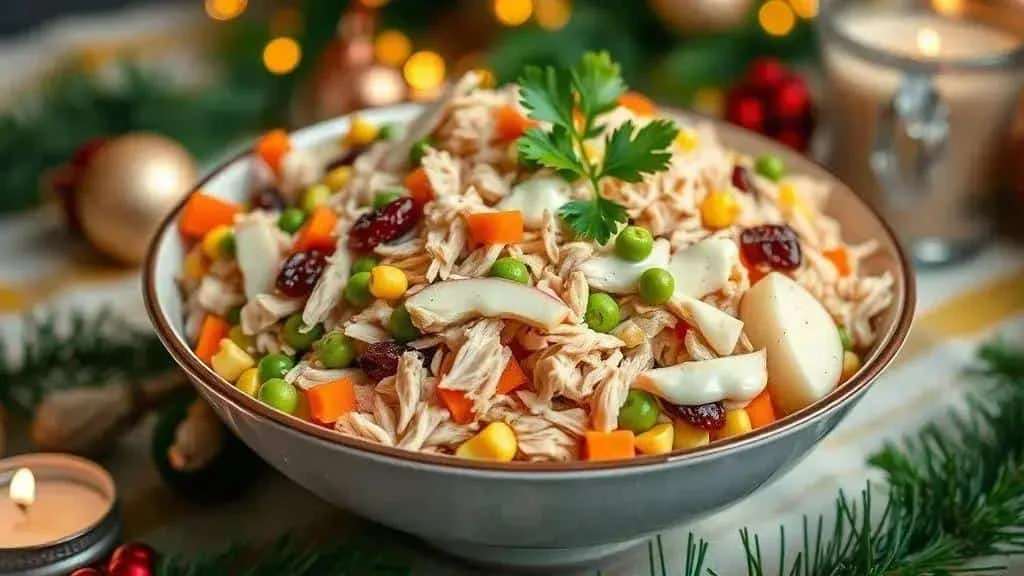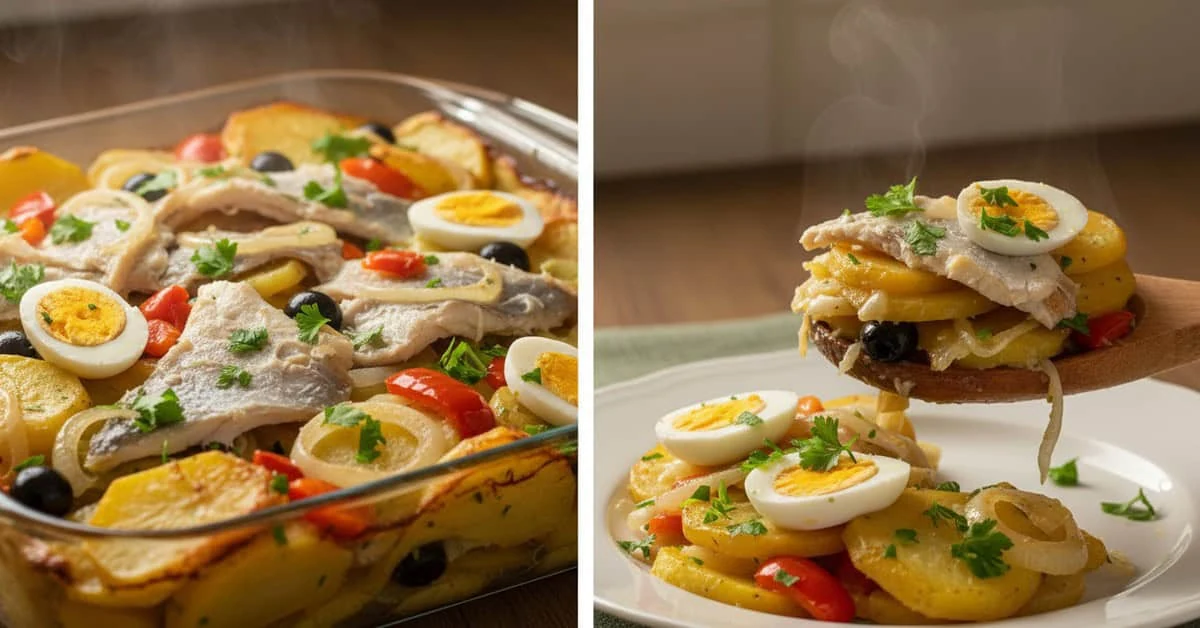
Christmas salt cod with potatoes and olives brings together prepared salt cod, tender potatoes, onions, olive oil and herbs in a layered bake. It is a festive favourite in Portuguese and Brazilian cooking. Variations include a béchamel topping or sweet potatoes, with plain rice and green salad as optional sides.
Christmas salt cod is a familiar festive dish in many Portuguese and Brazilian homes. This version combines potatoes and olives with a practical oven method. Careful desalting, gentle handling and a check that the fish is cooked through help the ingredients come together well.
Ingredients for Christmas Salt Cod with Potatoes and Olives
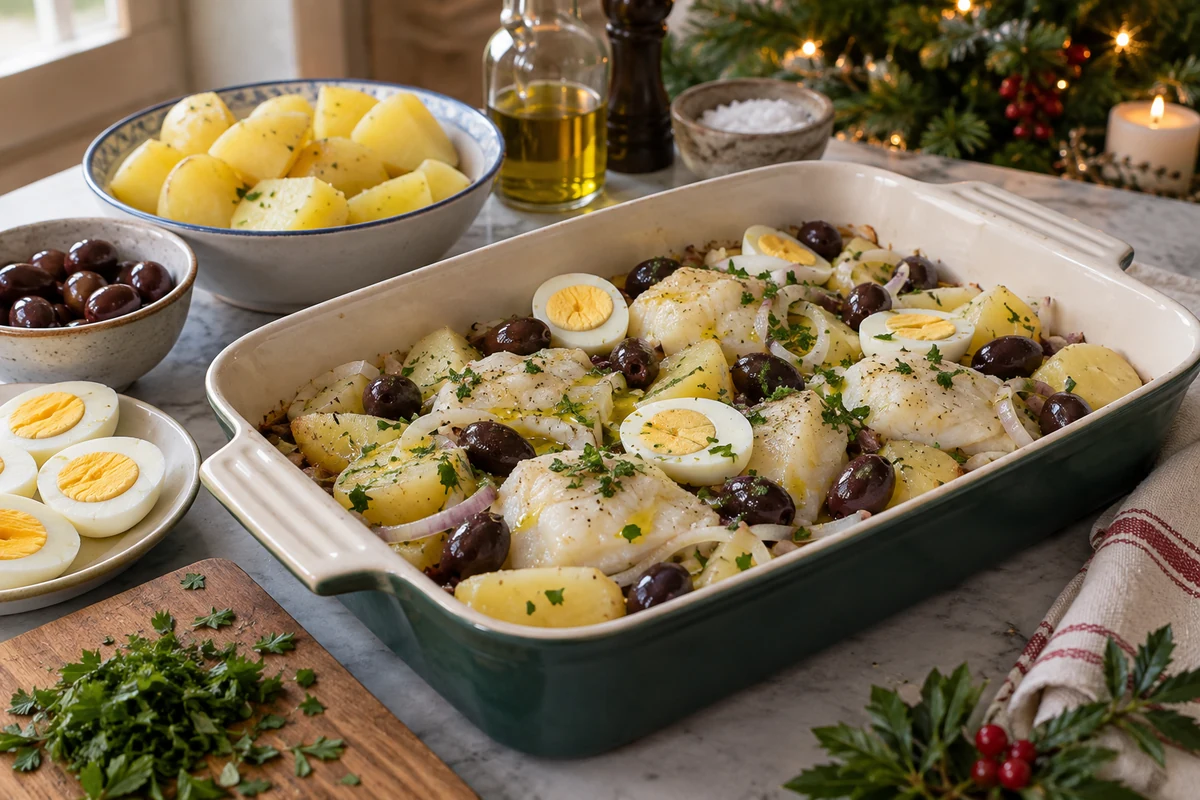
- 1 kg prepared, desalted salt cod – weigh after soaking and draining, with skin and bones removed. Follow the supplier’s preparation instructions if starting with dried salted fish. Fresh cod is a different, unsalted alternative; use a comparable prepared quantity rather than assuming 700 g replaces 1 kg.
- 1 kg potatoes – cut into 1 cm slices. Choose potatoes that hold their shape when cooked, such as Charlotte or another suitable all-round variety.
- 200 g pitted olives – a mixture of green and black olives adds colour and contrast.
- 2 large onions – thinly sliced into half-moons.
- 4 garlic cloves – chopped or thinly sliced, adjusted to taste.
- 120 ml extra virgin olive oil in total – about 8 tablespoons, divided between the onions, greasing and topping. Use 80 ml if preferred, reducing the amount at each stage rather than adding more later.
- A generous handful of fresh parsley – finely chopped to finish.
- 2 bay leaves – optional; remove before serving.
- Salt and black pepper – season cautiously because the fish and olives may already supply enough salt.
- 3 eggs – hard-boiled and sliced for an optional traditional garnish.
- 1 red pepper – cut into strips, optional.
Ingredient Notes and Alternatives
Salt cod: soak in cold water in the fridge, following the supplier’s instructions. The time depends on thickness: thin shredded fish may need much less time than thick loins. Change the water as directed. Boiling for ten minutes is not a reliable substitute for proper desalting.
Potatoes: choose a variety that stays in slices after cooking. Sweet potatoes make a sweeter alternative, but do not automatically make the meal lower in calories. Cook them until just tender before layering.
Olive oil: use an oil you enjoy. To reduce the amount, choose the 80 ml option and add a little unsalted vegetable stock or water only if the dish needs moisture; it should not be soupy.
Olives and eggs: pitted olives make serving easier. Eggs are optional; leave them out for anyone avoiding eggs, and remember that the main dish still contains fish.
How to Make Christmas Salt Cod with Potatoes and Olives
- Prepare the salt cod: if necessary, soak and change the water according to the supplier’s guidance, keeping the fish refrigerated throughout. Drain, remove skin and bones carefully, and weigh out 1 kg of prepared fish. Cut into manageable pieces; the cooked fish will separate into flakes more easily than the raw fish.
- Cook the potatoes: wash or peel the potatoes and cut into 1 cm slices. Simmer in water until just tender but still holding together, starting to check at about 10 minutes. Drain well and let excess steam escape briefly.
- Prepare the eggs: if using them, hard-boil the three eggs until both whites and yolks are firm. Cool under cold water, peel and slice. Refrigerate promptly if they will not be used straight away.
- Soften the onions and garlic: use about 80 ml of the 120 ml oil allowance, reserving the rest for the dish and topping. For the 80 ml version, use about 50 ml here. Gently cook the onions until softened, then add the garlic and optional pepper strips, cooking until tender without burning the garlic.
- Check the fish: inspect the prepared pieces again for bones and pat away excess moisture. Keep refrigerated until assembly. There is no need to partly cook the fish for two or three minutes and then store it; the oven stage below cooks it through.
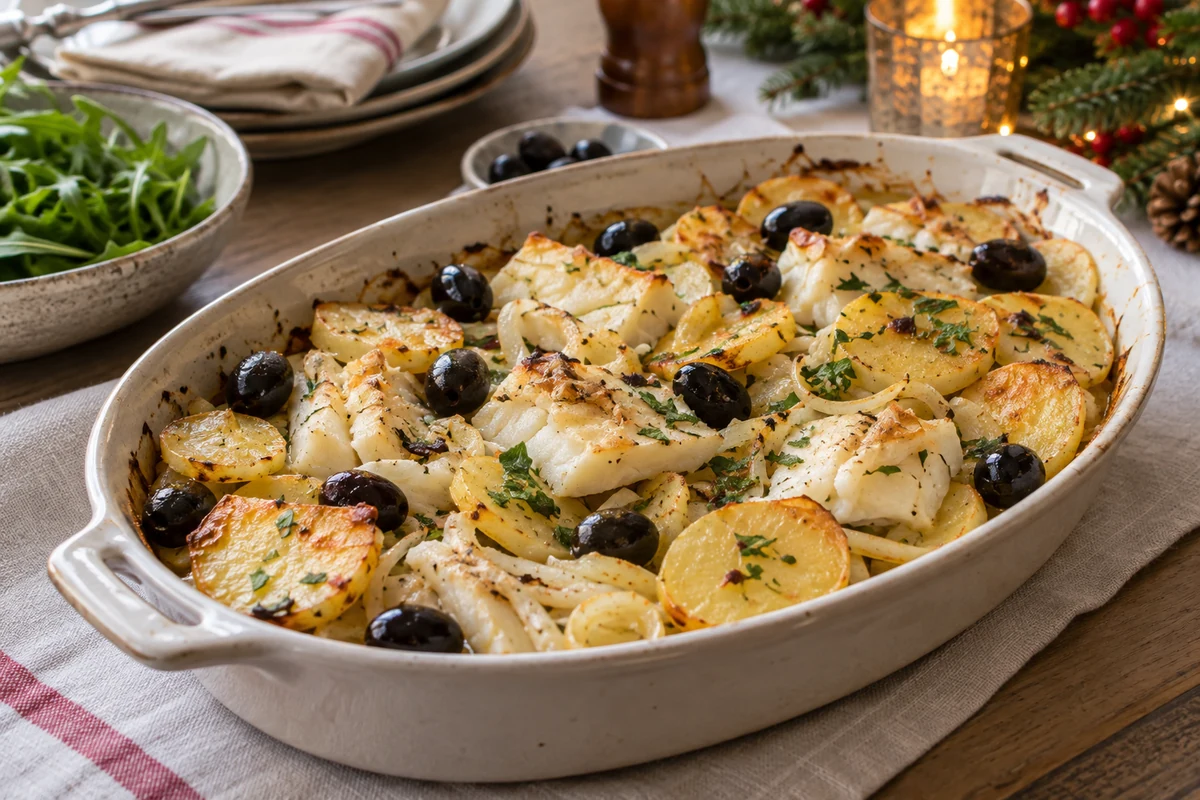
- Layer the dish: grease a large ovenproof dish with a little of the reserved oil. Layer potatoes, fish, softened onions and garlic, and the olives, distributing the ingredients evenly. Finish with some potatoes. Add the optional bay leaves where they can be found and removed later. Choose a dish large enough to avoid deep, tightly packed layers.
- Add moisture and cover: drizzle over the remaining measured oil. Add a small splash of unsalted stock or water if needed, then cover the dish with foil. Do not add an unmeasured extra 2–3 tablespoons of oil on top of the stated total.
- Bake: use a preheated oven at 180°C conventional or 160°C fan. Start checking after 20–25 minutes covered, then uncover for roughly 8–10 minutes if needed to colour the potatoes. These are guides, not a guarantee: the fish must be cooked through, opaque and easy to flake, and the centre piping hot. A clean thermometer can confirm 70°C for two minutes or 75°C for 30 seconds.
- Finish: remove the bay leaves, arrange the optional egg slices on top and scatter over the parsley. Add a few extra olives if desired, remembering their saltiness. Taste the cooked dish before adding salt or pepper.
- Rest briefly and serve: allow about five minutes before serving, while still hot. Green salad or a modest portion of plain rice can accompany this generous potato-based main course.
Quick Checks
- Potatoes: a fork should enter easily, while the slices remain intact.
- Salt: to check desalting, cook a small sample before tasting. Do not taste raw fish, and do not add salt automatically.
- Alternatives: use sweet potatoes for a different flavour, or the smaller measured oil allowance with a little unsalted stock if moisture is needed.
- Prepare ahead: assemble up to six hours ahead with cooled potatoes and onions, cover and refrigerate promptly within the fish’s storage instructions. A chilled dish takes longer to heat; check the centre rather than relying on a fixed extra five or ten minutes. Avoid thermal shock when using glass or ceramic dishes.
Variations on Christmas Salt Cod
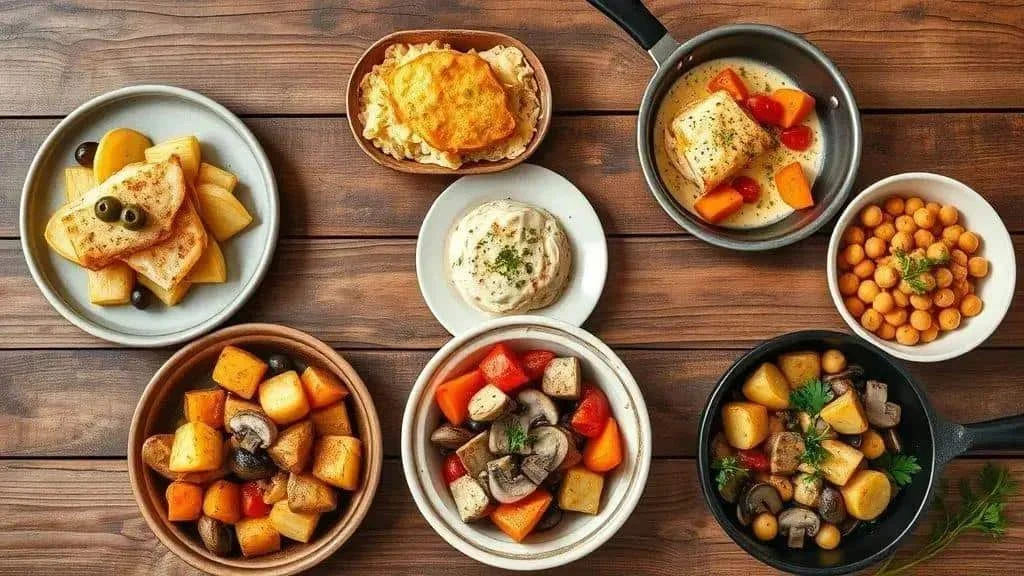
Adapt Christmas salt cod with potatoes and olives to your table, checking ingredients and preparation for any dietary requirements.
1. Classic Layered Bake
Use the stated 1 kg prepared salt cod, 1 kg potatoes and 200 g olives. Follow the covered baking method above, uncovering to colour the top once the dish is heating through. Check doneness at the centre before serving.
2. Béchamel Gratin
Use less oil and add 300 ml béchamel sauce, with up to 150 g grated cheese such as Parmesan or Portuguese queijo da ilha. Cover the layers with the sauce and bake until cooked through before browning the topping. Standard béchamel adds milk and wheat; check the recipe for relevant allergies.
3. Mediterranean-Style Peppers and Tomatoes
Add one red pepper in strips and two diced ripe tomatoes to the onions. Cook off excess liquid before layering, and try green olives with oregano or thyme.
4. Sweet Potato Variation
Replace half the potatoes with 500 g sweet potatoes, cooking each until just tender. Use 80 ml oil if preferred and add unsalted stock gradually only as needed. Less oil reduces the added fat; changing potato varieties alone does not guarantee a lighter meal.
5. Hob Version
Use a large, deep frying pan with cooked potato slices and prepared fish. Cook gently with the onions, measured oil and a little liquid as needed, covering to help the fish cook through. Turn carefully and check the thickest fish and centre of the dish; six to eight minutes is not a reliable universal cooking time. Finish with olives and parsley.
6. Vegetarian Chickpea and Mushroom Bake
Replace the fish with 700 g cooked, drained chickpeas and 200 g sliced mushrooms. Cook the mushrooms first, season with smoked paprika if liked, then assemble and heat thoroughly. This gives a different texture rather than imitating fish exactly. Use vegetarian stock, and omit eggs and any dairy additions for a vegan version.
Variation Tips
- Check seasoning: desalting and the olives affect the final salt level. Taste a cooked sample before making adjustments.
- Check the centre: sauce, dish size and starting temperature change the baking time. A golden top does not prove the fish underneath is cooked.
- Simple finishing touches: pitted olives and fresh herbs add contrast without needing extra oil.
Desalting, Optional Wine and Safe Storage
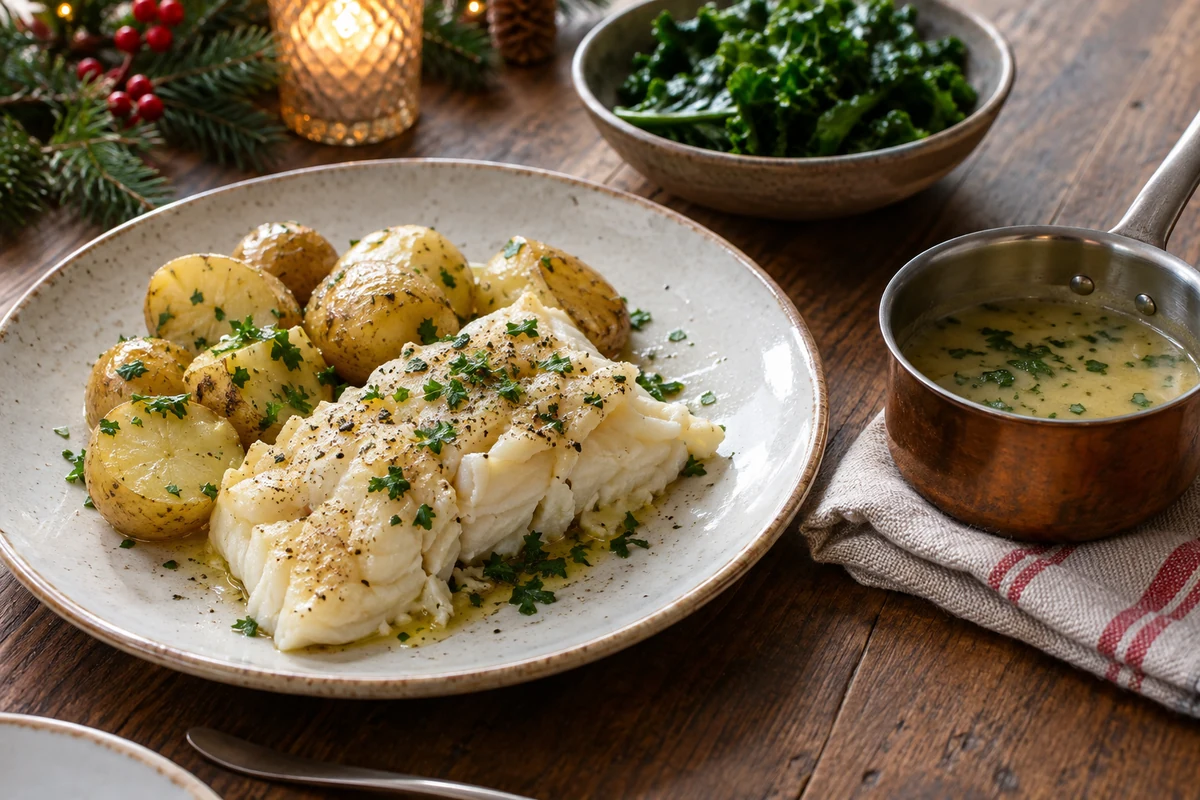
Desalting Salt Cod
- Prepare the fish: follow the supplier’s directions for removing surface salt, skin and bones. If rinsing off salt, avoid splashing other food or surfaces and clean the sink and utensils afterwards.
- Soak in cold water: use a clean, roomy container with plenty of water and keep it in the fridge throughout.
- Match the time to the cut: thin shredded fish may need only a few hours; ordinary pieces often need around 24 hours, with thick cuts taking longer. Follow the product instructions for soaking and water changes rather than using one schedule for every thickness.
- Avoid boiling shortcuts: boiling for ten minutes and briefly soaking afterwards can spoil texture without reliably correcting saltiness. Prepared desalted fish is the more convenient option when time is short.
- Check a cooked sample: cook a small piece fully, then taste it to judge residual salt. Continue the refrigerated desalting process if necessary and consistent with the supplier’s guidance.
Keep it cold: soaking water does not preserve fish at room temperature. Keep the fish refrigerated and do not add salt to the soaking water.
Optional Wine Without Flambéing
- Choose an optional flavouring: a little wine can be used for flavour, but it is not needed for this recipe. Port is usually much lower than 40% alcohol; do not choose a drink on the assumption that a high flame improves the dish.
- Take the pan off the heat: if adding wine to the softened onions, move the pan away from the flame first. Measure it separately rather than pouring from the bottle over a hot hob.
- Add a measured amount: use 30–50 ml wine if desired, then return the pan to gentle heat and simmer without deliberately igniting it. Account for this liquid when deciding whether the bake needs stock or water.
- Avoid unnecessary flames: flambéing is not part of this method. Keep loose clothing, paper and other flammable items away from the hob.
- Reduce gently: let the liquid simmer with the onions before assembling the dish, without drying the pan completely.
- Offer an alcohol-free option: use unsalted stock or water instead. Cooking or a brief flame does not guarantee that all alcohol has disappeared.
- Keep the fish tender: use gentle cooking and check doneness promptly. Alcohol and flambéing do not guarantee succulent fish.
Storing Salt Cod
- After desalting: follow the supplier’s refrigerated storage guidance and use promptly. Do not automatically add another 48 hours in water after a long soaking period, or extend a use-by date.
- Freezing: freeze suitable prepared fish promptly in well-wrapped portions, following the product instructions. Keep frozen at around −18°C and thaw in the fridge. Follow any directions to remove vacuum packaging before thawing; use within 24 hours after full defrosting.
- Fish in oil: do not treat lightly cooked fish covered in oil as a homemade preserve. A sterilised jar and a layer of oil do not establish a safe seven-to-ten-day shelf life. Cook fully and follow ordinary leftover storage instead.
- Vacuum packaging: sealing fish does not automatically make it safe for five to seven days in the fridge. Follow validated commercial instructions; do not invent a longer household storage period.
- Cooked leftovers: divide into shallow portions, refrigerate within two hours at 5°C or below and eat within 48 hours, or freeze promptly. Aim to use frozen portions within two months for quality. Reheat only once until steaming hot throughout.
Label clearly: record the date and whether the contents are raw or cooked. Freeze in useful portions to avoid repeated thawing, and keep raw fish separate from ready-to-eat food.
Side Dishes and Christmas Table Ideas
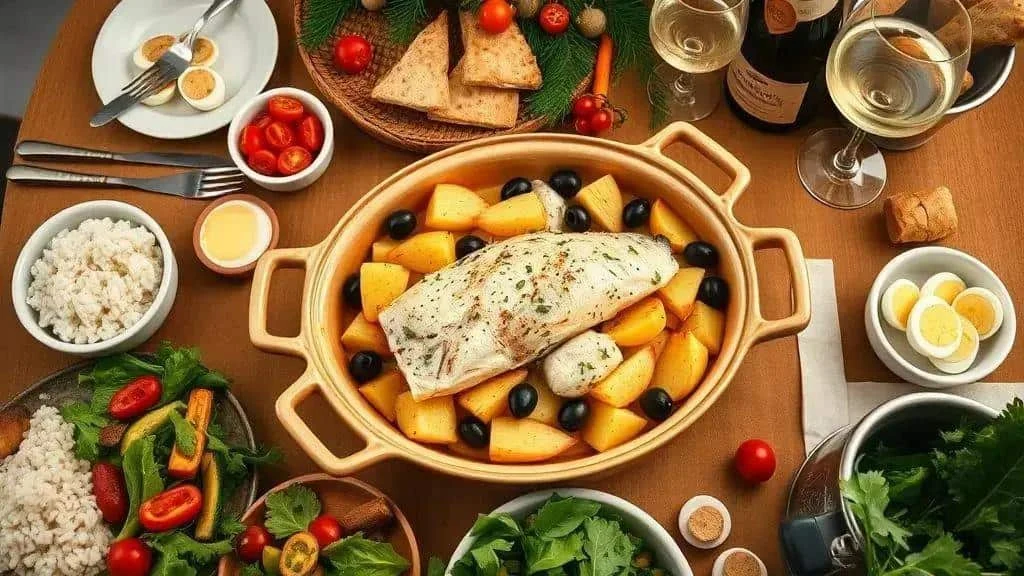
Choose fresh, colourful sides for Christmas salt cod with potatoes and olives, keeping the number of dishes manageable for the host.
Traditional Sides and Portion Planning
- Plain rice – allow a modest portion if wanted, as the main dish already contains potatoes. Around 50 g dry rice per person can be a starting point for a side; adjust for appetites and other dishes.
- Green salad with vinaigrette – roughly 80–120 g per person, using lettuce, rocket and cherry tomatoes.
- Roasted vegetables – about 150 g per person; try courgettes, carrots and pepper strips with olive oil and herbs, allowing different cooking times for each vegetable.
- Sautéed greens – about 80–100 g per person. Cook sliced kale or similar greens with garlic and a little oil until tender.
- Rustic bread or Portuguese broa – a medium slice can be useful for the sauce. Broa often contains wheat as well as maize, so check ingredients if avoiding gluten.
- Creamy mash, optional – around 100 g per person offers another soft accompaniment, though it may be unnecessary alongside the potatoes already in the bake.
Drinks to Serve Alongside
- Dry white wine – Alvarinho, Verdejo or Sauvignon Blanc are optional pairings for adults who choose to drink.
- Light red wine – a young Pinot Noir, served slightly cool if preferred, is another option.
- Sparkling wine – an optional celebratory drink; offer an equally appealing alcohol-free alternative.
- Alcohol-free drinks – sparkling water, lemonade or chilled mint tea work well. Keep plain water available too.
Arranging the Christmas Table
- Place the main dish centrally: use a heatproof mat under the hot oven dish and make it easy to reach without leaning across candles or drinks.
- Arrange the sides: place rice, salad and vegetables in separate bowls around the main dish, leaving serving space.
- Add bread and sauces: use baskets for bread and small jugs or bowls for sauces.
- Provide serving utensils: give each dish its own spoon, fork or tongs, especially where dietary requirements differ.
- Keep drinks to one side: a separate drinks area helps avoid crowding the main table.
- Finish the presentation: add the optional sliced eggs, olives and parsley just before serving, and scatter fresh herbs over the sides if desired.
Serving and Timing
- Serve promptly: a low oven setting alone does not prove food is being held safely. If keeping the dish hot, maintain the food itself at 63°C or above and check it; otherwise plan to serve after its brief rest.
- Serve manageable portions: offer smaller first helpings and replenish as needed rather than leaving all the food out for a long buffet.
- Identify ingredients: label vegetarian or gluten-free variations only after checking all components. Mention fish, eggs, milk and other relevant allergens, and use separate utensils.
- Set the table ahead: arrange plates and serving utensils earlier, keeping chilled foods refrigerated until needed.
A Welcoming Presentation
Contrasting colours highlight the golden potatoes, green parsley and olives. Simple rustic serving dishes suit the meal; leave clear space for people to serve themselves safely.
Preparing Ahead, Storing and Reheating
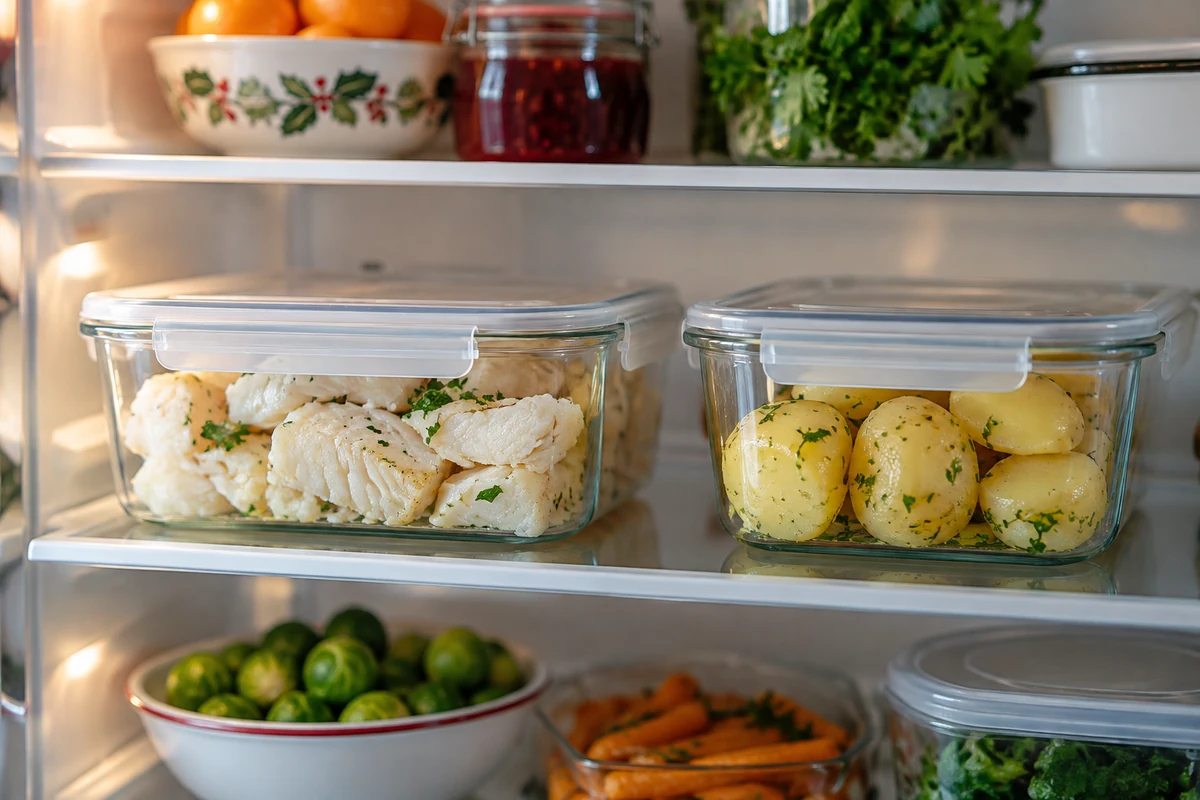
Planning preparation and storage makes Christmas salt cod easier to serve without rushing the cooking or leaving food out too long.
Tasks You Can Do Ahead
- Desalting: start far enough ahead for the cut you have bought, keeping it refrigerated and following the supplier’s instructions. Plan to cook promptly after desalting rather than adding an arbitrary extra two days.
- Potatoes: cook until just tender, cool promptly in shallow portions and refrigerate within two hours. Use within 48 hours, including any time before assembly.
- Onions and garlic: cook ahead if useful, cool promptly and refrigerate in a covered container. Keep the original 48-hour leftover deadline when combining with other ingredients.
- Hard-boiled eggs: prepare close to serving, cool promptly and refrigerate. For this make-ahead plan, use within 48 hours and avoid leaving peeled eggs on the worktop.
- Assembly: combine chilled prepared components up to six hours before cooking, subject to the fish’s storage guidance. Cover and refrigerate promptly, then remove non-oven-safe wrapping before baking.
Storage Essentials
- In the fridge: keep food at 5°C or below in suitable covered containers. Raw fish follows its product instructions; cooked leftovers should be refrigerated within two hours and eaten within 48 hours. Mixing older components does not restart their storage time.
- In the freezer: freeze suitable portions promptly, well wrapped and dated. Around two months is a quality guide for this cooked dish. Thaw fully in the fridge and use within 24 hours of defrosting.
- Oil is not a preservative here: do not extend the storage time by covering cooked flakes in oil or using a sterilised jar. Use normal chilled leftover limits.
- Avoid repeated thawing: portion food before freezing so you can defrost only what you need. Follow the product’s instructions and do not repeatedly thaw and refreeze prepared leftovers.
How to Reheat
- Preheat the oven: around 180°C conventional or 160°C fan is a starting point for reheating a covered portion. The portion’s size and temperature affect how long it takes.
- Keep it covered initially: cover with foil and add a little water or stock if necessary to prevent drying. Check the centre rather than assuming 15–20 minutes is sufficient.
- Colour the top if wanted: uncover briefly towards the end, watching closely. The centre must be steaming hot throughout, independently of any browning on top.
- Reheat single portions carefully: a microwave or covered pan can work. Follow appliance guidance, turn or stir where practical and check for cold spots. One or two minutes may not be enough. Reheat only once and confirm 70°C for two minutes or 75°C for 30 seconds at the centre if using a thermometer.
Practical Tips for Christmas Dinner
- Rest briefly: let the finished bake stand for around five minutes before serving, without allowing it to become cold.
- Keep hot food hot: if there is a delay, use suitable equipment and verify a food temperature of at least 63°C. An oven set to 90–100°C is not a substitute for checking the food itself.
- Garnish at the end: add the optional eggs, olives and parsley just before taking the dish to the table.
- Plan the serving space: keep serving utensils nearby and cold accompaniments separate. Keep chilled items in the fridge until required.
- Taste the cooked dish: adjust pepper if needed. The measured oil and salt from the fish and olives may already be enough.
Avoid unnecessary transfers: finish the bake in its ovenproof dish instead of moving it to a frying pan merely to save time. Never put an ordinary glass or ceramic oven dish directly on a hob.
Enjoy Your Christmas Meal
Christmas salt cod with potatoes and olives offers a generous festive centrepiece. Proper desalting, careful seasoning and thorough cooking let the familiar ingredients shine.
Thank you for reading. Follow our social channels for more recipes, or visit the I Love Christmas blog for seasonal ideas and inspiration.
Wishing you a welcoming Christmas table and a happy celebration. Return whenever you would like another festive cooking idea.
FAQ — Christmas Salt Cod with Potatoes and Olives
How should I desalt salt cod?
Follow the supplier’s instructions, soaking in cold water in the fridge and changing it as directed. Thin shredded fish needs less time than thick cuts. Cook a small sample before tasting to check saltiness. Do not rely on a ten-minute boiling shortcut.
Can I prepare parts of the recipe ahead?
Yes. Plan the desalting around the supplier’s guidance, and chill cooked potatoes and onions promptly if preparing ahead. Assemble chilled ingredients up to six hours before baking, within their existing storage deadlines. A cold dish may need longer to cook; check the centre.
How should I store leftovers?
Refrigerate shallow portions within two hours at 5°C or below and eat within 48 hours, or freeze promptly. Thaw in the fridge, use within 24 hours after full defrosting and reheat only once until steaming hot throughout. Oil or vacuum packaging does not extend these household limits.
Can I replace the potatoes?
Use sweet potatoes, or a half-and-half mixture, for a sweeter variation. Cook the slices until just tender before layering. This substitution does not automatically reduce the meal’s calories.
What can I drink with this dish?
Sparkling water or lemonade are easy alcohol-free options. For adults who choose wine, a dry white such as Alvarinho or Sauvignon Blanc can pair well; sparkling wine is another optional choice. Keep water available throughout the meal.
Sources and Further Reading
- Food Standards Agency: cooking food safely
- Food Standards Agency: chilling, freezing and defrosting food
- Norwegian Seafood Council: desalting salt cod
- Food Standards Agency: botulism and food preservation