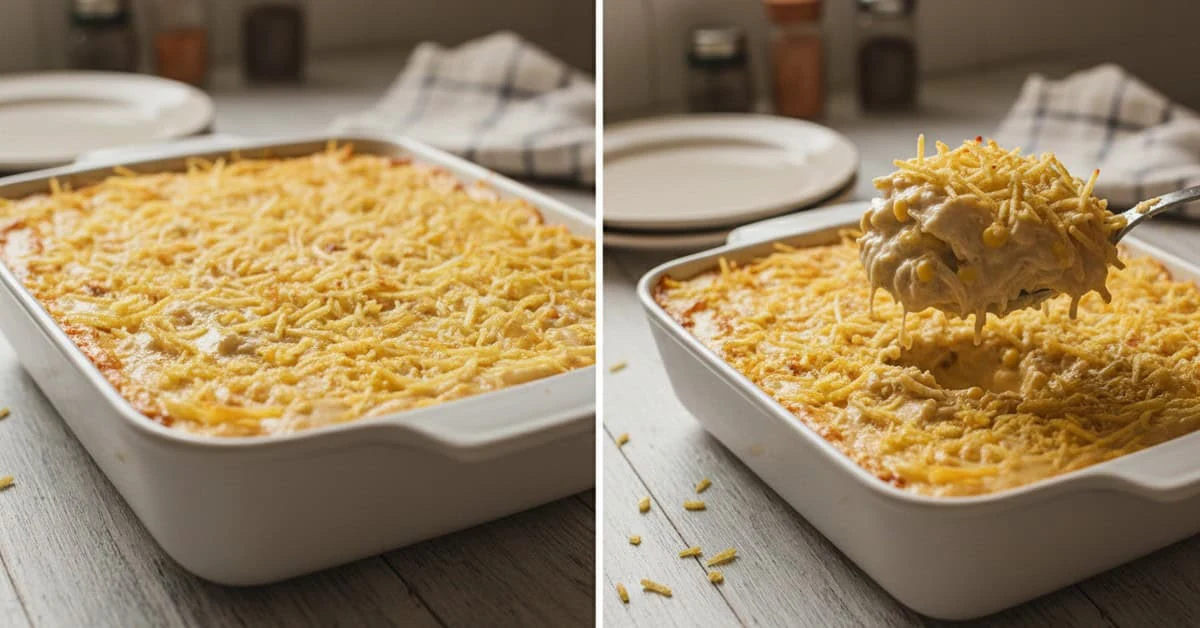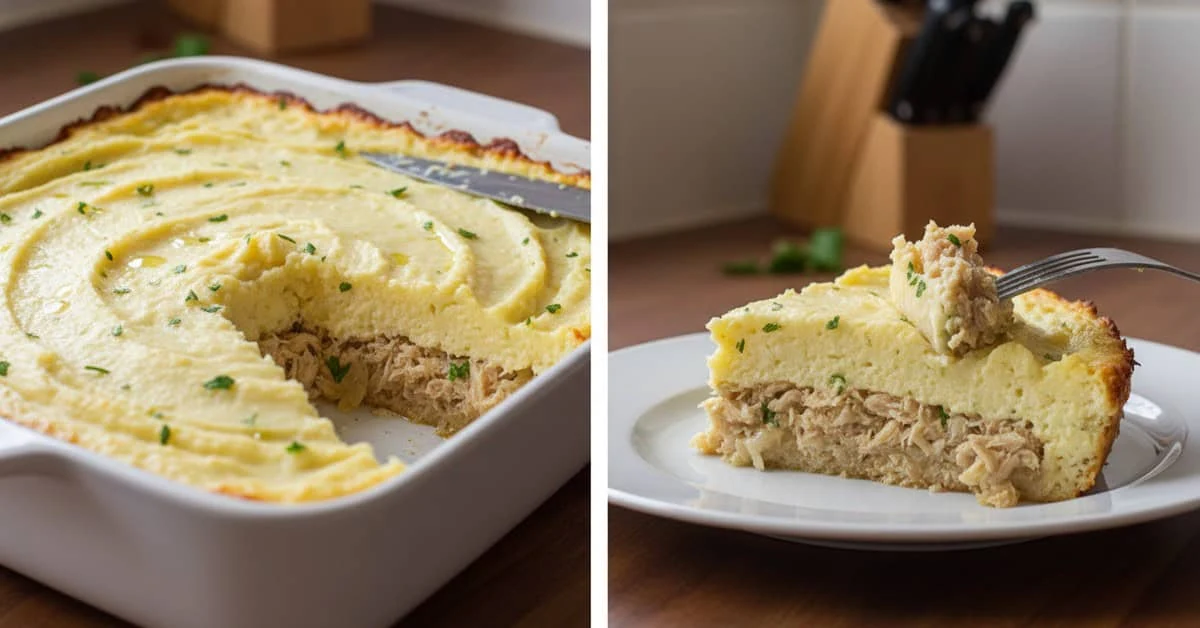
Christmas salt cod escondidinho is a Brazilian layered bake with soft mashed potato, a savoury filling of desalted salt cod and a golden cheese topping. Serve it in a sharing dish or individual ramekins. Alternative toppings include arracacha, sweet potato or cauliflower mash, and the dish can be assembled ahead and chilled safely before baking.
Christmas salt cod and mash bake brings a Brazilian festive favourite to the table. Escondidinho means something hidden away: here, a layer of seasoned salt cod sits beneath creamy mash. Follow the method below for preparation, variations and serving ideas.
Ingredients for Christmas Salt Cod and Mash Bake
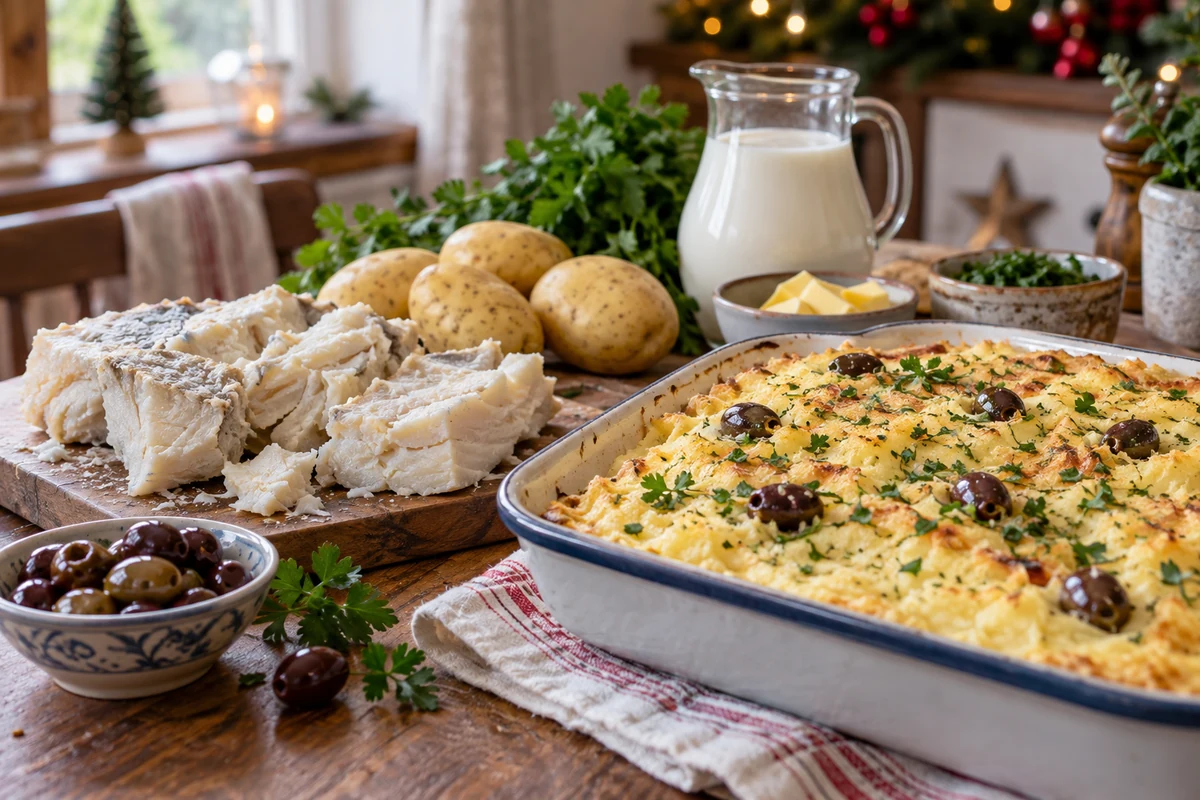
For this Christmas salt cod and mash bake, prepare the fish carefully and gather the remaining ingredients before cooking. Weigh the salt cod after desalting and draining; remove skin and bones before flaking it.
Ingredients
- 800 g desalted salt cod, flaked after cooking – use prepared portions or frozen, ready-desalted salt cod, thawed according to the packet instructions. Fresh cod is an unsalted alternative with a different flavour; it does not need soaking.
- 1.2 kg potatoes – cooked and mashed; alternatively, use 1 kg arracacha, known in Brazil as mandioquinha or batata-baroa, for a sweeter topping.
- 100 g butter – for the mash; cooking margarine is an alternative.
- 200 ml warm milk – add gradually to adjust the consistency. Unsweetened plant milk can replace it, but the butter, cream and cheese must also be replaced if making the whole dish dairy-free.
- Up to 200 ml single cream (optional) – adds richness; use only as much as the mash needs, or omit it for a less rich version.
- 1 medium onion – finely chopped.
- 3 garlic cloves – finely chopped or crushed.
- 4 tablespoons olive oil – for cooking the onion and fish filling.
- 100 g grated Parmesan – for the topping; grated mozzarella or Brazilian queijo coalho are alternatives.
- ½ cup sliced black olives – optional, for flavour and texture.
- ¼ cup chopped parsley and chives – for the filling and garnish.
- Ground nutmeg, to taste – a small pinch seasons the mash.
- Ground black pepper and salt, to taste – add salt cautiously, as the fish and olives may already provide enough.
Substitutions and Quick Tips
Tip: if starting with salted fish, follow the supplier’s desalting instructions. Soak in cold water in the fridge at 5°C or below, changing the water regularly; thick pieces may need longer than 24 hours. Season the mash at the end. For a less rich version, replace some butter with olive oil and omit the cream.
How to Make Christmas Salt Cod and Mash Bake
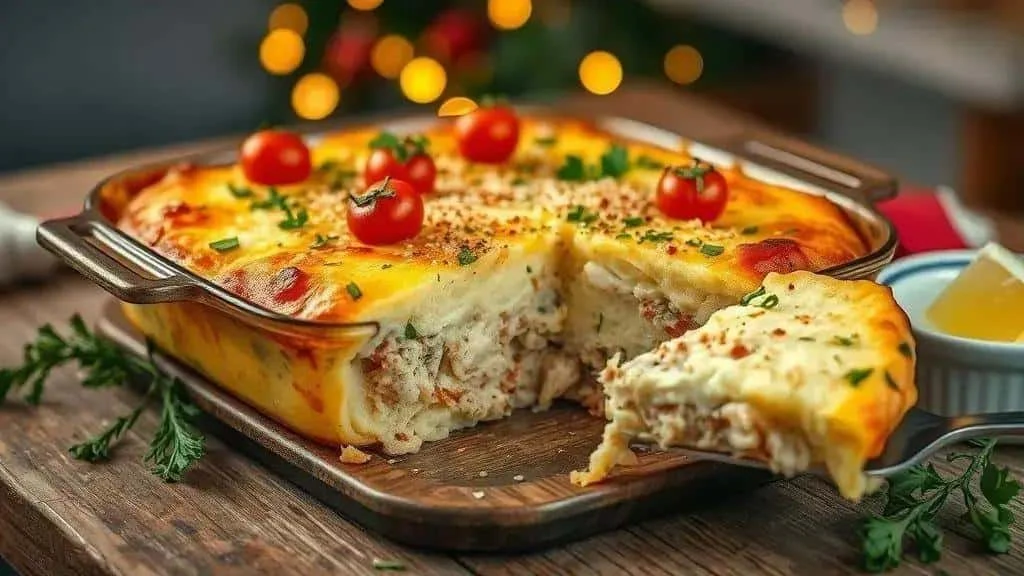
This step-by-step method for Christmas salt cod and mash bake takes you through the filling, mash and assembly. Taste cooked components before adjusting the seasoning.
- Preheat the oven to 200°C and grease a medium ovenproof dish, approximately 20 × 30 cm, with butter or olive oil.
- If the salt cod still needs desalting, soak it in cold water in the fridge, following the supplier’s timing and changing the water regularly. Do not leave it soaking on the worktop. Drain prepared, desalted fish and pat it dry.
- Cook the salt cod by gently poaching or steaming it until cooked through; 8–10 minutes may suit smaller portions, but thickness affects the time. Drain, remove skin and all bones, then flake with two forks. Check the thickest part reaches 70°C for 2 minutes or an equivalent safe combination, such as 75°C for 30 seconds.
- Make the filling: heat 4 tablespoons olive oil and soften the chopped onion until translucent. Add the 3 chopped garlic cloves and cook for another minute. Stir in the flaked salt cod and optional ½ cup sliced olives, then cook gently for 3–4 minutes. Season with pepper, parsley and chives.
- Make the mash: cook the 1.2 kg potatoes in lightly salted water until tender, approximately 20–25 minutes depending on the size of the pieces. Drain well, mash and stir in 100 g butter, warm milk gradually and a pinch of nutmeg. Add a little of the optional cream if wanted, keeping the mash firm enough to hold its shape.
- Taste and adjust the salt in the cooked filling and mash. The fish may retain some salt after soaking, so make the final adjustment only now.
- Assemble the bake: spread half the mash in the dish, add all the salt cod filling and cover with the remaining mash. Smooth with a spatula or make shallow peaks with a fork to help the top brown.
- Add the topping: scatter over 100 g grated Parmesan or mozzarella. A light drizzle of olive oil is optional; an egg glaze is not needed for this cheese-topped version.
- Bake: allow approximately 15–20 minutes for a freshly assembled, hot bake, until bubbling and golden. A chilled dish will need longer: check it is steaming hot throughout, not just browned on top. If necessary, finish under the grill for 2–3 minutes, watching closely.
- Rest and garnish: leave for about 5 minutes before serving. Scatter over parsley and chives; optional roasted cherry tomatoes or lemon wedges can be served alongside.
- Quick variations: replace some butter with olive oil and use skimmed milk for a less rich mash. For a creamier finish, add some of the optional cream gradually rather than automatically adding it all.
- Leftovers and storage: cool promptly in smaller portions and refrigerate within 2 hours at 5°C or below. Eat within 48 hours or freeze. Reheat only once, until steaming hot all the way through; an oven time alone cannot confirm this.
Practical Tips
- Salt control: taste a cooked sample before adding salt, as desalted fish can still be salty.
- The right texture: the mash should support the layers while remaining creamy to eat.
- A neat finish: pipe the mash with a wide nozzle if you would like a more decorative topping.
Variations on Christmas Salt Cod and Mash Bake
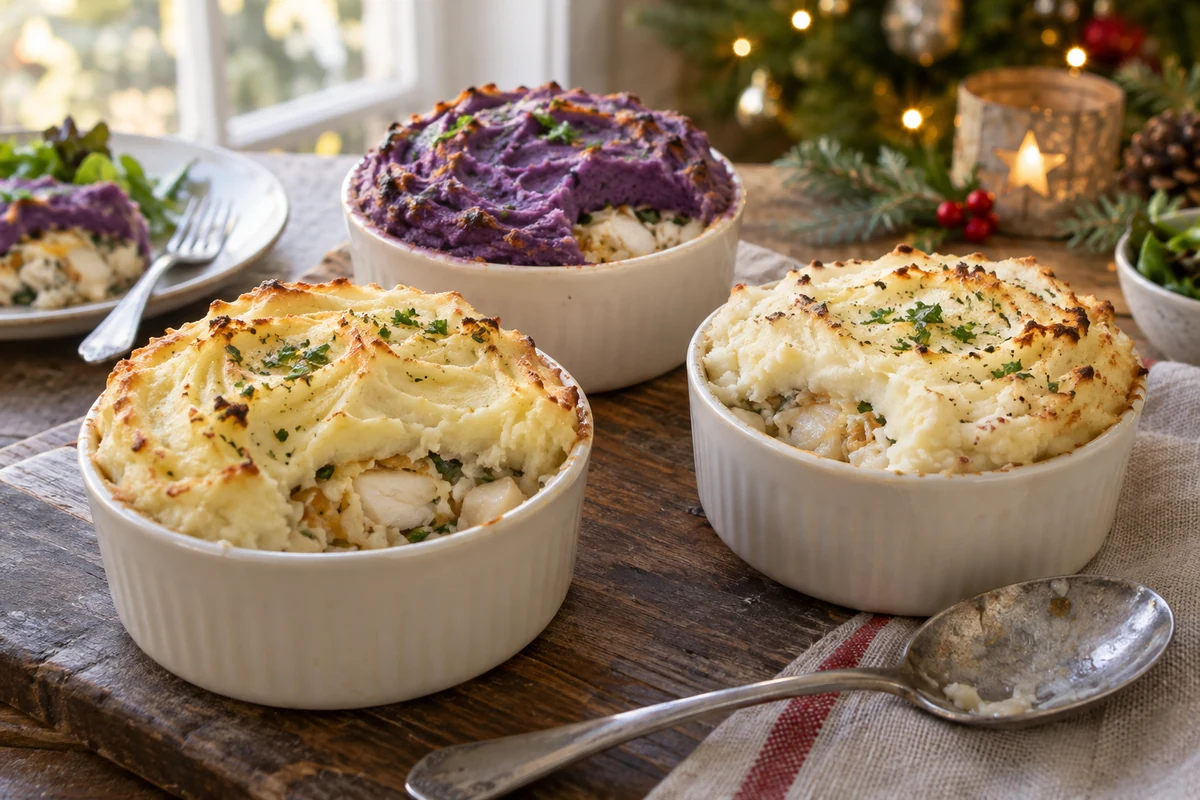
These variations on Christmas salt cod and mash bake offer different textures and flavours. For dietary requirements, check every ingredient rather than relying on the name of a variation.
Arracacha Mash (Mandioquinha)
Arracacha, a root vegetable also called mandioquinha or batata-baroa in Brazil, makes a sweeter, silky alternative to potato. It is not the same as a parsnip, though they can look similar.
- 1 kg arracacha – cooked and mashed.
- 80 g butter – for richness and a smooth finish.
- 150 ml warm milk – add gradually to suit the texture.
- Nutmeg, to taste – a small pinch.
- Cook the arracacha in lightly salted water until tender.
- Mash and stir in the butter and enough milk to make a smooth topping.
- Use in place of the potato mash when assembling the bake.
Purple Sweet Potato Mash
Sweet potato adds colour and gentle sweetness to balance the salt cod.
- 1 kg purple sweet potatoes – roasted or boiled until tender.
- 60 g butter, or olive oil added gradually to taste.
- 100–150 ml milk or unsweetened plant milk.
- Lemon zest – optional, for freshness.
- Roast or boil the sweet potatoes until tender.
- Mash and adjust the consistency with milk, adding the butter or oil gradually.
- Finish with optional lemon zest to balance the sweetness.
Cauliflower Mash: An Alternative to Potato
Cauliflower offers a different topping with less starch than potato. Drain it particularly well so it does not make the layers watery; the final richness depends on the butter and cream used.
- 1 medium cauliflower, approximately 700 g – cut into florets and cooked.
- 50 g butter or 2 tablespoons olive oil.
- 50–100 ml single cream or unsweetened plant milk, added gradually.
- Salt and pepper, to taste.
- Cook the cauliflower until very tender, then drain thoroughly.
- Blend with the butter and only as much cream as needed for a smooth, reasonably firm mash.
- Taste and season before assembling.
Salt Cod and Prawn Filling
Prawns add another seafood flavour to the filling. Use peeled, cleaned medium prawns and cook them thoroughly.
- 600 g desalted salt cod, cooked and flaked.
- 300 g medium prawns – peeled and cleaned.
- 1 medium onion and 3 garlic cloves, chopped.
- 4 tablespoons olive oil and ½ cup white wine (optional).
- Soften the onion in the oil, then add the garlic briefly without burning it.
- Add the cooked, flaked salt cod and stir gently for about 3 minutes.
- Add the prawns and cook until opaque and cooked through. Size affects timing; do not rely only on a pink exterior to judge doneness.
- Deglaze with the optional wine and let excess liquid reduce before using the filling. Wine is not guaranteed to become alcohol-free through brief cooking; omit it if avoiding alcohol.
Vegetarian or Vegan Filling
Replace the salt cod with hearts of palm and mushrooms. For a fully vegan dish, also replace all dairy in the mash and topping; removing the fish alone is not enough.
- 400 g chopped hearts of palm – drained.
- 200 g mushrooms, such as shiitake or button mushrooms – sliced.
- 1 onion and 2 garlic cloves, chopped.
- 50 ml olive oil for cooking, 150 ml unsweetened plant milk for the mash, and 2 tablespoons nutritional yeast (optional).
- Soften the onion and garlic in the oil, then add the mushrooms and cook until lightly browned.
- Add the hearts of palm and cook until excess liquid has evaporated.
- Season with herbs and pepper. Add optional nutritional yeast for a savoury flavour. Assemble with dairy-free mash and a suitable vegan topping.
Alternative Toppings and Crusts
For a different texture, use crisp farofa, toasted nuts or herbed breadcrumbs instead of cheese.
- 100 g breadcrumbs mixed with 2 tablespoons olive oil and herbs.
- 80 g chopped nuts, such as walnuts or Brazil nuts, lightly toasted.
- Farofa made by toasting 50 g Brazilian cassava meal (farinha de mandioca) with butter and onion; use the coarse meal, not tapioca starch.
- Scatter the chosen topping over the mash before baking.
- Bake until golden and crisp, with the filling hot throughout.
Choosing and Desalting Salt Cod for Christmas
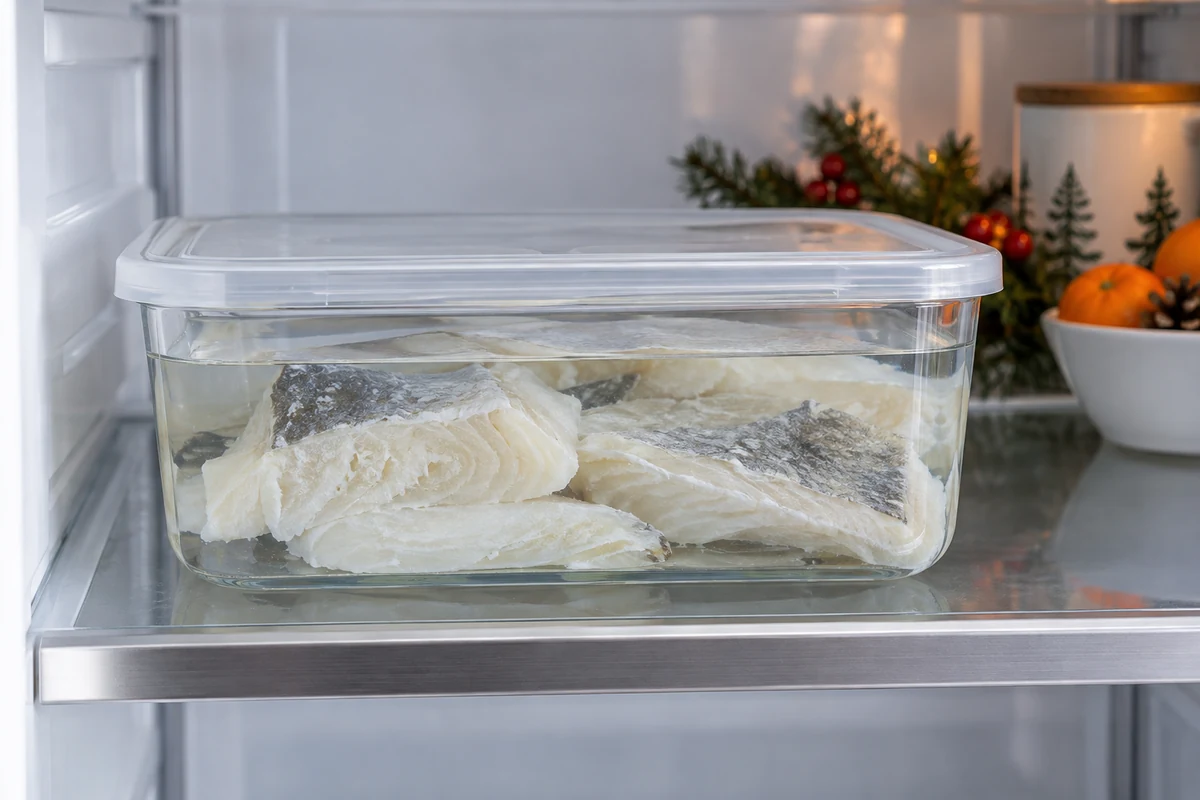
For a good Christmas salt cod and mash bake, the type of fish and its preparation both influence flavour and texture.
Choosing Salt Cod
- Type and traceability: buy from a reputable supplier and check the species, origin and preparation instructions on the label. Brazilian bacalhau products can vary; choose a product suitable for cooking and flaking.
- Condition: choose properly stored fish with intact packaging and a valid use-by date where applicable. Reject fish showing spoilage, including a strong ammonia smell; appearance alone does not establish safety.
- Cut: intact loin pieces are useful for serving whole, but smaller pieces can be a more economical choice for a flaked filling.
- Thickness: thicker pieces generally need longer soaking, so allow preparation time accordingly.
- Cost and suitability: compare the usable fish, preparation required and suitability for the recipe rather than assuming the most expensive product is best.
How to Desalt Salt Cod
Use cold water and keep the fish refrigerated at 5°C or below throughout desalting. Follow the supplier’s instructions: thickness, curing and whether the fish is already partly desalted all affect the required time.
- Initial rinse: rinse briefly under cold running water to remove surface salt, avoiding splashes onto ready-to-eat food or utensils.
- Prepare the pieces: if instructed by the supplier, divide very large portions into smaller pieces for more even soaking.
- Start soaking: place in a food-safe container, cover generously with cold water and refrigerate.
- Change the water: replace it regularly as directed by the supplier, returning the covered fish promptly to the fridge each time.
- Allow sufficient time: thin pieces may need around a day, whereas thick portions can take several days. Do not treat a fixed 24- or 48-hour schedule as suitable for every product; check the packaging or supplier’s guidance.
- Check the flavour: cook a small sample thoroughly before tasting. If still too salty, continue refrigerated soaking with fresh water. Never taste the fish raw to check the salt.
- Water is sufficient: milk is not needed for desalting and should not be relied on to rescue inadequately soaked fish. Continue with fresh cold water in the fridge if necessary.
- Avoid warm water: do not try to speed up desalting in warm water or at room temperature; keep the fish cold throughout.
- Drain before cooking: drain well and pat dry with kitchen paper so the filling does not become watery.
Quick Tips and Storage
- Final seasoning: add salt only after tasting the cooked filling, since the fish may retain some salt.
- Freezing: follow the product’s freezing instructions and freeze promptly in labelled portions if suitable. Defrost in the fridge and use within 24 hours of full defrosting; do not assume every previously frozen product can be refrozen uncooked.
- Temperature: keep the fish at 5°C or below during soaking, and clean surfaces and utensils after handling it.
- Avoid waste: prepare only what you need, or portion suitable fish for freezing following its storage instructions.
Assembly, Presentation and Serving Tips

- Serve hot: make sure the bake is hot throughout before a brief rest and prompt serving. If holding it hot for a buffet, maintain at least 63°C and check with a thermometer; a warm-looking dish is not enough.
- Portion planning: around 180–220 g per person can be a starting point for a buffet with several dishes, adjusted for appetites and other food. Choose individual dishes by the actual portion they comfortably hold.
- Prepare ahead: cool the cooked components promptly, refrigerating within 2 hours, and assemble with chilled ingredients. Keep covered at 5°C or below and bake within 48 hours of cooking the components. A cold bake takes longer to heat through.
Step-by-Step Assembly
- Even base: spread half the mash evenly across the dish.
- An even filling: distribute the cooked salt cod across the base without large gaps.
- Cover carefully: spread the remaining mash over the filling and smooth it, or make shallow fork marks for browning.
- Add the topping: use grated cheese, seasoned crumbs or chopped nuts according to your chosen version.
- Bake before serving: cook until hot throughout and golden. Individual dishes may take less time than one large bake, but still need checking in the centre.
Decoration and Presentation
- A touch of green: finish with chopped parsley and chives.
- A citrus finish: add lemon zest or serve thin lemon slices alongside.
- Crunch: toasted nuts, herbed breadcrumbs or farofa provide a contrast to the mash.
- The serving dish: a rustic ceramic dish suits the bake. Set it on a heatproof trivet, with festive napkins beside it rather than underneath hot cookware.
- Individual portions: ovenproof ramekins or small cocottes offer a neat presentation. Warn guests that the dishes are hot.
Serving at Christmas Dinner
- Position the dish safely: use a heatproof trivet and keep hot handles away from children. A trivet protects the table; it does not keep food at a safe hot-holding temperature.
- Serve neatly: use a broad spatula or serving spoon to lift portions without disturbing the remaining layers too much.
- Side dishes: a green salad with a light vinaigrette, roast vegetables or a simply seasoned farofa work well with the rich bake.
- Drinks: a dry white wine such as Sauvignon Blanc or Vinho Verde is an optional pairing. Sparkling water with lemon provides an alcohol-free alternative.
- Tell guests what is included: identify variations and allergens, including fish, dairy, prawns, wheat or nuts as applicable. Use separate utensils where needed to avoid cross-contact.
Serving and Leftover Tips
- Keeping it hot: cover to reduce drying and use equipment that maintains the food at 63°C or above. Check the food itself, not just the oven setting; serve promptly if you cannot hold it safely.
- Reheating: use an oven around 160–180°C, covering initially if the top might burn. Timing varies with portion size and starting temperature. Reheat only once and check it is steaming hot throughout before serving.
- Using leftovers: safely chilled portions can be eaten reheated as they are or used in a hot sandwich or small pie. Keep within the original 48-hour storage period and do not reheat repeatedly.
- Final table details: keep serving utensils nearby and use safe, indirect festive lighting so guests can help themselves easily.
To Finish
Christmas salt cod and mash bake combines a familiar Brazilian festive ingredient with comforting layers and a golden topping.
The method and variations let you adjust the texture, balance the salt and choose a presentation that suits your Christmas table.
Thank you for reading. Visit I Love Christmas and follow our social channels for more festive ideas.
FAQ — Christmas Salt Cod and Mash Bake
How can I tell whether the salt cod is sufficiently desalted?
Cook a small sample thoroughly and taste it. If it is still too salty, continue soaking in fresh cold water in the fridge, following the supplier’s guidance. Do not taste raw fish.
Can I use another fish instead of salt cod?
Fresh cod is an unsalted alternative with a different flavour and does not need desalting. Cook it thoroughly, remove all bones and adjust seasoning and cooking time to the fish you use. Do not apply salt-cod soaking instructions to other fish indiscriminately.
How should I store leftover escondidinho?
Cool promptly, refrigerate within 2 hours in covered smaller portions at 5°C or below, and eat within 48 hours or freeze. Reheat only once until steaming hot throughout; the exact oven time depends on the portion.
How much should I allow per person at Christmas dinner?
Around 180–220 g per person is a planning guide for a meal with several dishes. Adjust for appetites and the rest of the menu; select ramekins that comfortably hold your chosen portion rather than assuming grams equal millilitres.
How do I make creamy mash without making it too loose?
Drain the potatoes well and add butter and warm milk gradually. Stop when the mash is creamy but holds its shape. If necessary, stir in more cooked, well-drained mashed potato rather than adding more liquid.
Sources and Further Reading
- Food Standards Agency: cooking food safely
- Food Standards Agency: chilling, freezing and defrosting food
- Norwegian Seafood Council: desalting salt cod