This Christmas potato gratin combines thin potato slices, cream and cheese in a comforting side dish. The guide covers layering, baking and browning, with bacon, mushroom and dairy-free variations, plus serving, storage and reheating advice.
Christmas potato gratin is a creamy, golden side for a festive meal. Even slices and a little patience in the oven help the potatoes cook through while the top develops a crisp finish. Here is how to put it together and adapt it to your menu.
Ingredients for Creamy Christmas Potato Gratin

For this Creamy Christmas Potato Gratin, gather the following ingredients:
- 1.5 kg potatoes – peeled and thinly sliced. Choose an all-round or fairly firm variety that slices well; sweet potatoes provide a sweeter variation, with cooking time adjusted as necessary.
- 400 ml fresh cream – for richness; a plant-based cooking cream, such as soya, is an alternative. Replacing the cream alone does not make the whole recipe dairy-free.
- 300 ml whole milk – semi-skimmed milk or an unsweetened plant milk can be used instead; flavour and thickening will vary.
- 200 g grated Gruyère – or grated mozzarella for a milder taste.
- 50 g grated Parmesan – for browning; pecorino or a suitable plant-based alternative can be substituted. Use cheeses labelled vegetarian if serving vegetarians.
- 2 garlic cloves – chopped or crushed; optional, to flavour the cream.
- 1 tablespoon butter – for greasing the dish; olive oil is an alternative.
- Up to 1 teaspoon grated nutmeg – optional; this is the original recipe’s quantity, but it can be strong, so begin with a small pinch and add to taste.
- Salt and ground black pepper, to taste.
- A few rosemary or thyme sprigs – for flavour and garnish.
- 1 tablespoon breadcrumbs or panko – optional, for a crisp topping; omit or choose suitable gluten-free crumbs where required.
Substitutions and Quick Tips
Potatoes: firm slices give distinct layers; flourier potatoes produce a softer result. Cream and milk: plant-based products differ, so choose unsweetened cooking versions and check the consistency. Cheeses: Gruyère adds a stronger flavour, while mozzarella gives a milder, stretchy finish. Seasoning: taste the cream mixture before assembly and allow for the salt in the cheese; start cautiously with nutmeg.
Servings: approximately 6–8 as a substantial side, depending on the other dishes served.
How to Make Creamy Christmas Potato Gratin
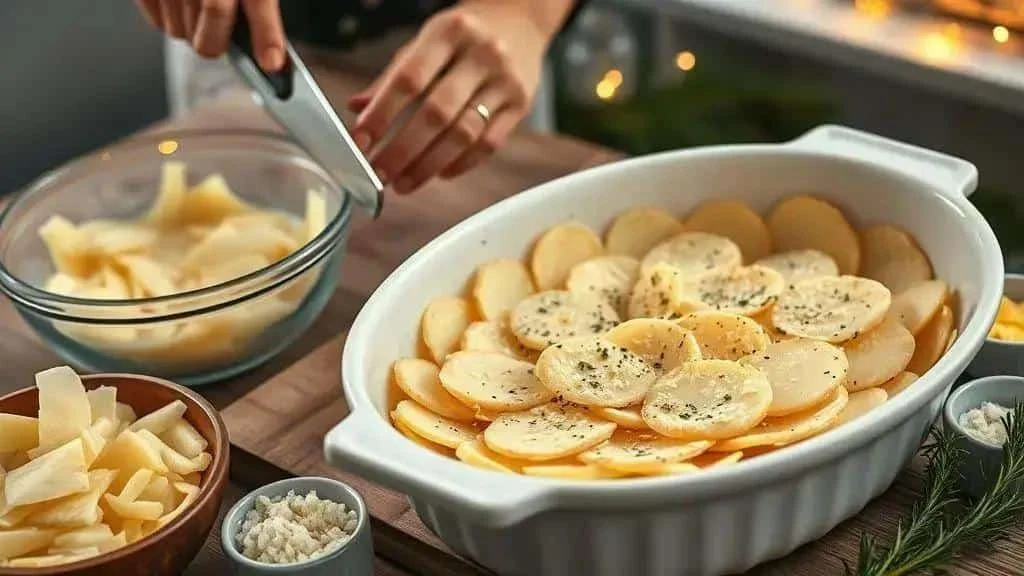
- Preheat the oven: set to 200°C conventional or 180°C fan. Grease an ovenproof dish large enough to hold the potatoes and liquid without filling to the brim.
- Prepare the potatoes: peel the 1.5 kg potatoes and slice evenly, approximately 2–3 mm thick. A mandoline helps, but use its hand guard and appropriate cut-resistant protection. Slice shortly before assembly; if holding briefly in cold water to prevent browning, drain well afterwards.
- Drain and dry: if the slices have been held in water, drain and pat dry with a clean cloth or kitchen paper to avoid adding excess water to the gratin.
- Prepare the cream mixture: combine 400 ml cream, 300 ml whole milk, the 2 crushed garlic cloves, nutmeg to taste, salt and pepper. If warming to infuse the flavours, use a saucepan over gentle heat without boiling; do not heat an ordinary mixing bowl on the hob.
Layering and Baking
- Build the layers: arrange the potato slices with a slight overlap. Add some grated Gruyère between every two or three layers, reserving some for the top.
- Add the liquid: pour the cream mixture evenly over the layers so it comes close to the top of the potatoes, leaving room to bubble. Gently settle the dish to release trapped air; avoid overfilling.
- Finish the topping: add the remaining Gruyère, 50 g Parmesan and optional tablespoon of panko or breadcrumbs. Add a few herb leaves for flavour; extra butter on top is optional rather than essential.
- Bake covered: cover with foil and bake for approximately 30–35 minutes to start cooking the potatoes without over-browning the top.
- Brown the top: remove the foil and bake for another 15–25 minutes, or longer if needed, until golden and bubbling. Test the centre with a knife: the potato layers should be tender throughout. If the top browns before the potatoes soften, cover again and continue baking.
- Rest and serve: leave for 10–15 minutes to help the creamy layers settle, then serve promptly with optional fresh herbs.
- Quick tips: plant-based creams and milks can behave differently, so follow the variation below rather than simply extending the baking time. Season cautiously because cheese adds salt. A dairy-free version needs plant-based milk, cream and cheese, plus oil instead of butter. Handle sharp slicers carefully.
Variations on Creamy Christmas Potato Gratin

Adapt this Creamy Christmas Potato Gratin with different fillings or dairy alternatives. These are variation ideas rather than separately tested recipes, so check texture and doneness as you cook.
Bacon and Caramelised Onion
Crisp bacon and slowly cooked onions add smoky, savoury flavour between the potato layers.
- 150 g bacon, cooked through and lightly crisped.
- 1 large onion, sliced and slowly softened in a little butter; brown sugar is optional rather than necessary for caramelising onions.
Preparation tip: cook the bacon thoroughly, drain excess fat and set aside. Cook the onion slowly until soft and golden. Distribute both between the layers before adding the cream, and reduce added salt.
Vegetarian Mushroom Gratin
Use sautéed shiitake, button or portobello mushrooms and herbs for a savoury meat-free version. Choose vegetarian-labelled cheese; traditional Parmesan uses animal rennet.
- 300 g mixed mushrooms – sliced and browned.
- 2 tablespoons fresh herbs, such as parsley, thyme or chives.
Preparation tip: sauté the mushrooms until their released liquid has largely evaporated before layering them with the potatoes. This keeps the gratin from becoming watery.
A Truffle-Flavoured Finish
A little truffle oil or truffle-flavoured cheese adds a different aroma to the finished dish.
- 5–10 drops truffle oil – begin sparingly, as strength varies.
- Optional: 30 g grated truffle-flavoured cheese.
Preparation tip: drizzle a little truffle oil over the finished gratin, rather than baking it for the whole cooking time, to retain its aroma.
Dairy-Free or Vegan Gratin
Use plant-based cooking cream, unsweetened plant milk, suitable vegan cheese and oil for greasing. A little cornflour can help thicken a thinner cream substitute. Check all labels, including those for breadcrumbs and flavourings.
- 400 ml plant-based cooking cream, such as cashew or soya, plus unsweetened plant milk in place of the dairy milk.
- 150–200 g grated vegan cheese; nutritional yeast may be added to taste for flavour, but is not a gram-for-gram substitute for this quantity of cheese.
Preparation tip: if needed, mix 1 tablespoon cornflour with a little cold plant milk taken from the recipe quantity. Stir into the cream mixture and heat gently until slightly thickened before assembly. Bake until the potatoes are tender and the dish is hot throughout.
Ricotta and Yoghurt Variation
Ricotta and plain yoghurt can replace some of the cream for a tangier flavour. The original does not specify the exact amount of cream to remove, so treat this as an adaptation: add liquid gradually rather than adding these ingredients on top of all the original cream.
- 200 g ricotta – blended until smooth.
- 150 g plain yoghurt – full-fat or reduced-fat, according to preference.
Preparation tip: blend the ricotta and yoghurt with herbs and a little nutmeg, then adjust the liquid to coat the potato layers. Yoghurt may separate under high heat, so expect a different texture from the cream version. Bake until tender rather than relying on a fixed extra time.
Serving Christmas Potato Gratin and Planning the Meal

Christmas potato gratin makes a rich side dish, so contrasting vegetables and fresher accompaniments help balance the meal.
Table Setting and Presentation
- Serve in the ovenproof dish on a heatproof trivet. Warm plates can help keep individual portions pleasant to eat, but neither a warm dish nor a trivet provides safe hot holding.
- Let the gratin settle before portioning. As part of a larger buffet, around 150–200 g per person can be a starting guide; the main recipe’s 6–8 servings are more substantial.
- Garnish with a few rosemary or thyme leaves and fine shavings of suitable hard cheese.
- Arrange plates and serving utensils where guests can reach them safely, avoiding unstable stands or crowded hot dishes.
- Neutral crockery and a few festive decorations suit the golden gratin. Keep candles and decorative pine cones clear of food and serving space.
Drink Pairings
- Full-bodied white wine: Chardonnay or Viognier are optional matches for the creamy cheese sauce.
- Light red wine: Pinot Noir can accompany the cheese without overpowering the potatoes.
- Sparkling wine or prosecco: the bubbles offer a contrast to the rich texture.
- Beer: a mild lager or amber ale is another optional pairing.
- Alcohol-free choices: sparkling apple juice or sparkling water with lemon provide a refreshing alternative.
What to Serve Alongside
- Roasts: turkey, a cooked ham or roast pork make suitable centrepieces alongside the gratin.
- Vegetarian mains: mushroom ragù or roast vegetables provide contrasting textures; use vegetarian cheese in the gratin too.
- Fresh sides: green salad with a sharp vinaigrette or a little fruit chutney can balance the richness.
- Bread and starters: rustic bread or a small cheese selection are options, though a lighter starter may suit an already rich meal.
A Practical Preparation Schedule
- The day before: prepare the cream mixture and refrigerate it covered at 5°C or below. If slicing potatoes ahead, cover them with cold water and refrigerate separately, then drain well before assembly.
- On the day: assemble the gratin and keep it covered in the fridge until ready to bake. Do not leave it out for an hour to warm up. Remove plastic covering and follow the dish manufacturer’s advice about moving it from fridge to oven.
- Bake: use a preheated oven, initially covered for about 30–35 minutes, then uncovered for around 15–25 minutes. Chilled ingredients or a deeper dish may need longer; check tenderness in the centre.
- Before serving: rest for 10–15 minutes, then portion and serve promptly.
- Reheating: cover loosely and reheat at around 180°C until steaming hot throughout, uncovering briefly to restore the topping. Do not assume 10–15 minutes will heat a whole cold dish safely. Reheat only once.
Quick Tips
- Reduce the salt in the cream mixture when using strongly salted cheeses.
- For extra crunch, mix the optional panko with a little melted butter or oil before adding it to the top.
- For vegetarian guests, use suitable vegetarian cheese and keep any bacon version in a separate dish with separate serving utensils.
- Individual ovenproof dishes make portioning easy; adjust the baking time and check each serving is cooked through.
Potato Gratin: Useful Background and Practical Care
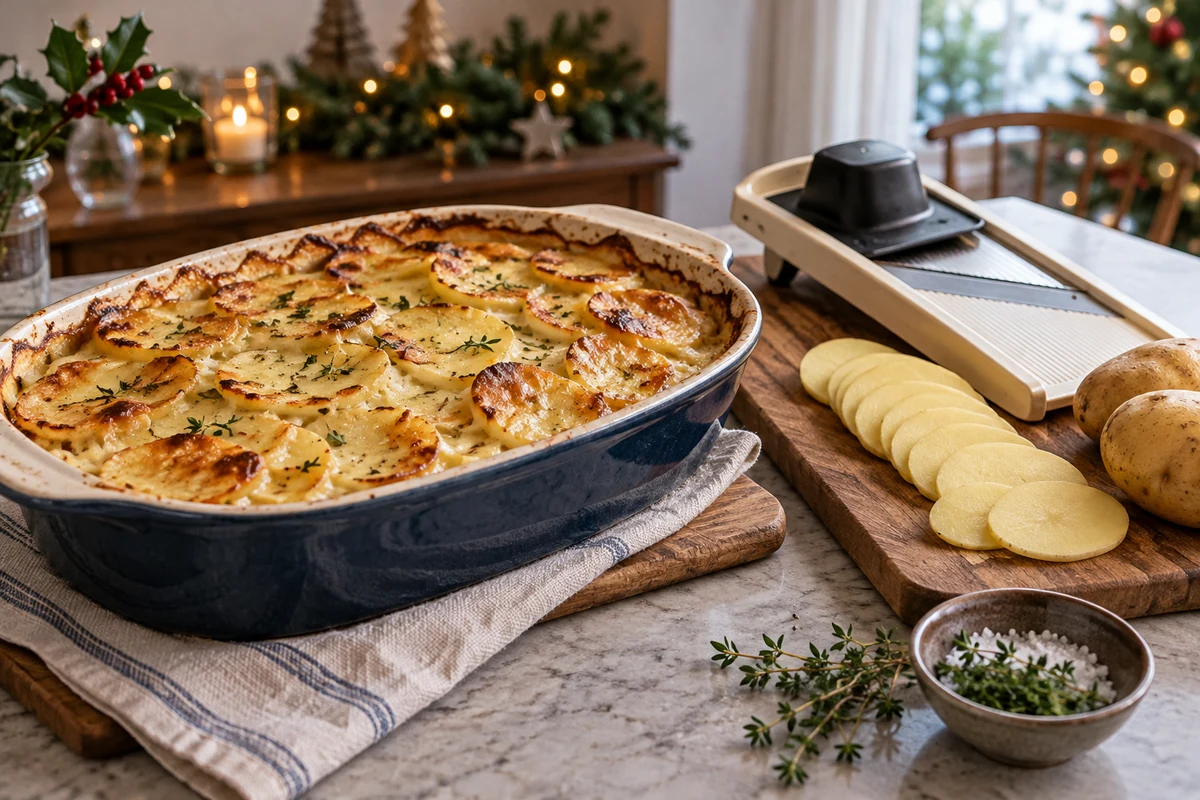
A few practical details help with both the texture and safe preparation of a Christmas gratin.
About the Dish
- French terminology: gratin describes a dish with a browned topping. This cheese-topped recipe is a potato gratin rather than a claim to reproduce one definitive traditional gratin dauphinois.
- Potato texture: firmer potatoes hold distinct slices, while flourier varieties soften and release more starch. Choose according to the texture you prefer; not every variety named in the original Brazilian recipe is available in the UK.
- Browning: oven heat produces the golden surface and toasted flavours, especially once the foil is removed and surface moisture can evaporate.
- Nutmeg: a little complements cream, but too much can dominate the cheese. Add gradually.
Choosing and Storing Potatoes
- Check green areas and sprouts: remove sprouts and cut away green or damaged areas before use. Discard potatoes that are extensively green, rotten or otherwise unsuitable; do not rely on cooking to make a badly affected potato safe.
- Store appropriately: keep whole potatoes in a cool, dark place, following any packaging advice. Current UK guidance also permits home storage in the fridge. Avoid light, which encourages greening.
- Check before cooking: use older sound potatoes first and inspect them for deterioration rather than assuming they will remain suitable for a fixed number of weeks.
During Preparation
- Even slicing: aim for 2–3 mm slices, using a mandoline’s guard and suitable hand protection or a sharp knife with care.
- Avoid excess water: wash potatoes before peeling. Repeatedly rinsing the sliced potatoes is not essential for gratin, since starch helps thicken the sauce; drain and dry any slices held in water.
- Cream temperature: warm gently if infusing with garlic and herbs, without bringing to a vigorous boil.
- Layering: overlap the slices slightly and distribute the cheese evenly through the dish.
- Moisture and browning: cover for the initial baking stage, then uncover to brown. Replace the foil if the top darkens before the centre is tender.
- Time and temperature: use 200°C conventional or 180°C fan. Around 45–60 minutes is a guide, not a guarantee; thickness, dish depth and starting temperature affect the cooking time.
- Check doneness: a knife should pass through the central potato layers easily. Rest for 10–15 minutes before serving.
Safe Cooling, Storage and Reheating
- Cooling and refrigeration: cool leftovers promptly in smaller portions and refrigerate within 2 hours at 5°C or below. Eat within 48 hours or freeze, rather than keeping this dish for 3–4 days.
- Reheating safely: reheat only once until steaming hot throughout. A clean probe can check the centre reaches 70°C for 2 minutes or an equivalent combination, such as 75°C for 30 seconds; surface bubbling alone is not enough.
- Freezing: freeze promptly in suitable labelled portions, noting that the sauce and potatoes may change texture. Defrost in the fridge and use within 24 hours of full defrosting, reheating thoroughly.
- Hygiene: clean hands, utensils and surfaces when handling unwashed potatoes, raw bacon and cooked food, keeping them separate to prevent cross-contamination.
To Finish
Creamy Christmas potato gratin is a comforting side for the festive table. Uniform slices, careful seasoning and a properly tender centre matter as much as a golden top.
Thank you for reading. Follow our social channels for more recipes, table-setting ideas and festive variations.
Visit I Love Christmas for more seasonal inspiration, and share your own festive cooking if you would like to.
FAQ — Creamy Christmas Potato Gratin
Which potatoes are best for gratin?
Choose a firm or all-round variety for distinct slices. Flourier potatoes make a softer gratin and release more starch. Even slicing and cooking until the centre is tender are important whichever variety you use.
Can I prepare the gratin the day before?
Yes. Prepare the cream mixture and refrigerate it covered. If slicing potatoes ahead, keep them covered with cold water in the fridge, then drain well. Assemble and bake the next day, keeping everything chilled until needed and allowing extra time for cold ingredients.
How can I reheat it while keeping the creamy texture and crisp top?
Reheat loosely covered in an oven around 180°C until steaming hot throughout, then uncover briefly to brown the top. Timing depends on the portion size and temperature. Reheat only once; a brief grilling stage does not heat a cold centre safely.
What substitutions can I make to avoid dairy?
Use suitable plant-based cooking cream, unsweetened plant milk, vegan cheese and oil instead of butter. A tablespoon of cornflour mixed with cold plant milk can help thicken a thin sauce. Check labels for relevant allergens, including soya or nuts.
Can I add bacon or mushrooms?
Yes. Cook bacon thoroughly and drain excess fat before layering it in. Sauté mushrooms until their released liquid has largely evaporated. For a vegetarian version, also choose vegetarian-labelled cheese and keep utensils separate from the bacon version.
How do I store leftovers safely?
Cool promptly in smaller portions and refrigerate within 2 hours at 5°C or below. Eat within 48 hours or freeze. Reheat only once until steaming hot throughout.
Sources and Further Reading
- Food Standards Agency: cooking food safely
- Food Standards Agency: chilling, freezing and defrosting food
- Food Standards Agency: safe food storage, including potatoes