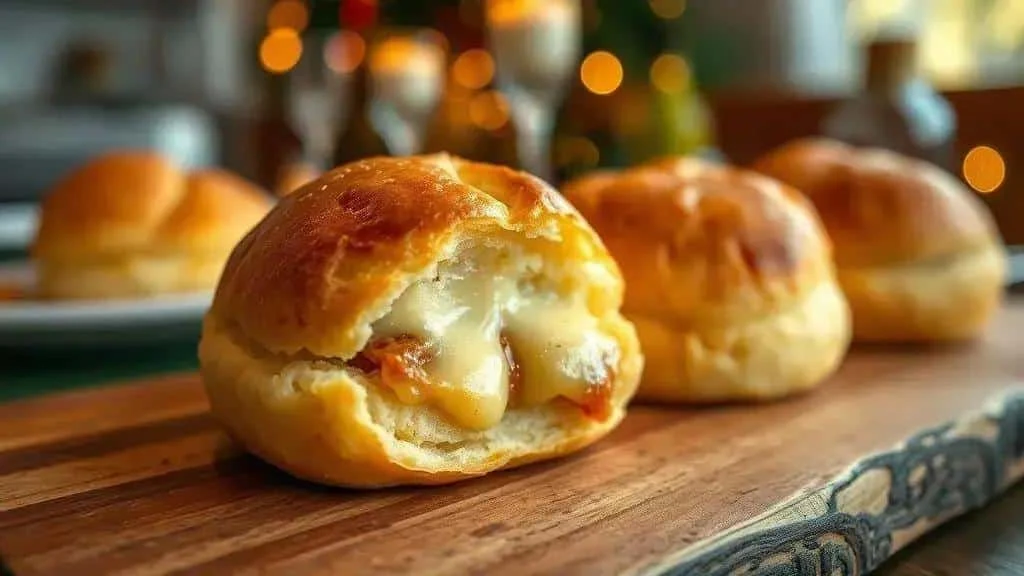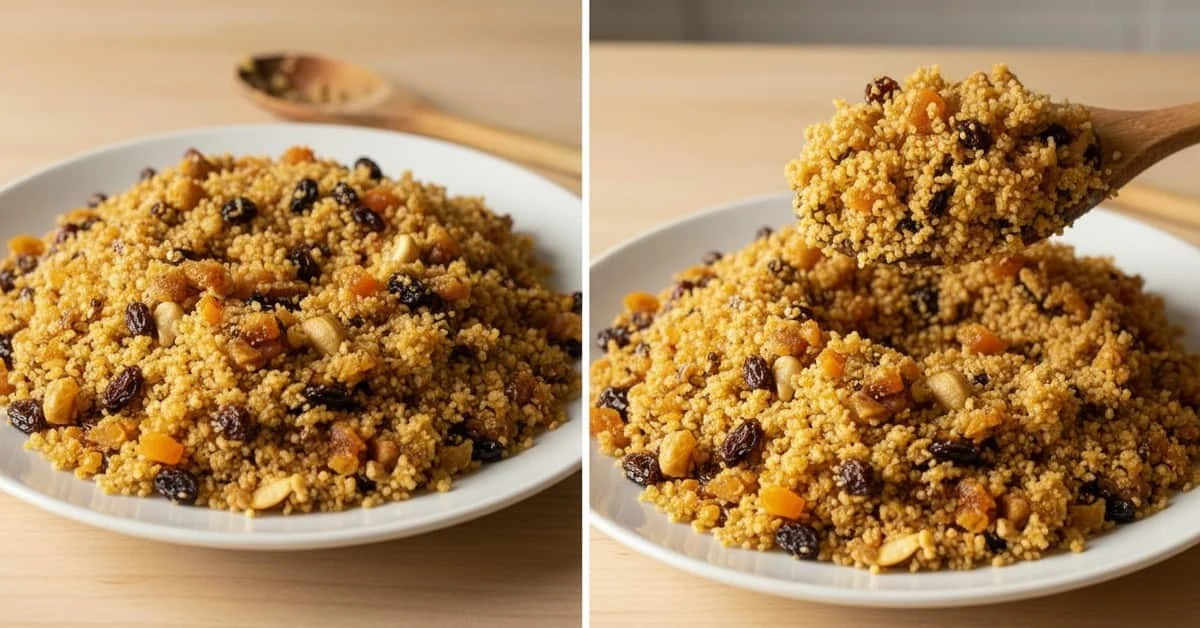
This Christmas farofa combines toasted Brazilian cassava meal, dried fruit, chopped nuts and citrus zest for a sweet and savoury side. Serve it with roast pork, turkey or vegetables, adapting the basic recipe with plant-based fat, optional bacon or tropical fruit. Farofa should be loose and crumbly, not a dough or sauce.
Christmas farofa with dried fruit brings a sweet and savoury contrast to a festive meal. This Brazilian side is made by toasting cassava meal with aromatics and additions. Follow the method below, then adjust the fruit, nuts and seasoning to suit your table.
Ingredients for Christmas Farofa
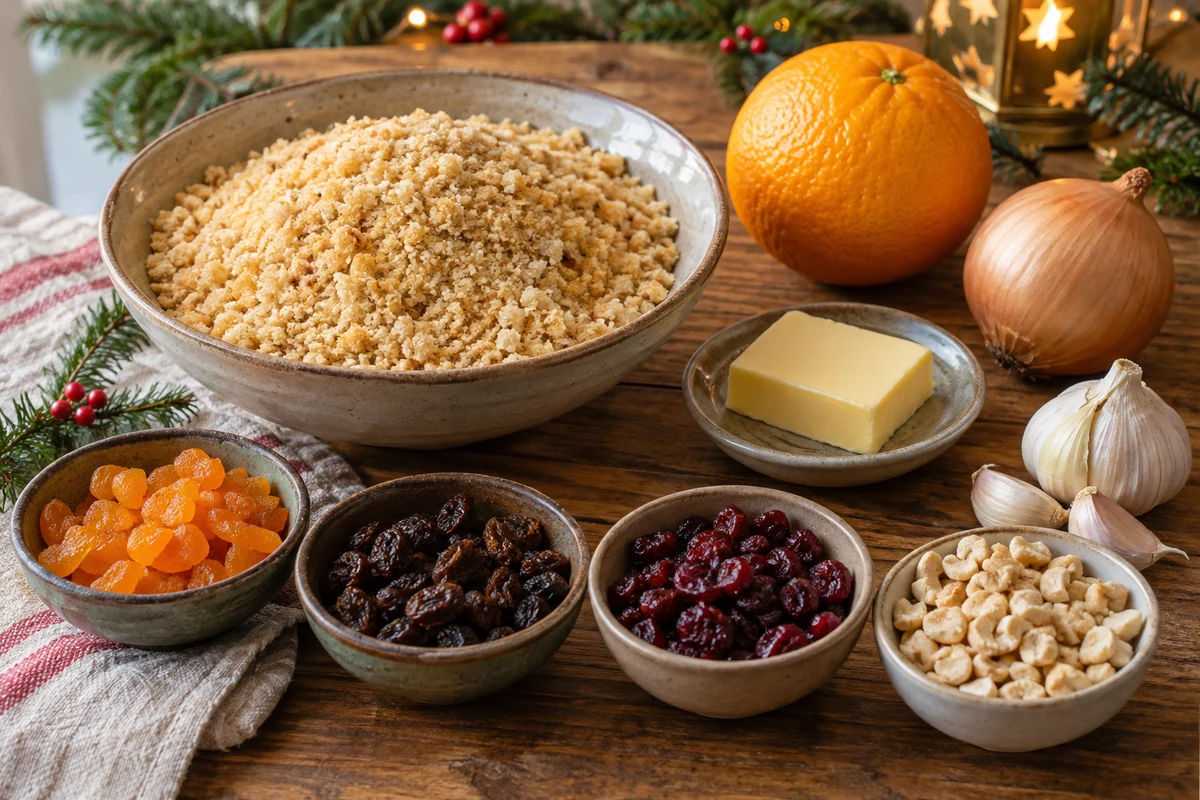
To make Christmas farofa with dried fruit, choose ingredients that balance sweetness, citrus aroma and savoury flavour. The following quantities are those of the original recipe, with substitutions explained where needed.
Ingredients for Christmas Farofa
- 2 tablespoons unsalted butter – for a dairy-free version, replace the butter and the separate tablespoon of oil below with approximately 3 tablespoons olive oil in total, adding more only if needed.
- 1 tablespoon vegetable oil – used alongside the butter in the standard version; a neutral coconut oil is an alternative.
- 1 medium onion, chopped – white or red onion both work.
- 2 garlic cloves, chopped – or 1 teaspoon garlic powder, added without letting it scorch.
- 2 cups Brazilian cassava meal (farinha de mandioca) – use a food-grade product intended for farofa, plain or already toasted, following its packet instructions. This is not tapioca starch or finely milled baking flour.
- ¾ cup chopped dried fruit – a mixture of cranberries, raisins and dried apricots; dates or dried figs are alternatives.
- ½ cup chopped nuts – cashews or walnuts, with almonds as another option.
- 1 tablespoon finely grated orange zest – or lemon zest for a different citrus aroma; avoid the bitter white pith.
- Up to 2 tablespoons soft brown sugar – add to taste because the fruit is already sweet. Alternatively, use up to 1½ tablespoons maple syrup or honey; honey is not vegan.
- Salt and ground black pepper, to taste – adjust after cooking.
- ¼ cup chopped fresh parsley – or chives, to finish.
- 150 g diced bacon, optional – cooked thoroughly until crisp. Omit for a meat-free version and add more nuts if appropriate.
Servings: approximately 6–8 as a side, depending on portion sizes and additions.
Quick Tips
Crunch: toast the nuts separately and warm dried fruit gently without burning it. Sweetness: add brown sugar a little at a time and taste the cooked mixture before using the full quantity.
How to Make Christmas Farofa
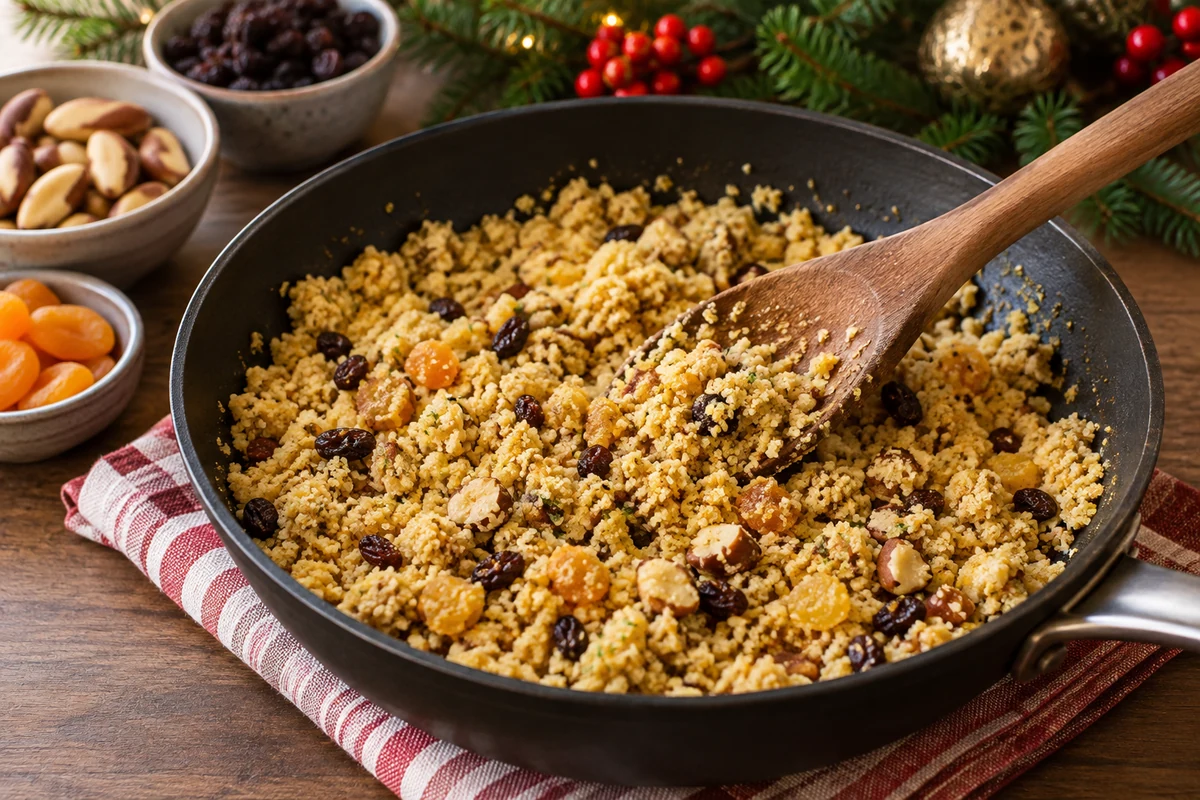
- Warm the pan: melt 2 tablespoons butter with 1 tablespoon oil in a large frying pan over medium heat, without letting the butter burn. Use the plant-based oil alternative if preferred.
- Cook the optional bacon: add 150 g diced bacon and cook thoroughly until crisp. Remove with a slotted spoon and drain on kitchen paper; discard excess rendered fat if the pan is too oily.
- Soften the onion and garlic: cook the chopped onion in the pan until softened, approximately 3–4 minutes, then add the chopped garlic briefly, stirring so it does not burn.
- Warm the fruit: add the brown sugar gradually, up to 2 tablespoons if wanted, and the ¾ cup chopped dried fruit. Stir gently for about 2 minutes to warm the fruit; avoid scorching the sugar.
- Add the cassava meal: lower the heat and add 2 cups gradually, stirring to distribute it through the aromatics and prevent lumps. Follow the product’s cooking instructions; do not taste uncooked flour products.
- Toast gently: stir over low to medium heat until the meal is cooked as required by its packet and pleasantly toasted. Around 4–6 minutes may suit already toasted farofa meal; timing varies. Add a little extra butter or oil only if the mixture seems too dry.
- Finish the flavour: add the tablespoon of orange zest, ½ cup chopped nuts and cooked bacon if using. Season the cooked mixture with salt and pepper to taste.
- Add the herbs: turn off the heat and stir in the ¼ cup chopped parsley.
- Serve: transfer to a serving dish, rest briefly for about 5 minutes and fluff gently before taking to the table.
- Quick variations: replace butter with olive oil for a dairy-free version. For a fully vegan dish, also omit bacon and honey. Taste before adding extra sweetness, as dried fruit and the optional sugar may already be enough.
Practical Tips
Avoid clumps: add the meal gradually and stir evenly. Salt control: season at the end, since bacon and salted nuts contribute salt; plain unsalted nuts are different.
The right texture: aim for loose, lightly coated crumbs. If too dry, add a little butter or oil gradually, up to a tablespoon at a time, rather than making it greasy.
Christmas Farofa Variations
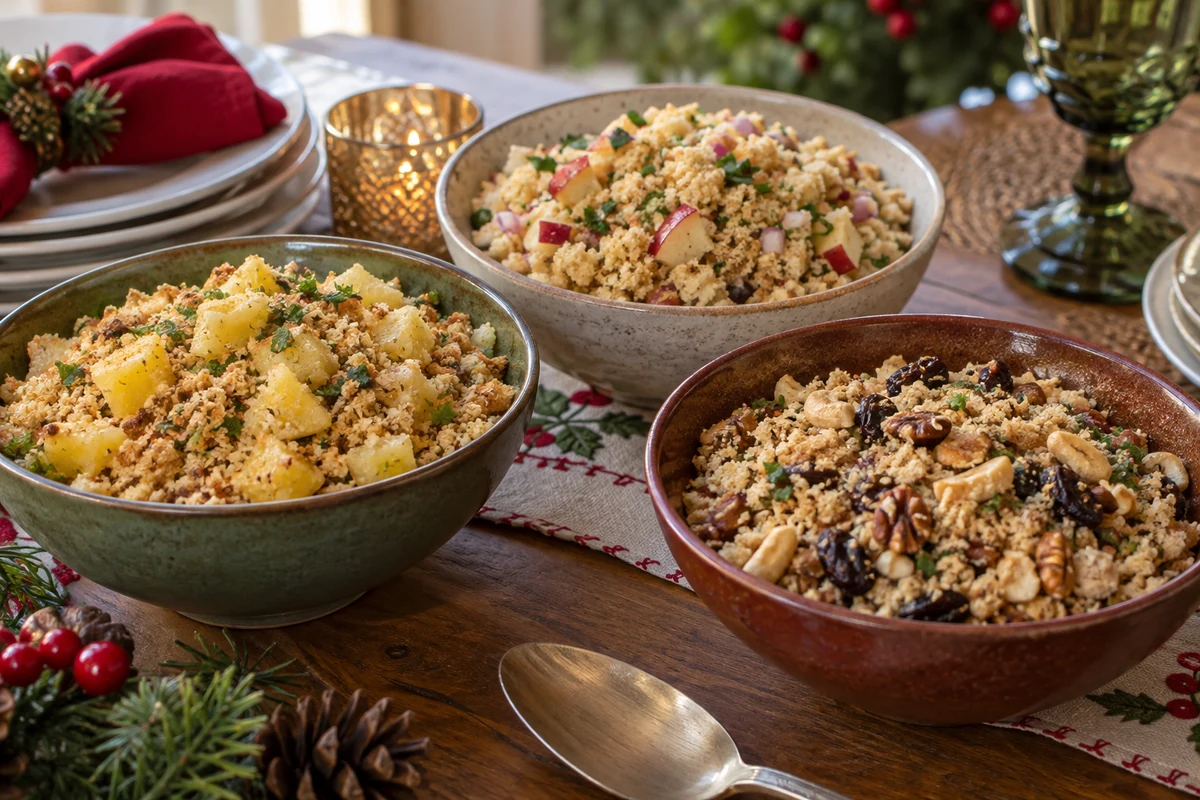
Try these variations on Christmas farofa with dried fruit, adjusting additions to the base mixture rather than automatically adding every variation ingredient together.
Crunchy Vegan Version
Use plant-based fat and omit bacon and honey. Check processed ingredients are suitable for your guests.
- 2 tablespoons olive oil in place of the butter, alongside the base recipe’s tablespoon of oil, adjusting only if needed.
- ¾ cup toasted nuts and seeds, such as cashews, almonds and pumpkin seeds, instead of the base nut quantity.
- ¾ cup dried fruit, such as apricots, raisins and cranberries.
- Tip: toast nuts briefly in an oven around 180°C, checking frequently. About 6–8 minutes is a guide; small pieces can burn sooner.
Tropical Pineapple Version
Pineapple adds juicy sweetness and acidity alongside richer main dishes, but also adds moisture to the farofa.
- 1 cup finely diced pineapple – fresh or tinned and thoroughly drained.
- 1 tablespoon lemon or lime juice – optional for flavour; it is not essential to prevent pineapple browning.
- Up to 2 tablespoons soft brown sugar – this replaces, rather than adds to, the base recipe’s sugar; reduce or omit if the pineapple is sweet enough.
- Tip: add well-drained pineapple near the end and mix gently to keep the pieces intact. Refrigerate leftovers promptly; the fruit does not make the dish suitable for room-temperature storage.
Apple and Caramelised Onion
Apple and slowly cooked onion give a different sweet and savoury combination.
- 1 medium apple, such as Gala or Fuji – peeled, cored and finely diced.
- 1 large onion – thinly sliced and cooked in 1 tablespoon oil, with up to 1 tablespoon brown sugar if wanted; use in place of the base chopped onion.
- ¼ cup chopped walnuts – as part of the chosen nut topping.
- Tip: cook the onion over low heat until soft and golden; this may take longer than the original’s 12–15-minute estimate. Add the apple towards the end and cook until softened to your preference.
A More Savoury Citrus and Herb Version
Reduce sweetness and emphasise herbs and citrus alongside roasts or grilled food.
- Reduce the brown sugar to 1 tablespoon or less, to taste.
- 1 tablespoon orange zest and juice of ½ orange, adding juice sparingly so the farofa stays crumbly.
- 2 tablespoons chopped fresh herbs, such as parsley and thyme.
- Tip: add ¼ cup sliced olives for a salty contrast, then adjust added salt accordingly.
Festive Cheese Variation
A little grated cheese gives another savoury note, though it changes the loose texture if too much is added.
- ⅓ cup finely grated Parmesan – added off the heat; use a vegetarian-labelled hard cheese if needed.
- ¼ cup chopped nuts – as an optional topping.
- Dairy-free option: use a suitable vegan cheese and oil instead of butter. For a vegan dish, also omit bacon and honey.
- Tip: let the freshly cooked farofa cool briefly before stirring in cheese to reduce clumping, then serve promptly.
Adjusting Portions and Flavours
Servings: the base recipe with 2 cups cassava meal gives approximately 6–8 side portions, depending on additions. Sweeter: taste before adding a little extra sugar, maple syrup or honey, remembering honey is not vegan. Crunchier: add up to another ¼ cup toasted nuts or seeds if suitable for your guests.
Preparation, Texture and Storage Tips
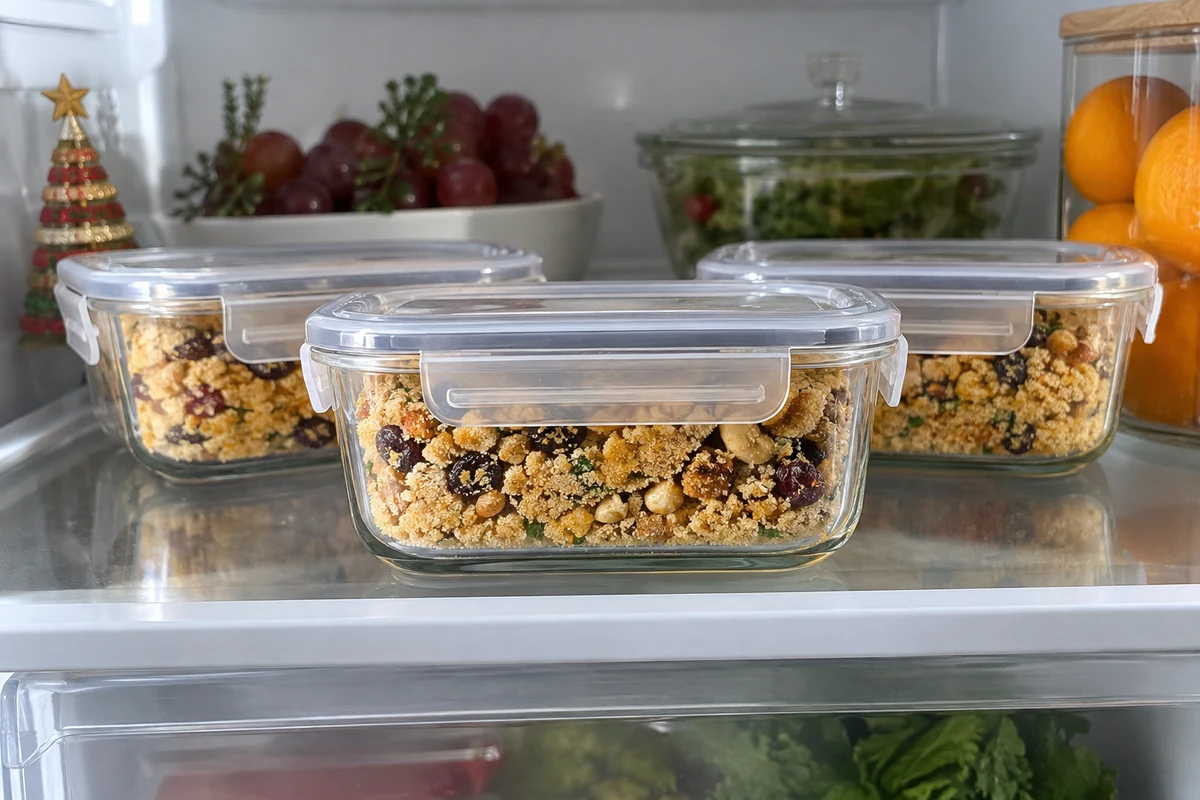
Cooking: toast the meal over controlled heat, stirring regularly. If the dried fruit or sugar starts to catch, reduce the heat; alternatively warm the fruit separately and fold it in near the end. Add fat gradually.
The Right Texture
Aim for loose, lightly coated crumbs with crunch from nuts and softness from dried fruit. Adjust gently:
- Too dry: add a little butter or olive oil, up to a tablespoon at a time, and stir well.
- Clumping: separate gently with a spatula over low heat. A brief spell spread in an oven tray may dry excess surface moisture, but avoid burning the fruit or sugar.
- Extra crunch: toast nuts or seeds separately, watching closely, and fold in near serving time.
- Softer dried fruit: soak very firm fruit in warm water for about 10 minutes, then drain and pat dry before adding.
Storage and Keeping Time
This finished dish contains cooked onion, fat and other moist ingredients, with optional bacon or fresh fruit. Treat it as a cooked leftover, not as a shelf-stable packet of dry farofa meal:
- Cooling: divide into shallow portions and refrigerate within 2 hours. Do not follow the original suggestion to leave the prepared dish at room temperature for 1–2 days.
- Refrigeration: keep covered at 5°C or below and eat within 48 hours, or follow any shorter ingredient guidance. The original five-day advice has been shortened for this prepared recipe.
- Freezing: freeze promptly in labelled food-safe portions if not eating within 48 hours. Follow ingredient freezing advice and expect fresh-fruit variations to change texture. Defrost in the fridge and use within 24 hours of full defrosting.
Reheating and texture: reheat only once until steaming hot throughout; aroma or a crisp surface alone is not a safety check.
- Frying pan: heat gently, stirring to distribute heat and prevent scorching. Continue until the whole portion is thoroughly hot, not merely fragrant after 2–4 minutes.
- Oven: spread in a shallow tray and heat at around 160°C, stirring carefully as needed. Timing varies with quantity and starting temperature; check throughout before serving.
- Microwave: use a microwave-safe container, stir during heating and follow the appliance’s instructions until steaming hot throughout. A single 20–30-second burst is not enough for every portion, and the result will be less crisp.
Finishing: add fresh parsley or chives just before serving and adjust seasoning or citrus sparingly.
Serving Farofa with a Christmas Meal
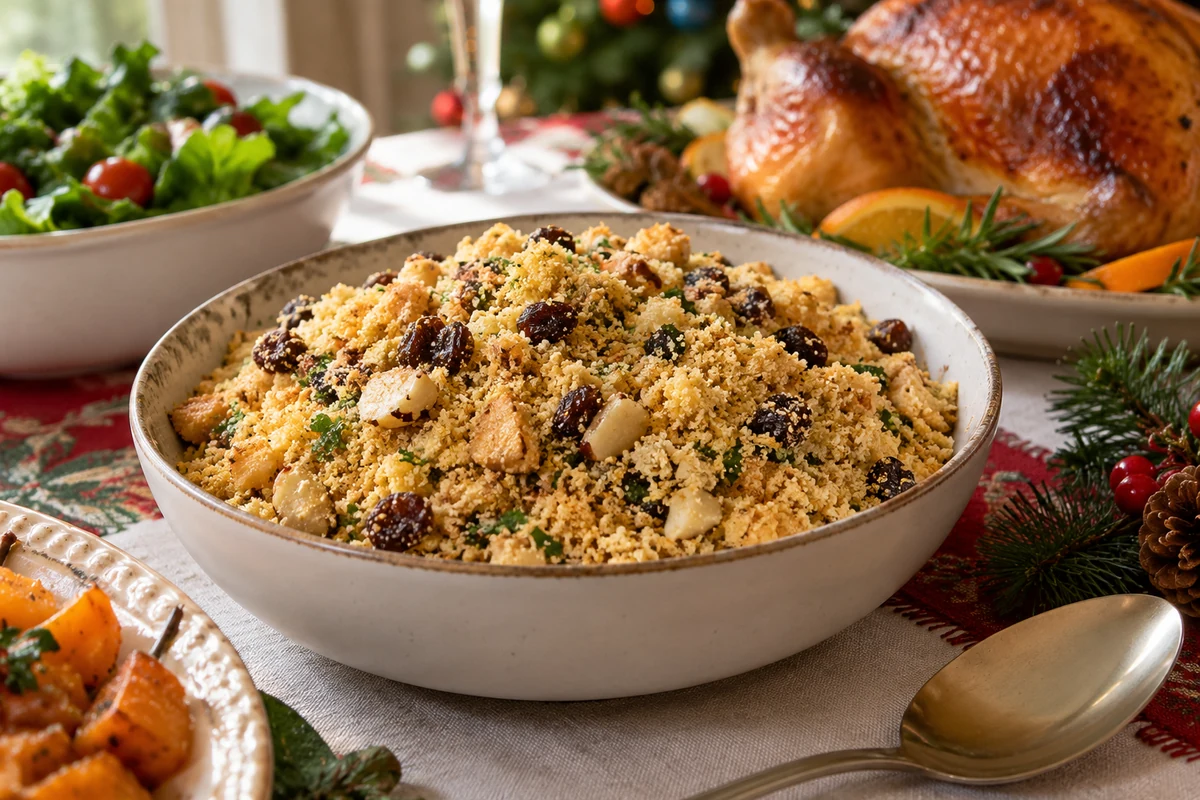
About the dish: farofa is a Brazilian cassava-meal accompaniment with many variations. Dried fruit and nuts give this version a festive sweet-and-savoury character, without implying a single documented origin for the combination.
Main-Course Pairings
- Roast pork leg: orange aroma and dried fruit provide a contrast to the rich meat. Zest supplies aroma rather than the acidity of juice.
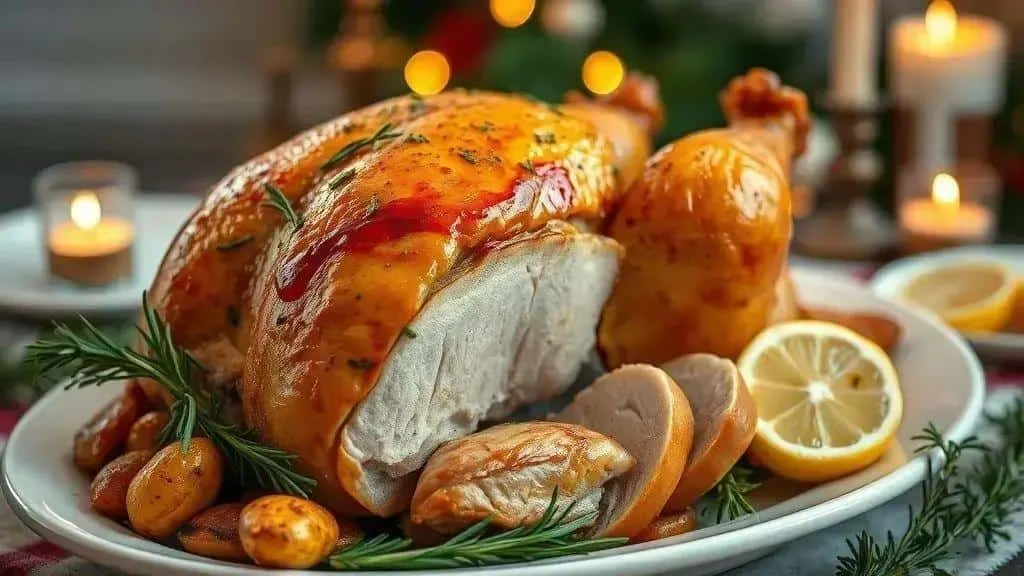
- Turkey or chicken: the crumbly texture complements roast poultry. Chester, named in the Brazilian original, is a branded poultry product rather than a separate species.
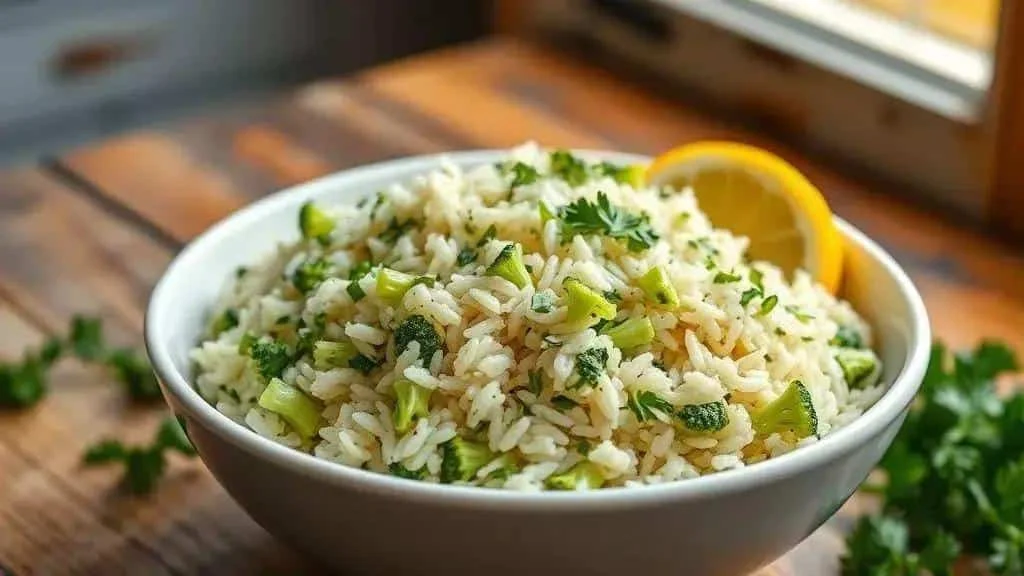
- Plain rice: a simply seasoned rice side gives a milder contrast to the fruit and nuts.
- Beans: black beans offer a soft contrast. Feijão tropeiro, a Brazilian bean dish that often already contains cassava meal, makes a more substantial pairing.
Drink Options
- Red wine: a lighter Pinot Noir or a soft Merlot is an optional pairing, depending on the main course.
- Brut sparkling wine: an optional contrast to the richness and sweetness.
- Pale lager: another optional choice alongside the main meal.
- Alcohol-free options: sparkling water with orange slices or chilled citrus tea work well.
Serving Tips
- Serve freshly cooked: a brief rest makes the farofa comfortable to eat, but do not leave it lukewarm for extended buffet service. If holding hot, maintain at least 63°C.
- Use a separate serving dish: let guests choose how much to add alongside other food.
- Portion guide: around 80–100 g is a substantial side portion; offer less when several rich accompaniments are available.
- Optional extras: offer additional dried fruit or nuts separately if suitable, keeping allergens clearly identified.
Table Presentation
- Colour: a simple rustic bowl and fresh herbs highlight the golden crumbs and fruit.
- Contrasting sides: place alongside sliced roast meat or a vegetarian main, crisp salad and rice.
- Identify additions: label bacon, dairy and nuts where included, and provide separate serving utensils for different versions.
To Finish
Christmas farofa with dried fruit combines sweet fruit, savoury aromatics and crumbly toasted cassava meal in a versatile festive side.
Try a suitable variation, adjust sugar and salt to taste, and serve promptly after cooking. Small changes in fruit, nuts and seasoning give different results.
Thank you for reading. Follow our social channels and visit I Love Christmas for more festive recipes and ideas.
FAQ — Christmas Farofa with Dried Fruit
Can I prepare the farofa ahead?
Yes. Make it the day before, cool promptly in shallow portions and refrigerate within 2 hours at 5°C or below. Reheat only once until steaming hot throughout, adding fresh herbs at serving time.
How can I keep the farofa for longer?
Refrigerate the prepared dish and eat within 48 hours, or freeze promptly in suitable portions. Do not keep this onion-and-fruit recipe at room temperature for days. Defrost in the fridge and use within 24 hours of full defrosting.
What dried fruit can I substitute?
Chopped dates, figs or dried apricots can replace cranberries or raisins. Adjust added sugar because different fruits and sweetened products vary in sweetness.
How can I make the farofa crunchier?
Toast nuts and seeds separately and add them at the end. Cook optional bacon thoroughly until crisp. Keep the cassava meal loose and avoid adding excessive liquid or fat.
How many portions does this recipe make?
The recipe with 2 cups cassava meal gives approximately 6–8 side portions, depending on additions and the rest of the menu.
Can I make a vegan farofa?
Yes. Use olive oil instead of butter, omit bacon and honey, and choose suitable plant-based ingredients. Nuts and seeds can add texture, but check for allergies and prepare appropriately for young children.
Sources and Further Reading
- Food Standards Agency: cooking food safely
- Food Standards Agency: chilling, freezing and defrosting food