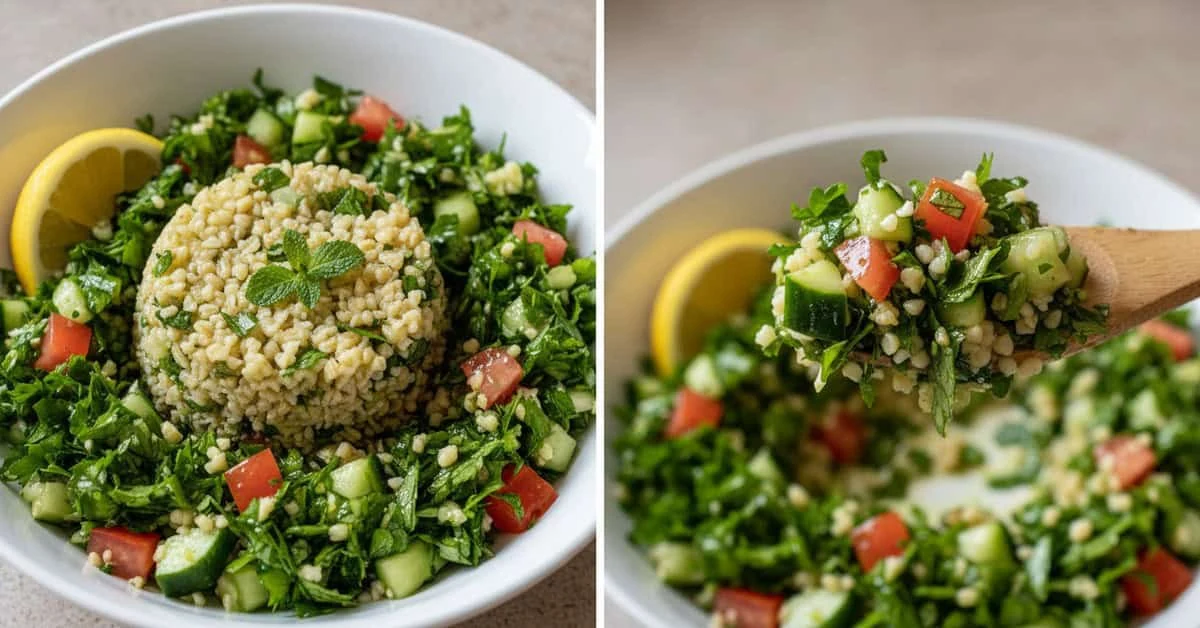
Christmas tabbouleh is a refreshing salad of bulgur wheat, parsley, mint, tomatoes, citrus juice and olive oil. This Brazilian festive adaptation works alongside richer dishes. Cooked quinoa offers a gluten-free alternative when all other ingredients are suitable, while pomegranate seeds or chopped nuts add colour and crunch.
Christmas tabbouleh salad brings fresh herbs and bright flavours to the table. This version offers a practical starting point, with suggestions for preparing the grains, adapting the dressing and adding festive toppings.
Ingredients for Refreshing Christmas Tabbouleh
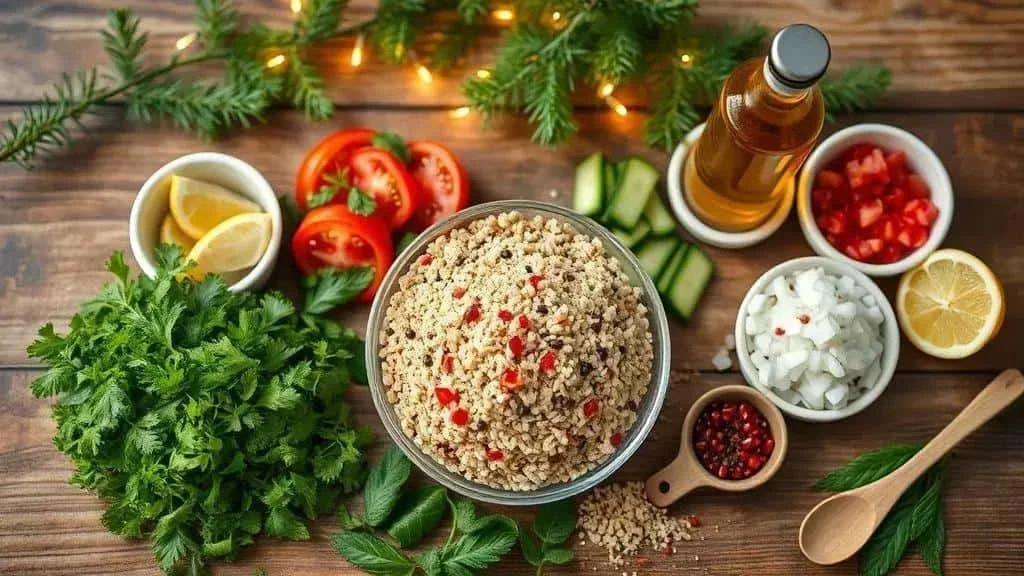
To prepare this refreshing tabbouleh for Christmas dinner, gather the following:
- 200 g fine bulgur wheat – prepare according to the packet, then drain well. The original gives both 200 g and 2 cups, which are not equivalent; use the stated weight here. For the quinoa variation, use the separately specified 170 g dry quinoa rather than assuming a cup of cooked quinoa is equivalent.
- 1 large bunch fresh parsley, approximately 200 g before trimming – wash, remove coarse stalks, dry and finely chop the leaves.
- 15 g fresh mint – finely chopped; basil gives a different flavour if preferred.
- 3 medium tomatoes – firm and ripe, deseeded and finely diced.
- 1 small cucumber – deseeded and finely diced; optional for crunch.
- 1 small red onion – finely chopped; 3 spring onions offer a milder alternative.
- 120 ml extra virgin olive oil – add gradually, using less if preferred.
- Approximately 60 ml fresh lemon or lime juice – roughly the juice of 2 small citrus fruits, but yield varies. The Brazilian original uses limão; either lime or lemon works, with a different flavour.
- Salt, to taste, up to approximately 1 teaspoon, and freshly ground black pepper to taste.
- Pomegranate seeds or chopped walnuts – optional festive toppings.
Notes and Substitutions
Tip: drain the prepared bulgur well to avoid a watery salad. For a less oily dressing, begin with less oil and adjust the citrus gradually. The basic salad is plant-based; quinoa replaces the wheat for a gluten-free variation, provided all ingredients and preparation surfaces are suitable. Taste before adding more salt or citrus.
How to Make Refreshing Tabbouleh
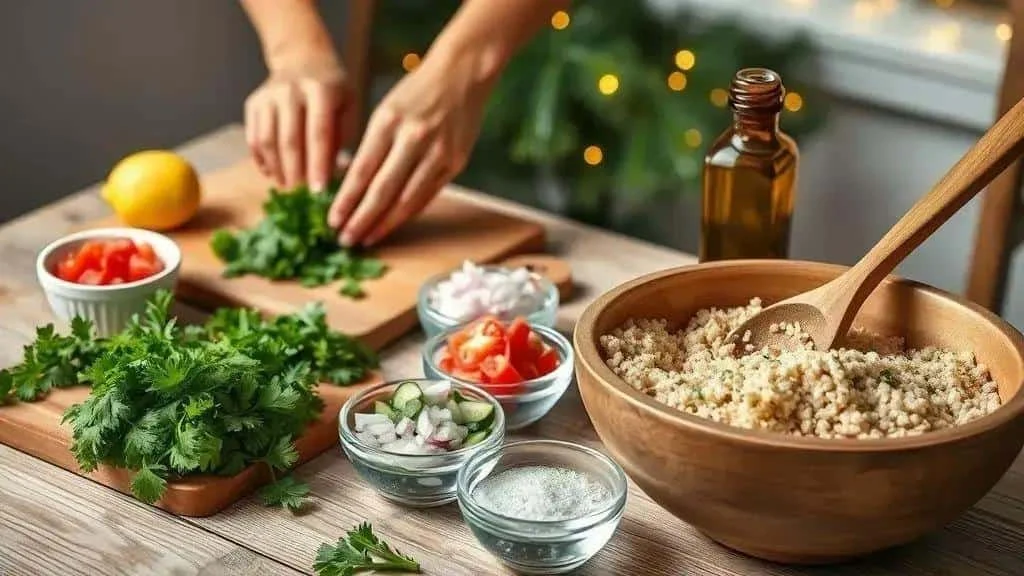
- Prepare the bulgur: use 200 g fine bulgur and follow its packet instructions. Some fine bulgur can be soaked, while coarser types require cooking. Drain thoroughly and cool promptly if heated; do not assume a 15–20-minute warm-water soak suits every product.
- Gluten-free alternative: use the variation’s 170 g dry quinoa. Rinse and cook according to its packet instructions; the original suggests 480 ml water and 12–15 minutes, but follow the product if different. Fluff, spread in a shallow container and cool promptly before mixing with the herbs.
- Prepare the herbs: wash and dry the parsley and mint, remove coarse stalks and finely chop with a sharp knife, keeping fingers clear of the blade.
- Dice the vegetables: finely chop the deseeded tomatoes, optional cucumber and red onion. If the onion is too strong, soak it briefly in cold water for about 5 minutes, then drain well.
- Combine: mix the prepared, cooled bulgur or quinoa with the herbs, tomatoes, cucumber and onion in a large bowl. Toss gently without crushing the vegetables.
- Dress the salad: add the olive oil and approximately 60 ml citrus juice gradually, then season with salt and pepper to taste. You may prefer less than the full 120 ml oil, so taste as you go.
- Balance the flavours: add a little more citrus if needed, or a small amount of oil if the salad seems dry. Taste after each adjustment.
- Chill: cover and refrigerate for around 30 minutes to let the flavours mingle. Keep at 5°C or below until serving.
- Finish before serving: toss gently, check seasoning and add optional pomegranate seeds or chopped walnuts.
- Storage: keep covered in the fridge at 5°C or below and use within 48 hours, whether made with bulgur or quinoa. Follow any ingredient’s shorter use-by guidance. Freezing is not recommended for the assembled salad because the fresh vegetables and herbs lose texture.
Useful Tips
Be generous with herbs for aroma and colour. A food processor can save time if used in brief pulses, but avoid turning the leaves into a paste. Add pomegranate and nuts at serving time, particularly when preparing the salad ahead.
Tabbouleh Variations for Different Menus
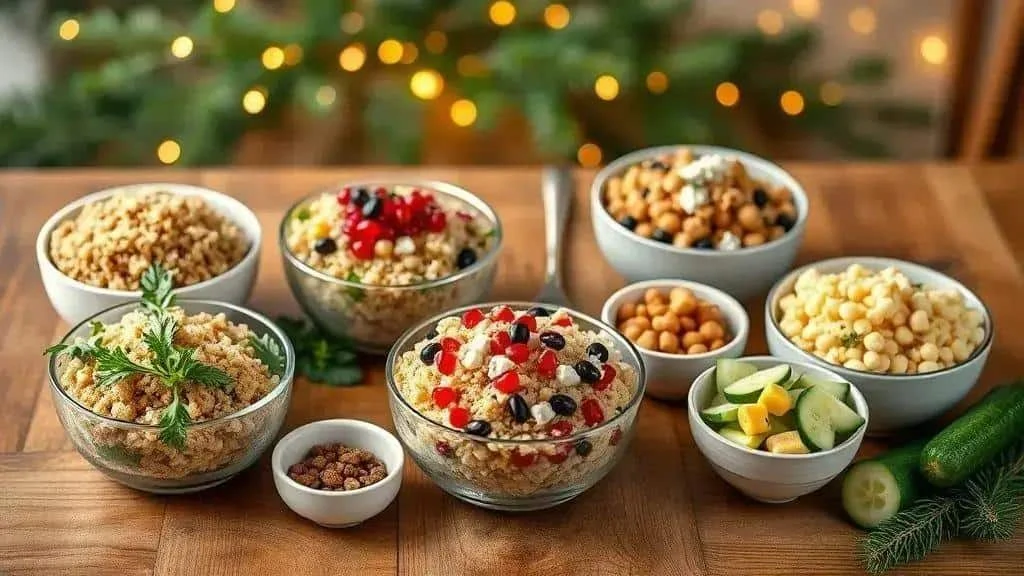
These adaptations offer different bases, toppings and dressings. Treat the listed quantities as variation guides and adjust seasoning to the amount of prepared salad; changing ingredients does not automatically make every version suitable for all diets.
1. Gluten-Free Quinoa Version
Replace the wheat with cooked quinoa for a different grain texture. Check the quinoa and all other ingredients are suitable for anyone avoiding gluten.
- 170 g dry quinoa – rinse and cook according to the packet. The original suggests 480 ml water; use the packet’s quantity if different, then cool promptly.
- Keep the herbs: a large bunch of parsley and approximately 15 g mint, finely chopped.
- Tomatoes: 3 medium tomatoes, deseeded and diced.
- Olive oil: 80–120 ml, added gradually to preference.
- Citrus: approximately 60 ml lemon or lime juice, adjusted to taste.
2. Cauliflower Alternative
Finely chopped cauliflower provides a vegetable base instead of wheat. This is a tabbouleh-inspired variation with a different texture, rather than a claim that it suits every particular diet.
- 300 g finely grated cauliflower – washed and well drained before grating; remove excess moisture gently.
- 15 g mint and a large bunch of parsley, finely chopped.
- 2 medium tomatoes, finely diced, and 1 small deseeded cucumber.
- 2 tablespoons (30 ml) olive oil and approximately 30 ml lemon or lime juice, to taste.
- Optional: 2 tablespoons grated hard cheese for richness. Choose a vegetarian-labelled alternative to Parmesan for vegetarians, or omit cheese for a vegan version.
3. Chickpea Variation
Cooked chickpeas make a more substantial salad and add another texture; they do not make it a nutritionally complete meal by themselves.
- 200 g cooked chickpeas – drained and optionally lightly crushed, mixed into the bulgur or quinoa.
- 40 g chopped walnuts or almonds – optional, for crunch.
- Dressing: approximately 80 ml olive oil and the juice of 1 large lemon, added to taste rather than automatically added on top of the base dressing.
- Seasoning: up to 1 teaspoon ground cumin if wanted; begin with less and taste.
4. Festive Pomegranate and Walnut Version
Pomegranate seeds and nuts add contrasting colours and textures to the festive salad.
- 80 g pomegranate seeds – added just before serving.
- 50 g chopped walnuts or pistachios, for crunch.
- Zest of 1 orange and juice of 1 lemon, adjusted to taste.
- Alternative dressing: try 2 tablespoons (30 ml) olive oil with the citrus and an optional teaspoon of honey. This makes a smaller amount of dressing than the base recipe; adjust to the salad. Omit honey for a vegan version.
5. Feta or Brazilian Queijo Coalho
Cheese adds salt and a creamy or firm texture. Queijo coalho is a Brazilian grilling cheese; choose products appropriate to your guests’ dietary needs.
- 100–150 g crumbled feta or cubes of grilled queijo coalho.
- 10–12 chopped black olives – pitted.
- 40 g diced cucumber and 40 g diced red pepper.
- Dressing: approximately 80 ml olive oil and juice of 1 lemon, used instead of the base dressing and adjusted to taste.
6. A Milder Family Version
Reduce sharp flavours for guests who prefer a milder salad. For young children, prepare all pieces and any nut toppings in an age-appropriate form; whole nuts are not suitable for children under five.
- Reduce the onion to ¼ small red onion, finely chopped, or use spring onion.
- Add more cucumber if desired, using approximately 120 g, cut appropriately for those eating it.
- Use a milder dressing: start with approximately 30 ml lemon juice and 2 tablespoons (30 ml) olive oil, then taste.
- Optional addition: 80 g cooked sweetcorn kernels for sweetness and colour.
Quick Adaptation Tips
Taste after changes and adjust salt and acidity gradually. Keep the herbs generous relative to the prepared base; bunch sizes and grain yields vary, so use appearance and flavour rather than a rigid cup-to-bunch rule.
Presenting and Storing Tabbouleh at Christmas
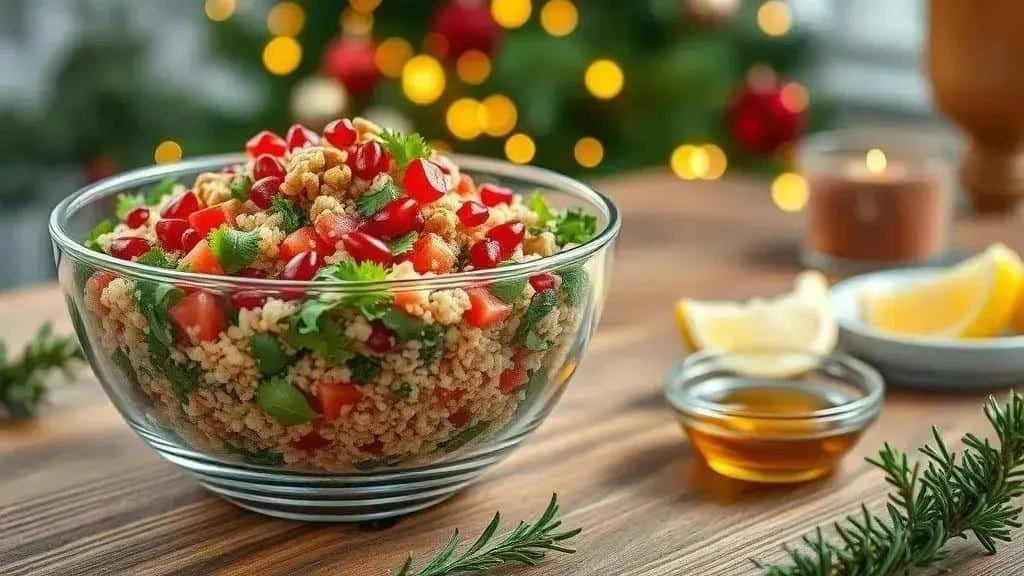
These practical tips help keep your tabbouleh fresh-looking and ready to serve.
Presentation
- Choose a serving bowl: glass or pale ceramic shows off the herbs and tomatoes.
- Portion guide: allow approximately 80–120 g per person as a side, adjusting for the rest of the meal.
- Final toppings: add pomegranate and chopped nuts just before serving to retain colour and crunch.
- Extra citrus: offer lemon or lime wedges separately so guests can adjust the sharpness.
- Easy serving: provide a serving spoon and, if wanted, clean lettuce or chicory leaves for small portions.
- Keep it cool: place it away from hot dishes. Serve a smaller bowl and replenish from the fridge, or use a suitable chilled serving arrangement.
Storage and Food Safety
- Cool cooked grains promptly: spread heated bulgur or quinoa in a shallow container and refrigerate within 2 hours. Mix with the fresh ingredients once cool; do not leave a large bowl on the worktop waiting for it to cool slowly.
- Use a covered container: clean, food-safe glass or plastic with a well-fitting lid helps protect the salad in the fridge.
- Fridge temperature: keep at 5°C or below and separate from raw meat or fish.
- Storage time: use within 48 hours for either bulgur or quinoa, following any shorter ingredient use-by date. Freezing the assembled salad is likely to spoil the fresh texture.
- Avoid prolonged room-temperature service: keep chilled until needed. As a cautious home-serving approach, limit time out to 2 hours, less in hot conditions, and discard food left warm too long rather than returning it to storage.
- Making ahead: for preparation 8–12 hours ahead, keep the dressing separate in the fridge and combine shortly before serving if you want to reduce liquid released by the vegetables.
- Adjust before serving again: for safely chilled salad still within its storage period, stir gently and adjust with a little citrus or oil if needed. Dressing changes do not extend shelf life.
- Transport: use an insulated cool bag with sufficient frozen packs and refrigerate promptly on arrival.
Quick Tips
Clean, dry herbs: wash herbs and vegetables thoroughly and dry before chopping. Add nuts and pomegranate at the last moment for the best presentation.
What to Serve with Tabbouleh
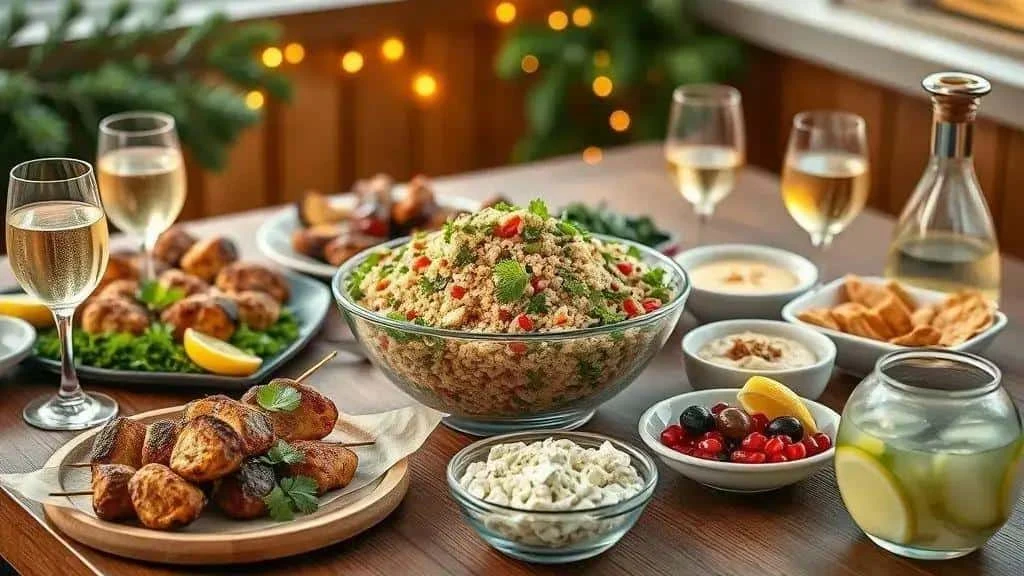
- Grilled mains: thoroughly cooked chicken skewers, salmon or kofta complement the citrus dressing.
- Creamy dips: houmous, labneh or baba ganoush provide a contrasting texture; check ingredients for allergens and dietary requirements.
- Bread and leaves: warm pitta, thin toast or chicory leaves can accompany small portions.
- Roast vegetables: aubergine, courgette and peppers give a warm contrast to the cool herbs.
- Cheese: crumbled feta or goat’s cheese adds a salty accent, if suitable for your menu.
Drink Options
- Brut sparkling wine: an optional chilled pairing for the sharp dressing.
- Light white wine: Sauvignon Blanc or Vinho Verde can complement fresh herbs and citrus.
- Dry rosé: another optional choice alongside richer additions such as cheese.
- Light beer: lager or wheat beer offers a different pairing; wheat beer is not a gluten-free choice.
- Alcohol-free options: sparkling water with lemon, chilled hibiscus tea or mint lemonade suit the fresh flavours.
Putting the Meal Together
- Acidity and richness: citrus-forward drinks or dressings provide a contrast to oily or cheesy accompaniments.
- Contrasting textures: an appropriate crunchy topping complements soft sides; consider allergies and children’s needs when choosing nuts or seeds.
- Temperature: serve the salad chilled and hot accompaniments separately, keeping each safely stored until needed.
- Portions: around 80–120 g per guest is a guide for a meal with several dishes.
- Family preferences: offer a less acidic portion and plain water for anyone who prefers milder flavours.
Presentation Tips
- Individual servings: small bowls or washed lettuce leaves make portions easy to serve.
- Last-minute garnish: add pomegranate and nuts just before serving.
- Serving order: include tabbouleh with the cold starters or alongside mains, keeping it physically separate from heat sources.
Tabbouleh and the Christmas Table
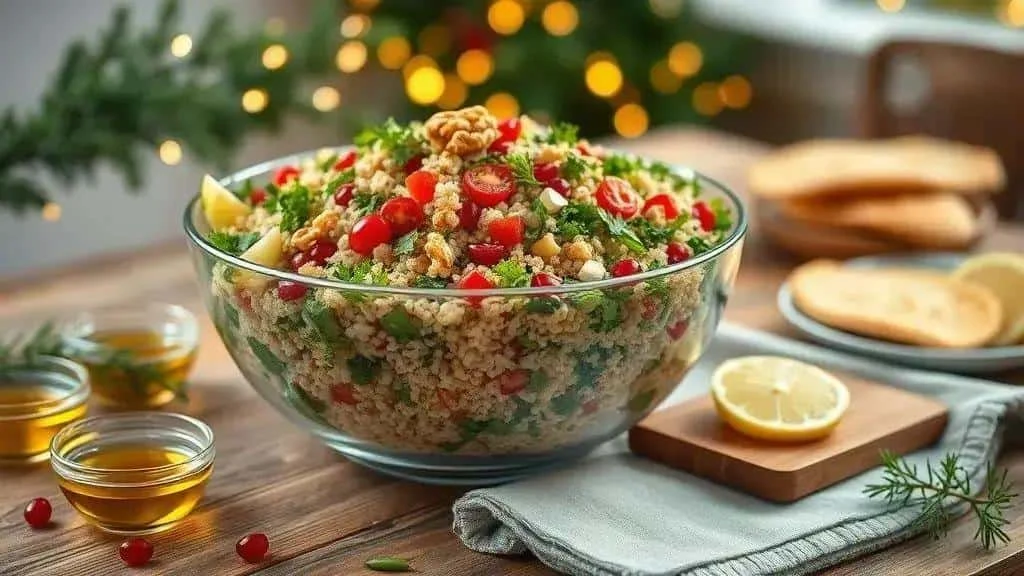
Tabbouleh is a Levantine herb-and-bulgur salad, closely associated with Lebanese cooking. This Christmas version adapts the salad for a festive buffet rather than claiming a single traditional Christmas recipe.
Origins and Adaptations
Parsley, mint, tomatoes, bulgur and citrus are familiar ingredients in tabbouleh. Recipes differ in their balance of herbs and grain; this Brazilian adaptation is more grain-forward than many parsley-led Lebanese versions.
A Place on the Christmas Menu
A cool herb salad can contrast with rich roasts and warm side dishes. Pomegranate, nuts and quinoa are optional adaptations here, not evidence of a specific historical Christmas tradition.
A Few Useful Details
- Name: the dish is commonly called tabule in Brazilian Portuguese and tabbouleh in English.
- Versatility: serve it as a starter or side, or include chickpeas and other accompaniments for a more substantial meal.
- A short chilled rest: lets the herb and citrus flavours mingle, although dressed vegetables soften over time.
- Different versions: bulgur, quinoa and cauliflower produce distinct textures. The latter two are adaptations rather than interchangeable versions of a single traditional recipe.
- Festive colours: green herbs and red tomato or pomegranate suit a Christmas table naturally.
- Ingredients and nutrition: the salad includes grains, herbs and vegetables; its nutritional profile depends on quantities, dressing and additions. No calculated nutrient values are provided for these variations.
Adapting to Your Menu
Choose pomegranate and nuts for contrast, extra mint if you enjoy its freshness, or less citrus for a milder salad. Keep the salad chilled until serving and prepare toppings appropriately for the people eating it.
To Finish
Refreshing Christmas tabbouleh offers fresh herbs, colour and a bright dressing alongside richer festive food. Small adjustments let you tailor the texture and flavour to your table.
Thank you for reading. Follow our social channels for more Christmas recipes and serving ideas.
Visit I Love Christmas for more ideas for festive meals, decorations and traditions.
FAQ — Christmas Tabbouleh
Can I prepare tabbouleh ahead for Christmas dinner?
Yes. Prepare it up to around 12 hours ahead and keep covered at 5°C or below. For a firmer texture, store the dressing separately and add it before serving, with pomegranate or nuts at the end. Cool any cooked grains promptly before mixing.
How do I make gluten-free tabbouleh?
Replace wheat bulgur with cooked quinoa and check all ingredients and preparation surfaces are suitable for avoiding gluten. This variation specifies 170 g dry quinoa; cook according to its packet, cool promptly, then combine with herbs and vegetables.
How much should I allow per guest?
Around 80–120 g as a side dish is a useful starting point. Adjust for appetites and the other food served.
What can I use instead of raw red onion?
Use spring onion or reduce the red onion to about a quarter of a small onion. Briefly soaking chopped onion in cold water and draining can soften its sharpness, though it does not remove the onion flavour completely.
How long does tabbouleh keep in the fridge?
Keep covered at 5°C or below and use within 48 hours, whether made with bulgur or quinoa, or sooner if an ingredient requires it. Avoid freezing the assembled salad because fresh herbs and vegetables lose texture.
Sources and Further Reading
- Food Standards Agency: cooking food safely
- Food Standards Agency: chilling, freezing and defrosting food
- Oldways: Mediterranean cooking and tabbouleh