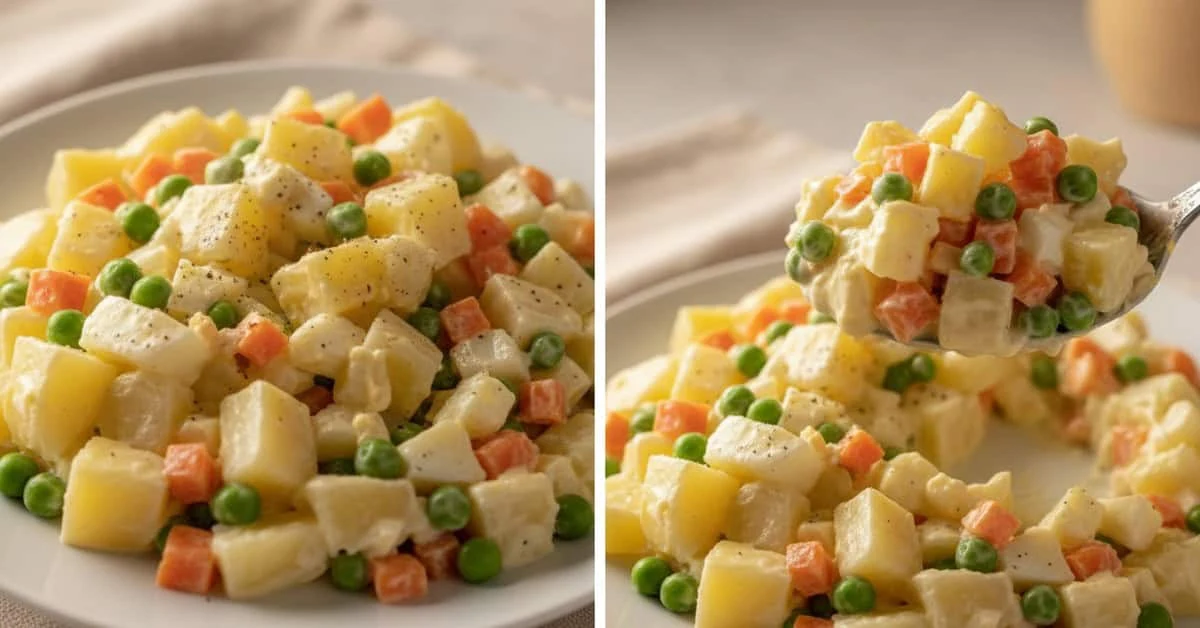
This Christmas potato salad combines potatoes, carrots, peas, mayonnaise and hard-boiled eggs. Cook the vegetables until just tender, cool them promptly and drain thoroughly before adding the dressing. Keep the salad refrigerated at 5°C or below and eat within 48 hours of preparing the earliest cooked ingredient.
Christmas potato salad is a familiar part of many Brazilian festive meals, bringing a cool, creamy contrast to the roast. This classic version includes practical advice on getting the texture right, preparing it ahead and adapting it for different tastes.
Ingredients for classic potato salad
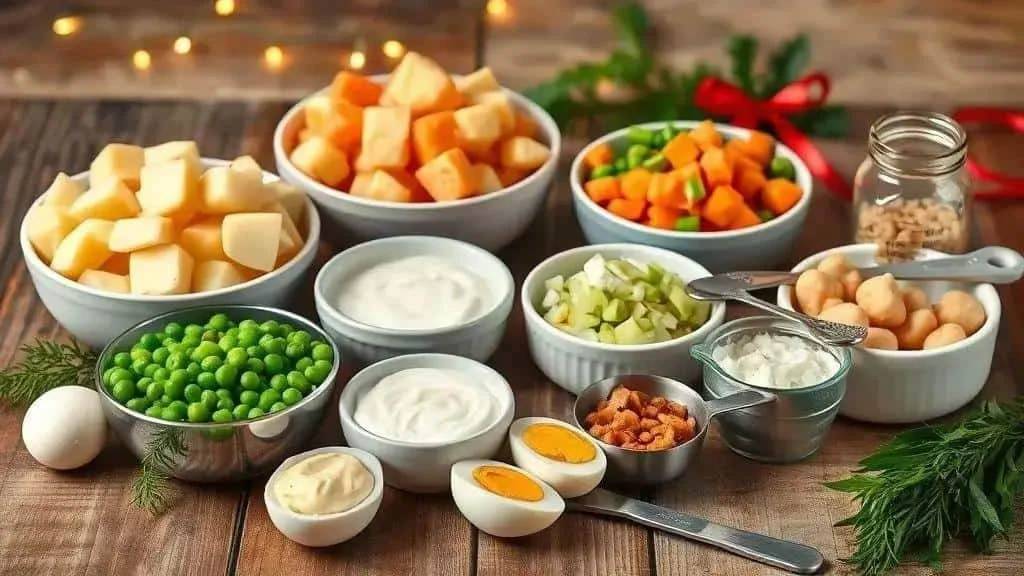
For this classic potato salad, gather the ingredients below. Use the gram quantities where given; cup measures vary between kitchens. The alternatives are suggestions for changing the recipe, rather than ingredients to add all at once.
Ingredients and quantities
- 1kg potatoes, peeled and cubed — sweet potatoes or arracacha, the South American root called mandioquinha in Brazil, give a different flavour. Adjust their cooking times.
- 2 medium carrots, peeled and cubed — cooked, well-drained courgette or washed, grated raw carrot can provide a different texture.
- 150g peas, cooked according to the packet instructions and cooled — drained tinned sweetcorn is an alternative.
- 3 hard-boiled eggs, chopped — use crumbled firm tofu for a vegan variation, changing the dressing as well.
- 240g mayonnaise — use vegan mayonnaise if required, or replace some with plain Greek yoghurt for a tangier dressing.
- 120g cream or plain yoghurt, optional — stir in gradually if you want a softer dressing.
- ¼ small onion, very finely chopped, or 2 tablespoons chopped chives — drained pickled red onion is another option.
- 60g chopped olives or diced gherkins, optional — a smaller amount of capers can also add a briny flavour.
- Salt, to taste — the original suggests about 1 teaspoon, but start with much less and account for the salt in the mayonnaise and olives.
- Freshly ground black pepper, to taste.
- Fresh parsley, chopped, to finish — chives or a mixture of parsley and spring onion also work.
- Juice of ½ lemon or lime, optional, to balance the flavour. Citrus juice does not replace refrigeration or extend the stated storage time.
How to make classic potato salad
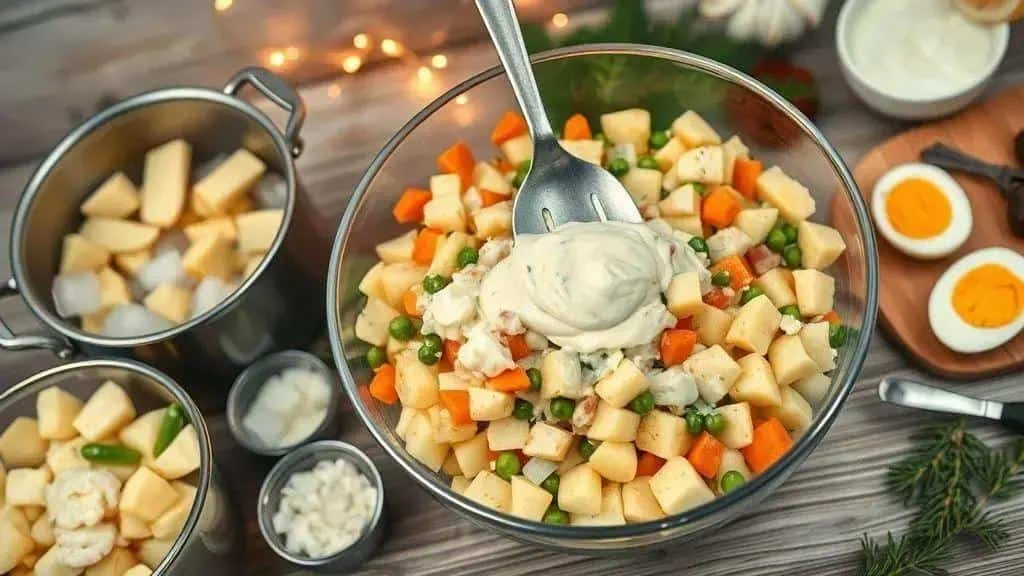
- Prepare the vegetables: wash and peel 1kg potatoes and cut into even cubes, about 2cm across. Peel and dice the 2 carrots evenly too.
- Boil the eggs: place 3 eggs in a saucepan of cold water, bring to the boil and cook for about 10 minutes, until the whites and yolks are firm. Cool promptly in cold water.
- Cook the potatoes and carrots: simmer in lightly salted water until tender but still holding their shape. As a guide, potato cubes may take 10–12 minutes and carrots 8–10 minutes. Cook separately if necessary and check with a fork rather than relying on the clock.
- Cook the peas: follow the frozen peas’ packet instructions, then drain and cool them. Ready-to-eat tinned peas simply need draining and, if preferred, rinsing.
- Cool and drain thoroughly: drain the cooked vegetables and spread them in shallow containers to cool promptly. A clean bowl of drinking-quality cold water and ice can help stop the cooking, but drain very well afterwards. Refrigerate within two hours of cooking; do not leave a large bowl cooling on the worktop.
- Chop the additions: peel and chop the cooled eggs, finely chop the onion or chives, and prepare the olives or gherkins if using.
- Make the dressing: combine 240g mayonnaise with up to 120g cream or plain yoghurt, if using. Add the juice of ½ lemon or lime gradually, then season with salt and pepper to taste.
- Fold together gently: place the cooled potatoes, carrots, peas, eggs and additions in a large bowl. Add the dressing a little at a time, folding with a spatula to keep the cubes intact.
- Adjust the texture: if the dressing is too thick, add a little cold drinking water, starting with a teaspoon. You may need up to 1–2 tablespoons. Taste before adding more salt or pepper.
- Chill before serving: cover and refrigerate for 1–2 hours so the flavours can settle. Keep the salad chilled until needed.
- Finish the dish: spoon into a serving bowl and garnish with chopped parsley, reserved slices of hard-boiled egg and a few olives.
Practical tips
- Even pieces: cut each type of vegetable into similar-sized pieces for more even cooking and a neat finish.
- Drain well: excess water will thin the mayonnaise dressing.
- A tangier dressing: replace half the mayonnaise with plain yoghurt.
- Vegan version: use vegan mayonnaise and crumbled tofu instead of eggs, and omit the dairy cream or use an unsweetened plant-based yoghurt.
- Prepare ahead: keep the cooked, cooled components and dressing covered in the fridge. Check the seasoning shortly before serving.
Classic potato salad variations
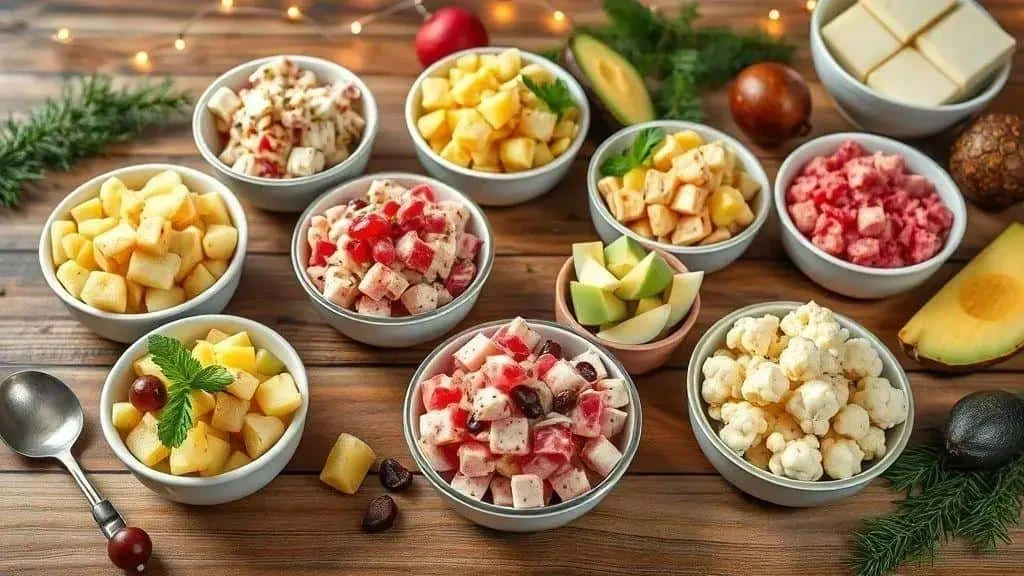
These variations give classic potato salad a different flavour or texture. Each list describes a separate variation; the smaller dressing quantities make a less heavily dressed salad, so fold it in gradually.
Tuna potato salad
Tuna gives the salad a savoury seafood flavour and makes it more substantial.
- 1 tin of tuna, about 170g before draining, drained thoroughly.
- 1kg potatoes, cooked, cooled and cubed.
- 150g peas, cooked and cooled.
- 120g mayonnaise — a reduced-fat version is optional.
- 3 hard-boiled eggs, cooled and chopped.
Vegan potato salad
Keep the creamy texture with plant-based ingredients, checking the labels of all prepared products.
- 1kg potatoes, cooked, cooled and cubed.
- 2 carrots, cooked, cooled and cubed.
- 240g vegan mayonnaise.
- 200g firm tofu, crumbled to replace the eggs.
- 150g cooked, cooled peas — drained tinned sweetcorn is an alternative.
Potato salad with yoghurt
Plain yoghurt adds a fresh, tangy flavour. Whether it reduces the energy content depends on the products and quantities used.
- 120g mayonnaise.
- 120g plain yoghurt.
- 1kg potatoes, cooked, cooled and cubed.
- 2 carrots, cooked, cooled and cubed.
- Fresh herbs, such as parsley or chives, to taste.
Beetroot potato salad
Beetroot brings a slightly sweet flavour and turns the dressing a festive pink.
- 2 medium beetroot, cooked, cooled and diced.
- 1kg potatoes, cooked, cooled and cubed.
- 120g mayonnaise — choose vegan mayonnaise for a plant-based version.
- Juice of ½ lemon or lime, added to taste to balance the sweetness.
Tropical potato salad with pineapple
This sweet-and-savoury variation works well with roast meats.
- 200g diced pineapple, fresh or tinned and very well drained.
- 1kg potatoes, cooked, cooled and cubed.
- 120g mayonnaise.
- 60g raisins, optional.
Cauliflower salad with avocado dressing
Replacing potato with cauliflower changes both the carbohydrate content and the size of the recipe. This is a smaller, different salad, rather than a like-for-like replacement for the 1kg potato version.
- 2 ripe avocados, mashed for the dressing.
- 200g cauliflower, cooked until just tender and cooled.
- Up to 120g cream or plain yoghurt, added gradually to adjust the consistency.
- Juice of ½ lemon or lime, to taste. It may slow browning, but the salad still needs refrigeration.
Quick tips for adapting the recipe
- Balance salt and acidity: add citrus juice or vinegar gradually and taste as you go.
- Avoid a watery dressing: drain the cooked vegetables thoroughly before mixing.
- Add crunch: chopped walnuts, diced green apple or gherkins provide a contrast. Tell guests if nuts are included.
- Allow chilling time: refrigerate for at least an hour before serving, keeping within the overall storage limit.
Ingredient swaps and vegan alternatives
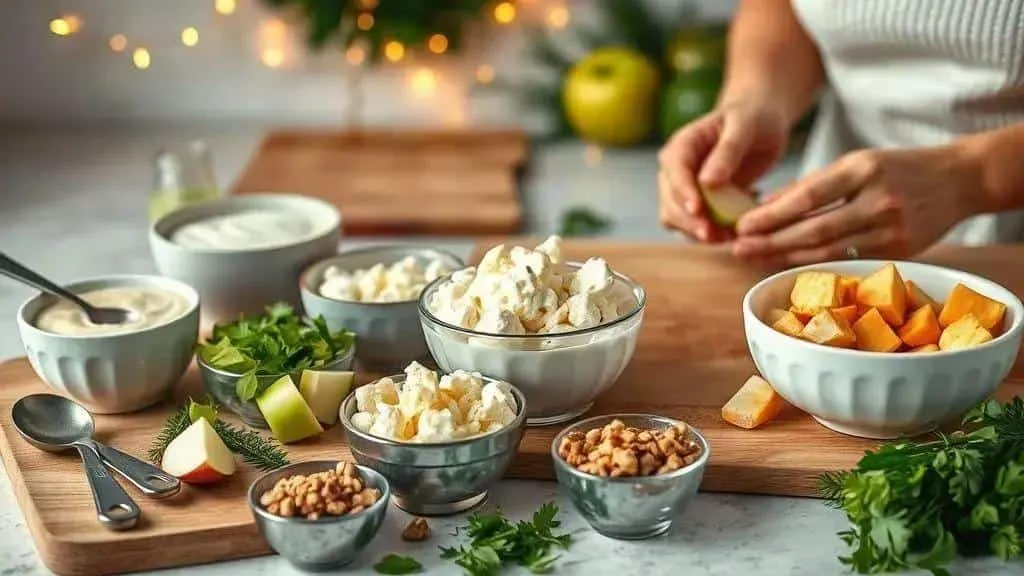
To change the flavour or make potato salad entirely plant-based, try the substitutions below. A different ingredient is not automatically lower in calories or suitable for every dietary requirement.
Dressing and vegetable swaps
- Mayonnaise: replace 240g mayonnaise with 120g mayonnaise and 120g plain or Greek yoghurt. Check the products if reducing calories is your aim.
- Reduced-fat mayonnaise: use 240g in place of the standard mayonnaise if you prefer its flavour and texture.
- A dressing without mayonnaise: mix 120g Greek yoghurt with 2 tablespoons olive oil for a smooth, tangy alternative.
- Different roots: the original suggests 700g sweet potato or 500g arracacha instead of 1kg potatoes. These make smaller batches, so reduce the dressing accordingly and cook until just tender; they are not equivalent weights or guaranteed nutritional improvements.
- Apple and nuts: add 1 chopped green apple and ½ cup chopped walnuts for crunch. Nuts also add energy, so this does not necessarily make the salad lower in calories.
Vegan alternatives
- Vegan mayonnaise: use 240g shop-bought vegan mayonnaise, or a properly prepared soy- or aquafaba-based recipe. Follow its storage instructions.
- Egg replacement: mix 200g crumbled firm tofu with up to 1 tablespoon citrus juice and a little salt for a soft, savoury addition.
- Chickpeas: 200g cooked, drained chickpeas, lightly crushed, are another alternative to eggs.
- Plant-based creaminess: add up to 120g unsweetened soy or coconut yoghurt, checking that its flavour suits a savoury salad.
- Extra flavour: 2 tablespoons nutritional yeast add a savoury note, and 1 teaspoon mustard gives a little sharpness. Mustard is an allergen, so check guests’ requirements.
Cauliflower and gluten-free options
- Cauliflower: using 300–400g cooked, cooled cauliflower instead of 1kg potatoes gives a smaller batch with a different texture. Add dressing in proportion rather than treating the quantities as interchangeable.
- Gluten-free preparation: check the mayonnaise, mustard, seasonings and other packaged ingredients, and prevent cross-contact during preparation. An ingredient being described as natural does not guarantee suitability.
Practical tips
- Taste gradually: add salt and citrus juice in small amounts.
- Avoid excess moisture: drain and cool the vegetables before folding in the dressing.
- Keep the texture: cut even cubes and handle gently, including when using alternative vegetables.
- Prepare ahead: refrigerate the cooled salad components and dressing separately, then combine shortly before serving.
A quick plant-based combination
- Creamy base: mix ½ cup vegan mayonnaise with ½ cup unsweetened plant-based yoghurt.
- Add texture: fold in 500g cooked, cooled potato or 300g cooked, cooled cauliflower, 1 cup cooked peas and 200g crumbled firm tofu.
- Finish: season with salt, pepper and up to the juice of ½ lemon or lime, then refrigerate for an hour.
Storage and serving at Christmas
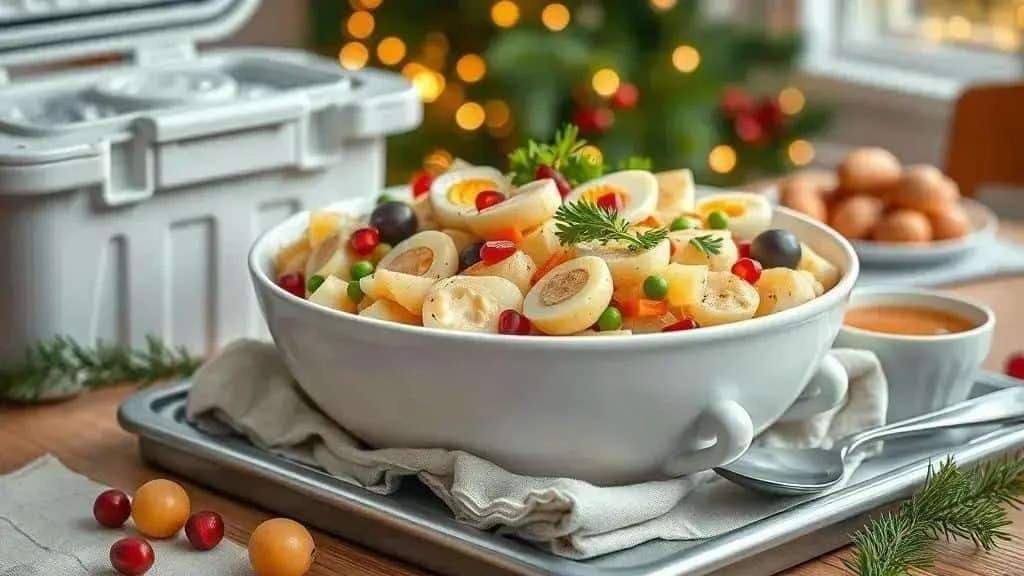
Careful chilling and serving help keep potato salad enjoyable and safe. The whole prepared dish needs refrigeration, not just the mayonnaise.
Refrigeration and storage time
- Temperature: keep the salad in a fridge set to 5°C or below; 0–4°C is a suitable target.
- Storage time: eat within 48 hours of preparing the earliest cooked ingredient, or sooner if a product’s instructions require it. Extra lemon or vinegar does not justify extending this to three days.
- Time out of the fridge: keep it as short as possible. For this make-ahead salad, use a cautious two-hour limit out of refrigeration, and less in hot conditions; do not save portions that have stood around for an uncertain time.
How to store it
- Containers: use clean, shallow, covered containers. Small amounts cool faster than a deep, tightly packed bowl.
- Cool promptly: cool cooked potatoes, carrots and eggs before adding the dressing, and refrigerate within two hours of cooking. Divide larger quantities into shallow portions rather than leaving the finished salad warm on the worktop.
- Label the container: record the preparation date and time so the storage limit is clear.
Arranging the serving dish
- Chill the bowl: put a suitable serving bowl in the fridge before filling it. A cold bowl helps briefly, but does not replace keeping the food chilled.
- Arrange neatly: spoon in the salad and gently level the surface with a spatula.
- Festive garnish: add egg slices, chopped parsley, olives, pomegranate seeds or washed edible herbs.
- Use smaller dishes: leave room for serving and replenish with separate chilled portions rather than putting the whole batch out.
Transport and buffet arrangements
- Transport: use an insulated cool bag or box with plenty of frozen ice packs. Aim to keep the salad at 5°C or below throughout the journey.
- Keep it level: secure closed containers on a flat surface so they cannot tip or crush the garnish.
- At a buffet: use a suitable bowl nested over ordinary ice, keeping meltwater away from the food, or bring out small refrigerated portions as needed. Ice packs can also help; do not use dry ice for this serving arrangement.
Portions and hygiene
- Portion guide: allow roughly 100–150g per person as a side dish, adjusting for the rest of the menu.
- Serving utensils: provide clean spoons and spatulas rather than allowing guests to use their own cutlery.
- Allergens: make ingredients clear, including egg, mustard, milk, soy, fish or nuts where used. Keep any alternative separate; a vegan salad is not necessarily allergen-free.
Common texture and seasoning problems
- Thin dressing: drain any excess liquid carefully, then fold in a little more mayonnaise or thick Greek yoghurt if appropriate.
- Too salty: adding plain, safely cooked and cooled potato or a little yoghurt can dilute the salt across a larger amount. Potato does not selectively absorb and remove the salt.
- Mushy vegetables: chilling will not undo overcooking. If useful, gently fold in some freshly cooked, cooled vegetables that still hold their shape.
- Freezing: this dressed salad is best made fresh and refrigerated. Freezing can split the mayonnaise and spoil the potato texture.
What to serve with potato salad
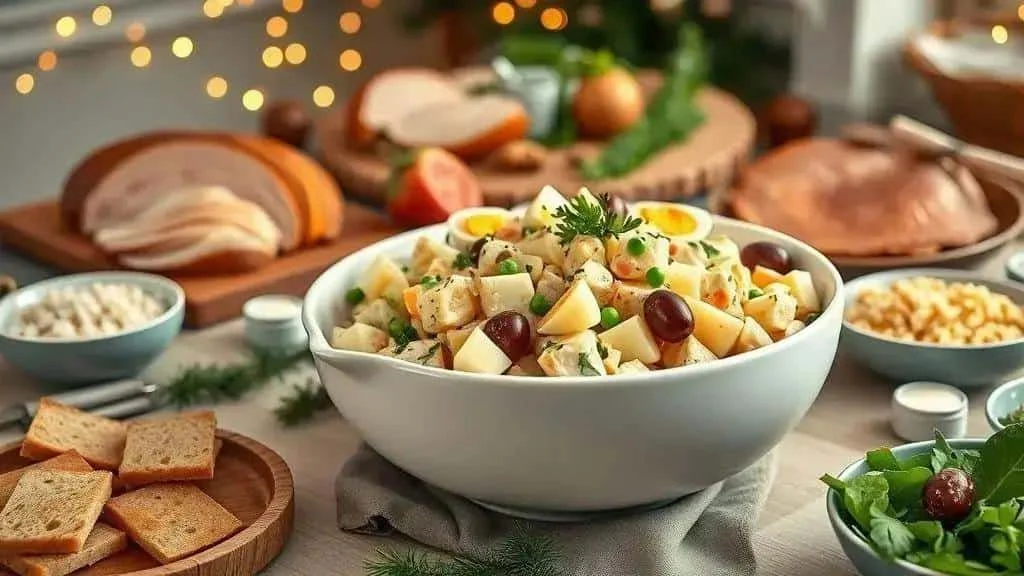
Pair potato salad with dishes that contrast with its creamy texture, keeping the overall meal in mind.
Accompaniments
- Roast turkey, chicken or pork loin: these work well with the cool salad. Brazilian Christmas menus sometimes use Chester, a branded roasting chicken, rather than a separate species of bird.
- Brazilian vegetable rice: arroz à grega adds colour and a different texture; it is the Brazilian festive rice dish rather than a claim of Greek origin.
- Crunchy farofa: serve this toasted cassava-meal side separately so it stays crisp.
- Bread and toast: sliced baguette or other bread makes a useful addition to a buffet.
- Green salad: simple leaves with a light vinaigrette contrast with the rich dressing.
- Other cold starters: pâtés, dips or cheese can be served alongside, with their own appropriate refrigeration and clean utensils.
Planning portions and the table
- Portion guide: allow roughly 100–150g per person as a side dish, adjusting for the rest of the menu.
- Offer a choice: a classic bowl and a clearly labelled vegan or yoghurt version can suit different preferences.
- Replenish gradually: use small bowls and replace them with fresh chilled portions. Do not top up a warm, partly eaten bowl.
Serving individual portions
- Keep it chilled: leave the salad in the fridge until you are ready to serve.
- Use separate utensils: provide a clean serving spoon for each dish to reduce cross-contact.
- Arrange the plate: add some green leaves, a modest serving of potato salad and the chosen roast alongside.
- Garnish: finish with a slice of hard-boiled egg, parsley and a few olives or pomegranate seeds.
Drinks and serving tips
- Drinks: a dry sparkling wine or light white wine is an option for adults who drink alcohol. Sparkling water with citrus, juice or a soft drink also works.
- Temperature: serve the salad cold and bring it out shortly before the meal.
- Crunch: keep farofa and bread separate until serving.
Simple presentation ideas
- A plain backdrop: white bowls help the vegetables’ colours stand out.
- Touches of colour: pomegranate seeds, diced beetroot or chives create a festive finish.
- Individual servings: small food-safe bowls or glasses make tidy portions.
Presentation and safely packed portions to take home
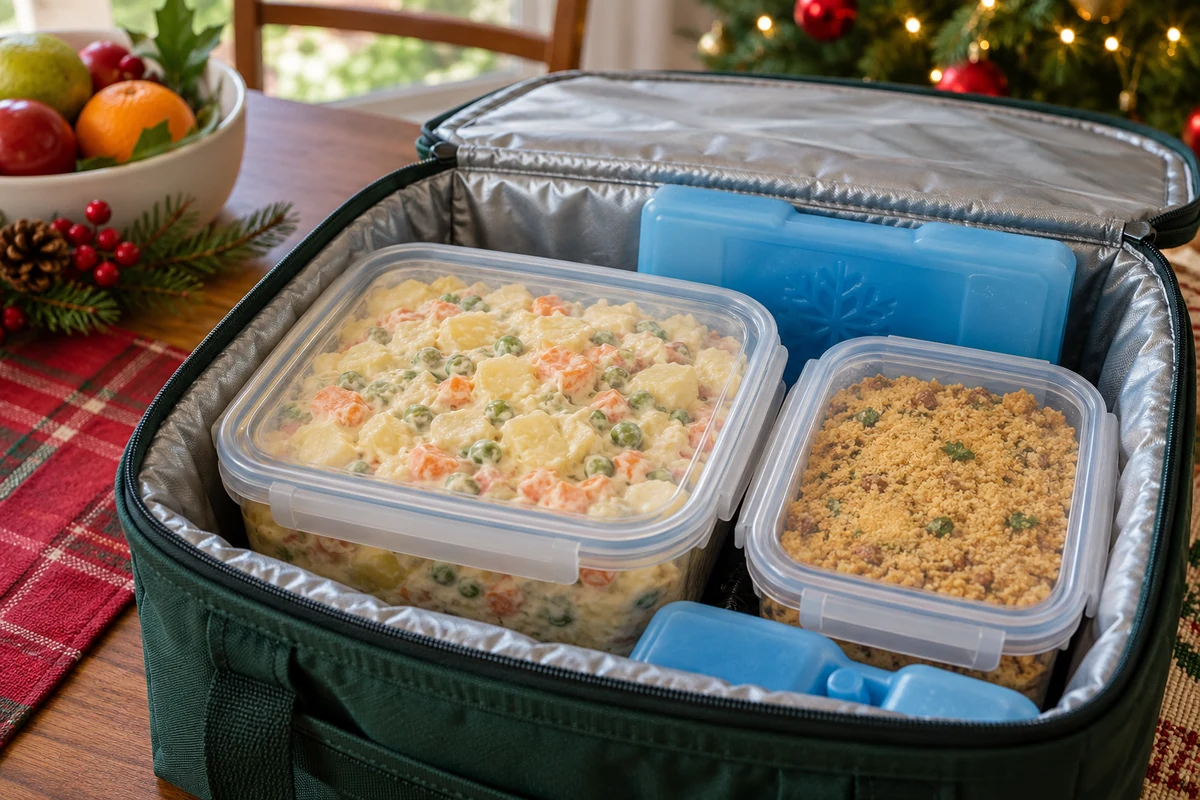
Serve potato salad attractively, and pack take-home portions only from food that has been kept safely chilled. Do not turn salad that has stood on a buffet for too long into gifts.
Quick presentation tips
- Use white bowls: they show off the carrots, peas and herbs.
- Finish neatly: level the salad and add egg slices, parsley and olives.
- Portion into glasses: small food-safe glasses or bowls give a simple individual presentation.
- Keep crunchy toppings separate: offer farofa or chopped nuts in their own bowls, clearly identifying nuts.
- Choose a stable base: a clean board can frame the serving bowl, but keep it away from heat and remember that a decorative base does not keep the salad cold.
Materials for take-home portions
- Small food-safe containers with lids, around 200–300ml, leaving enough space to close securely.
- Ribbon or string in red, green or a neutral colour, for the outside only.
- A simple external decoration, kept away from the food and used alongside a clear ingredient and storage label. Avoid decorative pine in contact with food.
- An insulated carrier and ice packs — a cardboard gift box alone will not keep a mayonnaise salad cold.
How to pack chilled take-home portions
- Use clean containers: wash and dry food-safe jars or tubs and their lids before use.
- Portion cold salad: pack roughly 150–200g into a suitably sized container, using only salad that has been kept safely refrigerated.
- Add a simple garnish: use a reserved slice of hard-boiled egg or a little washed edible herb, handling it with clean utensils.
- Close securely: fit the lid and add any ribbon outside. A sealed lid does not preserve the salad or make it shelf-stable.
- Add the festive detail: a small sprig of rosemary tied to the outside gives a seasonal look without touching the food.
- Keep cold in transit: secure the containers in an insulated cool bag with ice packs and refrigerate them promptly on arrival.
Hygiene and storage reminders
- Refrigerate promptly: keep at 5°C or below and use within the original 48-hour storage period. Repacking does not restart that clock.
- Keep decoration outside: ribbons and decorative sprigs must not contaminate the food or the inside of the lid.
- Label every portion: include ingredients and relevant allergens, the preparation date and instructions to keep refrigerated and eat within the remaining storage time.
More serving ideas
- Lettuce cups: spoon small portions into washed lettuce leaves just before serving.
- Small colourful dishes: food-safe bowls or ramekins add variety without elaborate decoration.
- A take-home combination: pack the chilled salad securely with ice packs, and keep bread or crunchy farofa in separate suitable containers. Each food still needs its own safe storage.
To finish
Classic potato salad is a versatile addition to a Brazilian-style Christmas meal. A few thoughtful changes let you adjust the dressing, vegetables and presentation to your guests’ tastes.
Try a yoghurt, vegan or tuna variation, and give chilling and hygiene as much attention as the garnish.
Thank you for reading! Share your photos and favourite variation on our social channels, and explore more ideas on the I Love Christmas blog.
Christmas potato salad: frequently asked questions
How long does potato salad keep in the fridge?
Keep it at 5°C or below and eat within 48 hours of preparing the earliest cooked ingredient, or sooner if a product requires it. Adding lemon or vinegar does not make a three-day storage period reliable.
Can I prepare it before Christmas dinner?
Yes. Cool cooked ingredients promptly and refrigerate them within two hours. Keep the components and dressing covered, then combine and chill for 1–2 hours before serving, within the overall 48-hour storage period.
How can I make it vegan and still creamy?
Use 240g vegan mayonnaise and replace the eggs with 200g crumbled firm tofu or cooked chickpeas. If needed, add up to 120g unsweetened plant-based yoghurt. Omit dairy cream and check all ingredient labels.
Why has the salad become watery?
Water clinging to cooked vegetables can thin the dressing. Drain the potatoes, carrots and peas thoroughly, cool promptly and refrigerate before combining with mayonnaise.
Which potatoes should I use, and how do I keep them intact?
Choose a firm, waxy or salad potato. Cut even cubes, simmer until just tender and check with a fork; 10–12 minutes is only a guide. Drain and cool promptly so they do not continue softening.
Sources and Further Reading
- Food Standards Agency: cooking food safely
- Food Standards Agency: chilling, freezing and defrosting food