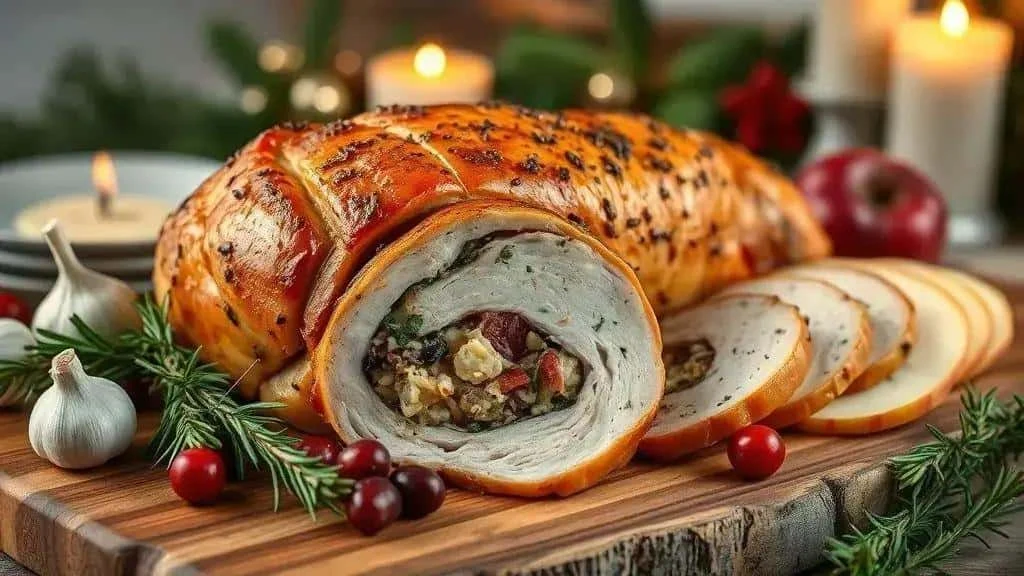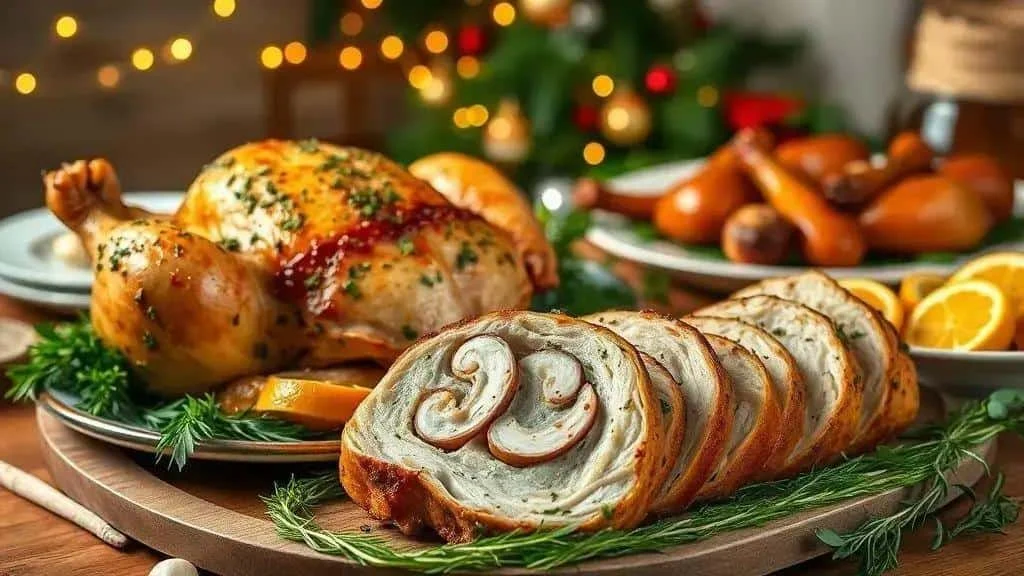
Explore seven Christmas chicken ideas, followed by detailed instructions for citrus-and-herb roast chicken and chicken with Brazilian farofa. Find flavour variations, shopping advice, accompaniments and food-safety guidance to help plan your festive meal.
These Christmas chicken recipes bring Brazilian festive flavours to a familiar roast. Start with seven ingredient combinations, then follow the two detailed recipes below. Farofa is a Brazilian toasted cassava-meal accompaniment; it is not made with tapioca starch. Oven temperatures are for conventional ovens: follow your appliance’s guidance for fan settings.
Why choose chicken for Christmas dinner?
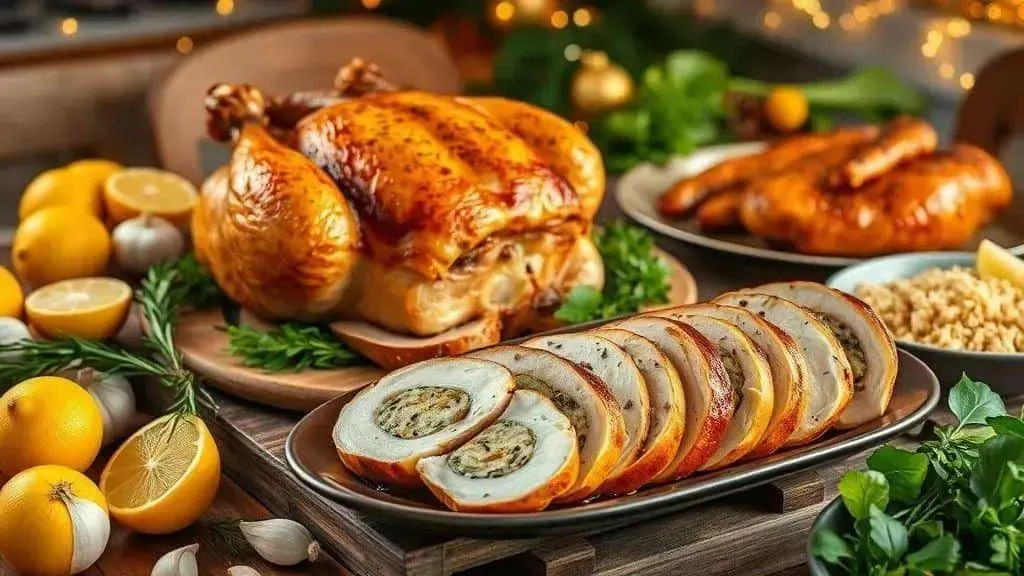
Chicken offers a practical alternative to a large turkey, with plenty of scope for different seasonings and serving styles.
- Budget: a chicken may cost less than a larger bird, leaving room in the budget for side dishes and dessert. Compare price per usable portion.
- Versatility: chicken works with sweet, savoury, citrus and herb flavours, whether roasted, grilled or cooked in a stew.
- Cooking time: smaller birds and portions generally cook sooner than a large turkey, making planning easier.
- Easy portions: drumsticks and thighs are straightforward to serve without carving a whole bird.
- Dietary adjustments: some recipes can be made gluten-free or adapted with different fats and sauces. Check every ingredient and avoid cross-contact where allergies are involved.
- Preparation ahead: marinades and farofa can be prepared in advance within safe chilled-storage limits; cooked chicken can also be frozen.
- Side dishes: serve with farofa, festive rice, citrus salads or herb sauces.
Practical buying and serving tips
- Amount per person: as a shopping guide, allow about 300–400 g of raw whole, bone-in chicken per person, including the bone weight. The lower 200–250 g allowance suits a smaller serving alongside several substantial dishes; it is not the weight of cooked boneless meat.
- Choice of cut: a whole chicken makes a centrepiece, thighs and drumsticks are convenient, and boneless breast offers a leaner cut.
- Source and storage: buy from a reputable supplier and keep the bird refrigerated at 5°C or below until preparation.
- Seasonings: fresh herbs, orange or lemon, garlic and butter or olive oil work well together.
- Food safety: cook the thickest parts to 70°C for 2 minutes or 75°C for 30 seconds. Check breast and thigh without touching bone; any filling must also reach a safe temperature. Cool leftovers promptly, ideally within 1–2 hours, then refrigerate.
- Presentation: finish with clean fresh herbs, citrus slices and rosemary sprigs for a festive platter.
With sensible planning, chicken can be a versatile centrepiece for a Christmas meal.
Planning and buying chicken for Christmas
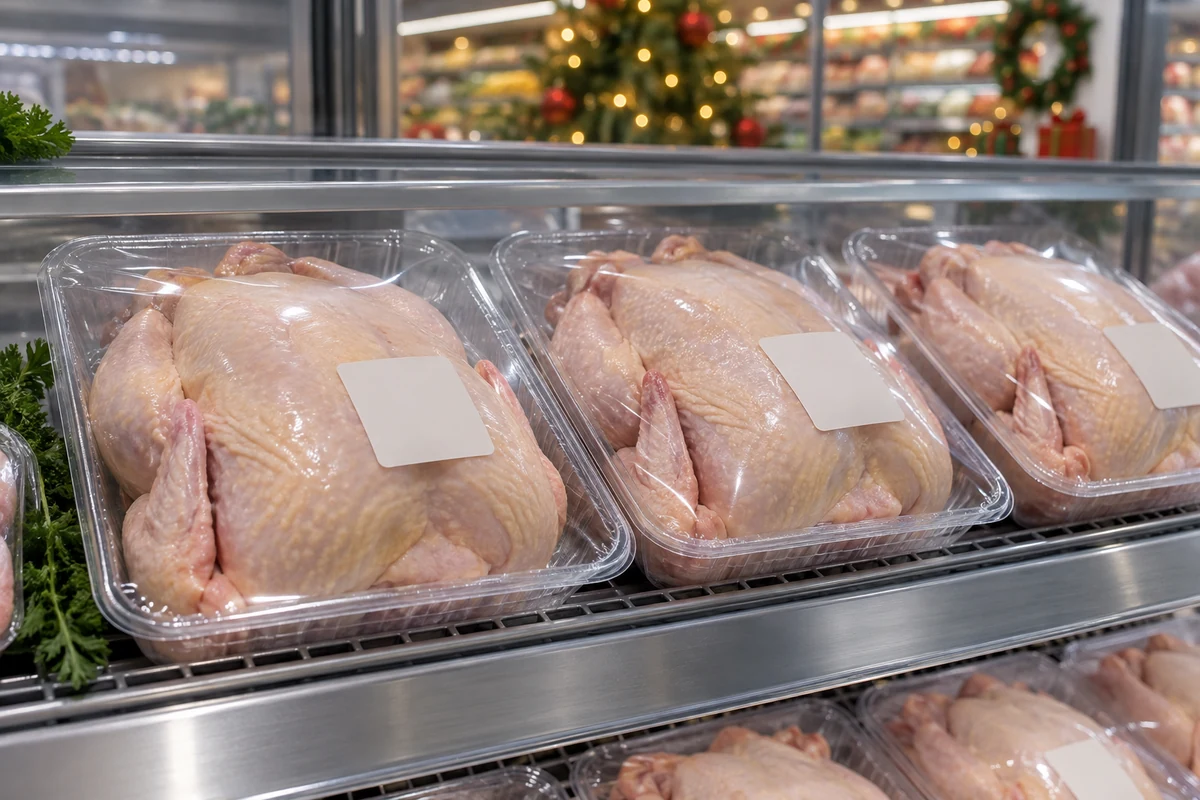
Deciding on portions, cuts and storage space ahead of time helps avoid last-minute problems.
- Calculate quantities: allow around 300–400 g of raw whole chicken per person, including bones, or a smaller 200–250 g allowance when several substantial dishes share the meal. Adjust for appetites and expected leftovers.
- Choose a cut: use a whole bird for presentation, boneless breast for a leaner option, or thighs and drumsticks for convenient portions.
- Compare prices: check the price per kilogram as well as the total. Bulk offers are only useful if you have suitable freezer space.
- Check the label: buy from a reputable supplier and check the use-by date, storage instructions and packaging. Appearance and smell cannot establish that raw chicken is safe.
- Organic or free-range: these may cost more; choose according to your budget and husbandry preferences, using the actual product label.
- Frozen or chilled: either can work well. Compare dates and storage instructions, and allow enough time to thaw a frozen bird fully.
- Packaging: choose intact, leak-free packs and keep raw poultry separate from ready-to-eat shopping.
Shopping checklist
- Calculate the total quantity for the guest list.
- Choose the cuts and a workable alternative if your first choice is unavailable.
- Compare prices per kilogram and per usable serving.
- Check use-by dates, supplier information and intact packaging.
- Make room in the fridge or freezer and plan thawing time.
- List the seasonings and any farofa ingredients.
Checking chicken before cooking
- Appearance: reject obvious spoilage or damaged packaging, but do not treat normal-looking meat as proof of safety.
- Smell: an unpleasant smell is a reason not to use chicken; the absence of a smell does not make it safe beyond its use-by date.
- Handling: avoid unnecessary handling of raw poultry. Wash hands and clean surfaces and utensils after contact; do not wash the chicken.
- Frozen packs: inspect the seal and storage condition. Heavy ice or freezer burn may affect quality, but does not by itself prove the food has thawed before.
A practical timetable
- 7–10 days ahead: decide the menu, guest numbers and quantities. Order ahead, or freeze a suitable purchase before its use-by date.
- Several days ahead: check the pack’s thawing instructions and move frozen chicken to the fridge at the appropriate time. Buy chilled chicken with a use-by date that covers your cooking day; do not assume it will keep for 3–5 days.
- The day before: prepare suitable seasonings and farofa, cool cooked components promptly and refrigerate separately. Marinate chicken within its use-by date and use fully thawed chicken within 24 hours.
- On the day: roast according to the chosen recipe and verify the thickest parts reach 70°C for 2 minutes or 75°C for 30 seconds.
Storage and food safety
- Thaw in the fridge in a covered container that catches drips, never on the worktop.
- Keep raw chicken separate from foods that are ready to eat.
- Use a clean food thermometer to verify thorough cooking: 70°C for 2 minutes or 75°C for 30 seconds.
- Cool leftovers within 1–2 hours, refrigerate at 5°C or below and eat within 48 hours or freeze.
Small steps that help
- Marinating: allow 12–24 hours for a whole bird or 4–6 hours for portions in the fridge, provided the use-by date and 24-hour limit after full thawing allow it.
- Drying the skin: pat it with disposable kitchen paper before roasting; discard the paper and wash your hands afterwards.
- Flavour combinations: try garlic, lemon or orange, butter or olive oil, rosemary and thyme.
- A backup dish: plan a simple alternative, such as separately cooked chicken breasts or a substantial vegetarian main, if plans change.
These checks make it easier to buy suitable chicken, plan the meal and handle it safely.
Seven Christmas chicken ideas: ingredients and timing
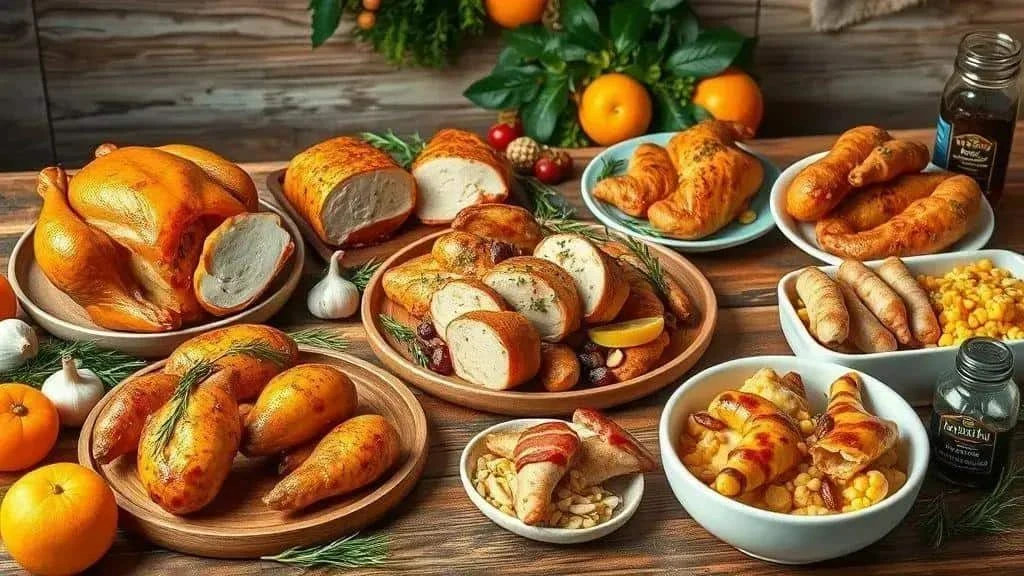
The following are ingredient outlines to help choose a flavour combination, not seven complete step-by-step recipes. The citrus roast and farofa version have detailed instructions below. Timings are guides and never replace a temperature check.
1. Citrus-and-herb roast chicken
Serves: roughly 6–8 with generous side dishes • Timing: 20 minutes’ preparation, then allow roughly 1 hour 50 minutes–2 hours 15 minutes for a 2–2.5 kg unstuffed bird at 180°C, following pack guidance and checking doneness; allow extra time for resting.
- 1 whole chicken, 2–2.5 kg, giblets removed if present and skin patted dry; do not wash.
- 3 tbsp butter, or olive oil instead.
- Zest and juice of 1 orange for a citrus flavour.
- 4 garlic cloves, crushed.
- 2 rosemary sprigs, or thyme.
- Salt and black pepper to taste.
2. Roast chicken with Christmas farofa
Serves: roughly 6–8 with sides • Timing: 30 minutes’ preparation plus about 1 hour 50 minutes–2 hours for the 2–2.2 kg unstuffed chicken at 180°C, subject to pack instructions and temperature checks. Cook the farofa separately, as explained below.
- 1 whole chicken, 2–2.2 kg, with farofa served alongside.
- 2 cups toasted cassava meal, sold as farinha de mandioca; not tapioca starch.
- 150 g chopped bacon, or a plant-based alternative for the farofa; the chicken dish itself remains non-vegetarian.
- 1 apple, chopped, for sweetness.
- ½ cup raisins, optional.
- 1 medium onion, chopped.
- Salt, chopped parsley and spring onion to taste; see the detailed recipe for the remaining ingredients.
3. Honey-and-orange glazed chicken
Serves: about 6 with sides • Timing: 15 minutes’ preparation; allow around 50–60 minutes for bone-in portions as a planning estimate, then follow your chosen recipe or pack cooking instructions and check the core temperature.
- 1.5 kg chicken drumsticks and thighs, skin removed if preferred.
- 4 tbsp honey, or a brown-sugar glaze instead; do not serve honey to children under 12 months.
- Juice of 2 oranges for the glaze.
- 2 tbsp soy sauce; taste before adding extra salt.
- 1 garlic clove, crushed.
- Pepper and orange zest to taste. Keep a clean portion of glaze aside before contact with raw chicken and brush it on near the end of cooking.
4. Chicken with nuts and dried fruit
Serves: roughly 6–8 with sides • Timing: 25 minutes’ preparation; allow approximately 1 hour 50 minutes–2 hours 5 minutes for a 2–2.3 kg unstuffed bird at 180°C, checking pack guidance and core temperature. Add resting time.
- 1 whole chicken, 2–2.3 kg, roasted without filling the cavity.
- 1 cup chopped Brazil nuts or walnuts, lightly toasted and served as a topping or accompaniment.
- ½ cup dried cranberries or raisins.
- 2 tbsp butter, or olive oil.
- Fresh sage or thyme for flavour.
- Salt and pepper to taste; add the nut and fruit topping towards serving time so it does not burn during the long roast.
5. Chicken with white wine and herbs
Serves: about 6 • Timing: 15 minutes’ preparation; bone-in breasts may take around 45–55 minutes in a suitable oven recipe, while boneless fillets cook sooner. Follow instructions for the actual cut and verify the core temperature.
- 1.2–1.5 kg bone-in chicken breasts, or boneless fillets with the cooking time adjusted.
- 1 cup dry white wine, or chicken stock if avoiding alcohol; cooking wine does not guarantee an alcohol-free dish.
- 2 tbsp butter.
- 2 garlic cloves, chopped.
- 1 fresh thyme sprig.
- Salt, pepper and lemon juice to taste.
6. Creamy chicken and sweetcorn bake
Serves: approximately 6–8 smaller portions with sides • Timing: 20 minutes’ preparation plus around 30 minutes for a bake made with already-cooked chicken; heat until steaming hot throughout, checking the centre.
- 600–700 g thoroughly cooked, shredded chicken, freshly prepared or safely chilled leftovers within their storage limit; not raw chicken.
- 200 g requeijão cremoso, a Brazilian creamy cheese spread; softened cream cheese loosened to a spoonable consistency is an alternative.
- 1 tin sweetcorn, drained; use the size specified in your chosen bake recipe rather than assuming all tins are equal.
- ½ cup grated Parmesan or mozzarella.
- Salt, pepper and parsley to taste. This is an ingredient idea; use a suitable chicken-bake method and reheat leftovers only once.
7. Roast chicken with bacon and cane syrup
Serves: about 6 • Timing: 20 minutes’ preparation plus roughly 1 hour for bone-in portions as a planning estimate; follow an appropriate recipe or pack instructions and check doneness.
- 1.5–2 kg chicken portions, preferably drumsticks and thighs.
- 150 g bacon rashers to cook with the chicken.
- 3 tbsp Brazilian cane syrup, melado de cana; molasses or dark honey gives a different but workable flavour. Do not serve honey to babies under 12 months.
- 2 tbsp Worcestershire sauce, optional; check allergens, including fish in many versions.
- Black pepper and salt to taste. Add a clean syrup glaze late in cooking to limit burning.
Quick notes
- Timing is approximate: allow separately for preheating, marinating, full thawing and resting. Size, cut and oven performance change the cooking time.
- Servings are estimates; adjust for appetites, bones and the number of side dishes.
- Substitutions change flavour and texture. Check all labels and preparation surfaces before describing a dish as suitable for an allergy or dietary requirement.
Citrus-and-herb roast chicken: ingredients
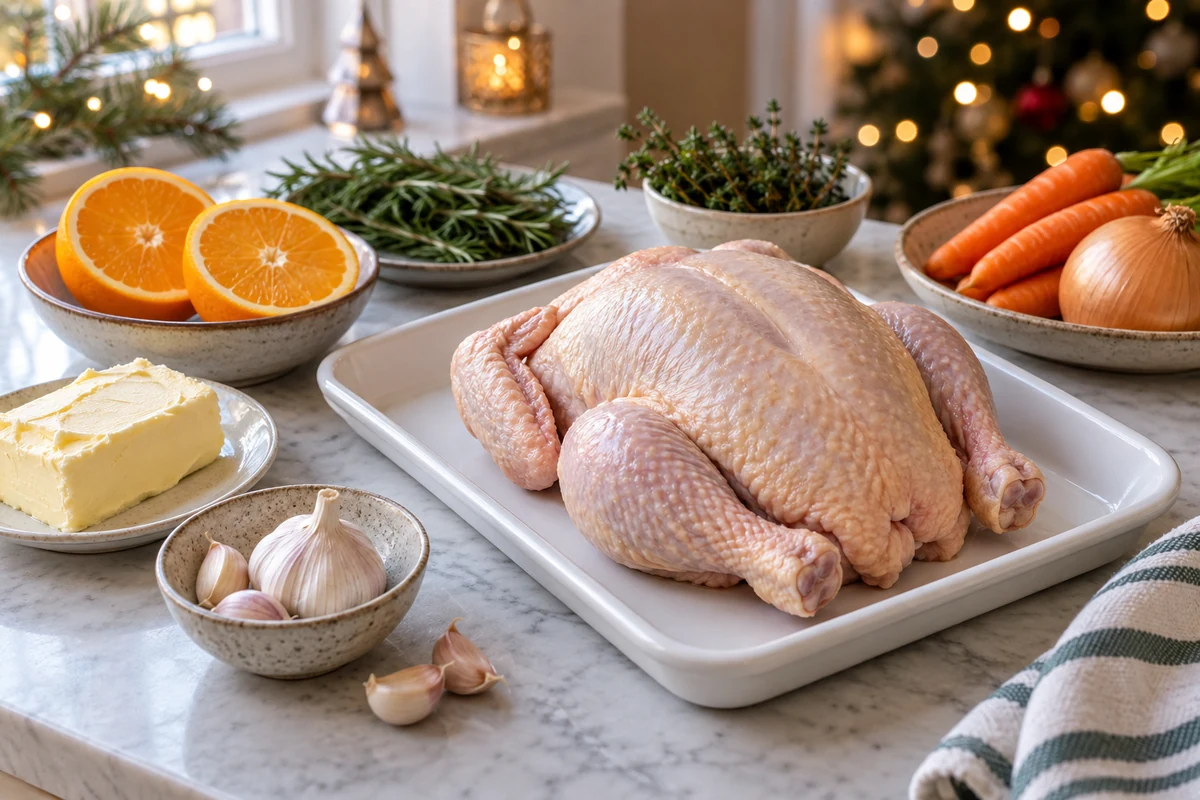
Serves: approximately 6–8 with substantial side dishes.
- 1 whole chicken, 2–2.5 kg, fully thawed if frozen, giblets removed if present and skin patted dry; do not wash.
- 3 tbsp softened butter, or 3 tbsp olive oil.
- Zest and juice of 1 orange; use 1 lemon instead for a sharper flavour.
- 4 garlic cloves, chopped, or 2 tsp garlic powder.
- 2 tbsp honey, optional, for a late glaze; brown sugar is an alternative. Omit honey for babies under 12 months.
- 2 fresh rosemary sprigs, or thyme if preferred.
- 2 fresh thyme sprigs.
- Up to 1 tbsp salt, using less to taste and allowing for any salt in the butter, stock or pre-seasoned chicken; do not add this automatically to a pre-brined bird.
- 1 tsp ground black pepper, or white pepper if preferred.
- 1 medium onion, quartered, for the roasting tin.
- 2 carrots, cut into large pieces, to roast alongside.
- ½ cup dry white wine or chicken stock, for the base of the tin.
- 1 extra tbsp melted butter, optional, for brushing near the end.
Substitutions and preparation notes
- Dairy-free option: use olive oil instead of all the butter and check the stock.
- More citrus aroma: add a little lemon zest alongside the orange.
- Marinating: refrigerate the seasoned bird for 12–24 hours if the use-by date and the limit of 24 hours after full thawing allow; shorter marinating is fine.
- Crisper skin: pat dry before applying the butter or oil, without rinsing the bird.
- Safety: verify 70°C for 2 minutes or 75°C for 30 seconds in the thickest breast and thigh, away from bone. Rest for 10–15 minutes only after it is fully cooked.
How to make citrus-and-herb roast chicken
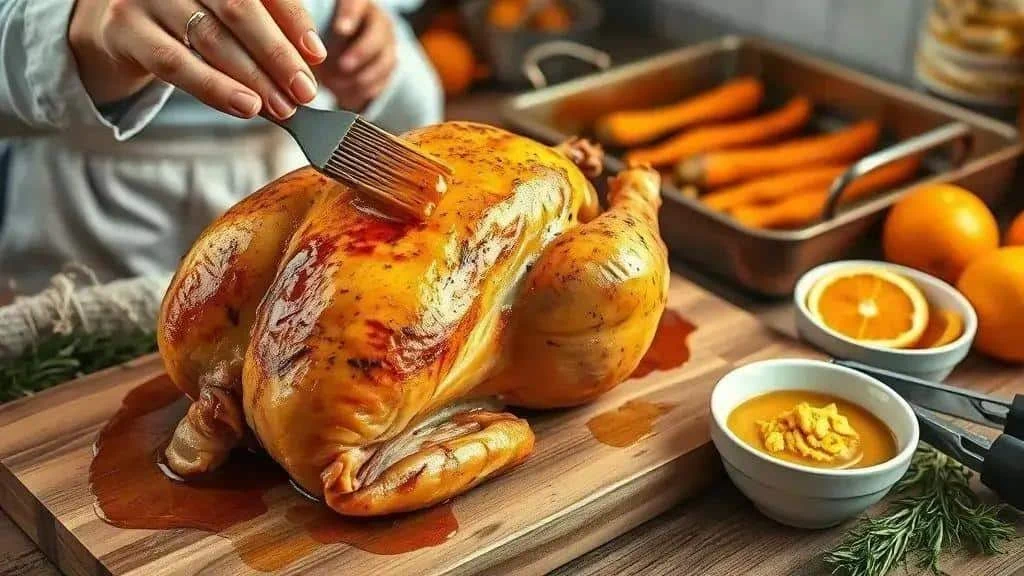
Follow these steps for citrus-and-herb roast chicken. Keep the cavity empty so the cooking guidance is for an unstuffed bird.
- Prepare safely: remove giblets if present and pat the skin dry with disposable kitchen paper. Do not wash raw chicken. This recipe uses the seasoning listed above rather than an additional wet brine; if your bird is already brined, reduce the added salt.
- Preheat the oven: heat to 180°C conventional, or follow the chicken pack and your oven’s fan guidance. Put the shelf in a position that allows the roasting tin to sit centrally.
- Make the herb butter: combine the 3 tbsp softened butter with the orange zest, all 4 chopped garlic cloves, chopped leaves from the rosemary and thyme, and salt and pepper to taste. Reserve the orange juice for the tin or glaze.
- Loosen the breast skin: gently ease it away from the meat and spread some herb butter underneath. Spread the rest over the outside, then wash your hands and clean any surfaces touched by raw chicken.
- Use the aromatics around the bird: place the quartered onion and any remaining herb stems in the tin rather than packing the cavity. The one orange supplies the zest and juice; no extra whole orange is needed.
- Position the chicken: tuck the wing tips underneath and place breast-side up on a rack in the roasting tin. Follow any trussing instructions on the pack without tying it excessively tightly.
- Add vegetables and liquid: arrange the carrots with the onion. Pour the ½ cup wine or stock into the tin with the orange juice; if using honey, reserve a little clean orange juice to loosen the honey for the final glaze.
- Roast until thoroughly cooked: follow the pack’s instructions. As a planning guide, 45 minutes per kilogram plus 20 minutes at 180°C gives about 1 hour 50 minutes–2 hours 15 minutes for a 2–2.5 kg unstuffed chicken. Allow longer if temperature checks show it is not ready.
- Finish the skin: if using the optional honey, mix it with the reserved clean orange juice and brush on during the final 15–20 minutes, watching for burning. The optional extra melted butter can be brushed on instead. Frequent basting is unnecessary and can soften the skin.
- Check with a thermometer: test the thickest breast and thigh without touching bone: 70°C for 2 minutes or 75°C for 30 seconds. Clean the probe between checks. The meat should also be steaming hot with no pink flesh and clear juices; do not rely on surface colour alone.
- If the skin browns too quickly: loosely cover it with foil and continue cooking until the centre is ready.
- Rest before carving: once fully cooked, rest the chicken for 10–15 minutes under loose foil, then carve and serve.
Practical tips and substitutions
- Dairy-free option: replace the butter with olive oil and check the other ingredients.
- More citrus: add lemon zest alongside the orange.
- Crisper skin: dry the skin before seasoning, avoid repeated wet basting and use only a light final coating of butter or oil.
- Extra browning: a brief hotter finish may add colour, but watch carefully, particularly with honey. Browning does not replace the core-temperature check.
- Short marinade: if time is limited, refrigerate the bird with its herb butter for 2–4 hours, within its safe storage limits.
- Using the carcass: make stock from safely handled roasted bones, or chill them promptly for use within 48 hours. Cool and store the finished stock safely too.
Citrus roast chicken variations
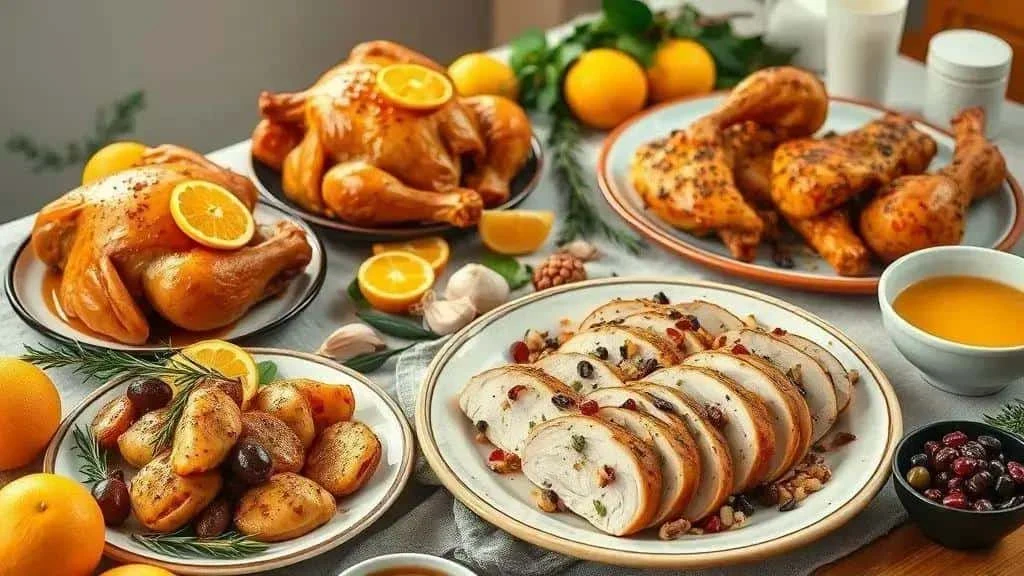
Use these as alternatives to the base seasoning or as separately cooked accompaniments; do not add every variation to one bird.
Variation 1: honey-and-orange glaze
A sweet, glossy finish for those who enjoy citrus with a little sweetness.
- Juice of 1 orange.
- 3 tbsp honey; unsuitable for babies under 12 months.
- 1 tbsp butter.
- Orange zest.
Tip: gently melt the butter with the honey and juice, add zest and brush on during the final 20 minutes. Use this instead of the optional base glaze and keep it away from raw chicken until application.
Variation 2: citrus and chilli
Add a little heat alongside the citrus flavour.
- Zest and juice of 1 lime.
- 1–2 tsp dried chilli flakes, adjusted to taste.
- 2 garlic cloves.
- Olive oil, enough to make a seasoning paste, replacing the base butter as appropriate.
Alternative: use chopped fresh red chilli instead of dried flakes.
Variation 3: olives and capers
A savoury, herby combination to serve with white wine pan juices.
- ½ cup sliced olives.
- 2 tbsp capers.
- Thyme and oregano sprigs.
- ½ cup white wine, replacing the base recipe’s wine or stock; use stock if avoiding alcohol.
Serving idea: add the olives and capers to the pan juices near the end, adjust salt and serve with roast potato wedges and a green salad.
Variation 4: Christmas farofa accompaniment
Bring Brazilian festive flavour to the roast by cooking the farofa separately; this keeps the bird unstuffed and the crumbs crisper.
- 2 cups toasted cassava meal, not tapioca starch.
- 100 g chopped bacon or a plant-based alternative.
- 1 chopped apple.
- Chopped parsley and spring onion to taste.
Method note: cook the bacon thoroughly, soften the apple, then stir in the meal and herbs. Serve alongside the chicken rather than compacting it inside the cavity; the detailed farofa recipe below gives a fuller version.
Variation 5: nuts and dried fruit
Add crunch and sweetness with a simple festive topping.
- 1 cup chopped nuts.
- ½ cup dried cranberries or raisins.
- Orange zest.
Finishing touch: lightly toast the nuts, mix with the fruit and zest and scatter over the carved chicken just before serving. Check nut allergies.
Variation 6: yoghurt and herbs
A tangy yoghurt marinade offers a different flavour from butter; the fat content depends on the yoghurt used.
- 1 pot plain yoghurt, with the amount adjusted to coat the chicken; pot sizes vary.
- Lemon juice and zest.
- Chopped garlic and fresh herbs.
Dairy-free alternative: use a suitable plain plant-based yoghurt or coconut milk; the texture and flavour will differ. Marinate in the fridge and do not use raw-chicken marinade as a ready-to-eat sauce.
Variation 7: chicken portions for a buffet
Separate portions are convenient to serve at a larger gathering.
- 1.5–2 kg drumsticks and thighs.
- The citrus seasoning from the base recipe, adjusted to the quantity of chicken.
- A pinch of smoked paprika.
Advantage: portions generally cook sooner than a whole bird, making it easier to offer two flavour combinations. Check the largest pieces individually.
Rules for adapting the variations
- Timing: use instructions suited to the weight and cut, rather than treating whole birds and portions alike.
- Core temperature: verify 70°C for 2 minutes or 75°C for 30 seconds in the thickest parts.
- Flavour balance: butter or olive oil can soften the impression of sharp citrus flavours.
- Marinating: refrigerate for a suitable 4–24-hour period, without exceeding the use-by date or 24 hours after full thawing. Acid does not make raw chicken safe.
Roast chicken with Christmas farofa: ingredients
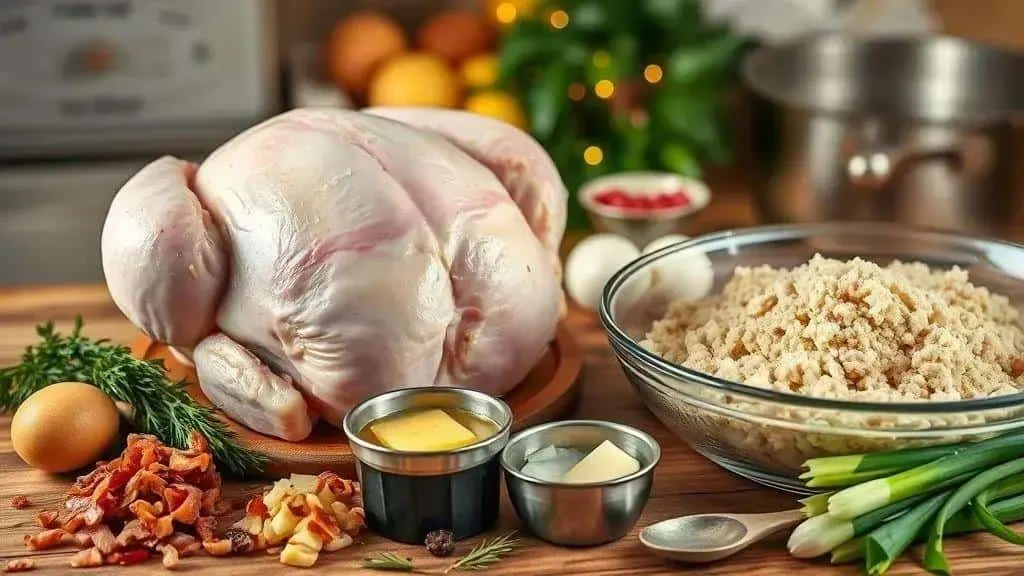
For roast chicken with Christmas farofa, prepare the following ingredients. Cook the farofa separately and serve it alongside the bird; UK food-safety guidance recommends cooking stuffing separately so the chicken cooks more reliably. This changes the presentation of the Brazilian stuffed-chicken idea without losing its flavours.
- 1 whole chicken, 2–2.2 kg, fully thawed if frozen, giblets removed if present and skin patted dry; do not wash.
- 2 cups toasted cassava meal, sold as farinha de mandioca; not tapioca starch. If using an untoasted commercial cassava meal, toast it according to its instructions.
- 150 g chopped bacon, or smoked tofu for a meat-free farofa; serving it with chicken does not make the whole meal vegetarian.
- 1 medium onion, chopped; white or red is suitable.
- 2 garlic cloves, chopped, or 1 tsp garlic powder.
- 1 medium apple, peeled and chopped, such as Fuji or Gala.
- ½ cup raisins or dried cranberries, optional.
- 2 hard-boiled eggs, chopped, or ⅓ cup chopped nuts instead, if suitable for your guests.
- 3 tbsp butter for the farofa, or olive oil for a dairy-free alternative.
- ¼ cup chopped parsley and spring onion, the Brazilian herb combination known as cheiro-verde.
- About 1 tsp salt, adjusted to taste and reduced for salty bacon or stock; divide between the bird and farofa as needed.
- ½ tsp ground black pepper, adjusted to taste.
- Up to ½ cup chicken stock or water to moisten the farofa if necessary; use vegetable stock for a vegetarian accompaniment.
- 1 tbsp lemon juice, optional, to season the chicken.
Substitutions and notes
- Vegetarian accompaniment: replace bacon with smoked tofu or sautéed mushrooms and use vegetable stock. Cook and serve this farofa separately from meat; a vegetarian main is still needed for guests who do not eat chicken.
- Adjusting the fat: reduce the bacon or use less cooking fat as appropriate. Replacing butter with the same amount of olive oil changes the fat type rather than automatically reducing total fat.
- Farofa texture: add stock gradually only if needed, starting with up to ¼ cup. Aim for loose, lightly moist crumbs rather than a wet mixture.
- Quantity: the mixture provides several portions alongside the chicken. Serve it in a separate bowl rather than forcing the full quantity inside the bird.
- Safety: roast the chicken with an empty cavity and cook or reheat the farofa separately until steaming hot. Check the thickest parts of the chicken reach 70°C for 2 minutes or 75°C for 30 seconds.
- Preparing ahead: make the farofa as described below, cool within 1–2 hours and refrigerate. Use within 48 hours, measured from the oldest cooked ingredient, and reheat only once.
How to make roast chicken with Christmas farofa
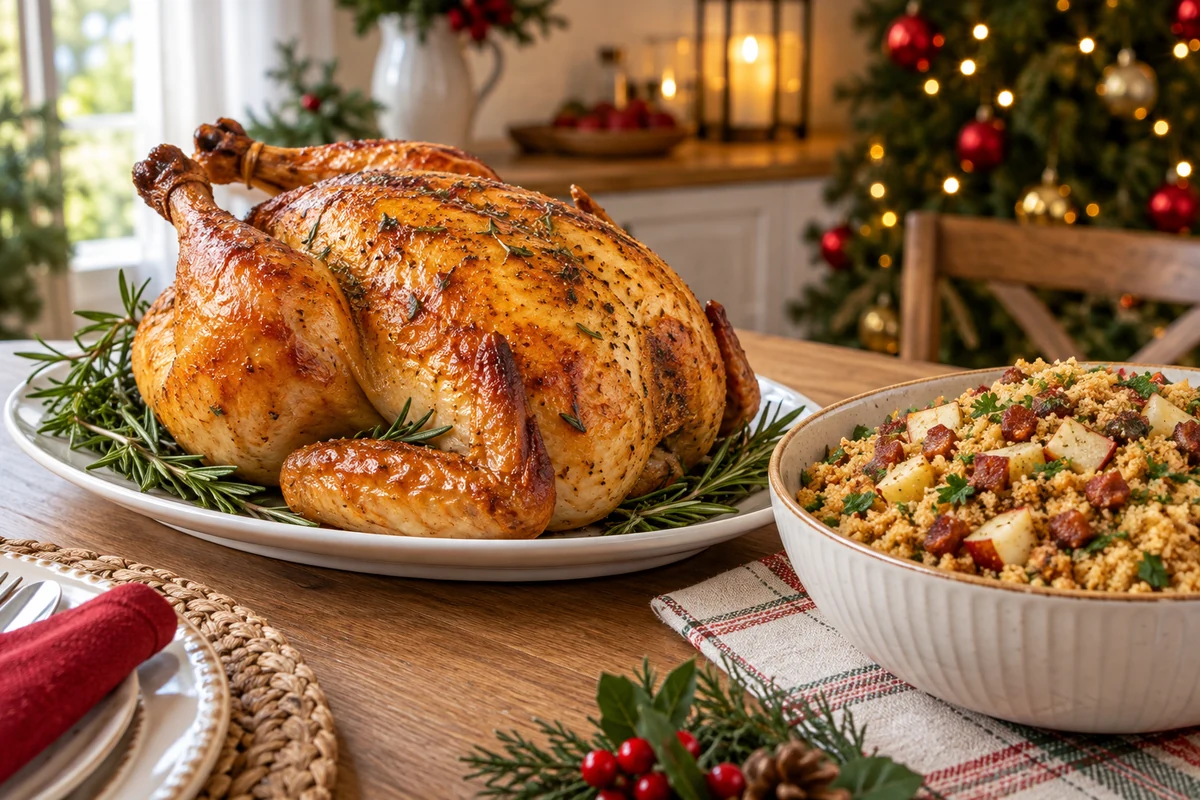
- Start the farofa: melt the 3 tbsp butter in a large frying pan, or use olive oil instead. Add the 150 g chopped bacon and cook thoroughly until browned.
- Add the aromatics: stir in the chopped onion and 2 chopped garlic cloves, cooking until the onion softens.
- Add fruit and eggs: stir in the chopped apple and optional ½ cup raisins or cranberries, allowing the apple to soften. Add the 2 chopped hard-boiled eggs, or the nut alternative, towards the end.
- Finish the farofa: stir in the 2 cups toasted cassava meal and ¼ cup chopped herbs. Adjust the salt and pepper, adding a little of the measured stock only if the mixture needs moisture. Keep the finished farofa separate from raw poultry.
- Season the chicken: pat the 2–2.2 kg bird dry with disposable kitchen paper, discard the paper and season with a share of the listed salt and pepper. Add the optional lemon juice if using. The butter in this recipe is for the farofa; no extra herb butter or orange is required.
- Keep the cavity empty: serve the farofa alongside the chicken. Do not put it inside the bird or pack crumbs under the skin.
- Position the bird: tuck the wing tips underneath and follow any trussing instructions on the pack. There is no filled opening to sew shut.
- Prepare the roasting tin: place the chicken breast-side up on a rack in a suitable tin. Keep the farofa’s stock allocation separate; additional vegetables or wine are optional accompaniments, not required ingredients for this recipe.
- Roast: preheat to 180°C conventional and follow the pack’s guidance. An unstuffed 2–2.2 kg chicken may need around 1 hour 50 minutes–2 hours using the guide of 45 minutes per kilogram plus 20 minutes. Continue cooking if the centre is not ready.
- Keep the farofa ready safely: make it near serving time or cool and chill it promptly for reheating once. Do not leave it lukewarm beside the oven throughout the roast. Hot-held food should remain at 63°C or above.
- Check the chicken: use a clean thermometer in the thickest breast and thigh without touching bone. Both should reach 70°C for 2 minutes or 75°C for 30 seconds. Reheated farofa must be steaming hot all the way through.
- Additional doneness checks: the chicken should be steaming hot through the centre, with no pink flesh and clear juices. A thermometer gives a more dependable check than judging the browned skin alone.
- Protect the skin: if it darkens too quickly, cover loosely with foil and continue cooking until the core is ready.
- Rest and serve: once fully cooked, rest the bird for 10–15 minutes under loose foil, carve and serve with the hot farofa.
- Save leftovers safely: portion chicken and farofa into separate shallow containers and cool promptly. Refrigerate within 1–2 hours, use within 48 hours or freeze; chill any carcass intended for stock promptly too.
Tips and safety
- Separate the farofa: cooking it outside the chicken avoids a dense filling slowing heat penetration into the bird.
- Safe thawing: follow the pack and thaw fully in the fridge in a container that catches drips. A whole bird may need 24–48 hours or longer; do not treat that range as a guarantee. Use within 24 hours of full thawing.
- Optional marinating: herbs and citrus can be used for a 6–12-hour refrigerated marinade, provided this stays within the use-by date and thawed-storage limit.
- Allow enough time: plan around 1 hour 50 minutes–2 hours for the unstuffed 2–2.2 kg bird at 180°C, plus resting, and use temperature checks rather than the clock as the final test.
- Storage: cool within 1–2 hours, refrigerate at 5°C or below and eat within 48 hours or freeze. Reheat only once, until steaming hot throughout.
Christmas farofa variations for roast chicken
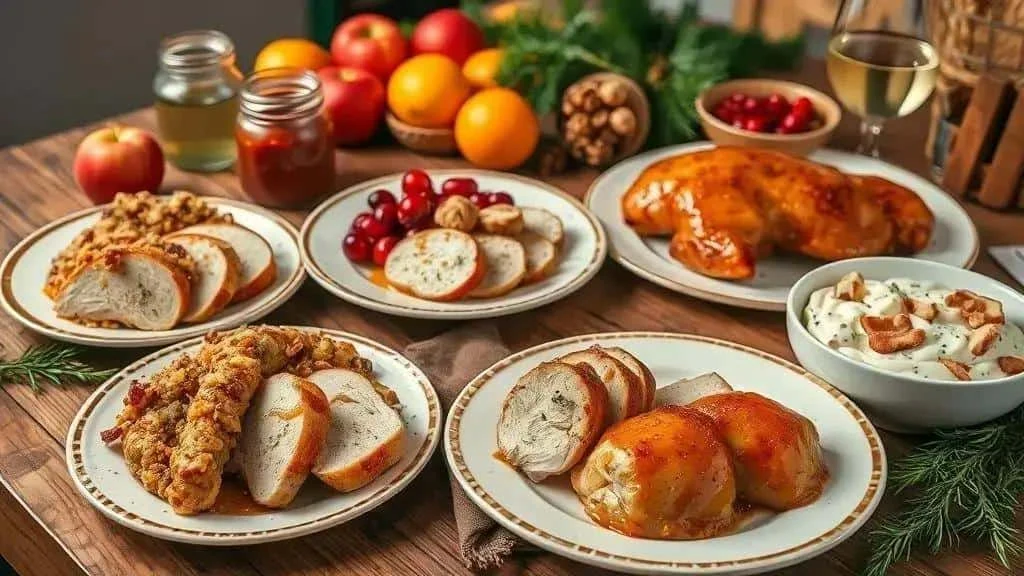
Change the separately cooked farofa or the chicken’s glaze to create different festive combinations. These ingredient ideas replace parts of the base recipe; they are not additions to use all at once.
Variation 1: nuts and dried fruit
A crunchy, lightly sweet combination for a festive accompaniment.
- 2 cups toasted cassava meal.
- 1 cup chopped Brazil nuts or walnuts, lightly toasted.
- ½ cup dried cranberries or raisins.
- 2 tbsp butter, or olive oil for a dairy-free alternative.
Tip: warm the meal in the butter or oil, then fold in the toasted nuts and dried fruit towards the end. Serve separately from the bird.
Variation 2: vegetarian farofa without bacon
A meat-free accompaniment when prepared with suitable ingredients and kept separate from chicken and its juices.
- 2 cups toasted cassava meal.
- 150 g chopped mushrooms, such as shiitake or shimeji, thoroughly sautéed.
- ½ cup chopped nuts or almonds for crunch.
- 2 tbsp olive oil for cooking the mushrooms and coating the meal.
Alternative: replace the mushrooms with cubed smoked tofu. This is a vegetarian side dish; serve an appropriate meat-free main as well.
Variation 3: honey-and-chilli glaze
A sweet and spicy glaze for the chicken’s skin, used instead of another glaze.
- 3 tbsp honey; not suitable for babies under 12 months.
- Juice and zest of 1 orange.
- 1 tsp dried chilli flakes, adjusted to taste.
- Brush on during the final 20 minutes of roasting. Mix and reserve the glaze separately from raw poultry, watch for scorching and check the chicken is fully cooked.
Variation 4: apple and citrus farofa
Apple and lemon zest add a fresh contrast to the roast.
- 2 cups toasted cassava meal.
- 1 apple, peeled and chopped, such as Fuji or Gala.
- Zest of 1 lemon.
- ¼ cup chopped parsley and spring onion.
Tip: use these in the base farofa method, softening the apple before adding the meal, zest and herbs. Add stock cautiously because the apple provides moisture.
Variation 5: wine and candied fruit
A sweeter farofa variation with wine flavour; choose stock instead if avoiding alcohol.
- ¼ cup white wine or port, reduced separately before adding to the base farofa.
- ⅓ cup candied fruit.
- 2 tbsp butter, used in place of the base recipe’s butter allowance for this variation.
Note: reducing wine concentrates its flavour but does not guarantee all alcohol evaporates. Use an alcohol-free alternative where required.
Variation 6: crisp bacon topping
A savoury topping that adds contrast to the carved chicken.
- 150 g chopped bacon, cooked until crisp.
- 2 cups toasted cassava meal.
- Black pepper, chopped parsley and spring onion.
Finishing touch: stir the meal and herbs into a suitable amount of the cooked bacon fat, then scatter the crisp bacon over the farofa and carved chicken just before serving.
Variation 7: yoghurt-and-herb chicken with farofa
Use the yoghurt mixture as a marinade for the chicken, with dry, separately cooked farofa on the side rather than making a wet cavity filling.
- 1 pot plain yoghurt, enough to coat the bird; pot sizes vary.
- Juice of 1 lemon.
- Chopped fresh parsley, spring onion and thyme.
- 2 cups toasted cassava meal for the separately prepared farofa, following the base method.
Dairy-free alternative: use a suitable plain plant-based or coconut yoghurt. Marinate in the fridge, respect safe storage limits and discard marinade that has touched raw chicken rather than serving it uncooked.
Quick guidance for the variations
- Farofa proportions: start with the listed 2 cups of meal and add any stock gradually, keeping the crumbs loose rather than soggy.
- Separate cooking: serve farofa alongside the bird, keeping it away from raw chicken and uncooked meat juices.
- Roasting time: follow guidance for the bird’s weight and verify 70°C for 2 minutes or 75°C for 30 seconds in the thickest parts.
- Final crunch: add toasted nuts or crisp, fully cooked bacon at serving time.
Side dishes, table ideas and practical substitutions
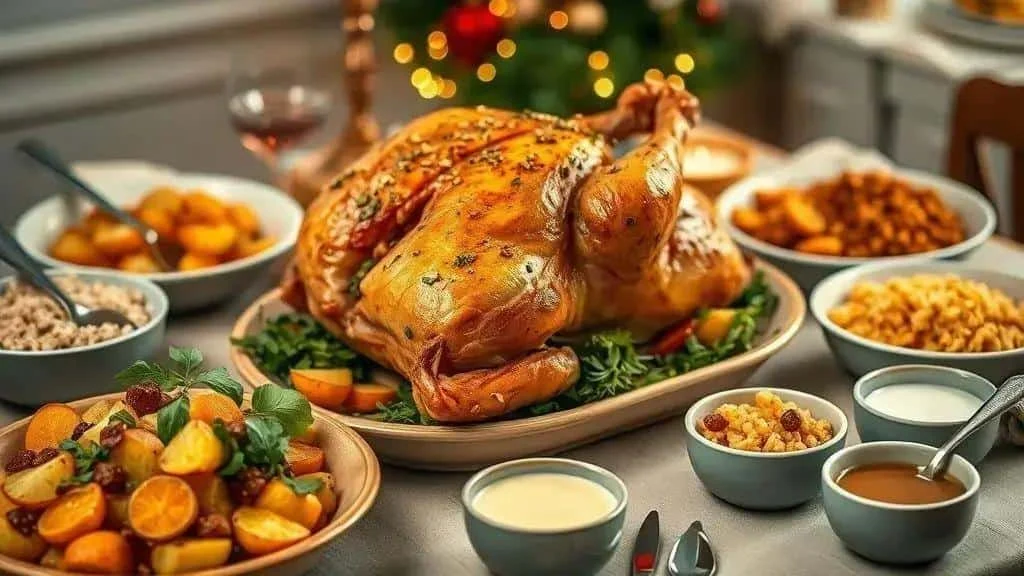
Balance textures with a crisp accompaniment, a simple starch, fresh vegetables and a sauce. You do not need every option below for one meal.
Accompaniments for Christmas chicken
- Christmas farofa: a Brazilian toasted cassava-meal accompaniment that contrasts with the meat and pan juices.
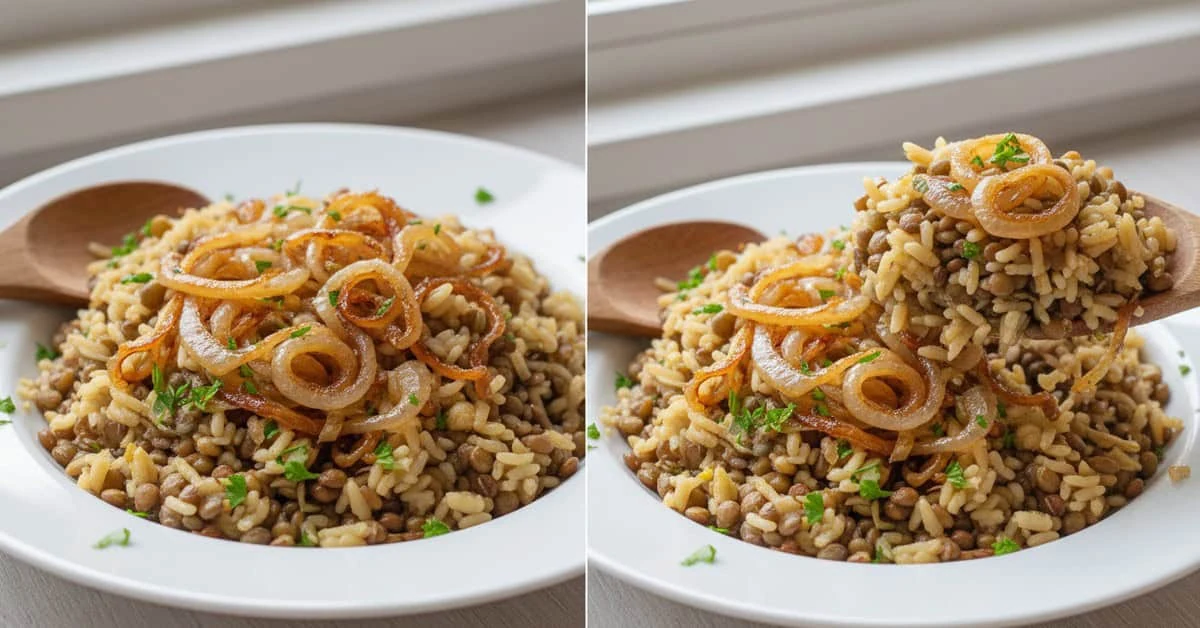
- Vegetable rice or rice with raisins: Brazilian arroz à grega is a colourful vegetable rice, despite its name meaning ‘Greek-style rice’. It works well with citrus glazes.
- Roast potato wedges: season with rosemary for a crisp outside and soft centre.
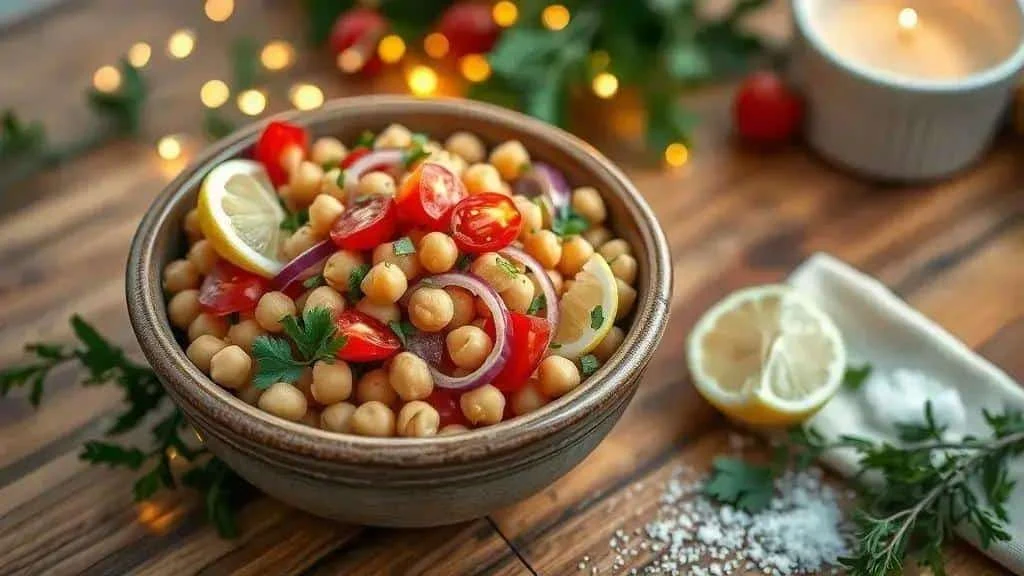
- Citrus salad: combine salad leaves, orange segments and walnuts, taking nut allergies into account.
- Roast vegetables: carrots, squash and onion add colour and sweetness.
- Yoghurt dressing or vinaigrette: serve separately as a fresh-tasting contrast to the roast.
- Potato or arracacha mash: arracacha, known in Brazil as mandioquinha, is a root vegetable distinct from cassava. Potato mash is the straightforward UK alternative.
Arranging the table
- Plan the serving route: group starters, mains and sides so guests can serve themselves easily.
- Use different serving dishes: a large platter suits the chicken, with smaller bowls for sauces and salads.
- Vary heights safely: use stable stands where appropriate without making hot dishes difficult to reach.
- Keep decoration simple: clean herbs, citrus and lights away from food can create atmosphere without getting in the way.
- Label ingredients clearly: identify allergens and suitable dietary options only after checking ingredients and preparation. Use separate serving utensils where needed.
- Keep food at the right temperature: hold hot dishes at 63°C or above and keep salads refrigerated at 5°C or below until serving. A stone slab or switched-off oven is not reliable temperature control.
Planning tasks ahead
- 2–3 days ahead: make suitable components only if you can freeze them safely, or their stated storage instructions allow this. Ordinary chilled cooked leftovers should be eaten within 48 hours; cooked rice has a shorter 24-hour limit.
- The day before: season the chicken within its use-by and thawed-storage limits. Wash and cut vegetables separately, then refrigerate in suitable containers.
- On the day: allow enough roasting time, add any glaze towards the end and prepare or reheat the sides close to serving time.
Practical substitutions
- Bacon-free farofa: use sautéed mushrooms, smoked tofu or toasted nuts, with vegetable stock if making a vegetarian side.
- Dairy-free option: replace butter with olive oil or a suitable dairy-free spread, checking all labels.
- Alcohol-free option: use chicken stock or water with a little lemon juice instead of wine.
- Gluten-free farofa: use labelled gluten-free cassava meal or Brazilian-style flaked maize meal. British cornflour is starch and is not the same ingredient. Check stock, sauces and cross-contact as well.
- Less sweetness: reduce honey or sugar to taste and use citrus zest for aroma, rather than promising the whole dish is low-calorie.
Final checks
- Check doneness: use a food thermometer to verify 70°C for 2 minutes or 75°C for 30 seconds in the thickest chicken meat.
- Allow for extra guests: have a practical plan, such as separately cooked chicken breasts or a substantial salad, without rushing poultry cooking.
- Set up a serving area: put sauces, bread and accompaniments within reach, with appropriate temperature control and separate utensils.
Conclusion
Christmas chicken can be a flexible festive main, from a straightforward citrus roast to a bird served with Brazilian farofa. Choose a manageable combination, plan quantities and check thorough cooking rather than relying on appearance or a fixed time alone.
Save your chosen recipe and share it with whoever is helping with the meal. Your own seasoning preferences and side dishes can make the menu feel personal.
Visit the I Love Christmas blog and our social channels for more festive ideas and recipes.
Christmas chicken: frequently asked questions
How much chicken should I buy per person?
As a rough shopping guide, allow 300–400 g of raw whole chicken per person, including bone weight. A smaller 200–250 g allowance may suit a meal with several substantial dishes. Adjust for appetites and remember that this is not the weight of cooked boneless meat.
How do I thaw chicken safely?
Follow the pack instructions and thaw fully in the fridge in a covered container that catches drips, away from ready-to-eat food. A whole bird may take 24–48 hours or longer. Never thaw it on the worktop, and use it within 24 hours of full thawing.
Can I prepare farofa ahead of time?
Yes. Cook it separately, cool within 1–2 hours, refrigerate at 5°C or below and use within 48 hours, counted from the oldest cooked ingredient. Reheat only once until steaming hot. Serve alongside the chicken rather than using it to fill the cavity. Cooked rice is different: cool it ideally within 1 hour and use refrigerated rice within 24 hours.
How can I get juicy chicken with crisp skin?
Pat the skin dry without washing the bird, use the measured butter or oil and avoid frequent wet basting. Follow suitable roasting instructions, check 70°C for 2 minutes or 75°C for 30 seconds in the thickest parts, then rest for 10–15 minutes before carving. Browning does not seal in juices or prove the centre is cooked.
Which dietary substitutions work?
For a dairy-free version, use olive oil or a suitable dairy-free spread. For gluten-free farofa, choose labelled gluten-free cassava meal and check stock and sauces. Replace bacon with tofu, mushrooms or nuts for a vegetarian farofa, and keep it separate from meat; the chicken main itself is not vegetarian. Check individual allergies and avoid cross-contact.
Sources and Further Reading
- UK Government: Christmas poultry cooking and food hygiene
- UK Government: safe cooking temperatures
- UK Government: chilling and defrosting food safely
- NHS: foods to avoid for babies and young children
- Food Standards Agency: home food facts, including rice storage