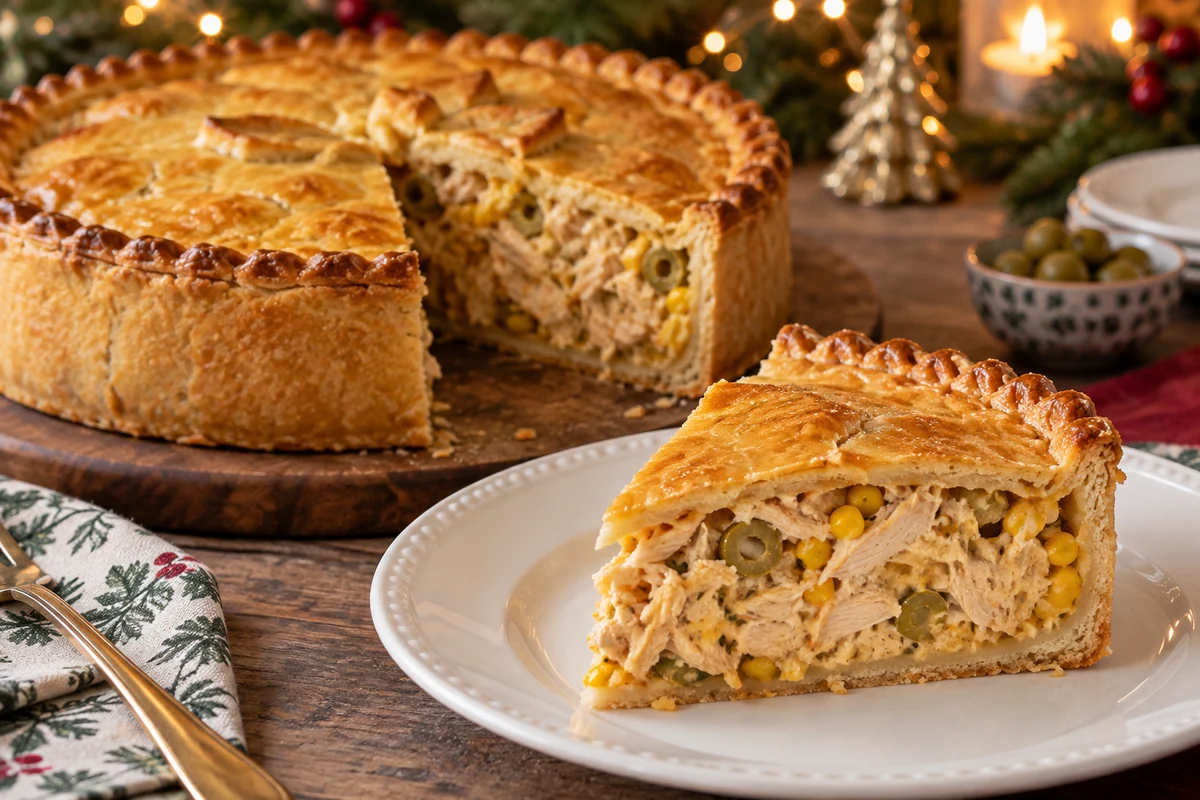
This creamy Christmas chicken pie is inspired by Brazilian empadão: shredded chicken, cream and soft cheese enclosed in golden pastry. A thick, cooled filling helps the pie slice neatly. Explore vegetarian and less-rich variations, plus practical serving and storage advice for a festive meal.
Christmas chicken pie brings a comforting centrepiece to the table. This Brazilian-style empadão pairs a creamy filling with a pastry base and lid, with tips for avoiding a soggy bottom and adapting the filling for different guests.
Ingredients for Creamy Christmas Chicken Pie
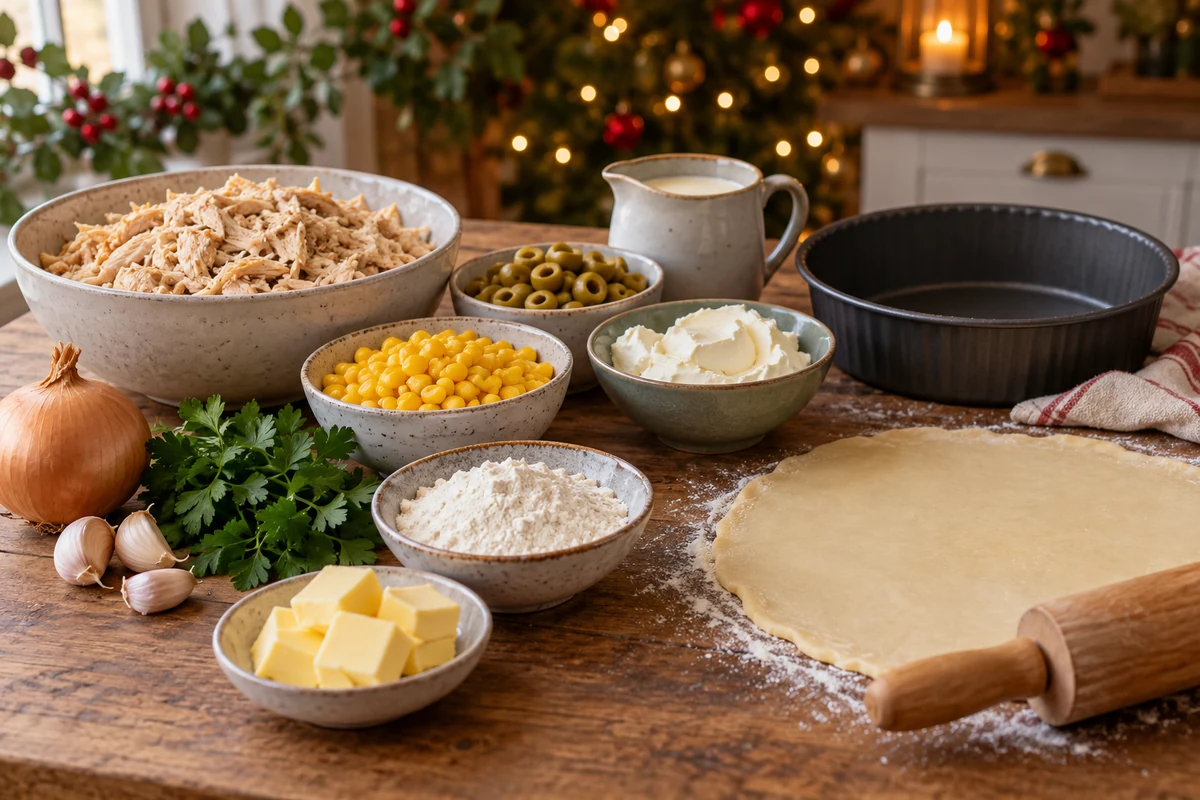
For a creamy Christmas chicken pie, gather the ingredients below. The source suggests a 25–28 cm pie dish, but depth affects capacity: check that the pastry and filling fit without overfilling, and bake any surplus separately.
- 700 g cooked, shredded chicken breast — this is the prepared weight, not the raw weight. Hearts of palm or prepared young jackfruit can replace the chicken in the vegetarian variation.
- Shortcrust pastry for a base and lid — the source starts with 500 g, but a deep 25–28 cm dish may need more. Check coverage before filling. Ready-rolled puff pastry is an alternative with different baking requirements; sheet sizes and pack weights vary.
- 2 tablespoons olive oil — or a neutral vegetable oil.
- 1 medium onion, chopped — red onion is an alternative, though not necessarily milder.
- 2 garlic cloves, chopped — or about 1 teaspoon prepared crushed garlic.
- ½ cup chopped green olives, optional — use black olives instead or leave them out.
- 200 g drained sweetcorn — weigh after draining; a tin’s total weight is not its drained weight. Thawed frozen sweetcorn is also suitable.
- 120 g Brazilian requeijão or cream cheese — requeijão is a creamy spreadable cheese; cream cheese gives a practical UK alternative with a slightly different texture.
- 200 ml cream — single cream works for a lighter sauce than double cream. Do not assume every carton or ¾-cup measure equals 200 ml.
- ½ cup chicken stock — homemade or made according to the stock product’s directions.
- 2 tablespoons plain flour — to thicken. Alternatively, use 1 tablespoon cornflour mixed with a little cold water; this changes only the filling, not the gluten content of the pastry.
- Salt to taste — the original suggests up to 1 teaspoon, but stock, olives and cheese may provide enough already. Season after the sauce is cooked.
- Black pepper to taste — freshly ground if available.
- ½ cup chopped parsley and spring onions — the Brazilian herb mixture known as cheiro-verde.
- 1 egg for glazing — or one yolk mixed with a little water.
- 100 g extra cream cheese or Catupiry, optional — for richer pockets in the filling; add this only once during assembly.
- A small pinch of grated nutmeg, optional — to season the sauce.
Quick Substitutions and Tips
For a less-rich filling, reduce the soft cheese and try thick plain yoghurt in place of some cream, adding it off the heat to reduce splitting. Dairy-free cream and cheese are options, but also check the pastry for butter or milk. Add stock gradually: the filling should be creamy, not runny. Taste only after the flour and other ingredients are cooked.
How to Make Creamy Christmas Chicken Pie
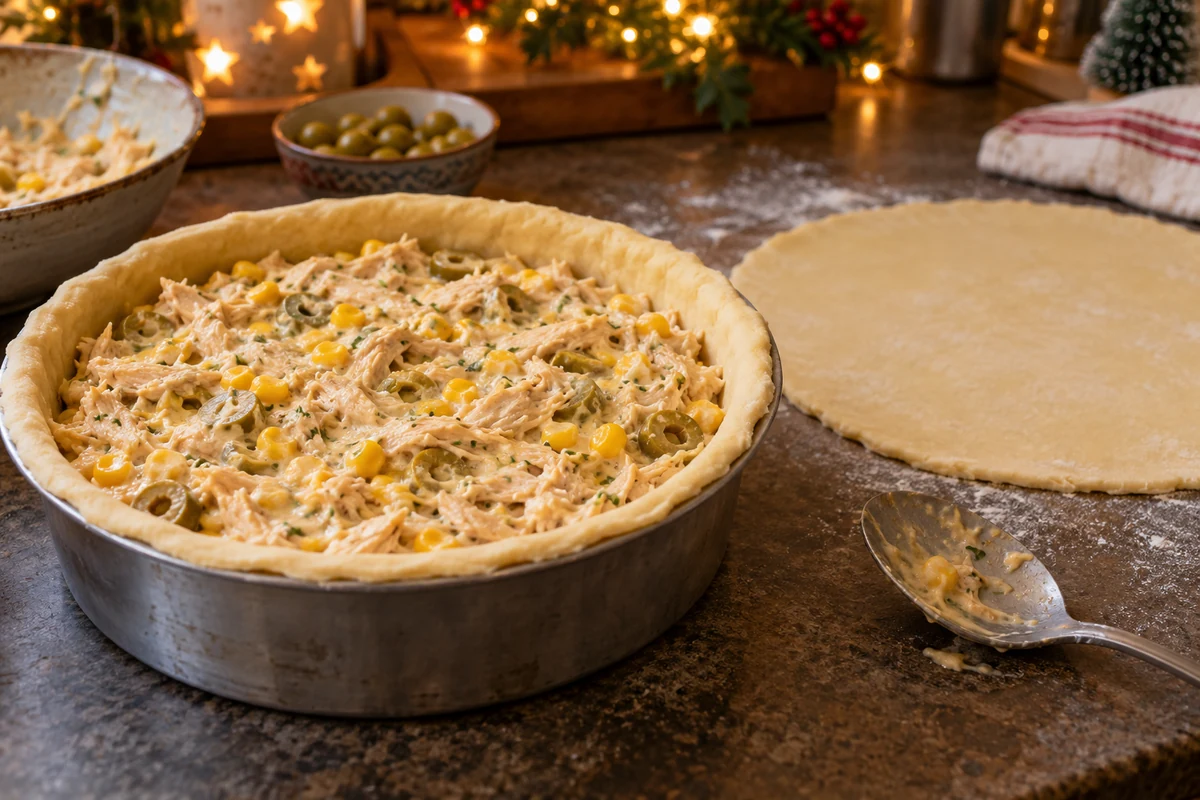
- Prepare the chicken: you need 700 g cooked chicken for this recipe. If starting with raw breast, cook enough to provide that prepared weight, using water or stock and any additional aromatics you prefer. Check the thickest part reaches 70°C for two minutes or 75°C for 30 seconds; a fixed 20–25 minutes cannot guarantee this for every piece. Follow the appliance’s instructions if using a pressure cooker. Reserve ½ cup suitable cooking stock.
- Shred: when cool enough to handle safely, shred with two forks. Freshly cooked roast chicken also works. If using refrigerated leftovers, keep within their safe storage period and avoid repeatedly reheating them during preparation.
- Cook the aromatics: heat 2 tablespoons olive oil in a large pan, soften the chopped onion, then add garlic and cook for about a minute without burning it.
- Prepare the additions: have the shredded chicken, chopped olives and drained sweetcorn ready. They will be folded into the cooked sauce below, rather than repeatedly heating already-cooked chicken during preparation.
- Make the sauce: stir the flour into the onion mixture and cook briefly, then gradually add the stock and 200 ml cream, stirring until smooth. Simmer until thickened and the flour is cooked, then mix in 120 g soft cheese. If using cornflour instead, add its cold-water slurry to the liquid and cook until thickened. For previously cooked chicken, cool the sauce promptly before combining, then heat the completed pie thoroughly in the oven.
- Season and combine: add pepper, optional nutmeg and the chopped herbs. Taste the cooked sauce for salt, then fold in the chicken, olives and sweetcorn. Reserve the optional extra 100 g cheese for assembly so it is not added twice.
- Cool promptly: spread the filling in a shallow container to release heat and refrigerate within two hours. Use a cooled filling for assembly; do not leave a deep bowl of chicken filling on the worktop for hours or assume it will cool through in 20 minutes.
- Line the dish: roll or unroll the pastry and line the base and sides, leaving an edge for sealing the lid. Check you have enough pastry and do not stretch it tightly into the dish.
- Assemble: spoon in the cooled filling without overfilling. Dot with the reserved optional extra cream cheese, add the pastry lid, seal and crimp the edges, then cut a few small steam vents.
- Glaze: beat the egg with a little water and brush over the top. The yolk-only alternative gives a deeper colour. Keep the vents open.
- Bake: preheat to 180°C conventional and follow your pastry packet’s guidance if it differs. Check from 35–45 minutes, but a deep pie with chilled filling may need longer. The pastry must be cooked and the centre steaming hot throughout; confirm with a clean probe. Cover the top loosely with foil if it browns too quickly.
- Rest before slicing: leave for about 10–15 minutes so the filling settles and the first slice is easier to lift out. Serve while still hot.
Practical Tips
Avoid a soggy base: use a cooled, thick filling and follow a suitable blind-baking method if your pastry calls for one; a fixed eight-minute pre-bake is not sufficient for every case. Filling texture: it should hold together on a spoon rather than pour. Convenient chicken: safely stored cooked chicken works, but plan the sauce preparation so the final oven bake is its reheating step. Freezing: freeze a cooled, assembled pie promptly, then thaw in the fridge before baking. Do not assume a frozen deep pie needs only 10–15 extra minutes.
Vegetarian and Less-Rich Christmas Pie Variations
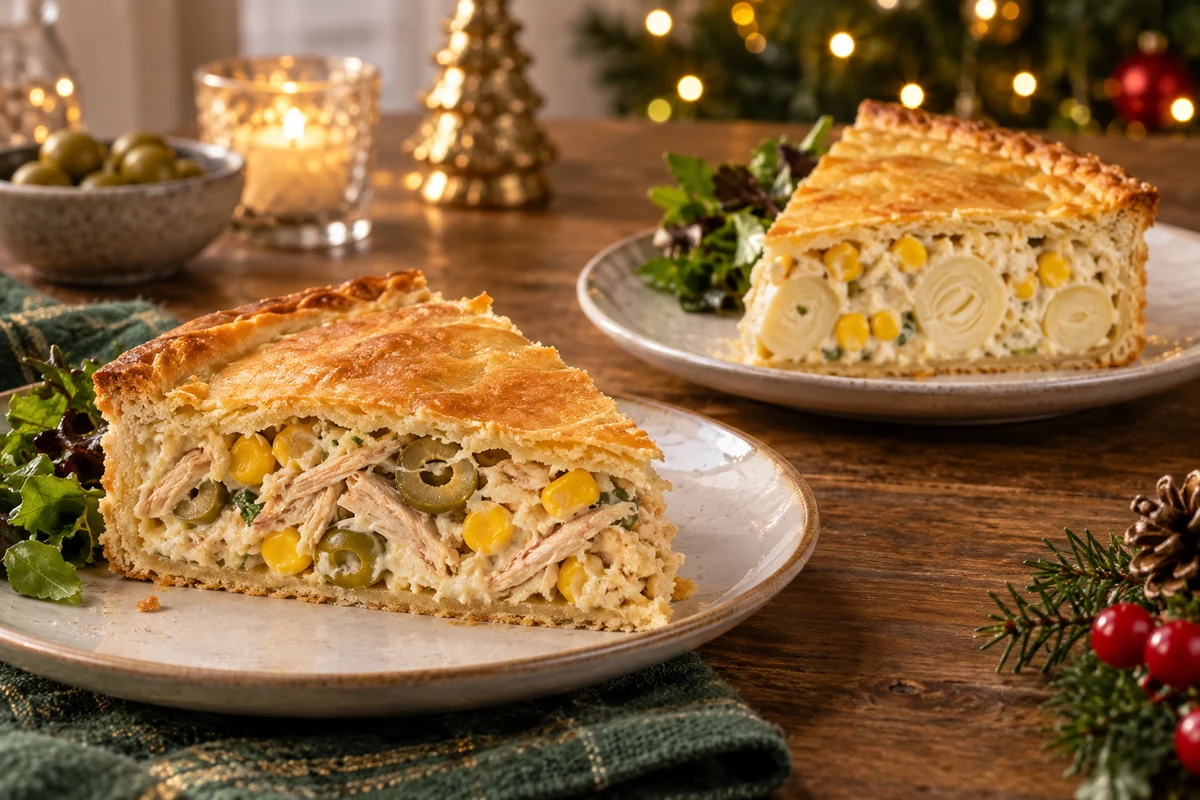
These variations keep the comforting character of Christmas empadão. One uses vegetables instead of chicken; the other reduces some rich dairy ingredients. Neither has a verified calorie calculation.
Vegetarian Hearts of Palm or Jackfruit Pie
Replace chicken with hearts of palm or young green jackfruit. Dairy ingredients can stay in a vegetarian version, while a vegan pie needs every animal-derived ingredient replaced.
- 700 g prepared, drained hearts of palm or young green jackfruit — chop the hearts of palm; prepare and shred jackfruit according to its product instructions.
- Enough shortcrust pastry for the base and lid — 500 g is the source’s starting estimate, not a guaranteed amount for every dish. Check ingredients for vegetarian or vegan suitability.
- 1 medium onion, chopped — for the flavour base.
- 2 garlic cloves, chopped — or about 1 teaspoon crushed garlic.
- ½ cup drained sweetcorn, optional — adds texture.
- ½ cup chopped green olives, optional.
- ½ cup plant-based soft cheese — or dairy cream cheese for a vegetarian version.
- 200 ml plant-based cooking cream — or dairy cream if suitable for your guests.
- 2 tablespoons plain flour — or 1 tablespoon cornflour mixed with cold water, adjusting thickness as needed.
- Salt, pepper, parsley and spring onions — to taste.
- Cook the aromatics: heat the same 2 tablespoons olive oil used in the main recipe and soften the onion and garlic.
- Add the main filling: stir in the prepared hearts of palm or jackfruit and cook for a few minutes to remove excess moisture.
- Add vegetables: mix in the drained sweetcorn and olives.
- Thicken: stir in the flour, cook briefly, then gradually add the cream and cook until thickened. Stir in the soft cheese. Use a little suitable vegetable stock if the sauce is too stiff; do not use chicken stock for a vegetarian pie.
- Season and cool: add herbs, pepper and salt as needed, then cool promptly before assembling. For a vegan pie, use a plant-based glaze rather than egg and check all pastry ingredients.
A Less-Rich Chicken Filling
Reducing cream and cheese can make a less-rich filling, but wholemeal or puff pastry is not automatically lower in fat or calories. Compare products and use an appropriate pastry recipe rather than assuming a ‘light’ label describes the finished pie.
- 700 g cooked, shredded skinless chicken breast.
- Pastry for the base and lid — a suitably thin shortcrust or wholemeal pastry can be used. Reduced-fat spreads do not always behave like butter in pastry, so follow a tested formula.
- 1 medium chopped onion and 2 garlic cloves.
- ½ cup sweetcorn and ⅓ cup olives, optional.
- ½ cup thick low-fat plain yoghurt — in place of the cream.
- ¼ cup reduced-fat cream cheese — or blended cottage cheese.
- ½ cup reduced-salt chicken or vegetable stock.
- Up to 2 tablespoons cornflour mixed with cold water — add gradually; this amount may make a small volume of sauce very thick.
- Salt, pepper and fresh herbs — to taste.
- Prepare the chicken: use properly cooked, shredded breast, following the preparation and reheating guidance in the main recipe.
- Soften the aromatics: use a suitable non-stick pan with a little oil, up to 1 tablespoon, or a cooking spray according to its instructions.
- Prepare the additions: have the chicken, sweetcorn and olives ready to fold into the finished sauce.
- Thicken the sauce: add the stock, then enough cornflour slurry to thicken while stirring and cooking through. Remove from direct heat before adding yoghurt and soft cheese. Combine with the chicken and vegetables as described in the main method, avoiding repeated reheating of leftover chicken.
- Assemble and bake: use cooled filling, cover with pastry and glaze with egg or a little milk if desired. Bake according to the pastry’s requirements, checking from around 35–45 minutes at 180°C conventional and continuing until the centre is properly hot.
Useful Tips
Moisture: drain preserved ingredients and cool the filling promptly. Flavour: fresh herbs and a small pinch of nutmeg add interest without needing extra cheese. Vegan versions: replace chicken, stock, dairy, pastry fat and egg glaze as needed, and disclose any nut or soya ingredients in substitutes.
Serving Christmas Chicken Pie
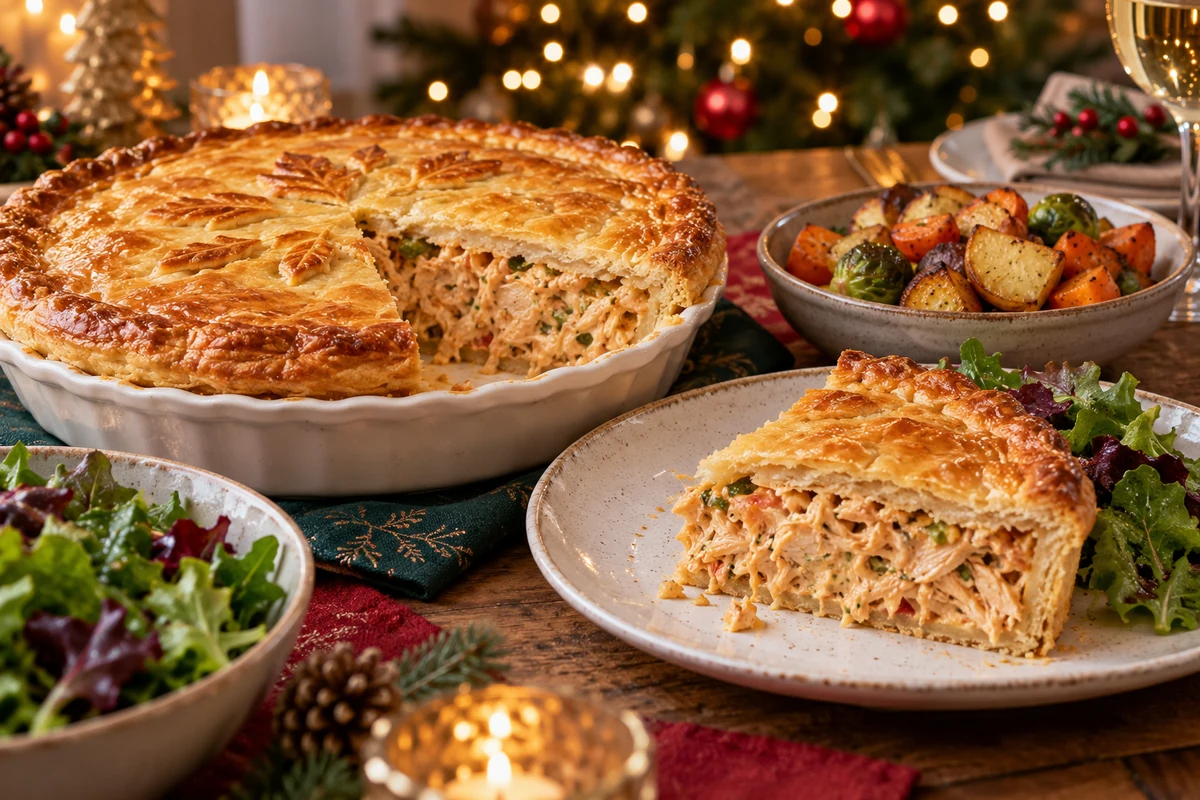
- Make it the centrepiece: serve the pie in its dish on a stable heatproof stand or trivet.
- Let it settle: rest for 10–15 minutes before cutting, while keeping it hot enough for serving.
- Portion thoughtfully: 120–150 g may suit a small portion with other dishes; a main-course serving may be larger. Divide according to the finished pie and the rest of the menu.
- Have tools ready: place a knife, pie server and plates nearby, with care around the hot dish.
Arranging the Table
- Keep sightlines clear: use a neutral tablecloth and low decorations so guests can see each other.
- Easy serving: arrange plates and dishes in a clear sequence to avoid crowding.
- Subtle decoration: keep decorative greenery away from food. Use edible herbs for any garnish that touches the pie.
- Warm lighting: soft lighting highlights the golden pastry. Keep candles well away from guests, food and flammable decorations, or use battery lights.
Cutting and Serving
- Bring it to the table: present the whole pie on its stable heatproof base.
- Cut carefully: use a clean knife and wipe it between cuts, lifting portions with a pie server.
- Serve promptly: add any filling that loosens during slicing to the same plate rather than leaving it in the dish.
- Buffet option: put out manageable portions and replenish as needed, rather than leaving the entire pie at room temperature for an extended period.
Side Dishes and Drinks
- Fresh salad: leaves with a light vinaigrette contrast with the creamy filling.
- Roasted vegetables: carrots, courgettes and colourful potatoes add texture and colour.
- Sauces: a small amount of herby yoghurt sauce or mild chimichurri can accompany the pie, though it already has a rich filling.
- Drinks: rosé, white wine or a light beer are options for adults who choose alcohol. Offer water with lemon and other alcohol-free drinks too.
Advance Preparation and Storage
- Prepare ahead: make the sauce and pastry the day before if useful, cooling and refrigerating promptly. Keep cooked chicken within its original safe storage period; assembling a pie does not restart that clock.
- Bake ahead: if chilling a freshly cooked pie for later, cool promptly in manageable portions and refrigerate within two hours. Reheat only once until steaming hot throughout. A fixed 10–12 minutes at 160°C is not a reliable reheating time for a whole deep pie.
- Freeze: freeze the assembled, cooled pie without its egg glaze, well wrapped and labelled. About two months is a quality target. Thaw in the fridge, use within 24 hours of complete thawing and bake thoroughly rather than relying on a small time extension from frozen.
- Reheating: an oven generally preserves pastry texture better than a microwave. Safety depends on heating the centre thoroughly, not on choosing a particular appliance. If the chicken had already been reheated in the pie, avoid another reheating cycle.
Finishing Touches
- Garnish: a little fresh parsley, spring onion or lemon zest adds colour and aroma.
- Plating: serve with a small portion of salad and edible herb garnish.
- Labels: identify vegetarian and other variations clearly, including relevant allergens. Avoid nutritional claims such as ‘low calorie’ without calculating the finished recipe.
- Atmosphere: gentle music and soft lighting can make a simple family meal feel festive.
Tips for a Creamy Filling
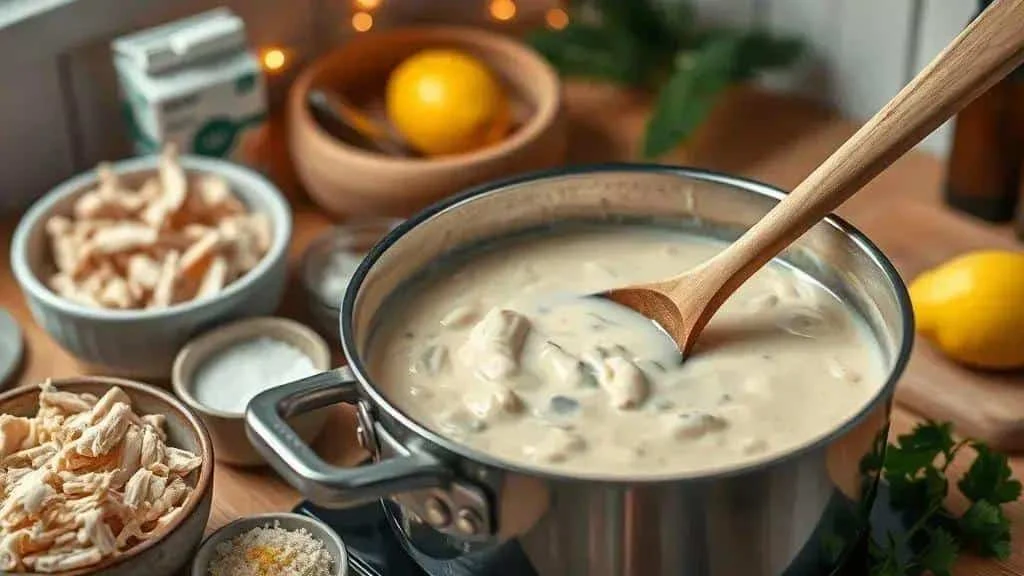
A few practical choices help the Christmas chicken pie filling stay creamy without soaking the pastry.
Thickness and Binding
Alternative roux method: you can make the sauce separately with 1–2 tablespoons butter and the same 2 tablespoons flour, then gradually add the liquids and cook through. This replaces the flour-thickening step in the main method; it is not an extra dose of flour. Cornflour slurry is another option, but gluten-free pastry is also needed for a gluten-free pie.
Liquid balance: use the 200 ml cream and up to ½ cup stock gradually. Stop adding liquid if the filling would become runny.
Building Flavour
- Stock: use the reserved cooking stock if suitable, or a well-flavoured prepared stock, accounting for its salt content.
- Optional savoury note: a teaspoon of Worcestershire or soy sauce can add depth. Check ingredients: Worcestershire often contains fish, and ordinary soy sauce commonly contains wheat.
- Extra cheese: the optional 100 g soft cheese is already included in the recipe. Grated hard cheese is a different flavour variation; do not automatically add another 50–100 g on top of every optional addition, and check vegetarian suitability.
Controlling Moisture
- Drain well: drain sweetcorn, hearts of palm and olives in a sieve. Let chicken drain naturally; there is no need to squeeze it through a cloth and risk introducing contamination.
- Reduce watery ingredients: cook excess liquid out of vegetables before combining with the thick sauce.
- Use cooled filling: cool promptly before assembly so the pastry fat does not melt prematurely.
Practical Details
- Soft-cheese pockets: distribute the reserved extra cheese in small spoonfuls during assembly.
- Aromatic finish: a little nutmeg or lemon zest adds flavour without needing more sauce.
- Final seasoning: taste the fully cooked sauce after cheese and stock have been added, before deciding whether it needs more salt.
Keeping Leftover Filling
Storage: refrigerate promptly in a covered container and use within 48 hours, respecting any earlier limit from the chicken’s preparation. Freeze if it will not be used in time. Reheat only once until steaming hot throughout; a little cream or milk may loosen the sauce but does not extend its safe storage life.
This Brazilian-style Christmas chicken pie brings a creamy filling and golden pastry to the festive table. A thick, cooled filling and a thoroughly baked centre matter more than rushing the timing.
Choose the variation that suits your guests, keeping ingredient substitutions, allergens and storage requirements clear.
For more Christmas recipes and seasonal ideas, follow our social channels and visit the I Love Christmas blog.
FAQ: Creamy Christmas Chicken Pie
How do I prevent a soggy pastry base?
Drain preserved ingredients, thicken the sauce and cool the filling promptly before assembly. If your pastry needs blind baking, follow a suitable method for that pastry and dish rather than assuming an eight-minute pre-bake is enough.
How do I make the filling creamy without making it runny?
Use either the flour-thickened sauce or a cornflour slurry, add stock gradually and cook until the sauce holds its shape. Soft cheese adds richness, but excessive liquid or multiple extra cheese additions can upset the balance.
Can I make a vegetarian or vegan version?
Yes. Use prepared hearts of palm or young jackfruit instead of chicken and vegetable stock instead of chicken stock. A vegan version also needs plant-based cream, soft cheese, pastry and glaze. Check allergens in substitutes.
How should I freeze the pie?
Freeze the cooled, assembled pie without its glaze, well wrapped and labelled. Aim to use within about two months for quality. Thaw in the fridge, use within 24 hours of complete thawing and bake until the pastry and centre are properly cooked.
What oven temperature and time should I use?
The source uses 180°C conventional with checking from 35–45 minutes, but follow the pastry’s guidance and allow longer for a deep chilled pie. Check that the centre is steaming hot throughout; cover the top if it colours too quickly. Rest briefly before cutting.
How can I store and reuse leftover filling?
Refrigerate promptly and use within 48 hours, or freeze, taking the chicken’s earlier storage into account. Reheat only once until steaming hot throughout. Use safely stored filling in small pies or other dishes, rather than repeatedly warming the same batch.
Sources and Further Reading
- Food Standards Agency: cooking food safely
- Food Standards Agency: chilling, freezing and defrosting food
- Handling flour and flour products safely