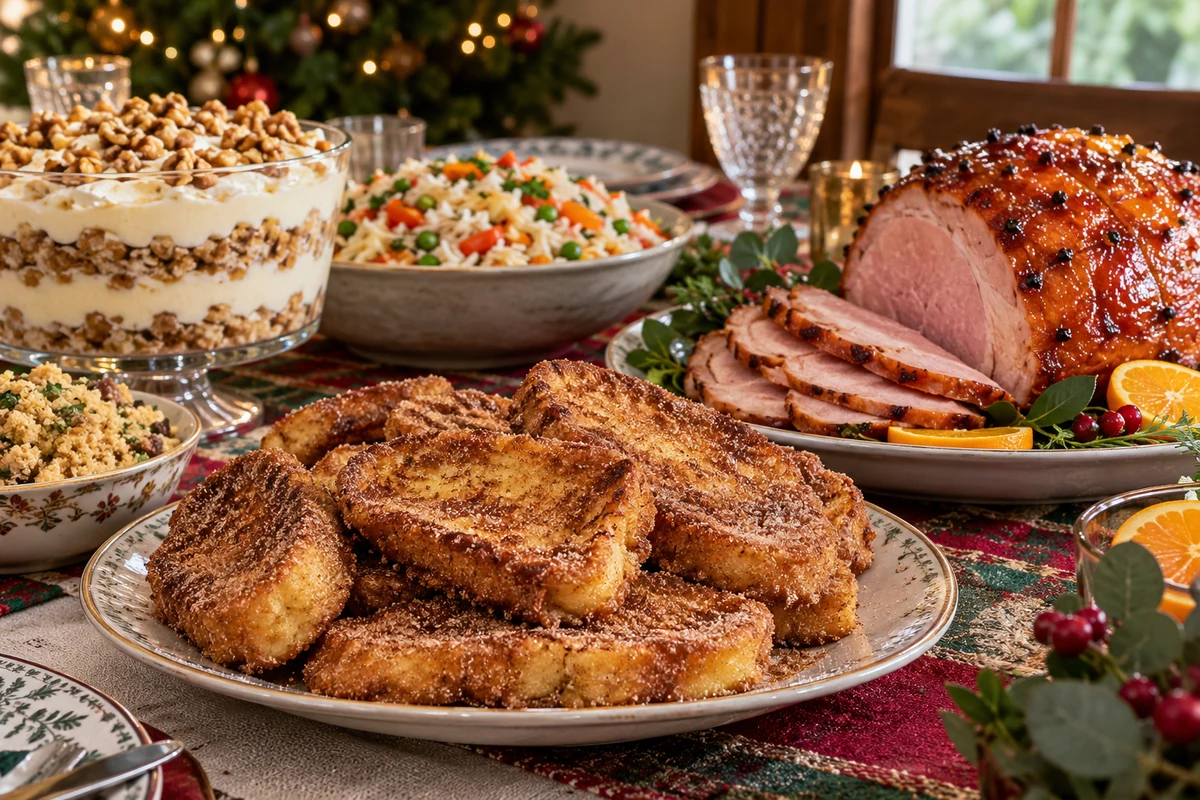
Christmas ham and cheese quiche combines a crisp pastry case with an egg-and-cream filling. Blind baking helps protect the base from moisture, while different cheeses and vegetables offer useful variations for a festive meal.
Christmas ham and cheese quiche is a comforting dish for a festive lunch or buffet. A few straightforward steps turn familiar ingredients into a golden tart that is easy to portion and share.
Ingredients for Christmas Ham and Cheese Quiche
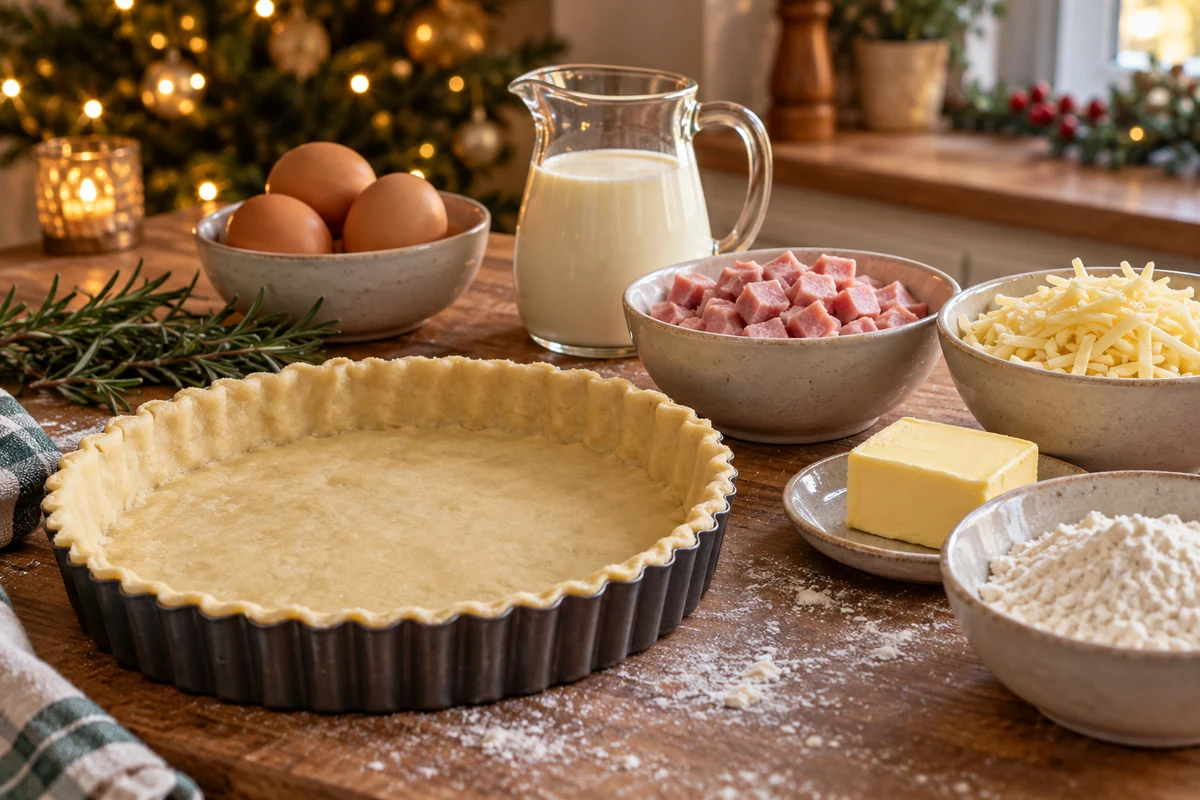
For a well-balanced Christmas quiche, gather the ingredients below and check your tin’s depth. A shallow 24 cm tart tin may not hold all the filling; bake surplus separately rather than overfilling.
- Pastry to line a 24 cm tart tin — ready-made shortcrust is convenient, or use homemade pastry. Puff pastry is another option, but follow its own baking guidance.
- 4 large eggs — alternatively, three whole eggs and one extra white give a different, slightly less-rich custard.
- 300 ml cream — or 200 ml cream and 100 ml whole milk for a less-rich filling. The type of cream affects richness.
- 150 g diced cooked ham — cooked smoked turkey is an alternative. Cook bacon thoroughly and drain it before using instead.
- 200 g grated mozzarella — or another melting cheese such as Gruyère, or a mixture.
- 50 g grated Parmesan, optional — adds a stronger, saltier flavour. Use a suitable vegetarian hard cheese in meat-free variations.
- 1 small onion, chopped, optional — or 2 tablespoons chopped spring onions.
- 1 tablespoon butter — for the onion; olive oil is an alternative.
- Salt — use sparingly because ham and cheese are already salty; the original ½ teaspoon may not all be needed.
- Ground black pepper — to taste.
- ¼ teaspoon grated nutmeg, optional.
- 1 tablespoon Dijon mustard, optional — adds tang; mustard is an allergen.
- 2 tablespoons chopped fresh herbs — parsley, chives or thyme.
- Dried cranberries or rosemary sprigs, optional — for a festive garnish. Remove woody rosemary stems before eating.
Small Variations
Whisk the eggs and cream just until combined, without incorporating excessive air. Replacing some cream with milk changes the texture as well as the richness. You can add 1 tablespoon mixed fresh herbs or 1 teaspoon smoked paprika. Cook and drain bacon before adding it, if using instead of ham.
How to Make Christmas Ham and Cheese Quiche

Follow these steps to prepare the Christmas quiche, checking the pastry and filling rather than relying entirely on timings.
- Prepare the oven and tin: preheat to 180°C conventional, with a shelf in the centre. A 24 cm loose-bottomed tart tin makes serving easier; set it on a baking tray to catch any leaks.
- Line the tin: ease the pastry into the corners without stretching it and trim the excess. Lightly prick the base if appropriate for your pastry recipe.
- Blind bake: line with baking paper and fill with baking beans or dry rice. The source suggests 10 minutes with weights and another five without, but this may be too short for some pastry: follow its instructions and continue until the sides are set and the base looks dry and lightly coloured.
- Cook the onion: melt the butter and gently soften the chopped onion, then allow it to cool slightly. The ham is already cooked and can go straight into the filling; it does not need a separate reheating step.
- Mix the custard: whisk four eggs with 300 ml cream, or 200 ml cream and 100 ml milk. Add pepper, optional nutmeg and Dijon, and only a little salt. Do not taste the raw egg mixture; cook a small spoonful separately if you need to check seasoning.
- Fill the case: distribute onion, ham and mozzarella in the pastry case, adding the optional Parmesan if using. Pour in enough custard to stay below the rim. Bake any excess in a separate suitable dish.
- Bake: bake at 180°C for roughly 35–45 minutes, depending on depth and oven. The filling should be set, with at most a slight wobble rather than liquid movement. Check the centre reaches 70°C for two minutes or 75°C for 30 seconds. Cover loosely with foil if the top colours too quickly.
- Rest: leave for 10–15 minutes before cutting so the filling settles and slices hold together.
- Serve and garnish: remove from the tin carefully and add chopped herbs. A few dried cranberries or edible herb sprigs can give a festive finish.
- Store and reheat: refrigerate leftovers within two hours and use within 48 hours, or freeze. Reheat only once until steaming hot throughout; 10–12 minutes at 160°C is not sufficient for every portion size.
Practical Tips
- Protect the base: blind baking helps prevent a wet custard from soaking into raw pastry.
- Season cautiously: account for salt in ham and cheese. Check seasoning with a fully cooked sample, not raw custard.
- Mix cheeses: combine mozzarella with a stronger cheese such as Gruyère for a different flavour.
- Watch the bake: begin checking from around 30 minutes, especially in a shallow tin.
Tips for a Good Pastry Case
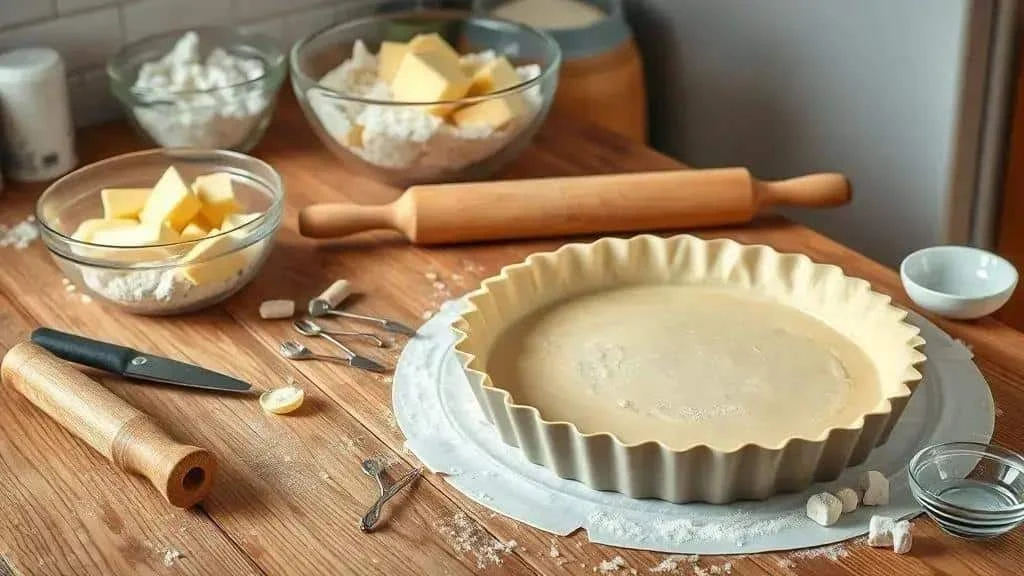
- Keep ingredients cool: cold fat and water help shortcrust pastry retain a tender texture. Shortcrust and laminated puff pastry are different preparations.
- Rub in the fat: if making shortcrust, work the butter into the flour according to your chosen recipe, leaving small pieces rather than melting it into a paste.
- Avoid overworking: mix only enough to bring the dough together, as excessive handling can make it tough.
- Add water gradually: use just enough cold water for the dough to hold together without becoming sticky.
- Rest in the fridge: wrap and chill for at least 30 minutes, or according to the pastry recipe, to firm the fat and reduce shrinkage.
- Roll with care: rolling between suitable sheets of baking paper can reduce extra flour and make transfer easier. Remove all wrapping before baking.
- Use little dusting flour: excess flour can dry the dough.
- Choose a suitable tin: a loose-bottomed metal tin helps with removal; chilling the lined tin can help the pastry keep its shape.
- Seal if needed: after blind baking, a thin layer of beaten egg white, baked until set, can help reduce moisture penetration.
Blind Baking Step by Step
- Line the tin: ease pastry into the 24 cm tin without stretching, then trim appropriately.
- Chill: refrigerate the lined tin for around 15 minutes, or longer if the pastry recipe directs. Prick the base lightly where appropriate.
- Add weights: line with baking paper and fill sufficiently with baking beans or dry rice to support the sides.
- First bake: bake in the preheated oven until the edges are set. The original 10-minute estimate is only a starting point; pastry thickness and the packet’s guidance take precedence.
- Remove the weights: lift out the paper and weights carefully, then continue baking until the base looks dry and lightly golden, checking from another 5–8 minutes.
- Optional seal: brush lightly with extra beaten egg white and return to the oven until set, usually a few minutes. This egg white is additional to the eggs in the filling.
Final Pastry Tips
- Freezing: homemade pastry can be wrapped and frozen according to its recipe; about one month is a practical quality target. Follow storage instructions for bought pastry.
- Substitutions: vegetable shortening or puff pastry does not automatically produce a lower-fat result. Compare ingredients or use a tested lower-fat pastry recipe if that is your aim.
- Protect the edges: cover them with foil before they burn if they are colouring faster than the centre cooks.
- Check doneness: look for set edges and a centre that is not liquid, and confirm the temperature as described above.
Christmas Quiche Variations
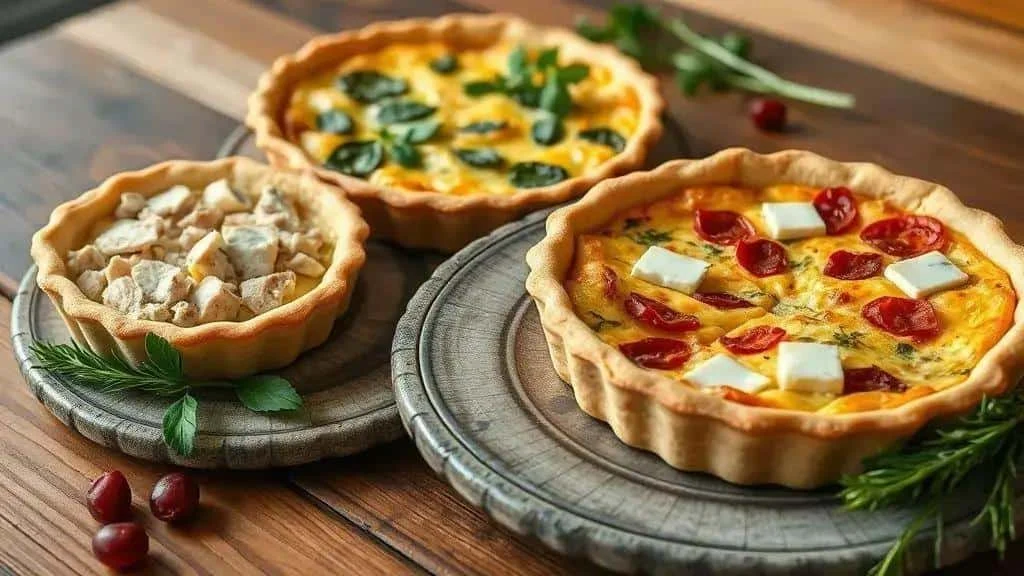
These three variations change the flavour or richness of the Christmas quiche. The vegetarian versions need suitable cheese and pastry; nutritional values have not been calculated.
Yoghurt and Turkey Quiche
- Pastry for a 24 cm tart tin
- 3 large eggs
- 200 g thick plain yoghurt — replaces the cream for a different, less-rich custard.
- 100 ml milk — whole or skimmed, according to preference.
- 120 g diced cooked turkey breast — not raw turkey.
- 100 g well-drained ricotta or cottage cheese — crumble or spoon it rather than trying to grate a soft cheese.
- 1 small onion, chopped
- Salt and black pepper — to taste.
- 2 tablespoons chopped fresh herbs, such as parsley and chives.
- Preheat the oven to 180°C conventional and line and blind bake the pastry case as above.
- Soften the onion in 1 teaspoon olive oil, then cool slightly. Add the already-cooked turkey during assembly rather than reheating it separately.
- Whisk the eggs with yoghurt and milk, adding herbs, pepper and a little salt.
- Fill the case with onion, turkey and cheese, then pour over the custard without overfilling.
- Bake for approximately 30–40 minutes, continuing until set and properly cooked in the centre. Rest for about 10 minutes before slicing.
Vegetarian Spinach and Ricotta Quiche
- Vegetarian pastry for a 24 cm tart tin
- 4 large eggs
- 300 g mashed ricotta — or 200 g ricotta and 100 g cream cheese for a softer mixture; check vegetarian suitability.
- 200 g cooked, well-drained spinach — if using frozen spinach, prepare according to its instructions and remove excess water.
- 1 garlic clove, chopped
- 50 g grated vegetarian hard cheese — traditional Parmesan is made with animal rennet and is not vegetarian.
- Salt, pepper and nutmeg — to taste.
- Cook the garlic in a little olive oil, add the prepared spinach, season and allow to cool slightly.
- Mix the ricotta with eggs, grated hard cheese, pepper, a little salt and a pinch of nutmeg.
- Add the spinach and spread in the blind-baked pastry case. This ricotta mixture is thicker than the cream custard in the main recipe.
- Bake at 180°C for roughly 35–45 minutes until the centre is set and properly cooked. Rest briefly before serving.
Vegetarian Sun-Dried Tomato and Goat’s Cheese Quiche
- Vegetarian pastry for a 24 cm tart tin
- 3 large eggs
- 250 ml cream — or 150 ml cream and 100 ml milk.
- 120 g goat’s cheese — feta is an alternative. Choose cheese labelled suitable for vegetarians; goat’s cheese is not automatically dairy-free or lactose-free.
- 80 g sun-dried tomatoes, sliced — rehydrate dry tomatoes according to their instructions, or drain oil-packed ones.
- 1 tablespoon chopped fresh basil
- Salt and pepper — to taste.
- Whisk eggs and cream until combined and season sparingly.
- Arrange tomatoes and pieces of goat’s cheese in the blind-baked case.
- Pour in the custard and scatter over the basil.
- Bake at 180°C, checking from 30–40 minutes, until set and properly cooked. Rest for about 10 minutes before slicing.
Tips for Every Variation
- Drain wet ingredients: spinach and whey-rich cheeses can release enough liquid to soften the pastry.
- Use salt cautiously: cheese and sun-dried tomatoes may provide plenty already.
- Smaller quiches: 10–12 cm tins make individual portions. Check earlier, but do not reduce the baking time by a simple size ratio.
- Storage: cool promptly, refrigerate within two hours and use within 48 hours, or freeze. Reheat only once until steaming hot throughout.
Serving Quiche at Christmas

- Let the quiche rest for 10–15 minutes after baking so the filling settles.
- Remove carefully from the tin onto a suitable board or serving plate. Support the loose base and avoid touching hot metal.
- Serve warm or chilled, according to preference. Do not leave an egg-and-dairy dish at room temperature for prolonged buffet service.
- Portions: a 24 cm quiche can be cut into six to eight slices. Allow for the size of the slices and the other food available rather than assuming two slices per guest.
- Reheating: use an oven around 160°C if that suits the portion, but continue until the centre is steaming hot throughout. An oven helps the pastry stay firmer than a microwave; the appliance alone does not determine safety.
Cutting Neat Slices
- Allow the filling to settle: wait around 10–15 minutes after baking.
- Use a suitable knife: a sharp knife can cut the pastry cleanly. If warming it in hot water, dry it carefully before use.
- Wipe between cuts: remove filling from the blade so each slice stays neat.
- Lift with a pie server: slide beneath the base to support the pastry.
- Plan portions: mark six to eight equal slices before cutting if you want uniform servings.
Side Dishes and Pairings
- Fresh salad: rocket with citrus dressing balances the rich filling. Use vegetarian cheese shavings when serving a vegetarian quiche.
- Chutneys and pickles: fruit chutney, mild chilli jam or sharp pickles provide contrast.
- Roasted vegetables: carrots, squash or asparagus with herbs bring colour and texture.
- Bread: a little crusty bread or toast can accompany a larger buffet, though the quiche already has pastry.
- Drinks: Pinot Noir, Chardonnay, sparkling wine or cider are options for adults who choose alcohol. Apple juice with mint is an alcohol-free alternative.
Arranging the Christmas Table
- Place the quiche centrally on a stable board or ceramic plate.
- Use edible festive garnishes such as chopped herbs and dried cranberries. Keep woody stems and decorative greenery separate from portions.
- Set out accompaniments in small bowls so guests can build their own plates.
- Identify variations and allergens with clear labels. ‘Vegetarian’ and ‘lower fat’ describe different things and should not be used interchangeably.
- Serving time: bring the quiche out close to eating time and replenish a buffet in small quantities. Include cooling and serving time when judging how long it has been out of the fridge.
Last-Minute Tips
- Make ahead: bake earlier in the day, cool promptly and refrigerate. Reheat once before serving if you want it hot.
- Refresh the pastry: use an oven for reheating, checking the centre as well as the crust rather than briefly warming only the base.
- Show a slice: serve the first portion on a plate so guests can see the filling.
Ingredient Tips for Better Flavour
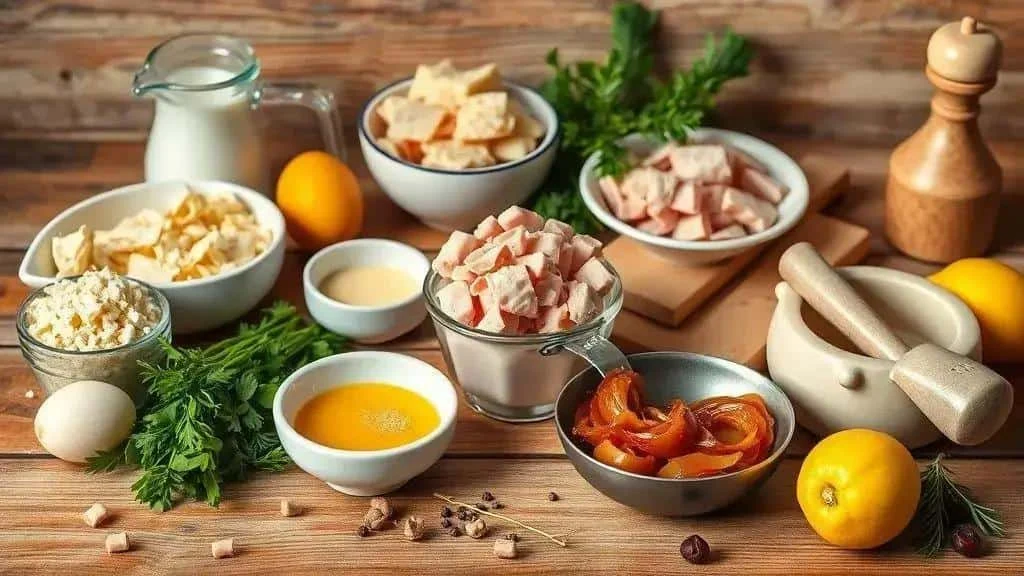
Small ingredient choices can change the flavour of a Christmas quiche without making the method more complicated.
Ingredient Notes
- Cheese: mature cheeses give a stronger flavour. Replace part of the mozzarella rather than automatically adding another 30–50 g and increasing salt and filling volume.
- Ham and turkey: compare labels. Processed turkey is not automatically lower in salt or calories than cooked ham.
- Nutmeg: ¼ teaspoon gives the custard a warm aroma; use a small amount so it does not dominate.
- Dijon mustard: adds tang and savoury flavour. The eggs, rather than the mustard, provide the main structure of the set filling.
- Fresh herbs: parsley and chives make a fragrant garnish, or can be mixed into the custard.
Ways to Develop Flavour
- Grate cheese freshly: it can melt differently from pre-grated products containing anti-caking ingredients, though the result depends on the cheese.
- Soften the onion gently: five to seven minutes may soften it and bring out sweetness; full caramelisation takes longer and should not be promised in that time.
- Remove excess moisture: drain ricotta and tomatoes appropriately and squeeze water from prepared spinach using clean equipment.
- Browned butter is optional: it adds a nutty flavour, but is different from clarified butter. Extra butter on the pastry base is not necessary for this recipe and can make it greasy.
- Check seasoning safely: cook a small sample of custard before tasting; do not taste raw egg mixture.
Flavour Combinations
- Ham, Parmesan and nutmeg — a rich, savoury combination.
- Cooked turkey, yoghurt and fresh herbs — use the yoghurt variation above with 2 tablespoons herbs.
- Spinach, ricotta and lemon zest — 1 teaspoon zest adds freshness to the creamy filling.
- Sun-dried tomato, goat’s cheese and basil — a sweet, tangy and savoury mixture, using vegetarian cheese when required.
Quick Substitution Guide
- Cream: the main recipe uses 300 ml, with an alternative of 200 ml cream and 100 ml milk. Adding melted butter back into a milk substitution does not automatically make the result lighter.
- Mozzarella: replace the 200 g with 150 g mozzarella and 50 g Gruyère for a stronger flavour.
- Ham: use 150 g cooked diced ham, or a smaller amount of thoroughly cooked, drained bacon to taste. Bacon changes the salt and fat content.
Small Finishing Touches
- Grate nutmeg freshly if available for a fragrant finish.
- Add a little lemon zest to brighten a rich cheese filling.
- Finish with fresh herbs just before serving.
Ready for the Table
This Christmas quiche offers a straightforward way to serve a warm, shareable dish with flavours suited to your guests.
If you try it, share your photos and explore our social channels for more seasonal cooking ideas.
Visit the I Love Christmas blog for recipes, decorations and festive inspiration. Enjoy your celebrations!
FAQ: Christmas Ham and Cheese Quiche
What are the main ingredients?
You need a pastry case, eggs, cream, cooked ham and grated cheese. Onion, herbs, nutmeg and Dijon are optional flavour additions. Check the tin’s depth before adding all the filling.
How do I avoid a soggy pastry base?
Blind bake the case until set and dry, drain wet filling ingredients and avoid overfilling. An optional thin layer of extra beaten egg white, baked until set, can help protect the base.
Can I prepare the quiche ahead and reheat it?
Yes. Cool promptly, refrigerate within two hours and use within 48 hours. Reheat only once until steaming hot throughout. The time depends on portion size, starting temperature and oven; do not assume a whole quiche is ready after 10–12 minutes.
How can I make a less-rich version?
Replace some cream with milk or follow the yoghurt variation, and choose a less-rich cheese. Compare labels rather than assuming processed turkey or wholemeal pastry is automatically lower in fat, salt or calories.
How do I make it vegetarian?
Use spinach and ricotta, or sun-dried tomatoes and goat’s cheese, with pastry and cheeses labelled suitable for vegetarians. Traditional Parmesan contains animal rennet. Drain vegetables well before adding them.
How long can I refrigerate it, and can I freeze it?
Refrigerate promptly and eat within 48 hours, or freeze well-wrapped portions. About one month is a practical quality target. Thaw in the fridge, use within 24 hours of complete thawing and reheat only once until steaming hot throughout.
Sources and Further Reading
- Food Standards Agency: cooking food safely
- Food Standards Agency: chilling, freezing and defrosting food
- Handling flour and flour products safely