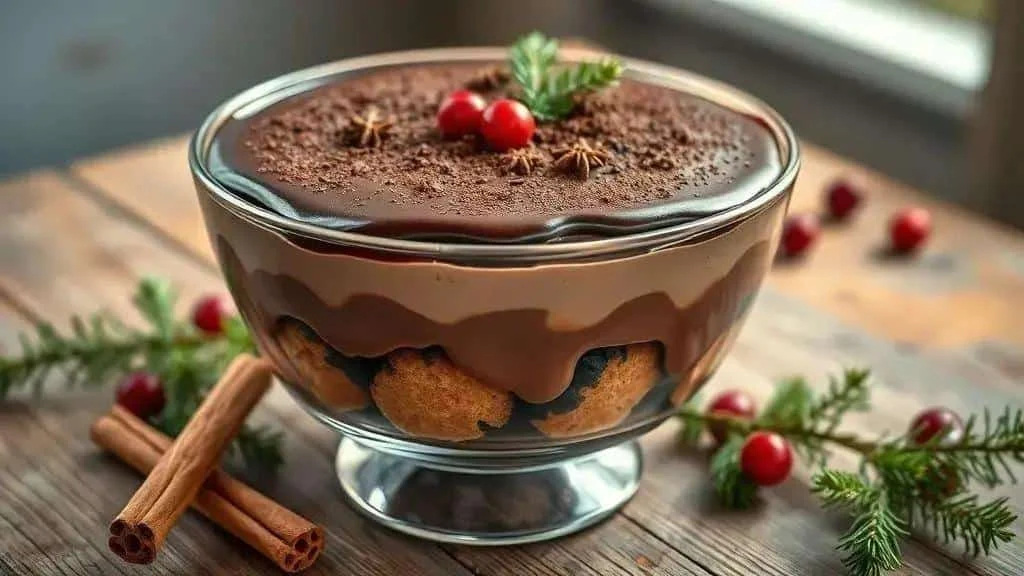
Christmas chocolate pavé is a Brazilian layered dessert made with lightly moistened biscuits and chocolate cream. Condensed milk, cocoa, butter and cream form the filling, with optional fruit or nuts on top. Assemble it ahead and keep it chilled; dietary adaptations require checking every ingredient, including the biscuits and decorations.
Christmas chocolate pavé brings a comforting Brazilian dessert to the festive table. This guide explains the layers, chocolate filling and finishing touches, with practical variations for your gathering.
Ingredients for Classic Christmas Chocolate Pavé
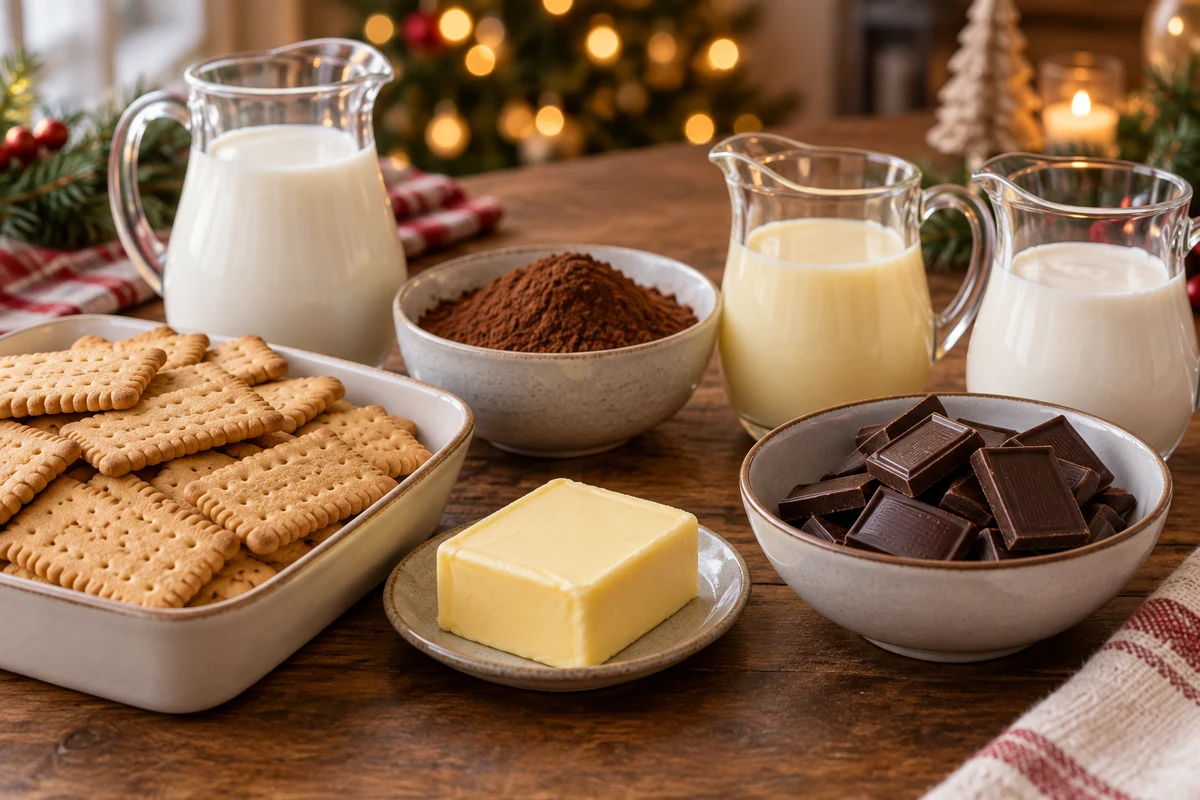
For a classic Christmas chocolate pavé, gather the ingredients below. The main method uses cocoa; melted chocolate makes a richer, firmer variation rather than an identical substitution.
Ingredients for Classic Christmas Chocolate Pavé
- 1 tin (about 395–397 g) sweetened condensed milk – the base of the filling; use a suitable plant-based equivalent for a vegan version.
- 2 tablespoons cocoa powder – or use 150–200 g melted dark chocolate for a different, richer filling, adjusting its consistency as needed.
- 200 ml single cream – for a creamy filling; a suitable plant cream or coconut cream changes the flavour and setting texture.
- 2 tablespoons unsalted butter, about 30 g – or a suitable plant-based baking block for a dairy-free version.
- 200–250 g plain tea biscuits or sponge fingers – use suitable gluten-free or vegan biscuits if required; sponge fingers commonly contain egg.
- Up to 240 ml milk – for lightly moistening the biscuits; cooled coffee or a suitable plant-based drink can be used instead. Optional alcohol is for an adult version only.
- 100 g dark chocolate, grated or shaved – optional topping.
- 1 teaspoon vanilla extract – optional flavouring.
- Dried fruit or chopped nuts, to taste – optional cranberries, walnuts or other suitable toppings.
Ingredient notes and substitutions
Melted chocolate usually makes a firmer filling than cocoa alone. A ganache topping is another option, using extra cream as specified below. For a less sweet impression, choose unsweetened cocoa and dark chocolate rather than sweet toppings. Reducing condensed milk or adding extra cream changes the set, so test a small batch. Dip biscuits briefly rather than soaking them.
How to Make Classic Christmas Chocolate Pavé
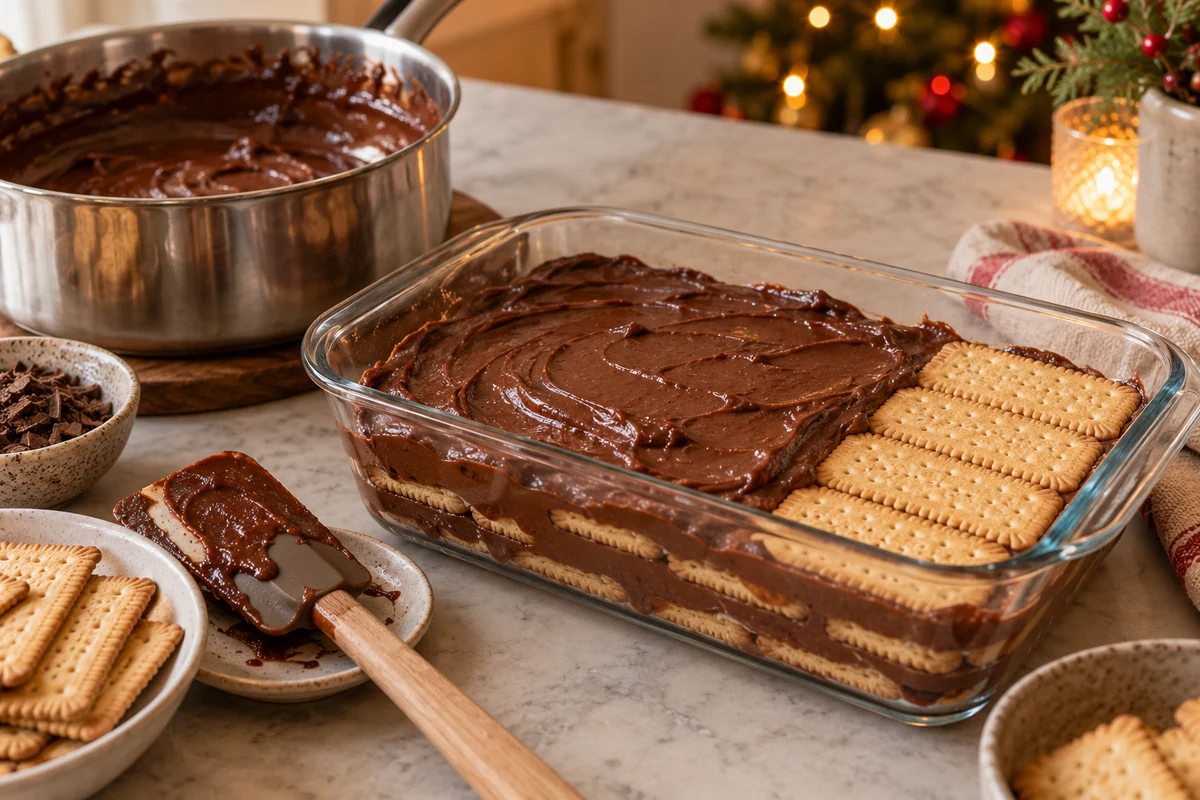
- Measure the ingredients: prepare the condensed milk, 2 tablespoons cocoa, 30 g butter, 200 ml cream, 200–250 g biscuits, up to 240 ml milk and optional 100 g chocolate topping.
- Cook the filling: stir the condensed milk, cocoa and butter together in a saucepan over a low heat. Stir continuously until smooth and thickened, with a brief trail visible across the bottom. Keep it soft and spreadable, rather than cooking to a firm confectionery consistency.
- Add cream and vanilla: remove from the heat and stir in 200 ml cream and optional 1 teaspoon vanilla. Transfer to a shallow clean container to cool promptly; refrigerate within 1–2 hours rather than leaving it out until completely cold.
- Prepare the dipping liquid: pour milk, cooled coffee or a plant-based drink into a shallow bowl. If adding a little liqueur, label the dessert accordingly; the alcohol is not cooked off.
- Lay the first biscuits: briefly dip them and arrange side by side in a clean dish sized to fit approximately two biscuit layers and two cream layers.
- Add chocolate cream: spread half the cooled filling evenly over the biscuits.
- Repeat: add another layer of lightly dipped biscuits and the remaining cream. Add a little chopped nut or dried fruit between layers if desired.
- Finish the topping: add grated chocolate, or make ganache with 100 g chocolate and an extra 50 ml heated cream. Let the ganache cool until spreadable before adding it.
- Chill: cover and refrigerate for at least 4 hours, preferably overnight, so the biscuits soften and the layers settle.
- Serve and store: cut portions if firm enough, or use a serving spoon for a softer set. Keep covered in the fridge and use within 48 hours of making the filling, or sooner if an ingredient requires it.
Practical tips
Dip lightly: about a second per side is a starting point, but delicate biscuits may need only a brush of liquid.
Check the whole recipe: a vegan version needs plant-based condensed milk, cream, butter replacement, dipping liquid, biscuits and chocolate. For gluten-free pavé, check all ingredients as well as the biscuits.
Sweetness and texture: extra cocoa can make the flavour less sweet without removing sugar. Adding 50 g melted chocolate makes the filling richer and potentially firmer. Test changes rather than assuming the original set will remain the same.
Christmas Chocolate Pavé Variations

These are variations on the main method, not separate complete ingredient lists. Retain the base ingredients unless a replacement is specified, and check the consistency after changing the chocolate or dairy.
1. Chocolate and berry pavé
Tart fruit provides contrast to the sweet chocolate cream.
- 1 tin (about 395–397 g) sweetened condensed milk – for the filling.
- 2 tablespoons cocoa powder – or 150 g melted dark chocolate for a richer variation.
- 200 ml cream – stirred into the filling.
- 200 g fresh berries – wash and dry strawberries, raspberries or blackberries. For frozen fruit, follow the packet’s cooking instructions, then cool and drain before use.
- 200 g plain biscuits – for the layers.
Assembly: add well-drained berries between cream layers, reserving some for decoration just before serving.
2. Mocha pavé
Coffee adds a contrasting flavour; use decaffeinated coffee if preferred.
- Up to 240 ml cooled, mild brewed coffee – instead of milk for dipping.
- 1 tin condensed milk and 2 tablespoons cocoa for the filling.
- 100 g dark chocolate – grated for the layers and topping.
- 200 ml cream – as in the main method.
Method: dip the biscuits briefly in cooled coffee, assemble as usual and finish with chocolate shavings and a light dusting of cocoa.
3. Walnut and caramel pavé
Nuts add crunch while caramel makes a sweeter variation.
- 150 g chopped walnuts or other suitable nuts – such as Brazil nuts or almonds.
- 1 tin condensed milk, 2 tablespoons cocoa and 50 g ready-made caramel or dulce de leche, alongside the base cream and butter.
- 200 g biscuits – for the layers.
Assembly: scatter some nuts between the layers and reserve the rest for serving. If caramel needs gentle warming to spread, let it cool before adding it to the chilled dessert.
4. White chocolate and fruit pavé
A sweeter, pale variation that contrasts with the dark chocolate version.
- 1 tin condensed milk, about 395–397 g – use a similar weight of a suitable plant-based product if adapting the entire recipe.
- 150 g white chocolate – melted into the filling instead of cocoa.
- 200 ml cream – or a compatible plant cream.
- 200 g prepared fresh fruit – such as mango or strawberries, washed where appropriate and drained well.
Tip: combine the melted white chocolate with the filling while both are warm, then cool promptly. Ordinary white chocolate contains milk; a vegan version needs a suitable alternative.
5. Vegan chocolate pavé
Use plant-based ingredients throughout, checking labels rather than relying on ‘dairy-free’ alone.
- About 395 g plant-based condensed milk – for example, a coconut- or soya-based product.
- 2 tablespoons cocoa powder – or 150 g vegan dark chocolate for a different texture.
- 200 ml coconut cream – results vary with its fat content.
- 200 g vegan biscuits – check for egg as well as dairy.
Method: follow the main process using plant-based butter and dipping liquid too. Test the filling’s set with your chosen products before preparing a large batch.
6. Chocolate biscuit and sprinkle pavé
A colourful version for a family gathering.
- 200 g chocolate biscuits – adjust the dipping time to their texture.
- 1 tin condensed milk and 2 tablespoons cocoa – with the butter from the base recipe.
- Edible sprinkles – choose age-appropriate decorations.
- 200 ml cream – for the filling.
Finish: add sprinkles just before serving so their colours and texture hold.
7. An alcoholic variation for adults
A little liqueur adds aroma. It remains in this unbaked dessert, so make a separate alcohol-free option where needed.
- 1 tablespoon amaretto, rum or coffee liqueur – mixed into the dipping liquid.
- 1 tin condensed milk, 2 tablespoons cocoa and 100 g chocolate for topping, with the remaining base ingredients.
Keep the biscuits lightly moistened: dip briefly and let excess liquid drain. Adding alcohol does not extend the dessert’s storage life.
Assembling and Serving Pavé at Christmas
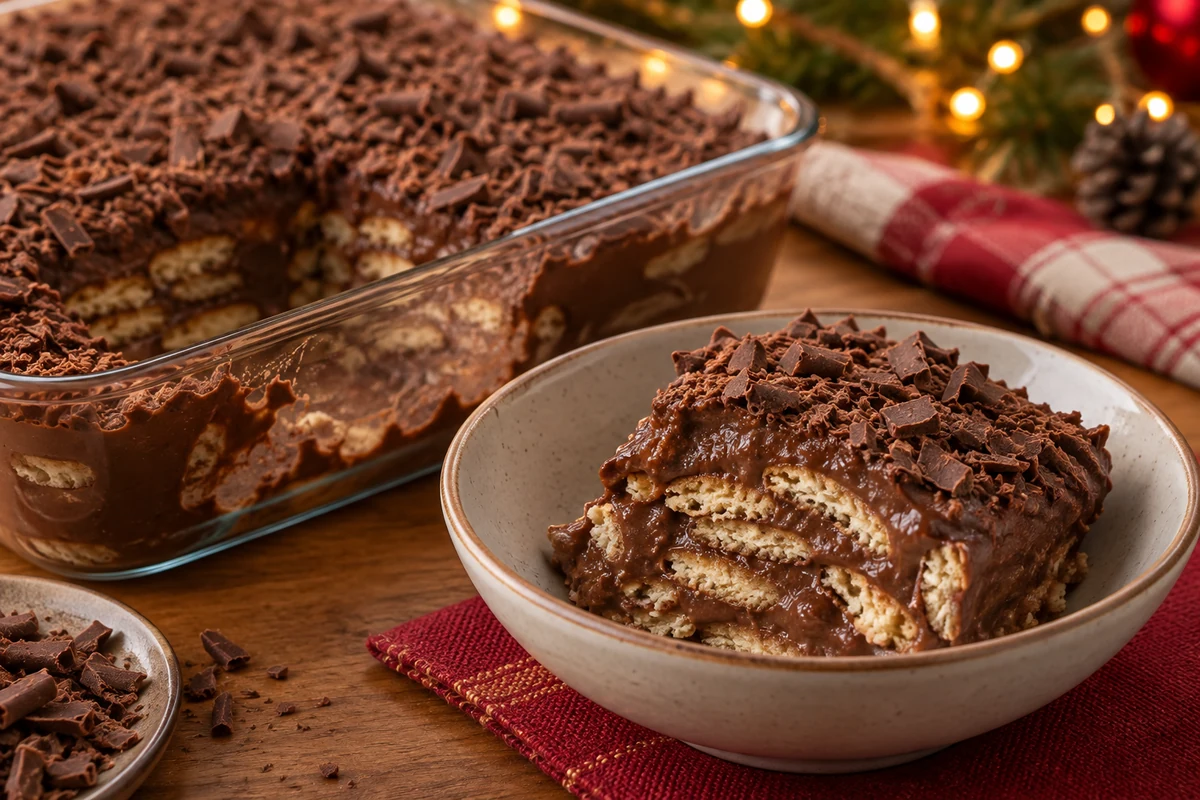
A few small details make Christmas chocolate pavé easier to assemble and serve neatly.
Layering
- Layer order: alternate lightly dipped biscuits and cream, finishing with cream and your chosen topping.
- Level the filling: spread each layer evenly with a palette knife, avoiding large gaps.
- Control the moisture: dip or brush the biscuits briefly so they soften without falling apart.
- Use even layers: relatively thin biscuit layers and evenly spread cream make portioning easier.
Portions and cutting
- Portion guide: allow roughly 100–150 g per person after a meal, adjusting to appetite and the other desserts.
- Neat portions: if the pavé is firm enough to slice, warm a knife in hot water and dry it between cuts. Otherwise, spoon it into bowls.
- Individual servings: small glasses make portioning simple and show the layers.
Presentation
- Chocolate finish: add grated chocolate, a light cocoa dusting or white chocolate curls for contrast.
- Festive colour: use suitable prepared berries, nuts or washed edible herbs. Keep cinnamon sticks as clearly removable decorations, preferably beside the dish.
- Extra crunch: add chopped praline or caramelised nuts just before serving.
Serving temperature
- Serve chilled: bring the dessert out when ready to serve. There is no need to leave the whole dish warming for an extended period.
- Useful utensils: provide dessert spoons and a wide serving spoon or slice, depending on the set.
- At the table: place the dish within easy reach and return unused portions to the fridge promptly.
Making ahead and storage
- Make ahead: assemble the day before serving, leaving time for at least 4 hours of chilling.
- Refrigerate: keep covered and use within 48 hours of making the filling, counting any advance preparation time.
- Freezing: cream and biscuits may change texture after thawing. If needed, test a small undecorated portion rather than freezing a large dish without checking.
Allergens and dietary requirements
- Identify ingredients: milk, wheat, egg, nuts and soya may be present, depending on the biscuits and chocolate. Check labels and tell guests what each version contains.
- Use separate equipment: prepare and serve allergy-suitable portions with clean, separate utensils to avoid cross-contact.
- Offer suitable alternatives: individual pots can help keep adapted versions separate, but vegan or gluten-free does not mean free from every allergen.
Dietary and Allergy Adaptations
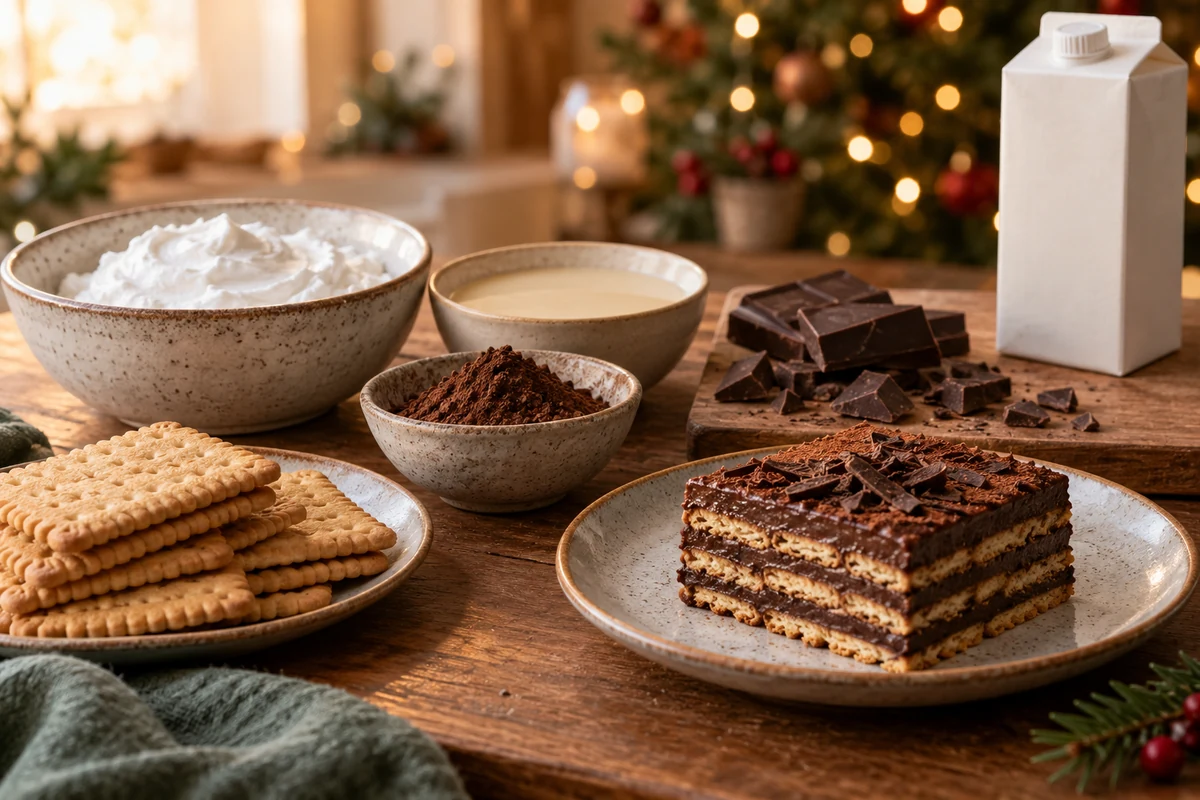
To adapt Christmas chocolate pavé, check the complete recipe and test the texture of your chosen replacements.
Vegan version
- Condensed milk: use about 395 g plant-based sweetened condensed milk. If making it yourself, follow a tested recipe with a defined yield; simply reducing equal cups of coconut milk and sugar is not a reliable equivalent.
- Cream: replace 200 ml dairy cream with a suitable plant cream or coconut cream, allowing for a different flavour and set.
- Butter: use about 30 g suitable plant-based baking block; coconut oil produces a different texture.
- Chocolate: check that both filling chocolate and decorations are vegan. Keep the amount specified for your chosen variation and use vegan biscuits and dipping liquid.
Lactose-free version
- Milk and cream: use lactose-free or suitable plant-based alternatives for the dipping milk and 200 ml cream.
- Condensed milk and other dairy: choose suitable lactose-free or plant-based condensed milk, butter, biscuits and chocolate. Lactose-free dairy still contains milk proteins and is not suitable for a milk allergy.
Gluten-free version
- Biscuits: use 200–250 g suitable gluten-free biscuits and adjust dipping to their texture.
- Check every packet: verify the cocoa, chocolate and other ingredients too, and prevent cross-contact during preparation.
Without nuts
- Crunchy topping: omit nuts or use an appropriate seed topping only if safe for the particular guest. Seeds are not automatically an allergy-safe replacement.
- Decoration: choose fruit or chocolate with suitable ingredient and cross-contact information.
Adjusting sweetness
- Condensed milk: reduced-fat products are not necessarily lower in sugar. Changing the amount or using a reduced-sugar product affects texture; check labels rather than treating the result as a special medical diet.
- Sweeteners: use a tested reduced-sugar filling recipe if desired. Do not assume a sweetener can directly replace the sugar and solids in condensed milk.
Adjusting texture
- A thicker plant-based filling: if needed, mix 1 tablespoon cornflour with 2 tablespoons cold plant drink, stir into the filling and cook thoroughly until thickened before cooling. This changes the texture and should be tested.
- Dipping liquid: plant drinks or cooled mild coffee work well. For citrus flavour, use a little zest or brush with orange juice separately rather than assuming an acidic milk mixture will remain smooth.
- Taste a cooled sample: adjust cocoa or sweetness gradually before assembling, using clean utensils.
Allergy precautions
- Avoid cross-contact: use clean, separate bowls, boards and spoons for adapted portions.
- Label clearly: identify ingredients and allergens and keep the versions separate during serving.
- Test in advance: a small trial with your chosen products is more useful than assuming every substitution sets identically.
Making Ahead, Storage and Practical Assembly
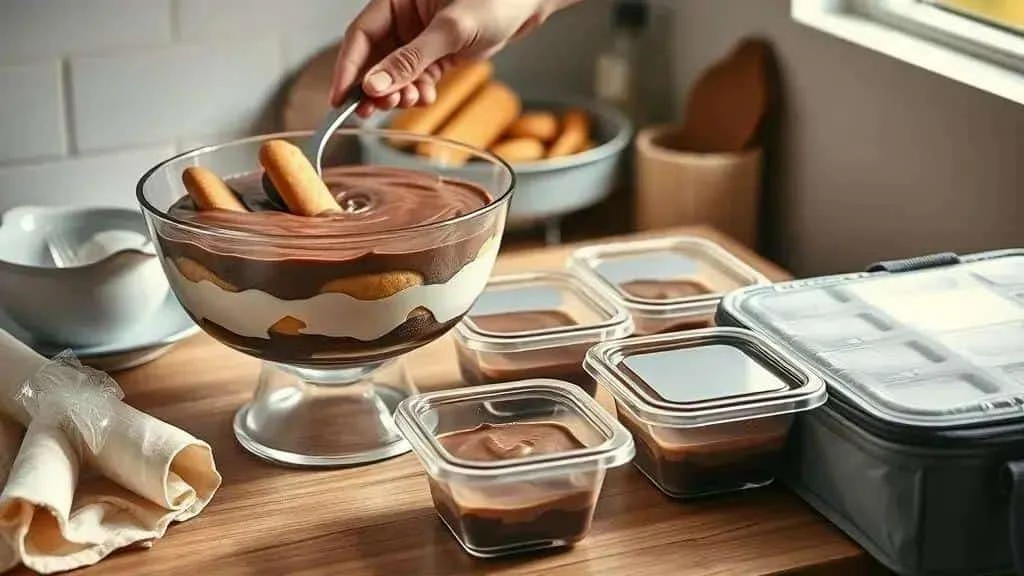
Preparing ahead makes Christmas entertaining easier, provided the dessert is cooled promptly and kept refrigerated.
What to prepare ahead
- Make the filling the day before: cool it promptly in a shallow container and refrigerate within 1–2 hours. Use the completed dessert within 48 hours of this step.
- Assemble in advance: build the layers the day before serving and add delicate decorations at the end.
- Keep spare biscuits dry: only moisten the biscuits needed for assembly; transport any unassembled components separately and keep the filling cold.
Practical assembly steps
- Choose a dish: use a clean, flat-bottomed dish; clear glass shows the layers.
- Prepare the liquid: put milk, cooled coffee or a plant drink in a shallow bowl.
- Moisten the biscuits: dip very briefly or brush delicate biscuits, then arrange side by side.
- Spread the cream: cover evenly with chocolate filling.
- Repeat the layers: alternate biscuits and cream, finishing with cream.
- Level the surface: smooth with a palette knife; add robust chocolate decorations now and delicate toppings later.
- Chill: cover and refrigerate for at least 4 hours or overnight.
Fridge storage
- Storage time: use within 48 hours of preparing the filling, or sooner if an ingredient’s instructions require it.
- Cover well: a lid or suitable food wrap helps prevent drying and absorption of fridge odours.
- Individual pots: covered portions are easier to transport in a cool box and serve without handling the whole dish.
Freezing: advantages and limitations
- Texture can change: the cream may separate and biscuits may become wetter after thawing.
- If freezing: freeze fresh, undecorated individual portions promptly and aim to use within a month for quality. Thaw fully in the fridge, allowing roughly 12–24 hours depending on size, and use within 24 hours of defrosting.
Transport and serving
- Keep it cold: transport in a clean insulated box with sufficient ice packs and refrigerate on arrival.
- Serve promptly: bring out the dessert when needed, keeping time outside chilled storage short.
- Cut or spoon: a warmed, dried knife helps with firm pavé; use a wide spoon if the filling is softer.
Quick practical reminders
- Avoid soaking: a brief dip is usually enough; some biscuits need only brushing.
- Thicken before cooling: any cornflour adjustment must be dispersed in cold liquid and cooked thoroughly into the filling before chilling.
- Decorate at the end: add sprinkles, fresh fruit and crunchy toppings shortly before serving.
Christmas Decoration and Presentation Ideas
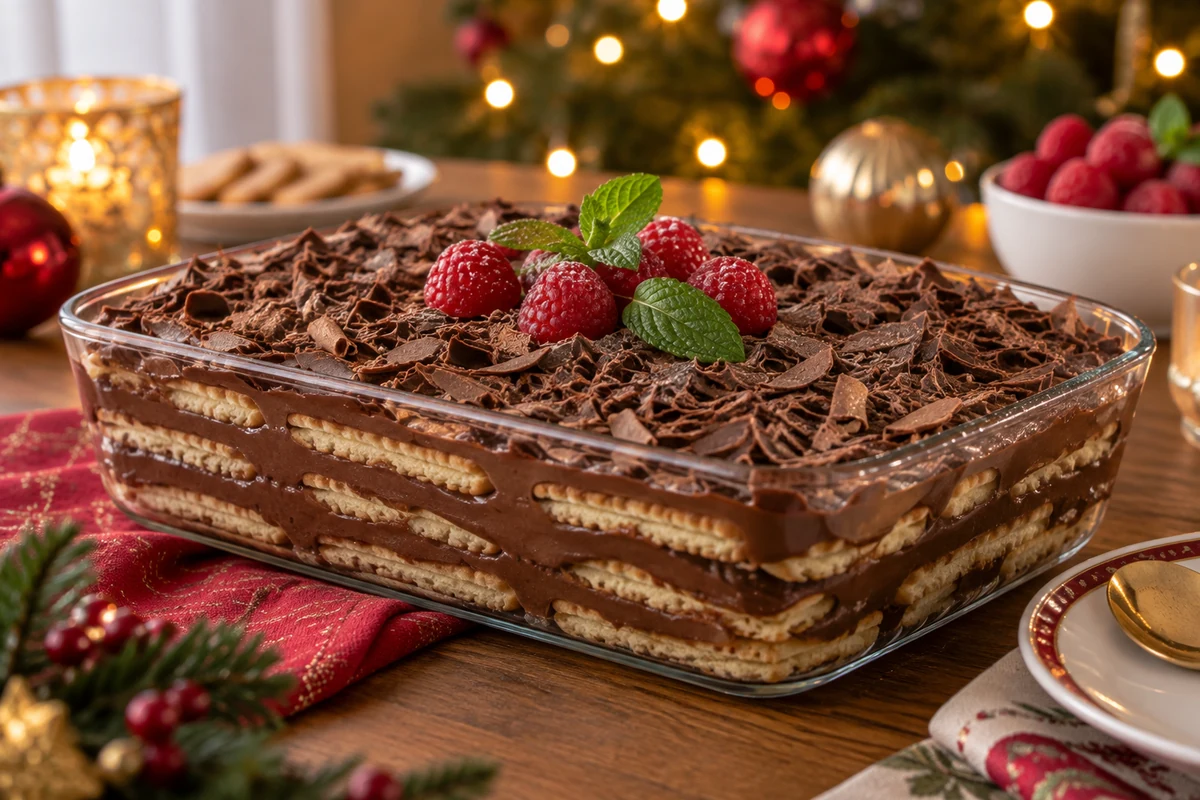
Decorating Christmas chocolate pavé can turn a simple layered dessert into a festive centrepiece.
Visual elements
- Colour contrast: prepared red berries or white chocolate curls stand out against dark chocolate.
- Texture: combine smooth cream with a little crunch and fruit.
- Visible layers: a glass dish lets the biscuit and cream layers become part of the decoration.
Garnishes and finishing touches
- Chocolate shavings: grate dark or white chocolate over the surface.
- Fruit and nuts: arrange prepared berries, sliced strawberries or chopped nuts in small clusters.
- Spices: dust with cocoa or a little cinnamon. Whole cinnamon sticks are not for eating and can sit beside the dish instead.
- Edible greenery: use washed food herbs such as mint. Never place unknown or non-edible foliage directly on the dessert.
Plates and serving dishes
- Individual glasses: clear dessert cups show the layers and simplify portions.
- Simple tableware: neutral plates or bowls let the dessert stand out; provide spoons for a soft set.
- A central display: set the dish on a stable serving board or festive tray when it is time to eat.
Lighting and atmosphere
- Soft light: indirect lighting highlights the chocolate without harsh reflections.
- Table decorations: small ornaments or pine cones can sit nearby, kept away from the food.
- Placement: choose an accessible spot for serving and photographs, then return leftovers to chilled storage promptly.
Last-minute decorating tips
- Add delicate toppings last: fresh fruit and sprinkles hold their appearance better when added just before serving.
- Identify variations: label the ingredients and allergens of vegan or gluten-free portions clearly.
- Keep decorations food-safe: use suitable edible ingredients and keep non-food ornaments off the cream.
Quick combinations
- Classic: dark chocolate shavings and a light dusting of cinnamon.
- Colourful: red berries and washed mint leaves.
- Rich and crunchy: walnut praline and white chocolate curls.
Thank you for reading
If you enjoyed this Christmas chocolate pavé recipe, try it at your festive gathering and share how it went. Follow our social channels for more recipes and Christmas ideas.
Visit the I Love Christmas blog for more festive recipes and inspiration.
Happy Christmas, and enjoy sharing your dessert.
FAQ: Christmas Chocolate Pavé
What are the basic ingredients?
Sweetened condensed milk, cocoa, cream, butter, biscuits and milk for dipping. Dark chocolate, vanilla, nuts and dried fruit are optional additions. A melted-chocolate filling has a different texture from the cocoa version.
How do I stop the biscuits becoming soggy?
Dip them very briefly in a shallow bowl, or brush delicate biscuits with liquid. Around a second per side is only a guide; absorption varies, so test one first.
Can I adapt the recipe for vegan guests or allergies?
Yes, but check every ingredient. A vegan version needs plant-based condensed milk, cream, butter replacement, dipping liquid, biscuits and chocolate. Gluten-free and other allergy requirements need suitable labels and precautions against cross-contact.
How far ahead can I make it?
The day before serving is convenient. Cool the filling promptly, keep everything refrigerated and count a maximum of 48 hours from making the filling, or a shorter ingredient limit. Add delicate toppings before serving.
How should I store leftovers?
Cover and refrigerate promptly, using within the original 48-hour preparation window. Do not keep portions that have spent too long out of chilled storage; assembling or serving does not restart the clock.
How do I serve pavé without it falling apart?
Chill for at least 4 hours, preferably overnight. If firm enough, portion with a warmed, dried knife and a wide slice. If softer, spoon into bowls; this is a creamy layered dessert, not necessarily a firm cake.