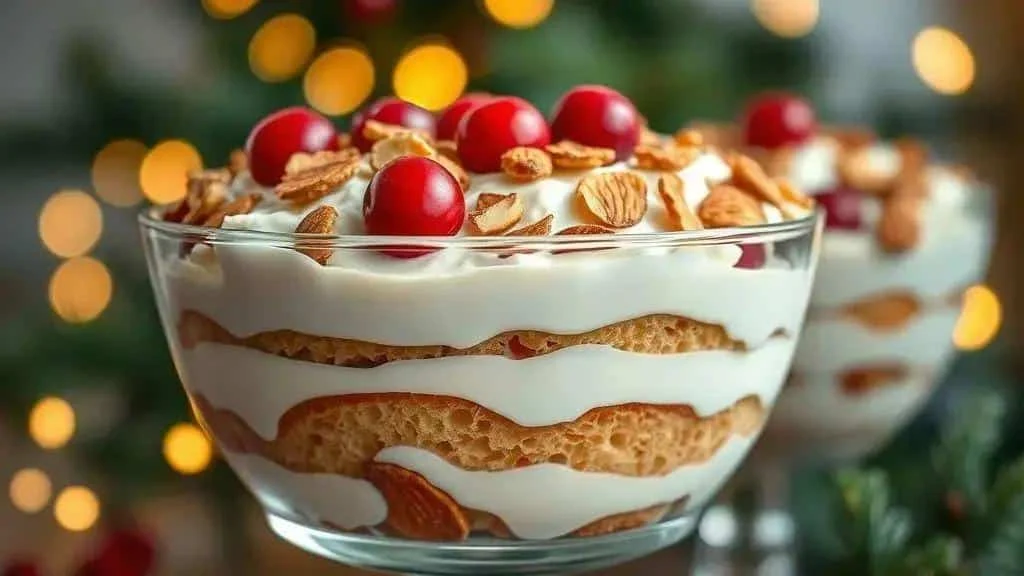
Christmas panettone pavé is a Brazilian-style layered dessert combining lightly moistened panettone with cooked vanilla custard and whipped cream. Serve it in a glass dish or individual pots, with berries, nuts or chocolate. Keep it refrigerated, including when giving individual portions as gifts.
Christmas panettone pavé turns a festive loaf into a creamy dessert to share. Follow the method below for the custard, layers and finishing touches, then choose a variation to suit your table.
Ingredients for Panettone Pavé with Vanilla Cream
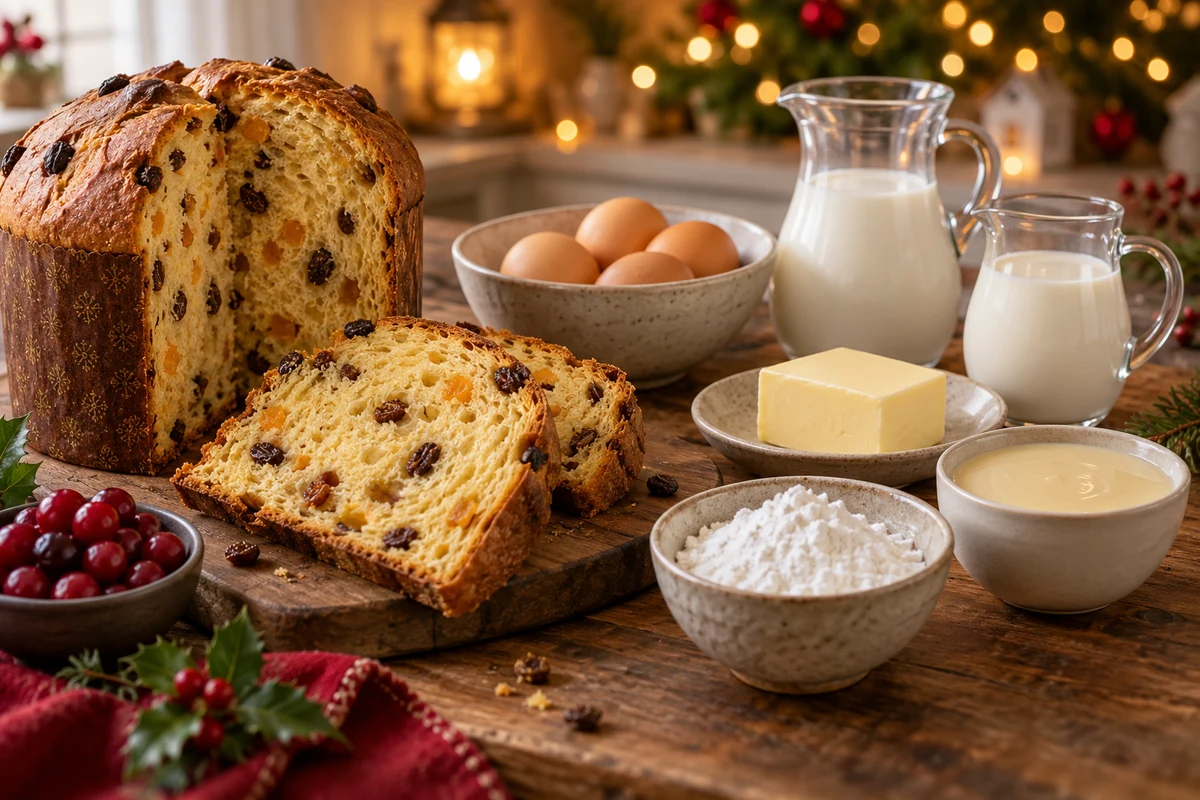
These quantities make a generous sharing dessert. The original estimate of eight portions gives substantial servings; for smaller after-dinner portions, divide it between more glasses. Choose a dish with room for the panettone and cream rather than forcing everything into a small tin.
Ingredients
- 1 panettone, about 400 g – sliced about 1 cm thick; mini panettone or a suitable gluten-free version can be used.
- 500 ml whole milk for the custard, plus up to 200 ml for moistening – the dipping milk is additional. Suitable plant drinks will change the flavour and texture.
- 1 tin sweetened condensed milk, about 395–397 g – a suitable plant-based product is needed for a fully vegan adaptation.
- 200 ml whipping cream – chilled; optional 50 g cream cheese can be added for a richer filling, but it does not replace the whipping cream directly.
- 3 egg yolks – these are cooked into the custard. For an egg-free version, use a tested egg-free custard formula instead of adding an arbitrary amount of cornflour.
- 2 tablespoons cornflour – for thickening; use level measuring spoons.
- 1 tablespoon unsalted butter, about 15 g – or a suitable plant-based baking block in an adapted recipe.
- 1 teaspoon vanilla extract – optional finely grated lemon zest can provide a citrus note.
- 50 g flaked almonds or chopped nuts – for topping; omit or choose a suitable biscuit crumb for guests who avoid nuts.
- 150 g fresh berries – washed and dried, such as strawberries or raspberries; cooled, well-drained compote is another option.
- White chocolate shavings, to taste – or dark chocolate for contrast.
- Up to 2 tablespoons rum, amaretto or brandy, optional – added to the dipping liquid for adults. Omit for an alcohol-free dessert; the alcohol is not cooked off.
Taste a cooked, cooled sample: adjust flavour before assembly. Lemon zest adds a citrus note without the risk of adding enough juice to split the dairy mixture.
How to Make Panettone Pavé with Vanilla Cream
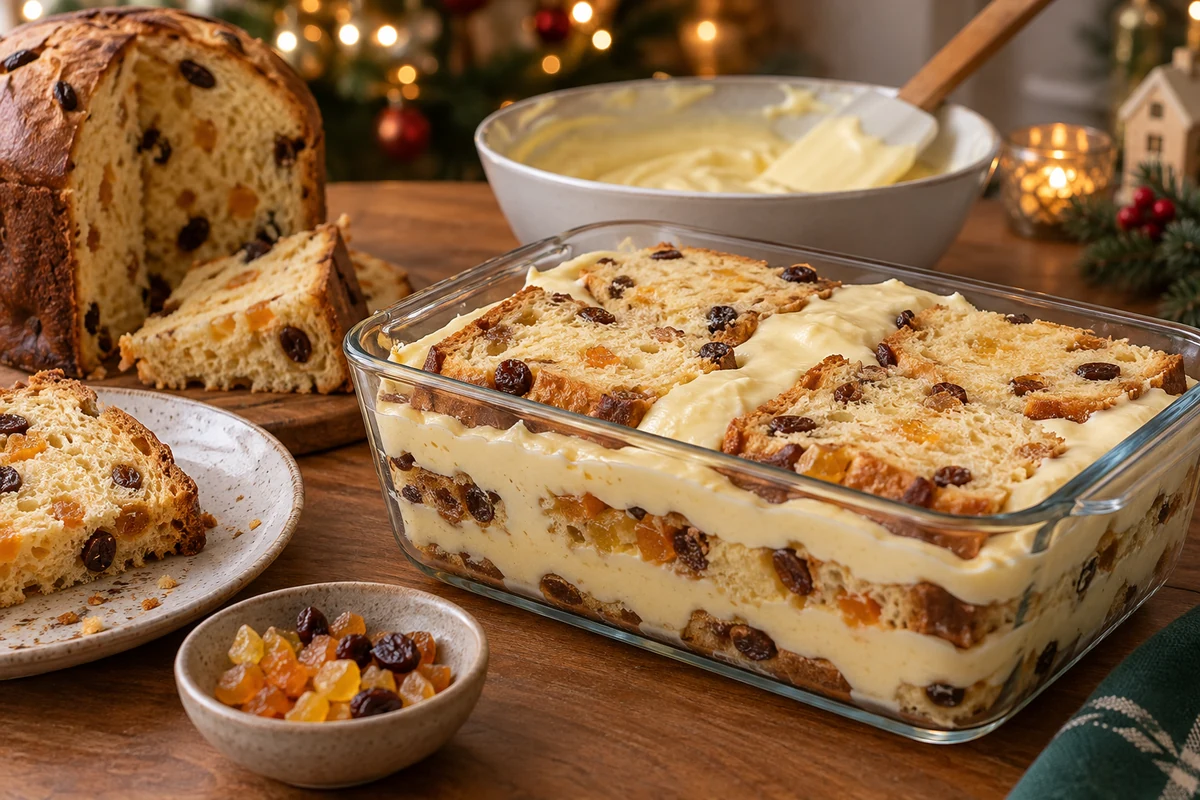
- Slice the panettone: remove all paper wrapping and cut into roughly 1 cm slices. Trim pieces to fit the dish while keeping the fruit-studded crumb intact.
- Cook the custard: take 4 tablespoons from the 500 ml milk and whisk with the cornflour and 3 yolks in a bowl. Heat the remaining milk with the condensed milk and 1 teaspoon vanilla until steaming. Gradually whisk some hot milk into the yolk mixture, then return everything to the saucepan. Cook over a moderate heat, whisking continuously across the base, until thick and bubbling, then continue for about 1 minute. The yolks must be cooked with the custard, not added after heating. Remove from the heat, stir in the butter and transfer to a shallow clean container. Cool promptly and refrigerate within 1–2 hours, with suitable wrap against the surface.
- Fold in the cream: whip 200 ml cold whipping cream to soft peaks. If using the optional 50 g cream cheese, beat it smooth first. Loosen the fully cooled custard with a whisk, then gently fold in the whipped cream and optional cheese. Do not add whipped cream to warm custard.
- Prepare the moistening liquid: use up to 200 ml additional milk, with optional 2 tablespoons liqueur for adults. Plain milk is sufficient; cooled mild coffee is another flavour option. You may not need all the liquid.
- Moisten lightly: brush each slice or dip it very briefly, depending on how soft it is. Do not soak it. Fit a layer into the dish.
- Build the layers: spread a layer of cream over the panettone, then repeat with more lightly moistened slices and cream. Finish with cream. A clear dish or individual glasses show the layers well.
-
Layering and decoration
Level the cream gently with a small palette knife. Just before serving, add the 50 g toasted, cooled flaked almonds, white chocolate shavings and 150 g prepared berries. Dark chocolate shavings give a stronger contrast.
- Chill: cover and refrigerate for at least 4 hours, preferably overnight, until the layers have settled.
- Store and make ahead: keep covered in the fridge and use within 48 hours of cooking the custard, or sooner if an ingredient requires it. Fresh preparation gives the best texture; add fruit and almonds at serving time.
- Adapt carefully: a lactose-free version needs suitable panettone, milk, condensed milk, cream, butter and chocolate. For an egg-free or vegan dessert, use a tested alternative custard and check the panettone too; replacing only the yolks is not enough.
Panettone Pavé Variations
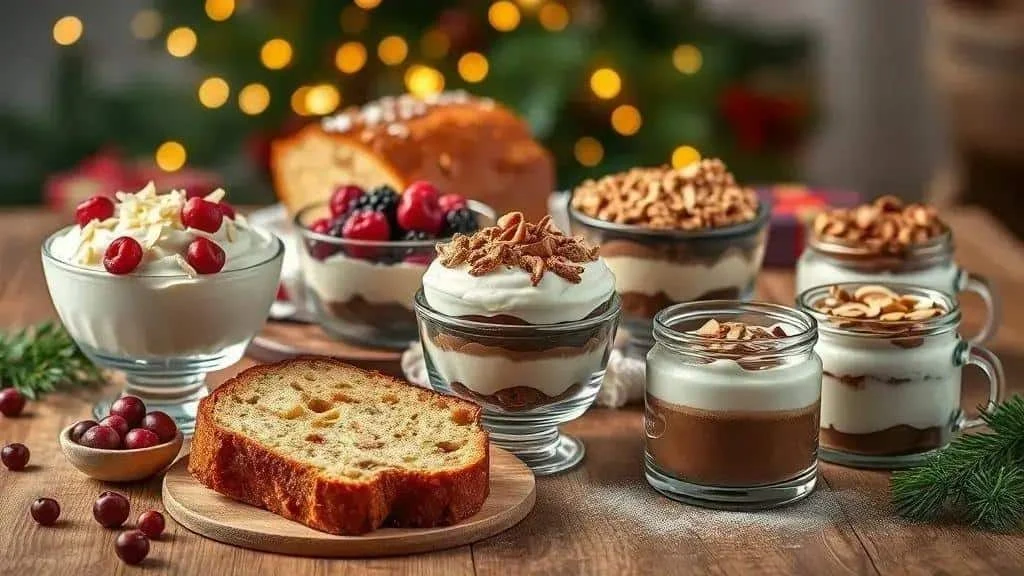
- Berries and vanilla — add the 150 g prepared berries between the layers or use a cooled, drained compote. A little lemon zest balances the sweet flavour.
- Chocolate — melt 150 g dark chocolate into the warm cooked custard before cooling, or test a cocoa version with 3 tablespoons cocoa mixed into the custard before cooking. These give different textures. Chocolate-hazelnut spread is another, sweeter variation and adds a nut allergen.
- Dulce de leche — add thin layers using about 200 g ready-made dulce de leche alongside the vanilla cream. Chopped almonds or walnuts add crunch; the result is sweeter than the base recipe.
- Coffee, inspired by tiramisu — brush the panettone with cooled mild coffee instead of milk, adding optional liqueur only for adults. A little mascarpone can enrich the cream; dust with cocoa before serving.
- Vegan — choose vegan panettone, plant-based milk, condensed milk, whipping cream, butter replacement and decorations. Use a tested egg-free custard formula with the intended yield; reduced-sugar dairy condensed milk is not a vegan substitute.
- Individual portions and gifts — layer small pieces in food-safe lidded pots, leaving room at the top. Keep them refrigerated and use chilled transport; these are perishable desserts, not shelf-stable gifts.
Adjusting quantities and texture
- Sweetness: a very sweet addition such as dulce de leche may justify testing a slightly less sweet custard. Reducing condensed milk by 50 g changes the formula, so check the set before making a full batch.
- Custard consistency: correct a thin custard before adding whipped cream. If an extra cornflour slurry is needed, cook it thoroughly into the custard and cool promptly again. Do not boil the completed whipped-cream filling.
- Moistening time: soft panettone may need only brushing; denser slices can take a brief dip. More liquid is not always better.
- Individual glasses: use smaller pieces and even layers, leaving delicate toppings until serving.
- Contrast: toasted almonds, suitable biscuit crumbs, raspberries or citrus zest balance the creamy sweetness.
- Alcohol-free options: use plain milk, a suitable plant drink or cooled decaffeinated coffee. Orange juice can be brushed on separately for a citrus variation; do not assume mixing it with milk will stay smooth.
Assembling, Decorating and Serving at Christmas
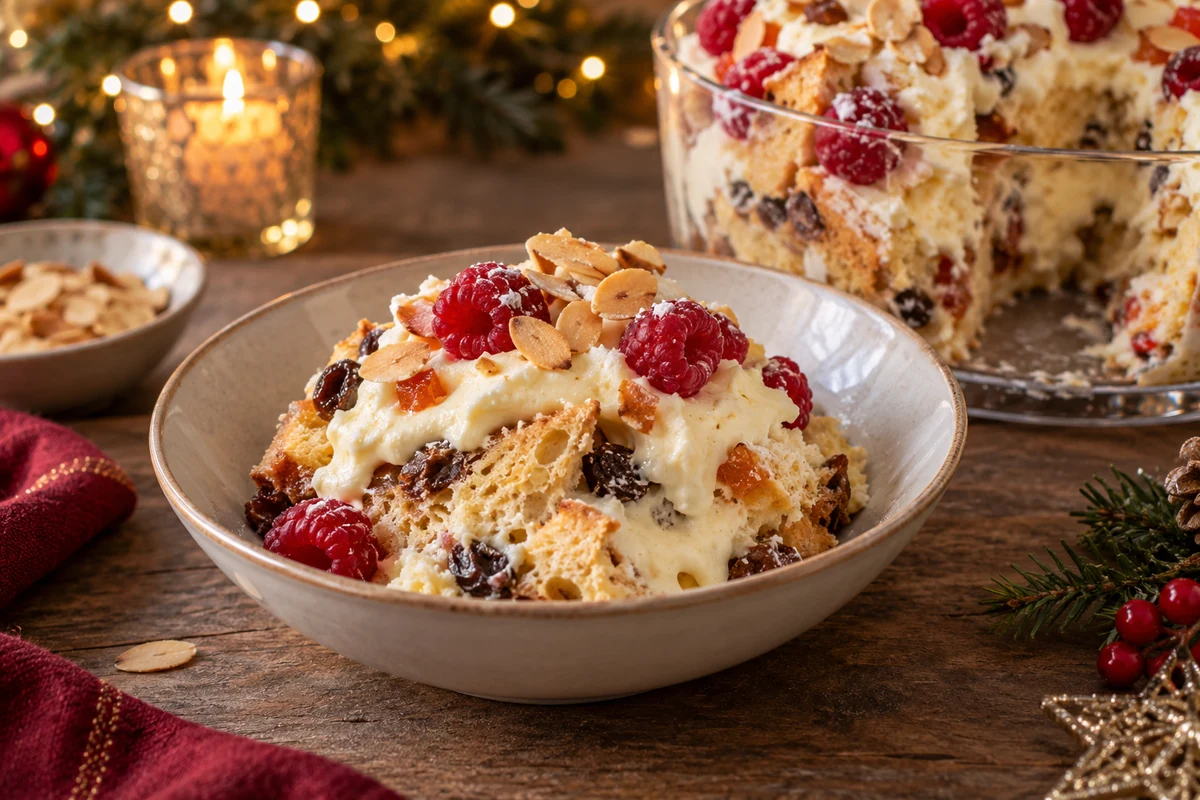
These practical tips help keep the layers neat and the dessert chilled until needed.
Assembly
- Choose a clear dish: glass bowls or dessert cups show the layers.
- Make an even base: trim and fit the panettone slices to fill gaps without compressing them heavily.
- Control the liquid: brush or briefly dip the slices, testing one before moistening the rest.
- Spread evenly: cream layers about 1 cm deep provide a useful starting point, adjusted to your dish.
- Level gently: use a small palette knife to smooth the filling and remove large gaps.
- Allow chilling time: refrigerate for at least 4 hours, or overnight for a more settled texture.
Decoration
- Fresh fruit: use about 100–150 g prepared berries per dish for colour and tartness.
- Crunch: add around 50 g toasted flaked almonds or suitable biscuit crumbs.
- Final touches: finish with chocolate shavings and a few washed mint leaves.
- Keep toppings fresh: add delicate berries just before serving if the dessert was made ahead.
- Festive table styling: place ornaments and pine sprigs around the serving area, keeping them away from the food.
Serving
- Portion guide: around 120–150 g can suit a small after-dinner serving. Weigh or divide the finished batch to determine the number of portions.
- Serve chilled: bring out the dessert when needed and keep its time outside the fridge short.
- Tableware: use small bowls or dessert plates with spoons and napkins.
- Drinks: coffee or hot chocolate suit the dessert; an optional liqueur can be offered separately to adults.
- Storage and transport: keep covered and chilled, using a cool box with ice packs for travel. Use within the original 48-hour preparation window.
- Neat portions: use a wide serving spoon and wipe the plate edges if needed.
Last-minute tips
- Short on serving time: individual pots simplify service, but they still need enough time to chill.
- For children: omit alcohol and use plain milk or a suitable plant drink rather than caffeinated coffee.
- Balance the flavour: lemon zest adds brightness to sweeter variations without extra liquid.
Storage and Make-Ahead Guidance
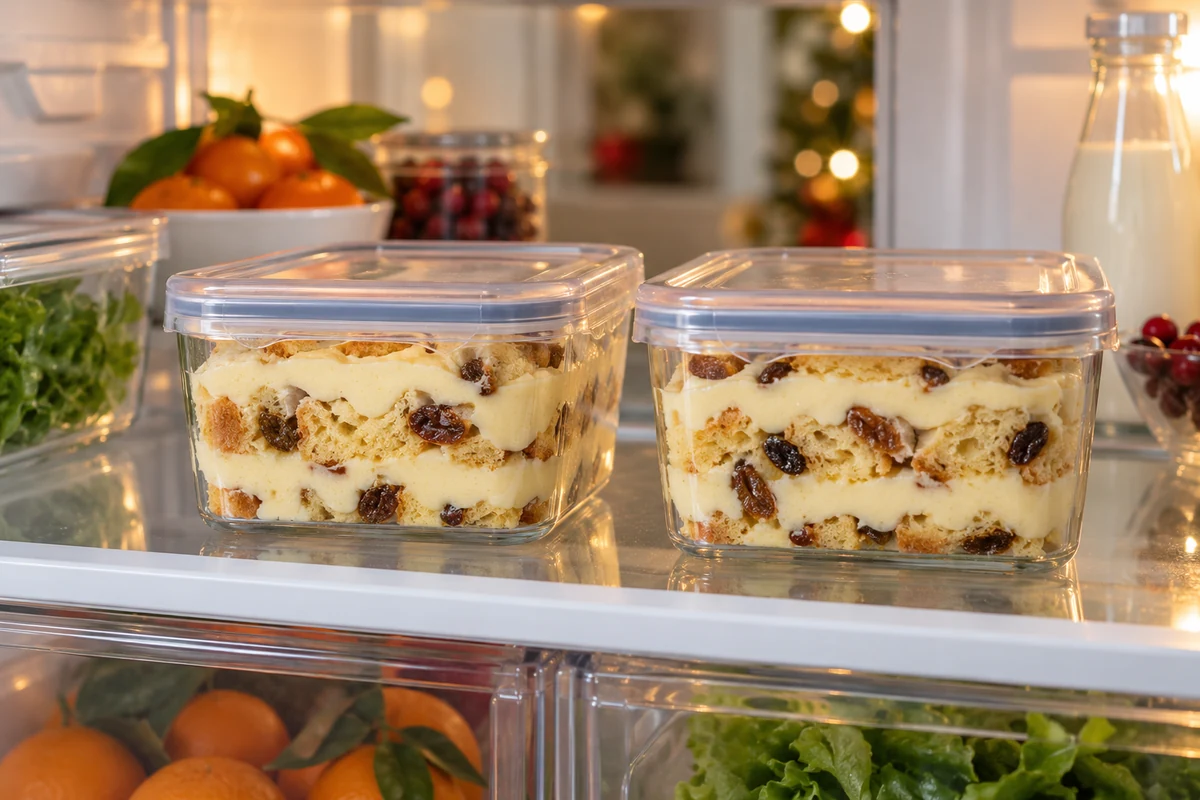
Keep the dessert refrigerated and track the preparation time of the custard, rather than starting a new storage period when the layers are assembled.
Refrigeration
- Storage window: keep covered in a fridge at 5°C or below, ideally around 4°C, and use within 48 hours of cooking the custard, or sooner if an ingredient requires it.
- Container: use a lidded dish or suitable food wrap to prevent drying and absorption of odours.
- Individual pots: covered portions are convenient but have the same storage limits as the main dish.
- Alcoholic versions: a small amount of liqueur does not extend the shelf life. Smell and appearance cannot reliably establish that a dessert is safe.
Freezing and texture
- Best made fresh: freezing can make the cream grainy or watery and the panettone soggy.
- If necessary: test a small undecorated portion, freeze promptly and aim to use within one month for quality. Thaw fully in the fridge, allowing roughly 12–24 hours depending on size.
- After thawing: use within 24 hours and keep refrigerated. Fresh decoration can improve appearance, but it cannot restore unsafe food or guarantee the original texture.
Transport and advance preparation
- Make the day before: assemble up to 24 hours before serving and add delicate toppings at the end.
- Keep transport chilled: use a clean insulated box with enough frozen gel packs and check that the dessert stays cold. A fixed number of packs or hours does not guarantee a safe temperature.
- Avoid heat: keep the dessert out of direct sun and refrigerate promptly on arrival.
When to discard
- Unusual smell: discard a dessert that smells sour or fermented; do not taste it to check.
- Unexpected changes: suspicious slime or foaming warrants disposal. Separation can also be a texture fault, but never use appearance alone to judge safety.
- Mould: discard the whole affected dessert rather than removing the visible spot.
Keeping the texture pleasant
- Clean utensils: use clean spoons for each serving; this does not extend the stated storage period.
- Add toppings late: keep fruit and crunchy decorations separate until serving.
- Avoid excess moisture: test a slice before assembly. A soggy panettone layer cannot reliably be repaired by adding more whipped cream afterwards.
- Date the containers: record when the custard was cooked and keep storage instructions with any gifted portions.
Individual Gifts and Small-Batch Selling Ideas
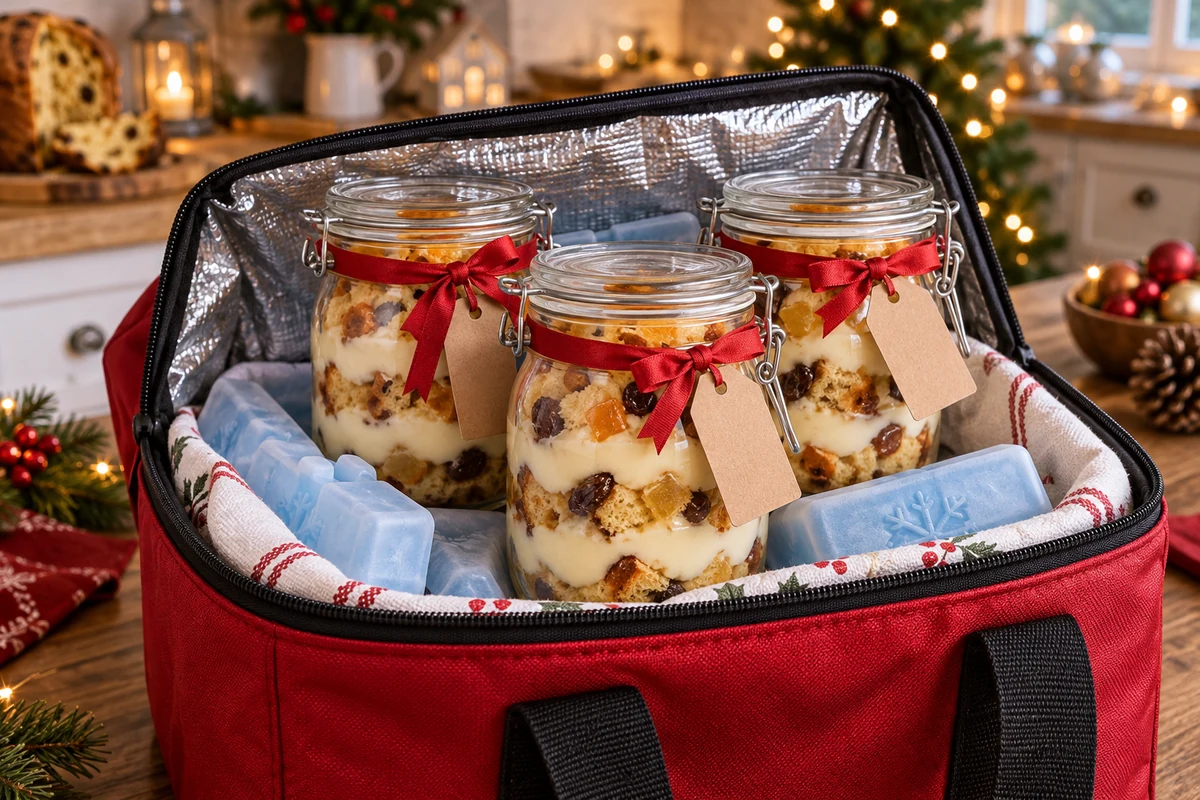
- Packaging: use food-safe lidded pots with room for decoration. Add ribbons and tags outside the container, and keep the dessert chilled.
- Portions: weigh individual servings or larger sharing tubs; pot volume and food weight are not interchangeable.
- Storage information: for home use, follow the 48-hour preparation window and keep refrigerated. A commercial shelf life must be established for the actual product and handling process rather than copied from a blog recipe.
- Gift decoration: keep paper, ribbon and tags outside the sealed pot. Give the recipient clear refrigeration and allergen information.
- Food business requirements: in the UK, register a food business with the local authority at least 28 days before trading and check the applicable hygiene, allergen and labelling requirements. The packaging and sales method affect the information required.
- Pricing: calculate ingredients, packaging, labour, energy, wastage and delivery before setting a price. Brazilian example prices do not establish a suitable UK selling price.
- Varieties: offer a small range, such as vanilla and berries, chocolate or dulce de leche, with clearly separate ingredients and allergen records.
- Retail presentation: use a suitable refrigerated display for filled pots; photographs or empty sample packaging can be displayed separately.
Planning a small batch for sale
- Test and standardise: record ingredient weights, yield and the preparation process so each batch is consistent.
- Calculate costs: add ingredients, packaging, labour, energy and other relevant expenses, then divide by the actual number of portions.
- Set sizes and prices: choose a manageable range and calculate any discounts against your costs.
- Plan the cold chain: arrange suitable refrigeration, chilled delivery containers and temperature checks.
- Check labelling: confirm the required product, ingredient, allergen, quantity, date and storage information for your sales method with the relevant guidance or local authority.
- Arrange collection or delivery: communicate timings and refrigeration needs clearly, keeping the product cold throughout.
An illustrative cost calculation
- Example only: if ingredients cost £4 per pot, packaging £1 and labour £1, the subtotal is £6 before any other costs. These are invented figures for arithmetic, not a market-price estimate.
- Mark-up versus margin: selling that £6 item for £12 is a 100% mark-up on cost and a 50% gross margin before other expenses, not a 100% profit margin. Set your actual price from your own costs and market.
Presentation and promotion
- Accurate photographs: show the actual portion, layers and packaging in clear light.
- Seasonal sets: offer small chilled gift sets with festive outer packaging where the numbers work.
- Local partnerships: consider cafés or shops with appropriate chilled storage.
- Samples: offer small portions with proper chilled handling and allergen information.
- Clear descriptions: explain ingredients honestly and make dietary claims only where the complete recipe and handling support them.
Enjoy your festive dessert
Thank you for following this Christmas panettone pavé recipe. It is a comforting way to turn a festive loaf into a dessert to share.
Follow our social channels for more Christmas recipes, decorating ideas and practical tips.
Visit the I Love Christmas blog for more festive inspiration. Thank you for reading.
FAQ: Christmas Panettone Pavé
Can I use different kinds of panettone?
Yes. Shop-bought, homemade and suitable adapted panettone have different textures, so test how much liquid a slice absorbs. Remove all wrapping and check ingredients if catering for dietary requirements.
How do I moisten it without making it soggy?
Brush or briefly dip slices using up to 200 ml additional milk, with optional liqueur only for adults. Soft slices may need very little liquid. The 500 ml milk for the custard is separate.
How long does it keep in the fridge?
Keep covered at 5°C or below, ideally around 4°C, and use within 48 hours of cooking the custard, or sooner if an ingredient requires it. Add fruit and crunchy toppings before serving. Liqueur does not extend this period.
Can I freeze it?
Fresh gives the best texture. If needed, test an undecorated portion, freeze promptly and use within a month for quality. Thaw fully in the fridge and use within 24 hours; the cream and panettone may become softer or grainier.
How do I make it lactose-free or vegan?
Check the panettone, milk, condensed milk, cream, butter and chocolate. A vegan version also needs an egg-free panettone and a tested egg-free custard formula. Lactose-free dairy still contains milk protein and is not suitable for a milk allergy.
Sources and Further Reading
- Food Standards Agency: chilling, freezing and defrosting food
- King Arthur Baking: cooking pastry cream
- Starting a food business in the UK
- Food Standards Agency: labelling food prepacked for direct sale